Fun Frog Drawing Ideas For Your Next Sketch Project
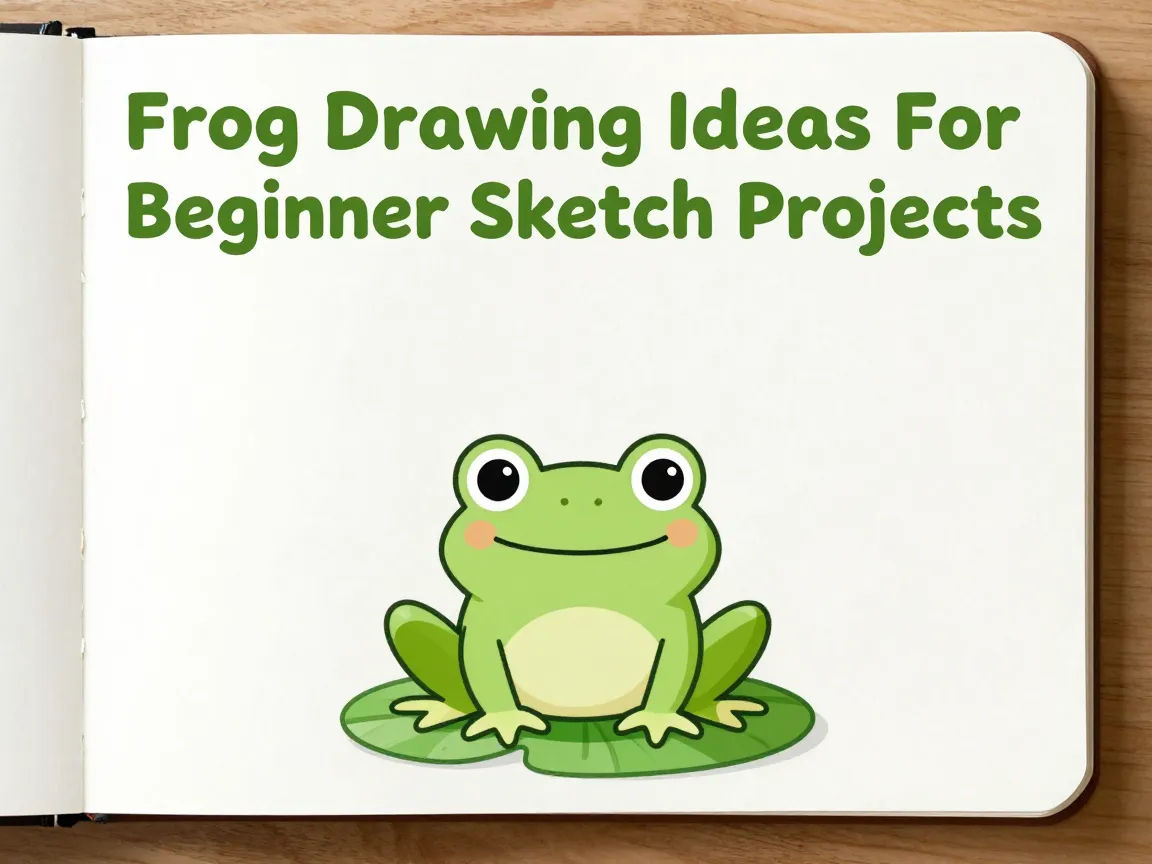
A single frog sketch can take fewer than ten strokes to complete, yet frogs remain one of the most repeated subjects in beginner art tutorials published throughout 2026. That paradox is the point: frogs are simple enough to draw in minutes but flexible enough to support dozens of creative variations. This guide breaks down 6 fun frog drawing ideas for your next sketch project, moving from easy starter poses to more advanced compositions, so any artist, student, or classroom can find a prompt that fits their skill level.
Disclosure: This post contains affiliate links. As an Amazon Associate, we earn from qualifying purchases, and at no extra cost to you.
Frog drawing collections circulating online right now range from eleven quick prompts to forty distinct styles, reflecting a broader shift toward variety-packed idea lists rather than single tutorials. This article condenses that trend into six focused, practical concepts that build on one another, starting with foundational shapes and ending with science-based diagrams. Each idea below includes construction tips, styling suggestions, and ways to adapt the same base frog into a brand-new project.
Key Takeaways
- The six ideas progress from beginner-friendly poses to more advanced compositions, making this list useful for kids, hobbyists, and experienced sketchers alike.
- A single oval-and-circle frog base can be reused across all six prompts by changing pose, props, or background.
- Oversized eyes and adjustable mouth curves are the fastest way to change a frog’s personality or mood in a sketch.
- Shading under the body and along the legs adds volume, shifting flat cartoon frogs toward more dimensional, semi-realistic drawings.
- Combining frog sketches into scenes or life-cycle diagrams turns simple single-subject drawings into full art or homework projects.
Why Frog Drawing Ideas Are Trending in 2026
Frogs have quietly become a staple subject in art education and casual sketching communities. Part of the appeal is structural: a frog’s body breaks down into a handful of basic shapes, making it an ideal subject for teaching proportion, gesture, and shading without the complexity of human or detailed animal anatomy.
Recent tutorials published and updated throughout 2026 lean heavily into this simplicity. Many start with the same formula: large ovals for the body, a circle for the head, sausage shapes for the legs, and small webbed toes. From there, artists are encouraged to refine contours and add shading to suggest volume, marking a gradual shift away from flat, purely cartoonish frogs toward sketches with more depth and dimension.
At the same time, frog drawing has become a flexible creative theme rather than a one-off exercise. Idea lists now frequently include costumed “character frogs,” multi-frog pond scenes, and educational life-cycle diagrams alongside the classic lily-pad pose. This variety explains why so many current guides package twenty, thirty, or even forty frog ideas at once. The exercise below distills that approach into six core concepts that cover the most useful techniques without overwhelming a beginner’s sketchbook.
6 Fun Frog Drawing Ideas For Your Next Sketch Project
The following six prompts are organized by difficulty and purpose. Start with the first two if you are new to drawing frogs, then move into character design, composition, and educational diagrams as your confidence grows. Each entry includes a short construction breakdown so the idea can be sketched immediately.
1. Classic Lily Pad Frog
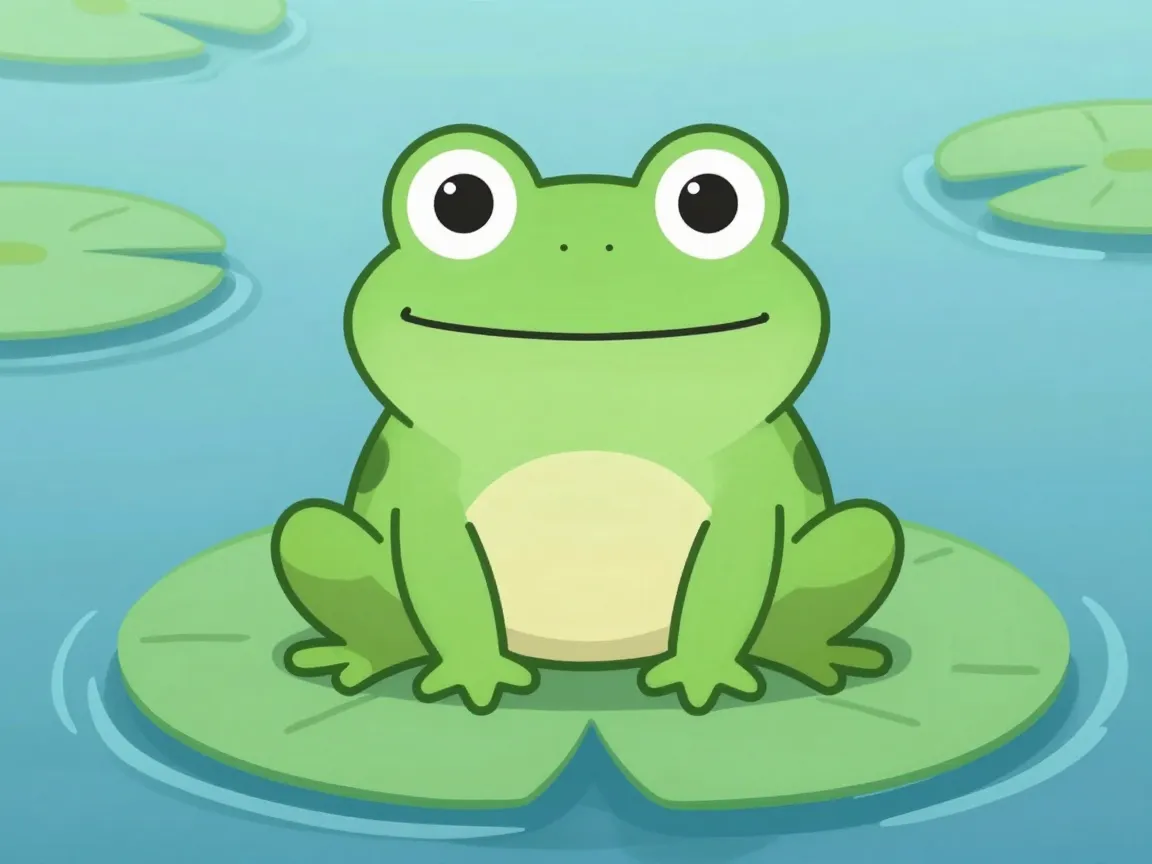
The most common starting point across 2026 step-by-step tutorials is a front-facing frog sitting on a lily pad. This pose is popular because it relies entirely on basic shapes: a wide oval for the body, a smaller circle or oval for the head, and two large round eyes that sit on top rather than on the front of the face.
To draw this version, begin with a horizontal oval for the body and a slightly flattened circle on top for the head. Add two big circles for the eyes with small black pupils, then draw a wide curved line underneath for the smile. Short, bent legs tuck under the body, with small rounded feet peeking out. Finish with a simple green lily pad shape beneath the frog, plus a few short lines radiating outward to suggest water ripples.
This idea works well as a first project because every shape is forgiving. Mistakes in proportion barely affect the final look, since cartoon frogs are inherently round and exaggerated. It is also the easiest of the 6 fun frog drawing ideas for your next sketch project to repeat quickly, making it ideal for warm-up sketches before tackling more detailed work.
2. Leaping And Dancing Frog In Motion
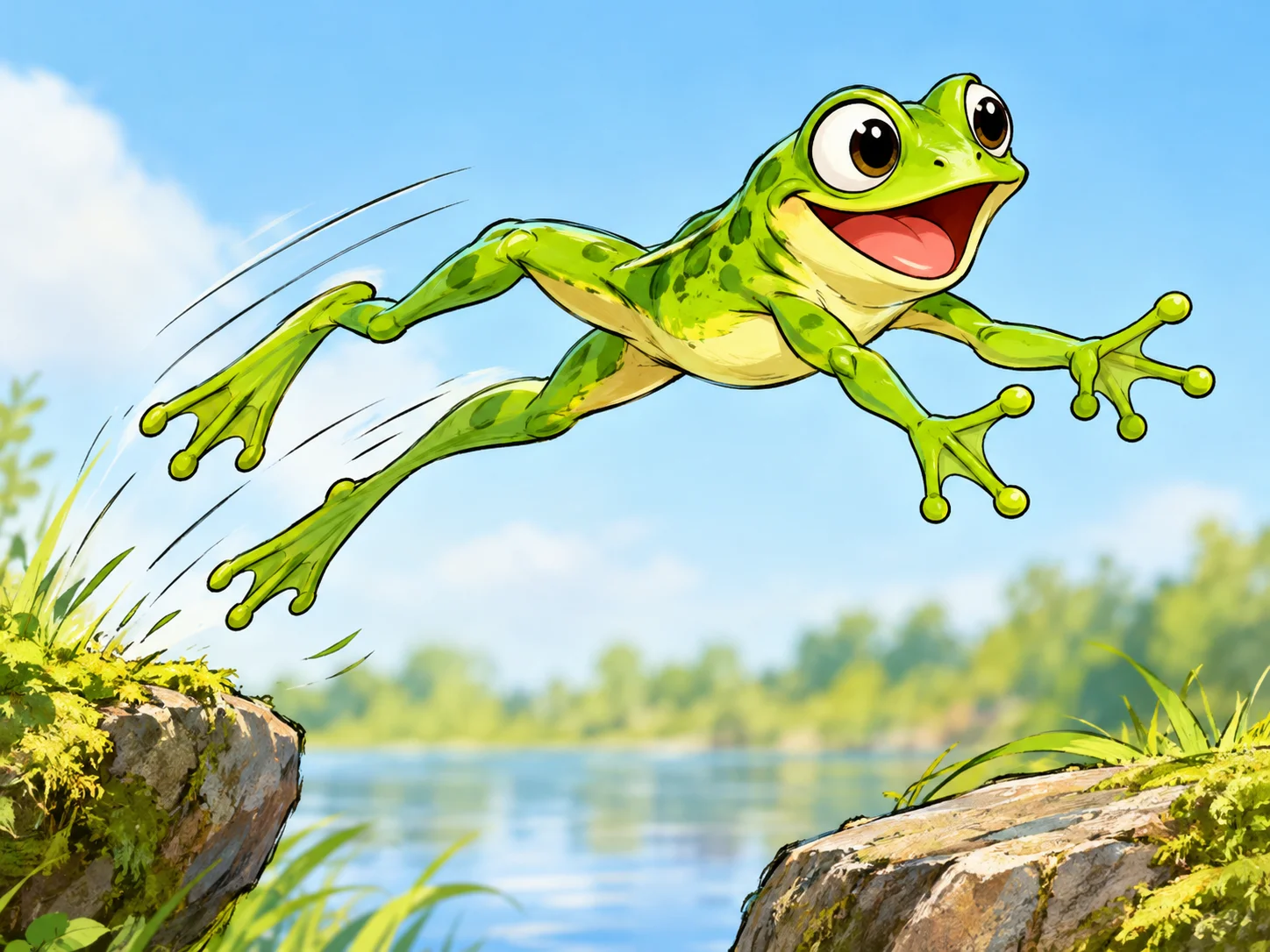
Once the basic frog shape feels comfortable, the next step is introducing movement. Dynamic leaping, bouncing, or dancing frogs are frequently highlighted in mid-2026 beginner guides as a way to practice gesture drawing and expressive body language without adding complex anatomy.
Start this sketch with a simple curved line, often called a gesture line, that shows the direction of motion. A leaping frog typically has its back legs stretched out behind it and its front legs reaching forward, while a dancing frog might have one leg kicked out to the side with arms raised. Exaggerate the bend in the legs and the curve of the body far more than you would for a resting frog. This exaggeration is what makes the pose feel energetic rather than stiff.
Adding motion lines behind the frog, such as short curved streaks trailing from the feet, reinforces the sense of speed or rhythm. This idea pairs naturally with the classic lily pad base from idea one, since the same head and eye shapes can be reused while only the body and limb positions change. Many artists find this the most enjoyable of the 6 fun frog drawing ideas for your next sketch project because it rewards loose, confident line work over precise detail.
3. Character Frog With Costume And Props
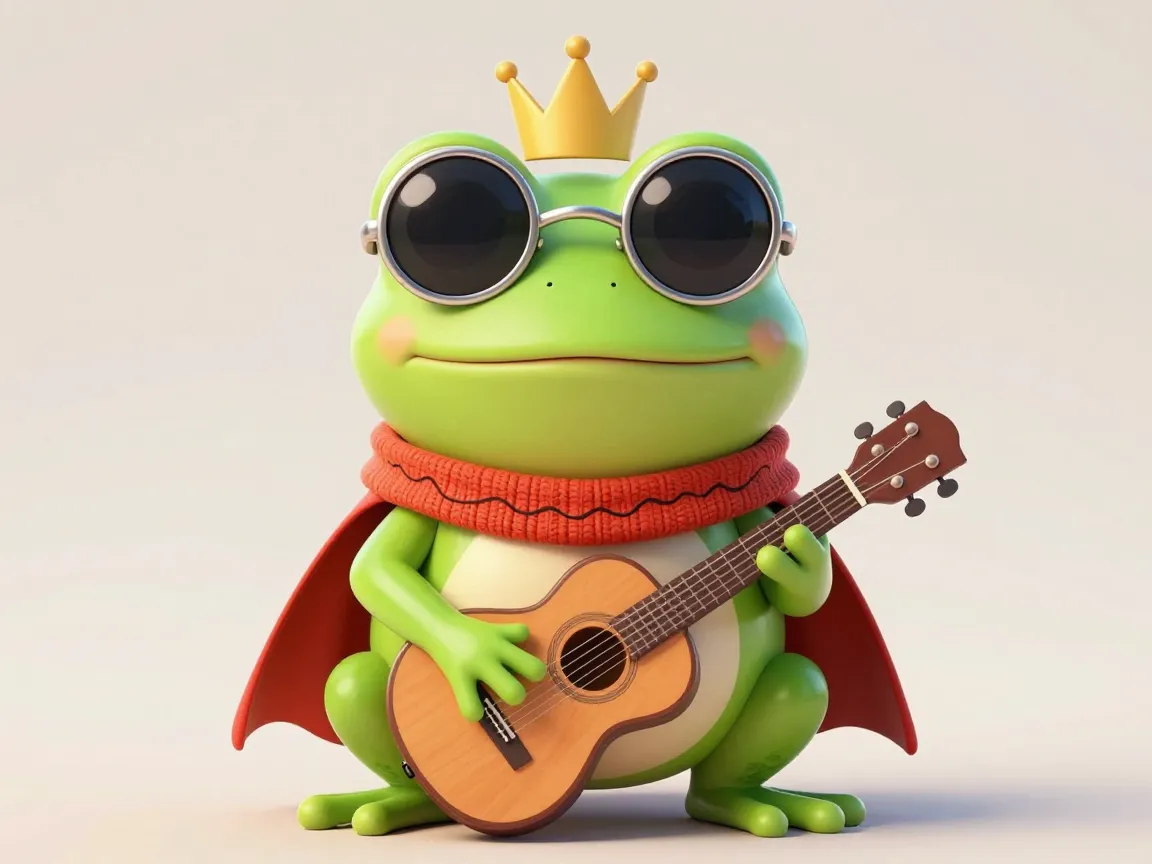
Character frogs dressed in costumes, hats, scarves, crowns, sunglasses, or holding props like guitars and hearts have become a major creative theme in frog drawing idea lists over the past two years. These designs are especially popular for greeting cards and lighthearted drawing challenges, with frog-themed puns such as “Hop-py Birthday” or “You’re Toad-ally Awesome” frequently paired with the illustrations.
Building a character frog starts with the same basic body used in earlier ideas. The creative work happens in the accessories. A small triangular crown turns a plain frog into royalty. A tiny guitar shape held in the front legs creates a musician frog. Round sunglasses drawn over the eyes instantly shift the mood from cute to cool. A knitted scarf wrapped around the neck, drawn with a few wavy parallel lines, adds a cozy, seasonal feel.
The real advantage of this idea is repeatability. Because the base frog stays the same, a single sketch can be redrawn multiple times with different costumes to build an entire themed set, such as a “frog through the seasons” series or a set of birthday card options. This makes character frogs one of the most efficient 6 fun frog drawing ideas for your next sketch project when the goal is producing several finished pieces quickly.
Consider keeping a short list of prop ideas nearby while sketching, since variety is the main draw of this concept. A simple table like the one below can help plan a themed set before drawing begins.
| Costume or Prop | Mood Created | Best Use |
|---|---|---|
| Crown and cape | Regal, playful | Birthday cards |
| Guitar or microphone | Fun, energetic | Music-themed art |
| Scarf and beanie | Cozy, seasonal | Autumn or winter sketches |
| Sunglasses | Confident, cool | Summer-themed pieces |
| Heart or flower | Sweet, affectionate | Greeting cards |
4. Multi-Frog Pond Scene Composition
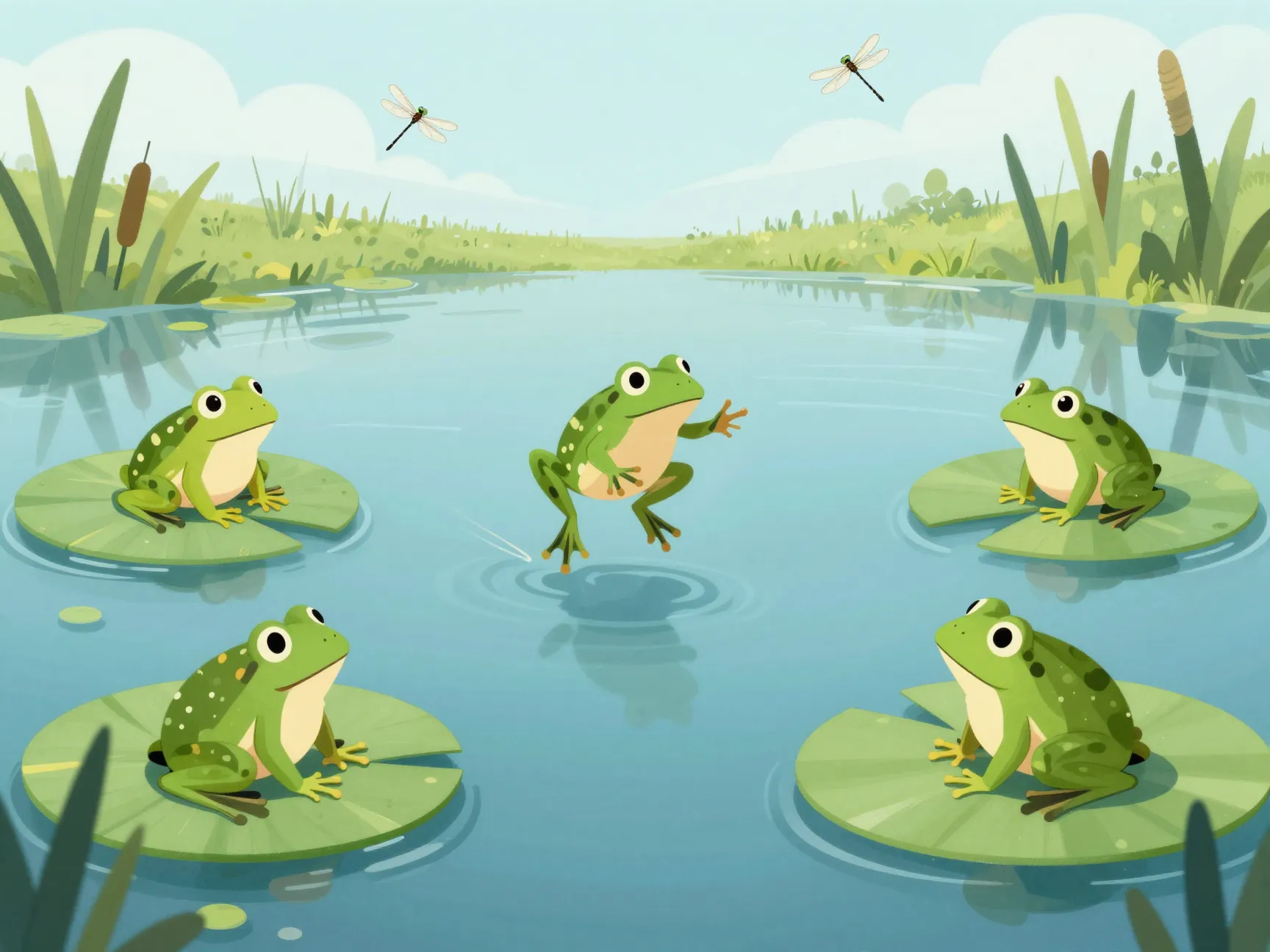
After practicing individual frogs, the next natural step is combining several of them into a single scene. Multi-frog pond compositions typically include three or more frogs in different poses scattered across lily pads, with added details like flowers, dragonflies, small fish, and reeds filling out the background.
To build this scene, start by sketching the pond itself as a wide, gently curved shape to represent the water’s edge. Place two or three lily pads at different sizes and positions, then add a frog to each one using poses from ideas one and two. Varying the pose, size, and direction each frog faces keeps the composition from feeling repetitive. A frog mid-leap near the center, paired with two resting frogs near the edges, creates a natural sense of balance.
Background details make this project feel complete. Small dragonflies can be added as two tiny ovals for wings and a thin body, drawn hovering above the water. A few fish shapes beneath the surface, drawn as simple curved triangles, add depth. Reeds or cattails along the pond’s edge frame the scene without requiring detailed botanical knowledge.
This idea is particularly useful for classroom projects or group activities. Individual frogs can be drawn separately, cut out, and arranged onto a shared background, turning a single-subject exercise into a collaborative display piece. Among the 6 fun frog drawing ideas for your next sketch project, this one offers the clearest path from basic sketching to full illustration.
5. Frog Life Cycle Diagram Sketch
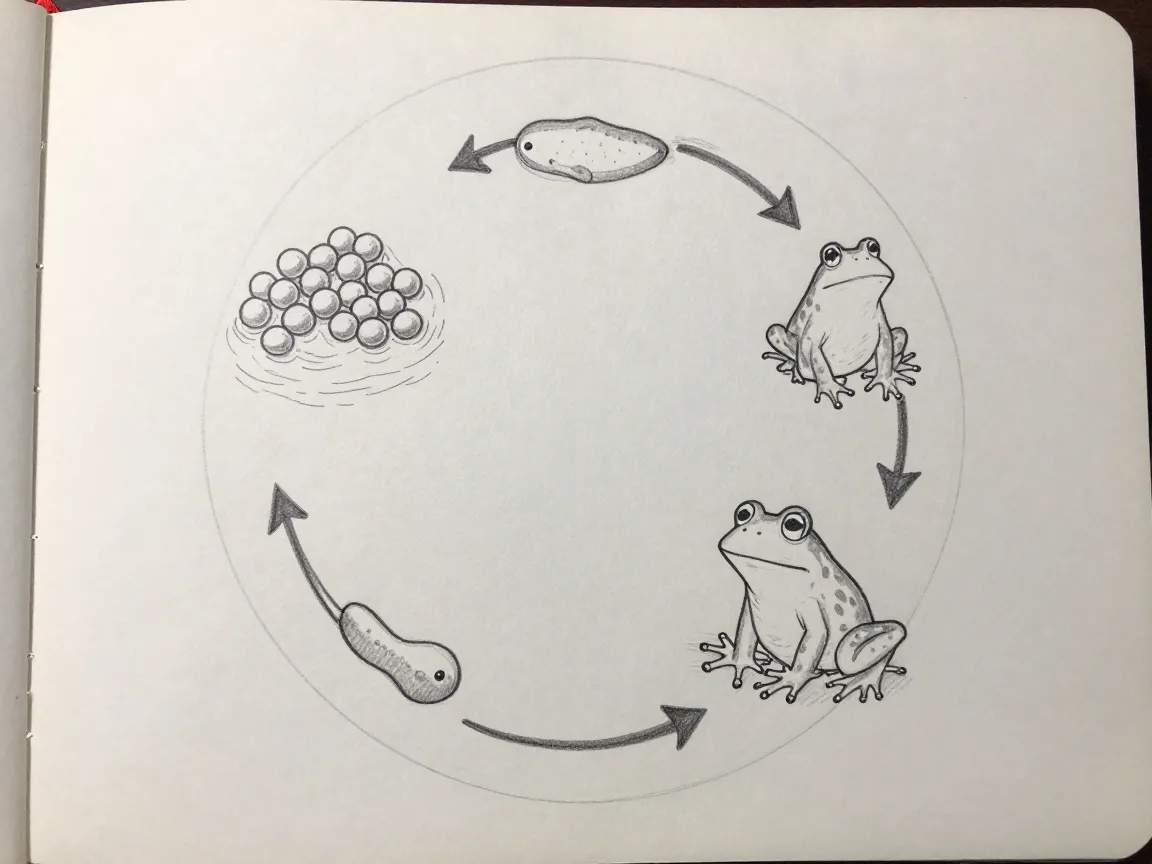
For artists looking to combine creative sketching with educational content, a frog life cycle diagram offers a structured and genuinely useful project. This idea arranges four stages, egg cluster, tadpole, froglet, and adult frog, around a circular layout connected by arrows showing the progression from one stage to the next.
Begin by lightly sketching a large circle to serve as a guide for placement. Draw the egg cluster at the top as a tight group of small circles, often shown floating in a patch of water. Moving clockwise, the tadpole stage is drawn as a small oval body with a long curved tail and no visible legs. The froglet stage shows a similar body shape but with small legs beginning to form and the tail shrinking. The final stage, the adult frog, uses the same construction from idea one, with full legs and no tail.
Arrows curving along the circle between each stage reinforce the cyclical nature of the diagram. Labels can be added beneath each stage if the project is intended for a school assignment, though the illustrations alone are often strong enough to stand as a piece of sketchbook art.
This project works well as a multi-panel exercise, since each stage can be practiced individually before being combined into the full diagram. It also demonstrates how the same basic skills used in simple cartoon frogs apply directly to more scientific or technical illustration, making it a valuable bridge between art and biology homework.
6. Vintage Line-Art Frog Template
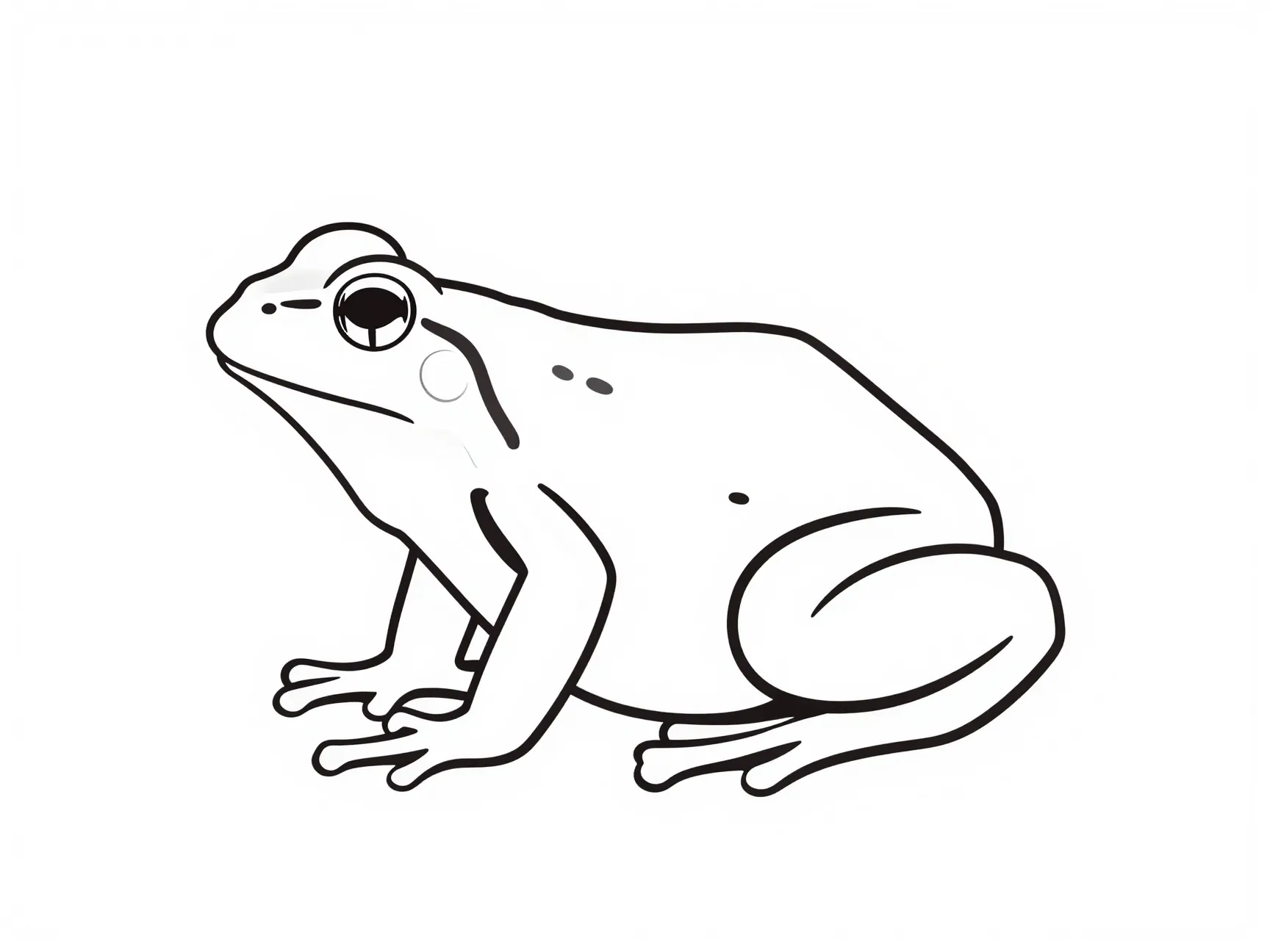
The final idea shifts away from cartoon styling toward clean, classic line art. Vintage-style frog outlines remain a notable category in 2026 drawing resources, often offered as printable templates meant for tracing, coloring, or mixed-media projects.
This style relies on smooth, continuous contour lines rather than the rounded, exaggerated shapes used in earlier ideas. Instead of oversized eyes and a wide cartoon smile, a vintage frog outline uses more naturalistic proportions, with a slightly elongated body, visible skin texture suggested through light cross-hatching, and eyes positioned more realistically along the sides of the head.
To draw this version, start with a light pencil outline establishing the overall silhouette, keeping lines clean and uninterrupted. Avoid heavy shading at this stage. Once the contour feels accurate, go over it with a slightly bolder line for the final outline, then add minimal interior detail, such as a few short lines along the back to suggest texture or folds in the skin.
This idea doubles as a practical resource. A finished line-art frog can be scanned or photocopied and reused as a coloring page, a base for watercolor or ink wash techniques, or a template for younger artists who want to focus on color and texture rather than construction. Among the 6 fun frog drawing ideas for your next sketch project, this one offers the most flexibility for mixed-media experimentation.
Tips For Bringing Your 6 Fun Frog Drawing Ideas For Your Next Sketch Project To Life
Technique matters as much as subject choice when sketching frogs. A few consistent adjustments can elevate any of the six ideas above from a flat cartoon into a more polished, dimensional drawing.
Focus on the eyes first. Oversized, bulging eyes are the primary way 2026 beginner tutorials achieve a “cute” or “silly” frog look. Adjusting eye size, pupil placement, and the angle of the mouth is often the fastest way to change a frog’s entire mood, shifting it from happy to surprised to shy without altering the body at all.
Build with simple shapes before refining details. Every idea in this list starts with the same foundation: ovals for the body, circles for the head, and sausage shapes for the legs. Locking in these basic proportions before adding fine details, such as webbed toes or skin texture, prevents the final drawing from looking lopsided.
Add shadow to suggest volume. Many updated 2026 tutorials recommend identifying a single light source, then building soft shadows underneath the body and along the legs. This small step moves a sketch away from a flat, purely cartoonish look toward something with more realistic depth, even within a simple cartoon style.
Reuse one base structure across multiple projects. Rather than designing a new frog from scratch for every idea, keep a consistent base template and simply change the pose, props, or background. This modular approach is one of the most efficient ways to build an entire themed sketchbook series without constantly restarting from a blank page.
Experiment with line weight. Thicker outlines around the frog’s silhouette, paired with thinner interior lines for details, create visual hierarchy and make the subject pop off the page, particularly useful for the character frog and vintage line-art ideas.
The table below summarizes how each core technique applies across the six ideas covered in this guide.
| Technique | Best Applied To | Quick Tip |
|---|---|---|
| Oversized eyes | Lily pad frog, character frog | Adjust pupil size for mood |
| Exaggerated limb bend | Leaping frog, dancing frog | Push the pose further than feels natural |
| Prop and costume variety | Character frog | Keep the base body identical each time |
| Scene composition balance | Multi-frog pond scene | Vary pose and size across frogs |
| Circular layout planning | Life cycle diagram | Sketch a guide circle before stages |
| Clean contour lines | Vintage line-art template | Avoid shading until outline is finalized |
Frequently Asked Questions
What is the easiest frog drawing idea for beginners?
The classic lily pad frog is widely considered the easiest starting point. It relies on basic ovals, circles, and a simple smile, with no need for complex shading or anatomy.
How can a frog drawing be made to look more dimensional instead of flat?
Adding shadows beneath the body and along the legs, based on a single identified light source, is the most effective way to suggest volume without changing the overall cartoon style.
Are character frogs with costumes suitable for greeting cards?
Yes. Costumed frogs with props like crowns, hearts, or musical instruments are commonly used for birthday and friendship cards, often paired with frog-related puns.
What age group is the frog life cycle diagram best suited for?
This idea works well for school-age children completing science projects, but it is also a useful sketching exercise for any artist interested in combining illustration with educational content.
Can one frog template be reused across all six ideas?
Yes. A single base structure, built from ovals and circles, can be adapted into nearly every idea on this list simply by changing the pose, adding props, or adjusting the line style.
Conclusion
Frog drawing remains one of the most approachable and endlessly adaptable subjects for sketchers of any skill level. The 6 fun frog drawing ideas for your next sketch project outlined above, the classic lily pad frog, a leaping or dancing frog in motion, a costumed character frog, a multi-frog pond scene, a frog life cycle diagram, and a vintage line-art template, offer a clear progression from simple shapes to more advanced composition and technical illustration.
The most practical next step is to pick one idea, sketch it once using only basic shapes, and then revisit it a second time with added shading, props, or background detail. Repeating this process across all six ideas builds a well-rounded sketchbook series using a single reusable frog structure, proving that a handful of ovals and circles can support an entire season of creative drawing practice.