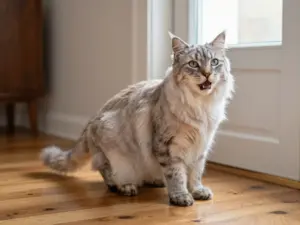
Orange Cat Drawing Projects That Showcase Their Fiery, Friendly Personality
An orange cat’s face contains almost no straight lines. Every curve, from the rounded cheeks to the sweeping tail stripes, seems built for warmth. That is likely why beginner art tutorials keep returning to this one coat color again and again, even though no single brand or platform has claimed it as an official series. The demand is real, the visual language is consistent, and the personality payoff is enormous for a relatively simple subject.
Disclosure: This post contains affiliate links. As an Amazon Associate, we earn from qualifying purchases, and at no extra cost to you.
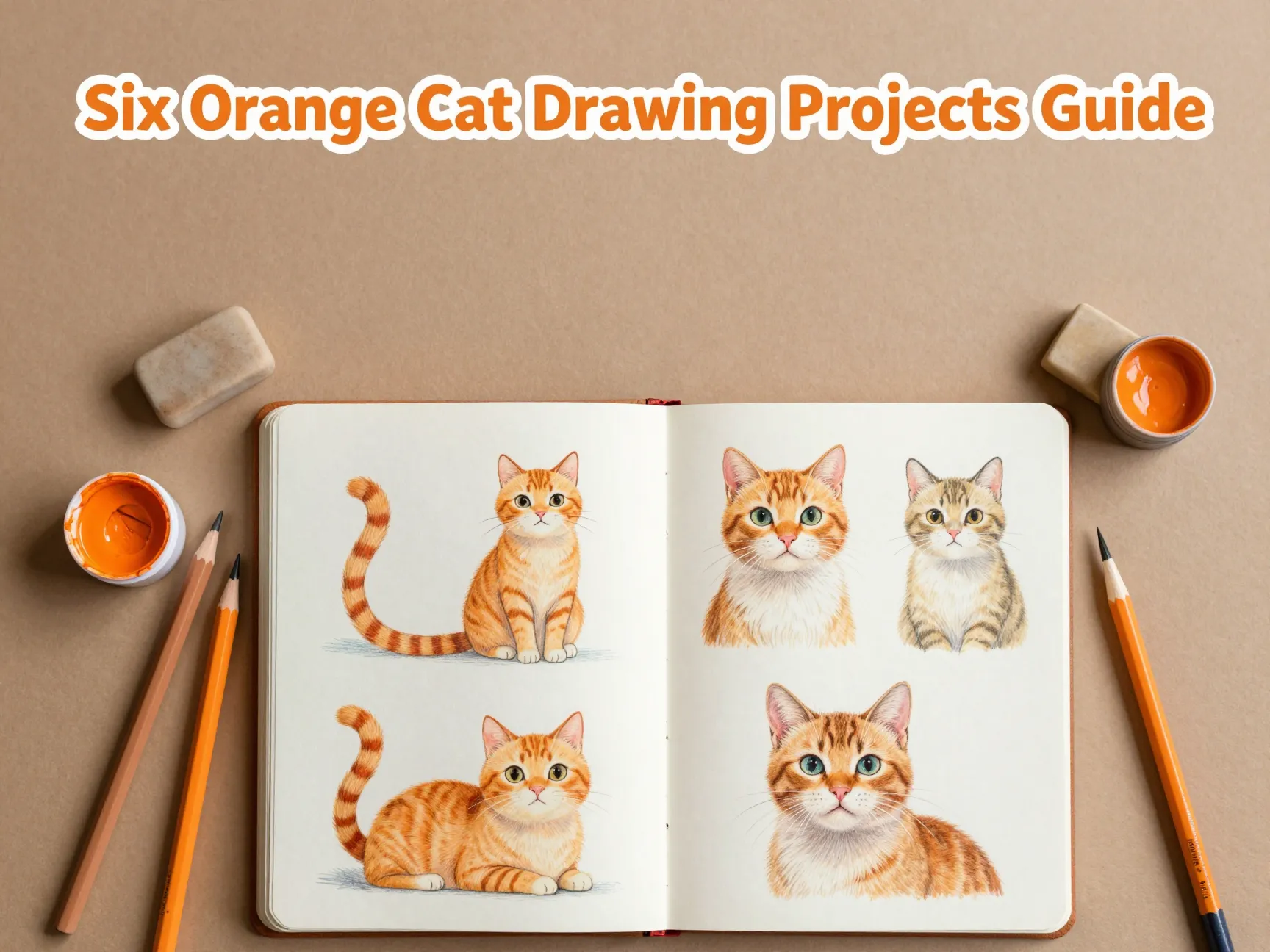
This guide organizes that scattered enthusiasm into one clear plan. The 6 Orange Cat Drawing Projects That Showcase Their Fiery, Friendly Personality outlined below move from a five-minute cartoon sketch to a layered colored pencil study, so artists of any skill level can pick a starting point and grow from there. Each project focuses on a specific technique, whether that is shaping a expressive “W” mouth, building believable tabby stripes, or layering warm tones to mimic fur that almost glows.
Key Takeaways
- Orange coloring is one of the most common choices in current cat-drawing tutorials because warm hues instantly signal a friendly, energetic personality.
- The 6 Orange Cat Drawing Projects That Showcase Their Fiery, Friendly Personality progress from simple cartoon shapes to detailed colored pencil and paint studies, so skill level is never a barrier to starting.
- Basic supplies work for every project on this list: regular pencils, erasers, paper, and optionally colored pencils, markers, or oil pastels.
- Facial features like large eyes, a rounded “W” mouth, and pink inner ears do more to convey friendliness than complex anatomy.
- Building fur color in layers, from yellow to orange to brown, is the key technique for a richer, more “fiery” finished look.
Why Orange Cats Dominate Cute Cat Art
Search any recent batch of beginner cat tutorials and orange keeps appearing as the default color choice, even in guides that never mention cat breeds by name. One widely used cute-cat guide recommends warm orange fur paired with a white belly, white paws, a white muzzle, pink inner ears, and dark round eyes specifically to create a friendly, lively look. Another simple tutorial aimed at kids and beginners suggests sketching a basic cat shape first, then coloring it orange with optional stripes, treating the color itself as shorthand for a playful character.
This pattern is not an accident of taste. Warm colors read as approachable in visual psychology, and orange sits right in the middle of the warm spectrum, energetic like red but softer and less alarming. Pinterest boards dedicated to orange cat art, some with more than 900 saved pins and still gaining new activity, show the same visual formula repeated across countless illustration styles: rounded bodies, oversized eyes, and confident, sometimes chunky poses. The color does the emotional work while the shapes stay simple enough for any skill level.
That combination, simple shapes plus emotionally loaded color, is exactly what makes orange cats such a strong foundation for a structured project series. Each of the 6 Orange Cat Drawing Projects That Showcase Their Fiery, Friendly Personality below leans on this same principle but pushes the technical skill a little further each time.
The 6 Orange Cat Drawing Projects That Showcase Their Fiery, Friendly Personality
The projects are ordered by difficulty, not importance. Someone brand new to drawing can start at project one and finish with a finished piece in under fifteen minutes. Someone chasing a more polished, gallery-ready result can skip ahead to the colored pencil or painting projects near the end. All six can be completed with tools already sitting in most homes: pencils, erasers, paper, and a basic set of colored pencils or markers.
1. The Round and Friendly Cartoon Cat
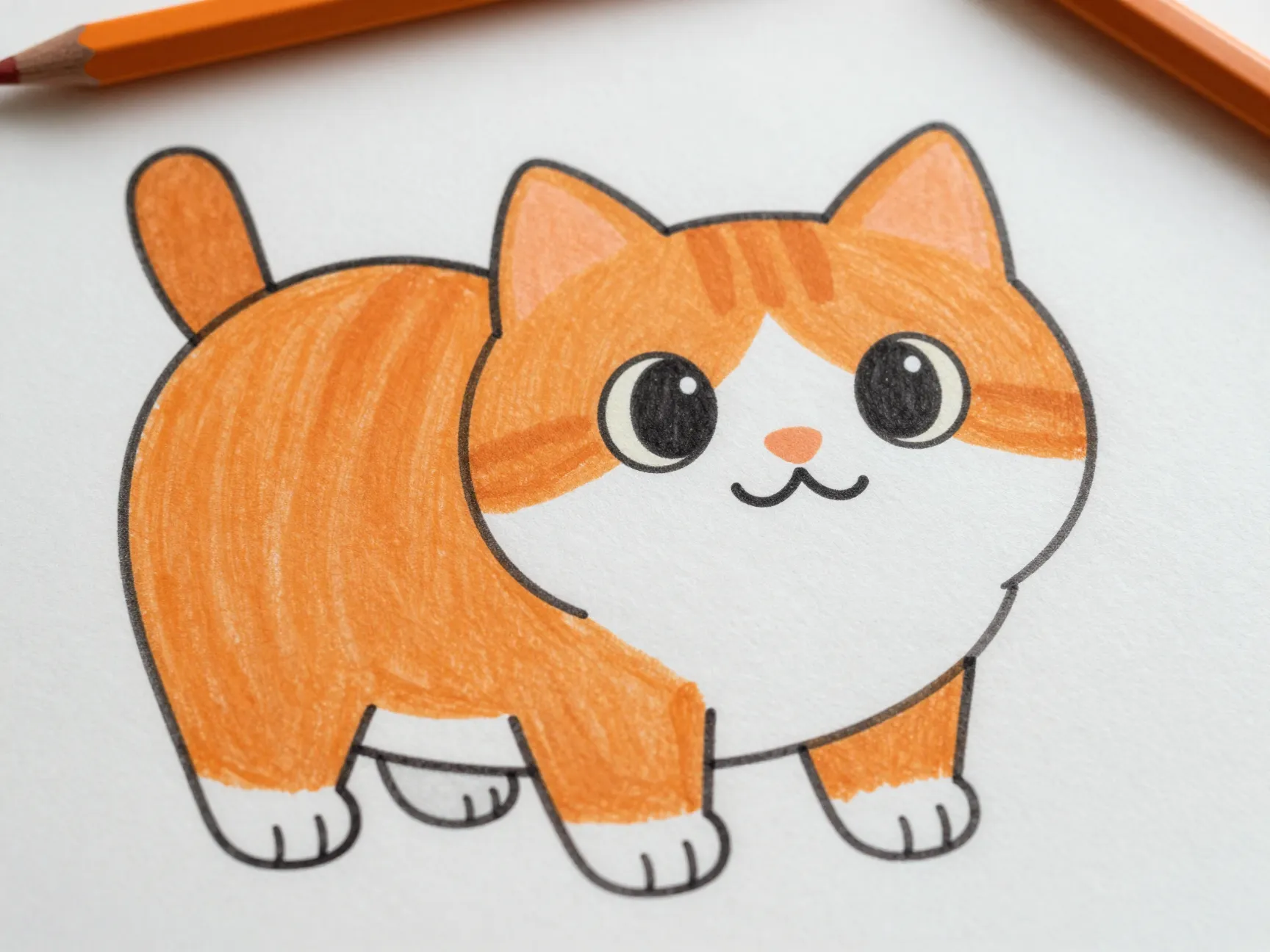
This is the fastest entry point and the one most beginner-focused YouTube tutorials build around. The body starts as a large circle or rounded oval, the head as a slightly smaller circle overlapping it, and the legs as short stubby shapes tucked underneath. Large almond-shaped eyes take up nearly a third of the face, paired with a small triangular nose and a gentle curved smile.
The friendliness comes almost entirely from proportion. Bigger eyes relative to the head, combined with rounded rather than angular body shapes, trigger the same “cute” response that makes baby animals appealing. Once the pencil outline is done, filling the body with solid orange and leaving the belly, paws, and muzzle white completes the classic friendly orange cat look. This project takes ten to fifteen minutes and needs nothing more than paper, a pencil, and orange coloring tools.
2. The Expressive Tabby Face Study
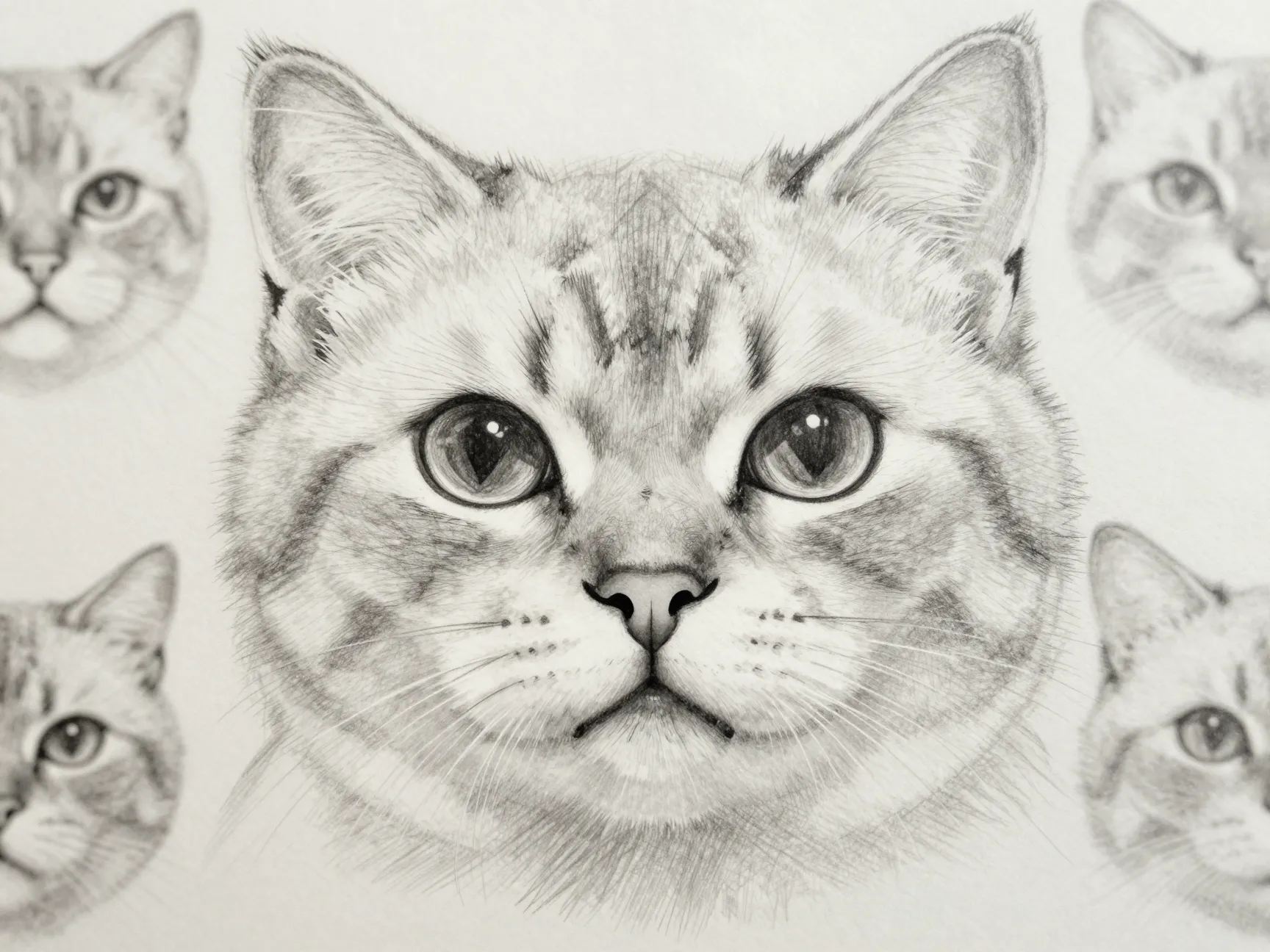
Where project one focuses on the whole body, this second project zooms in entirely on the face. A detailed orange tabby guide widely used in step-by-step tutorials builds the head as an oval, adds a triangular nose, then constructs the mouth using a distinctive “W” shape below the nose, two soft curves that read instantly as a content, slightly smiling expression.
Small fur tufts drawn as jagged little triangle clusters along the cheeks and chin add texture without requiring advanced shading skills. The eyes get extra attention here: rounder shapes suggest a calm, friendly cat, while slightly narrowed almond shapes suggest alertness or mischief, the “fiery” half of the personality equation. Practicing three or four versions of this same face with different eye shapes is one of the fastest ways to learn how much expression comes from just a few adjusted lines.
3. The Striped and Structured Tabby Body
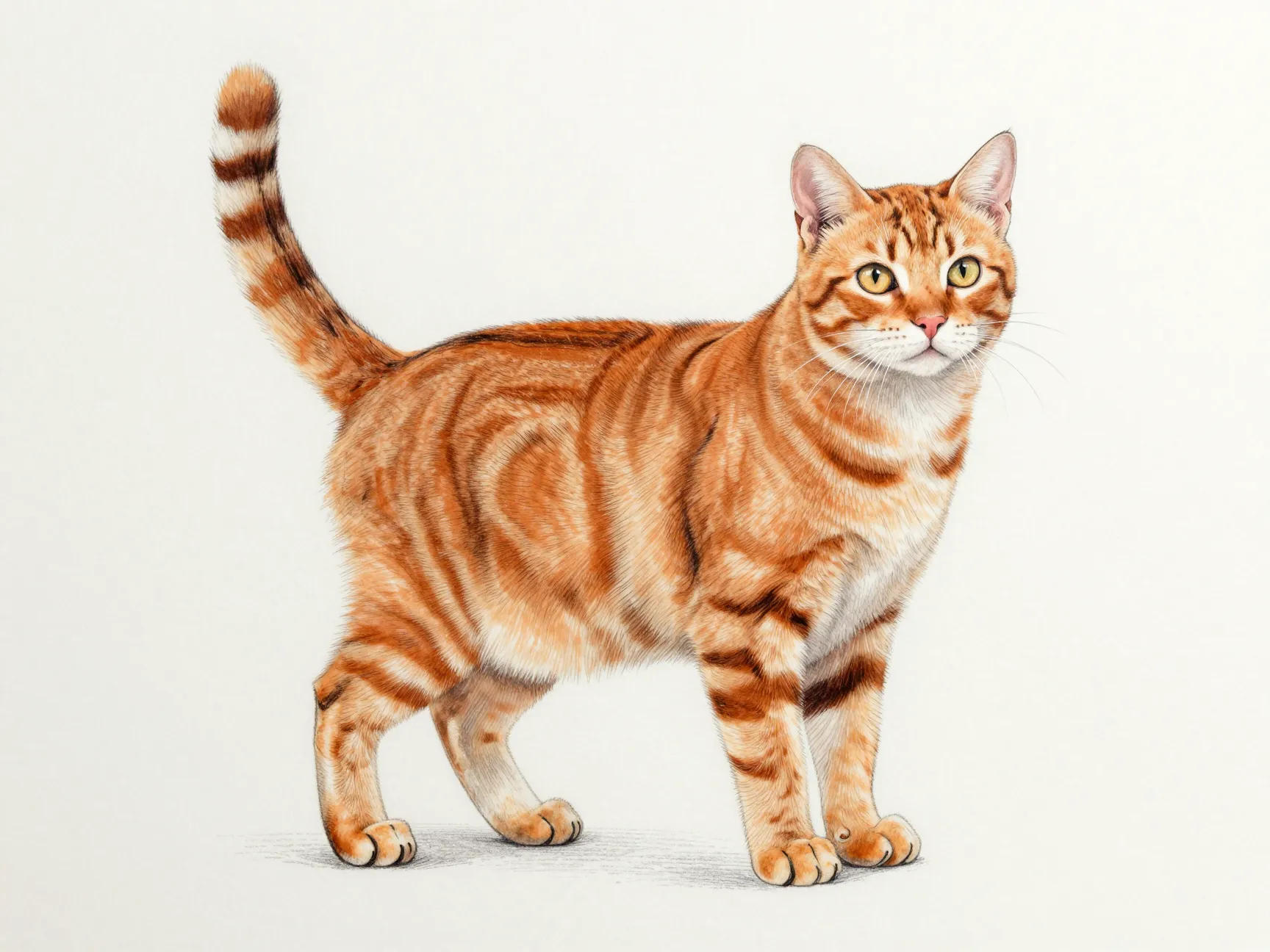
This project extends the face study into a full standing or sitting pose, with the classic orange tabby markings layered across the entire body. Stripes are not random scribbles; they follow the direction of the body’s form, curving slightly around the shoulders, running down the legs in narrower bands, and wrapping the tail in evenly spaced rings that taper toward the tip.
Getting the stripe placement right is the main technical skill here. A useful trick borrowed from structured tutorials is to lightly sketch the body shape first, then draw stripe guidelines as faint curved lines before committing to darker ink or colored pencil strokes. This keeps the pattern looking natural rather than pasted on. The tail in particular carries a lot of personality: a tail held high and slightly curved reads as confident and friendly, while a puffed-out tail suggests startled energy, useful if a project calls for a more spirited, fiery pose.
4. The Dynamic Action Pose
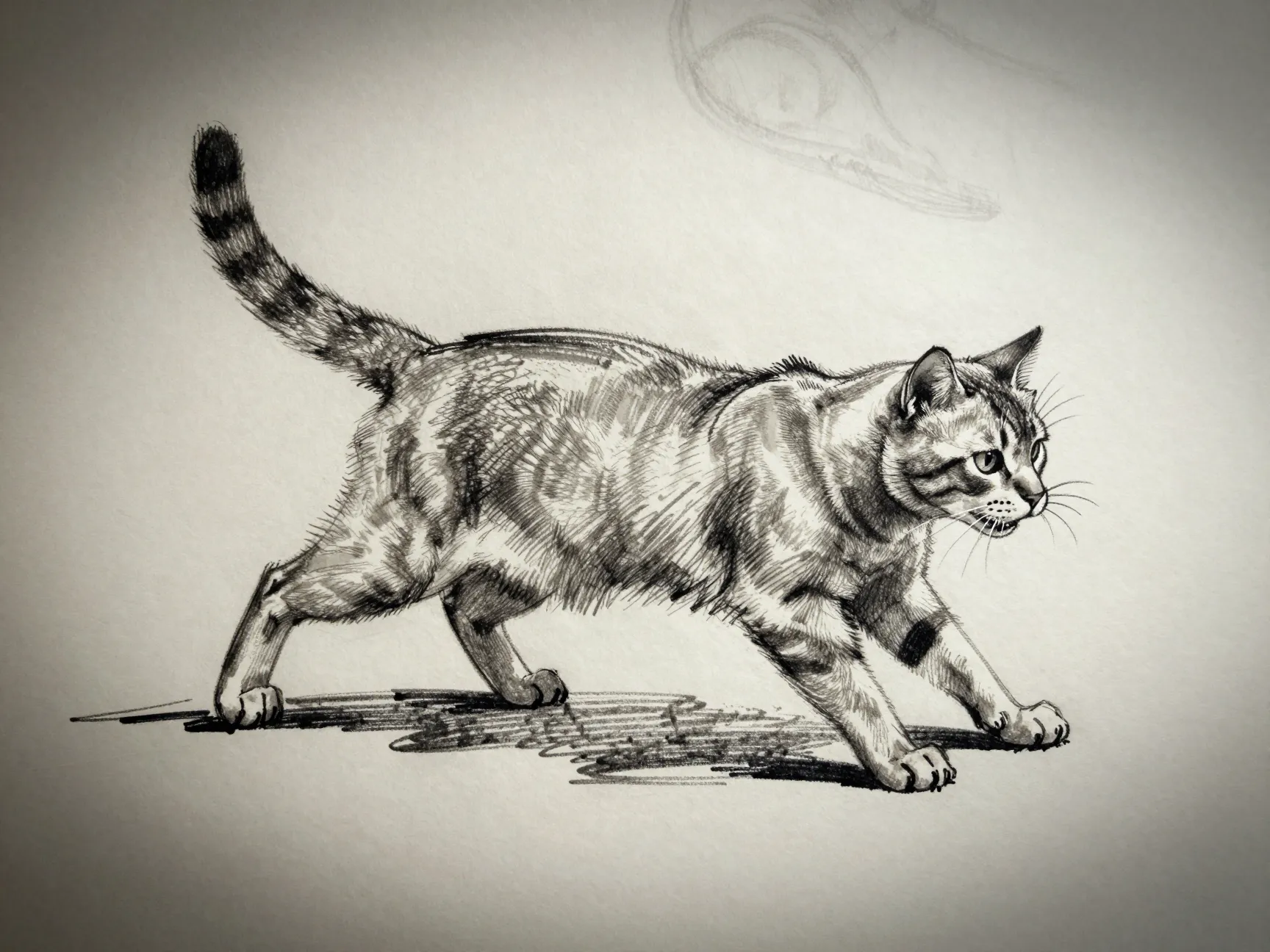
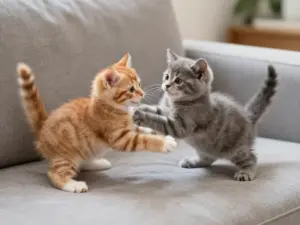
Static sitting cats are the easiest to draw, but a stretching, pouncing, or mid-jump cat communicates far more energy, which is exactly the “fiery” half of this project list. This project asks the artist to sketch the cat’s spine as a single curved line first, almost like a stretched letter S, then build the body around that spine rather than starting with a static oval.
Limbs extended in different directions, a slightly open mouth, and ears pinned forward instead of relaxed all combine to suggest motion and excitement. This is a noticeably harder project than the first three because balance and proportion matter more once the pose leaves a simple sitting position. Working from reference photos of real cats stretching or playing, even briefly, makes a significant difference in how convincing the final pose looks.
5. The Layered Colored Pencil Portrait
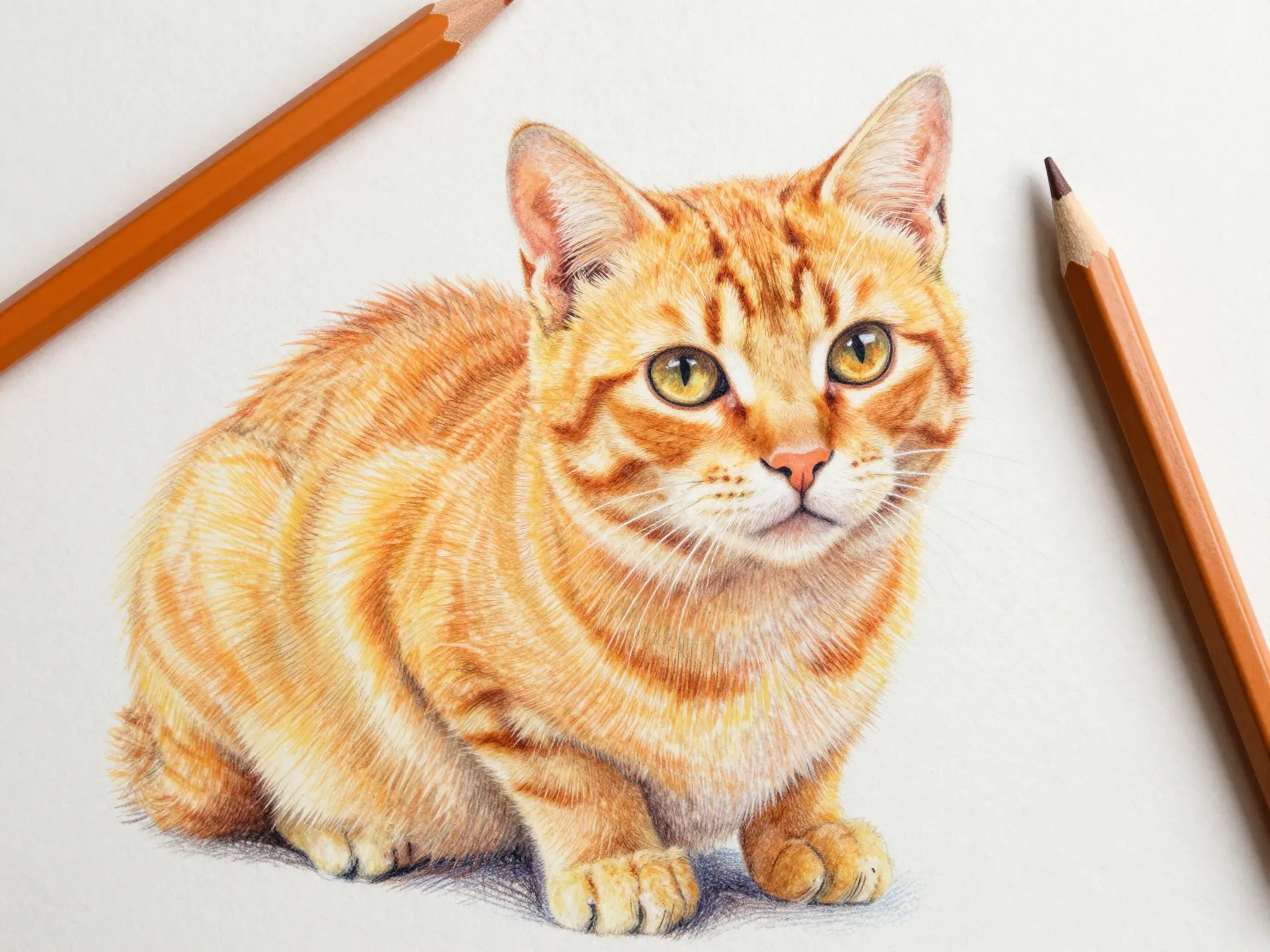
Structured online classes dedicated specifically to drawing orange tabby cats in colored pencils exist for a reason: flat orange coloring only goes so far before it starts looking one-dimensional. This fifth project introduces true layering. Instead of picking one orange pencil and shading everything with it, the technique calls for building fur in passes, starting with a light yellow base, adding orange over the mid-tones, and finishing with small strokes of brown or burnt sienna along shadowed areas like under the chin, inside the ears, and where the legs meet the body.
Short, directional pencil strokes that follow the direction fur would actually grow, rather than smooth circular shading, create a much more convincing texture. This project takes considerably longer than the earlier ones, often an hour or more for a detailed head-and-shoulders portrait, but the payoff is a noticeably more “fiery” and dimensional coat compared to the flat color of project one.
6. The Full Painted Composition
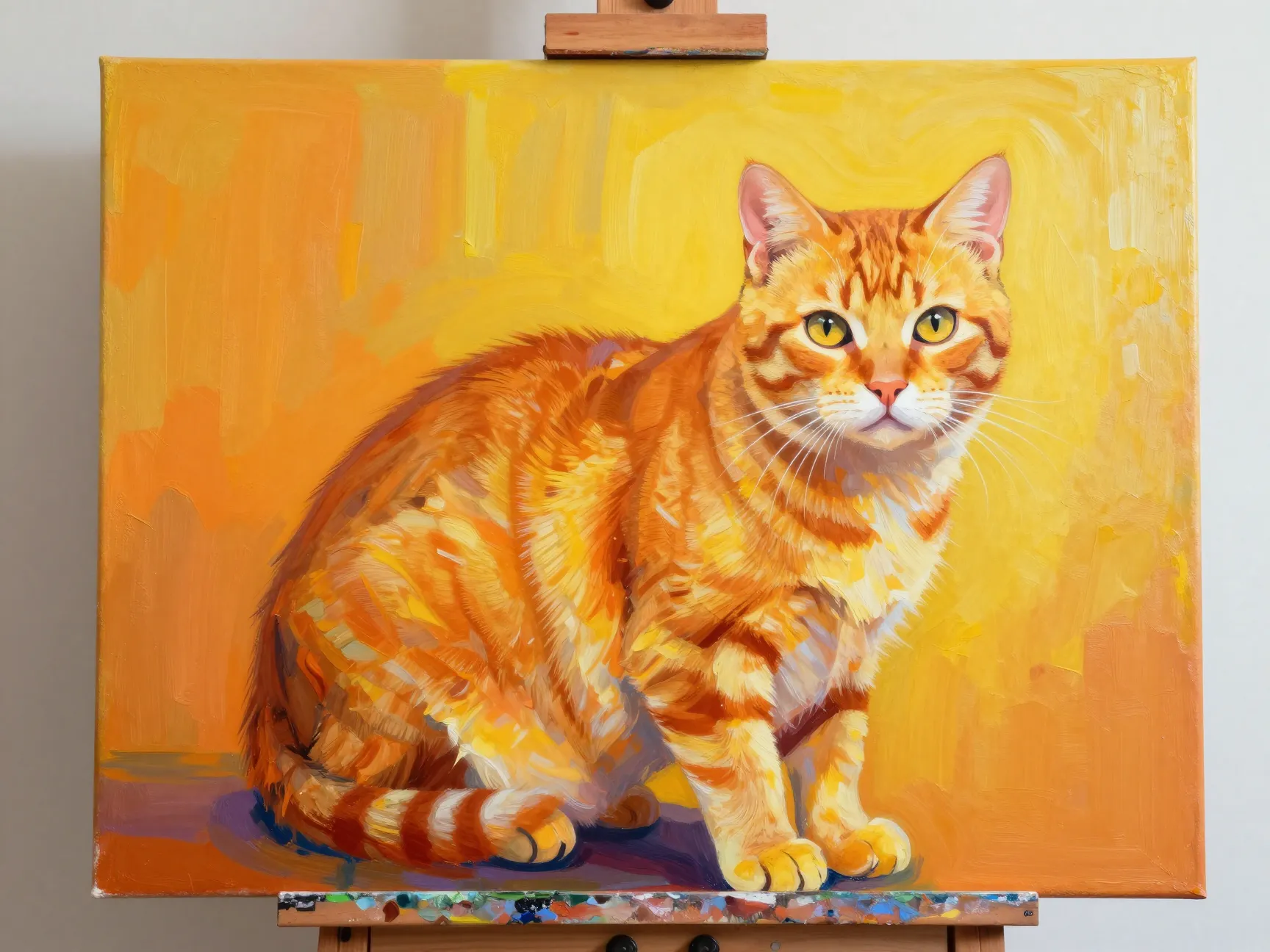
The final project moves beyond pencil entirely into paint, whether that is watercolor, acrylic, or gouache. Documented painting processes for orange cats describe building the fur through successive layers of yellow, orange, and brown paint, often against a bold or even rainbow-toned background to maximize contrast and visual energy. The background choice matters as much as the cat itself here; a warm-toned or high-contrast backdrop pushes the “fiery” quality of the orange fur even further, while a soft pastel background emphasizes the “friendly” side instead.
This project works well as a capstone piece after completing the first five, since it borrows the proportion lessons from project one, the facial expression work from project two, the stripe placement from project three, the sense of motion from project four, and the layering discipline from project five, all combined into one finished composition.
Choosing the Right Project From the 6 Orange Cat Drawing Projects That Showcase Their Fiery, Friendly Personality
Not every artist needs to complete all six in order. The table below breaks down which project fits which goal, so it is easier to jump straight to the most useful starting point.
| Project | Best For | Time Needed | Main Skill Practiced |
|---|---|---|---|
| 1. Round Cartoon Cat | Absolute beginners, kids | 10-15 minutes | Basic proportion |
| 2. Expressive Tabby Face | Learning facial expression | 15-25 minutes | Eyes and mouth shapes |
| 3. Striped Tabby Body | Pattern and markings | 20-30 minutes | Stripe placement |
| 4. Dynamic Action Pose | Adding energy and motion | 30-45 minutes | Body dynamics |
| 5. Colored Pencil Portrait | Realistic fur texture | 45-90 minutes | Layered shading |
| 6. Full Painted Composition | Capstone, display-ready art | 1-3 hours | Color layering and background design |
A reasonable approach for most learners is to work through the list roughly in order across a week or two, spending one sitting on each project. Skipping straight to project five or six without practicing the earlier proportion and expression lessons usually leads to frustration, since the fundamentals from the first three projects show up again in every later one.
Tools That Work for Every Project on This List
One of the most reassuring facts about orange cat drawing tutorials is how little specialized equipment they require. Across beginner sketches, structured face studies, and advanced colored pencil classes, the recommended tools stay almost identical:
- Regular graphite pencils in at least two hardness levels, one soft for shading and one firm for clean outlines
- A good eraser, ideally a kneaded one for lifting highlights without smudging
- Standard drawing or sketch paper, though slightly textured paper helps colored pencil layers grip better
- A basic set of colored pencils in yellow, orange, brown, and white, or alternatively markers or oil pastels for projects one through four
- Optional watercolor or acrylic paint and a few brushes only for project six
Nothing on this list requires a trip to a specialty art store. This accessibility is a major reason the orange cat subject has stayed popular across so many different tutorial formats, from quick YouTube videos aimed at kids to more structured paid classes for adults refining shading technique.
Tips for Capturing Both the Fiery and Friendly Sides
Balancing two seemingly opposite qualities, fierce energy and approachable warmth, in a single drawing is the real creative challenge behind this whole project list. A few consistent techniques help across all six projects:
Keep the eyes rounder and slightly larger for a friendlier read, or narrow them slightly and add a touch more distance between the eyebrows for a more spirited, alert expression. Ear position matters just as much as eye shape; relaxed ears angled outward suggest calm friendliness, while ears pointed straight up and slightly forward suggest excitement or curiosity. Tail position, when included, offers a third lever: a loosely curved tail held at medium height feels relaxed and friendly, while a raised, slightly puffed tail signals energy and alertness.
Color intensity plays a role too. A softer, more muted orange paired with plenty of white on the belly and paws leans friendly and approachable. A deeper, more saturated orange with minimal white, especially when combined with darker brown stripe accents, leans more toward the fiery, high-energy end of the spectrum. None of these adjustments require redrawing the whole cat; they are small, deliberate choices layered onto the same basic shapes covered across the six projects.
Frequently Asked Questions
Do these projects require any special art training?
No. All six projects use techniques found in beginner-friendly tutorials, and the first three are specifically designed for kids and first-time artists. The later projects add more nuance but still rely on skills built in the earlier ones.
What is the easiest way to make an orange cat drawing look friendly rather than aggressive?
Focus on rounder eyes, a gentle curved or “W”-shaped mouth, and plenty of white on the belly, paws, and muzzle. These three elements do most of the work regardless of which project is being attempted.
Can these projects be done digitally instead of on paper?
Yes. Every technique described, from basic shapes to layered shading, translates directly to digital drawing software. The core skills around proportion, expression, and color layering stay the same regardless of medium.
How long does it take to get through all six projects?
Working at a relaxed pace, most artists can complete the full set of 6 Orange Cat Drawing Projects That Showcase Their Fiery, Friendly Personality within one to two weeks, dedicating a single sitting to each project.
Is orange the only coat color that works for this kind of project series?
Orange is used consistently in current tutorials because the warm tone reads as friendly and energetic almost automatically, but the same techniques, proportion, expression, stripes, motion, and layered shading, apply to any coat color.
Conclusion
Orange cats have earned their spot as one of the most requested subjects in beginner and intermediate art tutorials, and for good reason. The color itself does emotional work that other coat tones simply cannot match as efficiently, cueing warmth and energy before a single line is even drawn. The 6 Orange Cat Drawing Projects That Showcase Their Fiery, Friendly Personality outlined in this guide give that popular subject a clear, progressive structure, moving from a ten-minute cartoon sketch to a fully layered colored pencil or painted portrait.
The most practical next step is simple: pick up a pencil, start with project one, and resist the urge to jump straight to the advanced projects. Each step in this list builds a skill the next one depends on, whether that is proportion, expression, pattern placement, motion, or color layering. By the time project six is finished, the fundamentals learned along the way will show up in every future drawing, orange cat or otherwise.