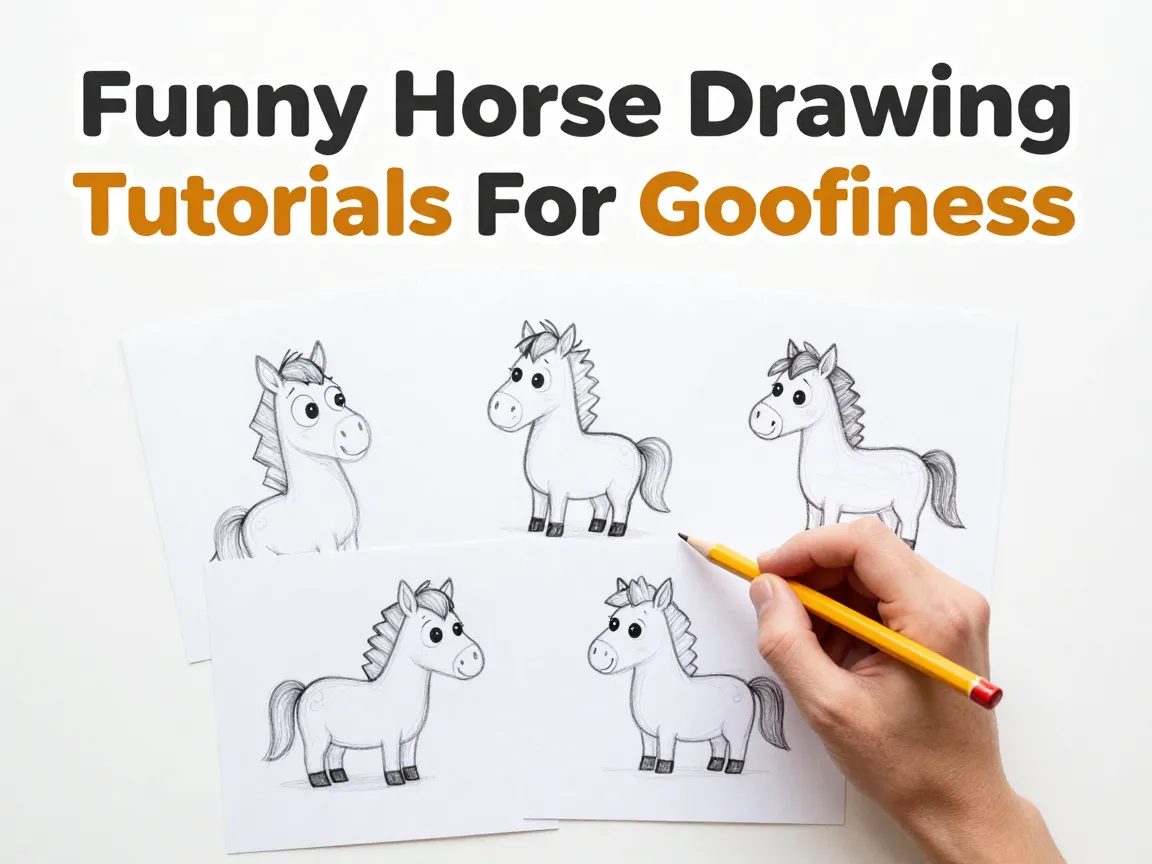
Funny Horse Drawing Tutorials To Master For Maximum Goofiness
A horse has roughly 205 bones, four legs that move in independent rhythms, and a head shape that trips up even seasoned illustrators. Yet somehow, the internet’s goofiest horse sketches, wall-eyed, buck-toothed, built from nothing but circles and squiggles, get more shares than technically perfect anatomical studies. That contradiction is exactly why mastering a handful of deliberately silly techniques matters more than chasing realism. This guide to 6 Funny Horse Drawing Tutorials To Master For Maximum Goofiness pulls together the clearest, most beginner-friendly methods circulating right now, so anyone with a pencil and a sense of humor can produce a horse that makes people laugh on purpose.
Disclosure: This post contains affiliate links. As an Amazon Associate, we earn from qualifying purchases, and at no extra cost to you.
Whether the goal is a quick doodle for a greeting card, a classroom art project, or a stylized social media post, these tutorials strip away the intimidation factor of equine anatomy and replace it with shapes a five-year-old could trace. The result is a repeatable system for drawing horses that look charmingly wrong in all the right ways.
Key Takeaways
- The best funny horse tutorials simplify anatomy into basic shapes like circles, U-shapes, and ovals before any exaggeration happens.
- Maximum goofiness usually comes from exaggerating just one or two features, an oversized muzzle, tiny legs, or saucer-sized eyes, rather than distorting the whole body.
- Beginner-focused video and web tutorials from 2026 consistently emphasize slow pacing, bold outlines, and step-by-step shape building.
- Bright, non-realistic color choices (pink snouts, yellow manes, purple coats) reinforce the comedic, cartoonish tone of a finished sketch.
- Practicing all 6 Funny Horse Drawing Tutorials To Master For Maximum Goofiness builds a flexible toolkit that works for kids, hobbyists, and content creators alike.
Why Goofy Horse Drawings Are Trending in 2026
Cartoon horses have always had a place in children’s art lessons, but 2026 has seen a noticeable surge in short, humor-driven tutorials across multiple platforms. A widely circulated YouTube video published in late January 2026 and updated again in February markets itself directly at “total beginners,” promising a funny horse that anyone can finish in a single sitting. Around the same time, short-form video platforms began hosting bite-sized “horse art project” clips that walk viewers through sketching playful horse outlines on canvas in under a minute, signaling that quick, stylized animal drawing has found a comfortable home in the scroll-and-watch format of modern social apps.
This trend is not random. Funny, simplified horse drawing solves a real problem: realistic horses are notoriously hard to get right, and a slightly “off” result in a realistic style often looks unsettling rather than endearing. Cartoon and goofy styles sidestep that trap entirely. A horse with a stubby neck, saucer eyes, or a mane drawn as jagged triangles reads as intentional and charming, even from an artist who has never picked up a sketchbook before. That forgiving quality is precisely why so many kids’ drawing channels, craft blogs, and beginner-focused creators keep returning to the same humor-first approach, and why a curated list of 6 Funny Horse Drawing Tutorials To Master For Maximum Goofiness is more useful now than a single generic “how to draw a horse” guide.
The 6 Funny Horse Drawing Tutorials To Master For Maximum Goofiness
Each tutorial below draws on a real, actively updated resource and highlights the specific technique that makes it stand out for comedic effect. They are ordered roughly from easiest to slightly more involved, so beginners can start at the top and work down as confidence builds.
1. The Total Beginner Funny Horse From the 2026 Step-By-Step Video Tutorial
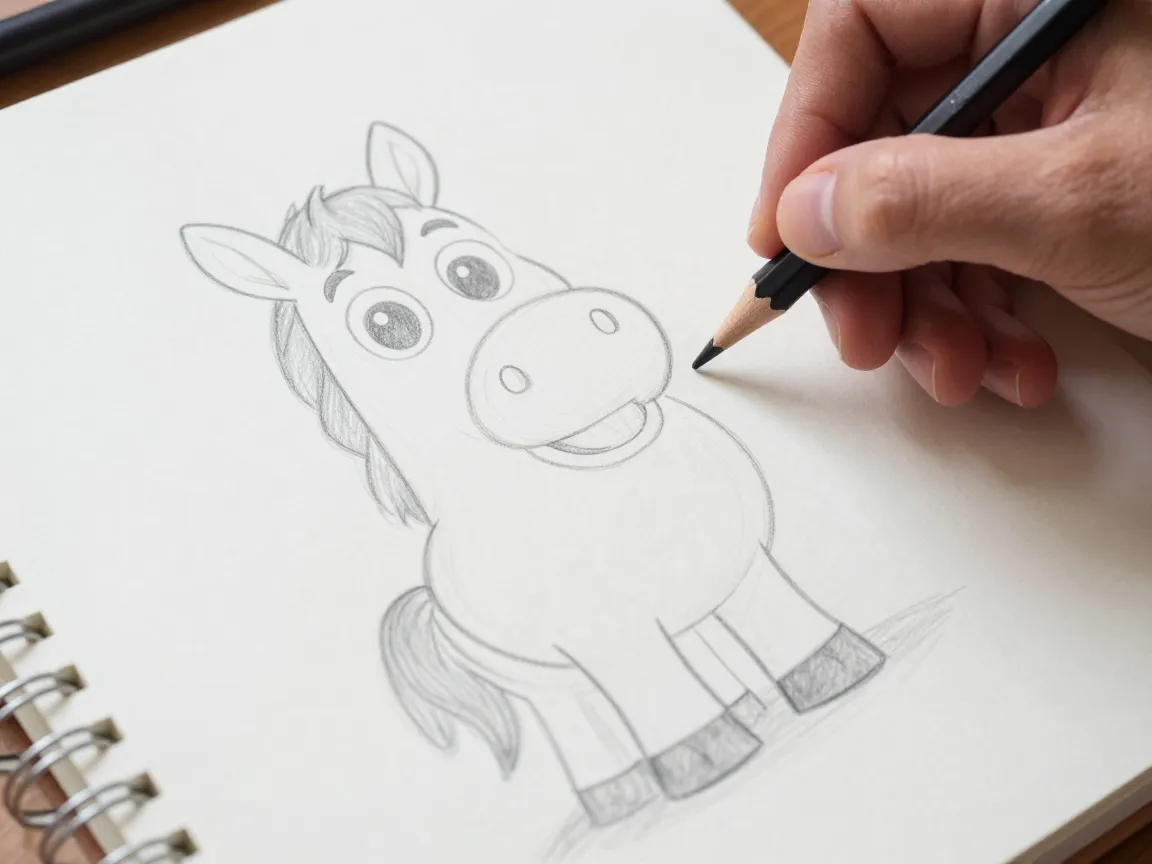
This widely watched YouTube lesson, first published in January 2026 and refreshed again the following month, is built specifically for people who have never drawn an animal before. It breaks the horse into a handful of rounded shapes, walks through the head and snout first, then adds a simplified body and legs. The tutorial leans into humor by encouraging slightly oversized eyes and a relaxed, open-mouthed expression rather than a serious equine stare.
What makes this one worth mastering first is its pacing. Every stroke is isolated and explained before moving to the next, which means mistakes are easy to catch early rather than compounding into a messy final sketch. For anyone intimidated by the idea of drawing animals at all, this is the lowest-friction entry point into the list.
2. The Snapchat-Style Quick Sketch Horse Outline
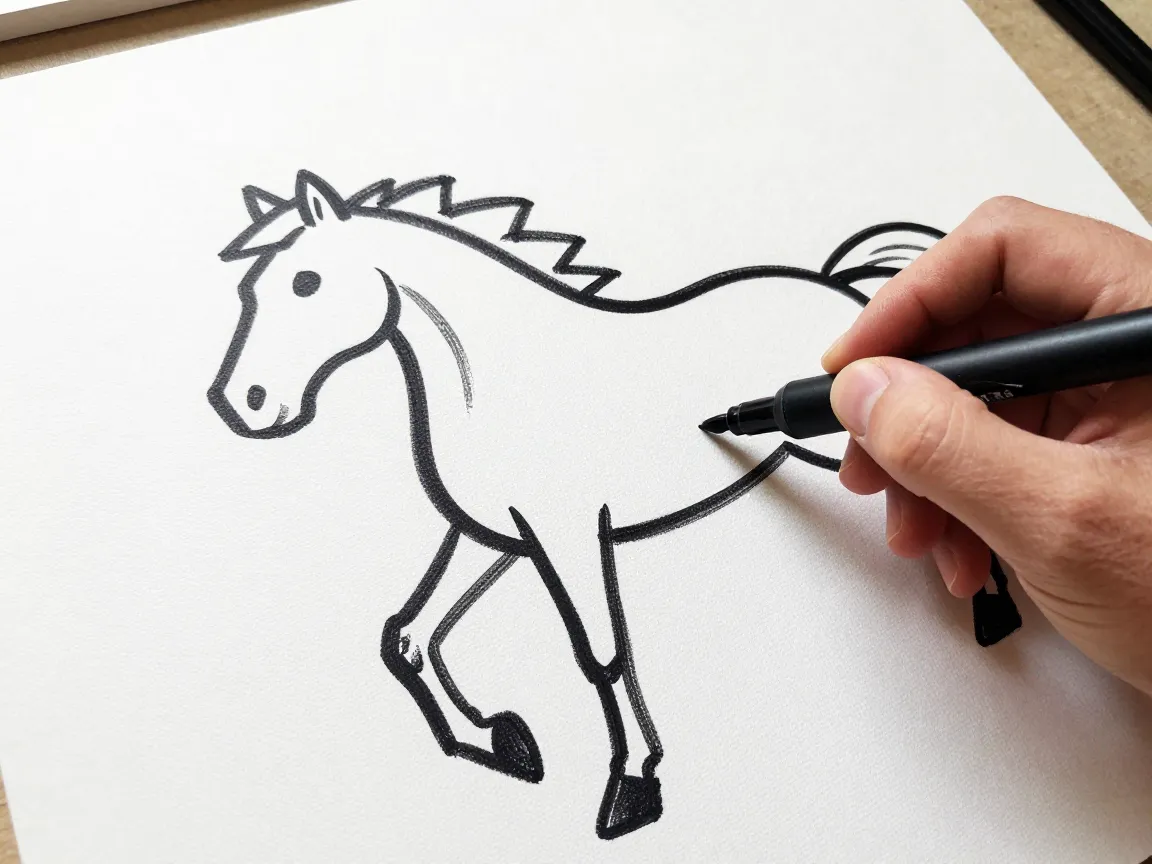
Short-form “Horse Art Project” clips that appeared on Snapchat in mid-2026 take a different approach: close-up, real-time footage of a pencil sketching a horse outline directly onto canvas. There is no long narration, just a hand moving confidently through the shape of a stylized horse head and body.
The goofiness here comes from speed and looseness. Because the clips are short, the lines are quick and slightly imperfect, which naturally produces a loose, cartoonish feel rather than a stiff, overworked drawing. This tutorial style is ideal for anyone who wants to practice drawing a funny horse in one quick burst rather than following a long, structured lesson. It also reflects how horse drawing content has moved into newer, faster-consumption platforms throughout 2026.
3. The Classic Cartoon Horse Built From Circles and U-Shapes
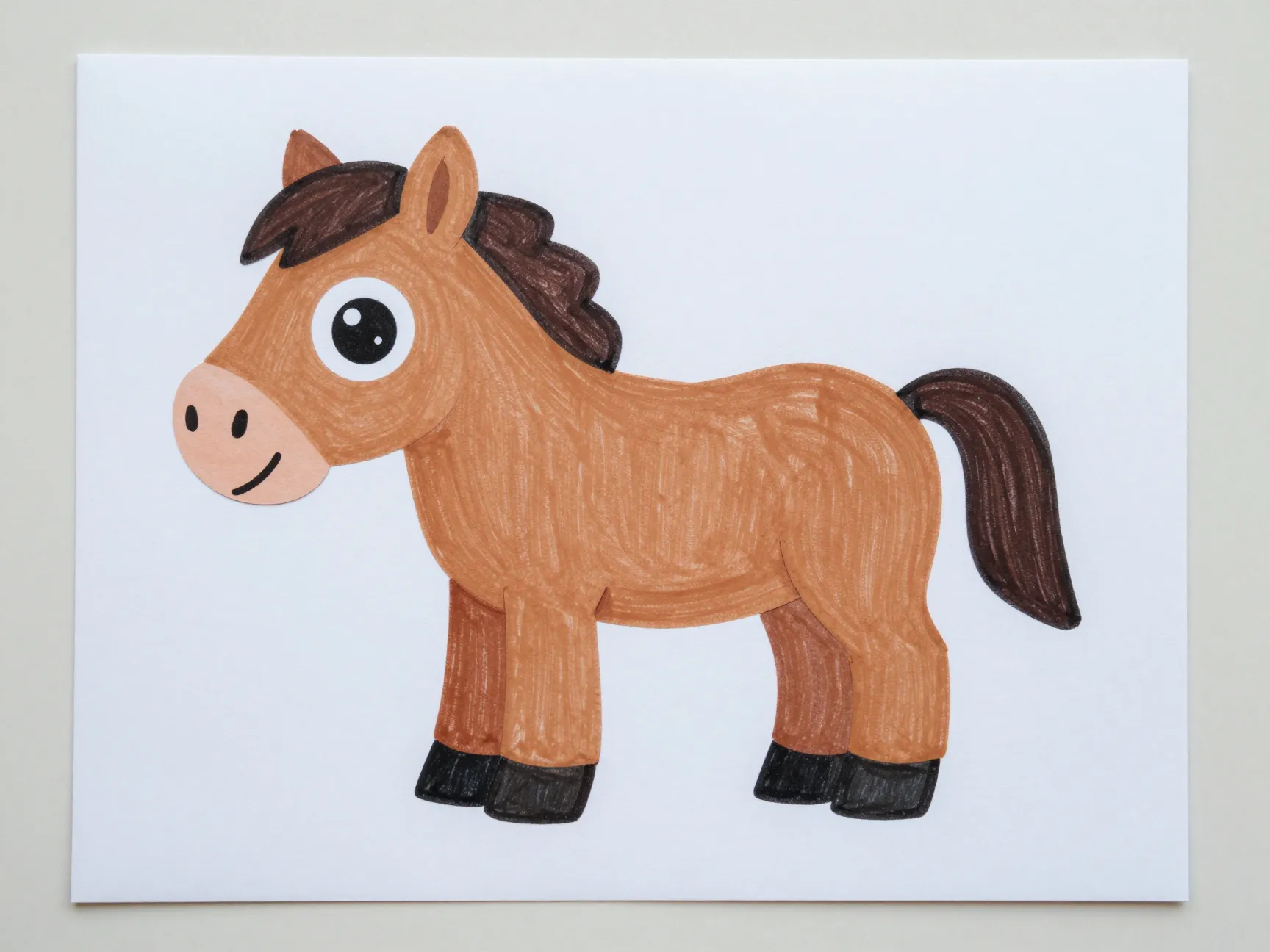
A long-running kids’ drawing channel video, originally posted in 2017 and still being updated as recently as October 2026, remains one of the most reliable entry points for younger artists. The method is refreshingly simple: a circle for the head, a U-shape wrapped around the eye for the brow and cheek, and basic rounded shapes for the body and legs.
Because the underlying structure is so forgiving, this tutorial is extremely easy to push toward maximum goofiness. Widening the U-shape around the eye instantly creates a surprised or silly expression. Shrinking the legs relative to the body produces a stubby, comical stance. This is a foundational technique worth practicing even after moving on to more advanced styles, since it teaches shape-based thinking that supports every other tutorial on this list.
4. EasyPeasyAndFun’s Nine-Step No-Fail Cartoon Horse
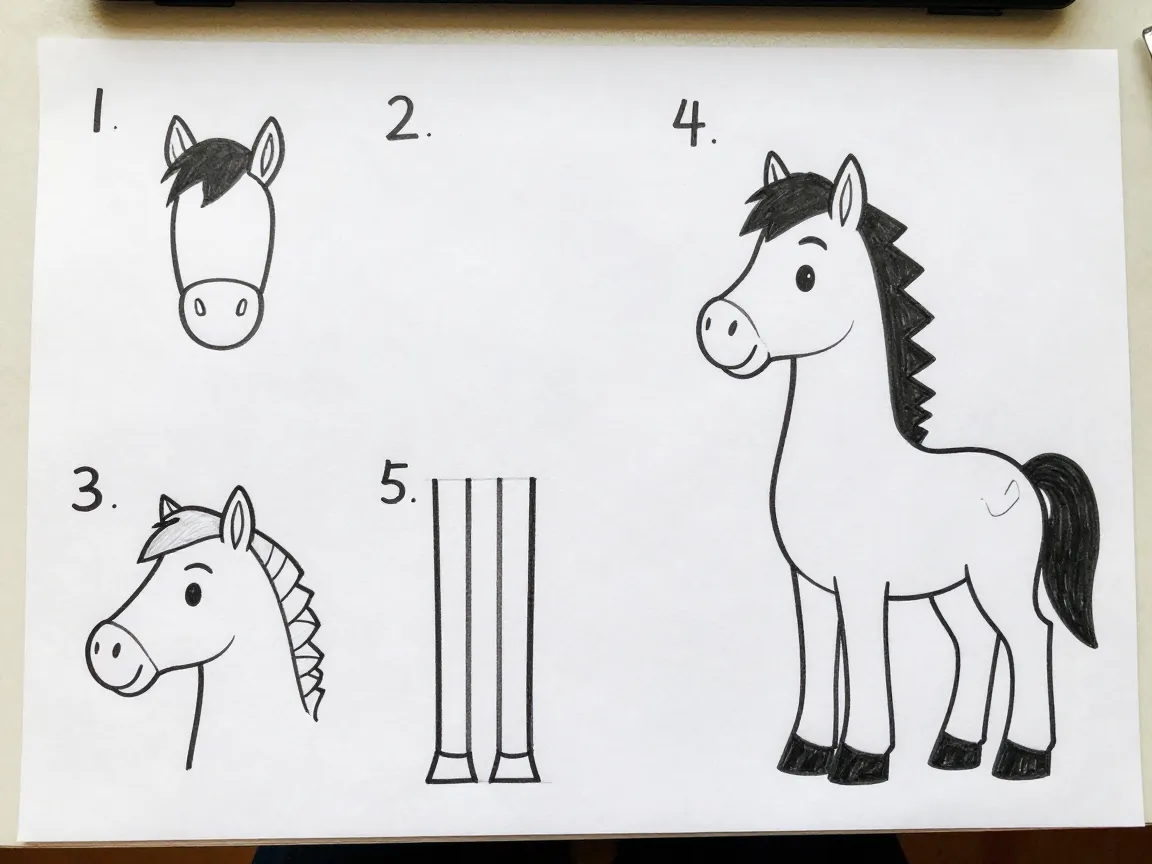
EasyPeasyAndFun’s horse tutorial, refreshed in October 2026, is built around a promise of being “no fail,” and the structure backs that up. It starts with a U-shaped head, adds simple straight-line legs, and finishes with a zig-zag mane that instantly signals a cartoon rather than a realistic animal.
The nine clearly separated steps make this tutorial especially good for classroom settings or parent-led art sessions, since each stage can be checked individually before moving forward. For goofiness, the zig-zag mane is the key lever: making it taller, spikier, or more irregular turns a cute cartoon horse into a genuinely funny one. Adjusting the head shape slightly, squashing it wider or taller, also changes the personality of the finished drawing dramatically with very little extra effort.
5. HelloArtsy’s Nine-Step Cartoon Horse With Playful Coloring
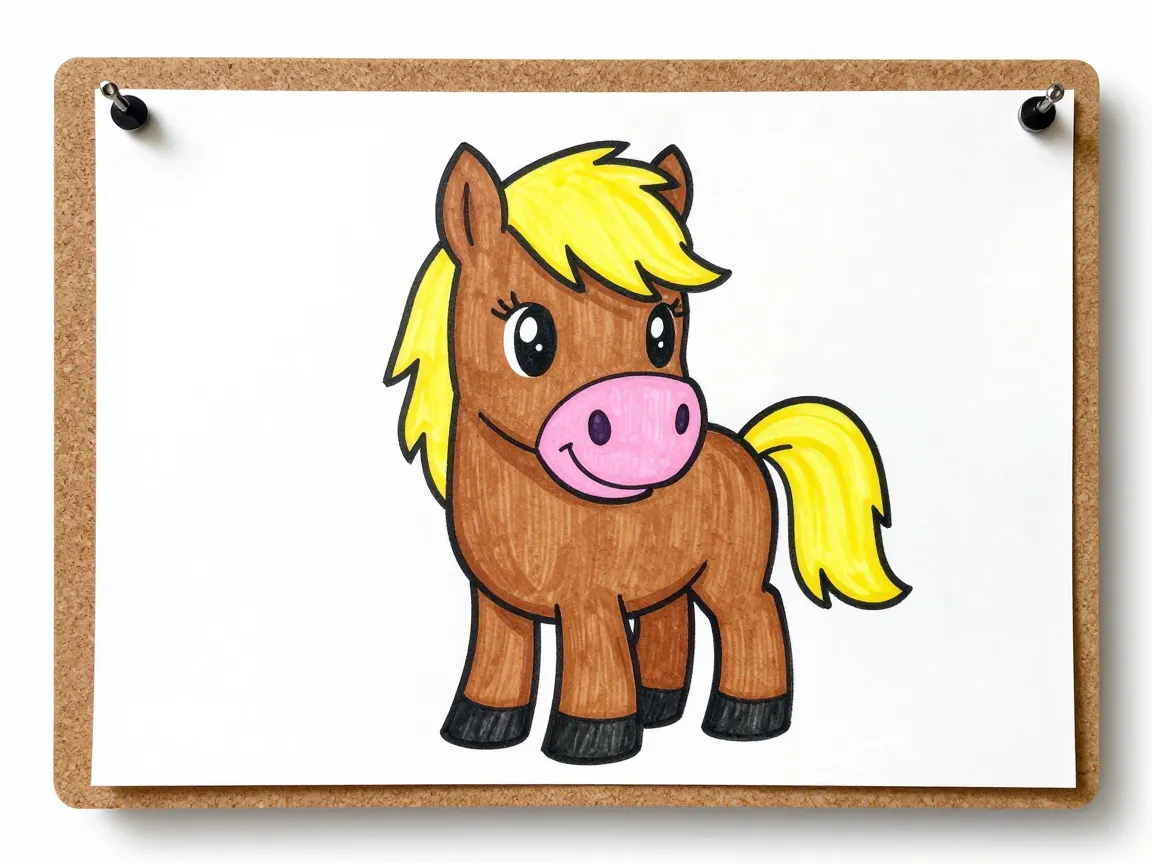
HelloArtsy’s cartoon horse lesson, first published in 2022 and updated again at the end of 2025, follows a similarly structured nine-step process: head, eyes, snout, ears, body, mane, legs, tail, and finally color. What sets this tutorial apart is its explicit coloring guidance, suggesting a light pink snout, a yellow mane and tail, and a brown body.
That color combination might sound unusual for a horse, but that is exactly the point. Unrealistic, candy-colored palettes reinforce the comedic tone even when the underlying shapes stay fairly simple and symmetrical. This tutorial is a strong choice for anyone who has already practiced basic cartoon shapes and wants to learn how color choice alone can push a drawing further into “funny” territory without changing a single line.
6. EquineSpot’s Exaggeration Method for Maximum Goofiness
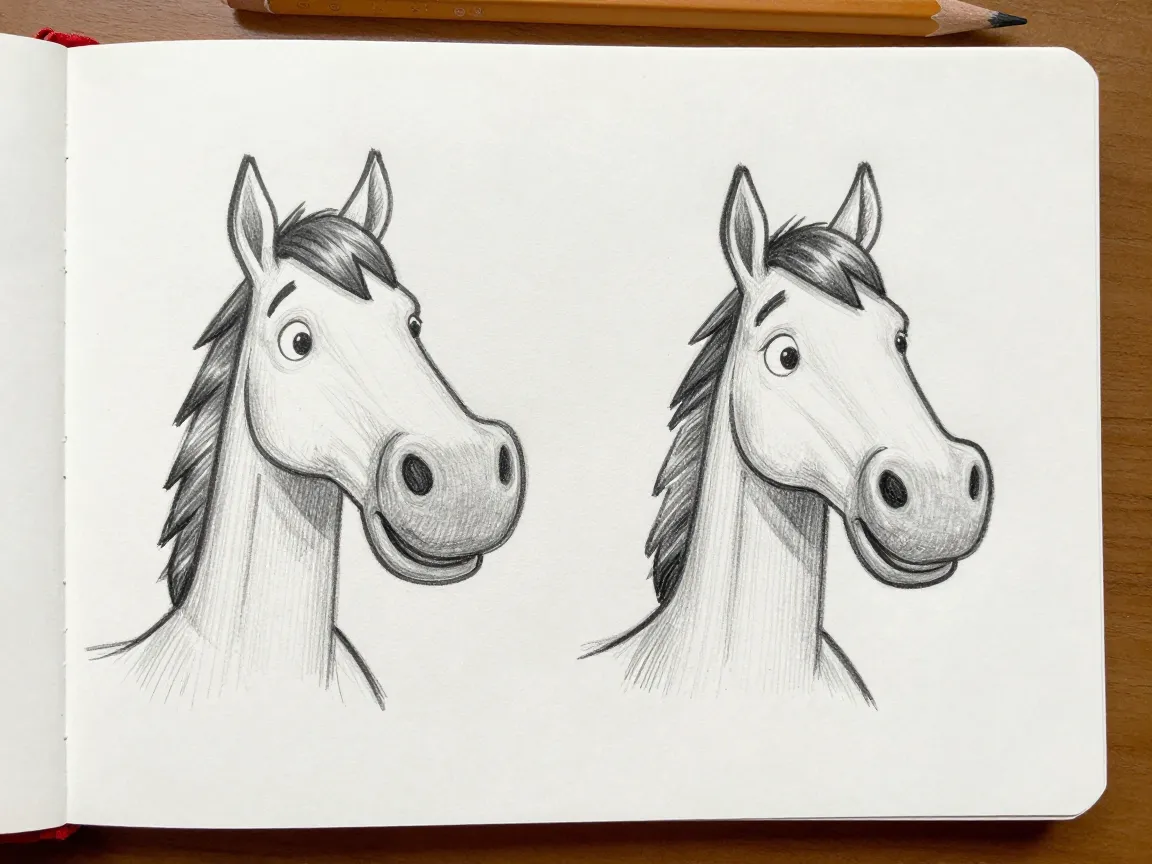
EquineSpot’s step-by-step cartoon horse guide, originally published in January 2024 and updated through October of that year, is the most explicitly comedic tutorial on this list. Rather than treating every feature equally, it advises picking one part of the horse to exaggerate dramatically, such as a huge rounded muzzle paired with a noticeably skinny neck.
This single-feature exaggeration technique is arguably the most important concept across all six tutorials. It works because the human eye reads contrast as comedy: a tiny detail next to an oversized one creates visual tension that reads as funny rather than awkward. The guide also recommends using simple, childlike shapes and experimenting with grids or themed variations, which makes it an excellent capstone lesson after practicing the more structured, shape-based tutorials earlier on this list.
How to Choose the Right Funny Horse Tutorial for Your Skill Level
Not every tutorial fits every artist. The table below breaks down which method suits different comfort levels and goals, making it easier to decide where to start within the 6 Funny Horse Drawing Tutorials To Master For Maximum Goofiness.
| Tutorial | Best For | Key Technique | Time Needed |
|---|---|---|---|
| 1. Total Beginner Video | First-time drawers of any age | Rounded shapes, slow pacing | 10 to 15 minutes |
| 2. Snapchat Quick Sketch | Fast practice, loose style | Confident, quick outlines | Under 5 minutes |
| 3. Circles and U-Shapes Classic | Kids and casual hobbyists | Basic shape construction | 10 minutes |
| 4. EasyPeasyAndFun Nine-Step | Classroom or guided sessions | Zig-zag mane, U-shaped head | 15 minutes |
| 5. HelloArtsy Nine-Step | Artists ready to add color | Playful, non-realistic coloring | 15 to 20 minutes |
| 6. EquineSpot Exaggeration | Intermediate doodlers wanting humor | Single-feature exaggeration | 15 minutes |
A sensible path is to start with tutorial one or three to build basic confidence, move through four and five to practice structured steps and color, then finish with tutorial six to learn the exaggeration principle that defines truly funny horse art.
Pro Tips to Maximize Goofiness in Every Horse Sketch
Across every tutorial reviewed for this guide, a few recurring strategies show up again and again. These are the techniques worth memorizing, since they apply no matter which specific lesson is being followed.
Exaggerate one feature, not everything at once. Distorting the entire horse at the same time tends to produce a confusing or unsettling image. Picking a single standout feature, like an oversized muzzle, tiny ears, or a stretched-out neck, keeps the drawing readable while still being funny.
Keep the shapes childlike. Nearly every tutorial on this list, from the classic circles-and-U-shapes method to EquineSpot’s grid-based approach, relies on simple geometric shapes rather than detailed anatomical curves. Simplicity is not a limitation here; it is the entire mechanism that makes a drawing feel lighthearted.
Push the facial expression further than feels comfortable. Arched eyebrows, oversized eyes, and a wide, toothy smile show up repeatedly across these guides because faces carry most of the emotional weight in a drawing. A slightly too-big smile almost always reads as funnier than a modest one.
Choose color on purpose. HelloArtsy’s suggestion of a pink snout with a yellow mane is a useful reminder that color does not need to match reality. Bright, unexpected combinations reinforce the comedic tone established by the shapes and expression.
Experiment with pose before committing to a final line. A horse standing stiffly in profile reads as neutral. The same horse mid-gallop with its legs splayed at odd angles, or rearing back in mock surprise, reads as instantly funnier. Several of the video tutorials demonstrate this by building the pose early, before adding detail.
“A tiny detail next to an oversized one creates visual tension that reads as funny rather than awkward.”
Common Mistakes That Make a Funny Horse Look Scary Instead of Silly
Goofy horse drawing has a narrow margin between charming and unsettling, and a few missteps show up often enough to be worth flagging directly.
- Overcrowding the face with too many exaggerated features at once, which can tip a design from funny into genuinely odd or uncanny.
- Skipping the shape-building stage and jumping straight to outlines, which usually leads to uneven proportions that look like mistakes rather than intentional style choices.
- Using harsh, jagged lines for the mane or tail without any curve or bounce, which can accidentally read as aggressive rather than playful.
- Choosing muddy or dark color palettes instead of bright, cheerful tones, undercutting the lighthearted intent of the sketch.
- Rushing the eyes. Since the eyes carry most of a cartoon character’s personality, a careless or lopsided eye shape is one of the fastest ways to derail an otherwise successful goofy horse.
Avoiding these five pitfalls, combined with the exaggeration and coloring principles from earlier sections, is usually enough to keep a sketch firmly in “funny” rather than “unsettling” territory.
Frequently Asked Questions
What skill level do these tutorials require?
All 6 Funny Horse Drawing Tutorials To Master For Maximum Goofiness are designed with beginners in mind. Several are explicitly labeled “easy” or “no fail,” and most rely on basic shapes like circles, ovals, and U-shapes rather than advanced anatomical knowledge.
Which tutorial is best for kids?
The classic circles-and-U-shapes cartoon horse and EasyPeasyAndFun’s nine-step method are both structured around very simple, repeatable shapes, making them strong choices for children or classroom settings.
Do I need special art supplies to follow these tutorials?
No. Most of these lessons can be completed with a basic pencil, pen, or marker and plain paper. The video-based tutorials often use simple black outlines, and coloring is optional unless a specific lesson, like HelloArtsy’s, calls for it.
How do I make my horse look funny instead of just simple?
The single biggest factor is exaggeration. Pick one feature, such as the muzzle, eyes, or neck, and make it noticeably larger or smaller than the rest of the body. Combine that with an expressive face and a bright, non-realistic color scheme for the strongest comedic effect.
Can these techniques be applied to other animals?
Yes. The core principles behind this list, simplified shapes, single-feature exaggeration, playful color, and dynamic pose, apply broadly to cartoon animal drawing in general, not just horses.
Conclusion
Funny horse drawing succeeds precisely where realistic horse drawing struggles: it turns imperfection into personality. Working through all 6 Funny Horse Drawing Tutorials To Master For Maximum Goofiness, from the gentle, beginner-paced video lesson to EquineSpot’s deliberate exaggeration method, builds a practical skill set that applies far beyond a single sketch. Start with the simplest shape-based tutorial to build comfort, then layer in color experiments and feature exaggeration as confidence grows.
The next step is simple. Pick one tutorial from this list, grab a pencil, and commit to finishing a single funny horse sketch today. Then try a second style tomorrow. Within a week of rotating through these six approaches, most beginners find they no longer need to follow a tutorial step by step at all, because the core principles, simple shapes, one exaggerated feature, an expressive face, and bold color, become second nature.