Cute Frog Illustration Ideas That Will Leap Off Your Sketchpad
More than 34,000 frog illustrations currently sit on iStock alone, and 99designs tracks over 160 active frog-themed logo and illustration concepts heading into late 2026. That is not a coincidence. Frogs have quietly become one of the most requested subjects in character design, children’s publishing, branding, and social media art. This guide breaks down 6 cute frog illustration ideas that will leap off your sketchpad, drawing on current marketplace data, professional tutorials, and trending AI-art prompts so every sketch feels fresh instead of recycled.
Disclosure: This post contains affiliate links. As an Amazon Associate, we earn from qualifying purchases, and at no extra cost to you.
Whether the goal is a mascot for a small business, a page in a picture book, or a quick doodle for an Instagram grid, the right frog concept can carry real commercial and creative weight. The sections below walk through what makes a frog character “cute” in 2026, six specific illustration concepts worth sketching today, and the tools and techniques that turn a rough outline into a finished piece.
Key Takeaways
- Frog illustrations remain in high commercial demand, with marketplaces like 99designs and stock libraries such as iStock and Shutterstock reporting tens of thousands of active frog-themed assets.
- The six strongest concepts for 2026 are lily-pad frogs, crowned frog princes, tea-drinking frogs, backpack-wearing adventurer frogs, bookish frogs with glasses, and kawaii chibi frogs.
- Cute frog design hinges on a handful of repeatable traits: rounded bodies, raised eye bumps, oversized eyes, simple color palettes, and small expressive details like wart dots or belly folds.
- Combining traditional tutorials with AI-prompt platforms is becoming a standard workflow for generating narrative-rich frog characters quickly.
- Props and settings, such as teacups, crowns, or backpacks, do more to create personality than complex anatomy changes.
Why Cute Frog Illustrations Are Hopping Across Every Platform
Frogs occupy a strange and useful niche in visual culture. They are small, round, and slightly goofy looking, which makes them instantly approachable. Unlike many animals, a frog’s natural anatomy already leans toward “cute” without much exaggeration, since real frogs have big eyes, smooth skin, and compact bodies that translate easily into simplified shapes.
Marketplace data backs this up. 99designs maintains a frog design inspiration page that was refreshed on October 4, 2026, cataloging more than 160 frog-themed logo and illustration concepts actively used by businesses, from pond-cleaning services to children’s brands. A separate frog illustration gallery on the same platform, updated September 29, 2026, showcases at least 13 contemporary frog styles ranging from minimalist flat designs to detailed fantasy renderings. Meanwhile, Shutterstock’s meme-frog collection has grown past 250 royalty-free images, nearly all featuring large round eyes and wide cheerful grins, confirming that exaggerated facial features now dominate how audiences expect frogs to look online.
Professional design communities reinforce the trend. Dribbble and Behance host hundreds of frog illustration projects, including mascots for pool-cleaning companies, juggling frog characters, tarot-card-style frogs, and counting-book frogs aimed at early readers. This spread across branding, publishing, and fine art suggests frogs are not a passing meme but a durable visual language that artists can keep building on.
“Frogs sit at the rare intersection of realistic and inherently cartoonish, which is exactly why they keep showing up in branding, kids’ books, and meme culture at the same time.”
The Building Blocks of a Cute Frog Character
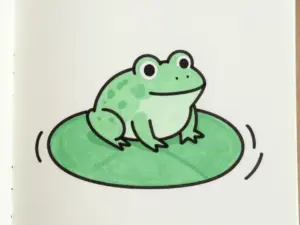
Before sketching any of the six ideas below, it helps to understand the anatomical shortcuts that make frogs read as “cute” rather than simply “accurate.” Drawize Academy’s September 2026 tutorial on drawing a frog on a lily pad breaks the process into a repeatable formula: a low, rounded body, two raised bumps for the eyes, folded-back legs, small splayed feet, and a notched lily pad underneath for grounding. EasyDrawForKids’ multi-method guide, last updated September 21, 2026, adds a kawaii variation built from simple circles and curves, light green bodies with lighter bellies, small wart dots, and a folded tummy line.
These details are small, but they carry most of the visual weight. The table below summarizes the core traits that separate a convincing cute frog from a generic green blob.
| Trait | Why It Matters | Common Technique |
|---|---|---|
| Rounded body | Reads as soft and friendly instead of slimy | Start with an egg or oval shape, not a long body |
| Raised eye bumps | Gives the face personality before adding pupils | Two small half-circles on top of the head |
| Oversized eyes | Signals “cute” instantly across cultures | Eyes sized at roughly one-third of the head |
| Light belly, darker back | Adds depth without extra shading work | Two-tone color block, light green to dark green |
| Small splayed feet | Keeps the pose grounded and stable | Three to four short toe lines per foot |
| Wart or spot details | Adds texture without complicating the silhouette | A handful of small dots, never a full pattern |
Mastering this short list means any of the six concepts in the next section can be sketched quickly, because the underlying frog “chassis” stays consistent even as props and scenes change.
6 Cute Frog Illustration Ideas That Will Leap Off Your Sketchpad
With the anatomy basics covered, it is time to look at the six specific concepts driving frog illustration trends in late 2026. These ideas pull from Carat’s prompt-writing guidance, NightCafe’s AI-art gallery, and traditional step-by-step tutorials, giving artists a mix of poses, props, and settings that can be adapted to any medium, from pencil sketches to digital painting.
Each idea below works as a standalone piece or as part of a larger series, such as a set of stickers, a children’s book spread, or a branded mascot family.
1. Lily-Pad Frogs with Rounded Bodies and Eye Bumps
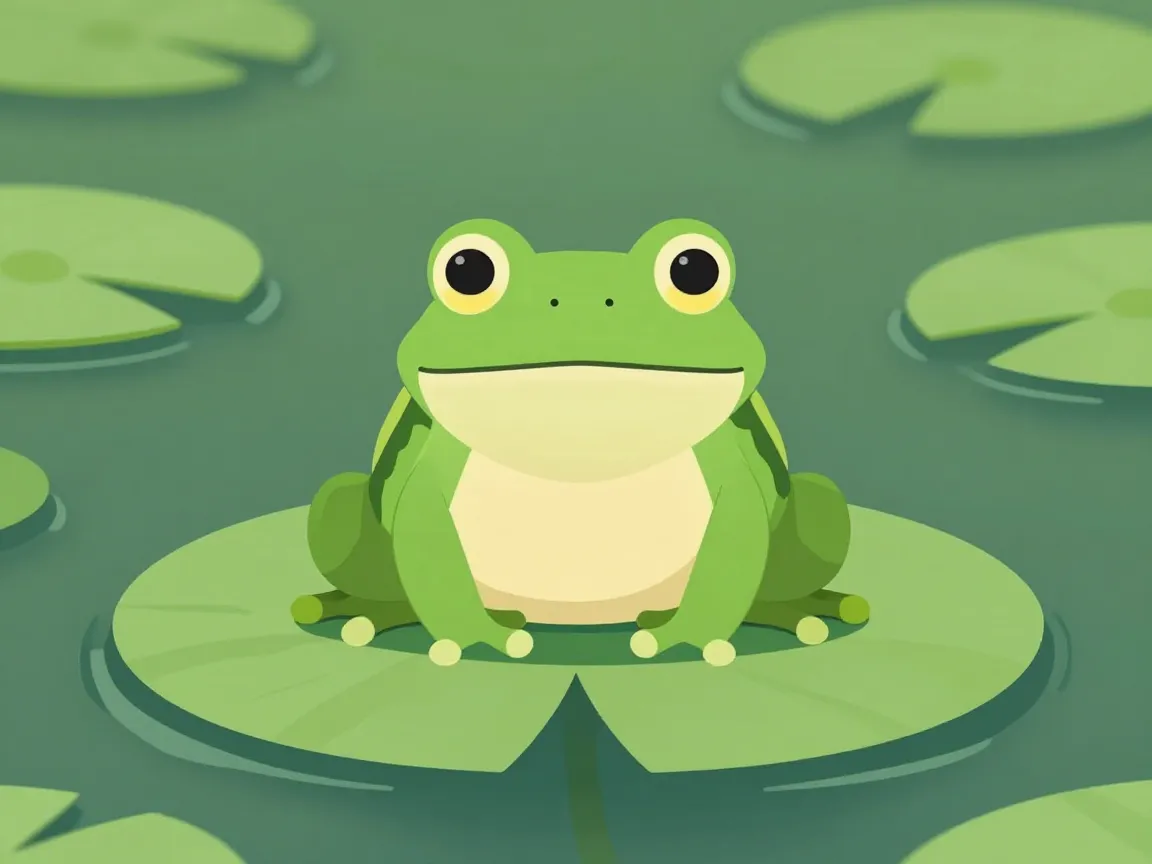
This is the foundational pose recommended by Drawize Academy and remains one of the most reliable cute frog illustration ideas for beginners and professionals alike. The frog sits low and centered on a notched lily pad, legs folded neatly beneath it, with small splayed feet peeking out from the sides. The eye bumps sit high on the head, giving the character an alert, curious expression even at rest.
This concept works especially well for logo design because the simple, symmetrical composition scales cleanly from a business card to a billboard. Keep the color palette to two or three greens plus a single accent color for the eyes or belly to avoid visual clutter.
2. Crowned Frog Prince Characters in Magical Ponds
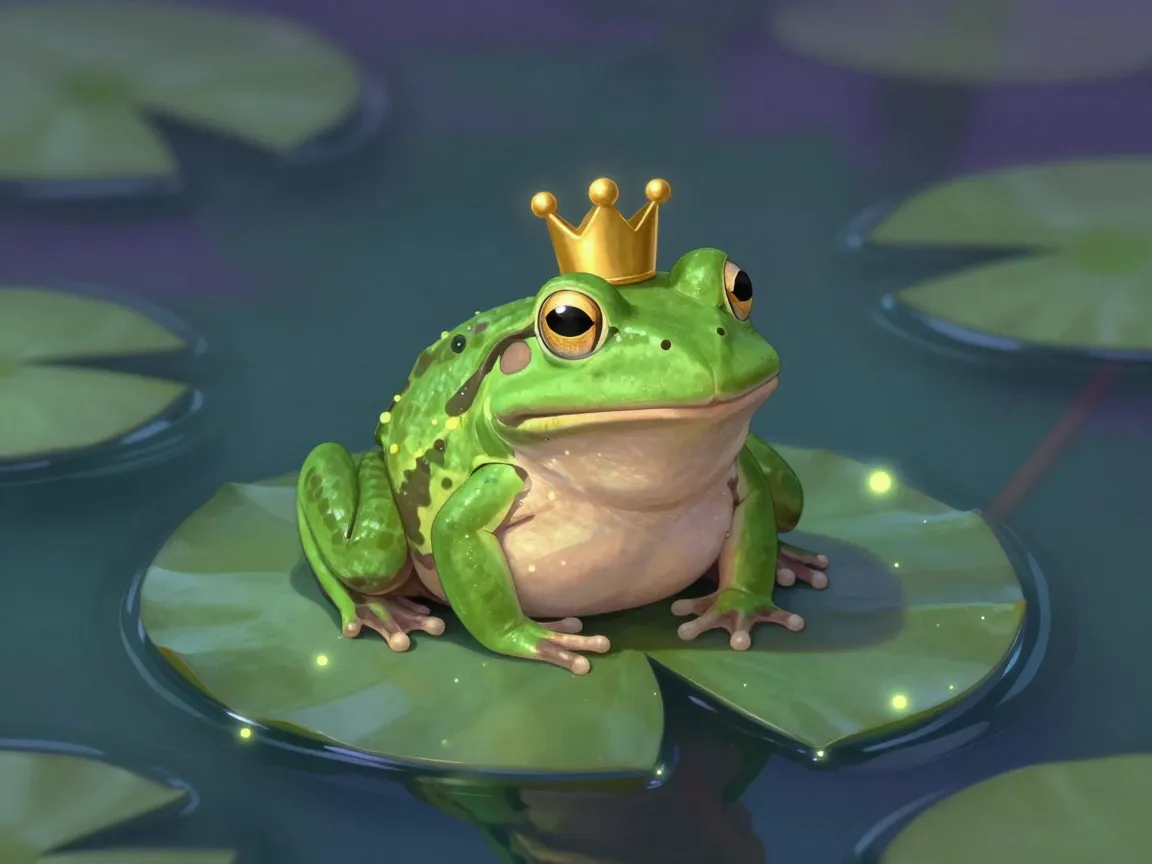
NightCafe’s AI-art gallery, updated October 4, 2026, highlights frogs wearing tiny crowns while perched on lily pads in glowing, magical ponds. This idea leans into fairy-tale storytelling and works well for fantasy book covers, greeting cards, or seasonal social media posts.
To sketch this version, start with the standard rounded frog body, then add a small, simple crown just above the eye bumps. Surround the frog with soft glowing dots or sparkles in the water to suggest magic without overcomplicating the background. A muted purple or deep teal pond color contrasts nicely against bright green skin and a gold crown.
3. Cozy Frogs Sipping Tea in Quiet Scenes
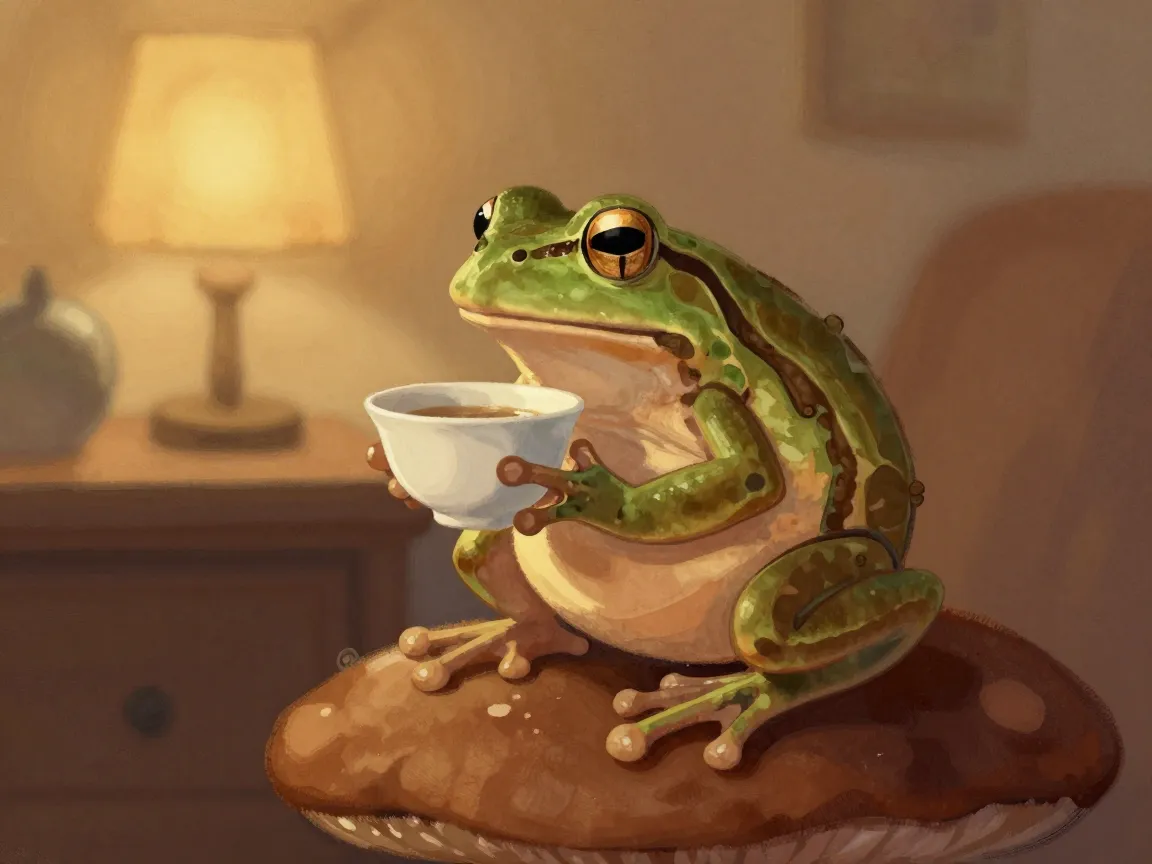
Among the most shareable cute frog illustration ideas on platforms like NightCafe are frogs enjoying a quiet cup of tea. This concept trades action for atmosphere, placing a small frog on a cushion or mushroom stool, a teacup balanced in its tiny webbed hands, with a warm lamp or soft afternoon light in the background.
This scene works particularly well for stationery, candle packaging, or cozy-aesthetic social media accounts. Focus on warm color tones, such as amber light and muted browns, to create a relaxed mood that contrasts with the usual bright pond greens.
4. Backpack-Wearing Adventurer Frogs in Vibrant Forests
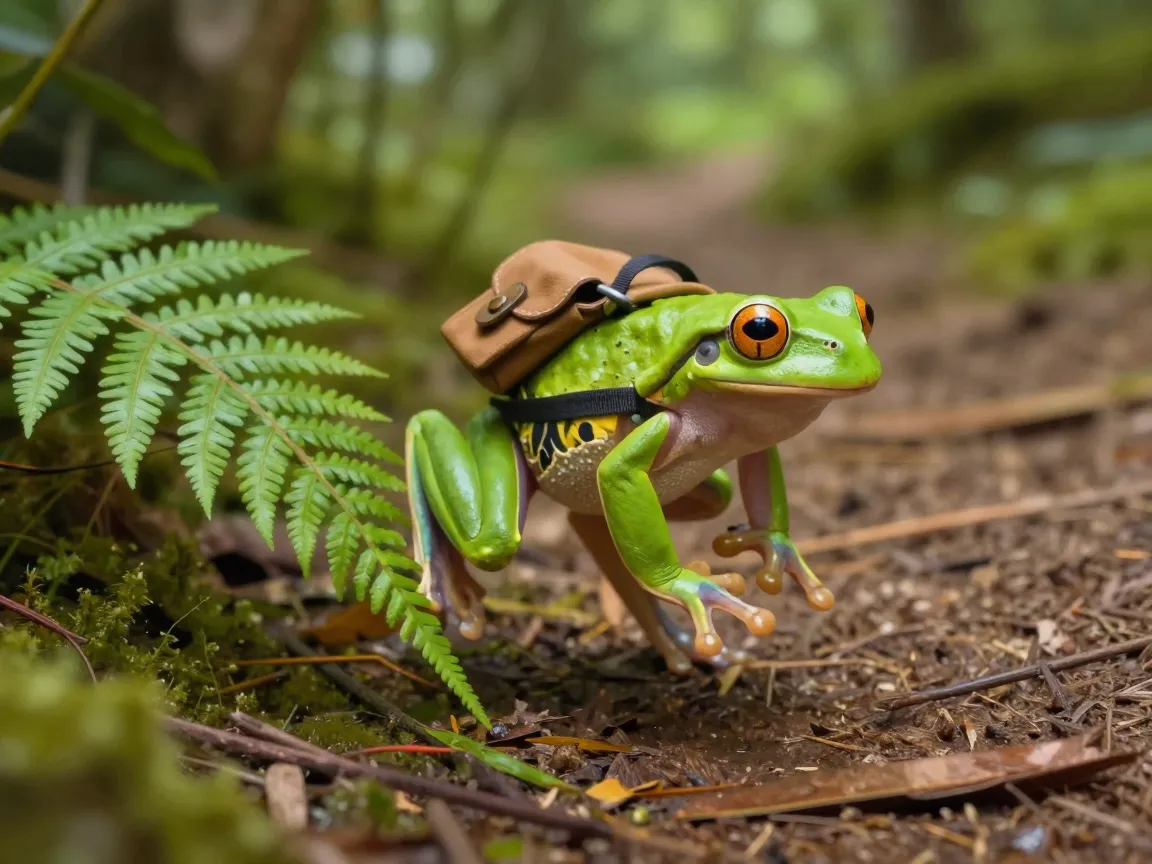
For a more dynamic composition, consider a frog outfitted with a small backpack, standing or hopping along a forest trail. This idea, also surfaced in NightCafe’s current trending prompts, suits children’s book spreads, educational materials, and brand mascots for outdoor or travel-related products.
Carat’s prompt-writing guidance is especially useful here, since it recommends specifying the frog species, the scene, and the art style together. A tree frog with a small satchel climbing a fern leaf reads very differently from a toad wearing hiking boots on a dirt path, even though both fall under “adventurer frog.” Deciding on species and setting before sketching keeps the composition focused.
5. Studious Frogs with Oversized Glasses and Books
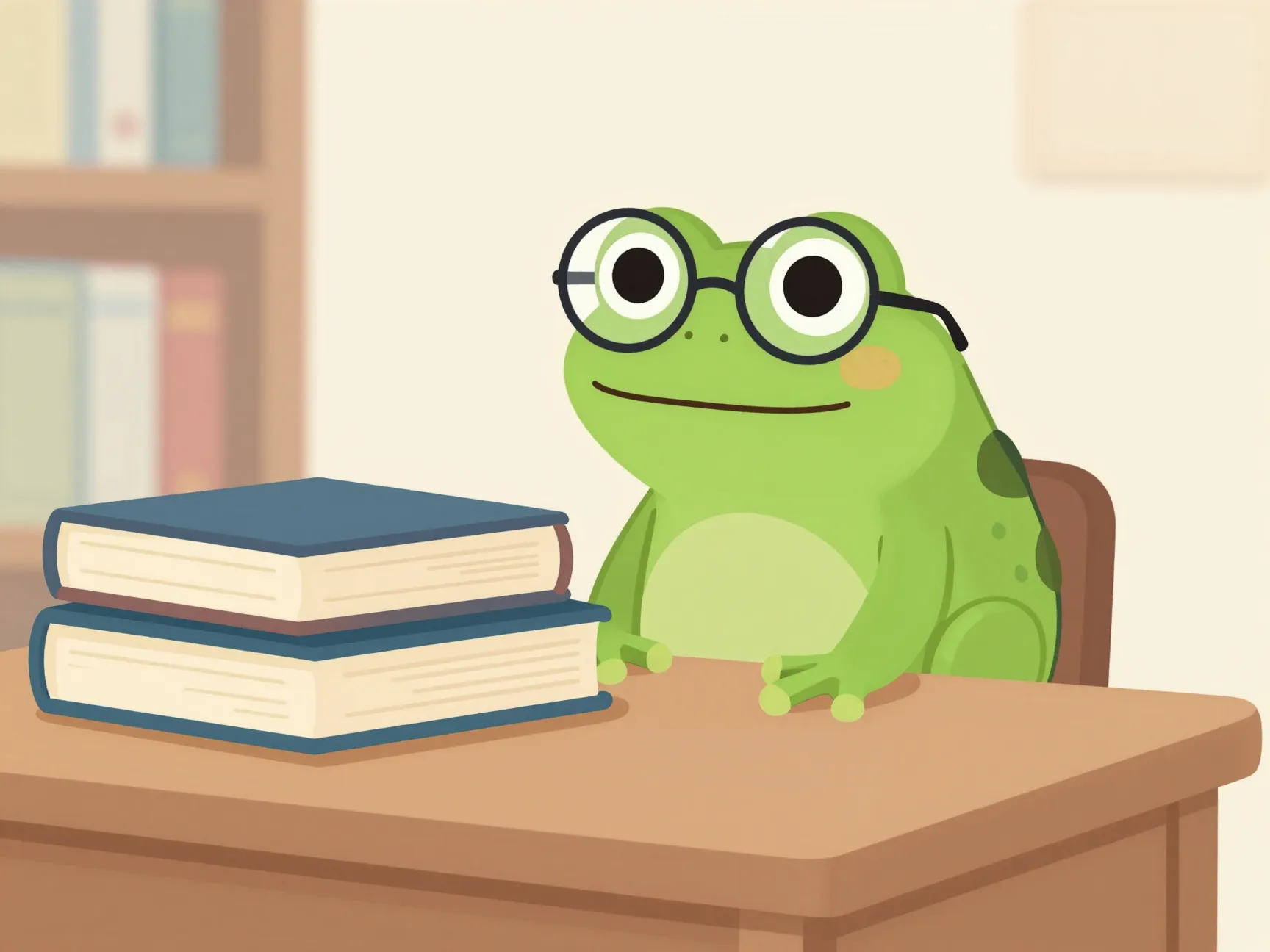
Bookish frog characters, often shown wearing round glasses and surrounded by stacked books or sitting at a tiny library desk, have become a recurring motif in both AI-art prompts and traditional illustration work. This concept pairs naturally with educational content, such as counting books, alphabet guides, or classroom posters, a use case already common across Dribbble and Behance frog illustration tags.
Keep the glasses simple, just two circles connected by a thin bridge line, and avoid overcrowding the scene with too many books. One or two oversized volumes next to the frog communicate “studious” without competing for attention with the character itself.
6. Kawaii Chibi Frogs with Oversized Eyes and Simple Shapes
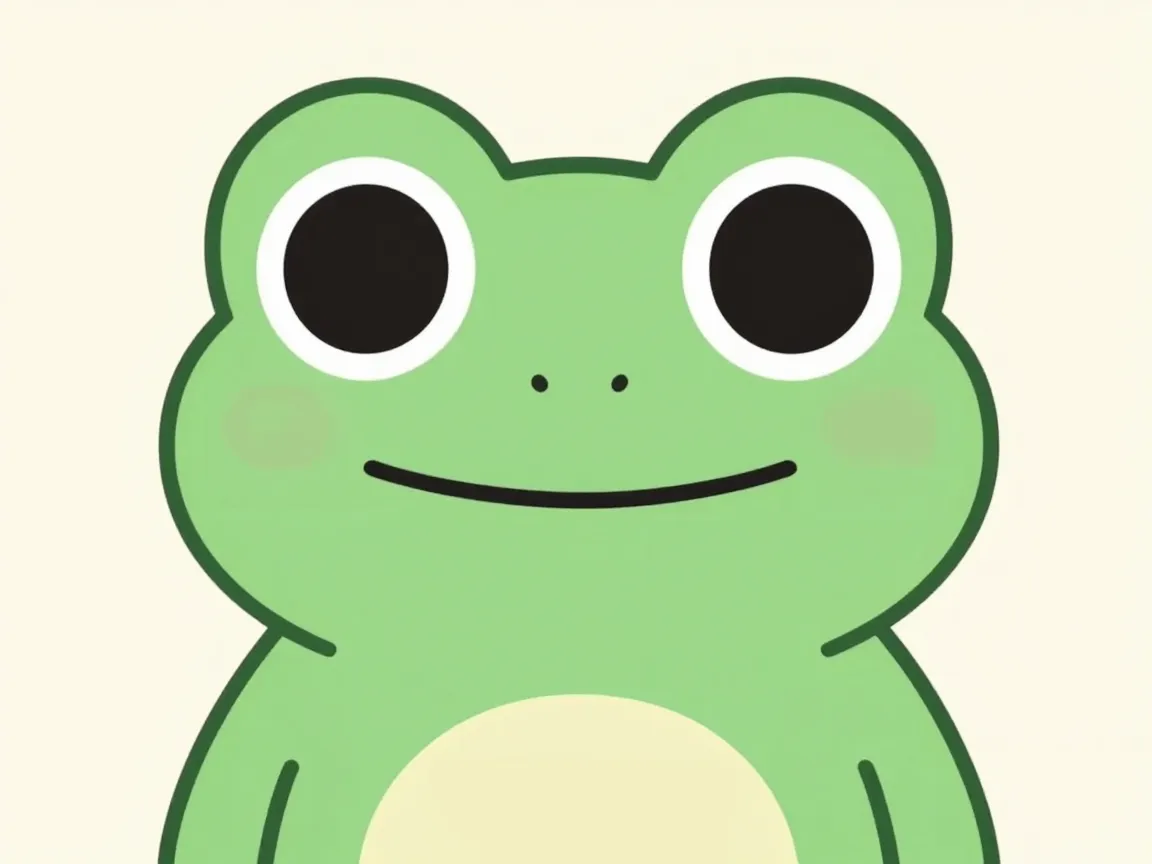
The final idea on this list of six cute frog illustration ideas is the kawaii chibi style, built almost entirely from circles and gentle curves. EasyDrawForKids’ guide outlines this approach clearly: start with a round head-and-body shape, add two very large eyes that take up much of the face, a wide simple smile, and light green skin with a lighter belly patch.
This style is ideal for sticker packs, emoji-style reaction images, and quick social media doodles because it can be drawn in under five minutes once the basic shape is memorized. Limiting the color palette to two or three shades keeps the chibi frog clean and easy to reproduce at small sizes.
Choosing the Right Style and Tools for Your Cute Frog Illustration Ideas
Once a concept is chosen, the next decision is medium and style. Carat’s gallery recommends thinking about three variables together: frog species, scene, and art style, such as watercolor, flat vector, or digital painting. The table below compares common approaches so artists can match tools to the idea they want to execute.
| Style | Best For | Typical Tools | Notes |
|---|---|---|---|
| Flat vector | Logos, app icons, brand mascots | Illustrator, Figma, Affinity Designer | Scales cleanly, easy to recolor, limited texture |
| Watercolor | Greeting cards, wall art, storybooks | Physical paints or digital watercolor brushes | Soft edges suit cozy or nature-themed scenes |
| Digital painting | Fantasy scenes, detailed character art | Procreate, Photoshop, Clip Studio Paint | Allows rich shading and lighting effects |
| Kawaii chibi line art | Stickers, social posts, quick sketches | Pencil and marker, or a basic tablet app | Fast to produce, highly shareable |
| AI-assisted prompt art | Rapid concept exploration, mood boards | NightCafe, Carat, other prompt platforms | Useful for generating pose and scene ideas before hand-drawing |
A growing number of artists now blend the last row into their workflow even when the final piece is hand-drawn. Carat’s emphasis on detailed prompts, paired with the volume of AI-generated frog imagery on platforms like NightCafe, suggests that hybrid workflows, where artists iterate frog designs by combining AI-prompted scene ideas with traditional tutorials, will keep producing richer, more narrative-driven frog characters for children’s publishing and social media through 2027 and beyond.
Tips to Make Your Frog Characters Leap Off the Sketchpad
A strong concept still needs good execution. These practical adjustments help any of the six ideas above feel more alive on the page.
Exaggerate one feature, not all of them. Choosing a single standout trait, whether that is unusually large eyes, a dramatic pose, or an oversized prop, keeps the character readable. Exaggerating everything at once tends to make a design look chaotic rather than charming.
Use props to carry the story. A crown, teacup, backpack, or pair of glasses communicates personality faster than facial expression alone. Shutterstock’s broader frog vector collection even shows frogs relaxing in cocktail glasses paired with positive-vibe text, proving that a single well-chosen prop can redefine a character’s entire mood.
Limit the color palette early. Most successful cute frog designs rely on two to four colors total, including the background. Adding more colors rarely adds appeal and often muddies the silhouette, especially at small sizes like app icons or stickers.
Study real reference poses before simplifying. Even stylized kawaii frogs benefit from a quick look at how real frogs fold their legs or balance on a lily pad. This grounding keeps simplified shapes feeling intentional rather than arbitrary.
Iterate with quick thumbnails. Sketching three or four tiny versions of a pose before committing to a final line drawing saves time and almost always produces a stronger composition than drawing one large version straight away.
Frequently Asked Questions
What makes a frog illustration look “cute” instead of realistic?
Cute frog designs rely on simplified, rounded shapes, oversized eyes, and a limited color palette. Realistic frog illustrations keep detailed skin texture, natural proportions, and muted, accurate coloring. The shift happens mainly through proportion changes, especially enlarging the eyes and head relative to the body.
Which of these six ideas works best for a children’s book?
Bookish frogs with glasses and adventurer frogs with backpacks tend to perform well in children’s publishing because they combine a clear personality trait with an implied activity, which helps carry a simple narrative across multiple pages.
Do I need digital tools to create a professional-looking frog illustration?
No. Many of the most effective cute frog illustration ideas, including the lily-pad frog and kawaii chibi frog, were originally designed as pencil or marker exercises. Digital tools speed up color testing and reproduction but are not required for a strong initial concept.
How can AI art platforms help with frog illustration ideas?
Platforms like NightCafe and prompt-writing tools like Carat are useful for generating scene and pose variations quickly, such as a frog prince in a glowing pond or a frog sipping tea in a cozy nook. Many artists use these outputs as mood boards or starting references rather than final artwork.
What is the easiest cute frog style for a beginner to try first?
The kawaii chibi frog is generally the easiest entry point, since it relies on basic circles and curves rather than detailed anatomy. The lily-pad frog pose is a close second and offers slightly more structure for artists ready to practice proportion and perspective.
Conclusion
Frogs have earned their place as one of the most dependable subjects in character illustration, backed by thousands of commercial assets on marketplaces like 99designs and iStock, active communities on Dribbble and Behance, and a steady stream of fresh prompts from AI-art platforms. The six concepts covered here, lily-pad frogs, crowned frog princes, tea-drinking frogs, backpack adventurers, bookish frogs with glasses, and kawaii chibi frogs, offer a practical starting point for anyone looking to sketch a frog that actually holds attention.
The next step is simple: pick one idea, commit to the two or three core anatomical traits that make frogs read as cute, and sketch three quick thumbnails before refining a final piece. Testing a prop, a palette, and a pose in rough form takes only a few minutes, but it is usually the fastest way to find the version of a frog character that genuinely leaps off the sketchpad.