Cartoon Tabby Cat Drawing Styles For Expressive And Fun Characters
More than 20,000 tabby cat drawings sit in a single stock illustration library, and search interest in “cartoon tabby cat” boards continues to refresh daily on visual platforms. That is not a coincidence. Tabby cats, with their swirling stripes and that famous “M” mark on the forehead, have become one of the most flexible subjects in cartoon character design. Whether the goal is a sticker pack, a children’s book hero, or an animated mascot, mastering the 6 Cartoon Tabby Cat Drawing Styles For Expressive And Fun Characters gives artists a repeatable toolkit for turning a common house cat into a character with real personality.
Disclosure: This post contains affiliate links. As an Amazon Associate, we earn from qualifying purchases, and at no extra cost to you.
This guide breaks down those six styles in plain language, explains when to use each one, and offers practical tips so any illustrator, hobbyist, or content creator can pick the right approach for their next tabby cat character.
Key Takeaways
Before diving into the details, here is a quick summary of what this article covers.
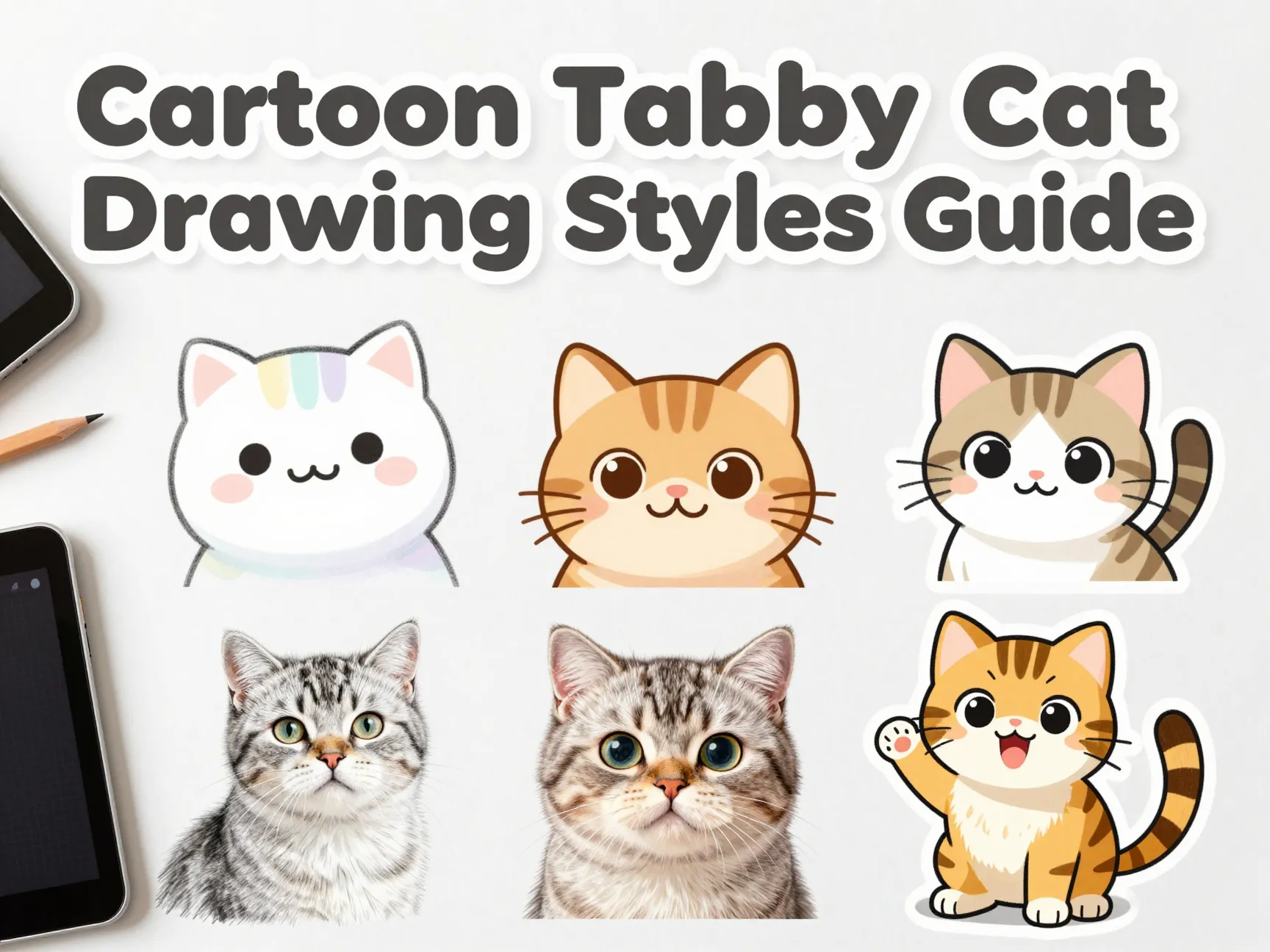
The six core styles are kawaii doodle tabbies, children’s book smiley tabbies, anime-inspired tabby characters, semi-realistic sketch tabbies, fully realistic stylized colored-pencil tabbies, and AI-generated humorous sticker mascots.
Each style trades realism for a specific emotional effect, from cute and simple to lifelike and detailed.
The tabby’s forehead “M” stripe and body pattern (classic, mackerel, spotted, or ticked) remain the visual anchor across every style.
Stock marketplaces list tens of thousands of tabby cartoon assets, confirming steady commercial demand for these six style categories.
Combining two styles, such as a kawaii body with anime eyes, often produces the most shareable and original characters.
The 6 Cartoon Tabby Cat Drawing Styles For Expressive And Fun Characters Explained
Cartoon tabby cats are not one single look. They sit on a spectrum that runs from ultra-simple doodles to nearly photographic colored-pencil portraits. Understanding where each style falls on that spectrum helps artists choose the right level of detail for their project, whether that project is a quick social media sticker or a polished book illustration.
The following six styles represent the most consistently used approaches found across tutorials, stock illustration platforms, and AI art tools in 2026. Each one is numbered for easy reference.
1. Kawaii Doodle Tabby Cats
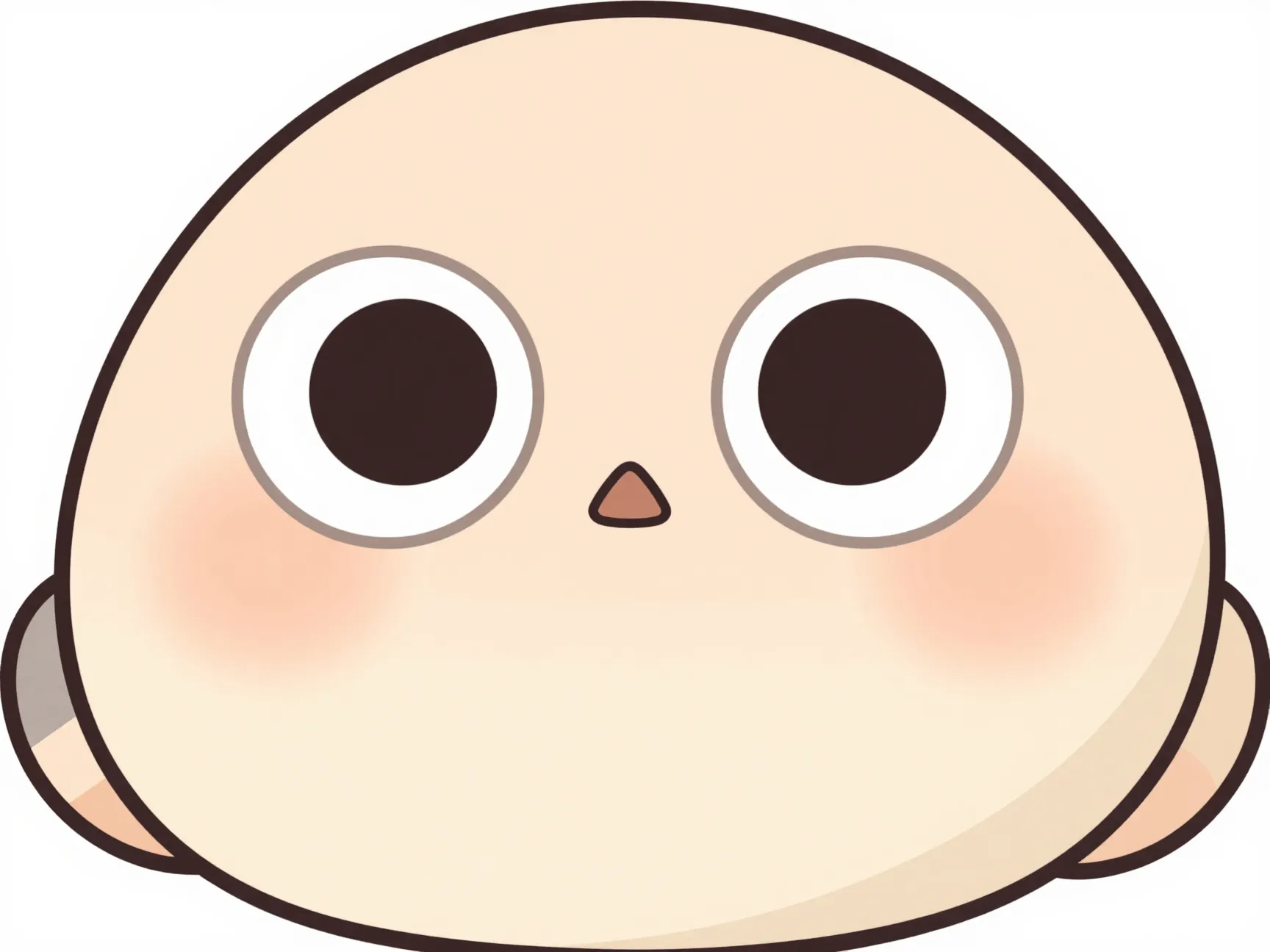
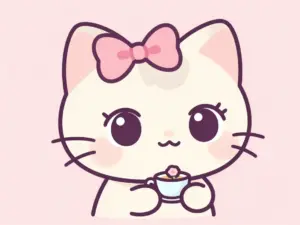
The kawaii doodle style is built for cuteness first and anatomy second. This is the look behind thousands of hand-drawn kitty doodles sold as royalty-free vector graphics, and it dominates stickers, planner decorations, and children’s merchandise. The body is a simple rounded blob, the head is often larger than the torso, and the eyes take up nearly a third of the face.
Key features of this style include a tiny triangle nose, short whisker lines drawn as simple curved strokes, and a color palette limited to soft pastels like peach, cream, and light gray. Stripes are suggested rather than fully rendered, usually as a few curved lines on the back and tail rather than a full tabby pattern. Because the shapes are so simple, this style is beginner-friendly and works well for anyone learning digital illustration software or basic vector tools.
Kawaii doodle tabbies are ideal for social media avatars, greeting cards, and product packaging aimed at younger audiences. The simplicity also makes this style fast to produce, which is why it remains one of the most searched and reused tabby cat cartoon formats on stock platforms.
2. Children’s Book Smiley Tabby Cats
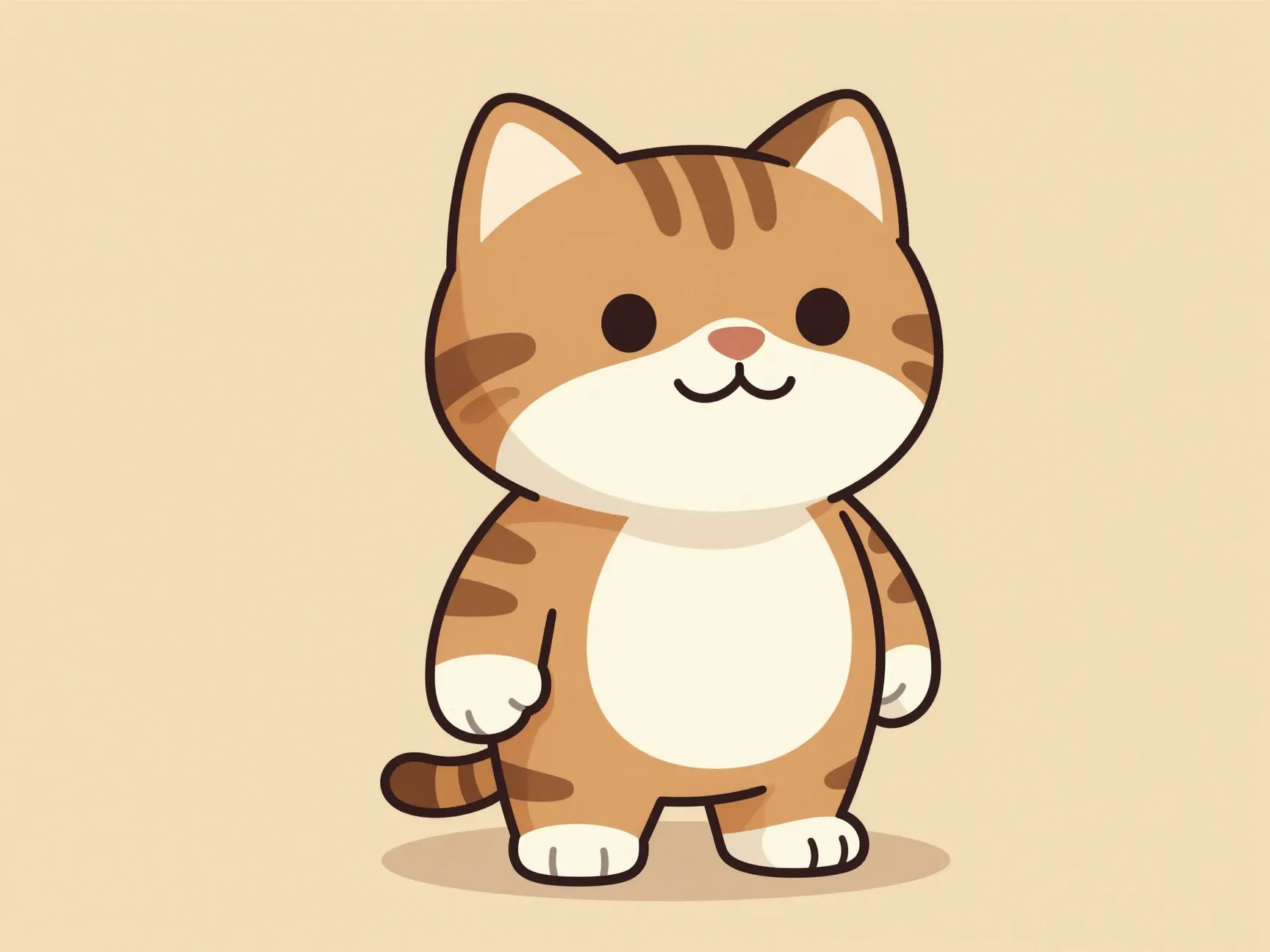
This style prioritizes warmth and readability for young audiences. Following the structure used in popular kid-focused drawing tutorials, the process starts with basic shapes: an oval for the head, a rounded rectangle for the body, and simple triangle ears. The defining trait of this style is the deliberate addition of the tabby “M” stripe on the forehead, followed by a few extra body stripes to reinforce the breed identity.
Unlike the kawaii style, children’s book tabbies usually have a fuller, more grounded body shape and a big, friendly smile that reads clearly even at small sizes. Coloring tends to follow realistic tabby tones such as warm brown, tan, and white, rather than pastel fantasy colors. This keeps the character believable as an actual cat while still feeling playful and approachable.
This style works especially well for picture books, educational materials, and mascot characters for pet-related brands. Because the drawing steps are simple and sequential, it is also one of the easiest styles to teach in a classroom or beginner art course.
3. Anime-Inspired Tabby Cat Characters
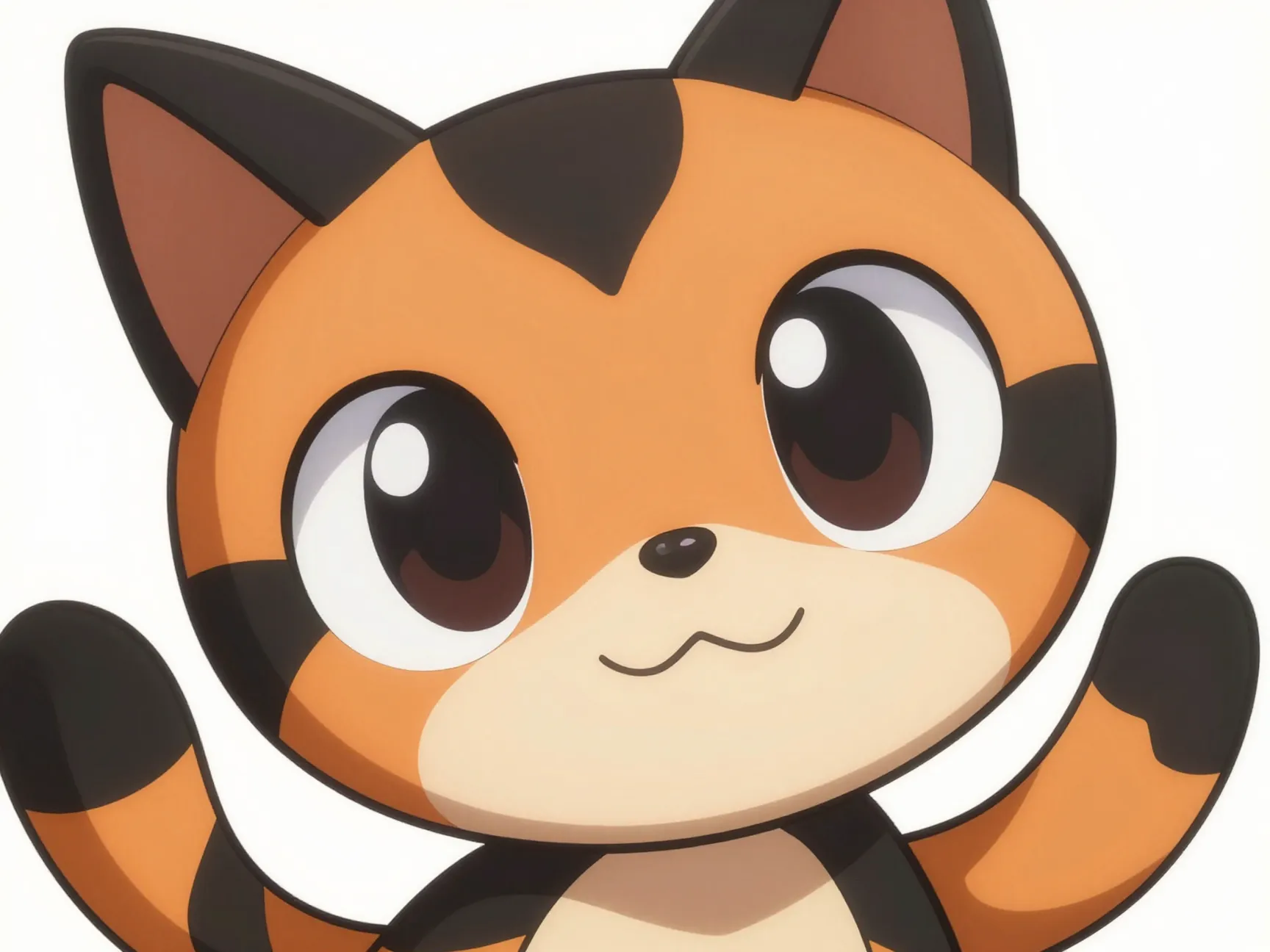
Anime-inspired tabby cats take the exaggerated large-eye, simplified head-shape conventions of Japanese animation and apply them to a feline character. In this style, the tabby pattern becomes a surface design layered on top of an anime-style head and body rather than the defining structural feature. Artists typically start with a stylized round or heart-shaped face, add sharply angled ears, and place large, glossy eyes with visible highlight dots.
Stripe placement is more flexible here. Because the underlying character design comes first, stripes are often added afterward along the tail, cheeks, and back, sometimes in bold black-and-orange contrast for visual punch. Tutorials on this approach frequently note that the same base character can be recolored to become a black cat, a white cat, or a tabby simply by changing the surface pattern, which makes this style extremely efficient for character sheets with multiple color variants.
Anime-inspired tabbies are popular in webcomics, mobile game character design, and fan art communities. They tend to carry more emotional range than other styles because the exaggerated eyes and expressive brows can convey shock, joy, or mischief instantly.
4. Semi-Realistic Sketch Tabby Cats
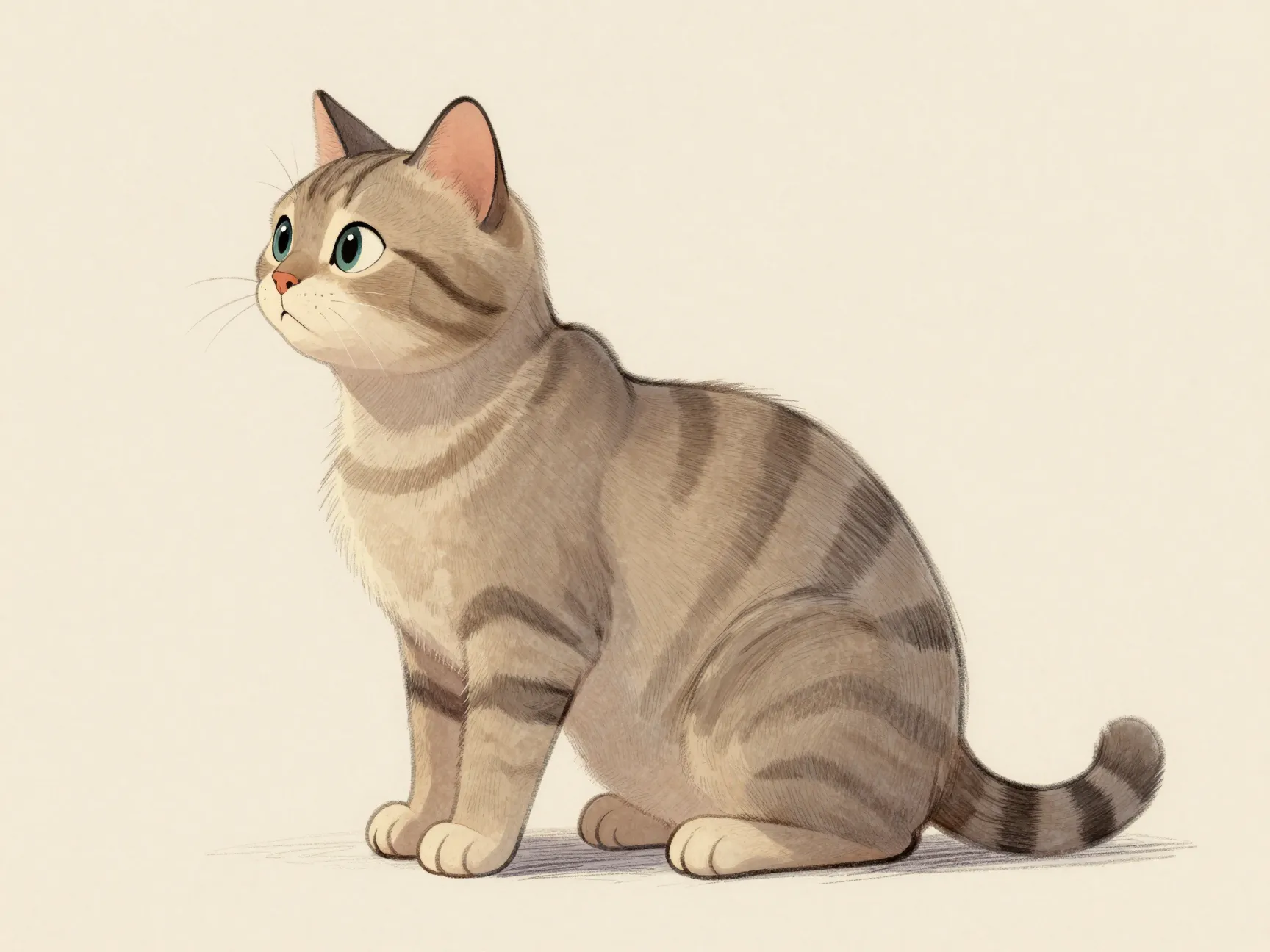
This style sits in the middle of the spectrum, balancing recognizable anatomy with cartoon-level simplicity. Step-by-step guides that use this method typically start with circles to block out the head, chest, and hindquarters, then add guideline crosshairs on the face to place the eyes, nose, and whisker pads accurately. This structural approach produces a cat that looks proportionally correct while still reading as clearly illustrated rather than photographic.
Shading is where this style earns its “semi-realistic” label. Instead of flat color fills, artists layer light hatching or soft shading around the eyes, muzzle, and ear interiors to suggest depth. Stripe patterns are drawn with more intention here, often following classic or mackerel tabby patterns rather than being simplified into a few curved lines. The result is a cat character that could believably exist in an animated film or comic book that leans toward realism, such as an adventure story or nature-themed series.
Because this style demands more structural planning, it suits illustrators who already have some drawing experience and want a character that reads as both charming and credible.
5. Fully Realistic Stylized Colored-Pencil Tabby Cats
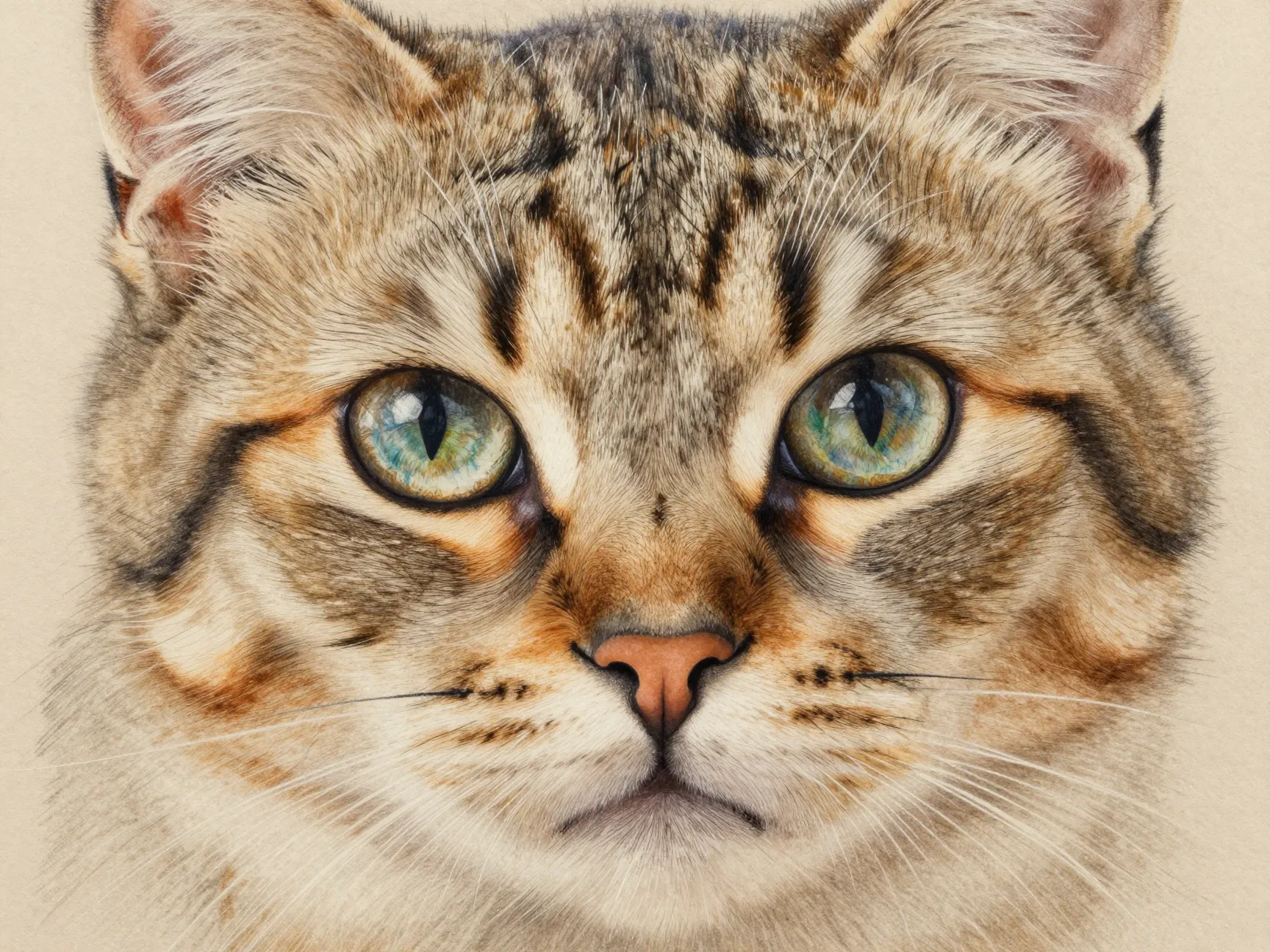
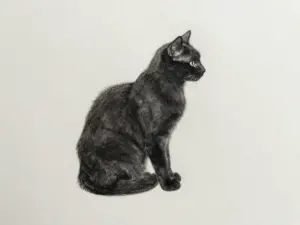
The most detailed style on this list borrows techniques from fine art rendering rather than traditional cartooning, yet it still counts as a stylized character when the proportions are gently exaggerated for expressiveness. Colored-pencil tutorials in this space describe building fur texture through multiple layered tones, commonly listed as sepia, black, brown ochre, olive brown, raw umber, burnt sienna, burnt ochre, and silver gray for the ears and stripe transitions.
The technique relies on mapping the entire face before adding any deep shading, then treating the pupils as the darkest value point in the drawing to anchor the rest of the tonal range. Fur direction matters enormously in this style; strokes follow the natural growth pattern of the coat, and stripe edges are softened with small flicking motions rather than left as hard lines. This produces a tabby cat that looks almost photographic but still carries an illustrated, slightly idealized quality.
This approach is best suited for fine art prints, premium greeting cards, or portrait commissions where clients want a lifelike but clearly hand-crafted piece. It takes considerably longer to complete than the other five styles, but the payoff is a rich, tactile image that stands out in a gallery or portfolio setting.
6. AI-Generated Humorous Sticker and Mascot Tabby Cats
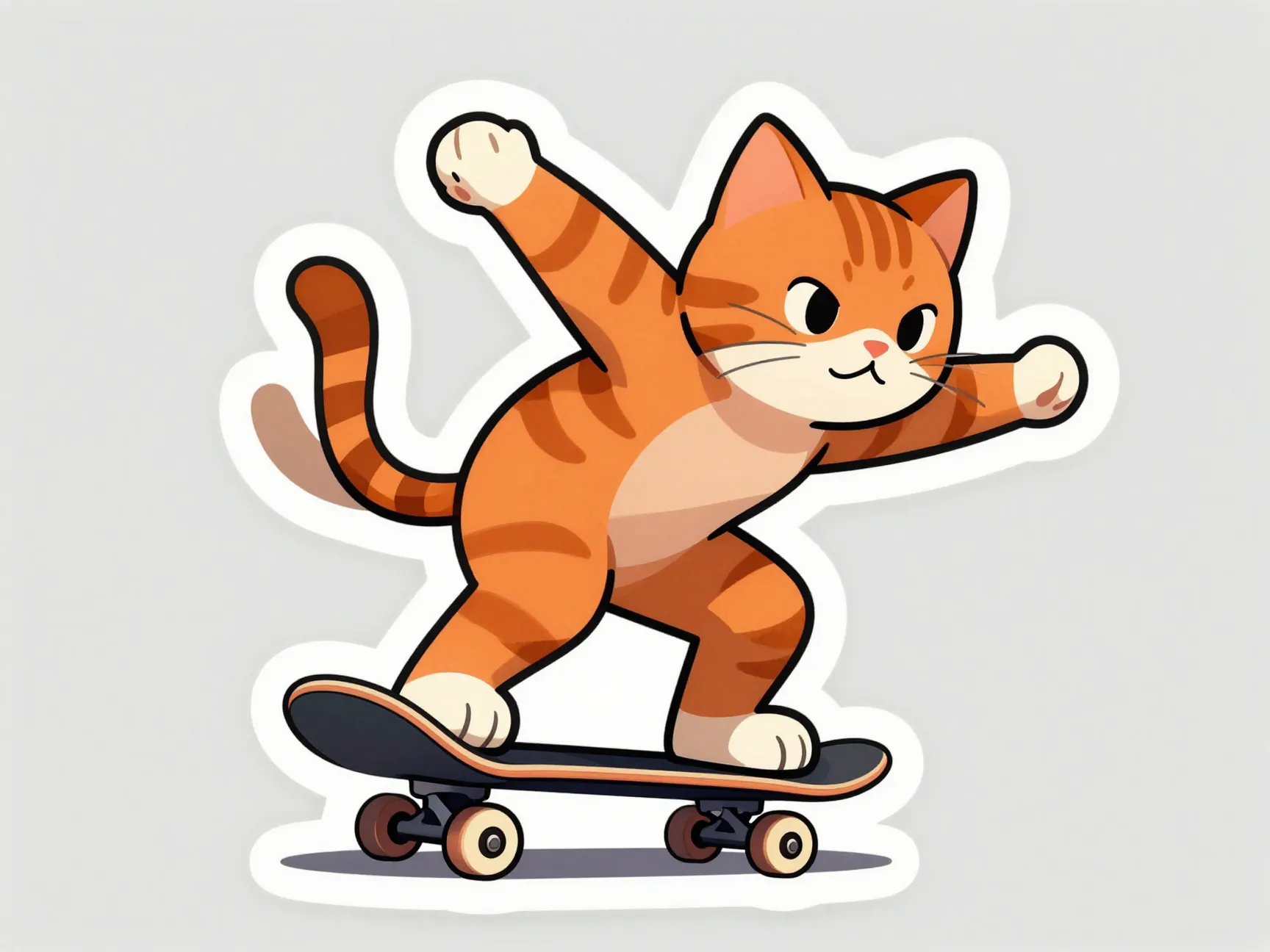
The newest addition to this list reflects how generative AI tools have entered the cartoon tabby cat space. Text-to-image platforms can now produce a “semi-realistic cartoon tabby cat” in seconds by blending soft shading with clearly defined stripes and cartoon-level exaggeration, all from a simple prompt. More specialized templates push this further into scenario-based humor, such as a cartoon orange tabby cat typing on a laptop for a sticker design, or a playful orange tabby skateboarding for a T-shirt graphic.
What defines this style is not a specific line weight or color palette but a functional purpose: fast, humorous, scenario-driven content optimized for print-on-demand products. The stripe pattern is usually simplified into bold, high-contrast orange-and-black bands so the design reads clearly even when shrunk down to sticker size. Poses tend to be exaggerated and action-oriented, since the goal is to trigger a quick laugh or a sense of relatability rather than to showcase technical drawing skill.
This style is especially useful for creators building merchandise lines, meme accounts, or quick social content, since AI generation dramatically shortens production time compared to traditional illustration methods.
Comparing the 6 Cartoon Tabby Cat Drawing Styles For Expressive And Fun Characters
Choosing among the 6 Cartoon Tabby Cat Drawing Styles For Expressive And Fun Characters becomes easier when the differences are laid out side by side. The table below summarizes the core traits of each style so artists and brands can match a style to their specific project needs.
| Style | Detail Level | Best Use Case | Skill Level Needed |
|---|---|---|---|
| Kawaii Doodle Tabby | Very Low | Stickers, planners, packaging | Beginner |
| Children’s Book Smiley Tabby | Low to Medium | Picture books, education | Beginner to Intermediate |
| Anime-Inspired Tabby | Medium | Webcomics, games, fan art | Intermediate |
| Semi-Realistic Sketch Tabby | Medium to High | Animation, comics | Intermediate to Advanced |
| Colored-Pencil Realistic Tabby | Very High | Fine art, portrait commissions | Advanced |
| AI-Generated Sticker Mascot | Variable | Merchandise, memes, quick content | Beginner (prompt-based) |
Notice that detail level does not automatically equal quality. A kawaii doodle can be just as effective as a colored-pencil portrait, provided it matches the platform and audience it is created for.
Choosing and Combining Cartoon Tabby Cat Styles
Deciding which of the 6 Cartoon Tabby Cat Drawing Styles For Expressive And Fun Characters to use starts with a simple question: where will the character live? A sticker pack calls for something bold and instantly readable at a small size, which points toward kawaii doodles or AI-generated sticker mascots. A picture book benefits from the warmth of the children’s book smiley style. An animated series or comic that leans toward adventure or realism fits better with semi-realistic sketch techniques.
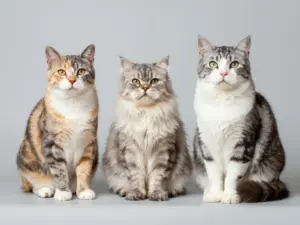
Pattern accuracy also matters more than many beginners assume. Recent expert breakdowns identify four primary tabby patterns: classic (swirled, marbled bands), mackerel (narrow vertical stripes like fish bones), spotted (broken stripes forming spots), and ticked (individual hairs banded with color rather than solid stripes). For character work, classic and mackerel patterns tend to be the most versatile because they read clearly at both large and small sizes and translate well across every style on this list.
A few rendering techniques can be borrowed across styles regardless of detail level. Stippling adds a sense of fur depth without heavy shading. Cross-hatching builds believable shadow under the chin and along the belly. Simple scribbling in the direction of fur growth suggests texture quickly. A “stripe cheat,” where parallel curved lines are drawn in clusters rather than individually planned, speeds up pattern work significantly. Finally, artists can use “pattern transfer,” lightly copying stripe placement from a real tabby photo reference, to keep even a simplified cartoon anatomically believable.
Combining elements from two styles often produces the most original results. A children’s book body with anime-style eyes creates a hybrid that feels both warm and expressive. A kawaii doodle shape with subtle colored-pencil-style shading on just the face can elevate a simple design without sacrificing its charm. Experimenting with these combinations is one of the fastest ways to develop a signature tabby cat character style.
Frequently Asked Questions
What is the easiest cartoon tabby cat style for beginners?
The kawaii doodle style is generally the easiest entry point. It relies on simple rounded shapes, minimal shading, and a small set of repeatable features like large eyes and a tiny nose, making it forgiving for anyone still developing basic drawing skills.
Do all cartoon tabby cats need the forehead “M” stripe?
No, but including it strongly reinforces the tabby identity. Children’s book and semi-realistic styles almost always include this mark because it is one of the most recognizable tabby features, while kawaii and AI sticker styles sometimes simplify or omit it in favor of a cleaner silhouette.
Which style works best for animated characters?
Semi-realistic sketch tabbies tend to translate best into animation because the underlying construction shapes make it easier to redraw the character consistently across multiple frames and poses while still keeping personality-driven facial expressions.
Can AI tools replace traditional tabby cat illustration?
AI tools are excellent for fast, scenario-based sticker and merchandise concepts, but they currently work best as a supplement rather than a full replacement. Many illustrators use AI outputs as inspiration or rough layout guides before refining details by hand.
Which tabby pattern is best for a simple cartoon design?
Mackerel and classic patterns are the most practical choices for cartoon work because their repeating stripe logic is easy to simplify without losing the recognizable tabby look, even in the most minimal kawaii-style designs.
Conclusion
The 6 Cartoon Tabby Cat Drawing Styles For Expressive And Fun Characters covered in this guide, kawaii doodle, children’s book smiley, anime-inspired, semi-realistic sketch, colored-pencil realistic, and AI-generated sticker mascot, each serve a distinct creative and commercial purpose. None of them is objectively “better” than the others; the right choice depends entirely on where the character will be used and how much time an artist has to invest.
For anyone ready to start drawing, the most practical next step is to pick one style that matches an immediate project, such as a kawaii doodle for a quick sticker or a children’s book smiley tabby for a story concept, and practice the core shapes until they feel natural. From there, layering in stripe pattern accuracy, shading techniques, and even a hybrid mix of two styles will lead to a more confident and original tabby cat character over time. The stripes may be simple, but the creative possibilities behind them are anything but limited.