Silver Tabby Cat Aesthetic Markings That Are Simply Magical
A single silver tabby hair can hold two completely different colors on one strand: a pale, almost metallic white near the skin and a jet-black tip at the very end. That microscopic detail is why silver tabbies look like they are lit from within, and it is the biological starting point for every pattern discussed in this guide to 6 Silver Tabby Cat Aesthetic Markings That Are Simply Magical.
Disclosure: This post contains affiliate links. As an Amazon Associate, we earn from qualifying purchases, and at no extra cost to you.
Silver tabbies are not simply gray cats. They are a genetic collaboration between a pigment-suppressing gene and one of several classic tabby patterns, and the result is a coat that photographers, breeders, and cat lovers consistently describe as “glowing.” This article breaks down exactly what creates that effect, walks through the six most magical marking types, and explains how to spot true silver tabby genetics on any cat, in any breed.
Key Takeaways
- Silver tabby cats get their shimmering look from the inhibitor gene (I), which strips color from the base of each hair while leaving the tips dark.
- All six silver tabby markings covered here, from the facial “M” to ticked agouti fur, are built on the same cool silver-and-black contrast.
- The classic marbled swirl and mackerel stripe patterns are the most common and most photographed silver tabby looks.
- Spotted and ticked silver tabbies are rarer and prized for their wildcat-like or subtly glittering appearance.
- Checking the undercoat at the elbows, forehead, and ear base is the fastest way to confirm true silver tabby genetics.
The Science Behind Silver Tabby Cat Aesthetic Markings That Are Simply Magical
Every marking on a silver tabby traces back to one gene: the dominant inhibitor gene, often written as “I.” This gene does not create the tabby pattern itself. Instead, it acts like a dimmer switch on pigment production near the skin, while leaving the pigment at the hair tip untouched. The practical result is a coat with a pale, cool, almost frosted base and dark, sharply defined markings layered on top.
This is different from how a brown or red tabby’s coat works. In those cats, the same tabby pattern exists, but the background color carries warm pigment all the way down the hair shaft, producing a golden, tan, or reddish base instead of silver. Breed standards from major cat federations are specific about this distinction: the most desirable silver tabbies show a background that reads as bright white or pale silver, not cream, tan, or brown. Any warm tint in the base coat is typically scored as a fault in breeds such as Persians and British Shorthairs.
Genetically, the inhibitor gene works alongside whichever tabby pattern gene a cat carries, whether that is classic, mackerel, spotted, or ticked. This is why silver tabbies show up across so many different breeds and pattern styles rather than being a single fixed look. The gene essentially takes whatever tabby blueprint is already present and reprints it in silver and black instead of warm tones.
It is also worth separating “silver tabby” from two related but distinct coat types: silver shaded and silver tipped, sometimes called chinchilla or shell coats. In shaded cats, roughly one-third of each hair carries pigment. In tipped cats, only the very tip is colored. Both produce a lighter, more ethereal dusting of dark color over a nearly white coat, without the bold, structured tabby pattern. True silver tabbies, by contrast, show clearly defined stripes, swirls, or spots rather than a soft overall dusting.
6 Silver Tabby Cat Aesthetic Markings That Are Simply Magical
The following six markings represent the full range of what a silver tabby coat can look like. Some are found on nearly every silver tabby, while others are rare enough to make a cat instantly recognizable. Together, they explain why silver tabby cat aesthetic markings are considered simply magical by breeders, veterinarians, and cat owners alike.
1. The Frosted Silver Ground Color
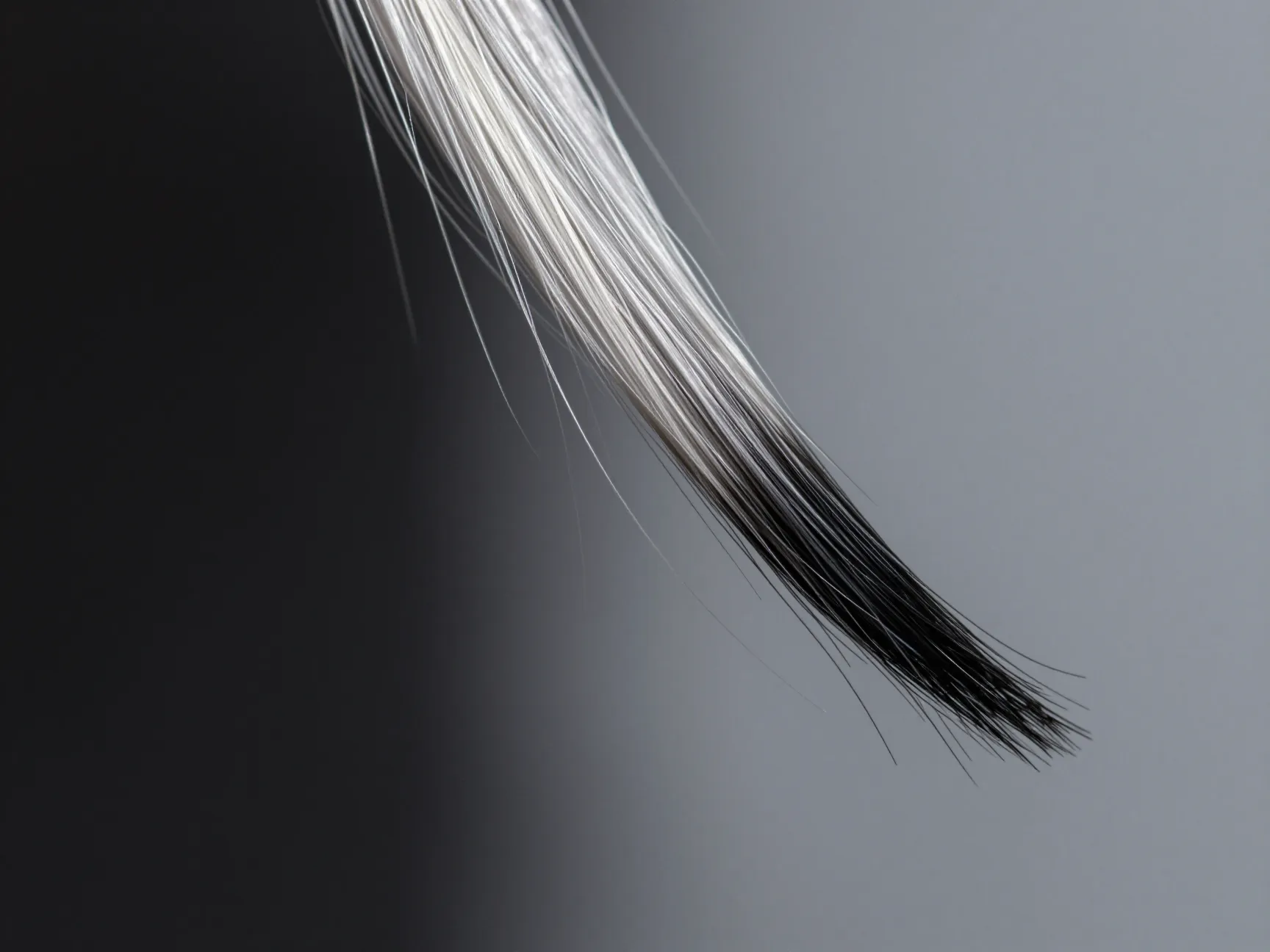
The single most defining trait among silver tabby cat aesthetic markings is the ground color itself. This is the pale, cool-toned background that appears between the darker markings, and it is the direct visual signature of the inhibitor gene at work.
A high-quality silver ground color should look bright, clean, and almost white, with a faint metallic or icy sheen rather than a warm or dingy cast. Breed standards for Persians, British Shorthairs, and American Shorthairs all emphasize this same requirement: the paler and purer the background, the more dramatic the contrast with the black or dark gray markings layered on top.
This shimmering base is what gives silver tabbies their nickname among some breeders as “moonlit” cats. In bright light, the coat can appear to sparkle, an effect created by the way light reflects differently off the pale hair base compared to the pigmented tips. Cats with a muddy, brownish, or cream-tinged ground color are typically marked down in shows, since that tinge signals incomplete inhibitor gene expression or a genetic mix with warmer tabby colors.
2. The Bold Facial M Marking and Striping
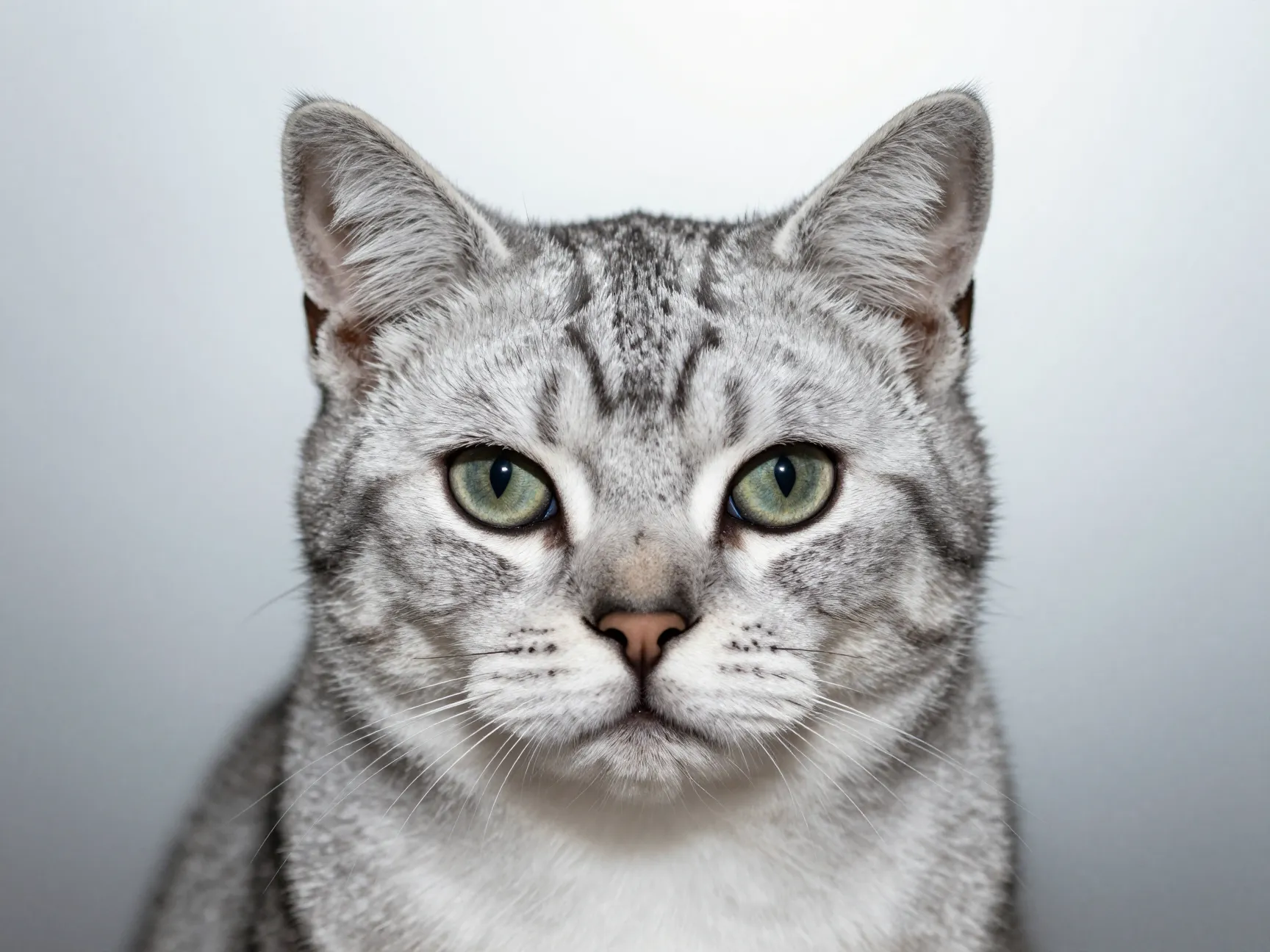
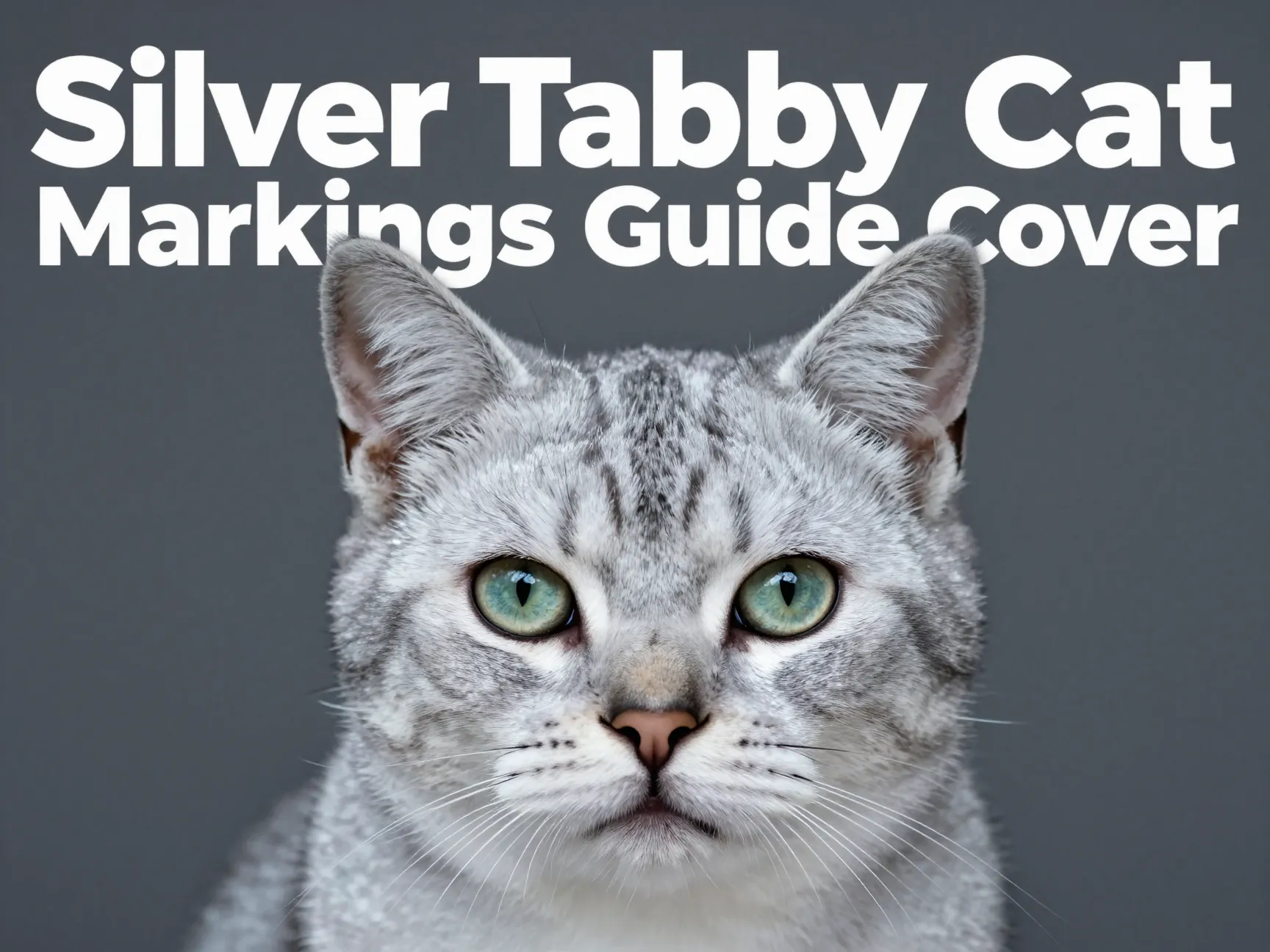
Every tabby cat, silver or otherwise, carries a distinctive “M” shaped marking on the forehead. On a silver tabby, this marking becomes especially striking because of the sharp contrast between the dark lines and the pale silver face.
The M marking typically sits directly above the eyes and is one of the most talked-about features in tabby folklore, often surrounded by charming (if unverified) legends about its origins. Regardless of the myths, experts agree it is a genuine hallmark of the tabby aesthetic, and on a silver coat it tends to look unusually crisp and graphic, almost like fine pen strokes on frost.
Beyond the forehead, silver tabbies also display:
- Fine lines running from the outer corner of the eyes toward the ears, sometimes called “mascara marks”
- Dark rims around the eyes that intensify eye color, especially green, hazel, or copper shades
- Vertical striping on the cheeks that frames the face symmetrically
- Spots or striping on the chin and jawline in some individuals
This facial patterning does more than look pretty. It visually frames the eyes, which is part of why silver tabbies are so heavily photographed. The dark facial lines against the pale silver background create a natural spotlight effect around the eyes.
3. The Classic Marbled Swirl Pattern
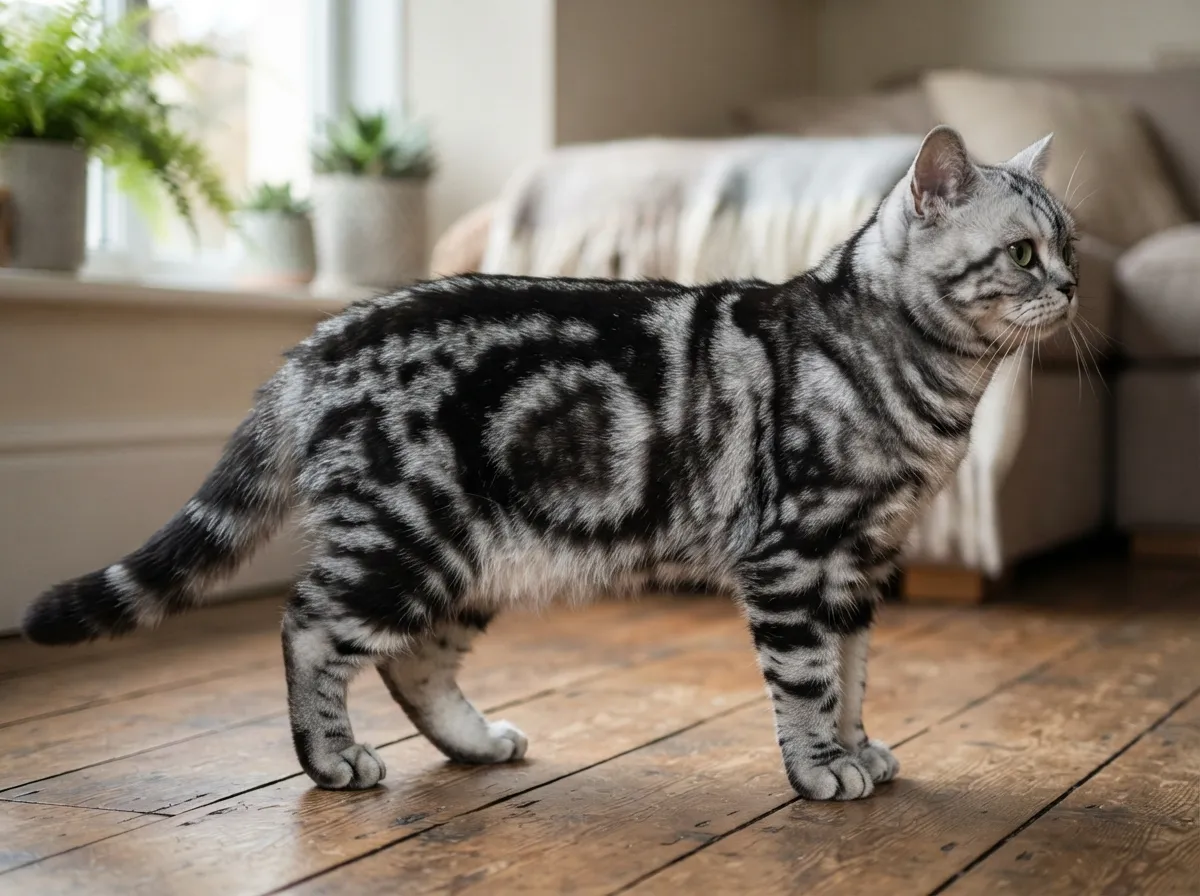
Among the six silver tabby cat aesthetic markings covered in this guide, the classic (also called blotched) pattern is arguably the most visually dramatic. This pattern is defined by broad, swirling bands of dark color that curve across the sides of the body, often forming a distinct “bullseye” or target shape just behind the shoulder.
In American Shorthairs and British Shorthairs, this pattern on a silver ground is considered one of the breed’s signature looks. The wide, marbled swirls stand out sharply against the pale background, creating a coat that almost resembles hand-painted marble or agate stone. Because the markings are broad rather than thin, they photograph exceptionally well, which is part of why classic silver tabbies dominate cat photography and social media feeds.
A well-defined classic pattern typically includes:
- A butterfly-shaped marking across the shoulders when viewed from above
- A bullseye swirl on each side of the body
- A dark stripe running down the spine, sometimes called the “spine line”
- Ring markings around the legs and tail
Breed judges look for symmetry between the left and right sides of the body, along with dense, unbroken lines. A blurry or fragmented swirl pattern is considered less desirable than one with clean, continuous curves.
4. The Sleek Mackerel Fishbone Stripes
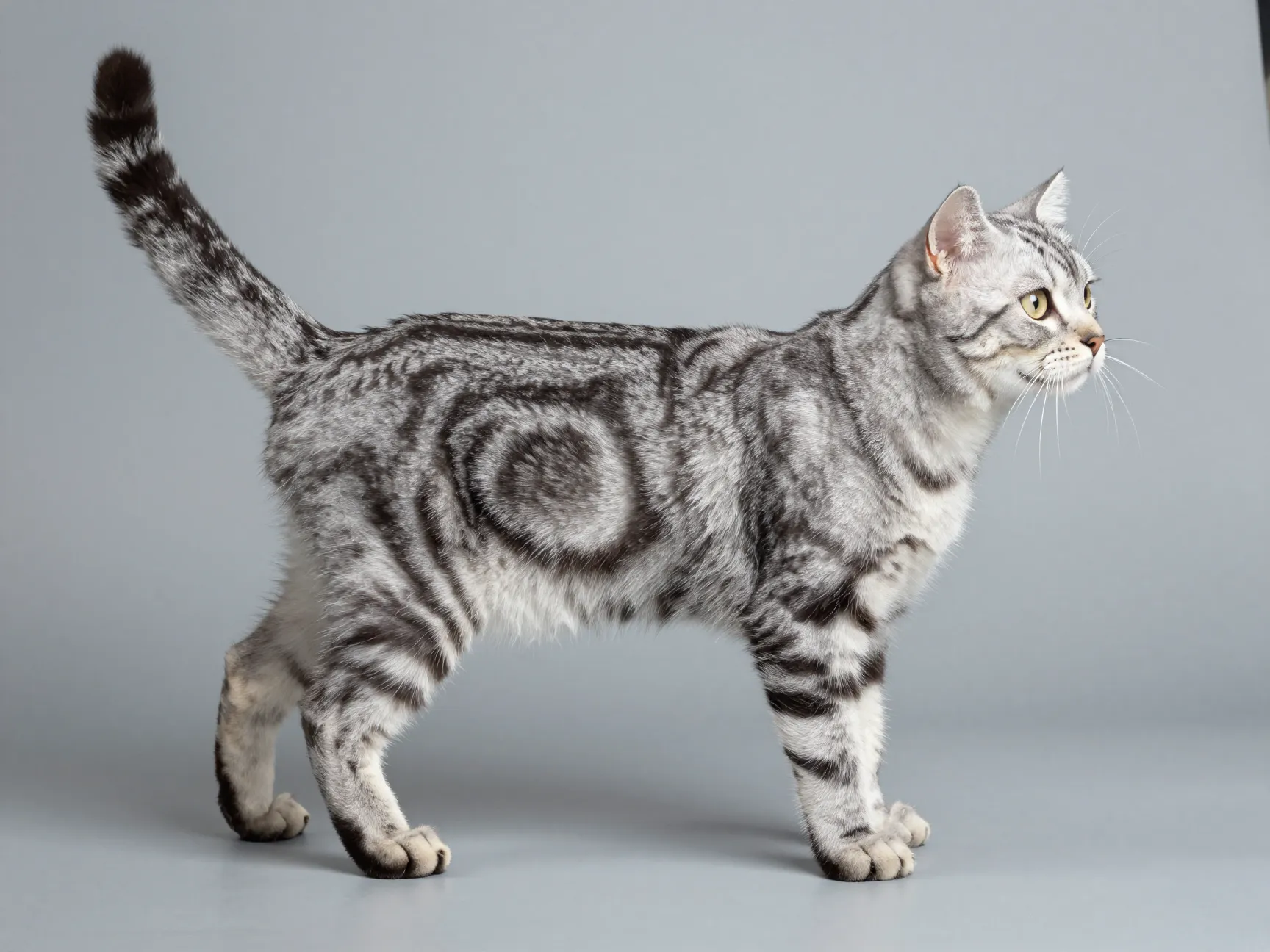
The mackerel pattern is the most common tabby pattern found in domestic cats, and on a silver coat it produces a particularly sleek, athletic appearance. Instead of broad swirls, mackerel tabbies show narrow, closely spaced vertical stripes running down the sides of the body, resembling the bones of a fish, which is exactly where the pattern’s nickname comes from.
This pattern is caused by a different, though related, version of the tabby gene compared to the classic pattern. On silver cats, the thin dark lines against the pale background create a striking sense of movement and muscle definition, which is why mackerel silver tabbies are often described as looking particularly lean and wild, even when they are fully domestic house cats.
Key features of the mackerel silver tabby look include:
- Narrow vertical stripes running perpendicular to the spine
- A continuous dark stripe along the top of the back
- Distinct ring markings encircling the legs and tail
- Stripes that may occasionally break into a broken mackerel pattern, blending toward spots
Because the stripes are thinner and more numerous than in the classic pattern, mackerel silver tabbies can sometimes appear almost silvery-gray from a distance, with the pattern only becoming fully visible up close or in direct light.
5. The Wild Spotted Rosette Pattern
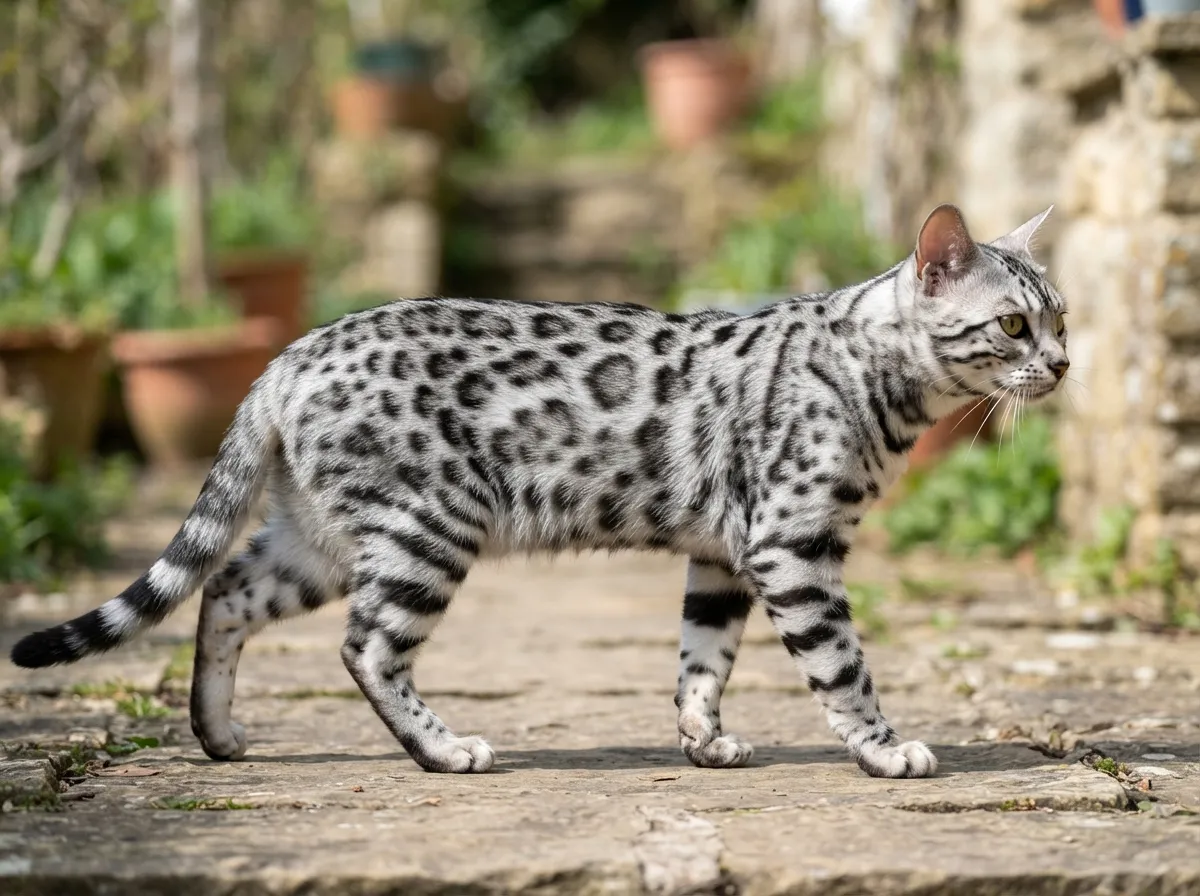
Spotted silver tabbies take the mackerel pattern and break it into distinct spots or rosettes rather than continuous stripes. The result is a coat that closely resembles a small wildcat, an effect that has made spotted silver patterns especially popular in British Shorthairs and hybrid breeds such as Bengals.
Genetically, the spotted pattern is understood as a variation on the mackerel gene, where modifying genes interrupt the stripes and reorganize them into rounded or elongated spots. On a silver background, these spots can appear almost inky, creating extremely high contrast that many breeders and owners consider the most eye-catching of all six silver tabby cat aesthetic markings.
Spotted silver tabbies often show:
- Rounded or oval spots scattered across the sides and back
- Rosette-style markings in hybrid breeds, where a lighter center is ringed by a darker outline
- Retained ring markings on the legs and tail, similar to mackerel cats
- A facial pattern that still includes the classic M marking and cheek striping
This pattern is relatively rare compared to classic and mackerel silver tabbies, which adds to its appeal among breeders and cat enthusiasts looking for a dramatic, wild-inspired appearance without crossing into true wildcat hybrids.
6. The Rare Ticked Agouti Shimmer
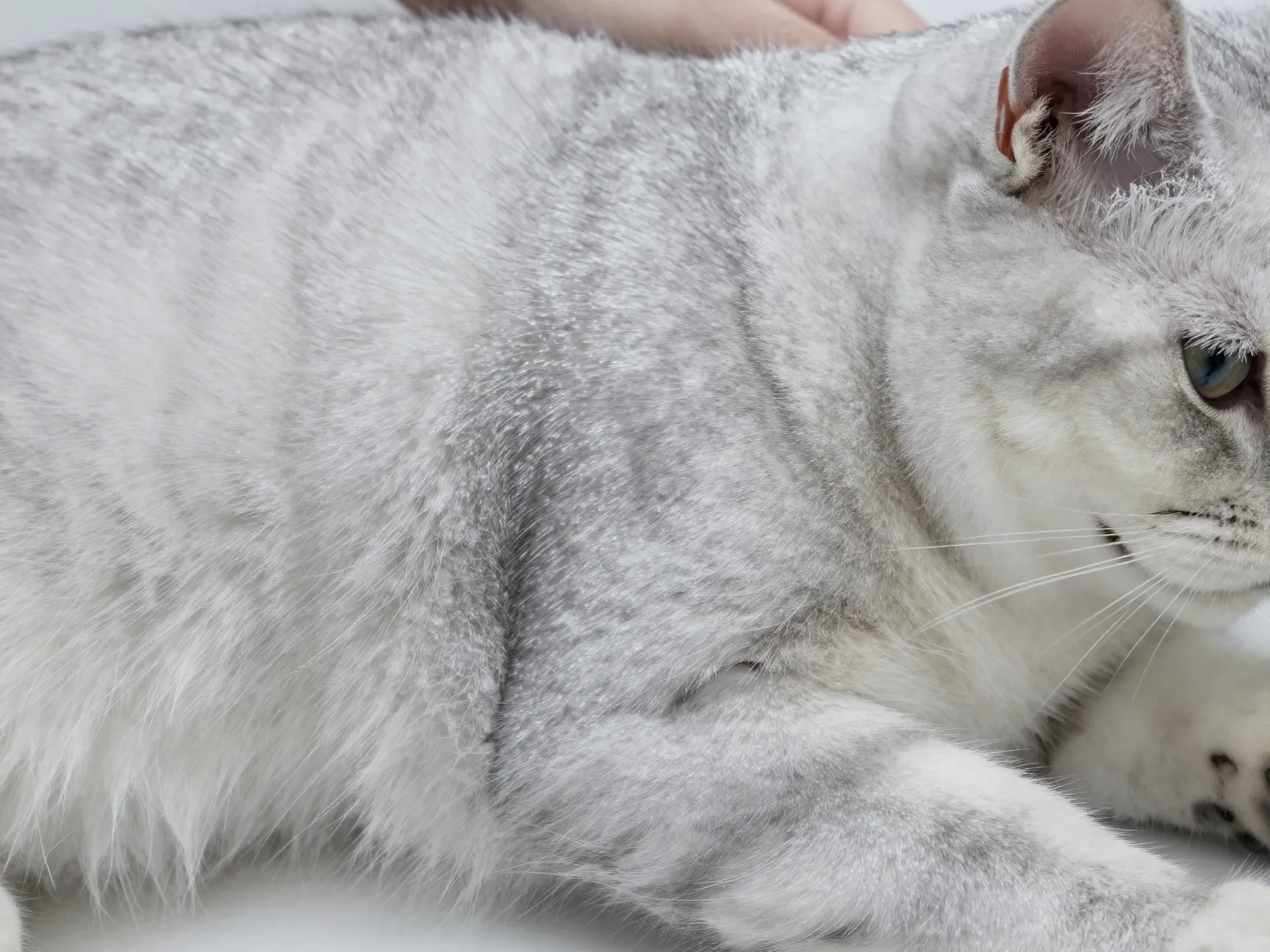
The sixth and most subtle of the six silver tabby cat aesthetic markings is the ticked, or agouti, pattern. Instead of clear stripes or spots across the body, ticked silver tabbies have individual hairs banded with alternating light and dark segments. From a short distance, the body can look almost uniformly silver, with the tabby pattern only fully visible on the face, legs, and tail.
This banding is the same agouti effect seen in wild rabbits and many rodents, and in cats it produces a coat that seems to shimmer evenly rather than showing bold, structured markings. Recent breed guides describe ticked silver tabbies as relatively rare and highly prized specifically because of this refined, understated glitter, which stands in contrast to the bold graphic patterns of the classic and mackerel types.
Typical features of a ticked silver tabby include:
- Banded hairs that create an overall shimmering, salt-and-pepper effect on the body
- A retained facial M marking and eye striping, even when the body pattern is faint
- Ringed markings on the legs and a striped or ringed tail
- A generally smoother, less patterned silhouette compared to other tabby types
Because the body markings are so subtle, some ticked silver tabbies are mistaken for solid silver or shaded cats. Checking the face and legs, where tabby markings almost always persist, is the most reliable way to confirm a ticked tabby pattern.
How to Identify True Silver Tabby Markings
Not every pale-coated tabby is technically a silver tabby. Distinguishing true silver genetics from a simply lighter version of a warm-toned tabby requires a closer look at the coat itself, not just a glance from across the room.
The most reliable method recommended by breed experts is to part the fur, rather than judge the coat from the surface. Gently separating the hair at a few key locations reveals the true base color underneath the visible tips.
| Check Point | What To Look For | What It Confirms |
|---|---|---|
| Base of the ears | Bright white or icy silver undercoat | True inhibitor gene presence |
| Elbows and inner legs | Pale, cool-toned base beneath darker guard hairs | Consistent silver expression |
| Forehead, near the M marking | Sharp contrast between dark lines and pale base | Strong, well-defined pattern |
| Belly and chest | Lighter overall tone with faint or absent markings | Typical silver tabby structure |
If the base of the hair is simply a paler shade of the same marking color, rather than a distinctly cool white or silver, the cat is likely a lighter-colored tabby rather than a true genetic silver. This distinction matters most in formal breeding and show contexts, but it is also a fun and genuinely useful skill for any cat owner curious about their pet’s coat genetics.
Eye color and nose leather can offer supporting clues as well. Breed standards commonly associate well-expressed silver tabby coats with green, hazel, or copper eyes, along with a brick-red nose outlined in black and dark paw pads. These features are not strict proof of silver genetics on their own, but combined with a clear undercoat check, they build a strong overall picture.
Silver Tabby Markings Across Cat Breeds
One of the more remarkable aspects of silver tabby genetics is how consistently the aesthetic translates across very different breeds. The inhibitor gene combines with whatever pattern and body type a breed already carries, producing recognizably “silver tabby” cats that still look distinctly British Shorthair, Persian, or American Shorthair.
British Shorthairs are especially well known for dense, richly marked classic and spotted silver tabby coats, often paired with the breed’s naturally round face and thick, plush coat texture. Persians show a softer version of the same patterns, since long hair naturally diffuses sharp lines into a more gently blended appearance. Breed standards still expect a clear, cool ground color in Persians, but warn that muddiness or a warm cast is a fault, even though the pattern itself reads as softer overall.
American Shorthairs are frequently cited as the breed most associated with the classic marbled silver tabby look, largely because the breed standard places heavy emphasis on bold, dense, high-contrast markings. Meanwhile, hybrid breeds such as Bengals combine the inhibitor gene with spotted or marbled patterns inherited from wildcat ancestry, producing dramatic silver-based rosettes that have become increasingly popular in 2020s breed and color guides.
This cross-breed consistency is part of why silver tabby cat aesthetic markings are considered such a magical, almost universal feature in the cat world. The same underlying genetics that create a silver Persian’s soft frosted coat also produce a British Shorthair’s bold spotted pattern and a Bengal’s striking silver rosettes.
Frequently Asked Questions
Are silver tabby cats a specific breed?
No. Silver tabby refers to a coat color and pattern combination, not a breed. It appears across many breeds, including British Shorthair, Persian, American Shorthair, and various hybrid breeds.
Why do some silver tabbies look almost white?
Cats with a ticked or agouti pattern, or those with shaded or tipped coats rather than a true tabby pattern, tend to show much fainter body markings. The tabby pattern is often still visible on the face and legs even when the body looks nearly solid silver.
Is a silver tabby the same as a gray cat?
Not exactly. A solid gray cat lacks the pigment-suppressing inhibitor gene’s contrast effect and does not show the characteristic pale base with dark tips. A true silver tabby has a distinctly frosted, two-toned hair structure rather than an even gray color throughout.
What eye colors are common in silver tabbies?
Green, hazel, and copper are the most frequently cited eye colors in breed standards for silver tabbies, though exact expectations vary by breed.
Can silver tabby markings change as a kitten grows?
Yes. Many kittens are born with softer, less defined markings that sharpen and darken over the first year of life as the coat matures and the contrast between the silver base and dark tips becomes more pronounced.
Conclusion
The six silver tabby cat aesthetic markings covered in this guide, the frosted ground color, the bold facial M marking, the classic marbled swirl, the mackerel fishbone stripe, the wild spotted rosette, and the rare ticked agouti shimmer, all trace back to the same genetic foundation: a pigment-suppressing gene layered over a classic tabby pattern. That shared origin is exactly why the silver tabby look feels so consistently magical, whether it appears on a plush British Shorthair, a soft-coated Persian, or a lean Bengal.
Anyone evaluating a silver tabby, whether for a breed show, an adoption decision, or simple curiosity, should start by parting the fur at the ears, elbows, and forehead to confirm a genuinely pale, cool undercoat rather than a warm-toned imitation. From there, identifying which of the six pattern types is present, classic, mackerel, spotted, ticked, or a blend, offers a deeper appreciation of exactly what makes that particular cat’s coat so visually striking. Understanding these markings does more than satisfy curiosity; it provides a genuine framework for recognizing and appreciating one of the most photogenic and genetically fascinating coat types in the entire cat world.