Key Russian Blue Cat Personality Traits Every Owner Should Know
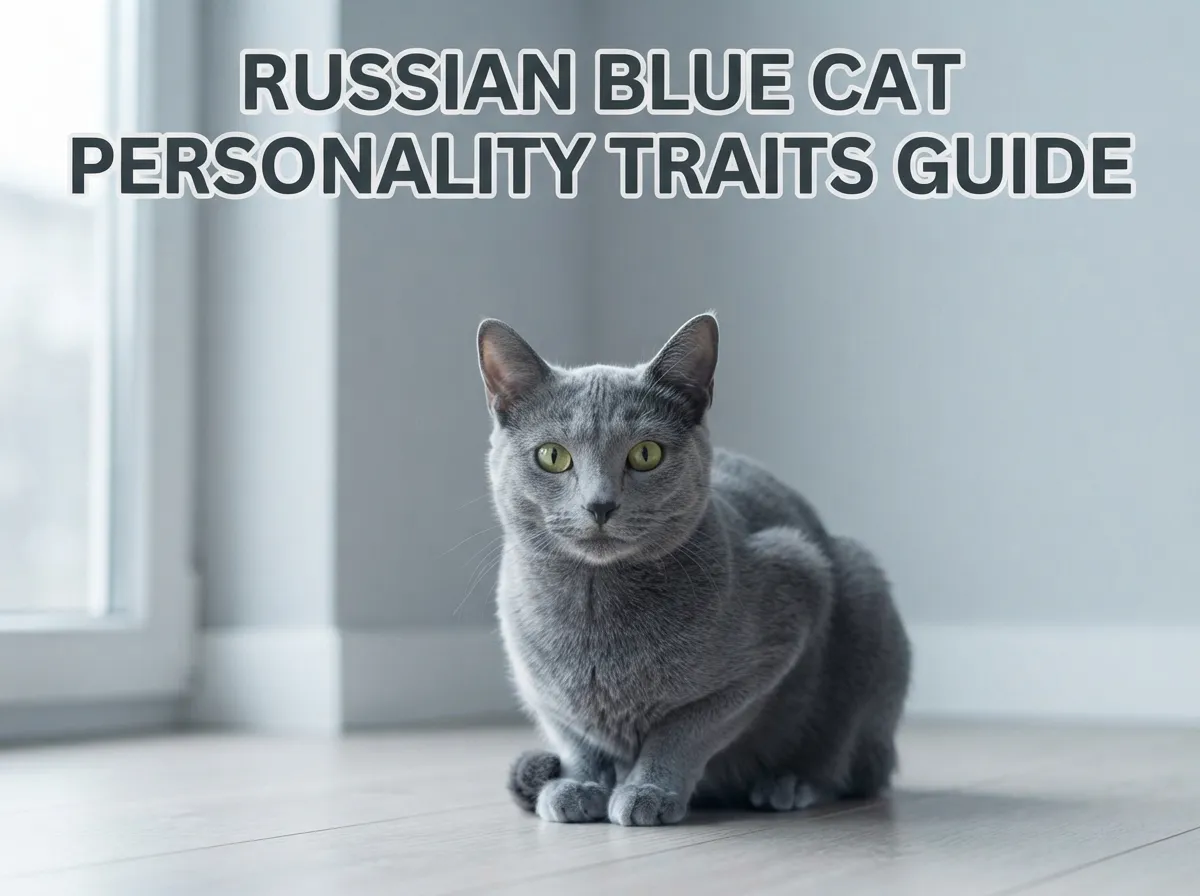
A Russian Blue will greet a stranger with silence, vanish under the sofa within seconds, and then, an hour later, quietly settle against the one person it trusts most in the house. That contradiction confuses a lot of new owners, but it is not confusion at all. It is the breed working exactly as it was built to work. Understanding the 6 Key Russian Blue Cat Personality Traits Every Owner Should Know is the difference between labeling this cat “cold” and recognizing one of the most emotionally loyal, intelligent, and low-maintenance companions in the feline world.
Disclosure: This post contains affiliate links. As an Amazon Associate, we earn from qualifying purchases, and at no extra cost to you.
Russian Blues have earned a reputation as the thinking person’s cat. They are not aloof for the sake of being difficult. Their behavior follows a consistent pattern rooted in sensitivity, intelligence, and a strong preference for calm, stable environments. Owners who study these traits before bringing one home tend to build stronger relationships with far fewer behavioral surprises.
Key Takeaways
- Russian Blues bond intensely with one primary person and often treat that relationship as central to their sense of security.
- Shyness around visitors and new environments is normal breed behavior, not a sign of poor socialization or illness.
- High intelligence means these cats need mental stimulation, puzzle toys, and consistent routines to stay balanced.
- Quiet by nature, Russian Blues still use soft, deliberate vocalizations to communicate specific needs.
- Emotional sensitivity is real: unpredictable homes or long stretches of neglect can trigger anxiety in this breed.
The 6 Key Russian Blue Cat Personality Traits Every Owner Should Know at a Glance
Before exploring each trait in depth, it helps to see the full picture side by side. The table below summarizes the six defining behaviors that consistently show up across 2025 and 2026 breed guides and veterinary behavior assessments.
| Trait | Core Behavior | What It Means for Owners |
|---|---|---|
| 1. Deep Loyalty | Forms one primary bond | Expect a favorite person; build trust slowly |
| 2. Reserved With Strangers | Hides or avoids visitors | Never force interaction with guests |
| 3. High Intelligence | Solves problems, opens doors | Provide puzzle feeders and enrichment |
| 4. Quiet but Purposeful | Soft, deliberate vocal cues | Learn to read specific meows |
| 5. Affectionate, Not Clingy | Seeks contact on its terms | Let the cat initiate closeness |
| 6. Controlled Playfulness | Active in short, focused bursts | Schedule brief, structured play sessions |
These six traits rarely appear in isolation. A Russian Blue that feels secure in its routine will show all of them in a balanced, predictable way. One that feels unsettled may lean harder into shyness or withdrawal. Keeping that connection in mind makes the rest of this guide far more useful.
1. Deep Loyalty and Strong Bonding to One Person
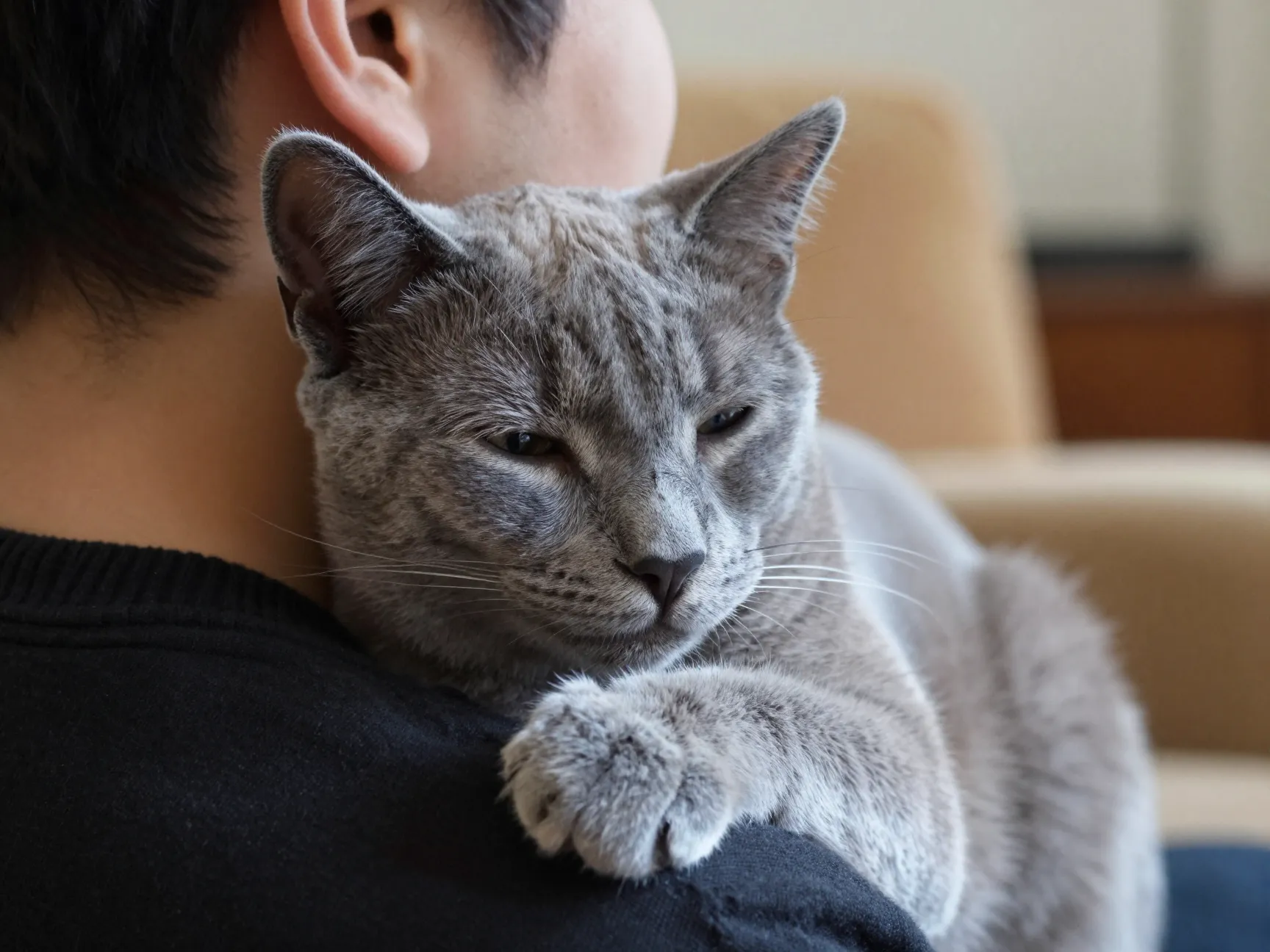
Russian Blues are famous for choosing a favorite. While the cat may tolerate the rest of the household politely, one person usually becomes the emotional anchor of its world. This is not favoritism out of stubbornness. It reflects how the breed processes trust: slowly, carefully, and with long memory.
Owners often describe their Russian Blue following them from room to room, waiting by the door before they arrive home, or choosing to nap only in spaces where that person spends time. This attachment tends to deepen over months, not days. Rushing the bonding process, forcing cuddles, or expecting instant affection usually backfires with this breed.
Building the bond works best through consistency rather than intensity. Feeding at the same times, using a calm voice, and allowing the cat to approach on its own schedule accelerates trust far more than persistent handling. Once that bond forms, it tends to be remarkably stable. Russian Blues are not known for switching favorites unless there is a major disruption, such as a long absence or a new household member taking over daily care.
This trait also explains why rehoming or major household changes can hit this breed harder than most. A cat that has invested its trust in one routine and one person needs time and patience to rebuild that same sense of security elsewhere.
2. Reserved and Shy With Strangers and Visitors
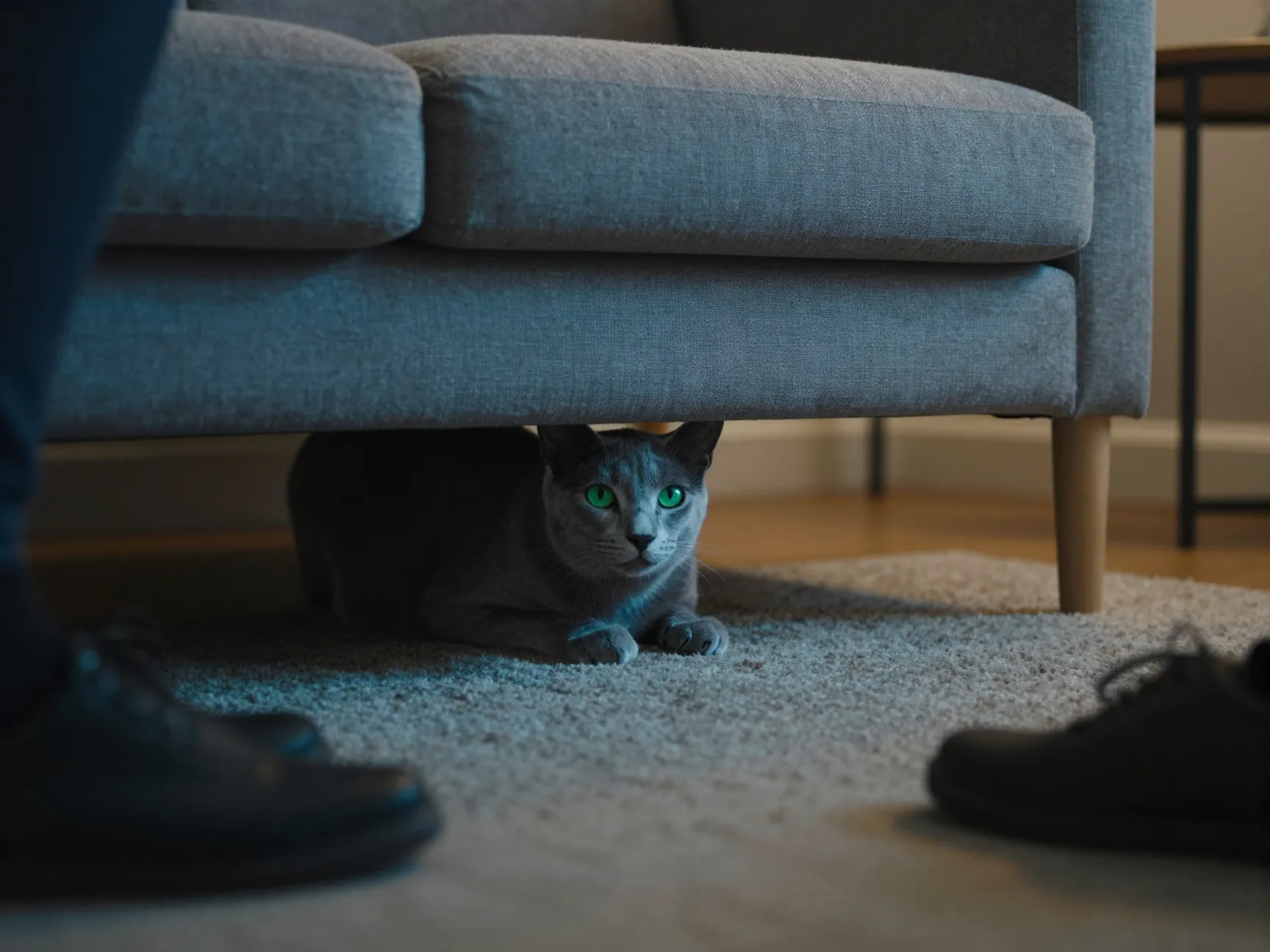
New owners are sometimes alarmed the first time a dinner guest arrives and the family cat disappears entirely. With Russian Blues, this is standard behavior, not a red flag. The breed is naturally cautious with unfamiliar people, loud environments, and sudden changes in household energy.
This shyness is rooted in temperament, not trauma or poor socialization. Even Russian Blues raised in warm, attentive homes from kittenhood often retain a instinct to retreat when strangers appear. They may watch from a doorway, observe from a high shelf, or hide completely until the visitor leaves.
The most effective approach is to let the cat set the pace. Forcing introductions, picking the cat up to “show it off,” or cornering it near a new guest almost always increases stress rather than reducing it. Over repeated calm exposures, many Russian Blues will eventually observe visitors from a comfortable distance, though full interaction with non-family members remains rare for most individuals.
Owners who understand this trait early avoid a common mistake: assuming the cat dislikes people in general. In reality, the same cat that hides from a guest may be draped across its favorite person’s lap an hour later. The shyness is situational, not a fixed personality flaw.
3. High Intelligence and Problem-Solving Behavior
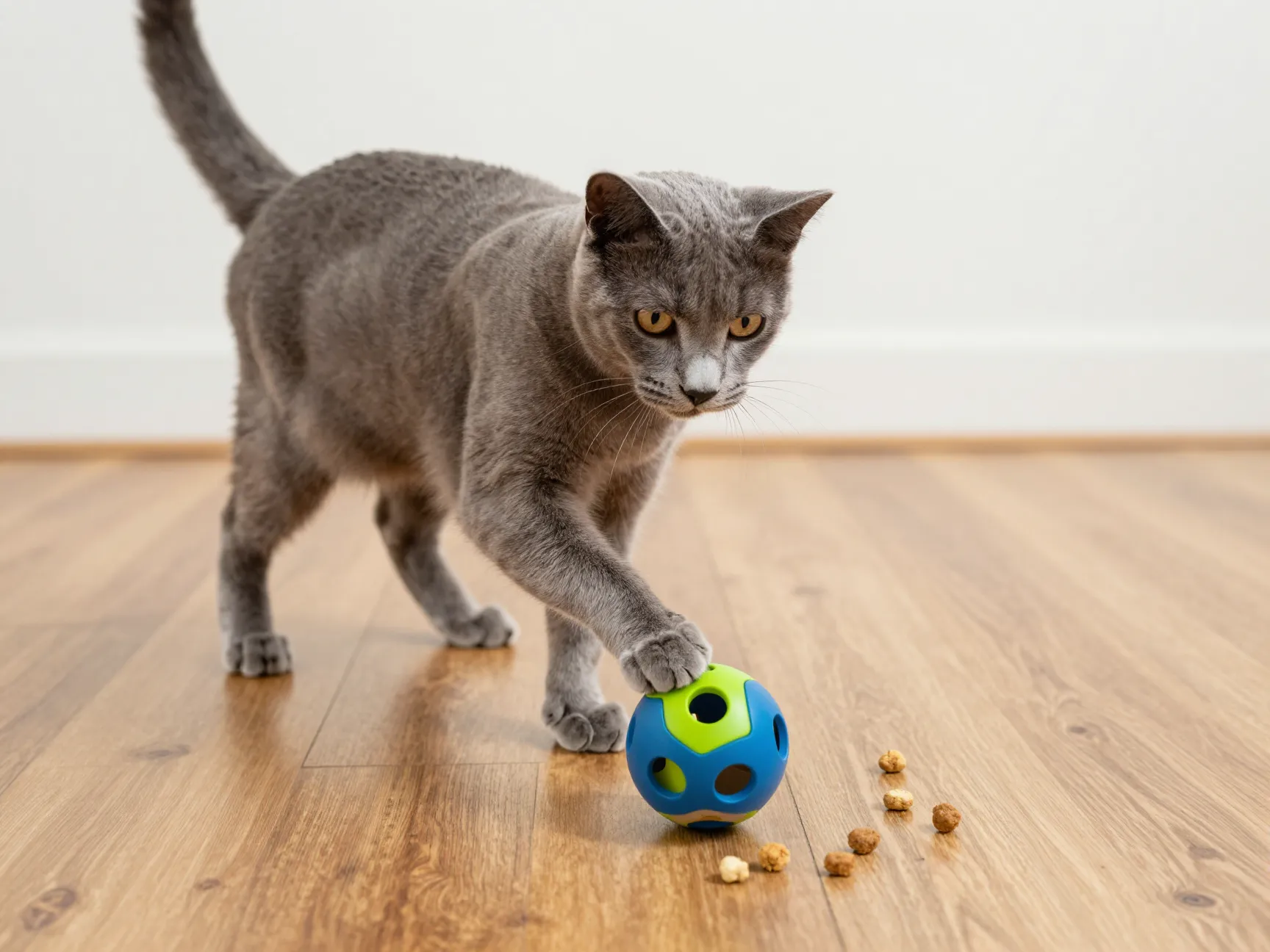
Russian Blues rank consistently among the more intelligent domestic cat breeds, and that intelligence shows up in practical, sometimes inconvenient ways. They learn how door handles work. They figure out which cabinet holds the treats. They notice patterns in daily routines faster than most owners expect.
This problem-solving drive means a bored Russian Blue is more likely to get creative than destructive. Compared to breeds that respond to boredom with scratching furniture or chewing cords, Russian Blues tend to channel intelligence into exploration, observation, and occasionally outsmarting simple cat-proofing efforts.
Because of this trait, mental enrichment matters as much as physical exercise. Puzzle feeders, treat-dispensing toys, and rotating novel objects keep the mind engaged. Many owners find their Russian Blue responds well to basic training, including leash walking, simple commands, and even fetch, which is unusual among cat breeds generally.
The table below highlights how intelligence-driven enrichment differs from generic play:
| Enrichment Type | Example | Why It Works for Russian Blues |
|---|---|---|
| Puzzle feeders | Treat balls, sliding puzzles | Satisfies problem-solving instinct |
| Training sessions | Clicker training, simple cues | Builds bond and mental engagement |
| Rotating toys | Swap toys weekly | Prevents boredom from repetition |
| Vertical exploration | Cat trees, shelves | Encourages observation and control |
Owners who skip mental stimulation sometimes see a Russian Blue redirect that energy toward less desirable behavior, such as opening drawers or unlatching cabinets. Intelligence in this breed is not optional to manage. It is a core trait that needs an outlet.
4. Quiet Demeanor, but Capable of Purposeful Vocalizing
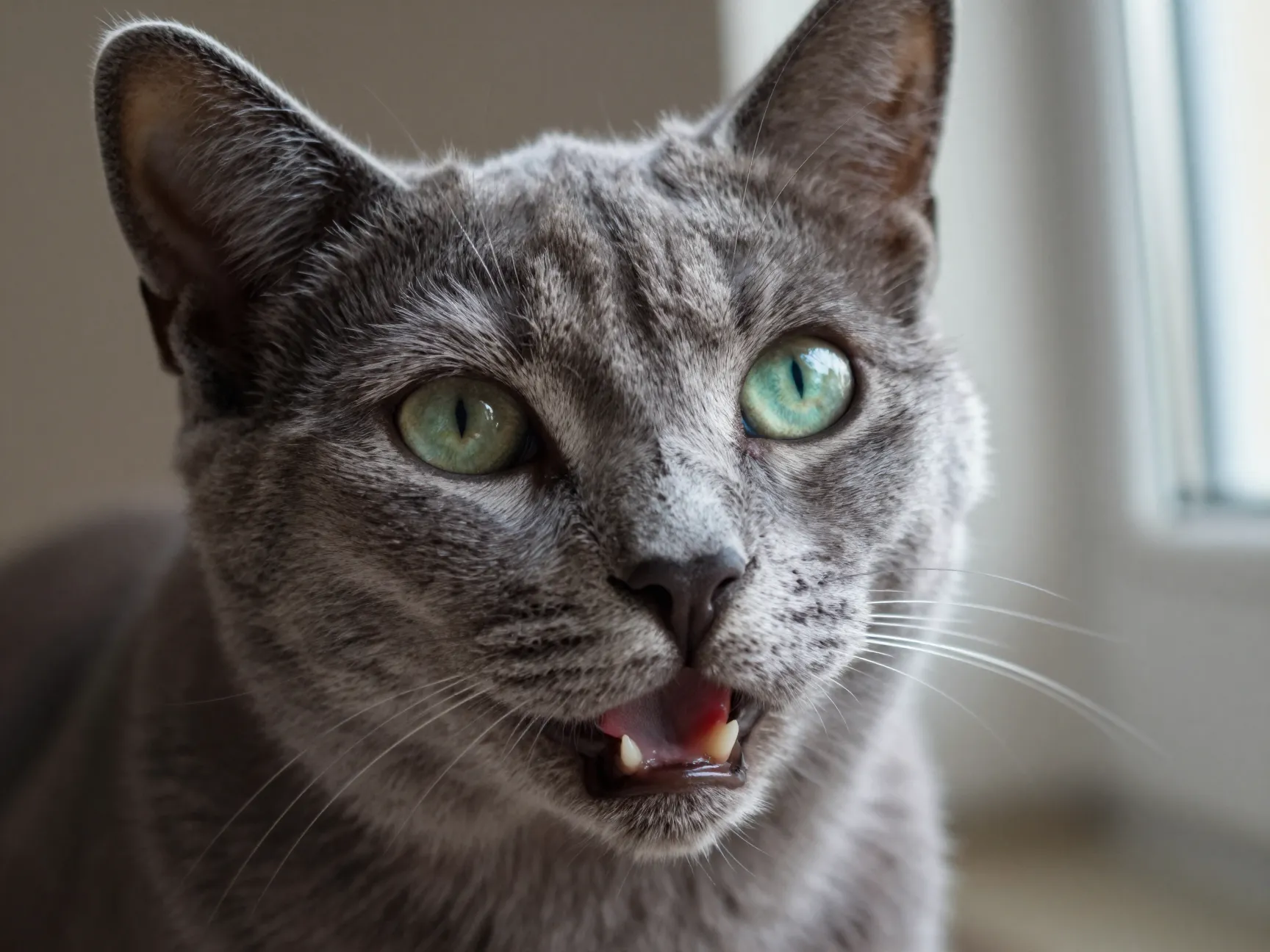
Russian Blues are often described as one of the quietest cat breeds, and for the most part that reputation holds up. They are not prone to constant chatter or attention-seeking yowling. However, quiet does not mean silent or unexpressive.
When a Russian Blue does vocalize, it is typically for a specific reason. A soft chirp near an empty food bowl, a short meow at the door when a favorite person leaves, or a particular tone during play are all common examples of purposeful communication rather than random noise.
Owners who pay attention to these vocal cues often find their cat has a small, consistent “vocabulary” of sounds tied to specific needs. Learning to distinguish a hunger meow from a greeting chirp helps owners respond appropriately without over-interpreting every sound as distress.
This trait also matters for households sensitive to noise, such as apartments or multi-pet homes. A Russian Blue is unlikely to disrupt a household with excessive vocal demands, but a sudden increase in vocalization should not be dismissed. Since these cats are naturally quiet, a noticeable change in vocal behavior can be an early signal of stress, pain, or an unmet need.
5. Affectionate and Emotionally Attuned, but Not Clingy

Russian Blues occupy a specific middle ground in the affection spectrum. They are not distant, but they are also not the type of cat that demands constant physical contact. Affection tends to show up in proximity rather than nonstop touching.
A Russian Blue might choose to sit near its person rather than directly on them, or wait quietly nearby while someone works instead of interrupting for attention. This is often described as emotionally attuned behavior: the cat seems to sense mood shifts and responds accordingly, offering closeness during calm moments and giving space during stress or activity.
A Russian Blue’s affection often looks like patience rather than persistence, choosing presence over demanding attention.
This balance makes the breed appealing to owners who want a warm companion without constant physical dependency. It also means forced affection, such as picking the cat up frequently against its preference, can undermine trust built over time. Respecting the cat’s terms for closeness tends to produce a more secure, affectionate relationship long term.
Because Russian Blues are so attuned to household mood, tension, arguments, or chaotic environments can visibly affect their behavior. Many owners notice their cat retreating during loud conflicts, then returning once calm resumes. This sensitivity is part of what makes the breed feel emotionally responsive in a way some owners compare to a quiet, observant companion rather than a typical pet.
6. Playful and Active in a Controlled, Thoughtful Way
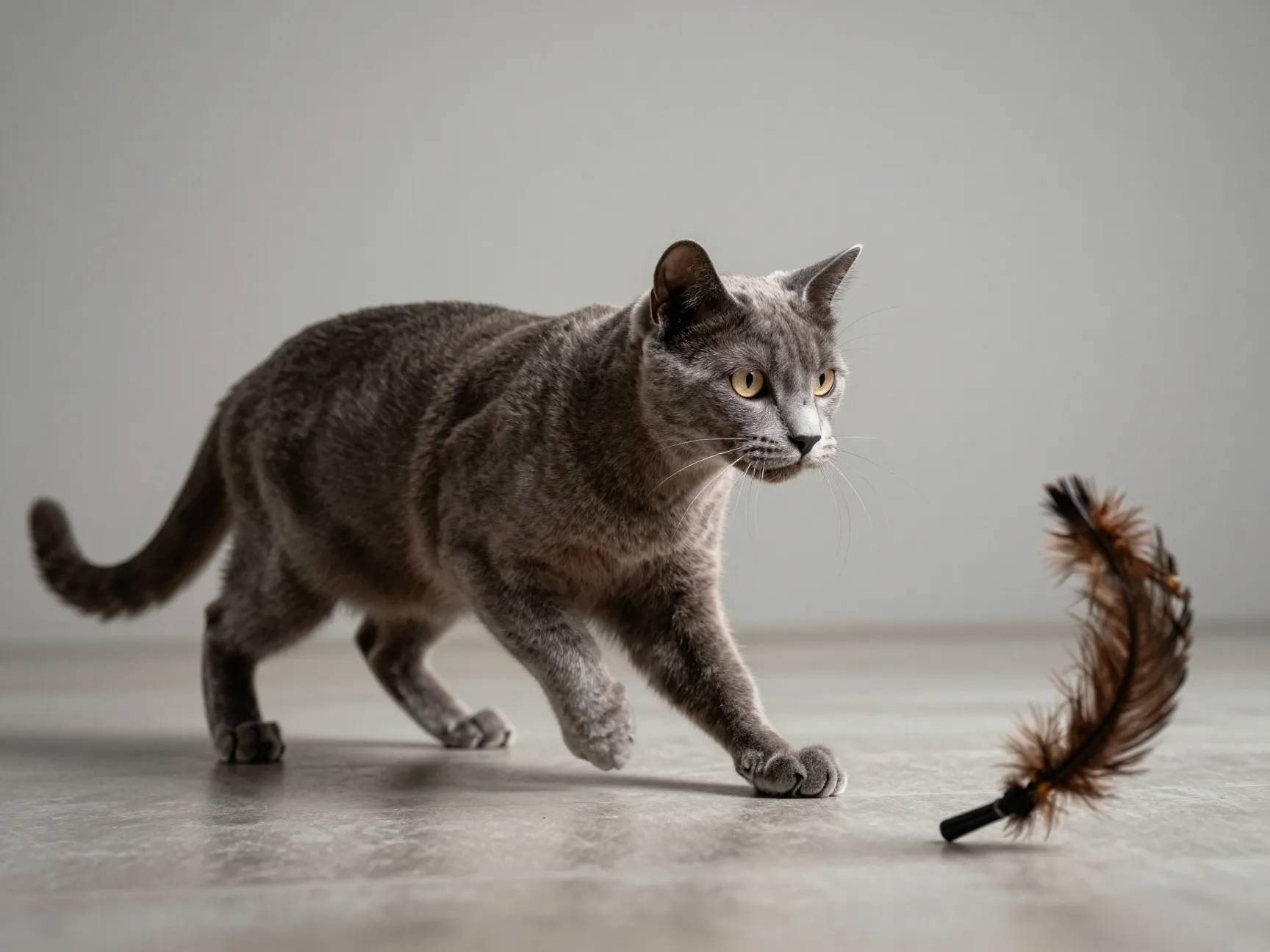
Russian Blues are active cats, but their play style differs from breeds known for nonstop energy. Play tends to come in short, focused bursts rather than prolonged chaotic activity. A Russian Blue might chase a toy with intense precision for several minutes, then walk away entirely satisfied rather than needing extended sessions.
This controlled playfulness reflects the same intelligence discussed earlier. Rather than random energy release, play often looks purposeful, almost strategic, as the cat tracks movement, calculates angles, or works out how to retrieve a toy from under furniture.
Daily structured play remains important even though sessions are short. A consistent 10 to 15 minute window using wand toys or interactive feeders tends to satisfy this breed’s activity needs without overstimulation. Owners who skip play entirely may notice restlessness or attention-seeking behavior later in the day, since the need for controlled physical and mental engagement does not disappear on its own.
Unlike breeds that thrive on chaotic zoomies, Russian Blues generally prefer play that feels like a small challenge rather than random exertion. This makes them well suited to interactive toys that mimic hunting behavior, such as feather wands or slow-moving mechanical toys, over toys that only encourage frantic, undirected movement.
What These 6 Key Russian Blue Cat Personality Traits Every Owner Should Know Mean for Daily Life
Understanding each trait individually is useful, but the real value comes from seeing how they interact in a real household. Russian Blues consistently show a strong preference for routine and predictable environments. Sudden schedule changes, loud households, or frequent rearranging of furniture can visibly unsettle this breed more than most.
This preference for stability connects directly to the breed’s emotional sensitivity. Because Russian Blues bond deeply and observe their environment closely, neglect or chronic unpredictability carries a higher risk of triggering anxiety compared to more resilient, adaptable breeds. Signs of stress can include excessive hiding, changes in appetite, over-grooming, or a shift from the breed’s normal quiet vocal pattern to more frequent or unusual sounds.
The good news is that Russian Blues are also well mannered and highly trainable, which makes prevention straightforward. A few practical habits go a long way:
- Keep feeding, play, and quiet time on a consistent daily schedule.
- Provide at least one dedicated quiet retreat space away from household traffic.
- Introduce changes gradually, whether that means new furniture, new pets, or new routines.
- Respect the cat’s need for alone time while still offering daily one-on-one interaction.
- Watch for subtle behavior shifts as early indicators of stress rather than waiting for obvious symptoms.
Russian Blues are genuinely social cats, but they tolerate alone time well when their core emotional and physical needs are met consistently. This makes them a strong fit for owners with regular but not extreme work schedules, as long as daily interaction remains predictable rather than sporadic.
Because this breed is generally non-destructive and well behaved, many of the daily life challenges owners face are emotional rather than behavioral. The cat is unlikely to shred furniture out of boredom, but it may quietly withdraw if its emotional needs go unmet for too long. Recognizing that distinction is one of the most important owner takeaways from the 6 Key Russian Blue Cat Personality Traits Every Owner Should Know.
Frequently Asked Questions
Are Russian Blue cats good for first-time owners?
Yes, with the right expectations. Their quiet, well-mannered nature suits first-time owners, provided the household understands the need for patience during bonding and respect for the cat’s cautious approach to strangers.
Do Russian Blues get along with other pets?
Generally yes, especially when introductions happen gradually. Their reserved nature means slow, low-pressure introductions work far better than immediate close contact.
Why does my Russian Blue hide from guests every time?
This is standard breed behavior rooted in natural caution, not poor socialization. Forcing interaction typically increases stress rather than resolving the shyness.
How much playtime does a Russian Blue actually need?
Short, focused sessions of 10 to 15 minutes once or twice daily are usually sufficient, given the breed’s preference for controlled, purposeful activity over prolonged play.
Can Russian Blues be left alone during work hours?
Yes, as long as their environment and routine remain consistent and they receive quality interaction before and after the workday. Chronic neglect, not occasional alone time, is what raises anxiety risk.
Conclusion: Bringing the 6 Key Russian Blue Cat Personality Traits Every Owner Should Know Together
Russian Blues reward patience with a level of loyalty and emotional depth that surprises many first-time owners. Deep bonding, cautious shyness, sharp intelligence, quiet but meaningful communication, measured affection, and thoughtful playfulness are not separate quirks. They form one consistent personality shaped by sensitivity and a need for stability.
Owners who internalize the 6 Key Russian Blue Cat Personality Traits Every Owner Should Know are far better equipped to build trust quickly, avoid common misunderstandings, and prevent the anxiety that can develop when this breed’s emotional needs go unnoticed. The practical next step is simple: establish a predictable daily routine, respect the cat’s pace with new people, provide regular mental enrichment, and stay alert to small behavior changes as early signals rather than waiting for obvious problems.
Handled with that level of attentiveness, a Russian Blue tends to become one of the most steady, emotionally rewarding companions an owner can have, quiet on the surface, but deeply attuned underneath.