Cute Cat Sketch Styles To Practice For Instant “Aww” Factor
A single circle, two triangles, and one oversized eye can trigger a reflexive smile in under three seconds. That is not an accident. Character designers have known for decades that rounded shapes and exaggerated proportions hijack the same visual cues humans use to recognize babies and kittens, which is exactly why cartoon cats consistently outperform photorealistic ones in likes, shares, and saves. Mastering 6 Cute Cat Sketch Styles To Practice For Instant “Aww” Factor gives beginner and intermediate artists a structured way to tap into that response without guessing what works.
Disclosure: This post contains affiliate links. As an Amazon Associate, we earn from qualifying purchases, and at no extra cost to you.
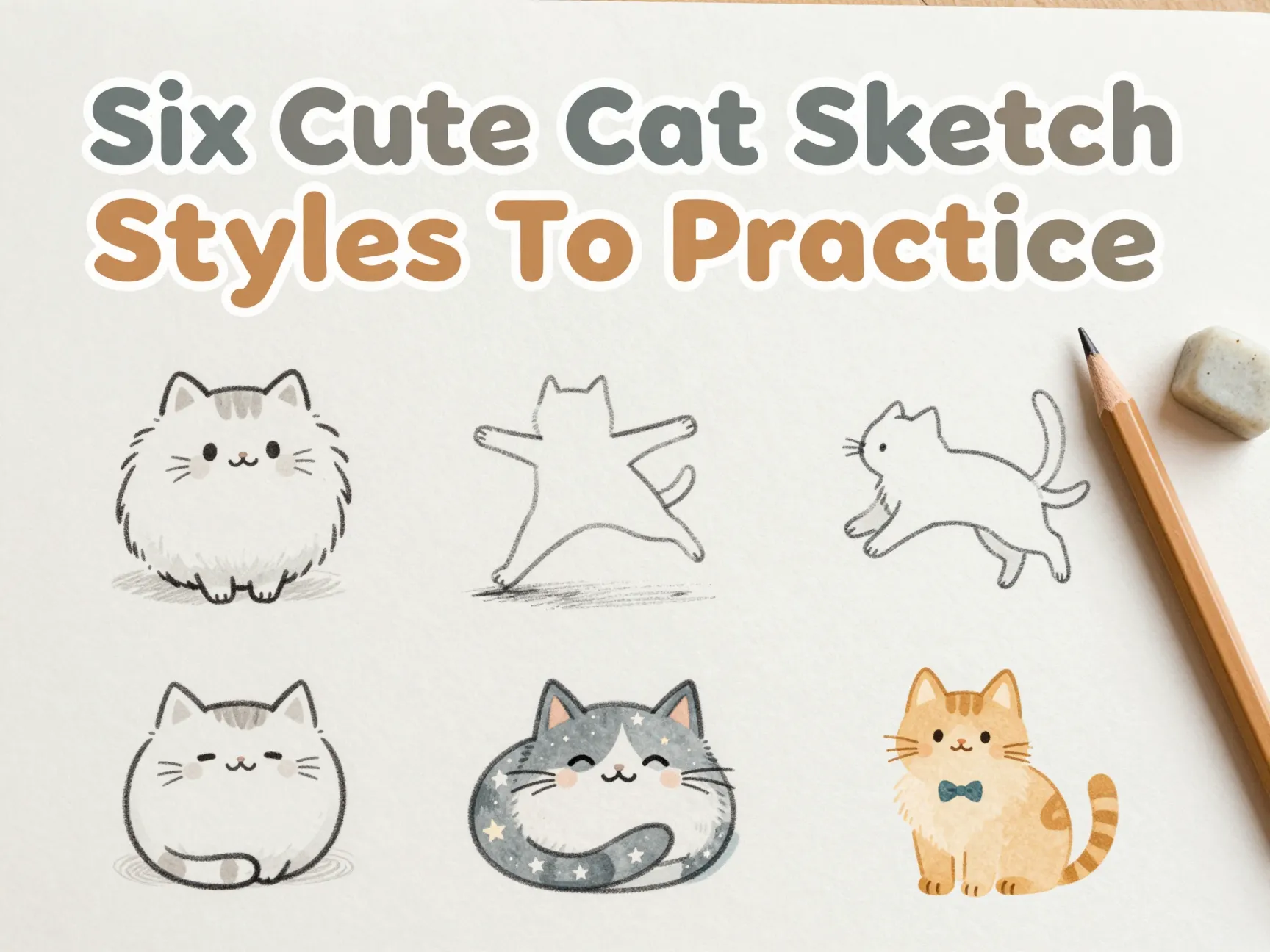
This guide breaks down six distinct, practice-ready styles pulled from current drawing trends, from chunky chibi cats to gesture-based motion sketches. Each style includes the shapes to start with, the proportions that sell the cuteness, and quick drills to build muscle memory. No single style is objectively “best.” Instead, cycling through all six sharpens different skills while keeping practice sessions varied enough to actually stick.
Key Takeaways
- Cuteness in cat sketches comes from exaggerated proportions, rounded forms, and simplified detail, not technical realism.
- The six core styles to practice are chibi/mochi cats, minimalist line cats, gesture/motion cats, cozy curled-up cats, fantasy cats, and costume or prop cats.
- Short, repeated 30-second to 5-minute sketches build skill faster than one long, perfected drawing.
- Circles and ovals remain the foundation for nearly every cute cat style, regardless of final polish level.
- Combining structural accuracy from tutorial hubs with character-driven flair from idea lists produces the widest stylistic range.
What Makes a Cat Sketch Instantly Cute
Before diving into the six styles, it helps to understand the shared visual language behind almost every “aww”-inducing cat drawing published across major tutorial and idea-list sites in recent years. Across sources ranging from step-by-step anatomy guides to massive drawing-idea compilations, the same handful of principles keeps showing up.
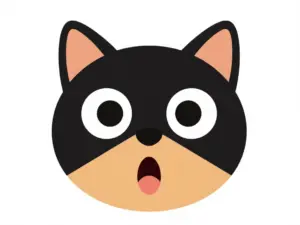
First, proportions get flipped. A realistic cat has a head roughly one-fifth the size of its body. A cute cat sketch often inverts that ratio, giving the head 40 to 60 percent of the total visual weight. This mirrors the same “baby schema” effect used in mascot design, plush toys, and emoji faces.
Second, edges soften. Sharp angles read as alert, wild, or aggressive. Rounded, flowing curves read as relaxed and approachable. That is why almost every cute cat guide recommends building from circles and ovals rather than boxes or wedges.
Third, detail gets rationed. A single well-placed whisker line or one subtle blush mark often communicates more charm than a fully rendered coat. Overworking fur texture tends to push a sketch toward realism, which reduces the exaggerated appeal that makes stylized cats so shareable.
Finally, expression carries the emotional payload. Large, slightly lowered eyes, a tiny closed mouth, or a single curved line for a smile do more work than an anatomically correct face. These four principles, oversized head, rounded shapes, minimal detail, and expressive eyes, form the backbone of every style covered below.
The 6 Cute Cat Sketch Styles To Practice For Instant “Aww” Factor
Each of the following styles isolates a different combination of the principles above. Treat this list as a rotating practice set rather than a one-time tutorial. Spend ten to fifteen minutes on each style per session, and revisit the full set weekly to notice steady improvement.
1. Chibi Mochi Cat
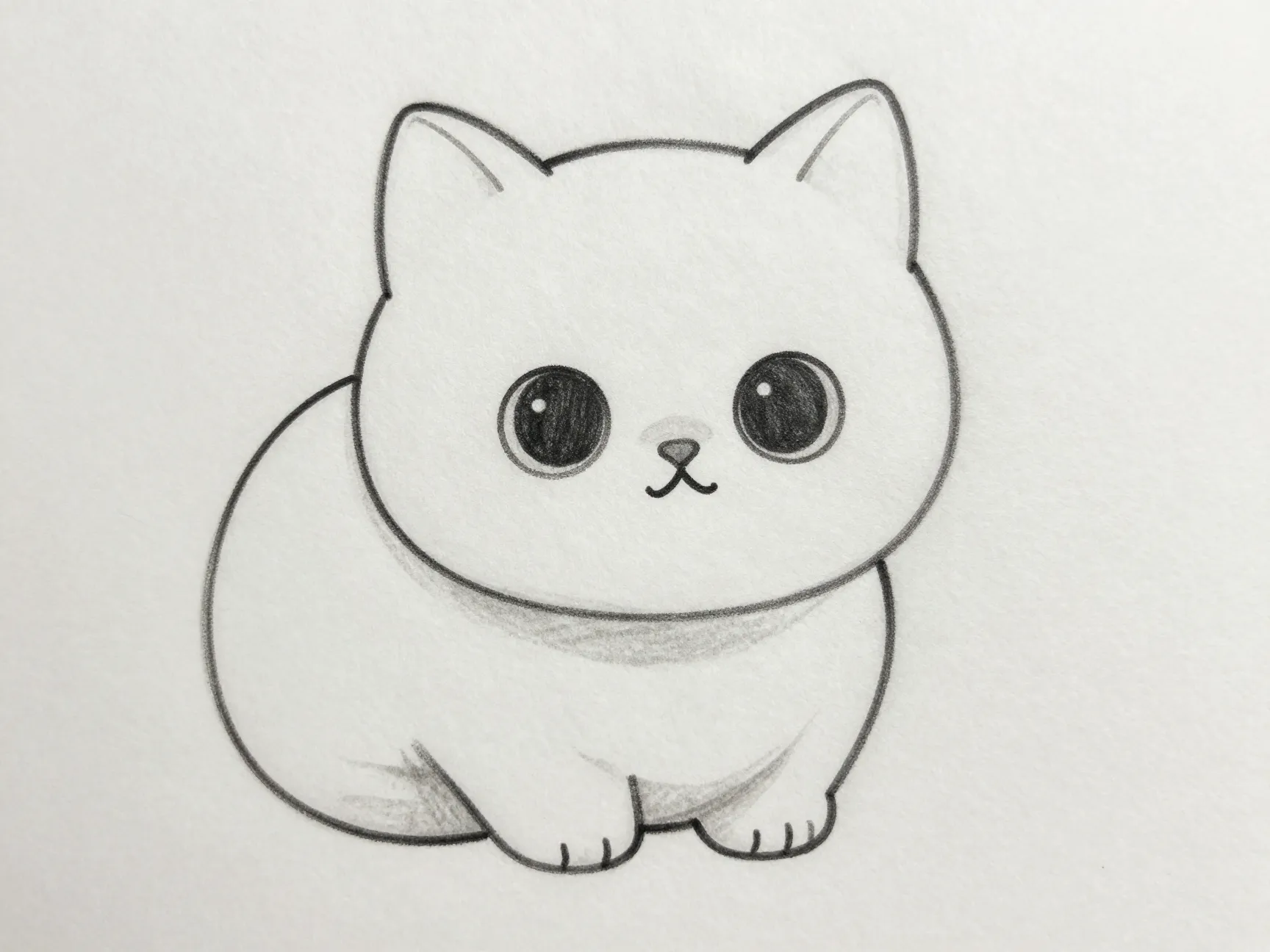
The chibi mochi style takes exaggeration to its most extreme, useful point. The body becomes a soft, dumpling-like blob, often no taller than the head itself. Limbs shrink into small stubs or disappear entirely beneath the rounded silhouette.
To sketch one, start with a large circle for the head and a slightly smaller, squished oval directly beneath it for the body, letting the two shapes overlap so there is no visible neck. Place two enormous eyes low on the face, taking up nearly a third of the head’s height, then add a tiny triangle nose and a small curved mouth. Two rounded triangle ears finish the silhouette. This style is currently favored in cute-drawing-idea guides specifically because the marshmallow-like body reads as instantly huggable, even to viewers who do not consider themselves cat people.
Practice drill: draw five chibi mochi cats in a row, changing only the ear angle and eye shape each time, to see how small tweaks shift the personality without altering the core proportions.
2. Minimalist Line Cat
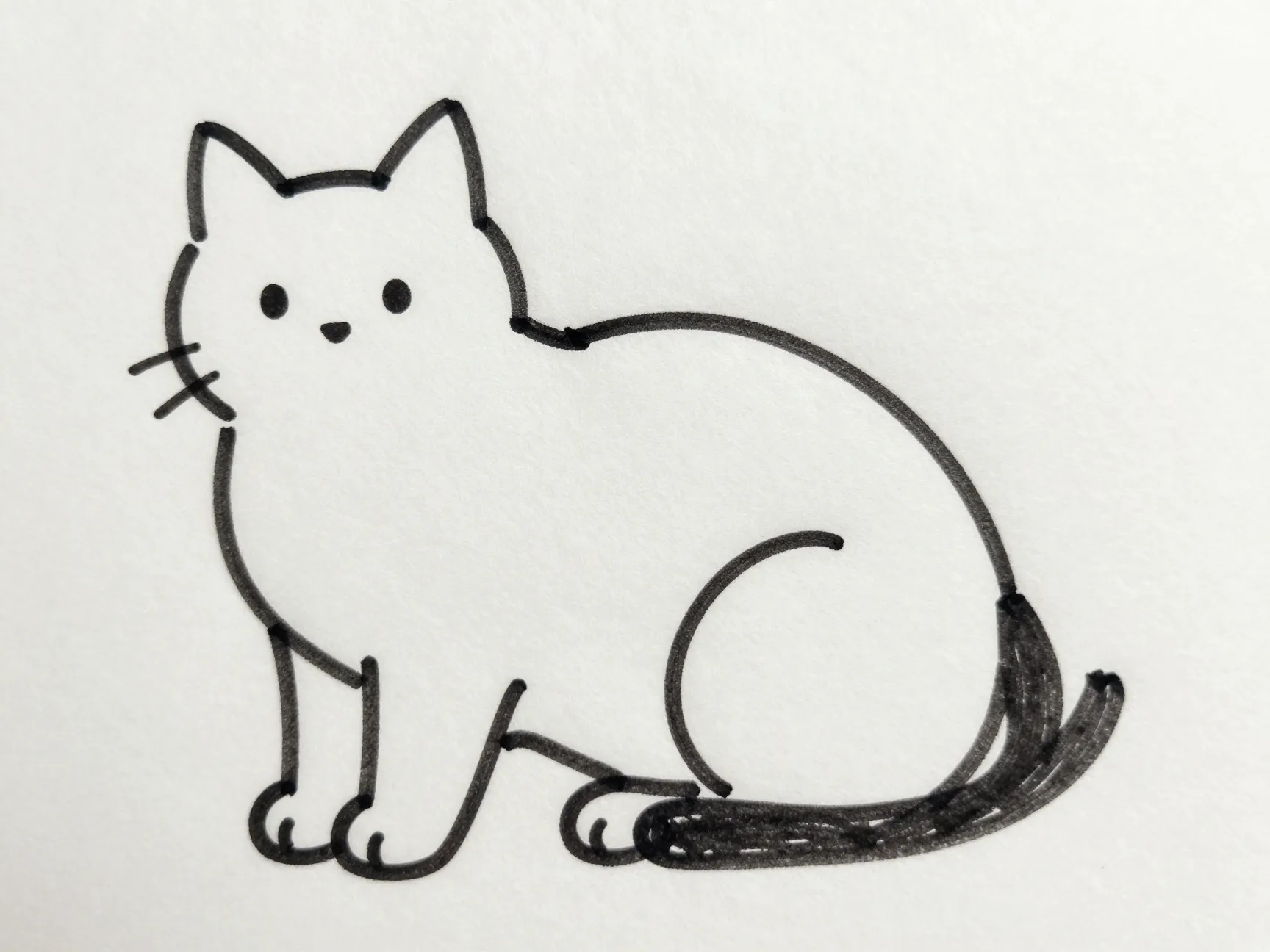
Where the chibi style maximizes shape, the minimalist line style minimizes stroke count. This approach uses a single continuous line, or as few line breaks as possible, to suggest an entire cat in silhouette.
Begin with a loose, unbroken curve that sweeps from the top of the head, down the back, around the tail, and back up through the belly and chest. Two small dots or short dashes for eyes and a simple curved line for the tail tip are often the only added details. Many current idea compilations organize dozens of variations on this exact concept because it scales so well across mediums, working equally well as a tattoo design, a logo mark, a greeting card illustration, or a quick sketchbook doodle.
The appeal here is confidence. A wobbly line looks charming in a minimalist cat; a wobbly line looks unfinished in a detailed one. That forgiving quality makes this style ideal for warming up before a longer drawing session.
Practice drill: set a timer for sixty seconds and attempt one continuous-line cat without lifting the pen. Repeat ten times, keeping the fastest three sketches as reference points for later refinement.
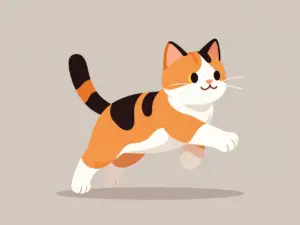
3. Gesture and Motion Cat
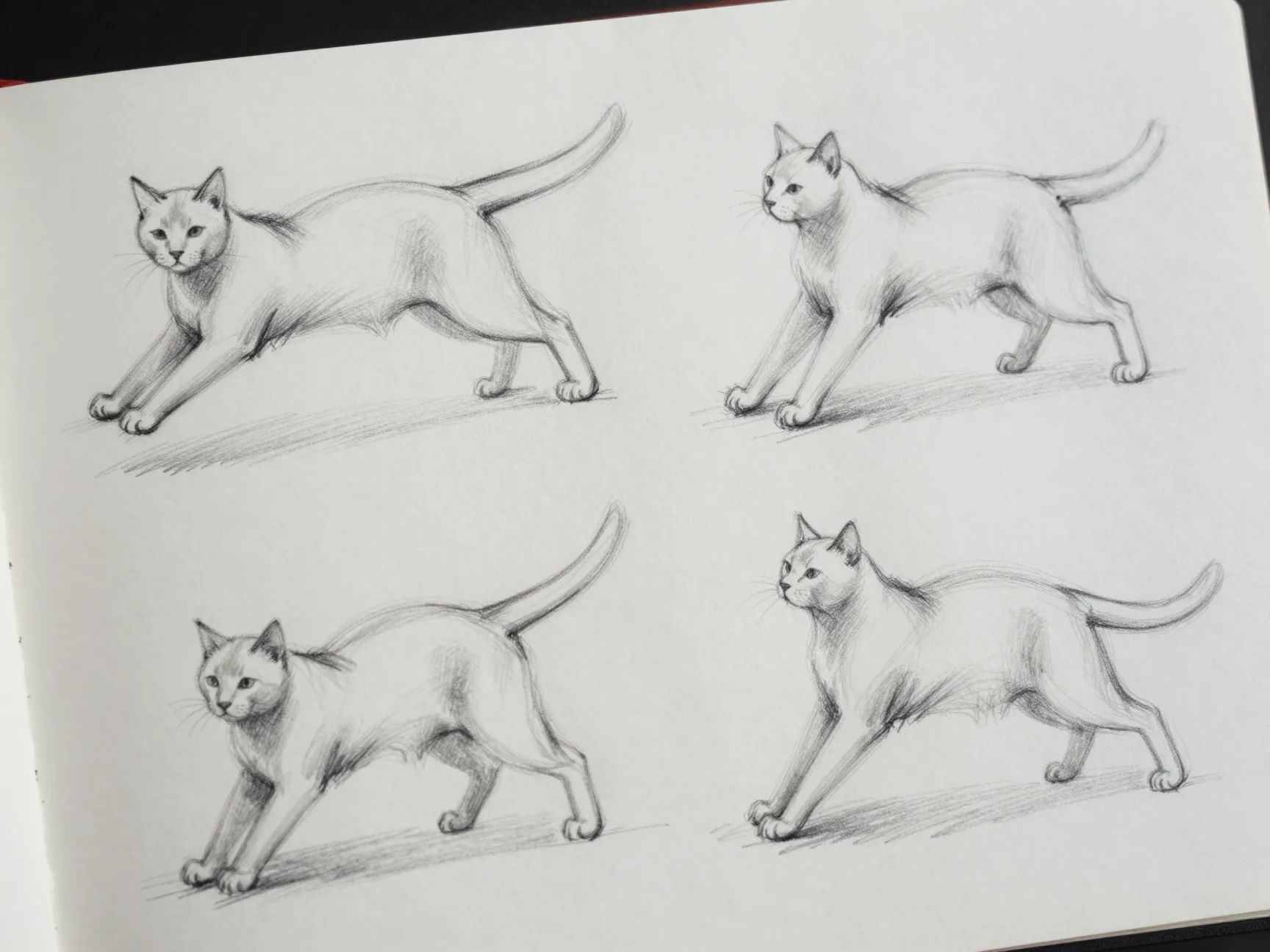
Static poses only capture part of what makes cats endearing. Their sudden pounces, mid-air twists, and exaggerated stretches are core to their charm, which is why gesture-based practice remains a staple recommendation across drawing-technique resources.
This style prioritizes a strong line of action, an imaginary curve running through the spine that shows the direction and energy of the pose, over anatomical precision. Sketch the line of action first, then loosely attach an oval body, a round head, and simplified limb shapes along that curve. Common poses include a cat leaping toward a toy, twisting mid-fall, or stretching into a deep arch with tail raised.
Because the goal is capturing movement rather than finished detail, thirty-second to two-minute gesture sketches are standard practice across illustration training programs. Speed matters more than cleanup here; a slightly messy but dynamic gesture sketch teaches more than a slow, stiff one.
Practice drill: find or imagine three action poses, jumping, stretching, and pouncing, and sketch each one three times at increasing speed, from ninety seconds down to thirty.
4. Cozy Curled-Up Cat
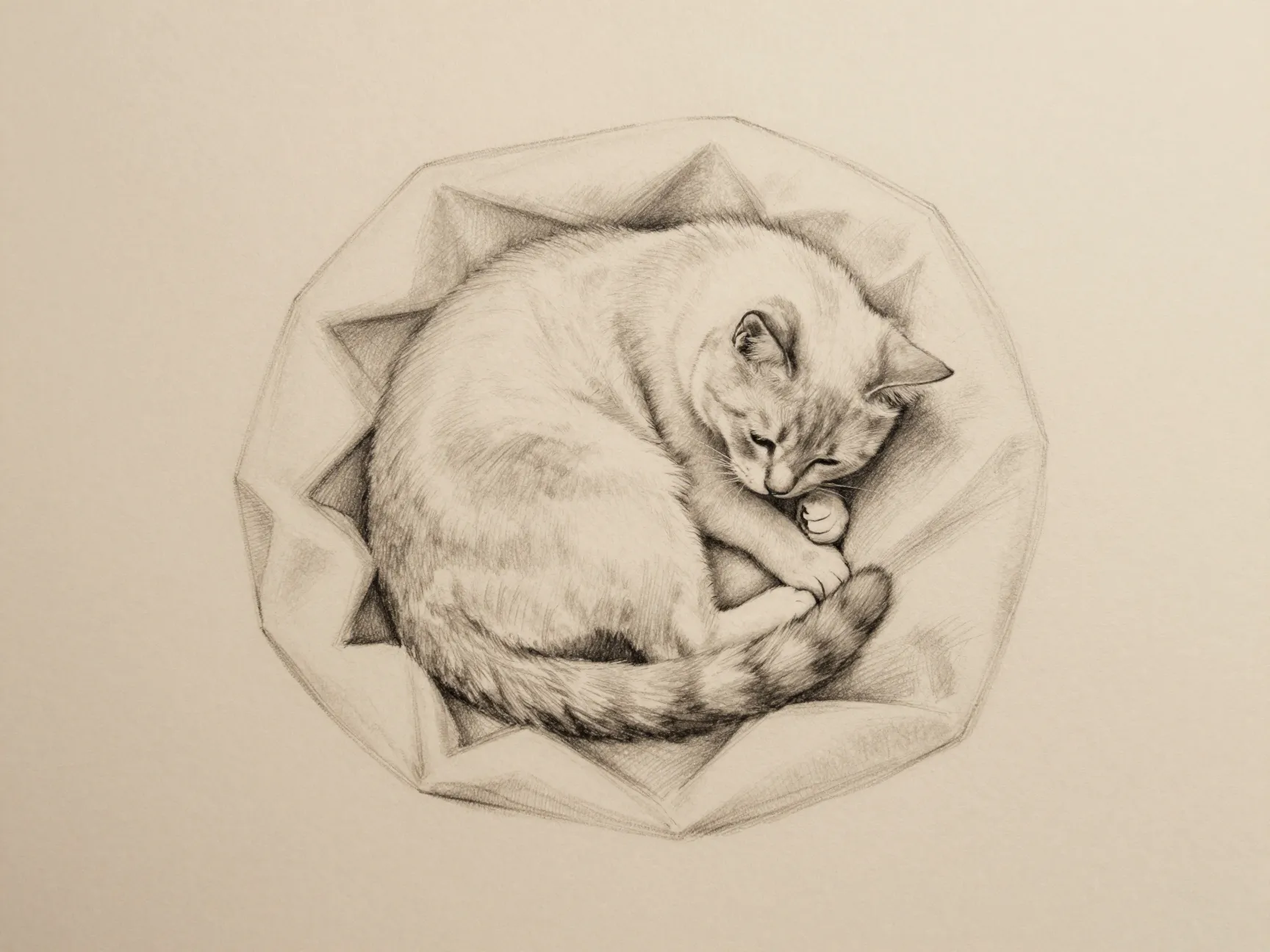
If motion sketches capture energy, the cozy curled-up style captures its opposite: total relaxation. This is consistently one of the most requested cute cat concepts across idea-list sites, and for good reason. A cat tucked into a tight circle, tail wrapped over its nose, taps directly into feelings of warmth and safety.
Construction starts with a single large circle or slightly flattened oval representing the entire curled body. Ears poke out from the top edge, a small face peeks from one side, and the tail sweeps around the outer rim to overlap the front paws or nose. Because the whole pose collapses into one dominant shape, this style is one of the fastest to sketch convincingly, making it a favorite for quick warm-ups and for artists building confidence with basic shape work.
Variations include a cat curled inside a bowl, a blanket fold, or a sunbeam patch, each adding a small environmental cue that increases the cozy, “aww”-worthy mood without requiring additional technical skill.
Practice drill: draw the same curled silhouette five times, changing only the surrounding context, a basket, a pillow, a windowsill, a cardboard box, a folded blanket, to practice storytelling through minimal added elements.
5. Fantasy and Magical Cat
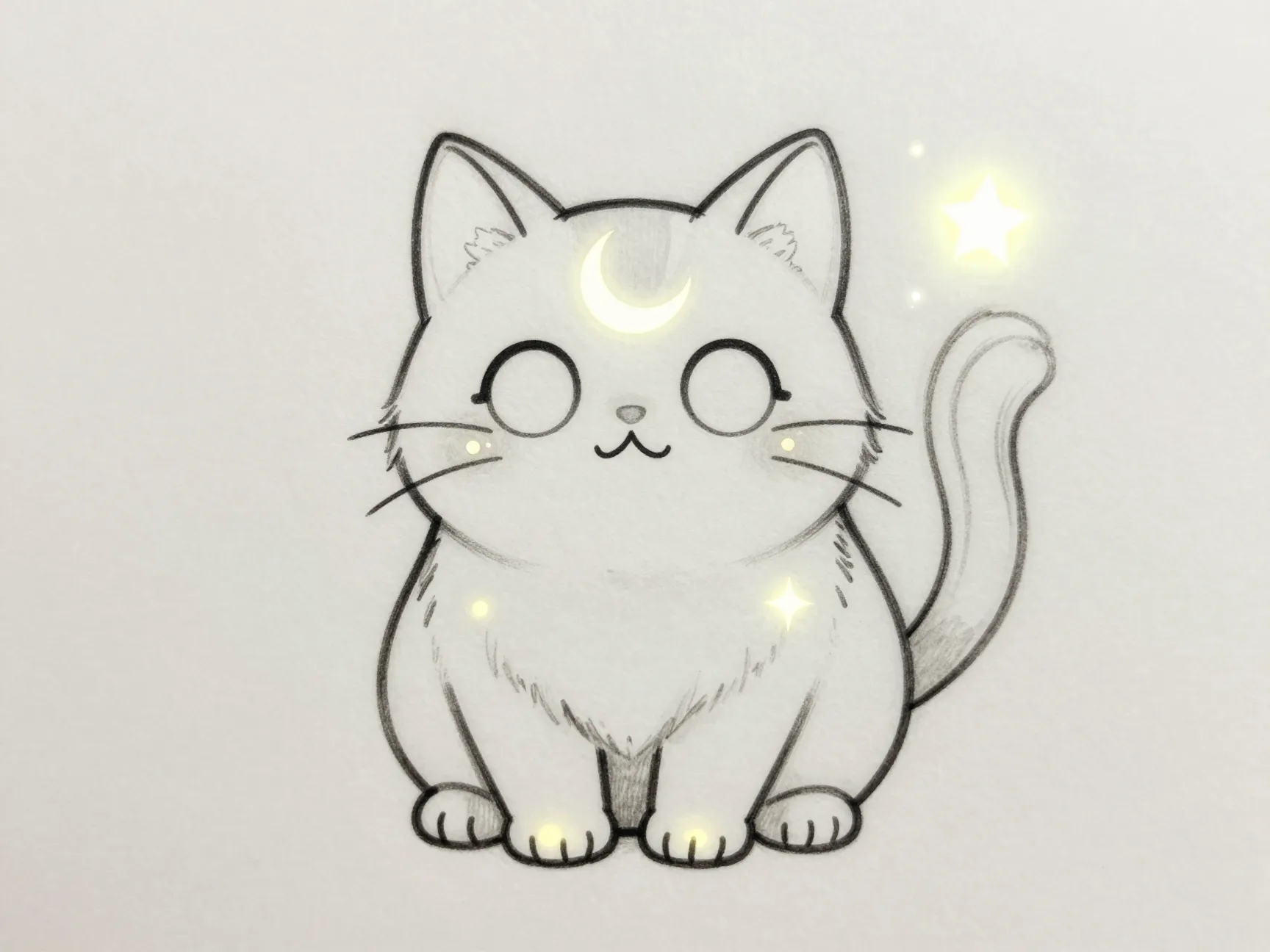
Fantasy cats layer imaginative elements onto the cute foundation already established by the previous four styles. Sparkles, tiny wings, star-shaped pupils, glowing markings, or a wispy magical tail turn a standard cute cat into something closer to a character design.
The construction process still relies on the same oversized head, rounded body, and simplified limbs. The difference lies entirely in the added flourishes: a crescent-moon marking on the forehead, softly glowing paw pads, or a trail of small stars following the tail. Because these elements sit on top of an already-simple base, this style rewards artists who have already built confidence with the chibi and cozy styles, since the underlying shapes need to stay clean enough to support the extra detail without becoming cluttered.
This style also tends to perform strongly in social and portfolio contexts, since fantasy elements add a memorable hook that separates a sketch from the dozens of similar cute cats already circulating online.
Practice drill: take one already-completed chibi or cozy cat sketch and add exactly three fantasy elements, no more, to practice restraint while still expanding the concept.
6. Costume and Prop Cat
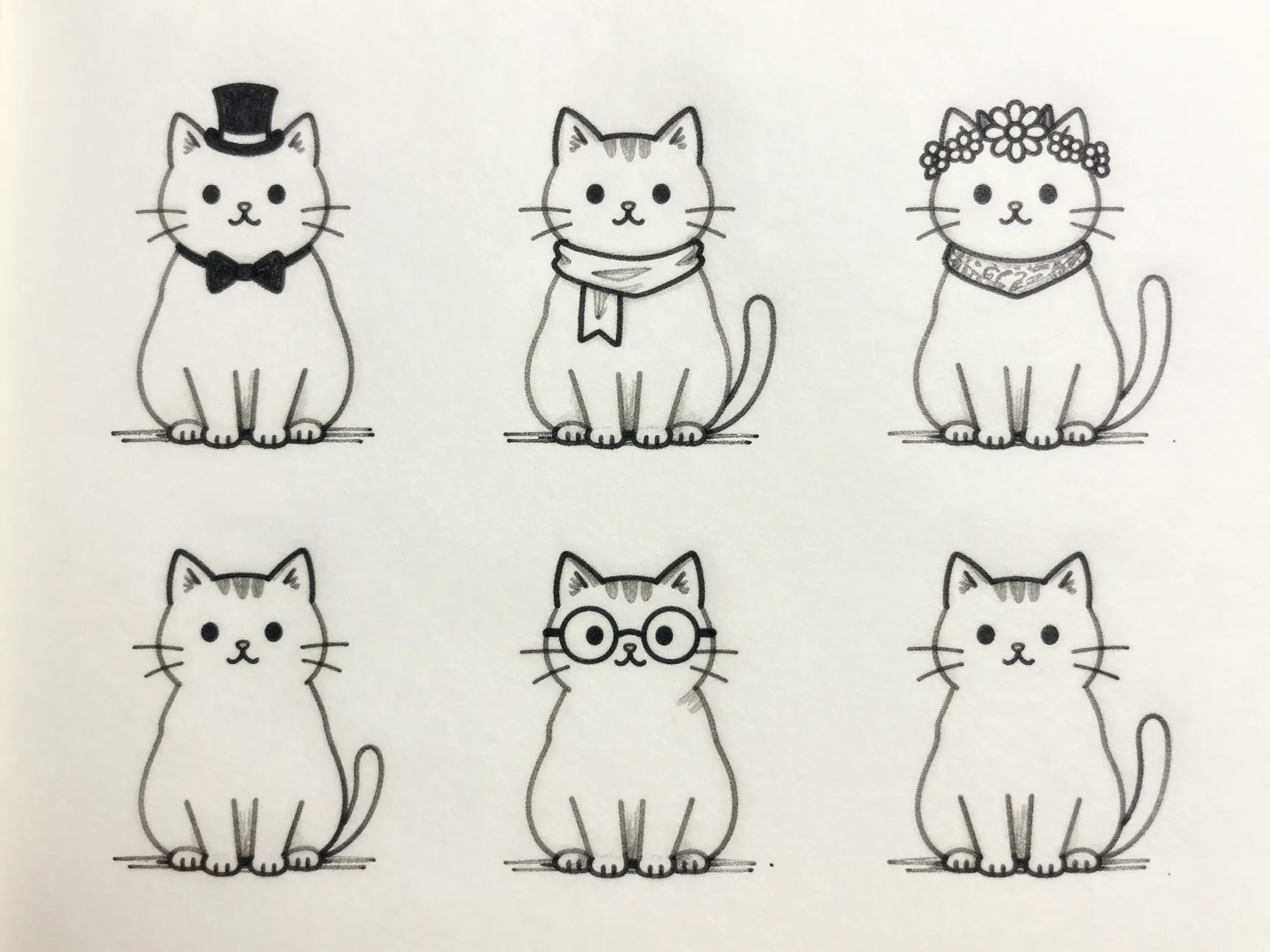
The sixth style swaps environmental storytelling for character storytelling through wardrobe. Costume and prop cats wear tiny hats, bow ties, flower crowns, scarves, or seasonal outfits, and this category has grown rapidly across recent cute-cat idea collections precisely because props offer near-infinite variation on a single base drawing.
Start with any of the core cute-cat body shapes already practiced, chibi, cozy, or a simple sitting pose, then add one clearly readable prop. A flower crown sits across the top of the head between the ears. A bow ties at the neck where the head meets the body. A tiny scarf wraps just below the chin. Keeping props to one dominant item per sketch prevents the design from feeling cluttered, echoing the same “less is more” principle that governs detail work in every other style on this list.
This style is particularly effective for themed practice sessions, such as sketching a week of holiday-costumed cats or a set of profession-themed cats, since the underlying body construction stays constant while only the prop changes.
Practice drill: draw one base cat shape, then create five quick variations by swapping only the prop, a hat, a bow, a scarf, glasses, and a flower crown, to build a personal reference sheet of accessory placement.
How to Practice These 6 Cute Cat Sketch Styles Effectively
Working through all six styles once is a good start, but repetition is what actually builds retrievable skill. A few structural habits make practice sessions more productive.
Rotate styles instead of repeating one. Drawing the same chibi cat fifty times in a row produces diminishing returns quickly. Cycling through all six styles in a single session, spending roughly equal time on each, keeps different muscles and decision-making skills active.
Time-box every sketch. Setting a visible timer, whether sixty seconds for a minimalist line cat or five minutes for a fantasy cat, removes the temptation to overwork a single drawing. Shorter constraints consistently produce looser, more expressive results, which tutorial hubs and gesture-drawing resources both point to as a core technique for building confidence.
Keep a dedicated practice sheet. Filling one page with six to ten small sketches, rather than starting a fresh page for every attempt, makes it easier to compare proportion choices side by side and spot which version reads as “cutest” at a glance.
Study reference sparingly. Photo references help with proportion checks, but leaning too heavily on them during stylized practice can pull a sketch back toward realism. A quick glance to confirm ear placement or paw shape is enough; the goal is exaggeration, not accuracy.
The table below summarizes the six styles and their core practice focus for quick reference during a session.
| Style | Core Shape | Main Skill Practiced |
|---|---|---|
| 1. Chibi Mochi Cat | Overlapping circles | Extreme proportion exaggeration |
| 2. Minimalist Line Cat | Single continuous curve | Confident, economical linework |
| 3. Gesture and Motion Cat | Line of action | Capturing energy and pose |
| 4. Cozy Curled-Up Cat | Single dominant circle | Mood and storytelling through pose |
| 5. Fantasy and Magical Cat | Base shapes plus flourishes | Restrained detail layering |
| 6. Costume and Prop Cat | Base shapes plus one prop | Character variation through accessories |
Common Mistakes to Avoid
Even with a clear framework, a few recurring errors tend to undercut the “aww” factor these six styles are designed to produce.
Overcrowding the face with detail is the most frequent issue. Adding whisker dots, nose shading, and fur texture lines all at once often pulls a sketch toward realism and away from the exaggerated cuteness that rounded, simplified shapes provide. One or two well-placed marks almost always outperform five scattered ones.
Keeping proportions too realistic is another common trap, especially for artists with some anatomy training who instinctively want to “correct” an oversized head or shrink an exaggerated body. Cute cat styles intentionally break realistic proportion; resisting that urge to correct is part of the skill.
Skipping the shape-building stage causes shaky, uneven results. Jumping straight to outline work without first blocking in circles and ovals for the head and body tends to produce lopsided faces and mismatched limb sizes, particularly in the chibi and cozy styles where the overall silhouette carries most of the visual weight.
Finally, treating props or fantasy elements as an afterthought rather than a planned addition often clutters an otherwise clean sketch. Deciding on one focal accessory or magical detail before starting the linework, rather than adding items randomly during cleanup, keeps the design readable.
Frequently Asked Questions
Which of the six styles is best for absolute beginners?
The minimalist line cat and the cozy curled-up cat are typically the most approachable starting points, since both rely on a single dominant shape and forgive uneven linework better than styles requiring more structural accuracy.
How long should a practice session take?
Fifteen to thirty minutes covering all six styles, spending two to five minutes per style, is enough to build noticeable improvement over a few weeks without causing fatigue or frustration.
Do these styles require any special drawing tools?
No. All six styles work equally well with pencil and paper, a basic ballpoint pen, or a digital drawing tablet. The techniques focus on shape and proportion decisions rather than tool-specific effects.
Can these styles be combined in a single drawing?
Yes. Many of the most shareable cat illustrations blend elements from two or three styles at once, such as a cozy curled-up cat wearing a small costume prop, or a chibi cat drawn using gesture-based motion lines.
Is realism ever useful when practicing cute cat styles?
Occasional realistic reference sketches help confirm proportion and anatomy, but the “aww” factor these six styles target comes specifically from exaggerating away from strict realism, so realism should stay a supporting tool rather than the end goal.
Conclusion
Cuteness in cat sketches is not a matter of talent alone; it is a repeatable set of decisions about proportion, shape, and restraint. The six styles covered here, chibi mochi cats, minimalist line cats, gesture and motion cats, cozy curled-up cats, fantasy cats, and costume or prop cats, each isolate a different piece of that formula, from oversized heads to confident single-line strokes to thoughtfully placed accessories.
The fastest way to see progress is consistency rather than intensity. A short daily or weekly rotation through all 6 Cute Cat Sketch Styles To Practice For Instant “Aww” Factor, even just ten minutes at a time, builds both technical shape-drawing skill and a personal sense of which stylistic choices produce the strongest emotional response. Start with a single practice sheet today: block in six small cat shapes, one for each style, and spend a few focused minutes bringing each to life. Revisit that sheet weekly, compare results, and let the styles that resonate most guide where to specialize next.