Funny Frog Drawings That Leap Off The Page With Humor
A single raised eyebrow on a cartoon frog can generate more laughs than an entire page of dialogue. That is not an exaggeration from a comedy textbook, it is a documented technique used by illustrators who specialize in turning a simple green amphibian into a scene-stealing character. Across tutorials, stock illustration libraries, and AI-generated art galleries published throughout 2026, one theme keeps surfacing: 6 Funny Frog Drawings That Leap Off The Page With Humor are not random doodles. They follow a repeatable formula built on exaggerated features, dynamic poses, and a single standout prop.
Disclosure: This post contains affiliate links. As an Amazon Associate, we earn from qualifying purchases, and at no extra cost to you.
This article breaks down six distinct styles of funny frog art that creators, hobbyists, and digital artists are currently making popular. Each one uses a different comedic trick, from belly-laugh poses to glow-up transformations, so there is something here for beginners sketching their first cartoon and for seasoned illustrators looking for fresh inspiration.
Key Takeaways
- Humor in frog illustration comes mostly from exaggerated facial features like oversized eyes, crooked mouths, and a single raised eyebrow.
- Dynamic poses, such as mid-air jumps off a lily pad, make frog drawings feel energetic rather than static.
- Simple shapes like circles, blobs, and even “potato” outlines are the foundation of beginner-friendly funny frog tutorials.
- Props such as oversized hats, cigars, or flowers add an extra layer of comedy and personality to a basic frog sketch.
- Commercial and AI-generated frog art increasingly relies on absurd scenarios and anthropomorphism to grab attention online.
What Makes 6 Funny Frog Drawings That Leap Off The Page With Humor So Effective
Humor in illustration is a science as much as an art. According to detailed cartooning guides published in 2026, the fastest way to make a frog drawing funny is to exaggerate one or two features rather than everything at once. A giant pair of eyes paired with a tiny crooked smile reads as comedic instantly, while a frog with every feature stretched to the extreme can look cluttered or confusing.
Facial expression does most of the comedic heavy lifting. A single raised eyebrow communicates skepticism. A wide-open mouth with a hint of drool signals an over-the-top reaction, like shock or surprise. These small adjustments are why 6 Funny Frog Drawings That Leap Off The Page With Humor tend to rely on facial exaggeration first, body shape second, and props third.
Body shape plays a supporting role. A rounded “blob” body with a wobbling belly suggests softness and clumsiness, two traits that read as funny rather than threatening. Beginner-friendly tutorials often start with a simple oval or circle for the body, then add a curved mouth and a bottom lip to create warmth and approachability before any comedic exaggeration is layered on top.
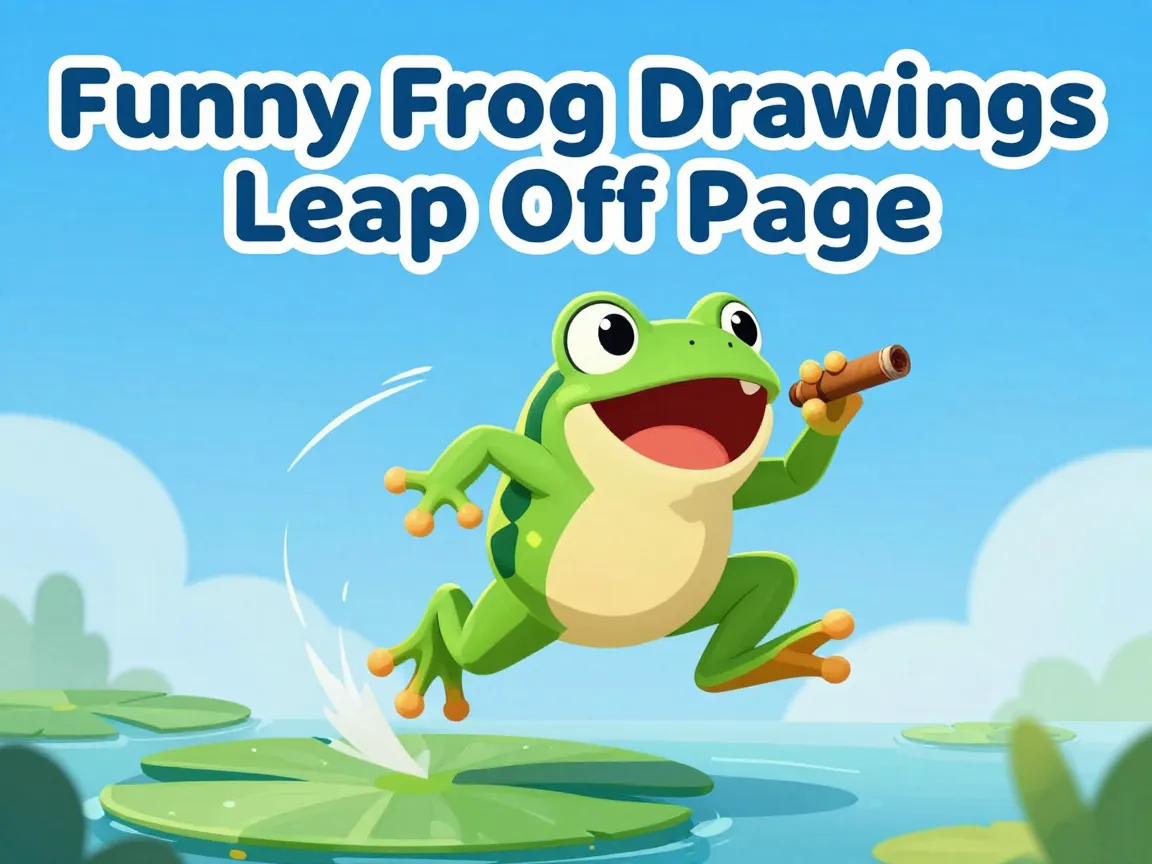
Finally, a single standout prop can push a drawing from cute to outright funny. A giant hat, a cigar, a flower crown, or even a tiny umbrella gives the frog a personality quirk that audiences remember. Stock illustration collections built around laughing or belly-holding frogs frequently use this exact formula: simple body, exaggerated face, one memorable prop.
“Comedy in cartoon art rarely comes from complexity. It comes from one unexpected detail placed on a simple, recognizable shape.”
The 6 Funny Frog Drawings That Leap Off The Page With Humor You Need to See
The following six styles represent the most common and most effective approaches currently circulating across drawing tutorials, stock art platforms, and social video content. Each one uses a different comedic mechanism, so pay attention to how the humor is built rather than just the final image.
1. The Belly-Laugh Frog
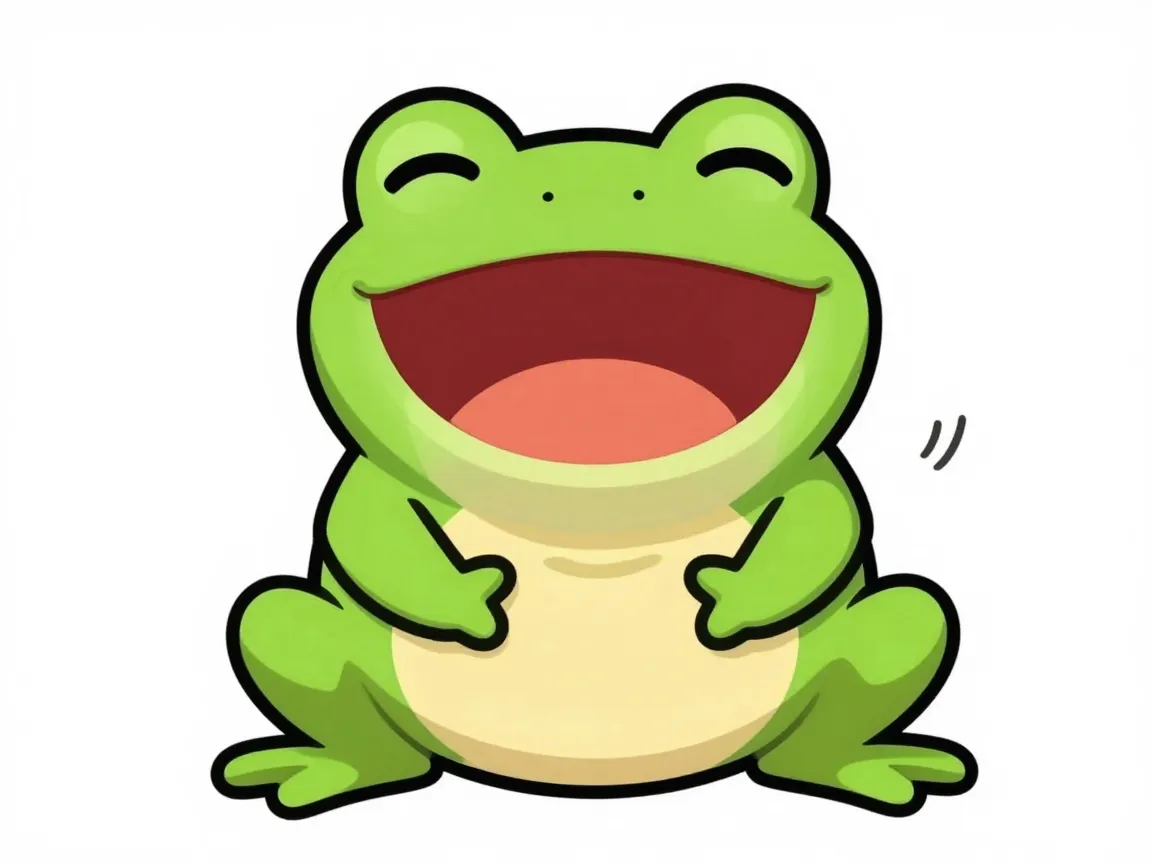
This style features a frog thrown into a full laughing pose, head tilted back, mouth wide open, and both front legs clutching its round belly. The exaggerated wobbling belly shape is central here, often drawn as a slightly uneven circle to suggest jiggly motion. Stock illustration libraries have popularized this exact pose because it works instantly across greeting cards, stickers, and novelty merchandise. The comedic trick is simple: nothing is funnier in cartoon form than a character caught mid-laugh, because the viewer cannot help but smile along.
Artists typically draw the eyes as tightly closed curved lines, since open eyes would undercut the sense of total abandon. A few small motion lines around the belly reinforce the shaking effect without needing any additional detail.
2. The Skeptical Eyebrow Frog
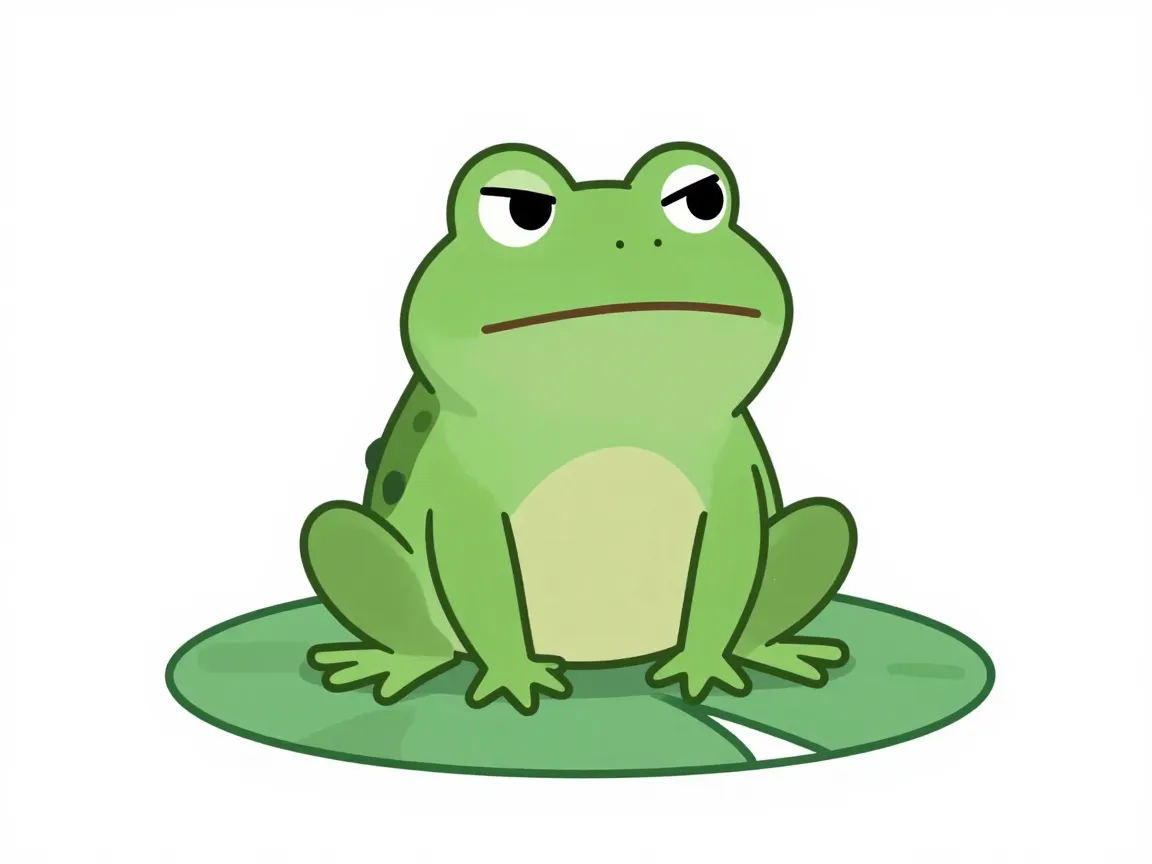
Here the entire joke rests on one raised eyebrow paired with a flat, unimpressed mouth line. This frog is not laughing or jumping; it is simply reacting to something absurd happening off-page, and that restraint is what makes it funny. The body stays relatively simple, often just sitting upright on a lily pad, because all the comedic energy is concentrated in the face.
Cartooning guides from 2026 specifically call out the single raised eyebrow as one of the fastest ways to inject personality into an otherwise plain frog sketch. It requires minimal technical skill but delivers maximum comedic payoff, which makes it a favorite among beginner illustrators testing out expression work for the first time.
3. The Dramatic Diver Frog
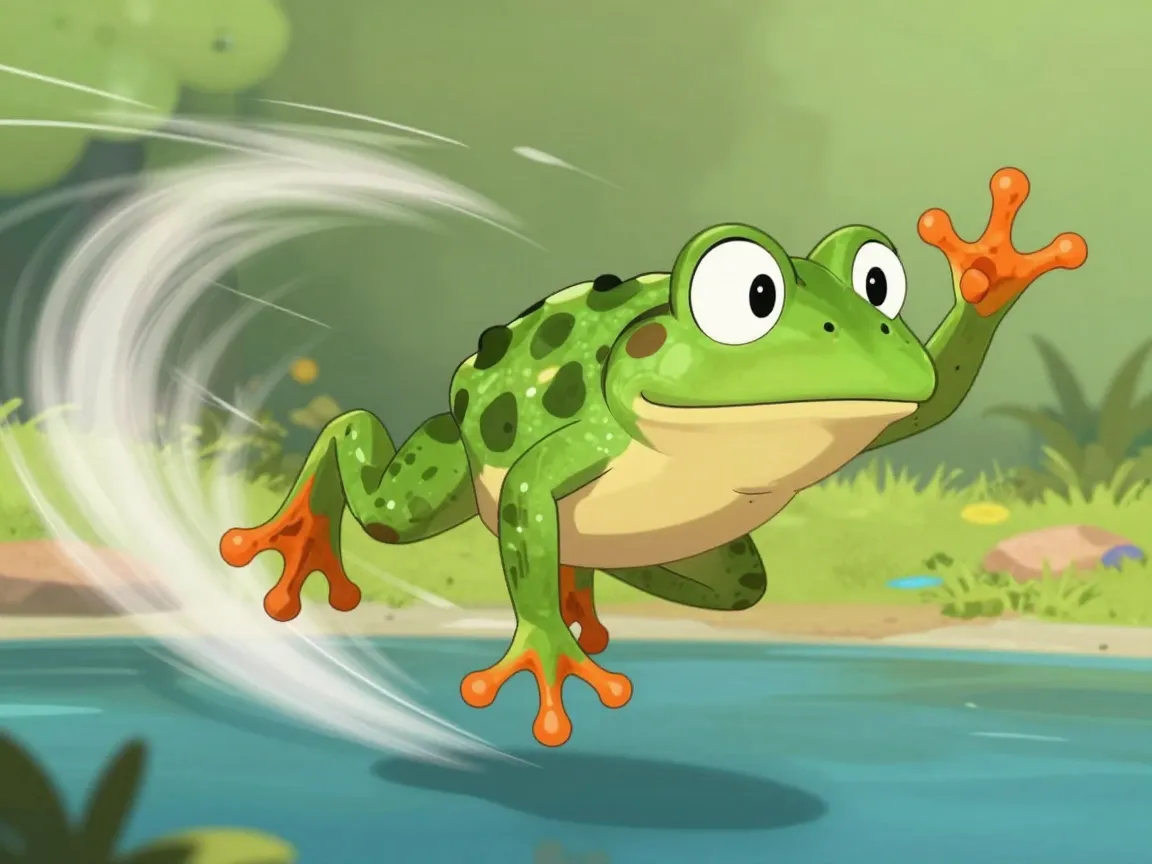
Motion is the entire joke in this pose. Instead of a frog calmly sitting on a lily pad, this drawing captures mid-air chaos: limbs splayed in every direction, eyes wide with alarm, and a trail of motion lines suggesting a less-than-graceful dive into the pond below. Cartoon frog galleries on stock photo and illustration sites frequently feature this exact action pose because it communicates energy instantly, even in a static image.
The comedic effect comes from the contrast between the frog’s usual nimble reputation and this clumsy, flailing depiction. Drawing tutorials that teach this pose typically start with a simple U-shape for the jumping stance before adding exaggerated limb angles for comedic effect.
4. The Potato-to-Prince Frog
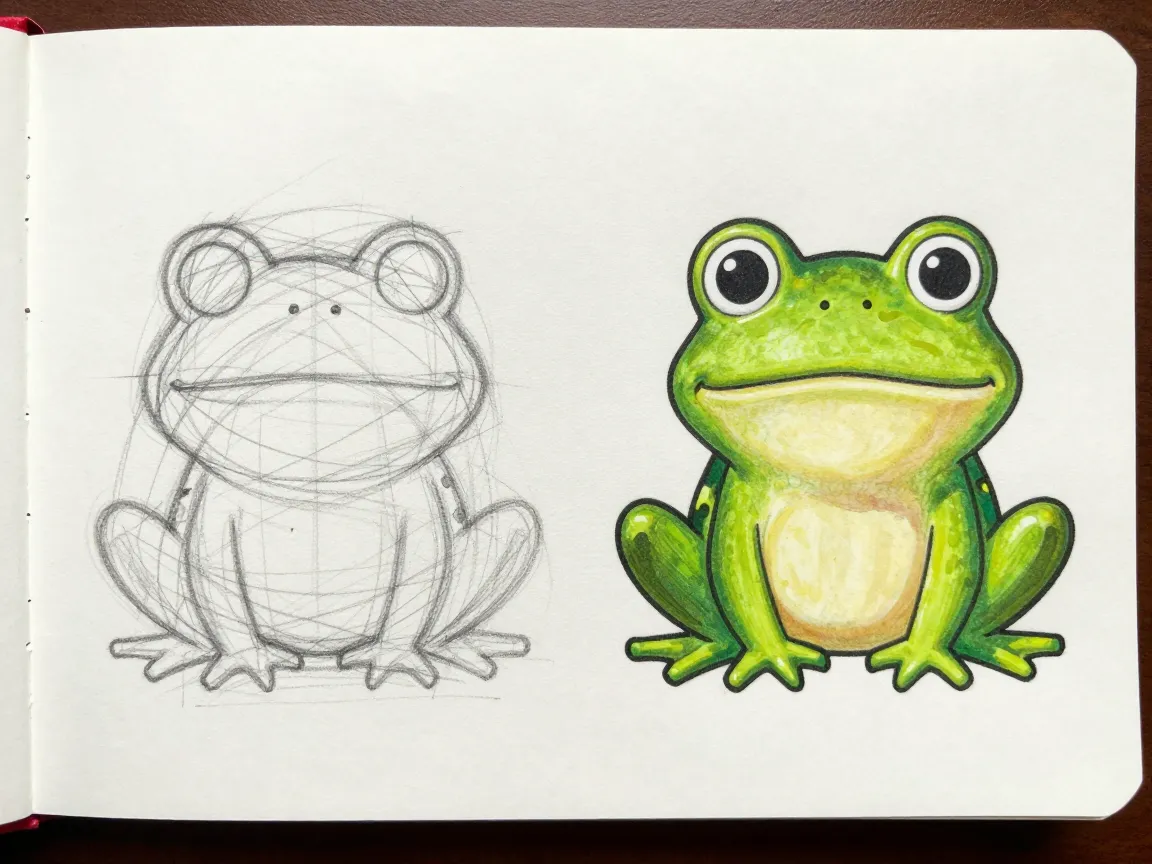
This style is less about a single finished image and more about a comedic before-and-after reveal, a format that has become especially popular in short-form video tutorials. The drawing begins as a rough, lumpy shape deliberately resembling a potato, then transforms step by step into a polished, big-eyed cartoon frog. The humor comes from self-deprecating contrast: the artist jokes about their own rough starting sketch before revealing a surprisingly charming final result.
This approach works particularly well for teaching purposes because it lowers the pressure on beginners. If even a “potato” can become a funny, appealing frog, the format reassures new artists that clean linework is not a prerequisite for comedic success.
5. The Dapper Cigar Frog
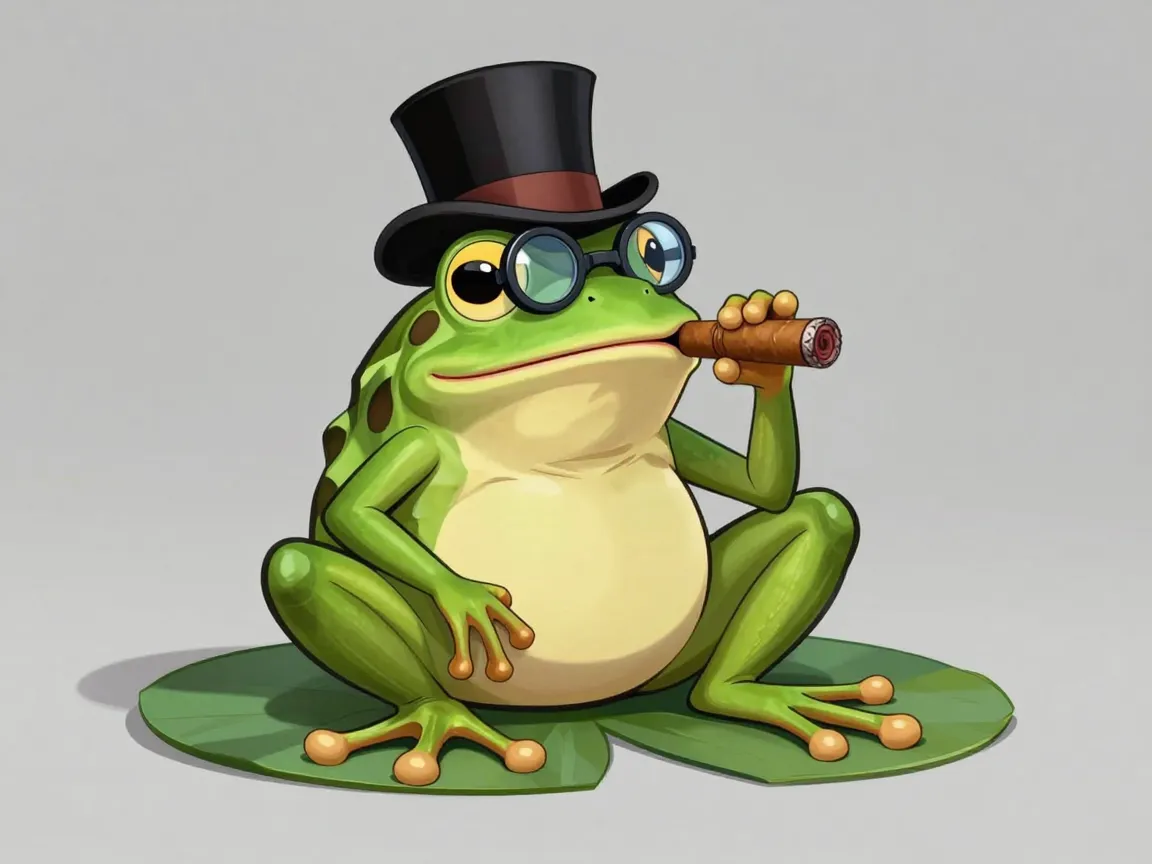
Sophistication paired with absurdity drives this style. A frog drawn with a tiny top hat, a monocle, or a cigar instantly reads as a parody of refined human behavior, which is inherently funny because frogs have no business looking that distinguished. Detailed cartooning tutorials specifically recommend this kind of single standout accessory as a shortcut to personality, since it avoids overloading the drawing with unnecessary detail while still delivering a strong comedic punch.
The body language supporting this prop usually leans relaxed, perhaps a slight lean back on the lily pad, one leg crossed over the other if the artist wants to push the joke further. The restraint in body posture contrasts with the boldness of the single prop, which keeps the overall composition balanced rather than chaotic.
6. The Flower-Holding Glow-Up Frog
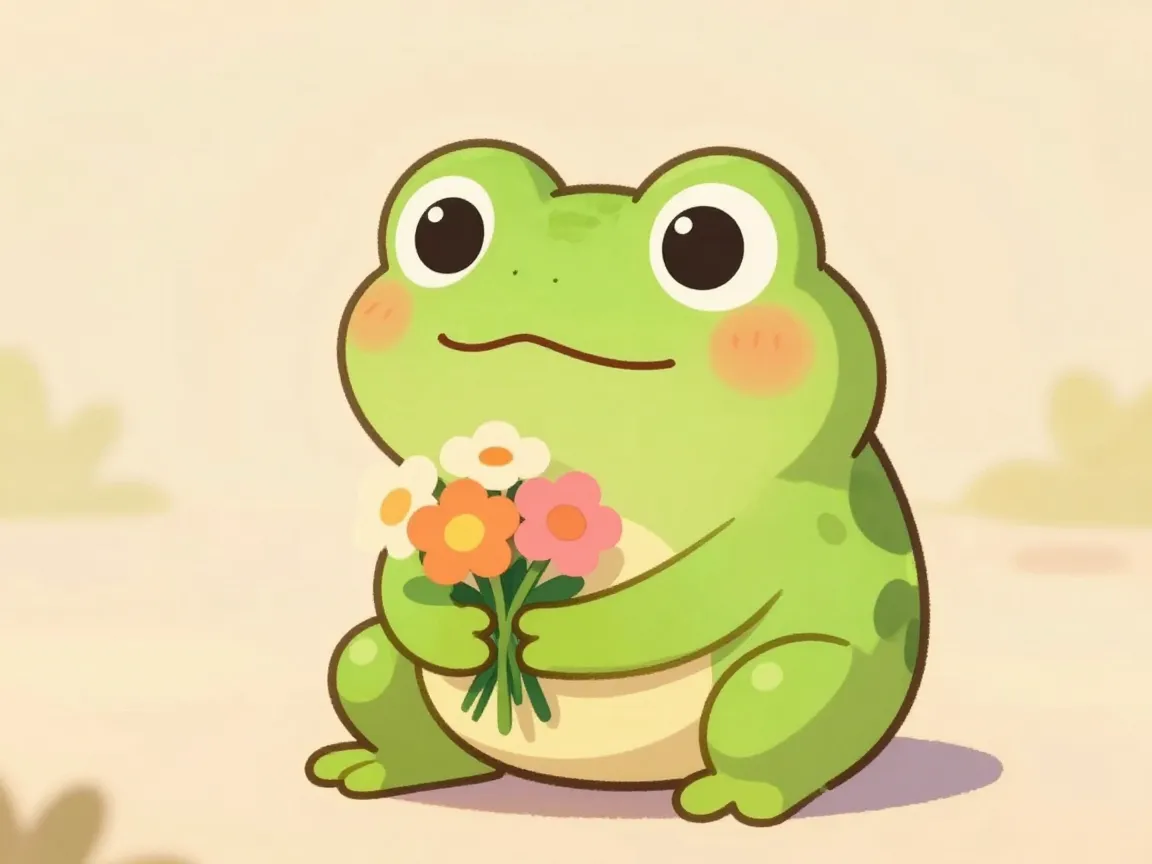
This final style blends sweetness with comedic exaggeration. The frog is drawn holding a bouquet of flowers, often with a shy or lovestruck expression, big round eyes, and a faint blush. Short-form video tutorials have popularized “glow-up” versions of this frog, transforming a plain sketch into a more polished, charming character by adding props like flowers or small accessories partway through the drawing process.
The comedic layer here is gentler than the other five styles. Instead of loud physical comedy, it relies on charm and unexpected sweetness, proving that 6 Funny Frog Drawings That Leap Off The Page With Humor do not all need slapstick energy to land. Sometimes a quietly adorable moment is funny simply because it is unexpected from a creature typically associated with ponds and mud.
Quick Comparison of the Six Styles
| Frog Style | Main Comedic Trick | Best For |
|---|---|---|
| Belly-Laugh Frog | Full-body laughing pose | Greeting cards, stickers |
| Skeptical Eyebrow Frog | Single raised eyebrow | Beginner expression practice |
| Dramatic Diver Frog | Exaggerated motion lines | Action-pose tutorials |
| Potato-to-Prince Frog | Before-and-after reveal | Short-form video content |
| Dapper Cigar Frog | One bold prop | Personality-driven illustration |
| Flower-Holding Glow-Up Frog | Sweet, unexpected charm | Gentle, character-driven art |
How to Draw Your Own 6 Funny Frog Drawings That Leap Off The Page With Humor
Creating a funny frog drawing does not require advanced art training. Most tutorials, including beginner-friendly guides updated throughout 2026, break the process down into five manageable steps that anyone can follow with a pencil and paper.
- Start with a rough, imperfect shape for the body, often compared to a potato or a blob. Perfection is not the goal here; this is simply the foundation.
- Add two large circles for the eyes, positioned toward the top of the body. Oversized eyes are the single most reliable way to make a frog read as cute and comedic.
- Draw a curved mouth line. A slight upward curve suggests a smile, while a flat or crooked line can suggest skepticism or mischief, depending on the comedic effect you want.
- Build out simple limbs using half-circles or U-shapes, especially if the frog will be shown jumping or diving. Dynamic poses add energy that static sitting poses cannot match.
- Finish with one standout detail, such as a hat, flower, or prop. This final addition is what pushes an ordinary frog sketch into memorable, shareable territory.
Shadows and shading can be added at the end for extra polish, but they are optional. Many of the most popular stylized frog tutorials intentionally keep shading minimal so that beginners are not discouraged by technical shading requirements early in the process.
A useful habit when practicing these six styles is to sketch the same basic frog shape six times on one page, then experiment with a different facial expression or prop on each one. This exercise mirrors exactly how professional cartoonists develop character variations quickly, and it reinforces the idea that small changes in expression create entirely different comedic outcomes.
Where Funny Frog Art Is Trending Right Now
Funny frog illustrations are not confined to sketchbooks. They show up across several corners of the creative internet, each with its own spin on the format.
Short-form video platforms have embraced frog drawing as a comedic teaching format in itself. Creators film themselves starting with an intentionally rough shape, joking about how bad it looks, before revealing a polished and charming final frog. This self-deprecating structure has proven highly shareable because it makes the audience feel included in the creative process rather than just watching a finished product.
AI-generated art galleries have also become a major source of humorous frog imagery. These tools can quickly produce frogs placed in absurd scenarios, wearing unexpected outfits, or performing exaggerated human activities, all of which lean on anthropomorphism for comedic effect. This has expanded the variety of funny frog concepts available to casual viewers far beyond what hand-drawn tutorials alone could produce.
Commercial platforms selling stickers, shirts, and novelty items continue to rely heavily on the same core formula described earlier in this article: big eyes, an exaggerated grin, and a silly situational twist. The durability of this motif across years of product design suggests that the comedic frog format has real staying power rather than being a passing trend.
Stock illustration and photography libraries round out the picture by offering ready-made frog art for commercial use, often featuring laughing poses, mid-jump action shots, or frogs diving dramatically off lily pads. These libraries confirm that motion and exaggerated emotion, not static poses, are what buyers and editors are actively seeking when they search for comedic frog imagery.
Frequently Asked Questions
What makes a frog drawing funny instead of just cute?
The difference usually comes down to exaggeration and timing. A cute frog has big eyes and a gentle smile. A funny frog pushes one feature further, such as an extreme laughing pose, a dramatic mid-air flail, or a single skeptical eyebrow, creating a moment of surprise or contrast that triggers a laugh rather than just a smile.
Do I need advanced drawing skills to create funny frog art?
No. Most of the techniques behind 6 Funny Frog Drawings That Leap Off The Page With Humor rely on simple shapes like circles, ovals, and U-curves. The comedic effect comes from expression and pose choices, not technical rendering skill, which is why these styles are popular in beginner and kid-focused tutorials.
Why do so many funny frog drawings include props like hats or cigars?
A single prop gives a character instant personality without requiring extra detail elsewhere in the drawing. It also creates a visual contrast, since frogs are not naturally associated with sophisticated accessories, and that mismatch is inherently comedic.
Are AI-generated frog images considered part of this trend?
Yes. AI art tools have become a significant source of humorous frog imagery, often placing frogs in unexpected scenarios or giving them human-like behaviors. This has broadened the range of comedic frog content available online alongside traditional hand-drawn tutorials.
What is the easiest funny frog style for a complete beginner to try first?
The skeptical eyebrow frog is typically the easiest entry point. It requires only a simple sitting body shape and one small facial adjustment, making it a low-pressure way to practice expression-driven humor before attempting more dynamic poses like the dramatic diver frog.
Conclusion
Funny frog drawings succeed because they follow a clear, repeatable comedic structure: exaggerate one or two features, choose a dynamic or expressive pose, and finish with a single memorable prop. The six styles covered in this guide, from the belly-laugh frog to the flower-holding glow-up frog, each demonstrate a different way to apply that formula, proving that there is no single “right” way to make a frog funny.
Anyone looking to practice this style should start simple. Sketch a rough body shape, add oversized eyes, experiment with one expressive feature, and resist the urge to overload the drawing with detail. The goal of 6 Funny Frog Drawings That Leap Off The Page With Humor is not technical perfection but personality, and that personality almost always comes from a well-placed exaggeration rather than a flawless line.
For the next step, pick one style from this list, grab a pencil, and try recreating it using the five-step process outlined above. Then challenge yourself to sketch all six in a single sitting. Comparing the results side by side is one of the fastest ways to understand exactly how small changes in expression and pose create entirely different levels of humor.