Golden Retriever Colors Chart: A Visual Guide To Coat Shades
A Golden Retriever’s coat can shift from the color of vanilla ice cream to the color of a copper penny, and yet every single one of those dogs is genetically the same breed carrying the same core color gene. That single fact surprises more new owners than almost anything else about this breed. This 6 Golden Retriever Colors Chart: A Visual Guide To Coat Shades breaks down exactly how breeders, veterinarians, and kennel clubs classify these shades, why the spectrum is wider than most people assume, and what the color actually says about genetics, health, and price in 2026.
Disclosure: This post contains affiliate links. As an Amazon Associate, we earn from qualifying purchases, and at no extra cost to you.
Coat color in this breed is not random. It follows a predictable genetic pattern, and understanding it helps buyers set realistic expectations, helps breeders describe litters accurately, and helps owners spot marketing gimmicks dressed up as “rare” colors. This guide lays out the full spectrum in plain language, with a practical chart, genetic explanation, and a clear answer to the black-and-chocolate confusion that still circulates online.
Key Takeaways
- The full coat spectrum runs from light cream to deep red or mahogany, and every shade in between is a normal, healthy Golden Retriever.
- The American Kennel Club officially recognizes only three color categories, while pet media commonly expands this into a 5, 6, or 7 shade chart for easier visual reference.
- Coat color comes from a recessive red gene (e/e) combined with intensity modifier genes, not from separate color breeds or hybrid mixing.
- Black and chocolate coats are not genetically possible in purebred Golden Retrievers; a dog with either coloring is not a purebred of this breed.
- Darker “red” or “mahogany” dogs are not rare or premium, and price differences tied to color claims are largely a marketing tactic rather than a genetic reality.
Understanding the Golden Retriever Color Spectrum
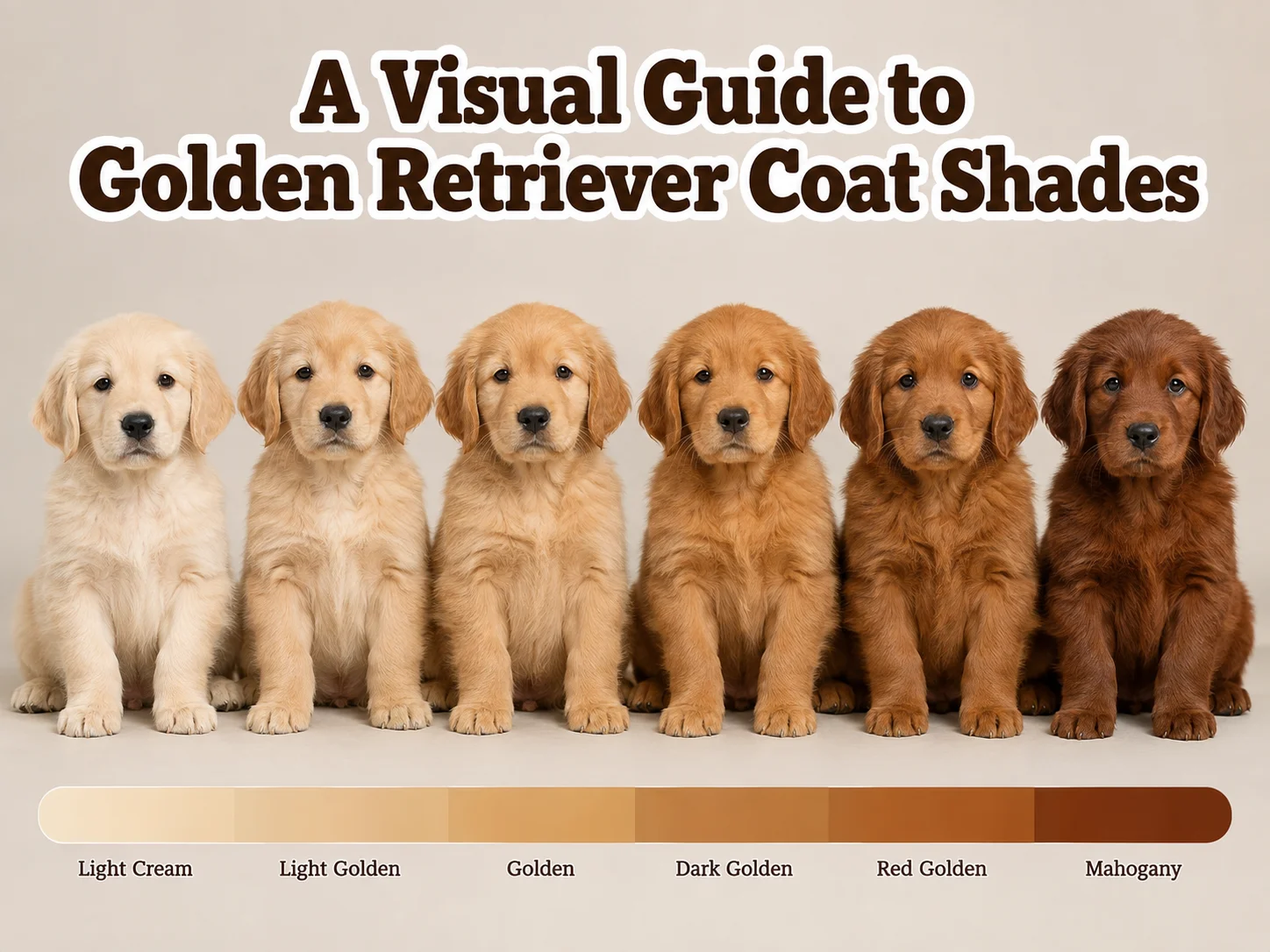
Most people picture one “Golden Retriever color,” but breeders and veterinary geneticists describe it as a continuous spectrum rather than a set of fixed categories. Think of it like a paint strip at a hardware store: the shades blend into one another with no hard line separating one from the next. This is exactly why a 6 Golden Retriever Colors Chart: A Visual Guide To Coat Shades is so useful. It gives structure to something that is naturally gradual, turning a blurry spectrum into a reference tool that owners, breeders, and veterinarians can actually use in conversation.
The confusion usually starts because two puppies from the same litter can grow into adults with noticeably different shades. A cream-colored pup and a deep gold sibling can share the same parents. This happens because coat color depends on how multiple genes interact, not on a single simple switch. It also changes with age, sun exposure, and even nutrition, so a dog described as “light golden” at eight weeks might deepen into a richer gold by age two.
Breed clubs have pushed back against the idea that any of these shades are unusual. Their consistent position is that this is a natural spectrum, not a collection of “rare colors” worth paying extra for. That distinction matters because it shapes both ethical breeding practices and buyer expectations, and it is the foundation for the chart in the next section.
The 6 Golden Retriever Colors Chart: A Visual Guide To Coat Shades
The following breakdown organizes the spectrum into six practical categories. This is not an official AKC classification system; it is the widely used pet-media framework that gives owners and prospective buyers a clear, visual way to talk about shade differences. Each entry below explains what the color looks like, where it tends to appear, and what it means for buyers.
1. Light Cream

Light cream is the palest shade on the chart, almost white with a faint warm undertone. This shade is common in dogs with European or “English-type” lines, sometimes called English Cream Golden Retrievers, though that name refers to a body type and country of origin rather than an official variety. Light cream puppies are often born nearly white and stay pale into adulthood. This shade has become popular in recent years partly because of its striking look in photos, which has unfortunately made it a target for inflated pricing claims that are not backed by genetics.
2. Cream
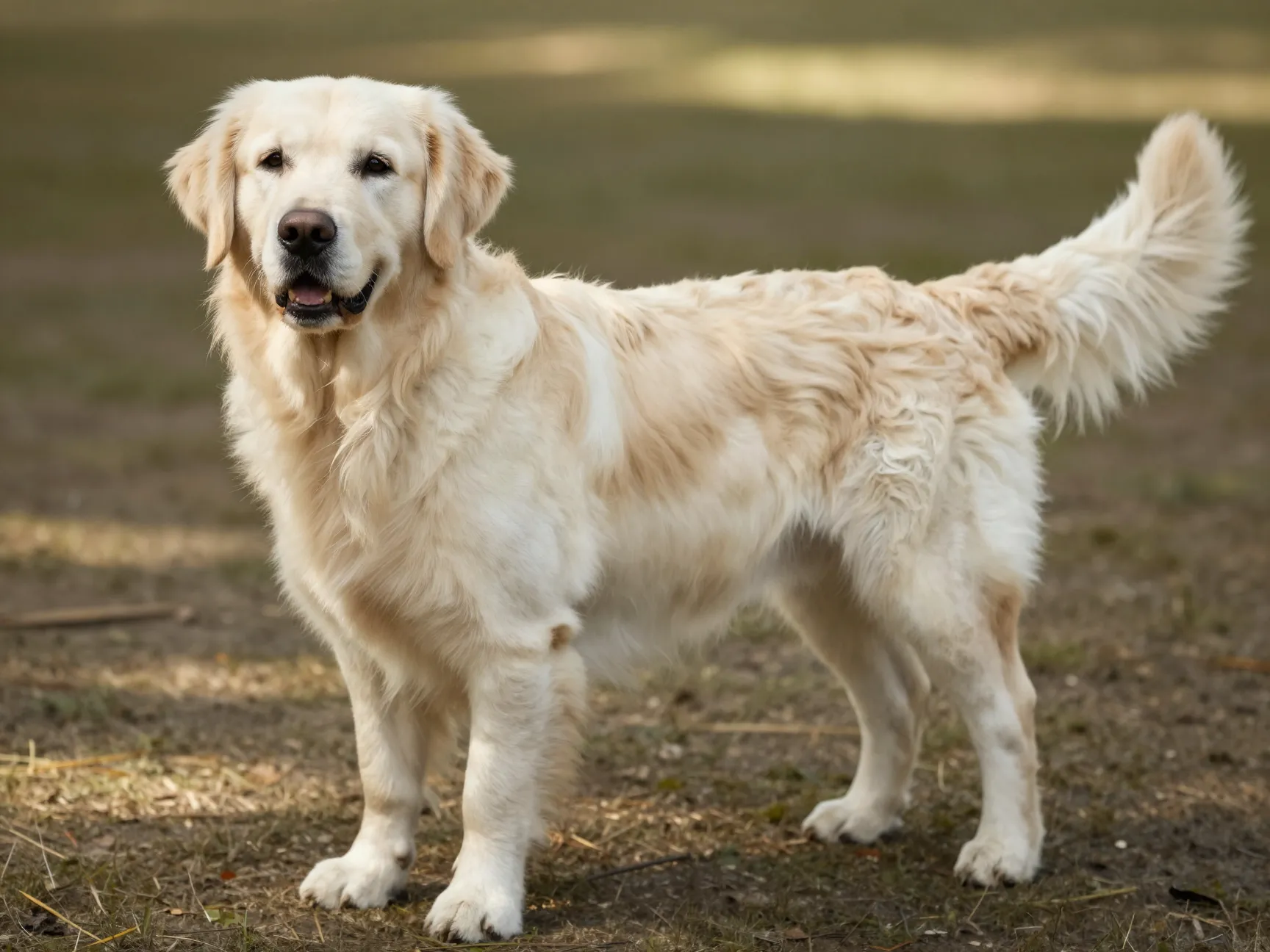
Cream sits just one step darker than light cream, with a soft ivory tone that can look slightly yellow in bright sunlight. Dogs in this category often have lighter feathering on the ears, tail, and legs compared to the body. Cream-coated Goldens are fully within breed standard color descriptions and are common in both American and European lines. This shade tends to lighten further with age, especially around the face and muzzle.
3. Golden

Golden is the shade most people picture when they hear the breed’s name. It sits in the middle of the spectrum, a warm honey-like tone that is neither pale nor deep. This is the most commonly seen shade in the general pet population and the one most frequently pictured in breed standard illustrations. A golden-coated dog typically shows even color across the body with only slightly lighter feathering.
4. Dark Golden

Dark golden is a richer, deeper version of the classic shade, often described as looking like turned honey or light amber. This shade is common in working-line and field-bred Golden Retrievers, which tend to run slightly darker overall than show-line dogs. Owners sometimes mistake dark golden for red, but the difference becomes clear side by side. Dark golden still has a yellow-gold base, while true red carries a noticeably warmer, orange-toned base.
5. Red Gold
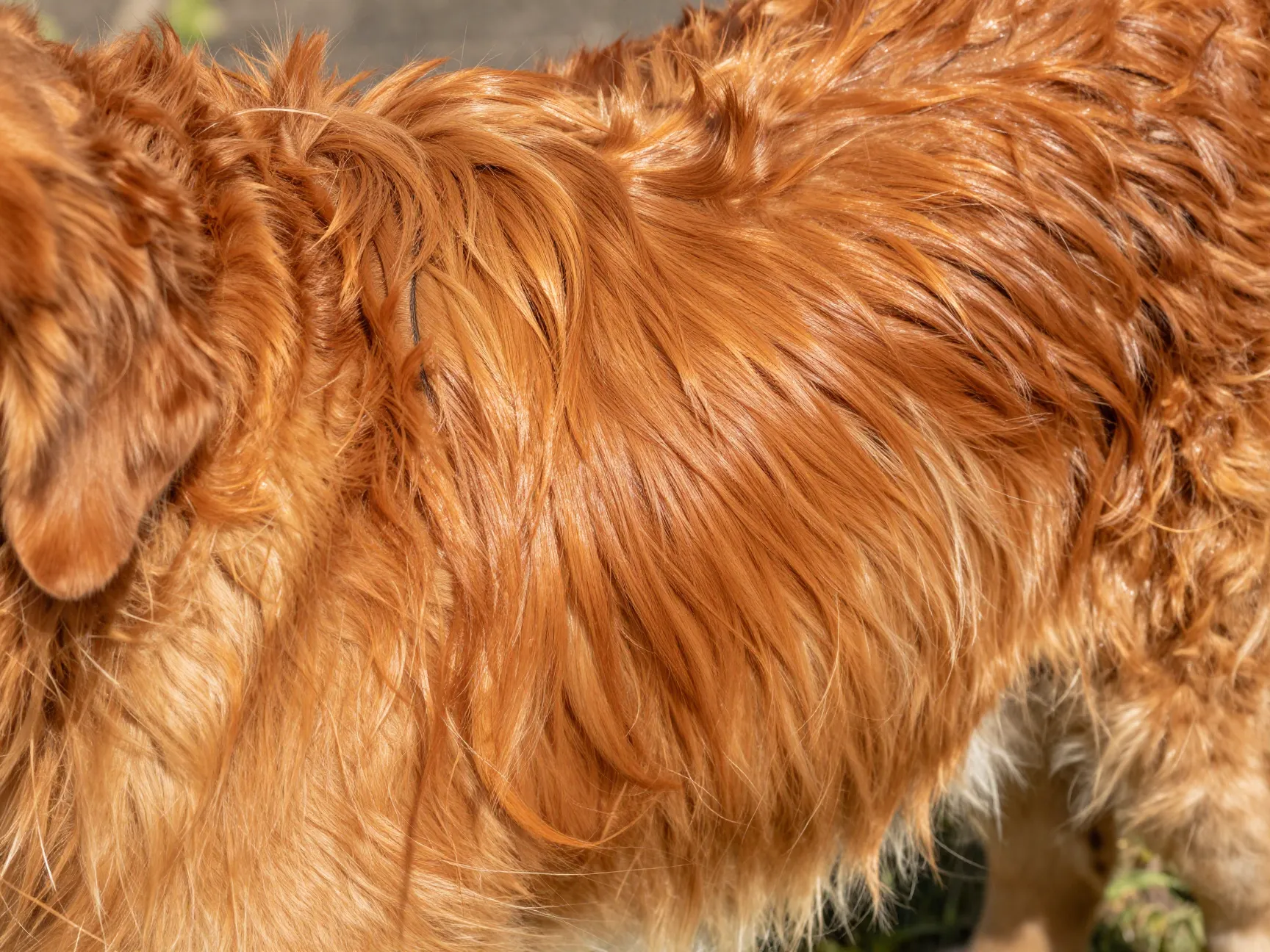
Red gold marks the point where the coat crosses from yellow-based tones into orange-based tones. This shade is sometimes marketed as a “rare red Golden Retriever,” but breed club guidance is clear that this is simply the deeper end of the natural spectrum, not a separate variety or bloodline. Red gold dogs often have a coppery sheen visible in direct sunlight, and their undercoat can appear noticeably lighter than the topcoat.
6. Mahogany
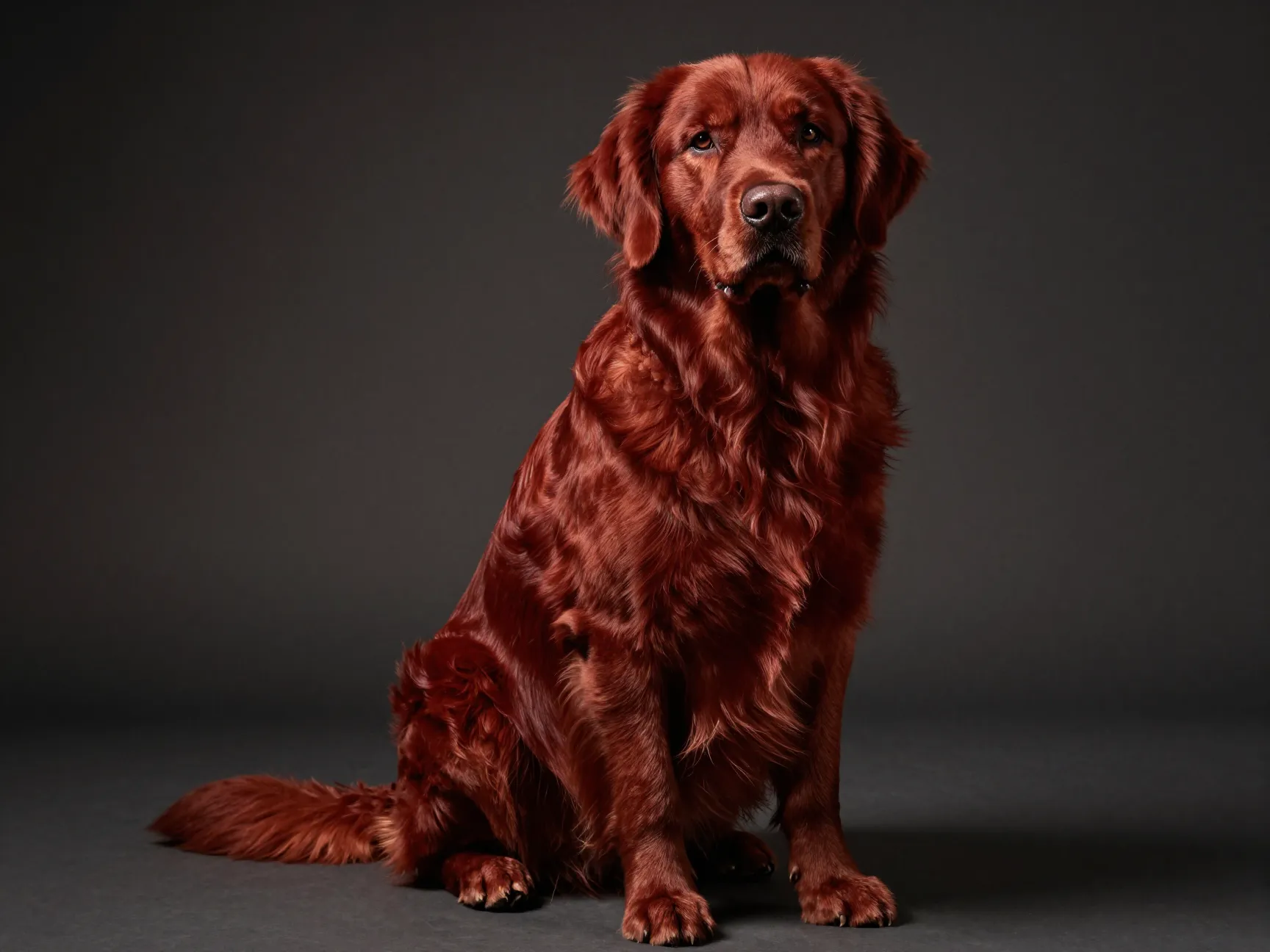
Mahogany is the deepest, richest shade on the chart, resembling dark red wood or aged copper. This is the least common shade simply because it requires a stronger combination of intensity modifier genes, not because it is a distinct color type. Mahogany-coated Goldens are still fully purebred and still fall within the acceptable range described by breed standards, even though they sit at the outer edge of that range. Buyers should be cautious of listings that price mahogany puppies significantly higher purely because of coat depth.
Genetics Behind the 6 Golden Retriever Colors Chart: A Visual Guide To Coat Shades
Every shade described above traces back to one underlying genetic mechanism: the recessive red gene, written by geneticists as e/e. This gene essentially “turns off” the black pigment pathway across the entire coat, which is exactly why Golden Retrievers cannot naturally produce black or chocolate coats. Without the black pigment pathway active, the only pigment left to express is a range of red-yellow tones called pheomelanin.
What decides where a dog lands on the cream-to-mahogany spectrum is a second layer of genetics known as intensity modifier genes. These modifiers control how much pheomelanin pigment gets deposited into each hair shaft. More pigment deposition produces darker, richer shades like red gold and mahogany. Less pigment deposition produces the pale, washed-out look of light cream and cream. Because multiple modifier genes are involved, and because puppies inherit a mix of modifiers from both parents, littermates can land at noticeably different points on the same spectrum.
This is also why coat color cannot reliably predict a puppy’s adult health, temperament, or working ability. The intensity modifier genes operate independently of genes tied to structure, coat texture, or health traits. A 2026 clarification from veterinary genetics researchers reinforced this point directly: color genetics and health genetics are separate systems, and claims linking specific shades to specific health outcomes are not supported by current research.
A simplified way to picture the process:
| Genetic Factor | What It Controls | Result on the Chart |
|---|---|---|
| Recessive red gene (e/e) | Blocks black pigment pathway | Removes the possibility of black or chocolate coats |
| Intensity modifiers (light) | Reduces pheomelanin deposit | Light cream, cream shades |
| Intensity modifiers (medium) | Moderate pheomelanin deposit | Golden, dark golden shades |
| Intensity modifiers (strong) | High pheomelanin deposit | Red gold, mahogany shades |
| Age and sun exposure | Alters pigment visibility over time | Gradual lightening or darkening after puppyhood |
AKC Standard Colors vs the 6 Golden Retriever Colors Chart: A Visual Guide To Coat Shades
Here is where a lot of online confusion originates. The American Kennel Club’s official breed standard recognizes only three color categories: rich, lustrous golden of various shades. In practical judging and registration terms, this is typically simplified into light golden, golden, and dark golden, sometimes represented with corresponding breed standard codes used in official documentation.
That three-category system is intentionally broad. It was written to describe a natural range rather than draw sharp boundaries, which is exactly why pet media outlets have expanded it into more detailed charts for everyday use. Some articles describe a 5-color chart, others a 6-color chart, and a few stretch it to 7 by separating red gold and red into distinct entries. None of these expanded charts are official AKC classifications. They are practical communication tools built on top of the same underlying three-category standard.
This is an important distinction for buyers to understand before comparing listings or breeder websites:
- The AKC standard is the only legally and competitively recognized classification, using three broad shade categories.
- Pet media charts, including 5, 6, and 7 shade versions, exist purely to help everyday readers visualize gradual differences within those three broad categories.
- No official kennel club recognizes “English Cream” or “Red Golden” as separate breeds, varieties, or color classes. These are marketing terms describing where a dog falls on the same continuous spectrum.
- A dog described as black, chocolate, or brown is not a purebred Golden Retriever, regardless of how the coat is marketed, because the recessive red gene makes those colors genetically impossible in this breed.
Breed club representatives have repeated this fourth point frequently in 2026 educational materials, partly because chocolate Labrador and black Retriever mixes are sometimes mislabeled or misrepresented as color variants of the Golden Retriever. If a seller describes a puppy this way, that is a clear signal to ask for documented pedigree verification before proceeding.
Price, Weight, and Color: What the 2026 Market Shows
Coat color has become an unfortunate pricing lever in the puppy market, and current 2026 data on sales listings supports what breed clubs have said for years: color-based price increases are not tied to any genetic rarity or added health value. Mahogany and red gold puppies are sometimes priced 20 to 40 percent higher than golden or cream littermates from the exact same litter, despite carrying identical health testing, structure, and temperament potential.
Weight and size, by contrast, are governed by entirely different genes than coat color and show no meaningful correlation with shade. A mahogany-coated male and a light cream-coated male from the same breeding program will typically fall within the same standard weight range, generally 65 to 75 pounds for adult males and 55 to 65 pounds for adult females, assuming similar bone structure and lineage.
The practical takeaway for buyers is straightforward: use the 6 Golden Retriever Colors Chart: A Visual Guide To Coat Shades as a descriptive tool, not a shopping justification. A responsible breeder should be able to explain price based on health testing, parental titles, and care standards, not based on how deep the coat color happens to be.
Golden Retriever vs Goldendoodle: Avoiding Color Confusion
A significant source of online color confusion comes from Goldendoodles and other Golden Retriever mixes, which display a much wider color range than purebred Goldens because they inherit genes from the Poodle side of their lineage. Poodles carry genetic diversity for black, chocolate, apricot, red, and parti-color coats, and when crossed with Golden Retrievers, those genes can surface in the offspring.
This is why searches and social posts sometimes show a “black Golden Retriever” or “chocolate Golden Retriever,” when the dog pictured is actually a Goldendoodle or another mixed breed. Distinguishing purebred coat genetics from doodle genetics matters for three practical reasons:
- Health testing standards differ between purebred breeding programs and mixed-breed breeding programs, affecting what genetic risks are relevant to screen for.
- Coat maintenance differs significantly, since Poodle-influenced coats often require different grooming schedules than the classic double coat of a purebred Golden.
- Registration and pedigree verification only apply to purebred dogs, so a mixed-breed puppy cannot be registered or judged as a purebred Golden Retriever regardless of coat appearance.
If a listing or photo shows a coat color outside the cream-to-mahogany range described in this guide, that is a strong signal the dog is a mix rather than a purebred Golden Retriever, and buyers should ask directly about the sire and dam’s breed documentation.
Frequently Asked Questions
Is a “red” Golden Retriever a different breed or bloodline?
No. Red gold and mahogany shades are simply the deepest end of the same natural color spectrum described in the AKC standard. There is no separate red bloodline or breed variety.
Do puppies keep the same color as they age?
Not always. Many puppies lighten or darken as they mature, particularly around the face and ears, and full adult coat color often does not settle until around two years of age.
Can two light cream parents produce a mahogany puppy?
It is possible but less likely, since intensity modifier genes are inherited from both parents. A cream-to-mahogany jump usually happens when one parent carries hidden modifier genes for a darker shade even though their own visible coat is light.
Are English Cream Golden Retrievers a separate breed?
No. “English Cream” describes a body type and coat shade commonly associated with European-line breeding, not a separate breed or officially recognized variety.
Why can’t Golden Retrievers be black or chocolate?
The breed’s recessive red gene (e/e) blocks the pigment pathway responsible for black and chocolate coloring across the entire body. A dog with either of those colors carries genetics outside the purebred Golden Retriever standard.
Conclusion
The Golden Retriever’s coat is best understood as one continuous spectrum shaped by a shared recessive red gene and a set of intensity modifier genes, not a lineup of separate color breeds. The 6 Golden Retriever Colors Chart: A Visual Guide To Coat Shades presented here, running from light cream through cream, golden, dark golden, red gold, and mahogany, gives that spectrum a practical structure that matches both the official AKC standard and the everyday language used by breeders and owners.
Before choosing a puppy or evaluating a listing, use this chart as a reference point rather than a price justification. Ask breeders for health testing documentation and pedigree records rather than focusing on coat depth, verify that any dog marketed outside the cream-to-mahogany range is being accurately described as a purebred, and remember that color says nothing definitive about a dog’s health, temperament, or working ability. A well-bred, well-cared-for Golden Retriever is a good companion at every shade on the chart.