Cane Corso Dog Aesthetic Styles That Showcase Their Noble Power
A Cane Corso can weigh more than most adult humans, generate a bite force that ranks among the strongest of any domestic dog, and still walk into a show ring with the composure of a palace guard. That contrast between raw physical force and calm dignity is exactly why breeders, judges, and owners keep talking about the breed’s “noble power.” It is not one single look. It comes in several distinct visual expressions, and understanding the 6 Cane Corso Dog Aesthetic Styles That Showcase Their Noble Power gives owners, breeders, and admirers a clearer way to appreciate what makes this ancient Italian mastiff so visually commanding.
Disclosure: This post contains affiliate links. As an Amazon Associate, we earn from qualifying purchases, and at no extra cost to you.
This guide breaks down each style in plain language, explains the biology and breed history behind it, and gives practical guidance for anyone choosing, grooming, or simply admiring a Cane Corso. The goal is not to rank one look above another. Every style reflects the same underlying structure and temperament; they simply present it differently through coat, ear shape, tail length, and conditioning.
Key Takeaways
- The 6 Cane Corso Dog Aesthetic Styles That Showcase Their Noble Power range from the classic black guardian look to refined show-ring conditioning, each rooted in real breed history rather than trend.
- Coat color, ear shape, and tail length are the main visual levers that separate these styles, but skeletal structure and muscle tone stay consistent across all of them.
- Adult Cane Corsos typically stand 23.5 to 27.5 inches at the shoulder and weigh 88 to 120 pounds, with a lifespan of roughly 9 to 12 years, forming the physical foundation for every aesthetic variation.
- Ear cropping and tail docking are restricted or banned in many countries, which is why the natural-ear watchdog look has become increasingly common and accepted in modern breed circles.
- Choosing a style should factor in local law, grooming needs, and lifestyle, not just visual preference, since some looks require more ongoing care than others.
What Gives the Cane Corso Its Noble, Powerful Aesthetic
Before breaking down the six looks, it helps to understand what physical traits create that “noble power” impression in the first place. The Cane Corso descends from ancient Roman war dogs, bred to guard property, herd livestock, and occasionally accompany soldiers into battle. That working history shaped a body built for strength and endurance rather than speed alone. Modern judges’ manuals and breed standards still describe the ideal Cane Corso as having a large, square-shaped head, a broad muzzle, and a chest that reaches at least to the elbow, all of which contribute to the imposing silhouette people associate with the breed.
Size plays an obvious role. Males typically stand between 25 and 27.5 inches at the shoulder and weigh 99 to 120 pounds, while females run slightly smaller at 23.5 to 26 inches and 88 to 99 pounds. That mass, combined with a short, stiff coat that lies close to the body, makes the underlying muscle definition visible in a way that longer-coated breeds simply cannot match. The head is arguably the single biggest contributor to the “noble” part of the equation. Breed guides consistently emphasize a flat skull, pronounced stop, and dark, almond-shaped eyes that create an alert, intelligent, almost watchful expression. Add a naturally confident gait, and the result is a dog that reads as both powerful and composed at the same time.
Movement matters just as much as static structure. Current breed standards call for a free, ground-covering trot with good reach in the front legs and drive from the rear, supported by a rectangular body proportion where length slightly exceeds height at the shoulder. This is not a decorative detail. It is functional architecture left over from a working dog that needed to cover distance efficiently while guarding territory. Every one of the 6 Cane Corso Dog Aesthetic Styles That Showcase Their Noble Power builds on this same physical foundation. The differences come almost entirely from coat color, ear and tail presentation, and the level of muscle conditioning a particular dog is bred or trained to display.
6 Cane Corso Dog Aesthetic Styles That Showcase Their Noble Power
Each of the following styles has grown out of real breeding history, regional preference, or show-ring practice rather than arbitrary trend-chasing. None of them require altering the breed’s fundamental structure. Instead, they highlight different combinations of coat, silhouette, and presentation that owners and breeders have gravitated toward over the decades.
1. Classic Black Guardian Aesthetic
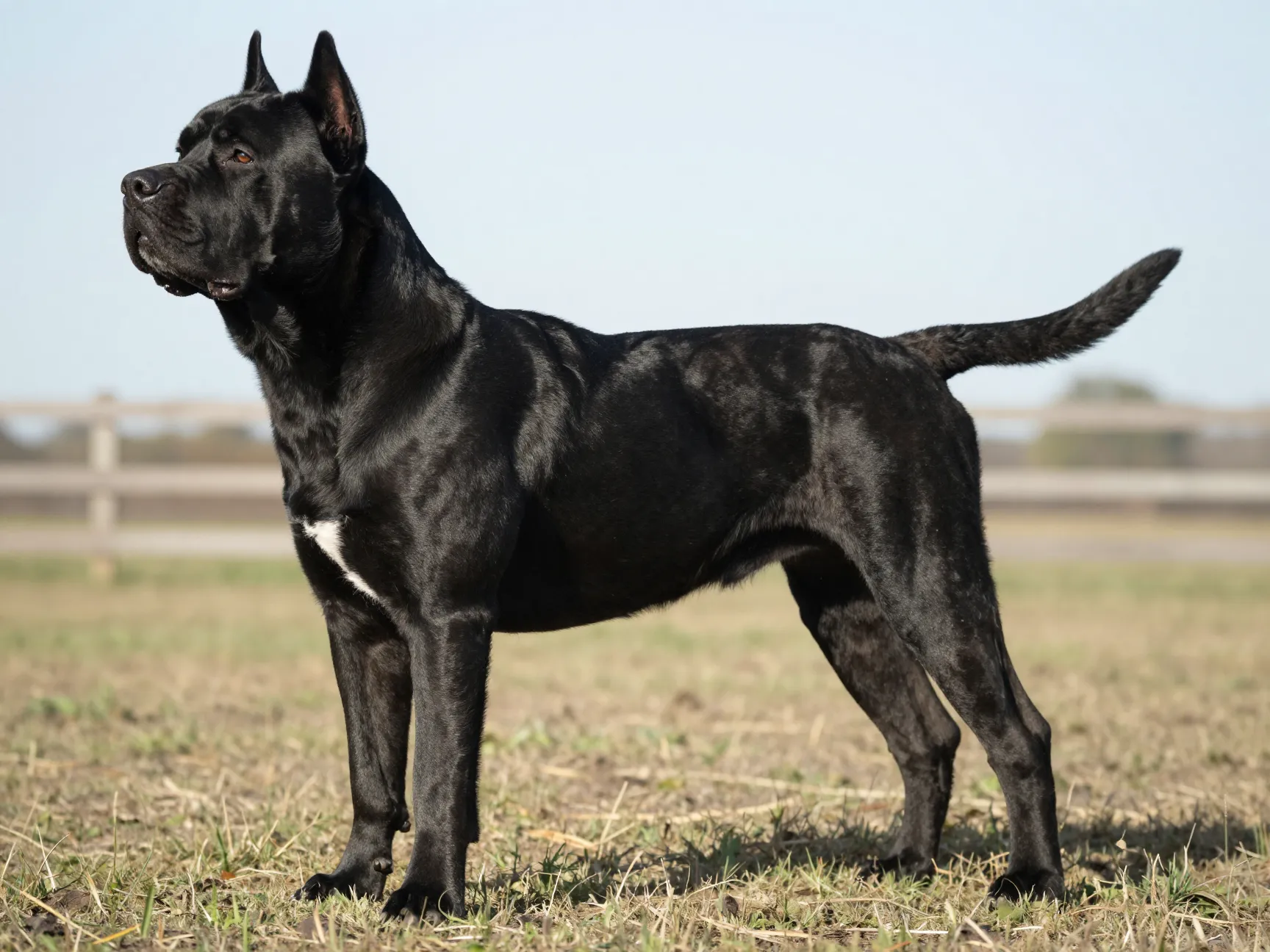
The classic black guardian is probably the image most people picture when they hear the word “Cane Corso.” This style features a solid black or very dark coat, historically paired with cropped ears and a docked tail in regions where those procedures remain legal. The short, stiff coat does more than look sleek; it accentuates every ridge of shoulder and thigh muscle, which is exactly why this look has become so tied to working-guardian imagery in film, security work, and protection-dog circles.
Because black absorbs light rather than scattering it, the coat tends to visually flatten shadows across the body, which paradoxically makes the muscle striations stand out more sharply under daylight. Cropped ears remove the softening effect that natural drop ears create around the face, giving the head an even more angular, alert profile. This aesthetic is closely associated with the breed’s role as a property and livestock guardian throughout southern Italy, where a lean, all-black dog patrolling a farm boundary became something of a regional icon.
2. Brindle War-Dog Aesthetic
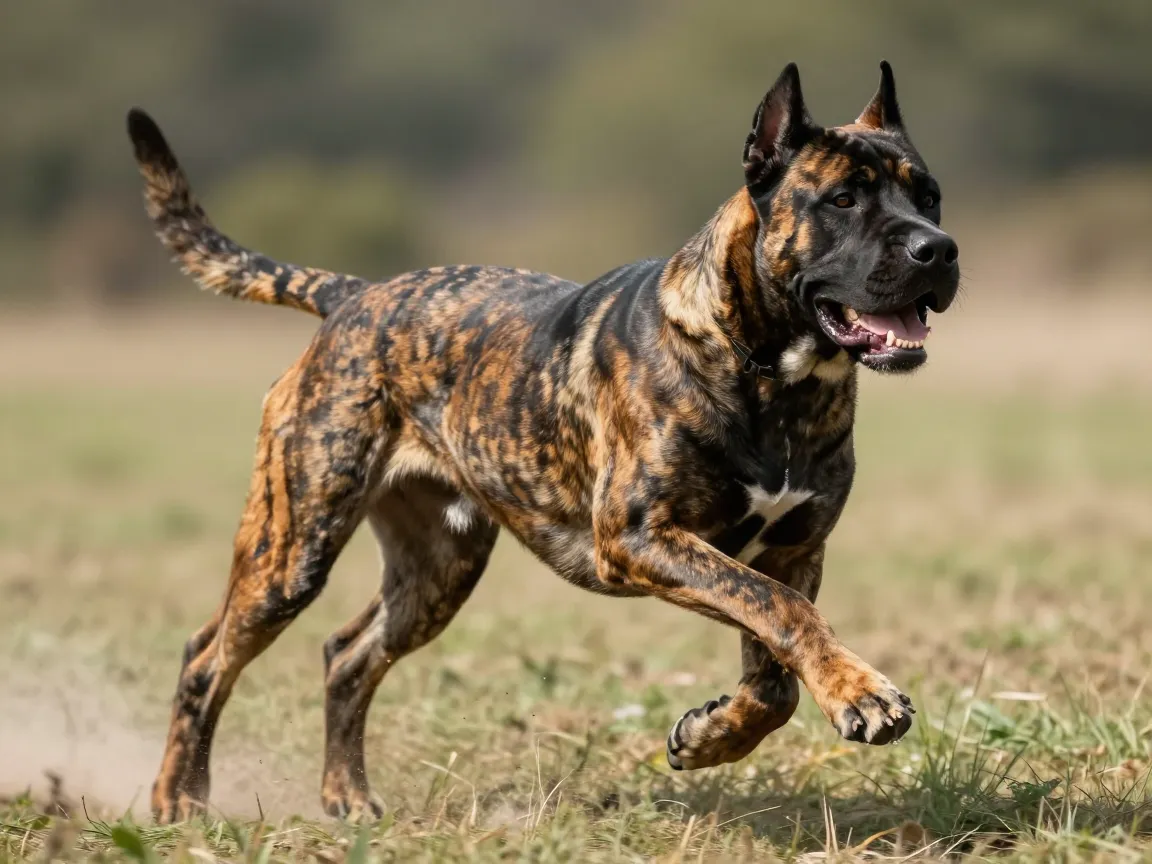
The brindle war-dog style leans directly into the Cane Corso’s documented lineage as a Roman battle and hunting companion. Brindle coats display tiger-like striping in either black or chestnut over a base coat, and breed show literature often highlights this pattern specifically because it echoes ancient depictions of Roman war dogs found in historical art and writing.
Visually, brindle does something unique: it breaks up the outline of the body just enough to draw the eye toward movement rather than static shape, which can make a brindle Cane Corso appear even more dynamic in motion than a solid-colored dog of the same build. Breeders who favor this look often pair it with a slightly heavier bone structure, since the striping pattern tends to photograph best on dogs with substantial muscle mass. Many owners describe brindle Corsos as having a “battle-ready” presence, a nod to the breed’s martial history rather than any difference in actual temperament.
3. Gray or Blue Urban Sentinel Aesthetic
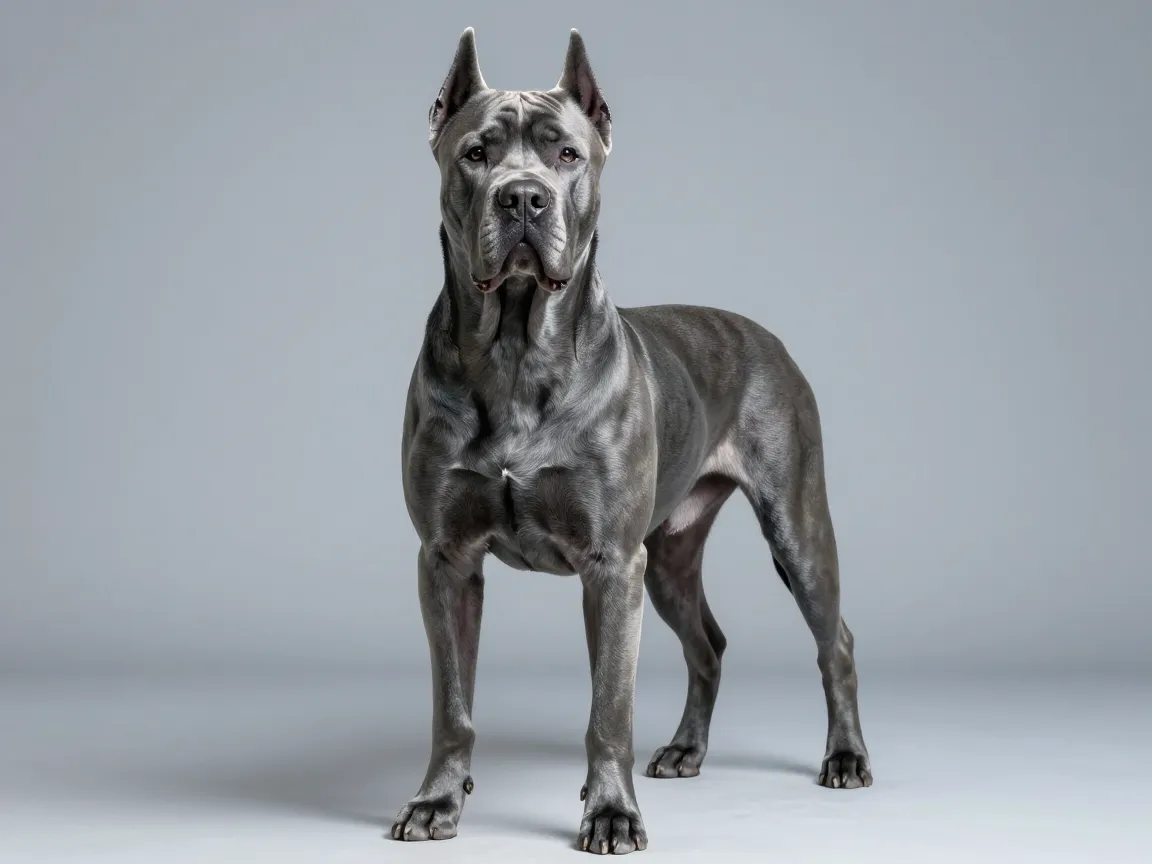
Gray and blue-tinged coats have become increasingly popular in modern breeding, giving rise to what many enthusiasts now call the urban sentinel look. Breed guides describe this coloring alongside a square head and dramatic musculature, producing an aesthetic that feels distinctly contemporary compared to the more traditional black or brindle looks.
The cooler tone of a gray or blue coat tends to photograph with a slightly softer, almost metallic sheen under artificial or overcast light, which is part of why this style has gained traction in urban settings and on social media. It is worth noting that blue in Cane Corsos is a dilution of black pigment, and reputable breeders monitor coat and skin health closely in dilute-colored dogs, since dilution genes can occasionally be linked to skin sensitivity. Done responsibly, though, this style delivers a striking, almost architectural look that pairs particularly well with the breed’s naturally imposing head shape.
4. Fawn or Red Rustic Noble Mastiff Aesthetic
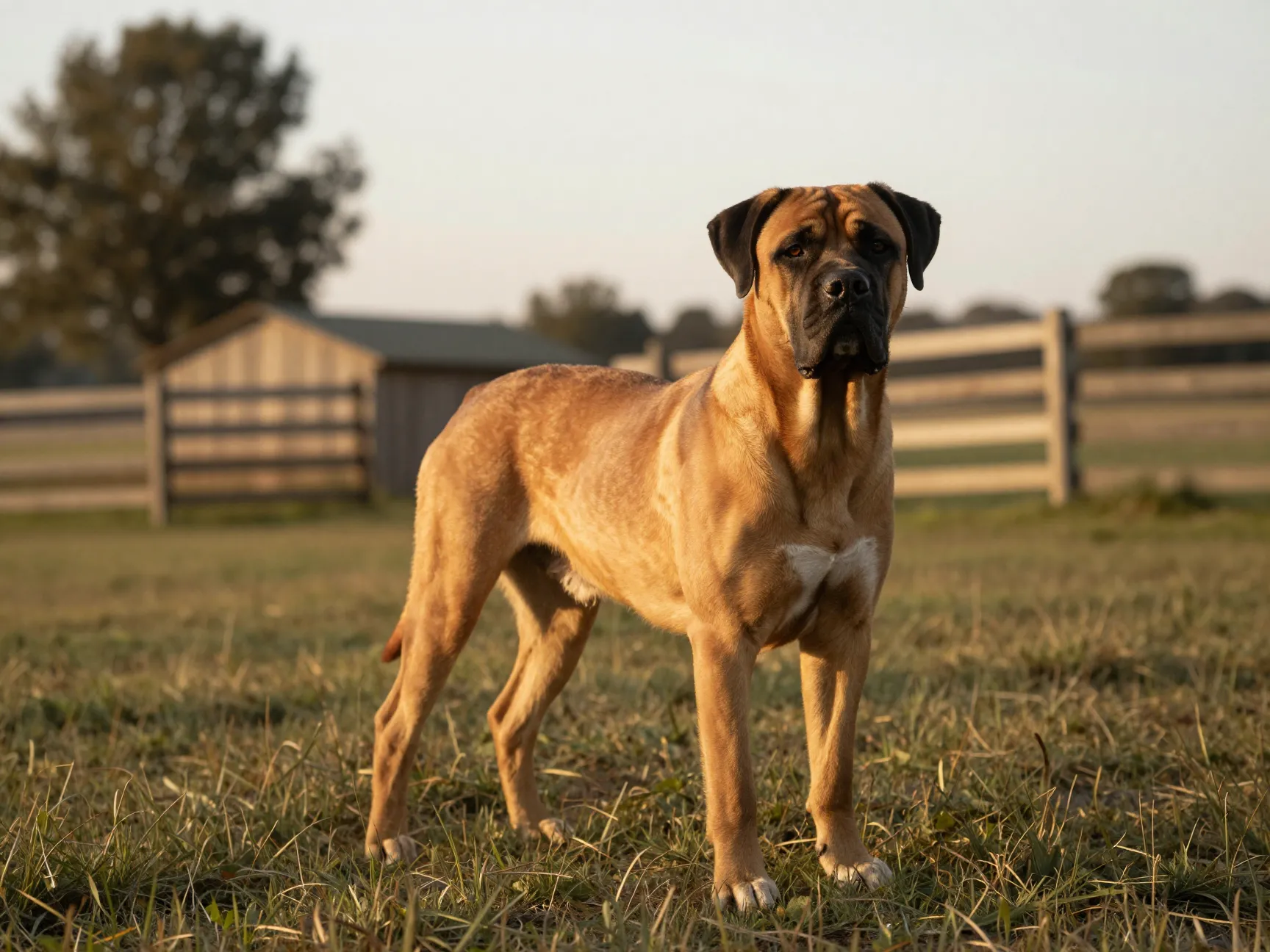
The fawn and red color family brings a warmer, earthier tone to the Cane Corso’s silhouette. These coats often appear with a black mask across the muzzle and small white markings on the chest or toes, details that breed standards typically accept within limited boundaries. The overall effect softens the intensity of the black guardian look while still preserving the same muscular frame underneath.
This aesthetic has a strong association with countryside and farm settings, where the warmer coat tones blend naturally with rural landscapes rather than standing out against them. Historically, this coloring lines up with the breed’s agricultural roots, since fawn and red Corsos were common working dogs on Italian farms long before the breed gained international show recognition in the late twentieth century. Many owners today choose this style specifically because it reads as approachable and grounded, a countryside bodyguard rather than an urban enforcer, even though the underlying protective instincts are identical across all six styles.
5. Natural-Ear Noble Watchdog Aesthetic

As ear cropping and tail docking face increasing legal restriction across Europe, parts of the United States, and elsewhere, the natural-ear noble watchdog look has grown from a niche preference into one of the most commonly seen presentations of the breed. This style keeps the standard dropped ears and a full, natural tail length, giving the dog a somewhat softer facial expression compared to cropped counterparts, while losing none of the breed’s regal bearing.
Veterinary and breed profiles increasingly emphasize this look precisely because it avoids the medical and ethical debates surrounding elective cosmetic procedures. Ear cropping in particular involves surgery under anesthesia purely for appearance, and a growing number of veterinary organizations have voiced concerns about the necessity of the procedure. The natural-ear watchdog aesthetic proves that a Cane Corso does not need surgical alteration to project authority. The heavy brow, dark eyes, and broad skull do the work on their own, and many judges and breed clubs now actively welcome this more natural presentation in the ring.
6. Show-Ring Elegance Aesthetic
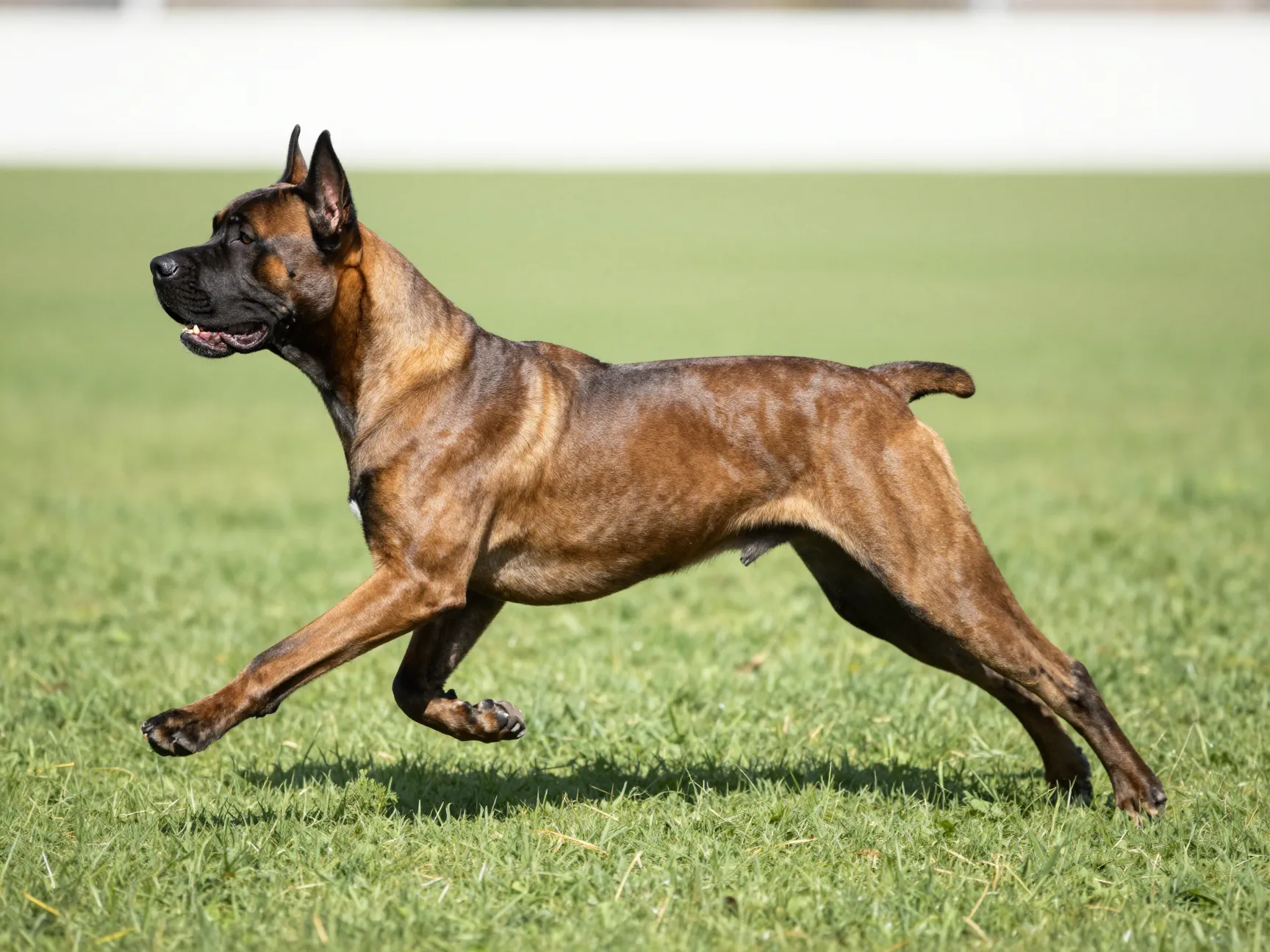
The sixth style is less about coat color and more about conditioning, proportion, and movement. Show-ring elegance describes dogs bred and trained to highlight the breed standard’s finer structural details: correct rectangular body proportions, a properly open pelvic angle, an elongated and efficient trot, and a balance between bone density and lean muscle that reads as athletic rather than bulky.
This is the aesthetic judges are trained to evaluate most closely at sanctioned events, since it reflects functional soundness rather than pure visual drama. A dog with show-ring elegance typically undergoes careful diet management, structured exercise, and conditioning routines designed to keep the coat glossy and the muscle tone visible without excess bulk that could compromise movement. Handlers often describe this look as the most “complete” expression of the breed standard because it demonstrates that the dog can move as powerfully as it looks standing still. Of the 6 Cane Corso Dog Aesthetic Styles That Showcase Their Noble Power, this one is the most technical, requiring genuine partnership between breeder, handler, and owner to achieve consistently.
Coat, Movement, and Body Proportions That Define the Look
Every style above draws from the same three visual building blocks: coat, movement, and proportion. Understanding how these interact helps explain why the breed looks so consistently powerful regardless of which aesthetic a particular dog displays.
| Visual Element | Typical Range or Description | Effect on Noble Aesthetic |
|---|---|---|
| Height at shoulder | 23.5 to 27.5 inches | Creates commanding physical presence |
| Weight | 88 to 120 pounds | Supports visible muscle mass under short coat |
| Coat type | Short, stiff, close-lying | Highlights muscle definition and body lines |
| Head shape | Square skull, broad muzzle, flat top | Produces alert, regal facial expression |
| Body proportion | Rectangular, length slightly over height | Gives balanced, athletic outline |
| Lifespan | Roughly 9 to 12 years | Reflects a sturdy, well-built frame maintained over time |
Coat color changes the surface appearance, but the trot is what convinces most observers of the breed’s underlying power. A correctly moving Cane Corso covers ground with minimal wasted motion, reaching forward with the front legs while driving off the rear with visible power through the hindquarters. This movement pattern stays constant whether the dog is black, brindle, gray, or fawn, which is exactly why all 6 Cane Corso Dog Aesthetic Styles That Showcase Their Noble Power ultimately trace back to the same skeletal and muscular blueprint.
“The Cane Corso’s power is not decoration. It is function made visible, whether that dog is standing still in a show ring or moving across open ground.”
How to Choose the Right Aesthetic Style for a Cane Corso
Anyone considering which of these six looks fits their own dog, or which style to prioritize when choosing a puppy, should weigh a few practical factors rather than aesthetics alone.
- Check local ear cropping and tail docking laws before assuming the classic black guardian or brindle war-dog look is achievable, since several countries and some U.S. states now restrict or ban these cosmetic procedures.
- Consider grooming needs realistically. Short-coated styles like the classic black guardian and gray urban sentinel require far less brushing than owners might expect, since the coat sheds minimally with regular care, but shedding season still calls for a rubber curry brush a few times weekly.
- Factor in health monitoring for dilute colors. Blue and some gray Cane Corsos carry dilution genes that occasionally correlate with skin sensitivity, so working with a breeder who screens for this is worth the extra research time.
- Match conditioning goals to lifestyle. Show-ring elegance demands structured exercise and diet discipline that suits owners planning to compete, while a natural-ear watchdog look fits families who want the breed’s protective presence without competition obligations.
- Prioritize temperament and health testing over color or ear presentation. Reputable breeders test for hip and elbow dysplasia, cardiac issues, and other breed-specific concerns regardless of which aesthetic style a litter displays, and this matters far more long-term than coat color.
Frequently Asked Questions
Is one of the 6 Cane Corso Dog Aesthetic Styles That Showcase Their Noble Power considered more “correct” by breed standards?
No single style is officially ranked above another in most modern breed standards. Judges evaluate structure, movement, and temperament rather than coat color or ear presentation, though cropped ears and docked tails were historically more common in show settings before legal restrictions changed practices in many regions.
Do cropped ears or docked tails make a Cane Corso more powerful looking?
They change the visual profile by sharpening the head’s outline and shortening the rear silhouette, but they do not affect the dog’s actual strength, working ability, or temperament. The natural-ear watchdog aesthetic proves the breed’s imposing presence comes primarily from its skull shape, muscle tone, and expression.
What is the rarest coat color among the six styles?
Blue or gray-toned coats tend to be less common than black, brindle, or fawn, partly because the dilution gene responsible for blue is recessive and requires both parents to carry it. This rarity has contributed to the gray urban sentinel aesthetic’s growing popularity among enthusiasts seeking a distinctive look.
Does coat color or style affect health or lifespan?
Generally, no, aside from the noted skin sensitivity sometimes associated with dilute blue coats. Overall lifespan across all six aesthetic styles averages 9 to 12 years, and health outcomes depend far more on genetics, weight management, and veterinary care than on coat color or ear presentation.
Can a Cane Corso’s aesthetic style change as it ages?
Coat color and ear or tail presentation stay fixed from puppyhood, but muscle definition and overall conditioning can shift significantly with diet, exercise, and age. A dog bred for show-ring elegance can lose some of that refined muscle tone without consistent activity, which is why conditioning is really a lifelong commitment rather than a one-time look.
Conclusion
The 6 Cane Corso Dog Aesthetic Styles That Showcase Their Noble Power all stem from the same source: a breed built over centuries to guard, work, and protect with quiet confidence. Whether a dog wears a classic black coat, brindle striping reminiscent of ancient war dogs, a modern gray sheen, a warm fawn countryside look, natural drop ears, or the refined conditioning of the show ring, the underlying structure and temperament remain remarkably consistent. Coat and ear presentation are simply different windows into the same powerful, disciplined animal.
Anyone drawn to this breed should start by researching a reputable breeder who prioritizes health testing and temperament over any single cosmetic style, then decide which aesthetic genuinely fits their lifestyle, local laws, and grooming capacity. From there, consistent training, proper nutrition, and regular veterinary checkups will do far more to bring out a Cane Corso’s noble power than any coat color or ear shape ever could.