Heartwarming Stories Of A Girl With Her Golden Retriever
A golden retriever named Pepe helped a non-verbal boy in Mumbai speak his first words after six months of steady, patient therapy sessions. That single documented case explains why search interest in dog-and-child bonding stories has climbed steadily for years, and why 6 Heartwarming Stories Of A Girl With Her Golden Retriever continues to be one of the most shared story collections across pet-focused media. These are not simply cute videos. They are documented and dramatized accounts of comfort, protection, and quiet healing that repeat across countries, cultures, and decades.

Disclosure: This post contains affiliate links. As an Amazon Associate, we earn from qualifying purchases, and at no extra cost to you.
This article gathers six of the most compelling examples of the girl-and-golden-retriever bond, drawn from films, therapy programs, medical journeys, and viral short stories. Each one shows a different side of what makes this particular breed so uniquely suited to standing beside a child through hardship, illness, loneliness, or simple everyday growing up.
Key Takeaways
- 6 Heartwarming Stories Of A Girl With Her Golden Retriever span therapy programs, medical alert dogs, rescue narratives, and dramatized short films, showing the bond’s range across real and cultural storytelling.
- Golden retrievers appear repeatedly in pediatric and therapy settings because of documented calming and confidence-building effects on children, including nonverbal and medically fragile kids.
- Several stories, including a seizure-alert dog and a therapy dog credited with speech gains, point to measurable developmental and health outcomes, not just emotional comfort.
- The trope of the golden retriever as a gentle, protective figure toward children appears consistently across Japanese cinema, Indian therapy programs, American memoirs, and global social media in 2025 and 2026.
- Readers can apply these stories practically by understanding how therapy dogs, service dogs, and family pets each play different but complementary roles in a child’s wellbeing.
Why These 6 Heartwarming Stories Of A Girl With Her Golden Retriever Keep Going Viral
Stories about a girl and her golden retriever are not a new trend. They have circulated in books, films, and family photo albums for generations. What has changed is the scale and speed at which these narratives now travel. A single video can reach millions of viewers within days, and platforms built around pet content, including dedicated dog-story archives and curated adoption video collections, keep publishing new examples well into 2026.
Part of the appeal is scientific, not just sentimental. Golden retrievers are consistently ranked among the most trainable and even-tempered breeds, which makes them frequent candidates for therapy work, medical alert training, and family placement with children who have anxiety, developmental delays, or chronic illness. Their size is large enough to feel protective but their temperament is gentle enough to feel safe. That combination is rare, and it is exactly why so many of the most memorable heartwarming stories feature this specific breed rather than a smaller or more high-strung one.
The other part of the appeal is narrative structure. A girl and her golden retriever story almost always follows a simple emotional arc: vulnerability, connection, and transformation. Whether the vulnerability is grief, illness, isolation, or fear, the dog becomes the steady point around which the girl’s healing happens. That structure is easy to tell, easy to believe, and easy to feel deeply, which is why it keeps resurfacing across cultures and formats year after year.
“The dog does not fix the problem. The dog simply refuses to leave, and that refusal becomes the thing that heals.”
The 6 Heartwarming Stories Of A Girl With Her Golden Retriever
The following six stories represent a mix of documented therapy outcomes, medical journeys, and widely circulated narrative films and short videos. Together they illustrate just how many different forms the bond between a girl and her golden retriever can take.
1. Akari and Socks: A Decade of Loyalty on Screen
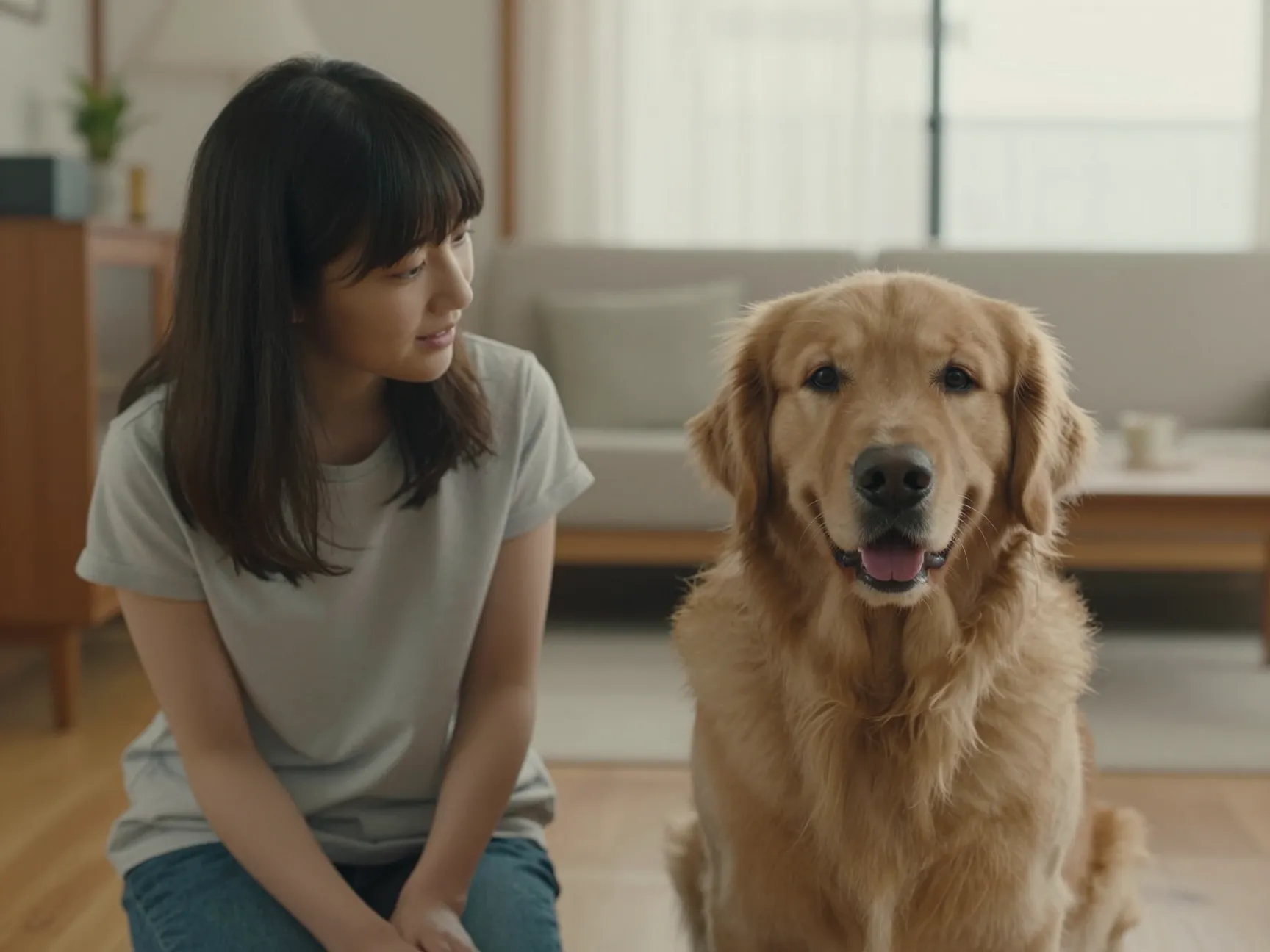
The Japanese film “10 Promises to My Dog,” released in 2008, remains one of the most internationally discussed examples of a girl-and-golden-retriever story. The film follows Akari and her golden retriever Socks across roughly ten years, tracking her through family loss, the ordinary struggles of growing up, and the pressures of young adulthood. A profile of the film updated by the Japan Foundation in December 2025 credits its emotional power to the “10 Commandments of Dog Ownership,” a set of principles about the responsibilities that come with caring for a loyal animal.
What makes this story stand out is its patience. Socks is not a rescue miracle or a medical hero. He is simply present, year after year, as Akari changes. That slow, steady companionship is the emotional backbone of the entire film, and it is one reason the story is still referenced internationally nearly two decades after its release.
2. Pepe and the Boy Who Found His Voice
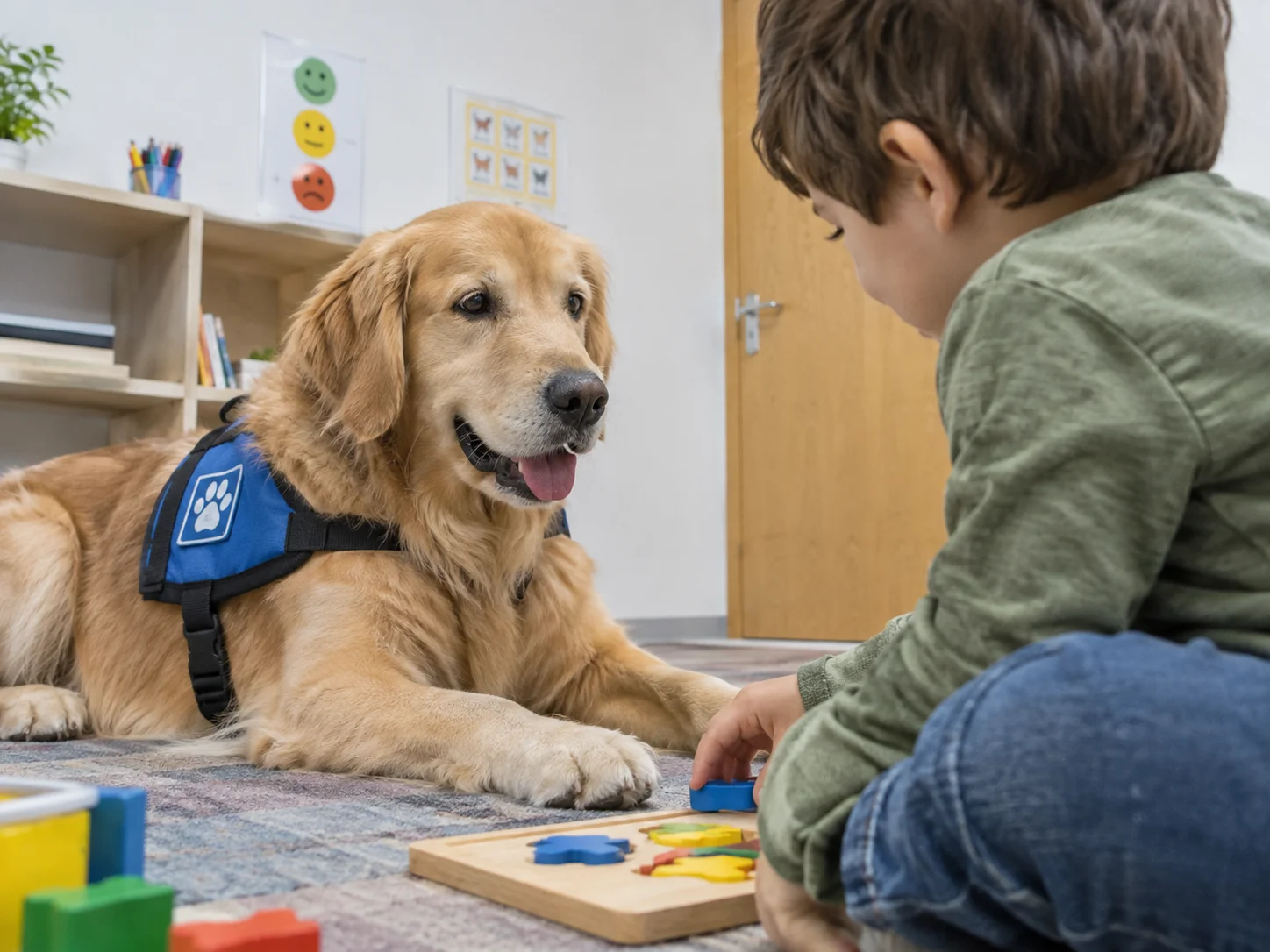
A June 2025 feature on dog therapy programs documented six real-world cases of therapy dogs changing lives, several of them involving golden retrievers working directly with children in India. Among the most striking was Pepe, a six-year-old golden retriever paired with a previously non-verbal boy. Over six months of consistent therapy sessions, the boy began speaking, a development his family and therapists directly credited to the calm, predictable presence Pepe brought to each session.
While the featured case centered on a boy rather than a girl, the same program described Bella, a golden retriever comforting cancer patients in Pune, and Leo, a dog supporting a mother coping with PTSD in Mumbai. These cases collectively show how golden retrievers are increasingly used in structured therapy settings across South Asia, often with children and families as the primary beneficiaries. The pattern reinforces why girl-and-golden-retriever pairings are so frequently highlighted in therapy-dog literature: the breed’s calm temperament translates into measurable developmental gains.
3. Emma and Max: Rebuilding Confidence After Anxiety
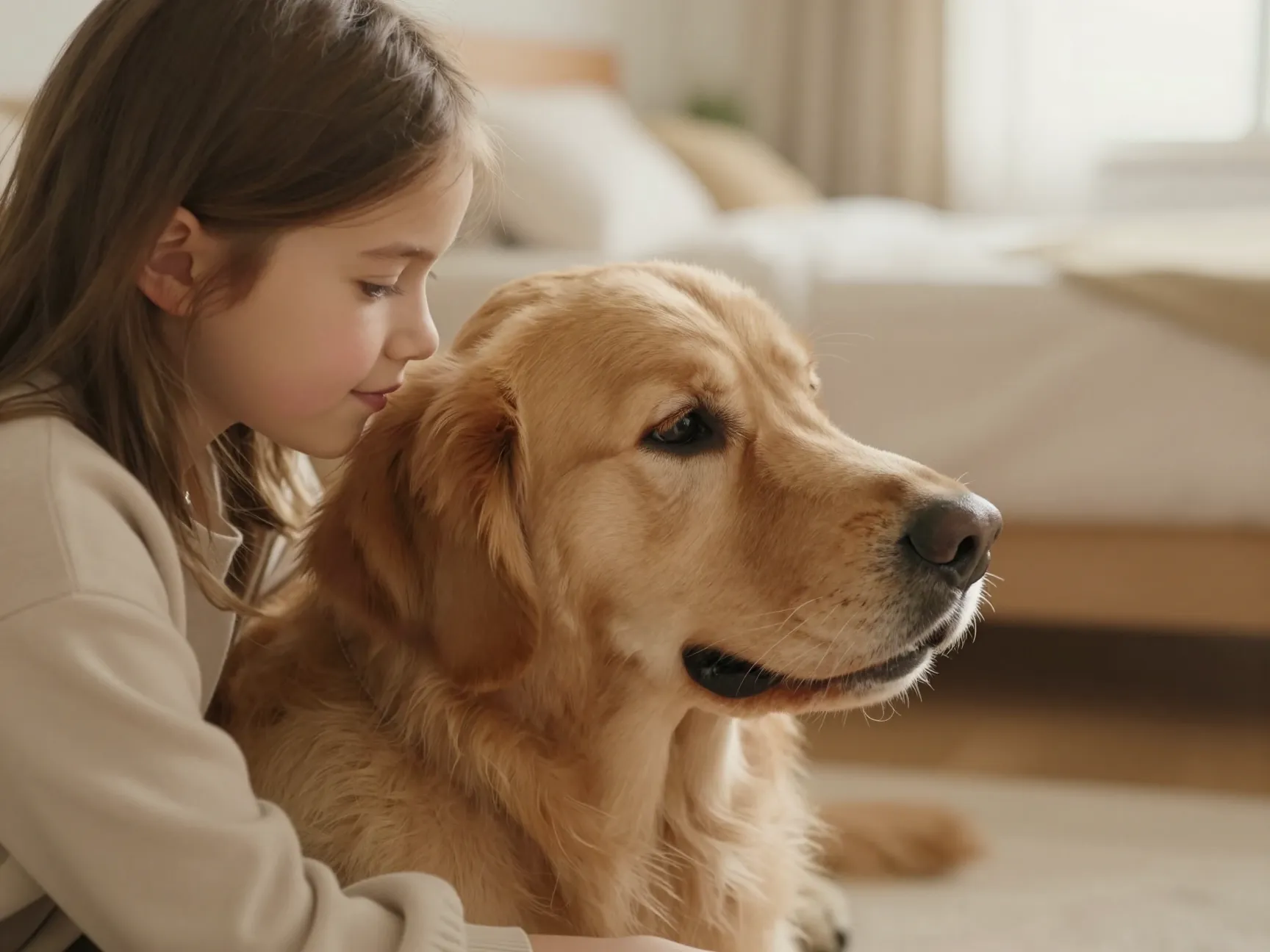
A December 2024 collection of heartwarming dog stories included the account of Emma, a young girl living with anxiety and depression whose family adopted Max, a specially trained golden retriever. According to the story, Max’s constant and calming presence helped Emma feel safe again, gradually rebuilding her social confidence and helping her reconnect with peers she had withdrawn from.
This kind of informal emotional support, distinct from formal service-dog training, is one of the more common threads in girl-and-golden-retriever stories. Families frequently describe the dog as a bridge back to normal life, giving a child something steady to focus on while they work through difficult emotions. Emma’s story is often cited because it captures a scenario many parents recognize: a child struggling silently, and a dog that seems to notice before anyone else does.
4. Hailey and Hunter: A Seizure-Alert Partnership
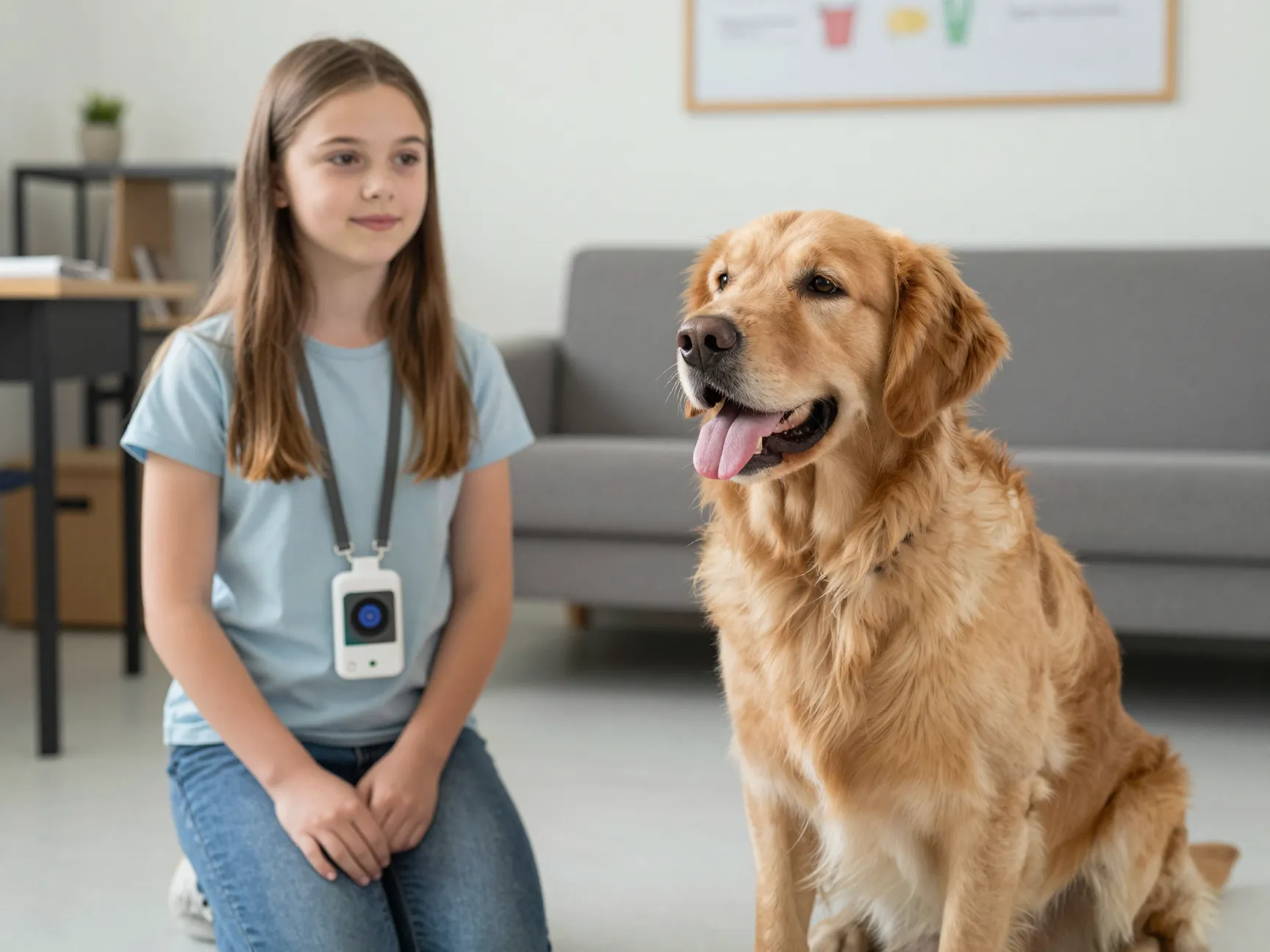
One of the most medically significant entries among these stories comes from a Guideposts feature titled “The Golden Retriever Who Came for Christmas.” It follows Hailey, a girl with complex medical needs, and Hunter, a golden retriever trained specifically to detect seizures before they happen. According to the account, by the time Hailey turned nine, her doctors were able to remove her feeding tube as her overall health and confidence steadily improved.
The story credits Hunter’s alerting behavior and simple companionship as central to Hailey’s transition into regular school starting in second grade. This case stands apart from the others because it involves formal medical alert training rather than general companionship or therapy visits. It demonstrates that the girl-and-golden-retriever bond can extend well beyond emotional comfort into direct, life-altering medical support.
5. Lily and Max: Comfort in a Child’s Final Days
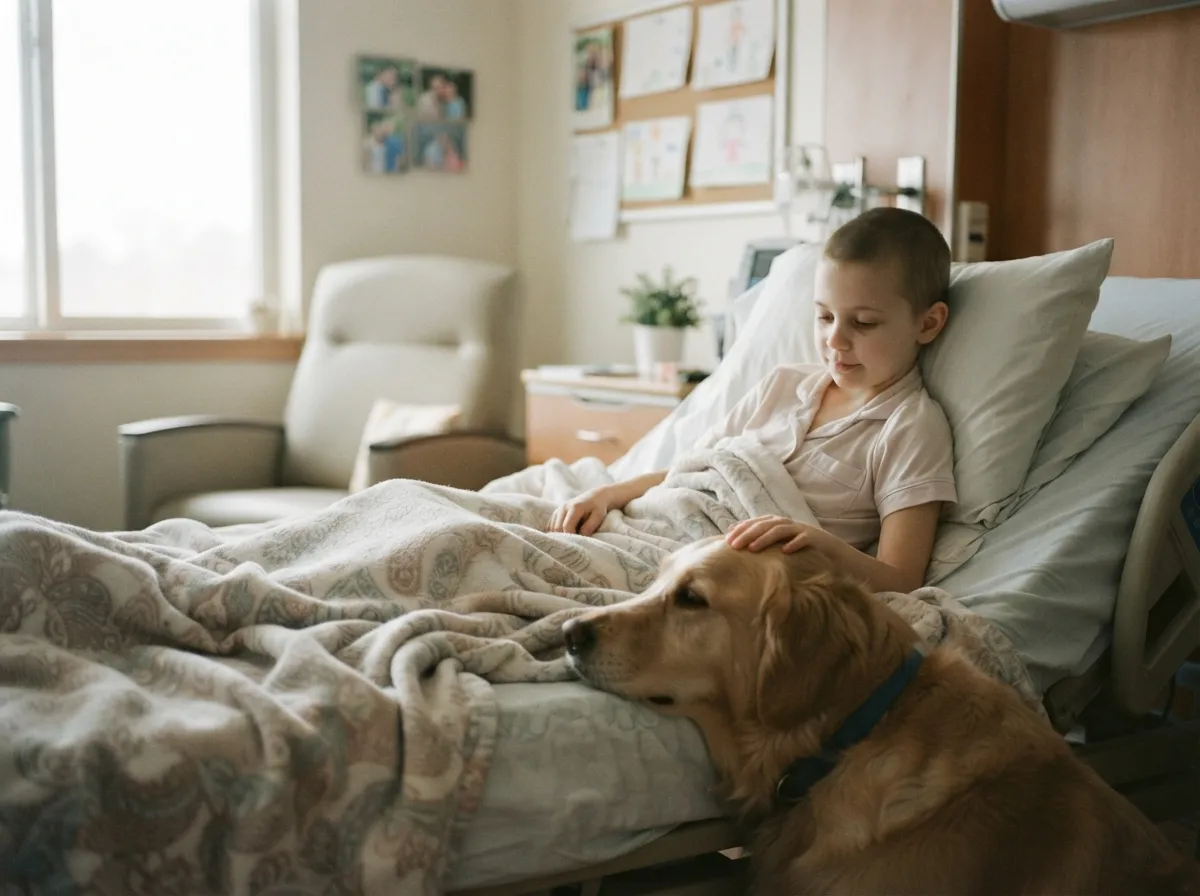
Among the more emotionally difficult entries in this list is the story of Lily, a terminally ill girl, and her golden retriever, also named Max, described in the narrative as her “guardian” and her “shadow.” The widely viewed 2025 video account portrays Max’s constant presence and behavior as emotionally significant enough to move medical staff to tears during Lily’s care.
While this particular narrative is told in a dramatized, story-driven format rather than as a clinical case study, it echoes something increasingly documented in pediatric end-of-life care: companion animals can meaningfully improve perceived quality of life and provide comfort during some of the hardest moments a family will ever face. Stories like Lily and Max resonate because they capture something real about how animals sit with pain without trying to explain it away.
6. Emily and Scout: Loyalty When Everyone Else Walked Away
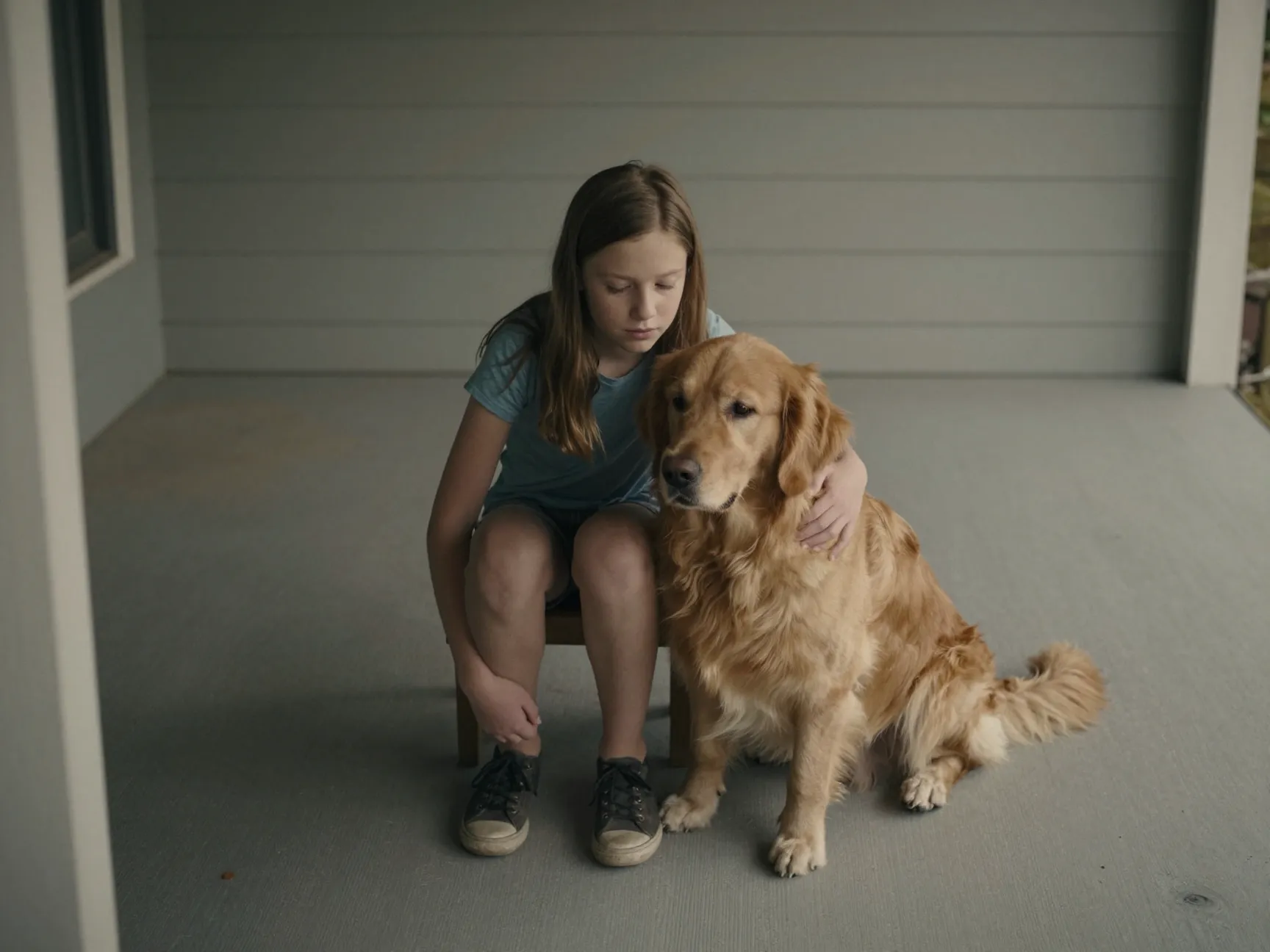
A July 2025 short film titled “Her Family Abandoned Her… But What the Dog Did Will Break Your Heart” follows Emily, a young girl left with nowhere to go, whose only constant companion is her golden retriever Scout. The film’s emotional center is Scout’s unwavering loyalty, staying by Emily’s side after everyone else in her life has left.
This story functions almost as a modern parable about unconditional love. It is less about medical outcomes or therapy metrics and more about the emotional metaphor golden retrievers so often represent in popular storytelling: steady presence in the face of abandonment. Combined with related rescue narratives, including a widely shared September 2025 account of a veterinary student rehabilitating a golden retriever that had been chained outdoors for seven years, these stories show how the breed’s reputation for gentleness and loyalty extends from fictionalized shorts into real rescue and rehabilitation work.
What These Stories Reveal About Golden Retrievers and Children
Looking across all six accounts, a clear pattern emerges. Golden retrievers show up again and again in stories involving children not by coincidence but because of specific, well-documented traits. The table below summarizes the core traits highlighted across these six stories and how each one supports children in different circumstances.
| Trait | How It Shows Up in the Stories | Example |
|---|---|---|
| Calm temperament | Reduces anxiety during therapy or medical sessions | Pepe helping a non-verbal boy find speech |
| High trainability | Enables specialized medical alert work | Hunter detecting seizures for Hailey |
| Steady presence | Provides comfort without demanding anything in return | Socks supporting Akari for a decade |
| Emotional sensitivity | Dogs appear to notice distress before others do | Max easing Emma’s anxiety and social withdrawal |
| Loyalty under hardship | Dogs stay present through abandonment or illness | Scout with Emily, Max with Lily |
Golden retrievers are frequently described in adoption and rescue content, including collections like “Golden Tails” updated in August 2026, as forming immediate and nurturing bonds with children in their new families. Curated video collections on major platforms echo the same theme well into 2026, framing golden retriever adoption not just as rescuing a dog but as gaining a devoted companion built for family life.
This is not simply a marketing narrative. Behavioral consistency across therapy programs, service dog training, and family adoption stories all point to the same underlying reality: golden retrievers are unusually well suited to reading and responding to a child’s emotional state, whether that child is anxious, medically fragile, grieving, or simply growing up.
The Recurring Symbol of the Protective Companion
A recurring image across several of these stories is the golden retriever acting almost like a guardian figure. A frequently cited anecdote describes a golden retriever named Lucy who retrieves a child’s dropped teddy bear, returns it to the bed, gently licks the child’s face, and then resumes a watchful position at the bedroom door. The author of that account explicitly compares Lucy to a protective nanny, reinforcing a trope that appears throughout this list: the golden retriever as a careful, attentive caregiver rather than simply a pet.
This symbolism helps explain why dramatized short stories, such as the December 2025 video about a golden retriever intervening when a crying seven-year-old girl is ignored by passersby on a busy street, resonate so strongly even though they are fictionalized. They tap into a widely shared cultural belief, supported by real therapy and service-dog outcomes, that golden retrievers are uniquely responsive and protective toward vulnerable children.
Frequently Asked Questions
Are these girl-and-golden-retriever stories based on real events or dramatized fiction?
Some are documented real-world cases, such as therapy programs in India and the seizure-alert partnership between Hailey and Hunter. Others, including the short films about Lily, Emily, and the crying child on a busy street, are dramatized narratives designed to illustrate the same emotional themes rather than strict documentary accounts.
Why do golden retrievers appear so often in therapy and service dog stories involving children?
Golden retrievers are widely recognized for their trainability, patience, and calm temperament, which makes them strong candidates for therapy work, seizure alert training, and family placement with children facing anxiety, illness, or developmental challenges.
Can a family pet provide the same benefits as a formally trained therapy dog?
Informal companionship, like Max’s role in Emma’s story, can meaningfully support a child’s emotional wellbeing, but it is different from the structured training behind medical alert dogs like Hunter or clinical therapy programs like Pepe’s. Families considering a dog for a child with specific medical or emotional needs should consult professionals about formal training options.
What should families look for when adopting a golden retriever for a child?
Look for breeders or rescues, such as those featured in ongoing “Golden Tails” style archives, that emphasize temperament testing and gentle socialization history. A dog’s individual personality still matters more than breed alone, even with a breed known for gentleness.
Where can readers find more stories like these?
Dedicated dog-story archives, including collections focused specifically on heartwarming dog transformations, continue publishing new golden retriever and child bonding stories through 2026, reflecting sustained public interest in this theme.
Conclusion
These 6 Heartwarming Stories Of A Girl With Her Golden Retriever show that the bond between a child and this particular breed is not a single story told one way. It is a decade-long companionship in a Japanese film, a therapy session that helped a child speak, a seizure alert that changed a medical outcome, and a quiet presence at a hospital bedside. Each version of the story proves the same underlying point: golden retrievers show up for children in ways that are steady, patient, and often life-changing.
For readers moved by these accounts, the most useful next step is practical rather than sentimental. Families interested in therapy or service dog support for a child should speak with a licensed program rather than relying on informal placement. Those simply looking for a loving family pet should research reputable breeders or rescue organizations with documented temperament histories. And anyone who wants more of these stories can follow ongoing dog-story archives and rescue series, which continue to document new examples of this remarkable bond well into 2026.