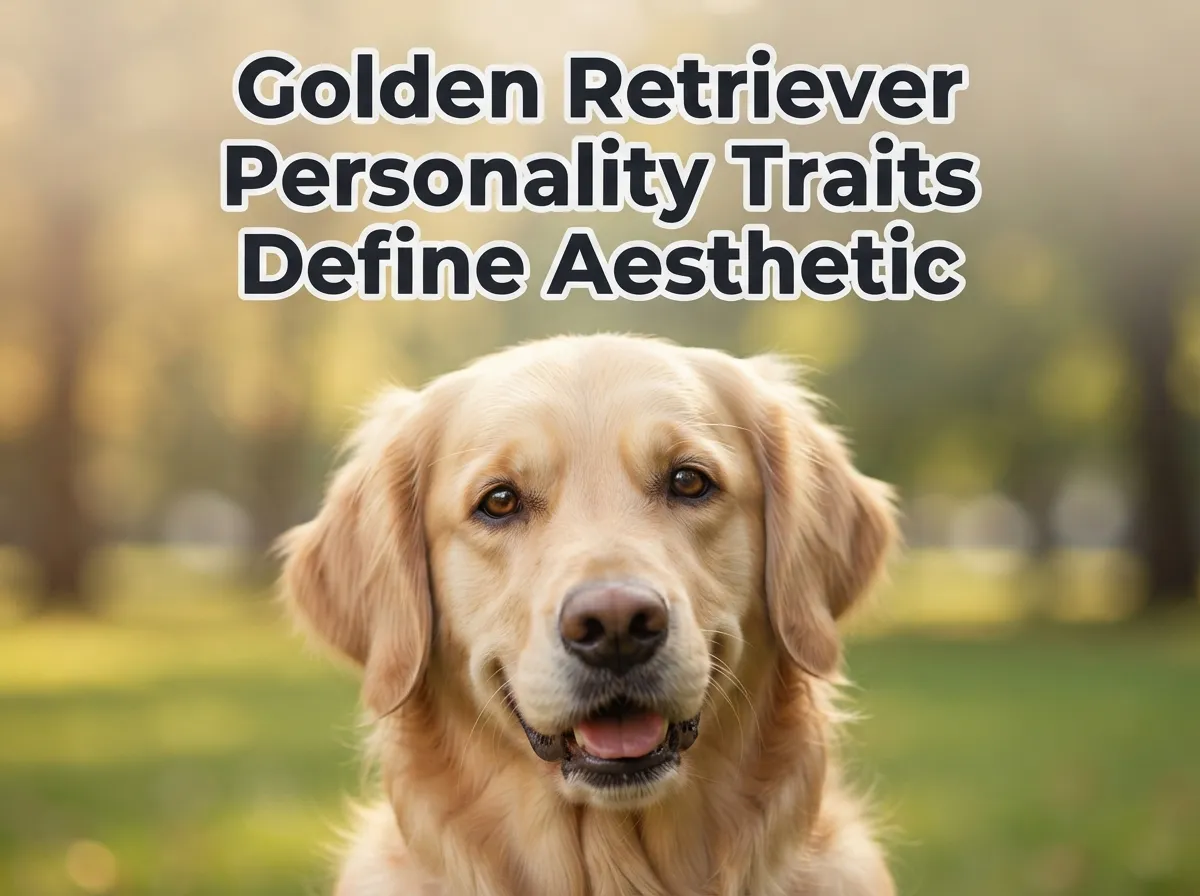
Golden Retriever Personality Traits That Define Their Aesthetic
A golden retriever will greet a total stranger with the same enthusiasm most people reserve for a best friend returning from war. That is not an accident of breeding luck. It is a documented, consistent behavioral pattern that shows up across therapy programs, family homes, and millions of short-form videos. Understanding 6 Golden Retriever Personality Traits That Define Their Aesthetic helps explain why this breed has become the internet’s unofficial symbol of comfort, warmth, and wholesome living.
Disclosure: This post contains affiliate links. As an Amazon Associate, we earn from qualifying purchases, and at no extra cost to you.
The phrase “golden retriever energy” has crept into everyday language to describe a person who is relentlessly upbeat, loyal, and easy to love. That linguistic shift did not happen by chance. It happened because the real dogs behind the phrase display a remarkably stable set of character traits, and those traits translate directly into the visual and emotional “aesthetic” people associate with the breed. This article breaks down the six defining traits, explains the science and history behind them, and shows why the golden retriever aesthetic is likely to stay culturally dominant for years to come.
Key Takeaways
- Golden retrievers consistently rank among the friendliest, most socially open dog breeds, thriving in busy, people-filled environments rather than shying away from them.
- Gentleness and patience make them exceptional companions for children, elderly individuals, and people with disabilities, which reinforces their reputation as a “safe” breed.
- High intelligence and trainability mean goldens genuinely want to cooperate with humans, not just tolerate instructions.
- Emotional attunement and empathy allow them to sense human moods, a trait increasingly documented in 2026 behavioral research.
- Sustained playfulness and a distinct lack of guard-dog instincts complete the profile, explaining why the golden retriever aesthetic dominates comfort-focused media and family-pet marketing.
Why the Golden Retriever Aesthetic Exists
Every recognizable “aesthetic” in pop culture is built on a foundation of real, repeated behavior. The golden retriever aesthetic is no different. Breed profiles published in 2026 consistently describe golden retrievers as friendly, reliable, and highly social, and these are not marketing buzzwords. They reflect over a century of selective breeding for a working retriever that had to cooperate closely with hunters, tolerate crowds, and remain calm under pressure.
That breeding history matters because temperament is partly heritable. Dogs bred for generations to work cooperatively with humans, rather than to guard territory or hunt independently, tend to pass down a calmer, more socially confident baseline. This is the biological groundwork underneath what the internet now calls the “golden retriever aesthetic.” The six traits below are the visible expression of that underlying temperament, and together they explain why this breed looks and feels the way it does, both in person and on a screen.
6 Golden Retriever Personality Traits That Define Their Aesthetic
The following list unpacks each defining trait in detail, showing how it shapes both real-world behavior and the visual, emotional impression people associate with the breed.
1. Unconditional Warmth and Social Magnetism

Golden retrievers do not save their enthusiasm for familiar faces. Recent breed guides describe them as among the friendliest dogs alive, greeting strangers as if reuniting with old friends. This is the single most defining trait behind the golden retriever aesthetic because it is the trait most visible to outsiders within seconds of meeting the dog.
This warmth shows up in specific, observable ways:
- A loose, wagging tail and relaxed ears when meeting new people
- A tendency to approach rather than retreat from crowds, children, and other animals
- Minimal territorial behavior around visitors or delivery workers
- A visible eagerness to be touched, petted, and included in group activity
Breeders and behaviorists point out that this social openness is not simply friendliness by accident. It reflects a genuinely low threshold for stranger anxiety, a trait that most other breeds do not share to the same degree. Compare a golden retriever’s reaction to a knock at the door with that of a typical guard breed, and the difference becomes obvious immediately.
“Golden retrievers treat almost every new person as a potential friend rather than a potential threat, and that single trait shapes nearly everything else about their public image.”
This social magnetism is also why golden retrievers thrive in busy, people-rich environments such as farmers markets, school pickup lines, and crowded parks. Many other breeds would find that level of stimulation stressful. Goldens tend to find it energizing.
2. Gentle Patience With Children and Vulnerable People

Gentleness is the second pillar of the golden retriever aesthetic, and it is arguably the trait with the most practical real-world impact. Breed profiles and working-dog studies repeatedly highlight golden retrievers’ patience with children, elderly individuals, and people with physical or cognitive disabilities. This is precisely why the breed dominates therapy dog programs, hospital visitation teams, and service dog training pipelines.
Patience in this context means more than just tolerating a toddler’s clumsy hug. It means:
- Remaining still and calm during unpredictable movements or loud noises
- Adjusting play intensity automatically based on who they are interacting with
- Showing minimal reactivity to being poked, pulled, or handled roughly by young children
- Staying composed in hospital, courtroom, or classroom settings where other breeds might grow anxious
This gentleness is not simply a personality quirk. It has a measurable functional purpose. Golden retrievers are one of the most commonly selected breeds for facility therapy work precisely because handlers can trust them not to overreact in high-stress emotional environments. A dog visiting a children’s hospital ward cannot afford to be easily startled or impatient, and golden retrievers consistently pass that test.
This trait also explains a large share of the breed’s visual aesthetic online. Photos and videos of a golden retriever lying motionless while a baby naps against its side, or patiently allowing a toddler to use its back as a pillow, circulate widely because they capture something rare: genuine, voluntary gentleness from a large, physically capable animal.
What Trainability and Emotional Intelligence Add to the Aesthetic
Beyond warmth and gentleness, two deeper cognitive traits round out the golden retriever’s defining character: their trainability and their emotional attunement to humans. These traits are less immediately visible than a wagging tail, but they are arguably more important in explaining why the breed has such a durable, trustworthy reputation.
3. High Trainability and Cooperative Intelligence
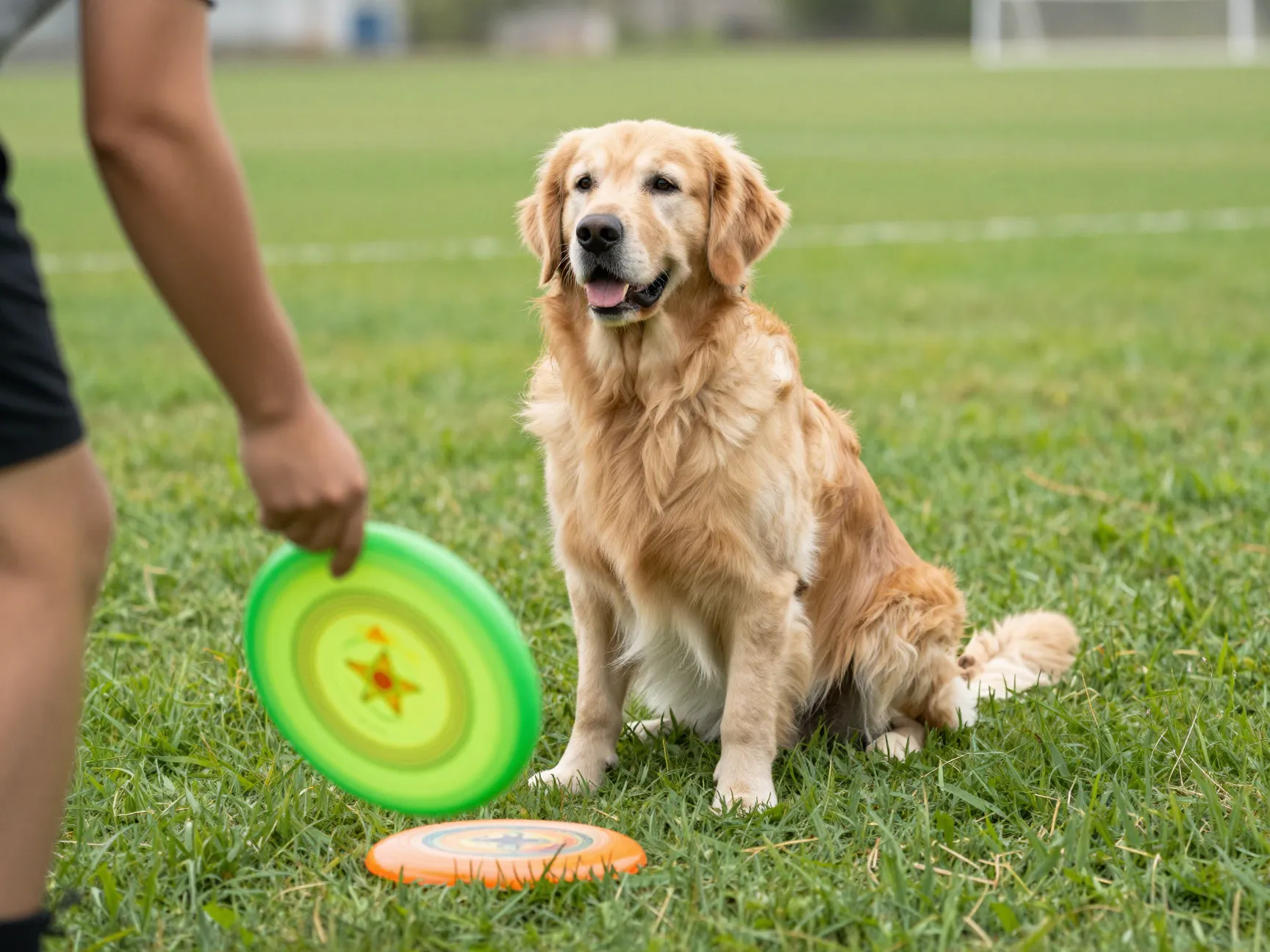
Golden retrievers are frequently ranked among the most trainable dog breeds, and this is not simply because they are obedient. Trainers and behaviorists describe them as genuinely wanting to work alongside humans, a trait rooted in their original job as retrieving gun dogs that had to follow precise commands in the field.
This cooperative intelligence shows up in measurable ways:
- Quick uptake of new commands, often within a handful of repetitions
- Strong eye contact and attentiveness during training sessions
- Willingness to repeat tasks without losing motivation or focus
- Reliable performance even with distractions present, once properly trained
This trainability is the reason golden retrievers are so heavily represented in service dog programs, search and rescue teams, and detection work. A dog can be friendly and gentle, but without trainability, none of that temperament translates into reliable working behavior. Golden retrievers check both boxes simultaneously, which is part of why their aesthetic reads as “capable” as well as “sweet.”
The table below summarizes how trainability compares across a few commonly referenced retrieving and companion breeds, based on consistent patterns found in current breed literature.
| Trait Focus | Golden Retriever | Typical Companion Breed | Typical Guard Breed |
|---|---|---|---|
| Eagerness to please | Very high | Moderate | Low to moderate |
| Command retention | Fast | Moderate | Moderate to fast |
| Motivation source | Human approval, food, play | Food, routine | Territory, instinct |
| Stranger tolerance during training | High | Moderate | Low |
This combination of eagerness and consistency is a large part of why golden retrievers appear so frequently in obedience demonstrations, viral training videos, and family testimonials. Their intelligence is not abstract. It is visible in how quickly they master new skills and how reliably they perform them later.
4. Deep Emotional Attunement and Empathy

The fourth defining trait is subtler but increasingly documented in 2026 behavioral analyses: golden retrievers appear unusually attuned to human emotional states. Handlers and researchers describe goldens as picking up on sadness, stress, or distress and responding with comforting behavior, such as leaning against a person, resting their head on a lap, or simply staying close without prompting.
This emotional sensitivity contributes heavily to the modern golden retriever aesthetic, particularly in “comfort content” that circulates online. A short video of a golden retriever quietly sitting beside someone who is crying resonates because it captures something real: the dog is not performing a trick, it is responding to an emotional cue.
Signs of this empathetic responsiveness include:
- Approaching a person who is crying or visibly upset without being called
- Adjusting energy level to match the emotional tone of a room
- Maintaining physical closeness during moments of stress, such as thunderstorms or hospital visits
- Showing visible concern, such as tilted head or soft whining, when a family member is unwell
This trait is a major reason golden retrievers are heavily represented not just in therapy dog work but in emotional support and psychiatric service dog roles. Emotional attunement cannot be trained the same way a “sit” command can. It has to be present in the dog’s underlying temperament, and golden retrievers display it consistently enough that trainers treat it as a defining breed characteristic rather than an individual quirk.
Playfulness, Social Confidence, and the Absence of Guard Instincts
The final two traits shape both the everyday experience of living with a golden retriever and the specific visual “aesthetic” that dominates dog-related media, from family photo albums to viral video platforms.
5. Sustained Playfulness and Puppy-Like Energy

Golden retrievers are known for maintaining a playful, almost puppy-like energy well into adulthood and even into their senior years. This trait feeds directly into the breed’s visual aesthetic: bounding through fields, splashing into lakes, catching frisbees with obvious joy. That imagery is not staged for cameras. It reflects a genuine, sustained enthusiasm for physical play that many other breeds lose after the first year or two of life.
This playfulness typically appears through:
- Persistent interest in fetch, tug, and water play throughout adulthood
- A tendency to initiate play with new dogs, children, and even unfamiliar adults
- Visible excitement and physical looseness during outdoor activity
- A slower decline in playful behavior compared to many other large breeds as they age
Recent short-form video trends have leaned heavily on this trait, with calm, cute, visually pleasing footage of golden retrievers playing forming a large share of the content associated with the “golden retriever aesthetic” label online. This is not incidental. Platforms reward content that feels emotionally uncomplicated and visually satisfying, and a golden retriever mid-leap over a wave or rolling joyfully in autumn leaves delivers exactly that.
This sustained playfulness also has practical implications for households. Families choosing a golden retriever should expect a dog that remains an active, engaged play partner for most of its life, not one that mellows into disinterest after puppyhood.
6. Social Confidence Without Guard-Dog Instincts
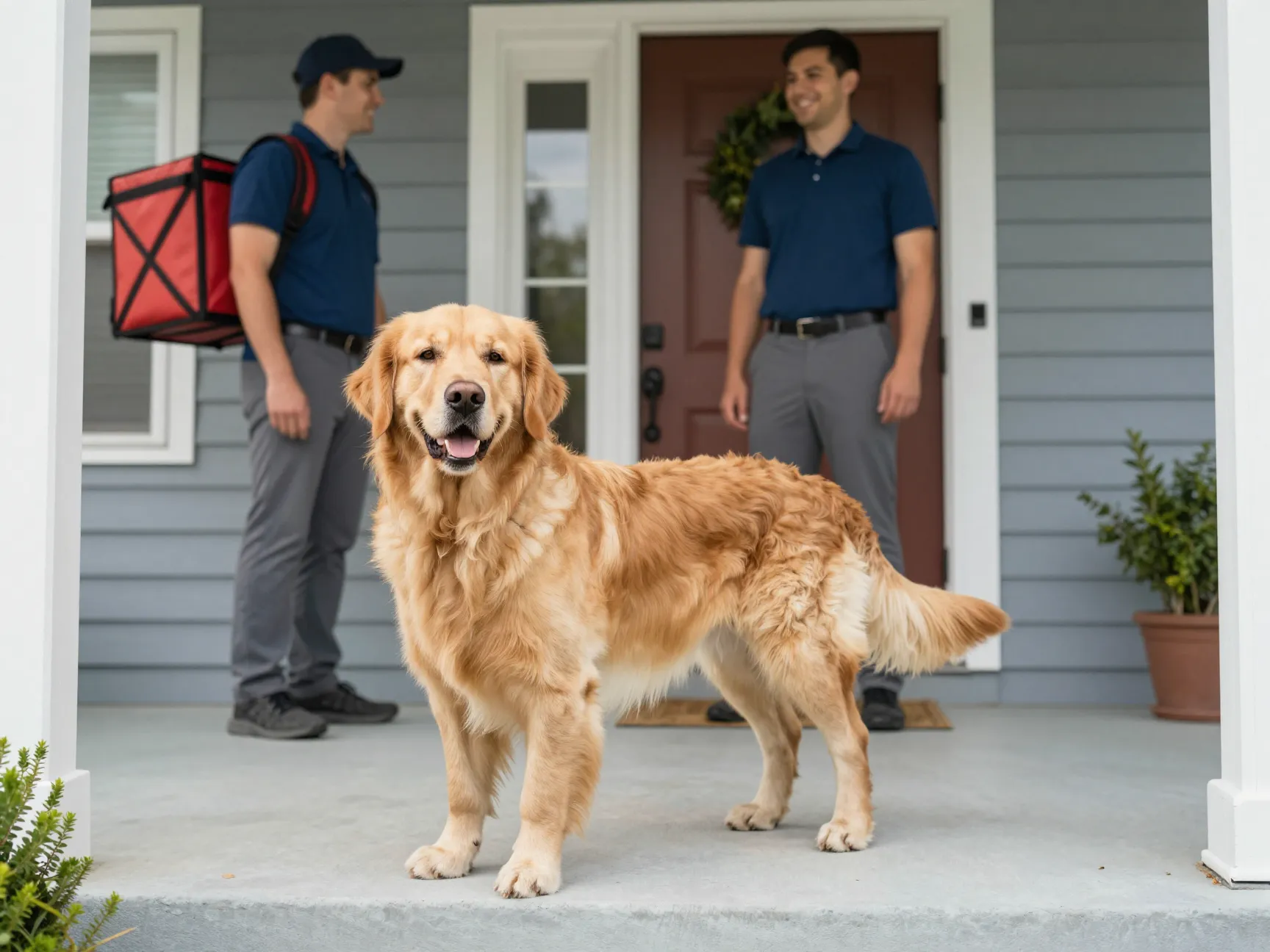
The sixth defining trait is what golden retrievers lack rather than what they display: territorial aggression and guarding instinct. Breed descriptions consistently note that golden retrievers make poor guard dogs, not because they are incapable of barking at a stranger, but because their fundamental instinct is to welcome rather than warn.
This trait matters for the aesthetic because it removes any sense of threat from the breed’s public image. A golden retriever’s large size and strength never register as intimidating in the way a similarly sized guard breed’s might, because the dog’s body language and behavior consistently signal openness rather than defensiveness.
Key indicators of this trait include:
- Minimal barking directed at strangers approaching the home
- Willingness to approach unfamiliar people and animals with curiosity rather than caution
- Low rates of resource guarding or possessive aggression compared to many other large breeds
- A general behavioral pattern of de-escalation rather than confrontation in tense situations
This absence of guard instinct, paired with high social confidence, is precisely why golden retrievers show up so often in family-pet marketing, insurance advertisements, and children’s media. Advertisers and content creators rely on the fact that audiences perceive golden retrievers as safe, unthreatening, and universally approachable, and that perception is earned through a consistent behavioral pattern rather than image alone.
How These Six Traits Combine Into a Recognizable Aesthetic
None of these traits function in isolation. The golden retriever aesthetic exists because warmth, gentleness, trainability, empathy, playfulness, and non-aggression consistently appear together in the same dog. Industry and behavioral analysts increasingly describe golden retrievers using human personality language, calling them “team players,” “companions,” and even informal “emotional support systems,” precisely because the trait combination mirrors qualities people value in close human relationships.
This convergence explains a broader prediction now common among pet industry analysts: given the breed’s stable temperament profile and strong presence in therapy work and online comfort content, the golden retriever aesthetic, friendly, emotionally supportive, and visually wholesome, is expected to remain dominant in dog-related media and family-pet marketing through the late 2020s. Unlike aesthetic trends built purely on appearance, this one is anchored in consistent, observable behavior, which makes it considerably more durable.
The table below offers a quick reference for how each trait contributes to the broader aesthetic identity of the breed.
| Trait | Primary Behavior | Aesthetic Contribution |
|---|---|---|
| Unconditional warmth | Greeting strangers enthusiastically | Approachability and social ease |
| Gentle patience | Calm handling of children and vulnerable people | Trustworthiness and safety |
| High trainability | Fast learning, cooperative work | Competence and reliability |
| Emotional attunement | Comforting distressed people unprompted | Emotional depth and empathy |
| Sustained playfulness | Lifelong enthusiasm for physical activity | Visual charm and joy |
| Lack of guard instinct | Non-territorial, welcoming behavior | Non-threatening, wholesome image |
Frequently Asked Questions
Is the golden retriever aesthetic based on real behavior or just internet hype?
It is grounded in real, documented behavior. Breed profiles, therapy dog program data, and trainer observations consistently describe the same warmth, gentleness, and trainability that online content simply captures and amplifies.
Do all golden retrievers display all six traits equally?
Most goldens display these traits to a strong degree because of consistent breeding history, though individual variation exists based on early socialization, training, and health.
Why are golden retrievers considered poor guard dogs despite their size?
Their fundamental instinct is social approach rather than territorial defense, which means they typically greet strangers rather than warn them off.
How does emotional attunement differ from simple obedience?
Obedience is a trained response to a command, while emotional attunement is an unprompted reaction to a person’s mood, which cannot be taught the same way commands can.
Will the golden retriever aesthetic remain popular in family-pet marketing?
Analysts expect it to remain dominant through the late 2020s, largely because the underlying temperament traits are stable and continue to perform well in therapy and comfort-focused media.
Conclusion
The golden retriever aesthetic is not an accident of camera angles or viral editing. It is the direct, visible result of six consistent personality traits: unconditional warmth, gentle patience, high trainability, emotional attunement, sustained playfulness, and a natural lack of guard instinct. Together, these traits explain why golden retrievers dominate therapy programs, family households, and online comfort content alike.
Anyone considering a golden retriever, or simply trying to understand why this breed resonates so strongly across cultures and platforms, should look past the golden coat and soulful eyes to the behavior underneath. Recognizing 6 Golden Retriever Personality Traits That Define Their Aesthetic provides a clearer, more accurate picture of what makes this breed genuinely exceptional, and offers a useful framework for evaluating whether a golden retriever’s real-world temperament matches the expectations set by its widely loved public image.