Facts About The Majestic Black Cane Corso You Need To Know
A dog that can weigh as much as a grown man and trace its bloodline back to the battlefields of ancient Rome is not a casual pet choice. Yet across the United Kingdom, sales listings for black Cane Corso puppies have quietly climbed into the hundreds, with some adult dogs changing hands for as little as £75. That is a startling number for an animal this large, this strong, and this steeped in history.

Disclosure: This post contains affiliate links. As an Amazon Associate, we earn from qualifying purchases, and at no extra cost to you.
Understanding this breed properly matters more than ever, especially as it grows in popularity as a so-called “status dog.” These 6 Facts About The Majestic Black Cane Corso You Need To Know go beyond surface-level appeal and into the real biology, history, and market forces shaping how this breed is bought, bred, and lived with today. Whether the interest is a future purchase, a research project, or simple curiosity about a strikingly dark, powerfully built mastiff, the details below offer a grounded, factual starting point.
Key Takeaways
- Before diving into the full breakdown, here is a quick summary of what matters most.
- The Cane Corso is a large Italian working dog descended from Roman Molossian war dogs, not a modern designer breed.
- Adult Cane Corsos typically stand 23 to 28 inches tall and weigh between 90 and 110 pounds, placing them among the largest working breeds.
- Coat color is statistically linked to lifespan, with black brindle dogs living longest on average and solid black dogs sitting in a middle range.
- The breed has become a popular alternative “status dog” in the UK following restrictions on the XL Bully, driven partly by celebrity ownership.
- Prices vary wildly, from £75 for adult rehoming to £1,600 for puppies, which creates real risks around impulse buying and irresponsible breeding.
1. The Black Cane Corso Descends Directly From Roman War Dogs

The black Cane Corso is not a recent trend or a manufactured hybrid. This breed’s lineage stretches back roughly two thousand years to the Molossian war dogs used by the ancient Roman military. These dogs were bred for guarding property, herding livestock, and in some historical accounts, accompanying soldiers into combat. The name itself hints at this working heritage, with “Corso” believed to derive from the Latin word “cohors,” meaning guardian or protector.
Officially, the Cane Corso is classified within the working group by major kennel organizations. This classification is not a minor technicality. It signals that the breed was developed for physical labor, protection duties, and independent decision-making rather than companionship alone. Unlike toy breeds or lapdogs bred primarily for temperament and size reduction, the Cane Corso retains the instincts, drive, and physical capability of a dog built to do a demanding job.
The black coat variation carries no separate historical origin from other Cane Corso colors. It is simply one of several recognized coat colors within the same bloodline, alongside fawn, red, grey, brindle, and black brindle. What sets the black Cane Corso apart visually is the striking, uniform darkness of its coat, which many owners find gives the dog an even more imposing, statuesque presence than lighter-colored counterparts.
Understanding this working-dog ancestry is essential context for anyone researching 6 Facts About The Majestic Black Cane Corso You Need To Know, because it explains almost every other trait discussed in this article, from size and structure to temperament expectations and training needs.
2. This Breed Is Built On A Genuinely Massive Frame

Size is one of the most immediately noticeable characteristics of the Cane Corso, and it is not exaggerated by marketing or media coverage. According to established breed standards, adult Cane Corsos typically stand between 23 and 28 inches at the shoulder. Weight ranges from roughly 90 to 110 pounds, which places a fully grown adult firmly in the category of large-to-giant working dogs.
Some media reports covering the breed’s rising popularity in the UK have noted individual dogs weighing up to about 50 kilograms, which converts to roughly 8 stone or 110 pounds. That figure sits at the upper end of the typical range but is entirely consistent with what breed standards describe for a well-developed adult male.
Here is a simple size comparison table for context.
| Measurement | Typical Range |
|---|---|
| Height at shoulder | 23 to 28 inches (58 to 71 cm) |
| Adult weight | 90 to 110 lb (41 to 50 kg) |
| Breed group classification | Working group |
| General build | Muscular, broad-chested, athletic |
This is not a breed that grows into an average-sized adult dog. Puppies born small and stocky can, within roughly 12 to 18 months, develop into an animal capable of significant physical force. Anyone considering ownership needs to plan housing, fencing, leash equipment, and daily handling around this eventual size from the very beginning, not after the dog has already outgrown early expectations.
The black coat does not affect size in any meaningful way. Black, fawn, brindle, and grey Cane Corsos all fall within the same general height and weight parameters, since coat color is a separate genetic trait from skeletal structure and muscle mass.
3. Average Lifespan Sits Between 9 And 12 Years

Longevity is a practical consideration for any prospective owner, and authoritative veterinary and breed references generally place the Cane Corso’s expected lifespan between 9 and 12 years. This range is fairly typical for a large working breed, though it sits somewhat lower than what many smaller companion breeds can expect.
Several factors influence where an individual dog falls within that range, including genetics, weight management, exercise routines, and access to consistent veterinary care. Large-breed dogs in general tend to face a higher risk of orthopedic conditions such as hip dysplasia, along with cardiac concerns that can shorten lifespan if left unmanaged.
“Lifespan in large working breeds is rarely just a matter of luck. Genetics, coat color, weight, and preventive veterinary care all interact to determine how many healthy years a dog actually gets.”
For prospective owners, this 9 to 12 year window is a useful planning benchmark. It means a puppy brought home today is realistically a decade-long commitment, spanning multiple life stages including intensive early training, a long adult working phase, and eventually a senior period requiring adjusted care. This single figure is one of the more practically important entries among the 6 Facts About The Majestic Black Cane Corso You Need To Know, since it directly shapes long-term financial and lifestyle planning.
4. Coat Color Is Statistically Linked To Lifespan
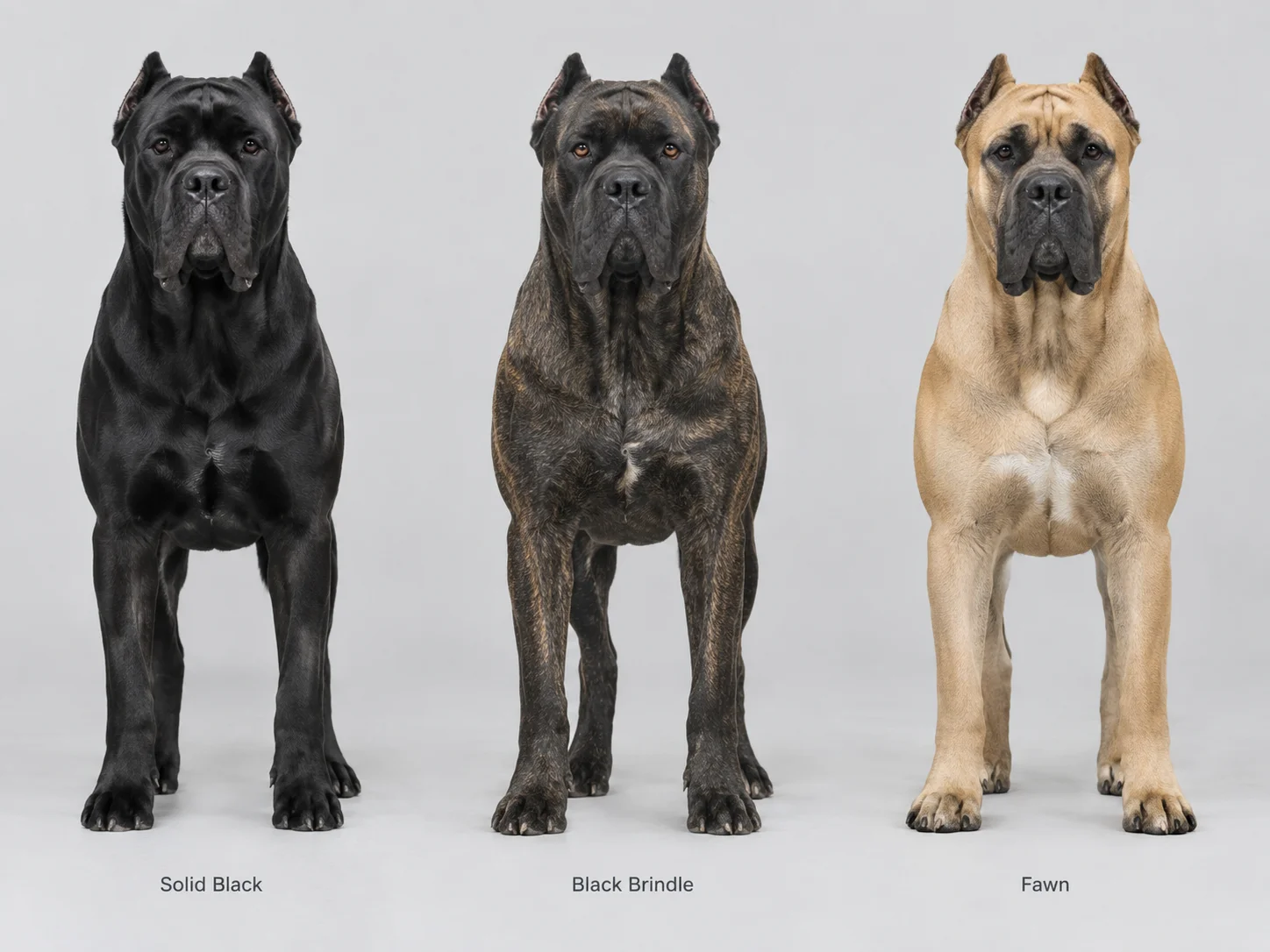
This is one of the more surprising and scientifically interesting facts about the breed, and it directly concerns the black Cane Corso specifically. A multinational study conducted in 2017 examined 232 Cane Corsos across 25 countries and found a measurable relationship between coat color and average lifespan.
The findings broke down as follows.
- Black brindle dogs01 recorded the longest average lifespan among all color variations, at 10.3 years.
- Brindle dogs02 followed closely, averaging 10.1 years of life.
- Grey brindle dogs03 came next, with an average lifespan of 9.8 years.
- Solid black, fawn, and grey dogs04 averaged approximately 9.0 years, placing them in a middle tier below the brindle-patterned colors.
- Dogs classified under “other” colors05 showed the shortest average lifespan in the study, at 8.1 years.
This data reveals an important nuance for anyone specifically interested in the solid black Cane Corso. While the breed overall remains a resilient and generally healthy working dog when properly bred and cared for, the solid black coat variation sits closer to the middle of the pack in this particular study, rather than at either extreme. Brindle patterns, including black brindle, appeared to correlate with somewhat longer average lifespans than solid coat colors.
It is worth noting that correlation is not the same as direct causation. Researchers studying coat color and longevity in dogs generally suspect that genetic factors linked to pigmentation may also be connected to other traits affecting overall health, rather than coat color itself directly causing longer or shorter life. Still, for a prospective owner comparing color variations, this study offers a data-backed reference point rather than pure anecdote.
5. The 6 Facts About The Majestic Black Cane Corso You Need To Know Include Its Rise As A UK Status Symbol

Beyond biology and history, the Cane Corso has become a cultural phenomenon in its own right, particularly in the United Kingdom. Following government restrictions placed on the XL Bully breed, media coverage and anecdotal reporting have increasingly pointed to the Cane Corso as an emerging replacement “status dog.”
Several factors appear to be driving this shift.
- Imposing physical presence01. The breed’s muscular build and substantial weight, up to roughly 50 kilograms, make it visually intimidating in a way that appeals to buyers seeking a dog associated with strength and protection.
- War dog ancestry as marketing02. The Roman military history of the Molossian bloodline is frequently referenced in media coverage and informal marketing, lending the breed an aura of toughness and prestige.
- Celebrity association03. Public figures including footballer Marcus Rashford and actor Vin Diesel have been linked to Cane Corso ownership, and this kind of visibility tends to accelerate demand among fans and status-conscious buyers.
- A gap left by breed restrictions04. With the XL Bully now subject to legal restrictions in the UK, buyers looking for a similarly large, powerful dog have shifted attention toward breeds like the Cane Corso that remain unrestricted.
This rise in popularity is not inherently negative, but it does carry real consequences. Breeds that experience rapid demand spikes often see a corresponding increase in poor breeding practices, as unscrupliar breeders rush to meet demand without regard for health testing, temperament screening, or proper socialization. A dog with the size, strength, and independent working instincts of a Cane Corso requires experienced handling, and a surge in impulse purchases driven by status appeal rather than genuine breed research can lead to dogs being rehomed, surrendered, or mismanaged.
Anyone reading about the 6 Facts About The Majestic Black Cane Corso You Need To Know specifically because of its trending status should weigh this cultural context carefully before treating the breed as a fashion statement rather than a long-term working dog with substantial needs.
6. Pricing And Availability Vary Dramatically Across The Market

The final fact concerns the practical reality of acquiring a black Cane Corso, and the numbers are wide enough to catch many first-time buyers off guard. Recent analysis of the UK market found that adult Cane Corsos are sometimes advertised for as little as £75, typically through rehoming situations where previous owners can no longer manage the dog’s size, energy, or training requirements. At the other end of the spectrum, puppies are commonly listed between £600 and £1,600, with more than 200 separate litter listings appearing across major UK pet-sale platforms at any given time.
This pricing spread reflects a market with very little standardization, and that lack of consistency creates genuine risk for buyers. A table breaking down typical price points illustrates the range clearly.
| Acquisition Type | Typical Price Range | Common Context |
|---|---|---|
| Adult rehoming | As low as £75 | Owners unable to manage size or training needs |
| Standard puppy listing | £600 to £1,600 | General marketplace and breeder listings |
| High-demand or show-line puppy | Above £1,600 | Health-tested parents, documented pedigree |
The sheer volume of listings, over 200 litters at once on major platforms, points to a breeding market that has scaled up quickly in response to demand. Rapid scaling in dog breeding is rarely a positive sign on its own. It often means fewer health screenings, less attention to temperament testing, and a higher likelihood that puppies are being produced primarily for profit rather than breed improvement.
Prospective buyers should treat unusually low prices with caution rather than excitement. A £75 adult dog may come with unresolved behavioral issues, inadequate training, or underlying health problems that motivated the original owner to give it up cheaply. Conversely, a high puppy price does not automatically guarantee quality, though reputable breeders who invest in health testing, socialization, and proper documentation typically charge accordingly rather than pricing at the rock-bottom end of the market.
What These 6 Facts About The Majestic Black Cane Corso You Need To Know Mean In Practice
Taken together, these six facts paint a clear picture. The black Cane Corso is a genuinely ancient working breed, not a modern invention, and its massive size, moderate lifespan, and color-linked longevity patterns are all backed by documented data rather than guesswork. At the same time, its recent surge in popularity as a UK status symbol has introduced market pressures, including inconsistent pricing and a flood of listings, that did not exist for this breed a decade ago.
Anyone seriously considering ownership should approach the decision with the same seriousness the breed’s history demands. This is a dog built for work, protection, and physical demand, not a passive companion suited to inexperienced or first-time dog owners. Matching the breed’s real needs, rather than its cultural image, to a household’s actual lifestyle is the single most important step before bringing one home.
Frequently Asked Questions
Is a black Cane Corso more aggressive than other colors?
Coat color has no established scientific link to temperament or aggression levels. Behavior in Cane Corsos is shaped far more by genetics, early socialization, training consistency, and individual breeding lines than by coat color.
Do black Cane Corsos live shorter lives than other colors?
Based on the 2017 multinational study, solid black dogs averaged about 9.0 years, which is close to the overall breed average but slightly shorter than black brindle or brindle-patterned dogs, which averaged closer to 10 years.
Why has the Cane Corso become popular in the UK recently?
Its rise is closely tied to restrictions placed on the XL Bully breed, along with media coverage highlighting its imposing build, war dog ancestry, and visibility through celebrity ownership.
Is it safe to buy an adult Cane Corso for a very low price?
Low prices, such as £75 adult listings, often reflect owners struggling with the dog’s size, training needs, or behavioral issues rather than a bargain. Buyers should ask detailed questions about the dog’s history before committing.
What breed group does the Cane Corso belong to?
The Cane Corso is classified in the working group by major kennel organizations, reflecting its historical role in guarding, herding, and protection duties rather than companionship alone.
Conclusion
The black Cane Corso is far more than a striking silhouette or a trending status dog. Its story runs through ancient Roman battlefields, modern veterinary research on coat color and longevity, and a rapidly shifting UK pet market shaped by celebrity influence and breed restrictions elsewhere. These 6 Facts About The Majestic Black Cane Corso You Need To Know demonstrate that informed ownership requires looking past appearance and popularity toward the breed’s real size, health patterns, and market realities.
Anyone considering this breed should take three concrete next steps. First, research reputable breeders who provide health testing documentation rather than choosing based on the lowest available price. Second, honestly assess whether current living space, experience level, and time availability match a working dog that can weigh over 100 pounds and live for a decade or more. Third, consult a veterinarian familiar with large working breeds before and after acquisition to plan for the specific health monitoring this breed benefits from throughout its life. Approaching the decision with this level of preparation is the clearest path to a healthy, well-adjusted relationship with one of the most historically significant working breeds still active today.