Essential Tips For Finding & Raising Yorkshire Terrier Puppies
A Yorkshire Terrier puppy can weigh less than a bag of sugar, yet the decisions made in its first six months shape a lifespan that often stretches well into the mid-teens. Recent breed-health analyses show that roughly one in four to one in three Yorkies develop patellar luxation, and dental disease affects nearly the entire breed by adulthood, numbers that make preparation, not impulse, the real key to successful ownership. This guide lays out 6 Essential Tips For Finding & Raising Yorkshire Terrier Puppies, covering everything from choosing a health-tested breeder to building the daily habits that protect this tiny dog’s joints, teeth, and long-term wellbeing.

Disclosure: This post contains affiliate links. As an Amazon Associate, we earn from qualifying purchases, and at no extra cost to you.
Whether a puppy is coming from a dedicated breeder or a rescue organization, the same principles apply: verify health history, plan for the breed’s specific vulnerabilities, and commit to consistent routines from day one. The sections below translate current veterinary guidance into practical, step-by-step actions any new owner can follow.
Key Takeaways
- Choose breeders or rescues that health-test parent dogs for patellas, eyes, and heart function, and avoid extreme “teacup” sizing.
- Feed 3 to 4 small, balanced meals daily to prevent hypoglycemia, especially in puppies under 5 pounds.
- Limit exercise to short, joint-safe sessions, about 15 to 20 minutes total per day for puppies aged 3 to 6 months.
- Start daily brushing and tooth care immediately, since dental disease is the most common health problem in the breed.
- Socialize and train early using positive reinforcement, and learn the warning signs of breed-linked conditions like tracheal collapse and Legg-Calvé-Perthes disease.
Understanding the Yorkshire Terrier Puppy Before You Bring One Home
Yorkshire Terriers are far more than a fashionable lap dog. Beneath the silky coat is a toy-breed body with a small margin for error when it comes to nutrition, bone growth, and airway health. Because adult Yorkies typically weigh only 4 to 7 pounds, even small mismanagement, a skipped meal, an overly long walk, or a poorly bred parent, can have an outsized impact on a puppy’s development.
Modern breed-risk research has sharpened the picture of what to watch for. Early-life orthopedic problems and liver issues are now recognized as significant concerns in young Yorkies, which is why pre-purchase veterinary records and transparent breeding practices matter more than coat color or bow style. Responsible breeders test mature parent dogs, females at least 2 years old and males at least 1 year old, for patellar, eye, and heart health before breeding, since this directly reduces the odds of inherited problems showing up in the puppy years later.
Understanding these baseline risks before searching for a puppy sets the stage for smarter decisions at every step that follows, from evaluating a litter to planning a first-year veterinary schedule.
“The healthiest Yorkshire Terrier puppies are rarely the tiniest ones in the litter, they are the ones whose parents were screened, matured, and matched with care.”
6 Essential Tips For Finding & Raising Yorkshire Terrier Puppies
Finding the right puppy is only half the job. Raising a Yorkshire Terrier puppy well requires ongoing attention to feeding, exercise, grooming, and training that fits the breed’s small frame and big personality. The following six tips reflect current veterinary and breed-specific guidance for both stages.
1. Start With A Health-Tested Breeder Or Reputable Rescue

The search for a Yorkshire Terrier puppy should always begin with the source, not the puppy itself. Reputable breeders willingly share documentation of health testing for the puppy’s parents, including patella evaluations, eye clearances, and cardiac screening. They also breed only from dogs that have reached physical maturity, generally females at 2 years or older and males at 1 year or older, because breeding from younger, still-developing dogs is linked to a higher rate of inherited defects in puppies.
Rescue organizations can be an equally strong option, particularly for those open to adopting a slightly older puppy or young adult. Many rescues conduct veterinary evaluations and disclose known health issues before adoption, which offers a similar layer of transparency. Whichever path is chosen, ask direct questions:
- Can health certificates for both parents be provided in writing.
- Has the puppy already seen a veterinarian, and are records available.
- What is the socialization plan the litter has followed so far.
A breeder or rescue that hesitates to answer these questions, or that markets puppies primarily on size and cuteness rather than health, is a signal to keep looking elsewhere.
2. Skip The “Teacup” Trend And Choose A Robust Puppy

“Teacup” Yorkies are often marketed as more exclusive or desirable because of their extremely small size, but current breed-risk data tells a different story. Very low adult body weight in Yorkshire Terriers is associated with markedly higher rates of hypoglycemia, orthopedic disease, and collapsing trachea. In other words, the smallest puppy in a litter advertisement is frequently the one carrying the highest long-term health risk.
Instead of chasing extreme miniaturization, current care guidance recommends prioritizing puppies from lines bred within the standard Yorkshire Terrier size range, generally growing toward that 4 to 7 pound adult weight rather than staying under 3 pounds as a marketed feature. A robust, well-grown puppy is more likely to have a stable metabolism, sturdier joints, and a more resilient airway than one deliberately bred to be unusually tiny.
When evaluating a litter, ask about the expected adult weight range of the puppy’s parents and grandparents rather than focusing solely on the current size of the puppy in front of you. Steady, proportional growth is a far better predictor of lifelong health than novelty size.
3. Build A Veterinary Care Plan From The First Visit
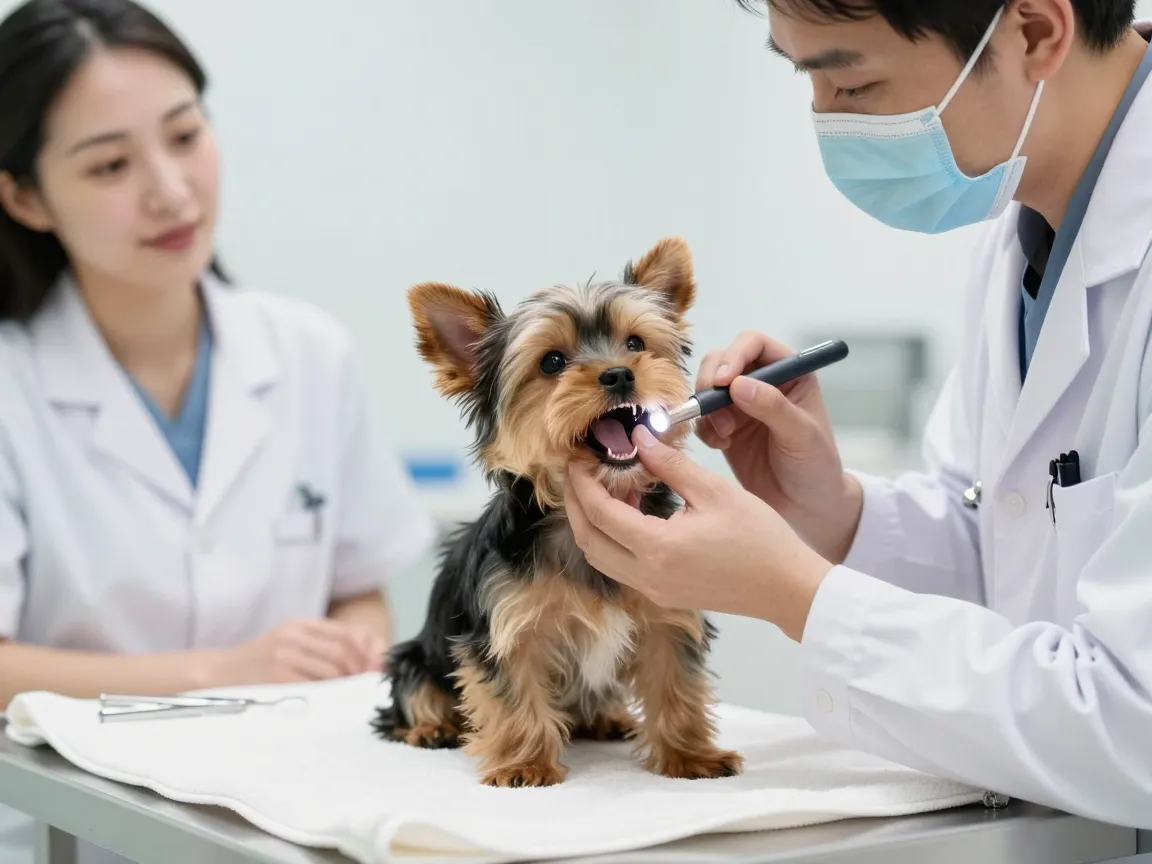
Once a puppy comes home, the next priority is establishing veterinary care with a professional experienced in toy-breed medicine. Updated Yorkshire Terrier health guidance identifies dental disease as the single most pervasive issue in the breed, with patellar luxation affecting an estimated one in four to one in three evaluated dogs. These numbers make early, targeted monitoring far more valuable than a generic annual checkup.
A well-structured veterinary plan for a Yorkie puppy typically includes monitoring for age-specific risks:
| Life Stage | Primary Concerns | Recommended Monitoring |
|---|---|---|
| 0-1 years (puppy) | Legg-Calvé-Perthes disease, hypoglycemia | Gait checks, weight tracking, blood sugar awareness |
| 1-7 years (adult) | Patellar luxation, dental disease | Orthopedic exams, professional dental cleanings |
| 7+ years (senior) | Tracheal collapse, mitral valve disease | Cardiac auscultation, cough monitoring |
Scheduling the first veterinary visit within the puppy’s first week at home, followed by the standard puppy vaccination series, gives the veterinarian a baseline for the dog’s weight, joint function, and dental development. From there, tailored checkup intervals, rather than a one-size-fits-all annual visit, offer the best chance of catching breed-linked conditions early.
4. Feed Small, Frequent Meals To Prevent Hypoglycemia

Because Yorkshire Terrier puppies have very little body fat and a fast metabolism relative to their size, they are particularly vulnerable to hypoglycemia, or dangerously low blood sugar. This risk is highest in puppies under 5 pounds and during the first few months of life, when energy reserves are smallest.
Current small-breed care guidance recommends feeding puppies 3 to 4 small, balanced meals throughout the day rather than one or two large ones. A practical schedule for puppies aged 2 to 6 months looks like this:
- Breakfast within 30 minutes of waking, roughly one quarter of the daily food amount.
- A midday meal of similar size to maintain steady blood sugar through active hours.
- An afternoon meal timed before extended play or rest periods.
- A final evening meal, completing roughly a quarter to a half cup of high-quality small-breed puppy food divided across all four meals.
Owners should watch for early signs of low blood sugar, sudden weakness, trembling, or unusual lethargy, and treat these as urgent. Rubbing a small amount of sugar or corn syrup on the puppy’s gums while arranging immediate veterinary care is a widely recommended first response for a Yorkie puppy showing these symptoms.
5. Keep Exercise Short, Gentle, And Joint-Safe

Yorkshire Terrier puppies are naturally energetic, but their still-developing bones and joints cannot handle the same activity load as a larger breed puppy. Updated activity guidelines recommend about 15 to 20 minutes of total daily activity for puppies aged 3 to 6 months, broken into very short leash walks of roughly 5 minutes each, combined with supervised indoor play and low-key socialization outings.
As puppies mature into adults, that activity level gradually increases. Most adult Yorkshire Terriers do well with about 30 to 40 minutes of daily exercise, ideally split into several shorter sessions rather than one long walk. This pattern reduces strain on joints prone to patellar luxation and on the airway, which can be vulnerable to tracheal collapse later in life.
A few practical safety habits make a meaningful difference during exercise and play:
- Use a harness instead of a neck collar to avoid pressure on the trachea.
- Avoid encouraging jumping off furniture or high steps, which stresses developing hip and knee joints.
- Supervise all play with larger dogs or young children to prevent accidental injury.
- Provide non-slip flooring or rugs in main play areas to reduce fall risk on smooth surfaces.
6. Commit To Daily Grooming, Dental Care, And Positive Socialization
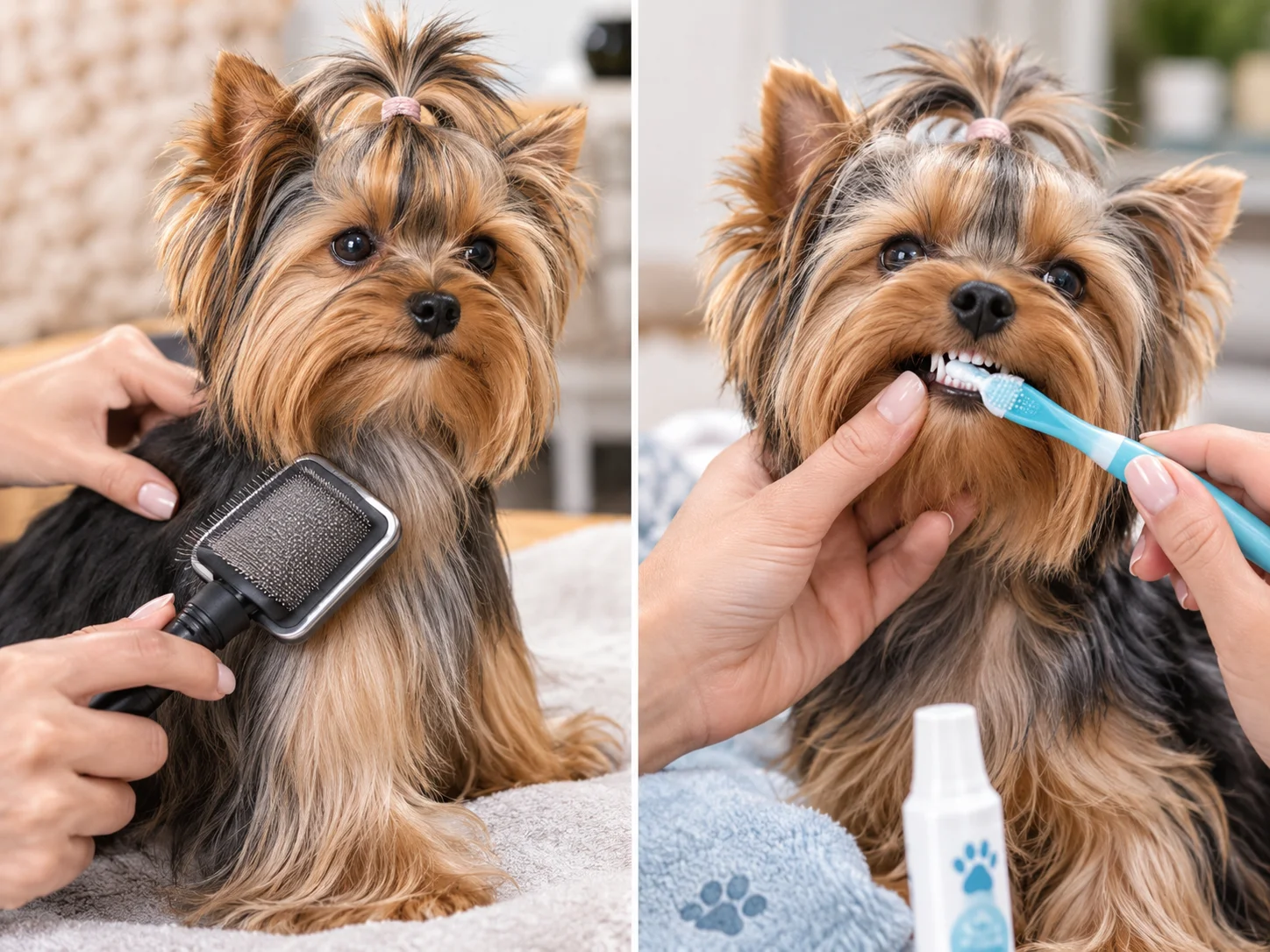
The Yorkshire Terrier’s fine, silky coat is one of the breed’s signature traits, but it also requires daily maintenance to prevent matting and skin irritation. Current grooming guidance recommends starting with gentle daily brushing using a soft or slicker brush, gradually building the puppy’s tolerance and praising calm behavior throughout the process. More intensive grooming, including trims for longer coats, is generally recommended every 4 to 6 weeks. Bathing should wait until the puppy is roughly three months old, after which a bath every one to three months with a dog-specific shampoo, preceded by careful detangling, keeps skin and coat healthy without overdrying.
Dental care deserves equal priority. Since dental disease is now recognized as the leading health problem in Yorkshire Terriers, daily tooth brushing paired with annual professional cleanings meaningfully reduces the risk of periodontal disease and early tooth loss. Introducing a toothbrush and pet-safe toothpaste in short, positive sessions during puppyhood makes this lifelong habit far easier to maintain.
Finally, early socialization and reward-based training shape a Yorkie’s temperament for life. Calm exposure to new people, sounds, surfaces, and safe environments during the first weeks at home, combined with basic cue training such as name recognition, sit, and come, builds confidence rather than anxiety. Cooperative handling exercises, practicing brushing, tooth checks, and nail trims as calm routines rather than stressful events, pay off enormously at future vet and groomer visits. Inadequate socialization during the first 3 to 6 months is closely linked to anxiety, excessive barking, and handling difficulties later in life, making this final tip just as important as any medical checklist.
Warning Signs Every Yorkshire Terrier Owner Should Know
Because Yorkshire Terriers are prone to several breed-specific conditions, recognizing early warning signs can prevent a minor issue from becoming an emergency. The table below summarizes symptoms that call for prompt veterinary evaluation.
| Symptom Observed | Possible Condition | Recommended Action |
|---|---|---|
| Disorientation or seizures after eating | Liver shunt | Seek veterinary evaluation same day |
| Honking or dry cough | Tracheal collapse | Schedule veterinary exam promptly |
| Persistent hind-limb lameness in a growing puppy | Legg-Calvé-Perthes disease | Orthopedic assessment as soon as possible |
| Skipping or hopping on a hind leg | Patellar luxation | Veterinary orthopedic check |
| Sudden weakness or trembling in a young or tiny puppy | Hypoglycemia | Apply sugar to gums, seek immediate care |
Keeping this list visible, on a refrigerator note or phone reminder, helps new owners respond quickly rather than second-guessing symptoms during a stressful moment.
Frequently Asked Questions
How much should a Yorkshire Terrier puppy weigh at different ages?
Growth varies by individual line, but puppies from standard-sized parents typically grow steadily toward an adult weight of 4 to 7 pounds. Puppies that are marketed as staying under 3 pounds as adults carry a higher documented risk of hypoglycemia and orthopedic problems.
At what age can a Yorkshire Terrier puppy have its first bath?
Current grooming guidance recommends waiting until roughly three months of age before the first full bath, focusing on gentle daily brushing in the meantime to manage coat health.
How often should a Yorkie puppy visit the veterinarian in the first year?
Beyond the standard puppy vaccination schedule, a tailored checkup plan that monitors joint development, dental growth, and blood sugar stability is recommended, since early-life orthopedic and metabolic issues are common in this breed.
Is a harness really necessary instead of a collar?
Yes. Because Yorkshire Terriers can be prone to tracheal collapse later in life, avoiding pressure on the neck during walks with a harness is a widely recommended preventive habit that should start in puppyhood.
Conclusion
Raising a Yorkshire Terrier puppy successfully comes down to preparation, consistency, and respect for the breed’s small size. Following these 6 Essential Tips For Finding & Raising Yorkshire Terrier Puppies, starting with a health-tested source, avoiding extreme “teacup” sizing, building a tailored veterinary plan, feeding small frequent meals, keeping exercise gentle, and committing to daily grooming and socialization, gives any new owner a strong foundation for decades of companionship with this affectionate toy breed.
The next step is straightforward: before bringing a puppy home, request health documentation from the breeder or rescue, book a veterinary visit for the puppy’s first week, and set up a simple daily routine covering meals, short walks, and a few minutes of brushing and handling practice. Small, consistent actions in the first months matter far more than any single decision, and they are what allow a Yorkshire Terrier puppy to grow into a healthy, well-adjusted adult dog.