Things To Know About The Golden Retriever Cocker Spaniel Mix
A dog that inherits the retrieving instincts of a Golden Retriever and the velvety ears of a Cocker Spaniel sounds like a storybook pet, but the reality involves real trade-offs in size, grooming, and health that many buyers never research before bringing one home. Anyone considering this crossbreed needs a clear-eyed look at 6 Things To Know About The Golden Retriever Cocker Spaniel Mix before signing an adoption contract or paying a breeder’s deposit. This guide breaks down the essentials, from body size and temperament to the grooming routine and health screenings that responsible owners should expect.

Disclosure: This post contains affiliate links. As an Amazon Associate, we earn from qualifying purchases, and at no extra cost to you.
Sometimes called the Golden Cocker Retriever, Dakota Sport Retriever, or Cogol, this hybrid has grown in popularity as families search for a dog that combines the loyalty of a retriever with a slightly smaller footprint. It is not a purebred, has no official breed standard, and its traits can vary depending on which parent breed dominates. That variability is exactly why understanding 6 Things To Know About The Golden Retriever Cocker Spaniel Mix matters so much before adoption day.
Key Takeaways
- The Golden Retriever Cocker Spaniel mix typically stands 14 to 19 inches tall and weighs 30 to 45 pounds, though some individuals reach up to 24 inches and 60 pounds.
- Expected lifespan runs about 11 to 14 years, occasionally stretching to 15 with strong genetics and proactive veterinary care.
- This mix is affectionate, social, and highly trainable, making it a strong fit for active families with children and other pets.
- It needs at least one to two hours of daily exercise plus mental stimulation, and it is not hypoallergenic despite its popularity as a “designer” dog.
- Hip dysplasia, eye conditions, and a moderately elevated cancer risk mean health screening of both parent dogs is essential before purchase or adoption.
What Is the Golden Retriever Cocker Spaniel Mix?
The Golden Retriever Cocker Spaniel mix is a designer hybrid created by pairing a purebred Golden Retriever with a purebred American Cocker Spaniel, though breeders occasionally use the English Cocker Spaniel instead. Because it is a first-generation cross rather than an established breed, no major kennel club recognizes it with a formal standard. That means every litter can look and behave a little differently, depending on which genes come through more strongly.
Breeders and rescue groups use several interchangeable names for this dog, including Golden Cocker Retriever, Dakota Sport Retriever, and Cogol. Regardless of the label, the dog usually presents as a medium-sized companion with a friendly expression, a slightly elongated muzzle, and long, low-set ears reminiscent of the Cocker Spaniel side. Its coat is often wavy or feathered, picking up texture from both parent breeds rather than the sleek single coat sometimes seen in other retriever mixes.
Because this is a hybrid rather than a standardized breed, prospective owners should treat any generalized description as a starting point rather than a guarantee. Two puppies from the same litter can grow into noticeably different adult dogs. This unpredictability is one of the most important undercurrents running through 6 Things To Know About The Golden Retriever Cocker Spaniel Mix, and it shapes almost every other consideration on this list.
6 Things To Know About The Golden Retriever Cocker Spaniel Mix
The following breakdown covers the practical realities of living with this crossbreed, drawing on current breed profiles and veterinary guidance. Each point below addresses a different aspect of ownership, from physical traits to daily care requirements.
1. Size and Physical Build

Most Golden Cocker Retrievers land in a medium-size range that splits the difference between their parent breeds. Typical adults measure 14 to 19 inches at the shoulder and weigh between 30 and 45 pounds, though the broader range reported across breed guides stretches from 14 to 24 inches and 30 to 60 pounds. This wide spread happens because genetics from a larger Golden Retriever parent can sometimes dominate, producing a bigger dog than the “typical” range suggests.
This body size makes the mix noticeably smaller than a purebred Golden Retriever, which commonly reaches 55 to 75 pounds, but larger than most Cocker Spaniels, which usually top out under 30 pounds. For apartment dwellers or those with limited yard space, this in-between size can be either an advantage or a challenge depending on the specific dog’s growth pattern. It is worth asking breeders about the size of both parent dogs to get a more realistic prediction.
2. Lifespan and Longevity

Owners can generally expect 10 to 15 years with a Golden Retriever Cocker Spaniel mix, with most current sources converging on a typical range of 11 to 14 years. This lifespan roughly matches both parent breeds and reflects the moderate hereditary health risks inherent to the cross.
“A well-bred, well-cared-for Golden Cocker Retriever can comfortably reach the 13-to-14-year mark, but genetics and preventive veterinary care both play major roles.”
Diet, exercise consistency, and early screening for orthopedic and eye problems all influence how close a given dog gets to the upper end of that range. Dogs that stay lean and receive regular veterinary checkups tend to outlive those carrying excess weight or untreated joint issues.
3. Temperament and Personality

Friendliness is the hallmark trait of this crossbreed. Descriptions across recent breed profiles consistently paint the Golden Cocker Retriever as affectionate, social, and eager to please. This dog typically does well with children, strangers, and other animals, especially when socialization starts early and continues consistently through puppyhood.
Intelligence inherited from both parent breeds also makes this mix highly responsive to training. Golden Retrievers are famous for their trainability in obedience and service work, while Cocker Spaniels bring a sharp, attentive nature from their sporting dog background. Combined, these traits usually produce a dog that picks up commands quickly and thrives on positive reinforcement.
That said, the Cocker Spaniel side can occasionally introduce a touch more sensitivity or vocal alertness than a purebred Golden Retriever would show. Families should expect a dog that craves companionship and does not do well when left alone for long stretches. Isolation and boredom can trigger destructive habits or excessive barking in dogs bred for close human interaction.
4. Exercise and Mental Stimulation Needs

This mix carries moderate-to-high energy levels drawn from both a retrieving heritage and a sporting spaniel background. Most individuals need at least one to two hours of physical activity every day, ideally split between structured walks, off-leash play, and interactive games like fetch.
Below is a simple weekly framework many owners use to keep this crossbreed physically and mentally satisfied:
| Activity Type | Frequency | Example |
|---|---|---|
| Cardio exercise | Daily | Brisk walk or jog, 30 to 45 minutes |
| Free play | Daily | Fetch, swimming, or yard time |
| Training sessions | 3 to 5 times weekly | Obedience drills, trick training |
| Mental enrichment | Daily | Puzzle feeders, scent games |
| Socialization outings | Weekly | Dog park visits, playdates |
Mental stimulation matters just as much as physical exertion. Puzzle toys, scent-based games, and short training sessions help prevent boredom, which otherwise can manifest as chewing, digging, or persistent barking. Households with sedentary lifestyles or very limited outdoor access are generally poor matches for this mix.
5. Grooming and Shedding Reality
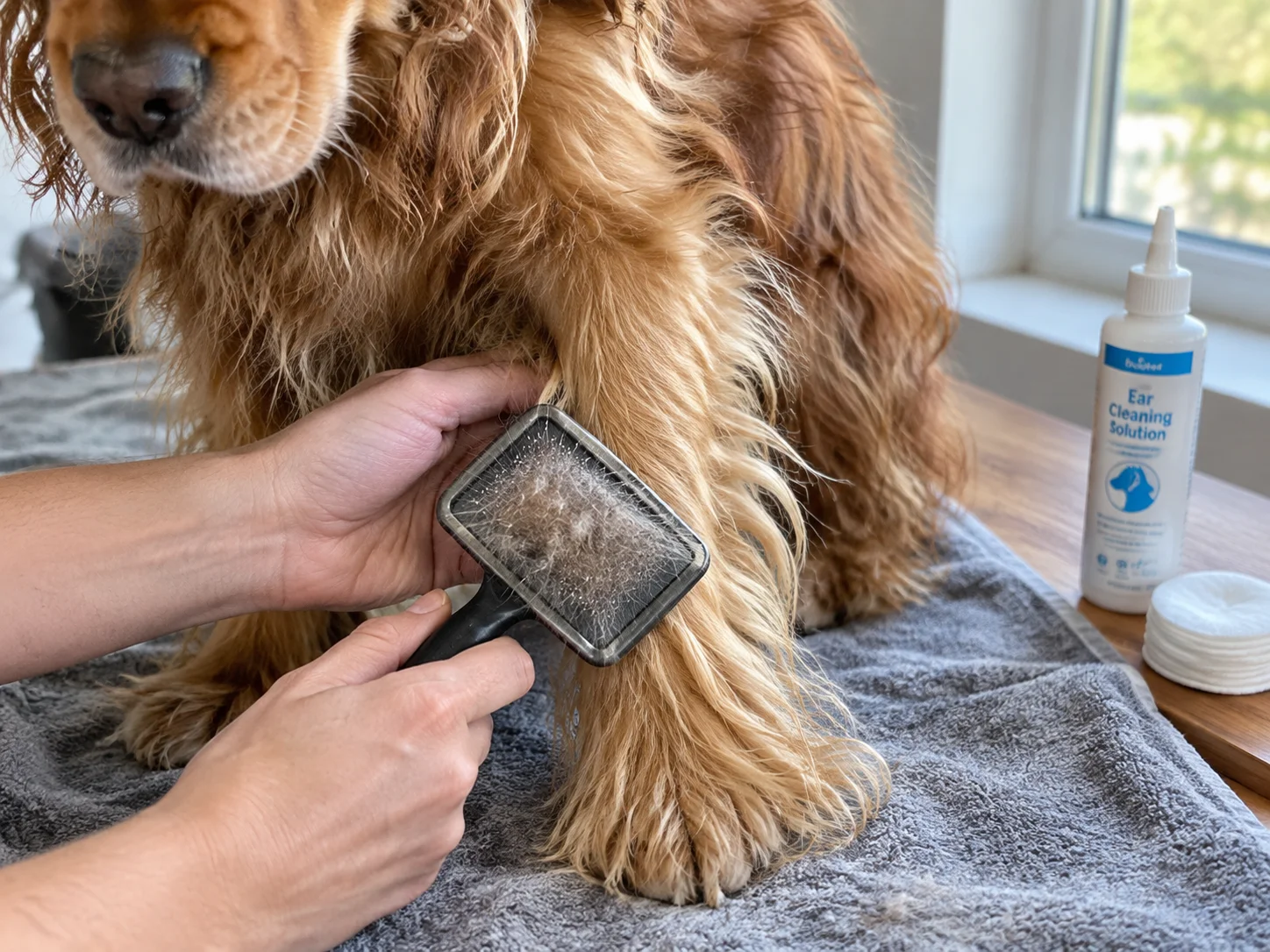
The coat on a Golden Retriever Cocker Spaniel mix tends toward medium length with a wavy or feathered texture, most noticeable around the ears, chest, and legs. This coat needs brushing several times a week, and many owners find daily brushing prevents matting most effectively, particularly in the feathered areas that tangle easily.
Ear care deserves special attention. The floppy, low-set ears inherited from the Cocker Spaniel side restrict airflow and trap moisture, raising the risk of infections if not cleaned regularly. Owners should check and gently clean ears on a consistent schedule, especially after swimming or bathing.
Perhaps the most important myth to dispel involves allergies. This crossbreed is not hypoallergenic. Both parent breeds shed at moderate-to-high levels and carry standard dog dander, so people with allergies should not count on this mix to reduce symptoms. Anyone with sensitivities should spend extended time around the specific parent dogs, if possible, before committing to a puppy.
6. Common Health Concerns

Hip dysplasia stands out as the primary health concern across nearly every recent breed health overview for this mix. Because both parent breeds carry some genetic predisposition toward joint problems, offspring can inherit similar vulnerabilities. Additional concerns documented across veterinary sources include:
- Elbow dysplasia, affecting joint function and mobility over time.
- Entropion and ectropion, eyelid conditions that can cause irritation or vision problems.
- Epilepsy, presenting as recurrent seizures requiring long-term management.
- Hypothyroidism, which can affect metabolism, coat quality, and energy levels.
- Cataracts, which may develop with age and affect vision clarity.
- Bloat, a serious and potentially life-threatening digestive emergency.
- Congestive heart failure, a cardiac condition more common in aging dogs.
- Von Willebrand disease, a blood clotting disorder inherited genetically.
- An elevated overall cancer risk compared with some smaller companion breeds.
Because of this list, orthopedic screening and eye examinations are strongly recommended before breeding and periodically throughout the dog’s life. Reputable breeders should be able to provide hip, elbow, and eye clearance documentation for both parent dogs. Buyers who skip this step take on meaningfully higher risk of costly veterinary bills down the road.
Is the Golden Retriever Cocker Spaniel Mix Right for Your Household?
Matching this crossbreed to the right home matters just as much as understanding its physical and health traits. This dog generally thrives in households that offer consistent companionship, access to outdoor space, and owners willing to commit to a structured exercise and grooming routine.
Novice dog owners can absolutely succeed with this mix, provided they are realistic about the time commitment involved. Positive-reinforcement training tends to work exceptionally well given the breed’s intelligence and eagerness to please, which makes early obedience classes a smart investment. A securely fenced yard is ideal, though committed owners without one can substitute daily walks and off-leash park visits.
Families with young children often find this mix to be an excellent fit, as both parent breeds have reputations for gentleness and patience. However, close supervision during early interactions remains important with any dog, regardless of breed reputation. Households with other pets also tend to see smooth integration, particularly when socialization begins during puppyhood.
On the other hand, this crossbreed is a poor match for households that are frequently empty for long hours, apartments with no nearby outdoor access, or owners unwilling to commit to weekly grooming sessions. The combination of moderate-to-high energy, social needs, and coat maintenance simply does not align well with a low-activity lifestyle.
Because the Golden Retriever Cocker Spaniel mix remains a designer hybrid without formal kennel club recognition, there is no enforced breed standard governing how it should be bred. This makes due diligence essential. Prospective owners should:
- Request health clearance documentation for both parent dogs, particularly for hips, elbows, and eyes.
- Ask about the breeder’s socialization practices during the first eight weeks of a puppy’s life.
- Visit in person whenever possible to observe the puppy’s environment and the temperament of both parents.
- Consider checking local shelters and breed-specific rescue groups first, since designer mixes occasionally end up in rescue systems.
Choosing adoption over purchase, when a suitable dog is available, also helps avoid inadvertently supporting irresponsible breeding operations that skip health testing altogether.
Frequently Asked Questions
Is the Golden Retriever Cocker Spaniel mix a good family dog?
Yes, in most cases. This crossbreed is typically affectionate, social, and patient, making it well suited to families with children when properly socialized from puppyhood.
How big does a Golden Cocker Retriever get?
Most adults reach 14 to 19 inches tall and weigh 30 to 45 pounds, though the full reported range extends up to 24 inches and 60 pounds depending on which parent breed’s genetics dominate.
Does this mix shed a lot?
Yes. This crossbreed sheds moderately to heavily and is not hypoallergenic, so allergy sufferers should not rely on it as a low-allergen option.
How much exercise does this mix need daily?
Plan on at least one to two hours of physical activity each day, combined with mental stimulation like puzzle toys or training sessions to prevent boredom-related behavior issues.
What health tests should breeders provide?
Look for hip and elbow dysplasia screening along with eye clearance certificates for both parent dogs, since these are the most commonly cited hereditary risks for this hybrid.
Conclusion
The Golden Retriever Cocker Spaniel mix offers a compelling blend of loyalty, intelligence, and manageable size, but it is not a low-maintenance pet by any measure. Reviewing 6 Things To Know About The Golden Retriever Cocker Spaniel Mix reveals a dog that demands regular grooming, consistent exercise, and proactive health monitoring in exchange for its famously affectionate temperament.
Prospective owners should approach this crossbreed with realistic expectations rather than assumptions borrowed from either parent breed alone. That means budgeting time for daily brushing and exercise, setting aside funds for orthopedic and eye screenings, and choosing a breeder or rescue organization that prioritizes health testing over quick sales. Anyone ready to meet those responsibilities will likely find this mix to be a warm, trainable, and rewarding companion for well over a decade.