Black Cat Drawing Sketches For Spooky, Mysterious, And Playful Art
Search interest in black cat imagery is not a small niche hobby. Shutterstock alone lists close to 290,000 royalty-free black cat illustrations, a number that keeps climbing every Halloween season. That kind of volume tells a clear story: artists, teachers, and hobbyists are constantly hunting for fresh ways to draw this one animal, again and again, without repeating themselves. This guide breaks down 6 black cat drawing sketches for spooky, mysterious, and playful art, pulling together the most useful tutorial approaches circulating between 2024 and 2026 so any artist, from a first-time doodler to a digital painting enthusiast, can pick a style and start sketching today.
Disclosure: This post contains affiliate links. As an Amazon Associate, we earn from qualifying purchases, and at no extra cost to you.
Black cats sit at a strange crossroads in art history. They are simultaneously a symbol of bad luck, a Halloween icon, a beloved pet, and a favorite subject for cozy, cute illustration. That range is exactly why a single “how to draw a black cat” tutorial rarely satisfies everyone. Some people want a moody, realistic portrait with deep shadow work. Others just want a round-headed kitten shape they can color in five minutes. This article organizes six proven sketch approaches so readers can match the technique to the mood they are going for.
Key Takeaways
- Six distinct sketch styles cover the full range of black cat art: realistic and shaded, simple beginner shapes, cute stylized circles, spooky floating ghost cats, dramatic Halloween shading, and classroom-friendly scenes.
- Digital tutorials from 2026 recommend using dark cool greys instead of pure black as a base coat, then layering highlights for a more lifelike fur effect.
- Beginner-friendly guides build cats from basic shapes: circles, ovals, and teardrops, which makes the subject approachable for kids and first-time sketchers.
- Halloween and ghost-cat tutorials use zigzag outlines, floating poses, and yellow eye accents to push a piece toward spooky or mysterious territory.
- Stock photography data confirms black cat illustrations remain commercially popular, which means practicing these six sketches also builds a transferable, marketable skill.
Why Black Cat Drawing Sketches Remain a Favorite Art Subject in 2026
Few animals carry as much symbolic weight in visual art as the black cat. It shows up on Halloween posters, greeting cards, tattoo flash sheets, children’s books, and horror movie promotional art. That versatility explains why tutorial creators keep producing new guides instead of letting older ones stand alone. A single search for black cat drawing content in 2026 surfaces digital painting walkthroughs, TikTok speed-sketches, YouTube lessons for kids, and classroom worksheets side by side, each aimed at a slightly different audience and skill level.
This spread of content is not random. It reflects three separate audiences chasing three separate goals. Digital artists want a realistic, painterly cat that shows off shading skill. Casual sketchers and parents want quick, cute outlines that a child can trace and color. Halloween decorators and horror-themed artists want something eerie enough to set a mood on a poster or card. The six sketches covered below were chosen specifically because each one satisfies one of those goals without overlapping too much with the others, giving any reader a genuinely varied toolkit rather than six versions of the same drawing.
The 6 Black Cat Drawing Sketches For Spooky, Mysterious, And Playful Art
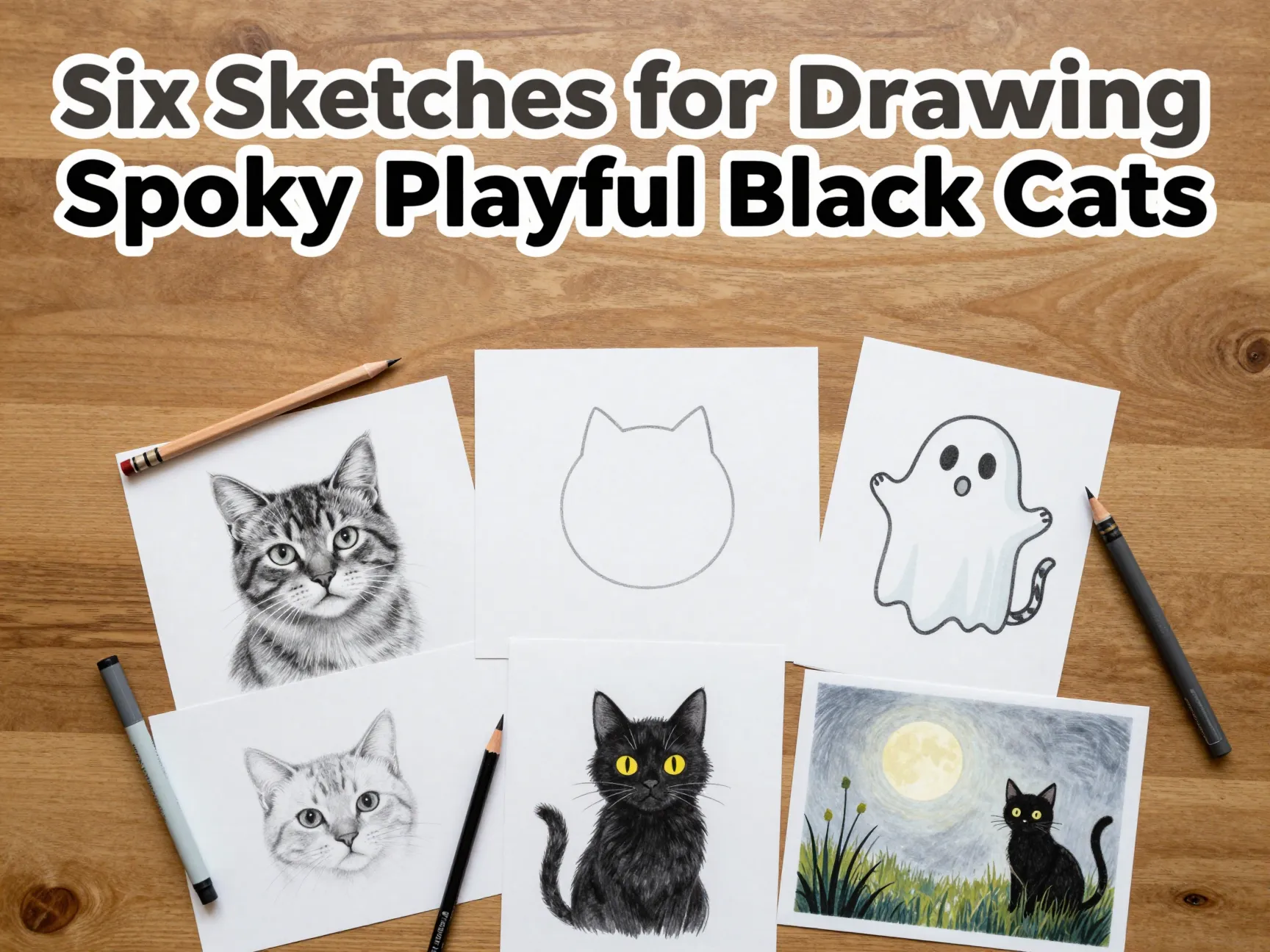
Below is the complete breakdown of the 6 black cat drawing sketches for spooky, mysterious, and playful art referenced throughout this guide. Each entry includes the core technique, the tools that work best, and a quick note on the emotional tone it creates. They are ordered from most detailed and realistic to simplest and most playful, so readers can jump to whichever skill level fits.
1. The Realistic Shaded Black Cat Portrait
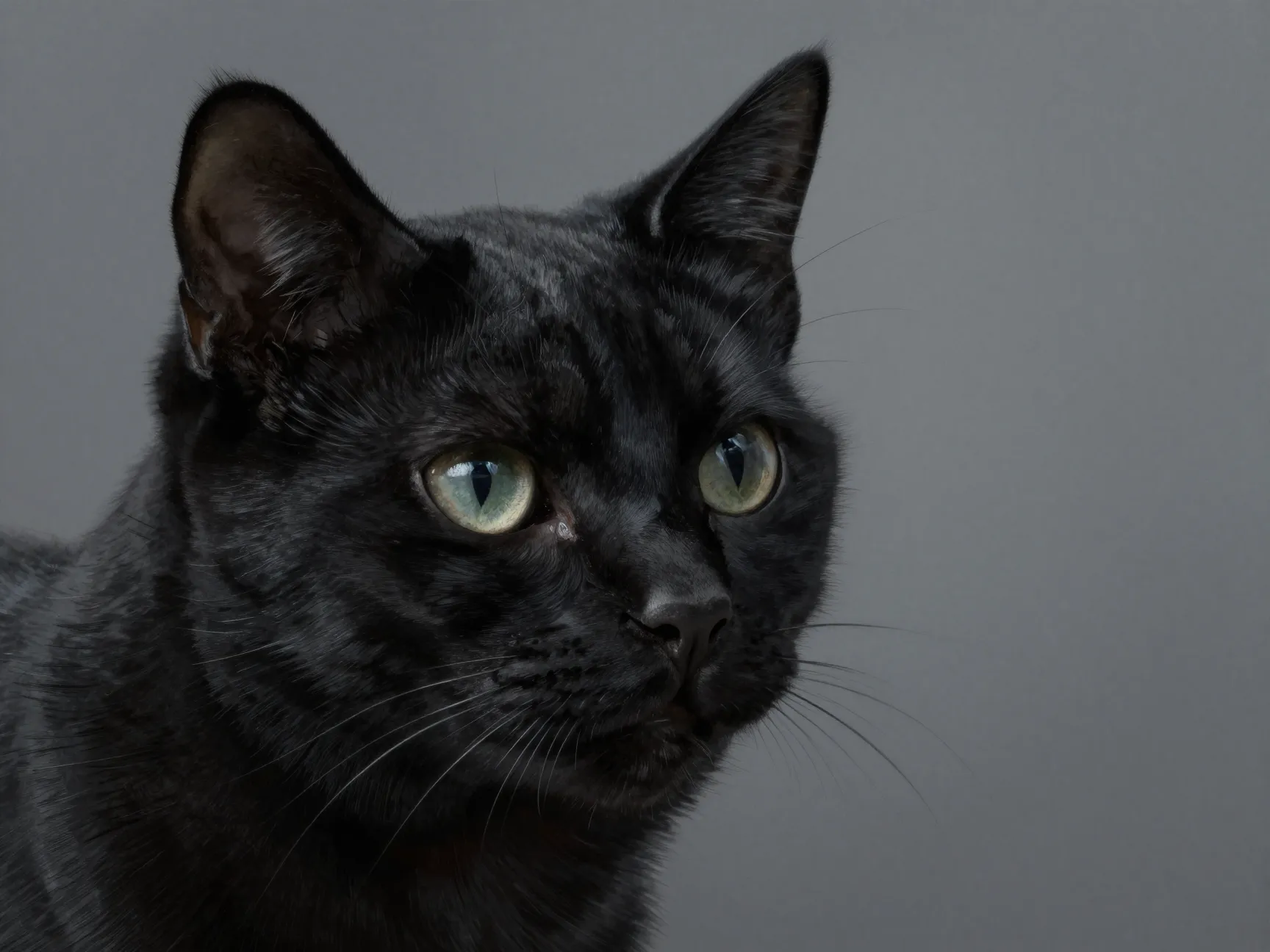
This is the most technically demanding of the six approaches, and it produces the most striking result. Rather than filling the entire cat with flat black, this method starts with a rough sketch to establish pose and proportion, then refines the structure into clean line work before moving into shading.
The trick that separates an amateur black cat drawing from a convincing one is color choice. Instead of pure black, artists use very dark, cool greys as the base tone. Pure black flattens the image and hides all form, while a dark grey base leaves room to build up highlights. Once the base is down, highlights are added around the cheeks, the bridge of the nose, the tips of the ears, and along the jaw and body edges where light would naturally catch reflected glow. Fur texture comes last, using short, directional brush strokes that follow the actual growth pattern of the coat rather than random scribbles. Whiskers and their subtle shadows are added at the very end to finish the illusion of depth.
This sketch works best for artists comfortable with digital painting software or blending pencils, since the effect depends heavily on smooth gradient transitions.
2. The Simple Step-by-Step Beginner Black Cat
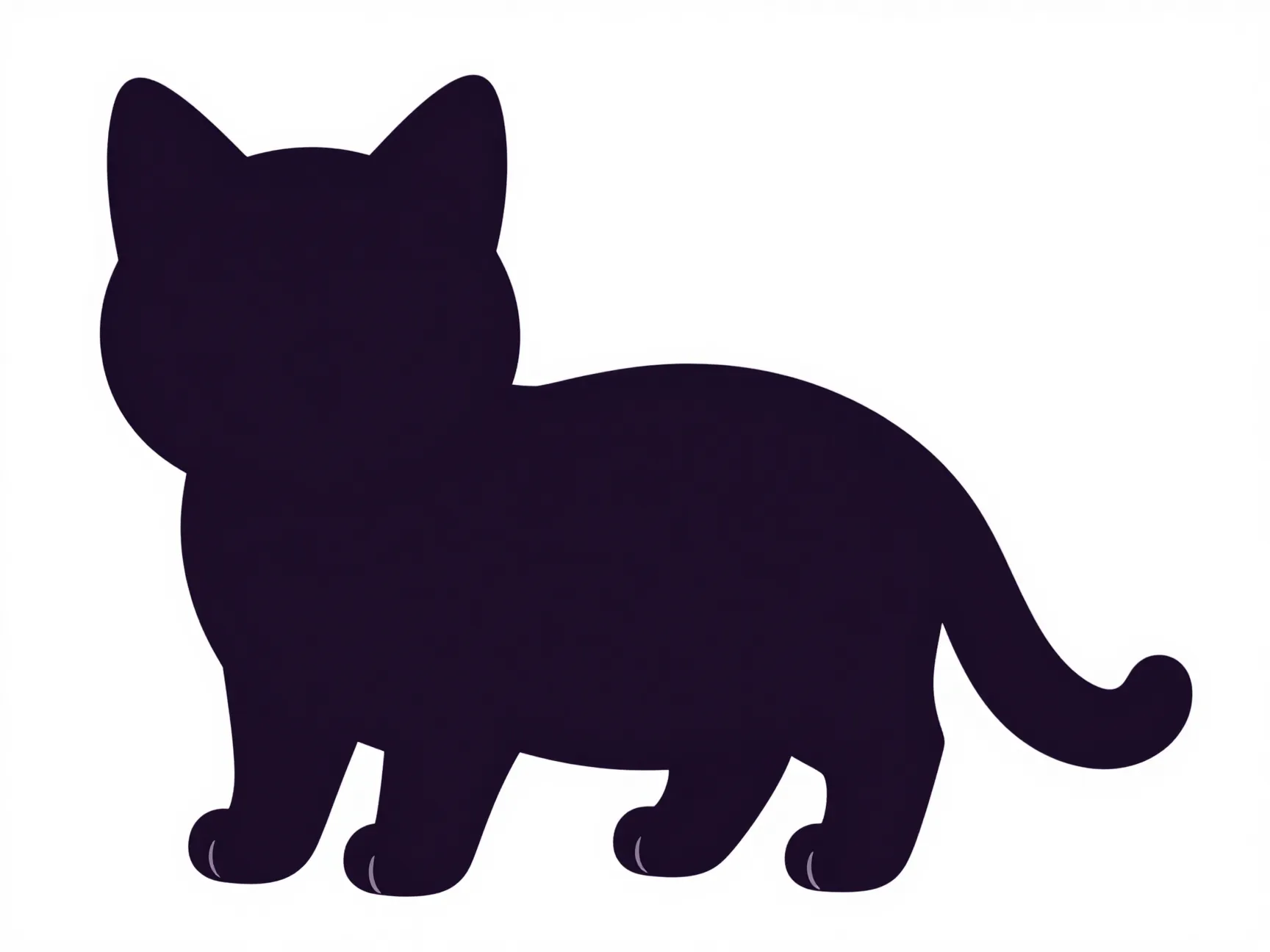
For anyone who wants a friendly, low-pressure introduction to drawing cats, this method removes almost all guesswork. It builds the entire animal from a small set of recognizable shapes: pointed triangle ears, a rounded head, and a teardrop-shaped body that tapers toward the back legs.
From there, rounded front paws are added, with a couple of curved inner lines to suggest separated toes without drawing individual claws. A curling tail finishes the silhouette. The final step is coloring, and this is where the sketch earns its playful reputation, since a simple flat black or dark purple fill instantly reads as “cute Halloween cat” rather than anything frightening.
This approach is ideal for beginners, kids, or anyone sketching quickly in a notebook margin. It requires no shading skill and no understanding of anatomy beyond basic shape combination.
3. The Cute Circle-and-Oval Stylized Black Cat
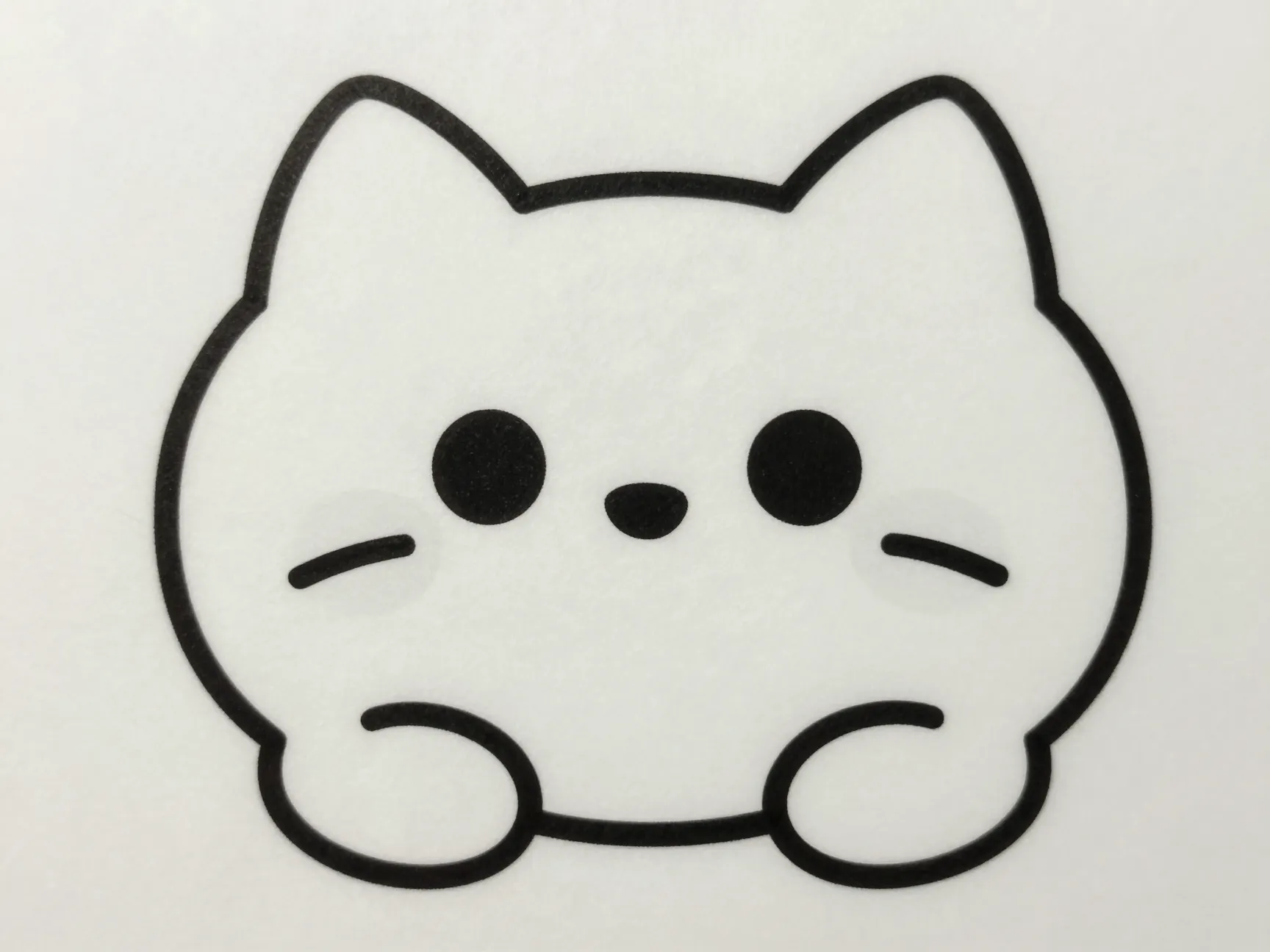
This sketch takes simplicity even further and leans into a rounded, almost bubbly cartoon style that has become popular on short-form video platforms. The construction starts with a circle for the head and an oval for the body, connected with light guideline strokes to keep the proportions balanced before any final lines are drawn.
Face features are placed using faint construction lines first, which helps keep the eyes, nose, and whisker dots symmetrical. Limbs are simplified into short, rounded shapes rather than realistic paws and legs. The entire piece can be completed in under a minute once the shape logic is memorized, which is exactly why this style spreads so quickly across social video tutorials. It is one of the fastest of the 6 black cat drawing sketches for spooky, mysterious, and playful art to master, and it works well for stickers, icons, and social media avatars.
4. The Spooky Floating Black Cat Ghost
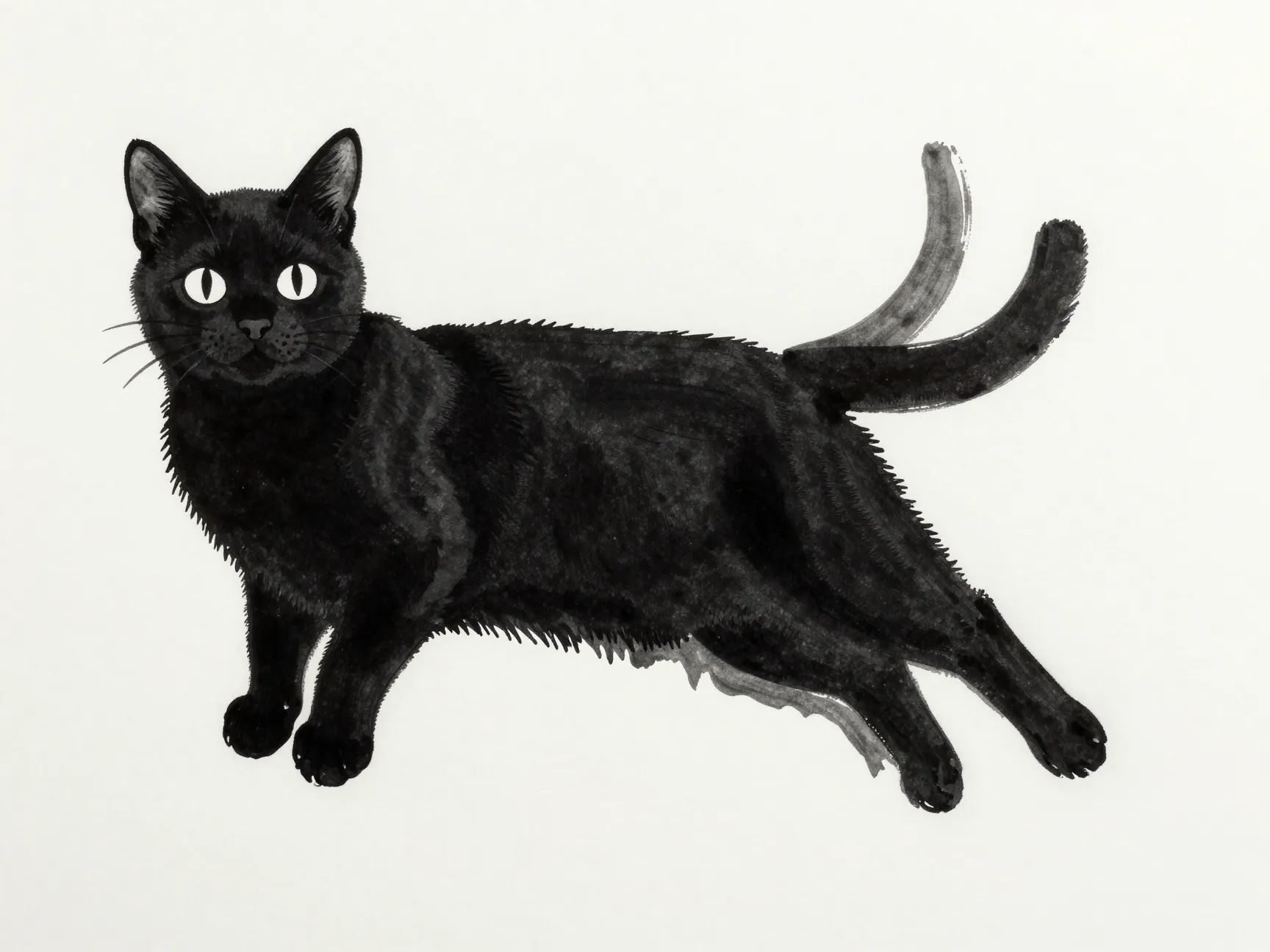
Halloween-specific tutorials push the black cat into genuinely spooky territory by turning it into a floating, spectral figure. Construction begins the same way as many other cat sketches, with oval shapes for the head and body, but the legs are drawn bent and tucked rather than standing, and the tail curves in a way that suggests weightless drifting rather than normal movement.
The defining feature of this style is the “ghostly touch”: instead of a clean, solid outline, the bottom edge of the body is drawn with a zigzag or wavy line to mimic transparency or a dissolving edge. Shading is concentrated around the ears and eyes to create a hollow, haunting look, and the piece is typically finished with a bold black ink outline that contrasts sharply against a lighter background. This sketch is a strong choice for Halloween cards, spooky posters, or seasonal social media graphics.
5. The Mysterious Dramatic-Shaded Halloween Cat
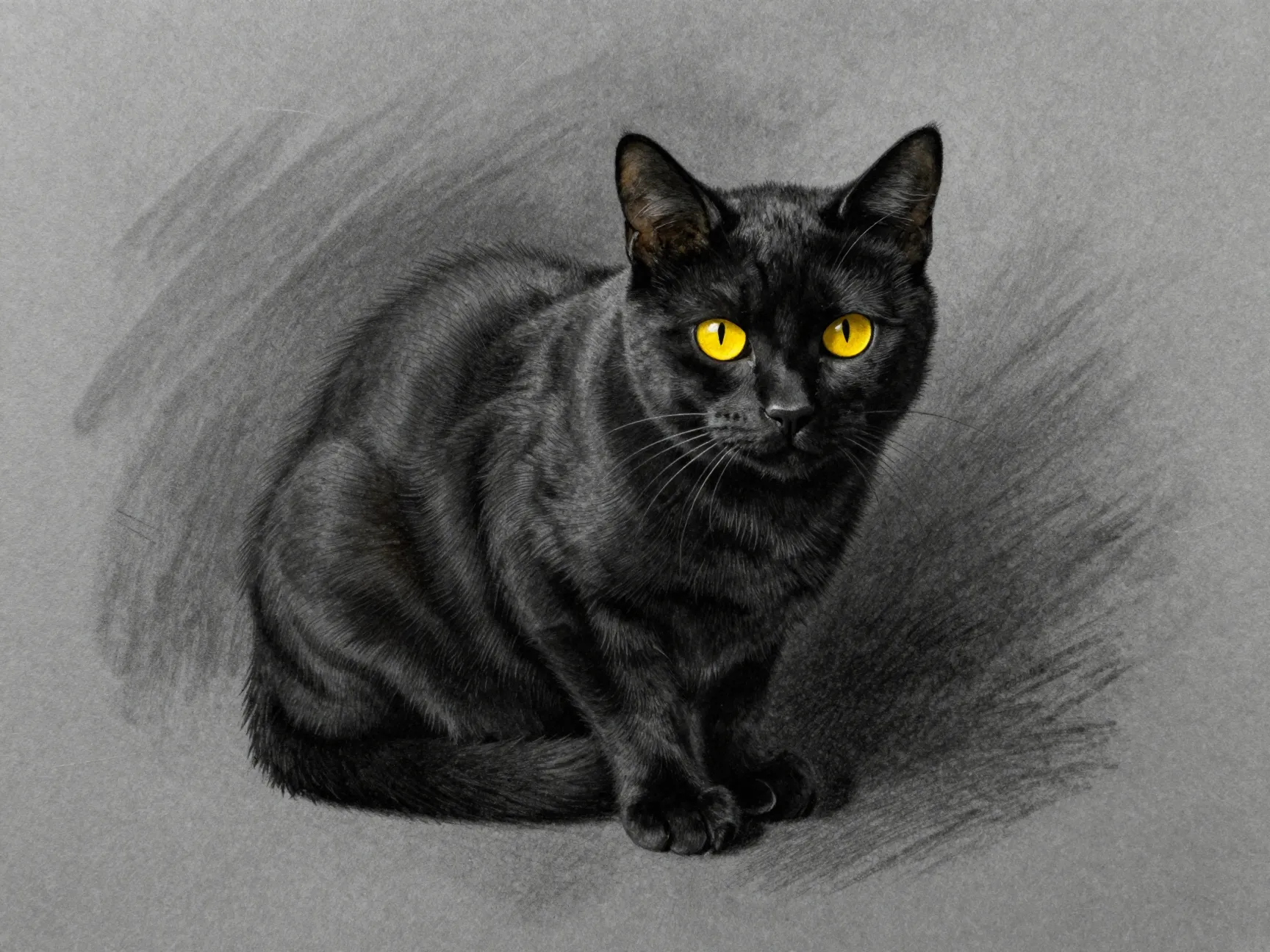
Where the ghost cat leans playful-spooky, this sketch aims for something moodier and more mysterious. Construction still relies on simple circle guides for the head and body, but the finishing techniques do the heavy lifting. Fur is built in layered strokes that follow the direction of real cat fur, similar to the realistic portrait method, but the palette leans into multiple shades of grey rather than a single flat tone, which adds visible depth without full realism.
Two details push this sketch into “mysterious” territory rather than simply dark. Highlights are deliberately reserved and used sparingly, so most of the cat stays in shadow. The eyes are colored a vivid yellow, which creates strong contrast against the dark fur and immediately reads as watchful or eerie. Some versions add subtle color to the inner ears as well, which softens the piece just enough to keep it from feeling purely frightening.
6. The Classroom-Friendly Black Cat Scene
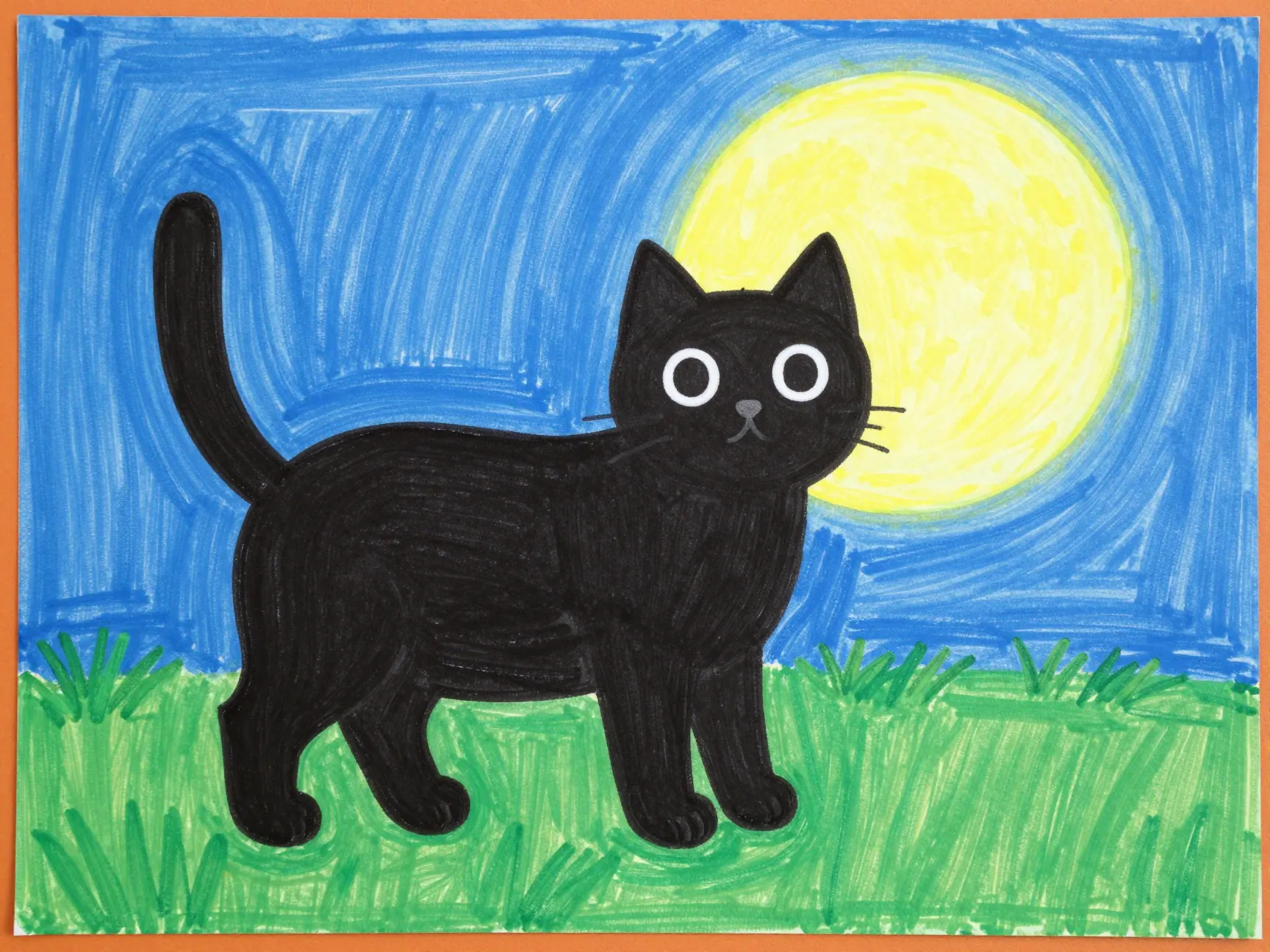
The final sketch in this list trades individual detail for storytelling and is specifically designed for younger artists or casual weekend sketching sessions. It starts with a circle for the head and a simplified rounded body, then adds front and back legs, triangle ears, a small nose, round eyes, and a tail using the same basic shape logic as the beginner sketch.
What makes this version distinct is the environment. Rather than leaving the cat isolated on a blank page, this method places it inside a small scene, typically standing in grass with a moon glowing in the background sky. Once the pencil sketch is complete, the lines are traced over in marker and the whole piece is colored using crayons or markers. This style is common in classroom art lessons because it teaches composition and background elements alongside basic animal drawing, and it consistently produces a charming, approachable finished piece that works well for Halloween bulletin boards or greeting cards.
Comparing the 6 Black Cat Drawing Sketches For Spooky, Mysterious, And Playful Art
Choosing the right sketch depends on time available, skill level, and the mood being targeted. The table below summarizes each style side by side.
| Sketch Style | Skill Level | Mood Created | Best Tool |
|---|---|---|---|
| Realistic Shaded Portrait | Advanced | Mysterious, lifelike | Digital brush or blending pencil |
| Simple Beginner Cat | Beginner | Playful, cute | Pencil and marker |
| Circle-and-Oval Stylized Cat | Beginner | Playful, cartoonish | Pen or tablet stylus |
| Floating Ghost Cat | Intermediate | Spooky, seasonal | Ink pen |
| Dramatic Shaded Halloween Cat | Intermediate | Mysterious, eerie | Graphite or grey markers |
| Classroom Scene Cat | Beginner | Playful, decorative | Crayon or marker |
Materials and Tools for Black Cat Sketching
Good technique matters more than expensive supplies, but the right tools make each of the six styles noticeably easier to execute. A basic graphite pencil set with at least three hardness grades handles most shading needs for the realistic and dramatic Halloween styles. Fine-tip black ink pens work well for the ghost cat and stylized circle-oval versions, where clean, confident outlines matter more than soft blending.
Digital artists working through the realistic portrait method benefit from a tablet with pressure sensitivity, since the fur texture strokes depend on varying line weight. A basic layered brush set with a textured or “dry media” brush option closely mimics the fur-direction strokes described in current digital tutorials. For classroom or kid-friendly sessions, crayons and washable markers remain the most practical choice, since they are forgiving, quick to apply, and require no blending skill.
Paper choice also matters more than most beginners expect. Smooth bristol or marker paper works best for ink-heavy styles like the ghost cat, while a slightly textured sketch paper holds graphite shading better for the realistic and dramatic Halloween pieces.
Tips to Make Your Black Cat Drawing Sketches Look Professional
A handful of small adjustments separate an average sketch from one that looks intentional and polished, regardless of which of the six styles is being used.
- Avoid pure black as a first fill. Starting with a dark grey or deep charcoal base leaves room to push both darker shadows and lighter highlights later, which is exactly why digital tutorials recommend it for realistic work.
- Build shading gradually rather than all at once. Broader idea collections on black cat art consistently point to gradual light-to-dark shading as the single biggest factor in controlling mood, since a sketch that goes straight to full black loses all sense of form.
- Keep whiskers subtle. Overly thick or overly numerous whiskers make a cat sketch look cluttered. A few clean, tapered lines with a faint shadow beneath them read as far more convincing than a dense cluster.
- Use eye color deliberately. Yellow or green eyes against black fur create immediate visual contrast and can shift a piece from “cute” to “mysterious” with almost no other changes.
- Match the background to the mood. A floating ghost cat needs negative space and a faded edge to feel eerie, while a classroom scene benefits from a simple moon and grass line to feel warm and playful.
How to Choose Among the 6 Black Cat Drawing Sketches For Spooky, Mysterious, And Playful Art
Picking the right sketch from this list comes down to answering three quick questions. First, how much time is available: quick sketches favor the circle-oval or beginner shape method, while realistic shading requires patience. Second, what is the piece for: seasonal decor points toward the ghost cat or dramatic Halloween version, while greeting cards or classroom projects favor the scene-based sketch. Third, what tools are on hand: ink-based tools favor the ghost cat style, while pencils or digital brushes favor the realistic portrait and dramatic shading approaches.
Frequently Asked Questions
What is the easiest black cat sketch for a total beginner?
The simple step-by-step beginner cat and the circle-and-oval stylized cat are both built from basic shapes and require no shading skill, making them the most accessible starting points.
Why do black cat tutorials recommend dark grey instead of pure black?
Pure black hides all form and texture, making the drawing look flat. Dark cool greys allow room to add both shadows and highlights, which is essential for a realistic or dramatic finished look.
How can a black cat drawing look spooky rather than cute?
Floating poses, zigzag or wavy outline edges, concentrated shading around the eyes, and sparse highlights all push a sketch toward a spookier, more mysterious tone.
Are these six sketch styles suitable for classroom use?
Yes. The simple beginner cat and the classroom scene sketch were specifically designed with young or first-time artists in mind and require only basic shapes and coloring tools.
Do these techniques work for digital art as well as traditional pencil drawing?
Most of the six styles transfer well to digital tools, especially the realistic shaded portrait, which was originally developed using layered digital brush techniques.
Conclusion
Black cat drawing sketches remain popular precisely because the subject bends in so many directions at once. A single animal shape can become a haunting Halloween ghost, a moody realistic portrait, or a cute doodle in a notebook margin, depending entirely on technique choice. The 6 black cat drawing sketches for spooky, mysterious, and playful art covered in this guide give artists at every skill level a clear starting point, whether the goal is a detailed digital painting or a five-minute sketch to color with a child.
The best next step is simple: pick one style from this list that matches available time and current skill level, gather the basic materials, and complete one full sketch before moving to the next style. Building comfort with all six over time creates a flexible personal toolkit that can handle nearly any black cat art request, from a quick Halloween card to a detailed portrait piece.