Iconic Cat Meme Faces And The Stories Behind Them
A single grumpy feline face has been reproduced, remixed, and reposted more times than most Hollywood blockbusters have sold tickets. That is not an exaggeration. Grumpy Cat alone generated an estimated $100 million in merchandising and licensing before her death in 2019, and her scowl still circulates daily on social platforms more than a decade after it first appeared on Reddit. Cats did not just stumble into internet culture by accident. They became its unofficial mascots, and a small handful of feline faces built the visual grammar that meme culture still uses today.
Disclosure: This post contains affiliate links. As an Amazon Associate, we earn from qualifying purchases, and at no extra cost to you.
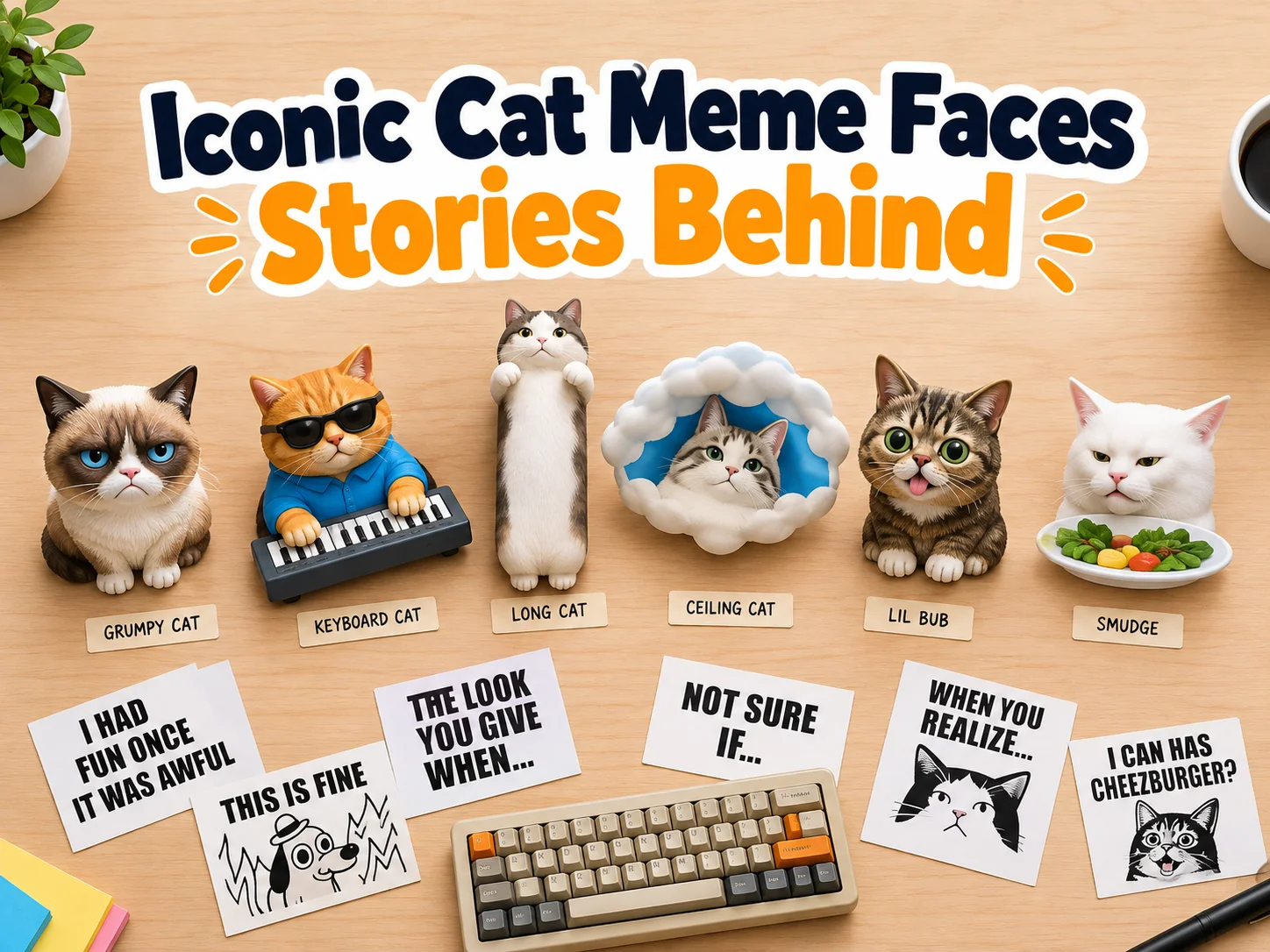
This article breaks down 6 Iconic Cat Meme Faces And The Stories Behind Them, tracing each one from its real-world origin to its current status as digital shorthand for everything from workplace exhaustion to social anxiety. Understanding these faces is not just nostalgia. It explains how internet humor works, why certain images become templates, and how new cats keep joining an already crowded feline hall of fame in 2026.
Key Takeaways
- Grumpy Cat and Smudge the Cat remain the two most referenced entries whenever historians or meme explainers discuss 6 Iconic Cat Meme Faces And The Stories Behind Them, anchoring both the early and modern eras of feline internet culture.
- Keyboard Cat, Longcat, and Ceiling Cat represent the pre-YouTube and early image-macro period, showing how meme culture existed before algorithm-driven platforms took over.
- Lil Bub shifted the cultural conversation toward vulnerability and community care, a theme scholars now study as part of youth identity and online communication.
- New entrants such as China’s wax gourd cat and AI-generated cat imagery prove the meme cat canon is still expanding in 2026, blending nostalgia with fresh controversy.
- Academic research increasingly treats cat meme faces as communication tools, not just jokes, particularly for how young people express emotion and build online identity.
The Original Icons: How 6 Iconic Cat Meme Faces And The Stories Behind Them Began
Long before short-form video and AI image generators, three cats laid the groundwork for what would become an entire genre of internet humor. Their formats were simple: a single striking image, minimal text, and infinite reusability. These early faces prove that meme culture rewards distinctiveness over production value.
1. Grumpy Cat (Tardar Sauce)
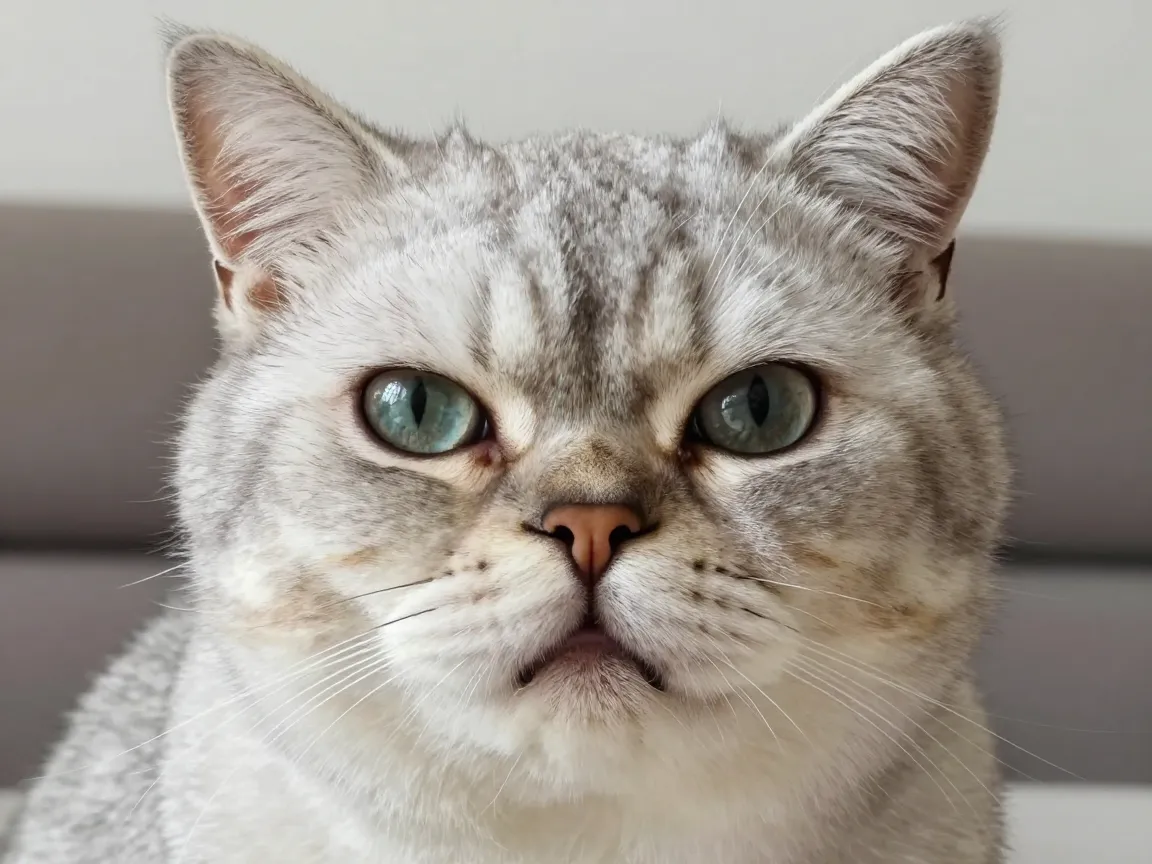
Grumpy Cat is the cat almost everyone pictures first when asked about famous internet felines. Her real name was Tardar Sauce, and her permanently displeased expression was not an act. She had feline dwarfism and an underbite, physical traits that gave her face its signature scowl. Her owner posted a photo to Reddit in 2012, and the image spread within hours.
What made Grumpy Cat different from earlier viral animals was consistency. Every new photo of her looked equally unimpressed, which meant meme creators could caption her with almost any frustrated or sarcastic thought and it would land. She became the face of workplace complaints, Monday mornings, disappointing food, and rude relatives. Brands noticed quickly, and Grumpy Cat went on to headline a Lifetime movie, multiple books, and a branded coffee product.
“Her face did not change. The internet’s use of it did. That flexibility is the real reason Grumpy Cat outlasted almost every viral animal that came before her.”
Recent retrospectives on 6 Iconic Cat Meme Faces And The Stories Behind Them continue to emphasize Grumpy Cat’s medical condition as central to her story, framing her not as a gimmick but as a genuine physical rarity that happened to translate perfectly into meme language.
2. Keyboard Cat (Fatso)
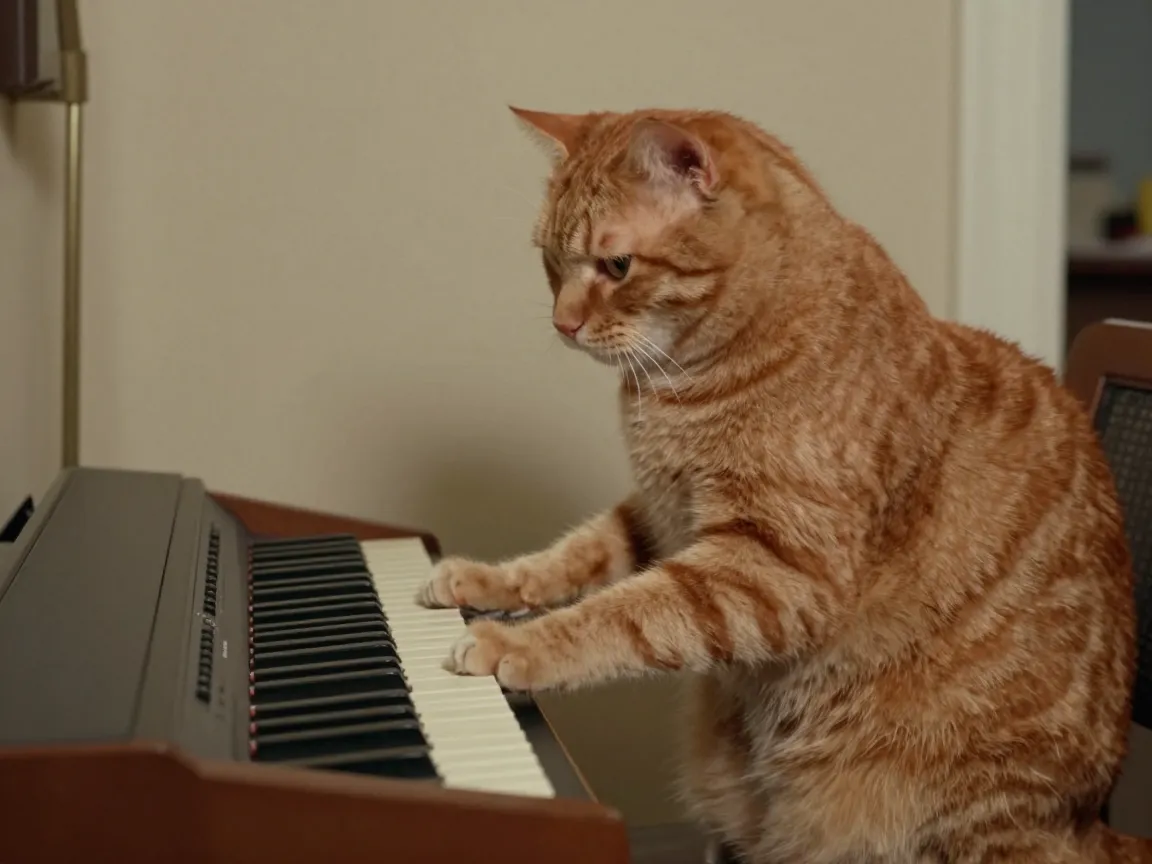
Keyboard Cat predates most of what people now call meme culture. The footage of a tabby cat named Fatso appearing to “play” a small keyboard was originally filmed in 1984 by Fatso’s owner, decades before social media existed. The clip resurfaced online in 2007 and quickly became the internet’s go-to reaction video for awkward or failed moments.
The format was simple but genius. Whenever something embarrassing happened in a video, online, or on a broadcast, editors would cut to Keyboard Cat playing a cheerful little tune, as if to musically usher the failure off stage. This became known as being “played off,” and the phrase stuck around long after the original video’s popularity peaked.
Keyboard Cat matters historically because it shows meme culture existed before YouTube made video sharing effortless. Old home footage, once niche and personal, became a shared cultural reference point almost by accident.
3. Longcat and Ceiling Cat
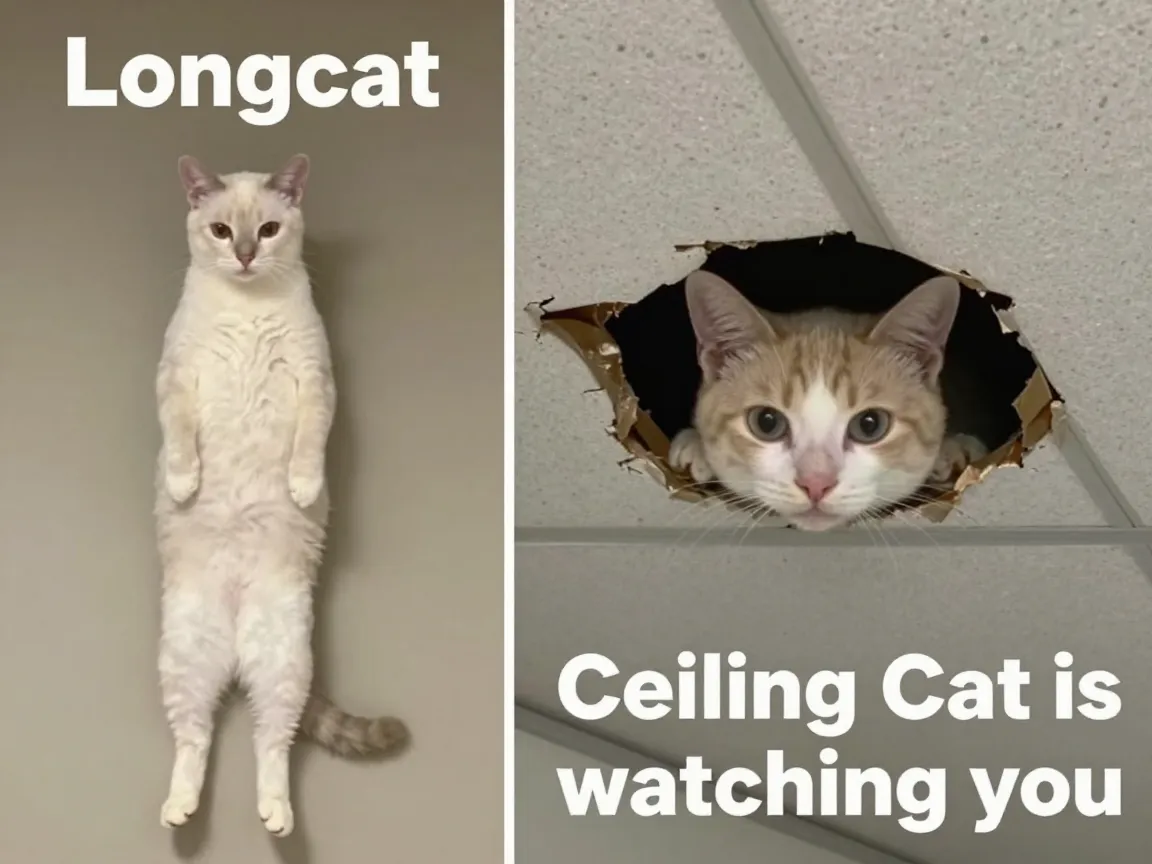
Longcat, a real cat named Nobiko, became famous for one simple visual trick: an image that made the cat appear impossibly stretched and long. The photo spread on image boards in the mid-2000s and became a running joke about exaggerated proportions, often paired with an opposite meme called Tacgnol.
Around the same period, Ceiling Cat emerged from a photo of a cat peeking through a ceiling tile, staring down as if watching over the room. The caption “Ceiling Cat is watching you” turned the image into an early example of an all-seeing, slightly ominous internet mascot, a format that later memes would borrow repeatedly.
Both Longcat and Ceiling Cat are considered proto-LOLCats, part of the earlier wave of image-macro humor that relied on bold white Impact font captions layered over simple photos. Historians studying meme culture in 2026 still point to this period as the moment internet humor developed its own visual dialect, one built almost entirely around cats.
Modern Legends: The Next Wave of 6 Iconic Cat Meme Faces And The Stories Behind Them
As social platforms matured, cat memes evolved from static image macros into more emotionally layered formats. The next three entries in this list of 6 Iconic Cat Meme Faces And The Stories Behind Them show how meme culture started blending humor with genuine sentiment, and eventually, sharp social commentary.
4. Ceiling Cat’s Legacy in Everyday Reaction Culture
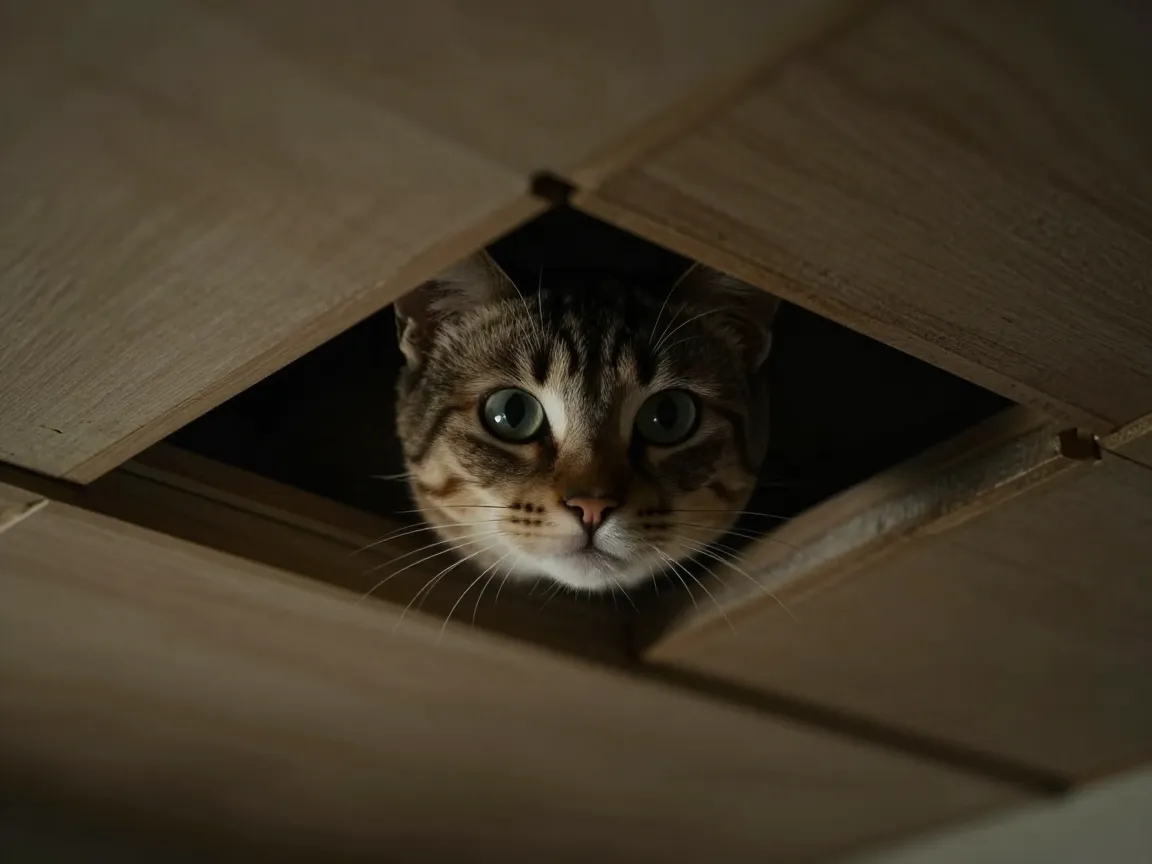
While already introduced above, Ceiling Cat deserves separate recognition for how it evolved past its original joke. Unlike purely comedic formats, Ceiling Cat introduced the idea of a recurring cat “character” with a personality, watching, judging, and occasionally intervening in internet lore. This character-based approach influenced later formats where a single animal face represents a recognizable role, such as suspicion, surveillance, or mild disapproval, rather than a single one-off joke.
This shift from “funny photo” to “reusable character” is a key turning point in meme history. It set the stage for cats to become recurring emotional stand-ins rather than novelty images used once and forgotten.
5. Lil Bub
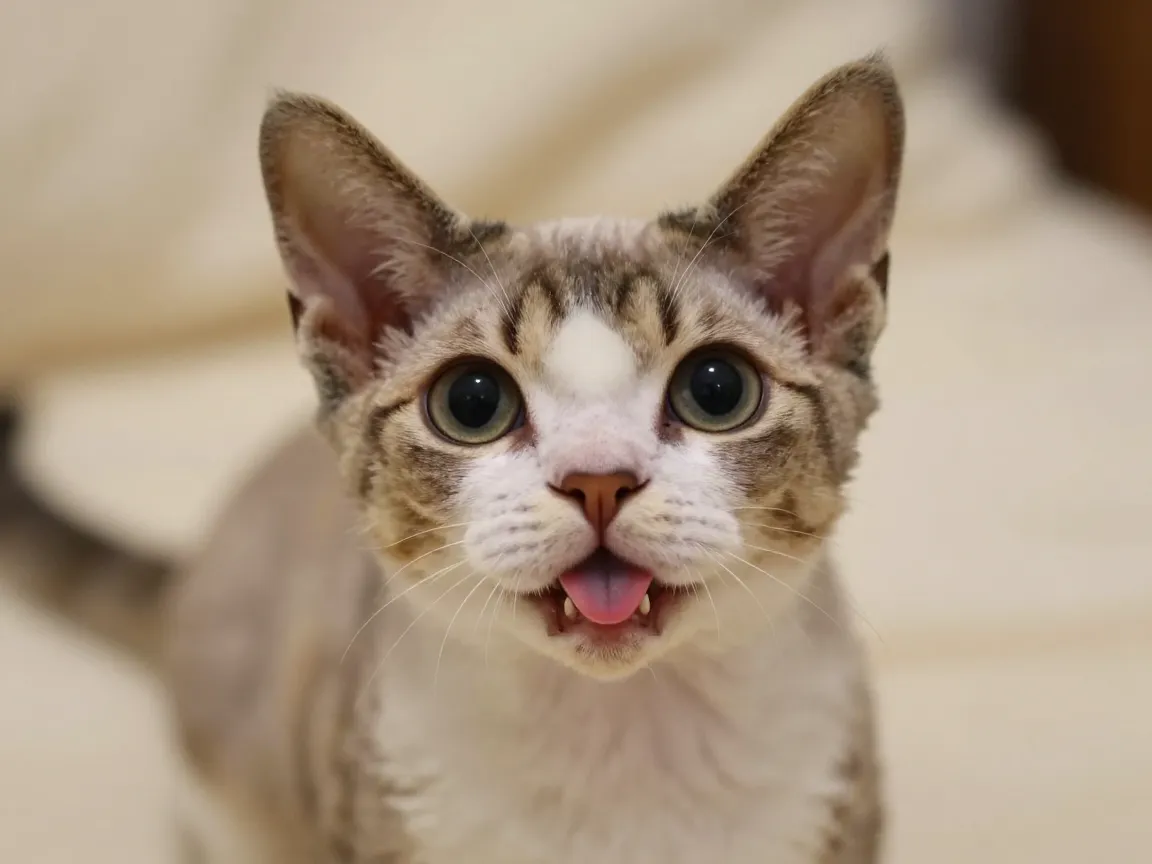
Lil Bub was a small cat with a permanently kitten-like appearance caused by several genetic conditions, including dwarfism and a jaw abnormality that left her tongue perpetually sticking out. Rescued as a stray, she was adopted and introduced to the internet in 2011. Unlike Grumpy Cat’s sarcastic tone, Lil Bub’s meme identity was built around warmth, fragility, and care.
Her online presence raised money for animal shelters and disabled pets, turning her image into more than a joke format. People shared Lil Bub not to mock her appearance but to express affection and highlight resilience. Academic and cultural writing increasingly frames Lil Bub as part of a broader “lovable weak” category of viral animals, where vulnerability becomes a point of connection rather than ridicule.
This distinction matters. Lil Bub demonstrated that meme cats did not have to be funny to succeed. They could also become symbols of empathy, community fundraising, and emotional support content, a trend that has only grown stronger on platforms built around short video and comment culture.
6. Smudge the Cat
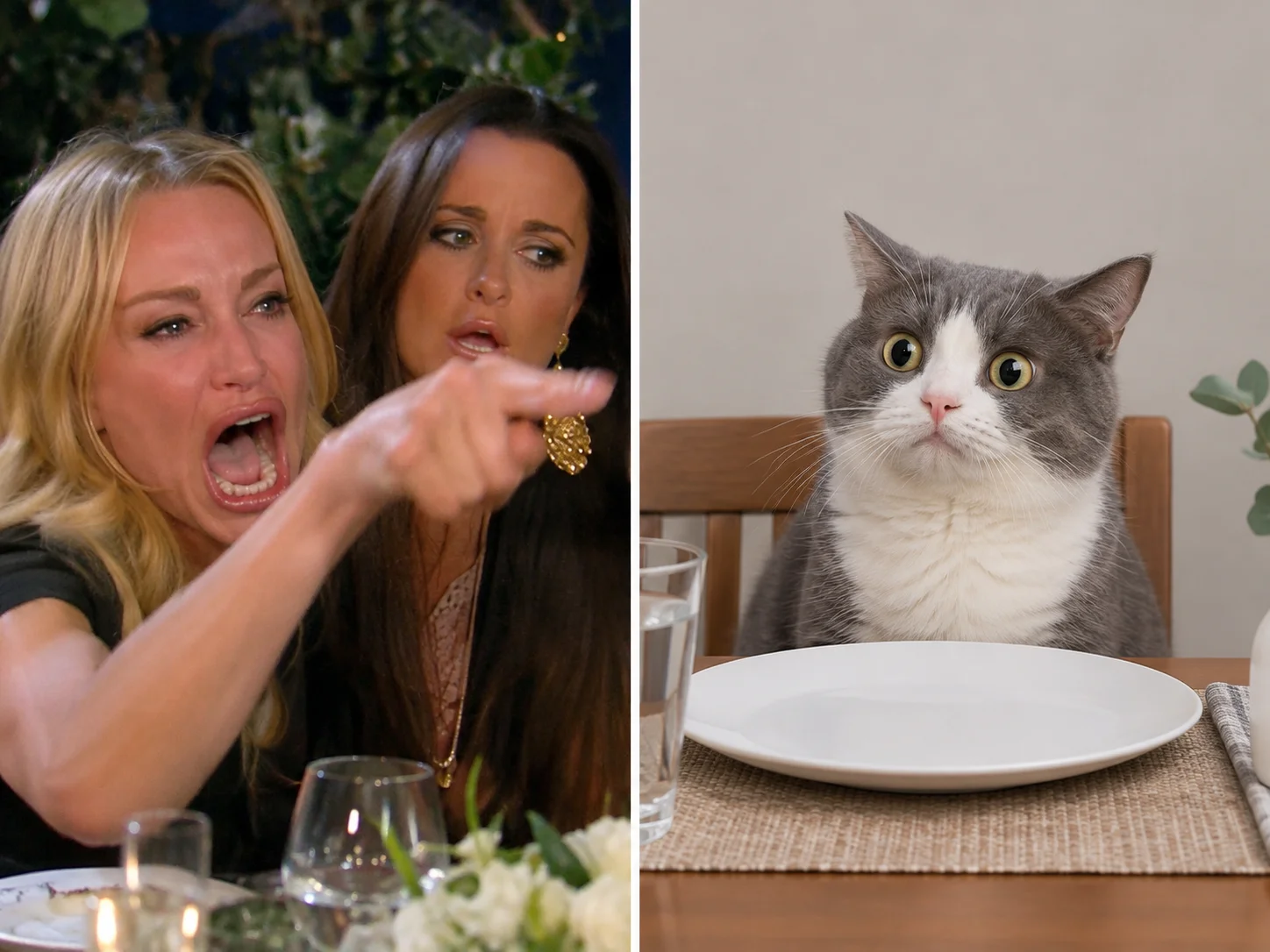
Smudge is arguably the most recognizable modern entry among 6 Iconic Cat Meme Faces And The Stories Behind Them. The meme pairs two separate images: a photo of women arguing at a dinner table, taken from a reality television franchise, and a photo of a gray-and-white cat sitting at a table with an oddly human, wide-eyed expression, as if reacting to being yelled at.
Both images existed independently before being combined around 2018 and 2019. The cat photo actually shows Smudge looking confused near an empty dinner plate, unrelated to the women in the original photo. Once combined, the format exploded because it was endlessly adaptable. Anyone could swap in a new “yelling” image on one side and a new absurd response on the other, turning the format into one of the most flexible meme templates ever created.
Smudge’s popularity did not fade quickly, unlike many viral formats. Coverage between 2019 and 2026 has repeatedly returned to the meme, both to document its origin story and to track its continued use in political commentary, sports arguments, and everyday social media jokes. Few meme cats have proven this durable.
Here is a quick side-by-side look at how these six faces compare in origin and cultural role.
| Cat Meme Face | Origin Era | Core Emotion Represented |
|---|---|---|
| Grumpy Cat | 2012, Reddit | Sarcasm and annoyance |
| Keyboard Cat | 1984 footage, viral in 2007 | Awkward failure |
| Longcat | Mid-2000s image boards | Exaggeration and absurdity |
| Ceiling Cat | Mid-2000s image boards | Surveillance and suspicion |
| Lil Bub | 2011 | Vulnerability and care |
| Smudge the Cat | 2018 to 2019 | Confusion and overreaction |
Why These 6 Iconic Cat Meme Faces And The Stories Behind Them Still Shape Internet Culture in 2026
Short-form video and AI-generated imagery now dominate most social platforms, yet commentary tied to International Cat Day in 2026 consistently points out that classic meme cat faces still structure everyday online jokes. Workplace fatigue, gaming frustration, and social anxiety all continue to get expressed through these same six faces, often remixed into new formats rather than replaced entirely.
Scholarly research published in 2026 goes further, treating cat meme faces as genuine tools for youth communication and identity construction. Instead of viewing memes as throwaway jokes, researchers now study how young people use specific cat expressions to signal emotional states that are harder to say directly, such as embarrassment, exhaustion, or mild outrage. The predictable, recognizable nature of faces like Grumpy Cat or Smudge makes them efficient shorthand, almost like an emoji with a built-in backstory.
Algorithm-driven platforms have also changed how these images circulate. A meme format does not need to be new to perform well. It needs to be instantly recognizable, which is exactly why decade-old faces like Longcat or Ceiling Cat still resurface in retrospective content, nostalgia posts, and “meme history” explainers published throughout 2026.
Three main reasons explain why these faces endure:
- Instant recognition. A single glance is enough for most internet users to understand the reference, no caption required.
- Emotional flexibility. Each face can be recaptioned for dozens of different situations without losing its comedic effect.
- Nostalgic value. Many current internet users grew up alongside these memes, giving them personal as well as cultural significance.
New Contenders Joining the Meme Cat Canon
Meme culture has never been static, and 2026 offers clear proof that the roster of iconic cat faces keeps growing. China’s wax gourd cat is a recent example of how quickly a new feline face can join the canon. All it takes is a distinctive image paired with a compelling backstory, and platforms do the rest, amplifying the format across languages and regions within days.
AI-generated imagery has introduced a different kind of complication. A viral wave of AI-generated “Cat in the Hat” style images in 2026 highlighted how easily synthetic cat visuals can spread, while also raising real questions about platform policy, misinformation, and content authenticity. Unlike Grumpy Cat or Smudge, these AI-generated faces are not tied to a real animal with a real story. That distinction is becoming a meaningful dividing line in how audiences and platforms evaluate meme authenticity going forward.
Looking ahead, expect future rankings of iconic cat meme faces to blend the classic six names covered here with regional viral cats and AI-generated entries. That mix reflects both genuine nostalgia for early internet culture and growing unease about how synthetic imagery fits into a tradition built on real, often quirky, animals.
Conclusion
The story of 6 Iconic Cat Meme Faces And The Stories Behind Them is really a story about how internet humor evolved from simple image macros into a shared emotional language. Grumpy Cat and Keyboard Cat proved that a single striking photo could outlast its original context. Longcat and Ceiling Cat showed how format and repetition build lasting jokes. Lil Bub introduced vulnerability and care into meme culture, and Smudge the Cat demonstrated just how far a flexible template can travel once it clicks with a broad audience.
For anyone building content, studying internet culture, or simply trying to understand why a cat’s face keeps showing up in unrelated conversations, the lesson is straightforward. Distinctive imagery paired with a genuine backstory travels farther than polished production ever could. Keep an eye on emerging feline faces like the wax gourd cat, but do not be surprised if the classics, Grumpy Cat, Keyboard Cat, Longcat, Ceiling Cat, Lil Bub, and Smudge, keep resurfacing for years to come.
Frequently Asked Questions
Why do cat memes stay popular longer than most viral content?
Cat faces are visually simple, emotionally expressive, and easy to caption for many different situations, which keeps them relevant across new platforms and trends.
Is Grumpy Cat still relevant after her death in 2019?
Yes. Her image continues to circulate widely, and retrospectives published through 2026 still reference her as the defining example of a meme-worthy cat expression.
What made Smudge the Cat different from earlier meme cats?
Smudge’s meme paired an unrelated cat photo with a separate viral image, creating a two-panel format that people could endlessly adapt, which extended its lifespan far beyond typical single-image memes.
Are new cat memes still being created in 2026?
Yes. Viral cats such as China’s wax gourd cat show that fresh feline faces can still join the meme canon quickly when paired with a compelling story.
Do researchers actually study cat memes seriously?
Yes. Academic work increasingly examines cat meme faces as tools for identity expression and communication, particularly among younger internet users.