Breeds Known For That Stunning White Cat With Green Eyes Look
Nearly eight out of every ten solid white cats have green eyes. That single statistic explains why the image of a snow-white cat with piercing emerald irises feels so iconic, yet also so common once you start looking for it. The pairing is not some rare genetic lottery win, it is the expected outcome of a specific gene doing exactly what it was built to do. Still, certain breeds have leaned into this look so consistently that they have become the visual shorthand for it. This guide walks through the 6 Breeds Known For That Stunning White Cat With Green Eyes Look, explains the biology behind the combination, and gives practical guidance for anyone considering one of these cats as a companion.
Disclosure: This post contains affiliate links. As an Amazon Associate, we earn from qualifying purchases, and at no extra cost to you.
Key Takeaways
- Green eyes appear in roughly 80 percent of solid white cats because the dominant white (W) gene reduces melanin without necessarily disrupting eye pigment the way blue-eyed white genetics can.
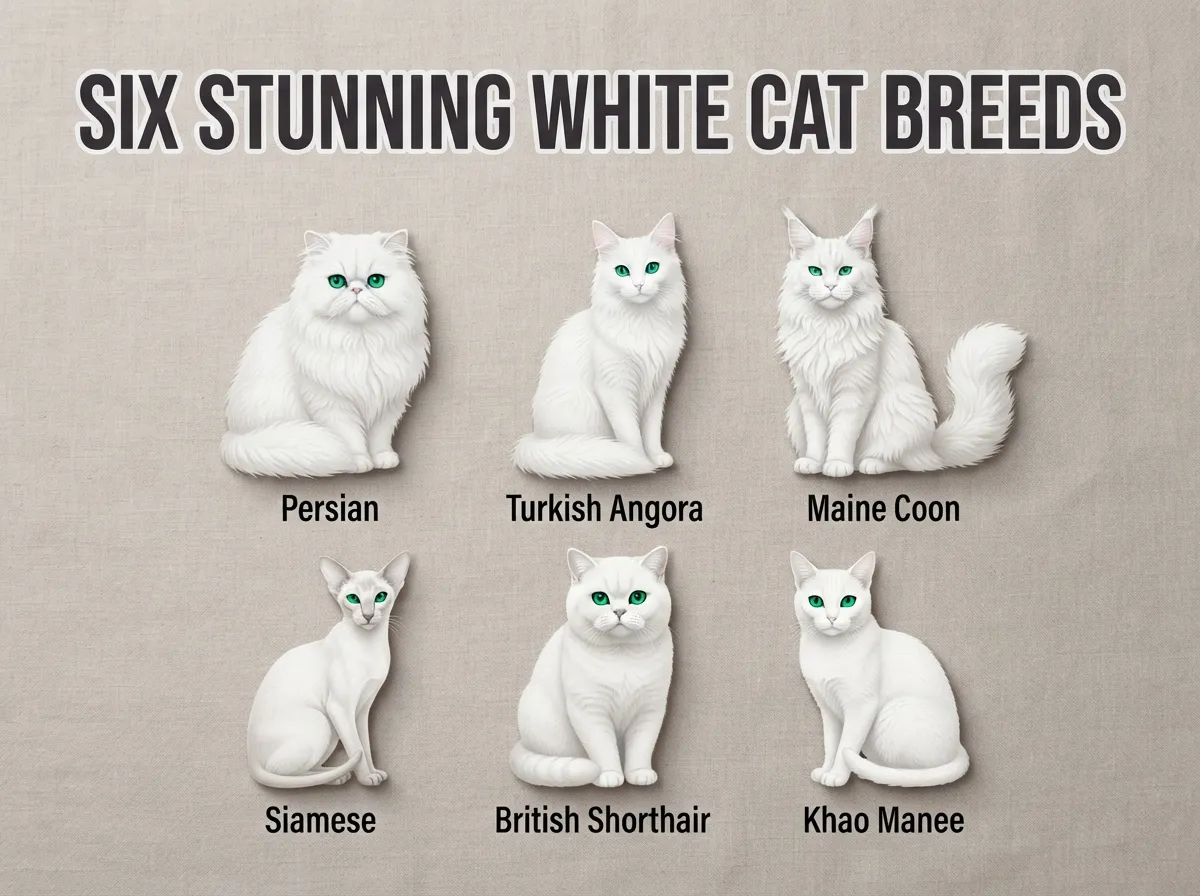
- The Russian White, Turkish Angora, Norwegian Forest Cat, Oriental Shorthair, Khao Manee, and Turkish Van are the six breeds most consistently associated with the white coat and green eye combination.
- Green-eyed white cats generally carry a lower risk of congenital deafness than blue-eyed white cats, making eye color a meaningful health signal, not just an aesthetic detail.
- Breed standards vary: some organizations require vivid green eyes for certain varieties, while others accept a broader range including blue, gold, and odd-eyed cats.
- Choosing a breed for this look should factor in coat maintenance, temperament, and breeder health testing, not appearance alone.
Why White Cats So Often Have Green Eyes
The science behind the “white cat with green eyes” look is simpler than most people assume. A dominant gene known as the W gene masks nearly all other coat color genes, producing a solid white coat regardless of what color the cat would otherwise have been. This gene also interferes with melanin development in the iris, which is why white cats frequently display lighter eye colors such as blue, gold, copper, or green rather than the darker browns and hazels seen in many colored cats.
Green eyes specifically result from a moderate reduction in melanin, enough to shift pigment away from gold or copper but not so extreme that it produces the pale blue associated with a different, more disruptive form of the white gene. This is an important distinction for anyone concerned about health. Blue-eyed white cats have a documented higher rate of congenital deafness because the version of the white gene most strongly linked to blue eyes also affects the inner ear structures responsible for hearing. Green-eyed white cats, by contrast, typically carry a form of the gene that leaves those structures unaffected, which is one reason breed literature increasingly flags eye color as a practical health indicator rather than a purely cosmetic trait.
This genetic backdrop is also why the phrase “6 Breeds Known For That Stunning White Cat With Green Eyes Look” is a reasonable simplification rather than an exact scientific boundary. Green eyes can technically appear in white individuals of many breeds, including Persians, Ragdolls, Balinese, and Cornish Rex cats, since the underlying coat-color genetics work the same way across breeds. However, a smaller group of breeds has bred so consistently toward vivid green eyes as a standard-preferred trait that they have become the reference points most people picture when they hear the phrase.
The 6 Breeds Known For That Stunning White Cat With Green Eyes Look
The following six breeds represent the clearest, most consistently documented examples of cats where a pure white coat and vivid green eyes are either a breed standard requirement or an especially common, celebrated combination. Each entry includes practical details on coat care, temperament, and what to expect if bringing one of these cats home.
1. Russian White
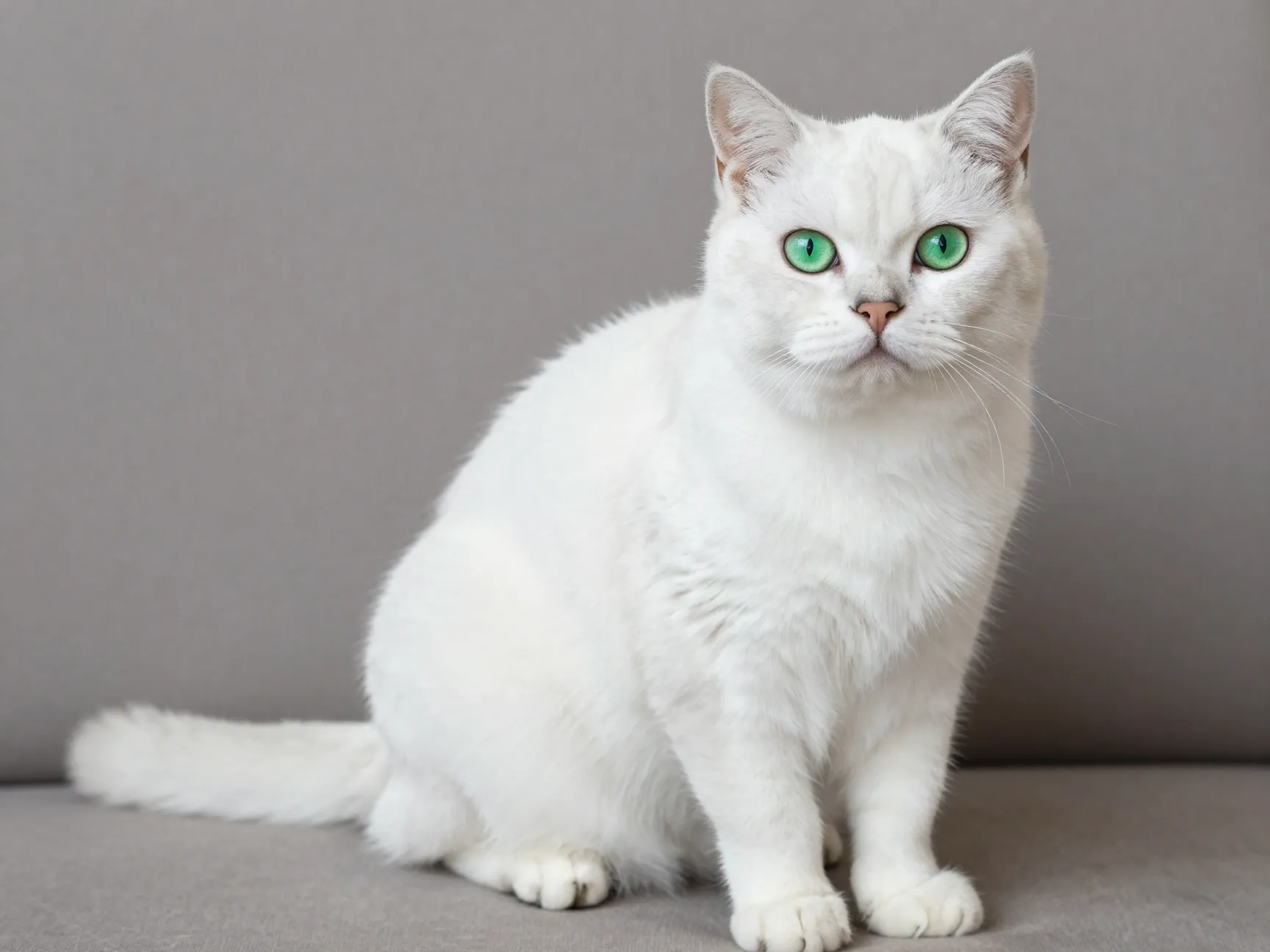
The Russian White sits at the top of almost any serious discussion of white cats with green eyes because its breed standard explicitly calls for “vivid green” eye color. This breed is a variety within the broader Russian shorthair family, sharing ancestry with the well-known Russian Blue but distinguished by its short, dense, plush white coat that stands away from the body with a soft, silky texture.
Temperament-wise, Russian Whites tend to be quiet, reserved with strangers, and deeply attached to their chosen humans. They are not lap cats in the constant-cuddle sense, but they follow their owners from room to room and appreciate routine. Coat care is minimal since the fur is short and double-layered, resisting matting; a weekly brush is usually enough outside of seasonal shedding periods. Because this breed carries the specific white gene variant less associated with inner ear disruption, congenital deafness is less commonly reported here than in some other all-white breeds, though reputable breeders still perform hearing tests (typically BAER testing) as a precaution.
2. Turkish Angora
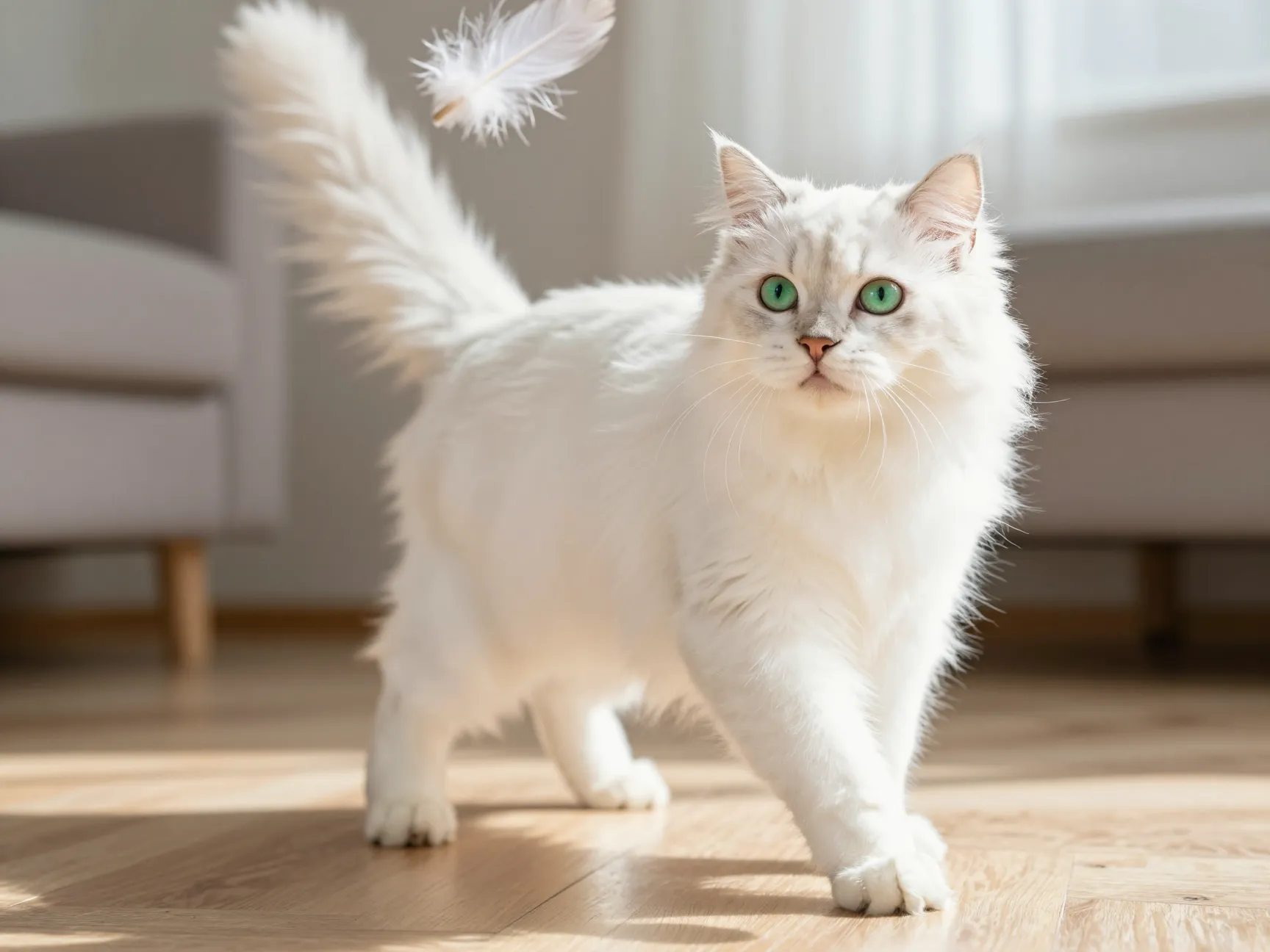
Turkish Angoras are one of the oldest natural cat breeds, originating in the mountainous regions of Turkey, and white has always been their signature color. While breed standards accept blue, amber, and odd eyes as well, green-eyed white Turkish Angoras are common and widely photographed, making them a strong contender among the 6 Breeds Known For That Stunning White Cat With Green Eyes Look.
This breed has a fine, silky, semi-long coat without a heavy undercoat, which means less matting than other longhaired breeds but still benefits from brushing two to three times a week. Turkish Angoras are energetic, vocal, and highly intelligent, often described as dog-like in their loyalty and eagerness to be involved in household activities. They tend to bond intensely with one or two people and can be reserved with visitors. Prospective owners should know this breed thrives on mental stimulation; puzzle feeders and interactive toys help prevent boredom-driven mischief.
3. Norwegian Forest Cat
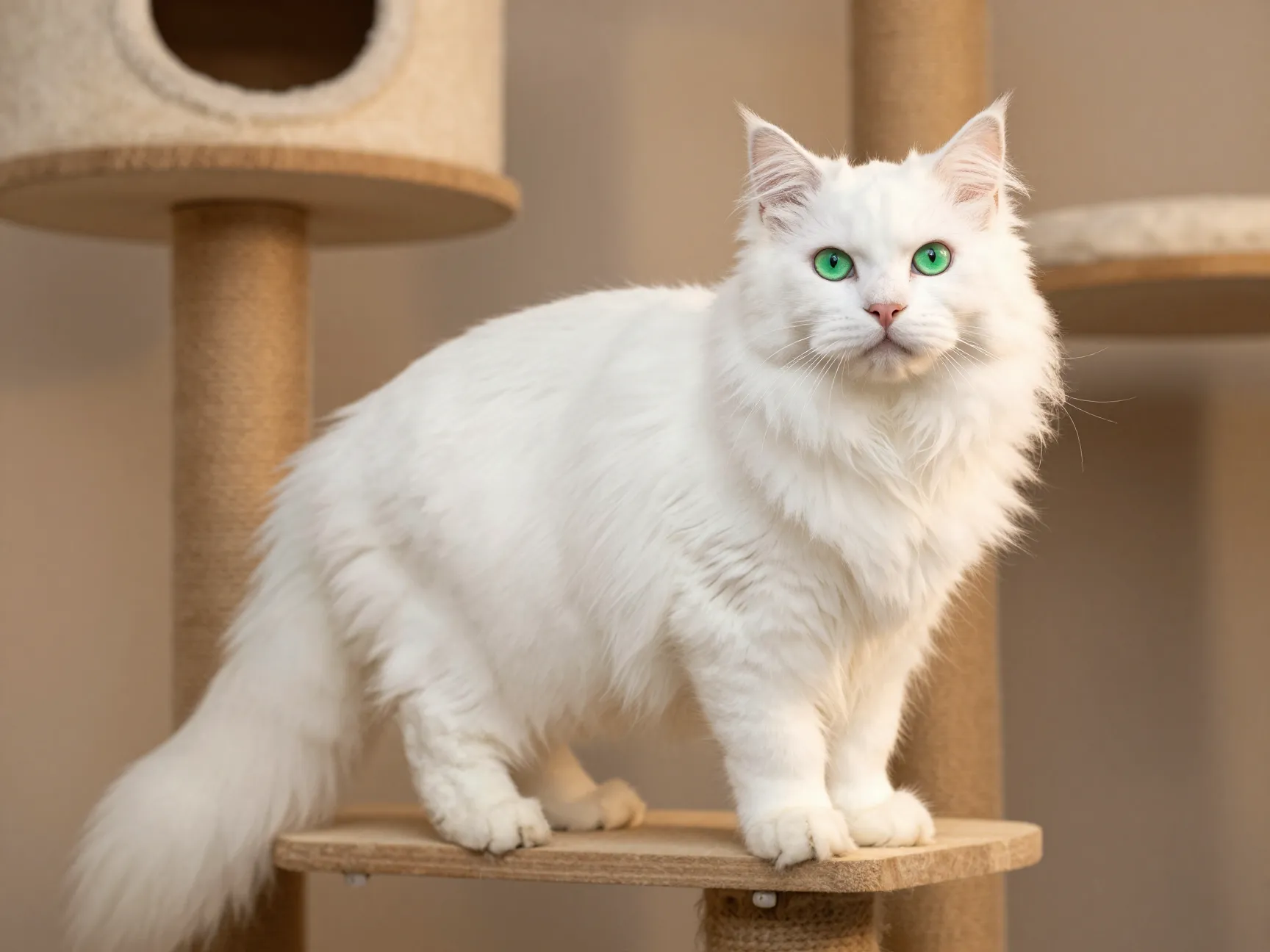
Norwegian Forest Cats bring a completely different silhouette to this list: large, muscular bodies, a thick double coat built for cold Scandinavian winters, and a bushy tail that often gets compared to a raccoon’s. Breed standards for this cat accept all eye colors, but bright emerald green eyes are frequently highlighted as a hallmark feature in breed descriptions, especially in solid white individuals, whose pale coat throws the green color into sharp visual contrast.
Grooming is more demanding here. The long, water-resistant topcoat and dense undercoat require brushing at least two to three times weekly, with more frequent attention during spring and fall shedding seasons. Personality-wise, Norwegian Forest Cats are gentle, patient, and good with children and other pets, making them a popular choice for multi-pet households. They are also skilled climbers, so tall cat trees or shelving are worth the investment.
4. Oriental Shorthair
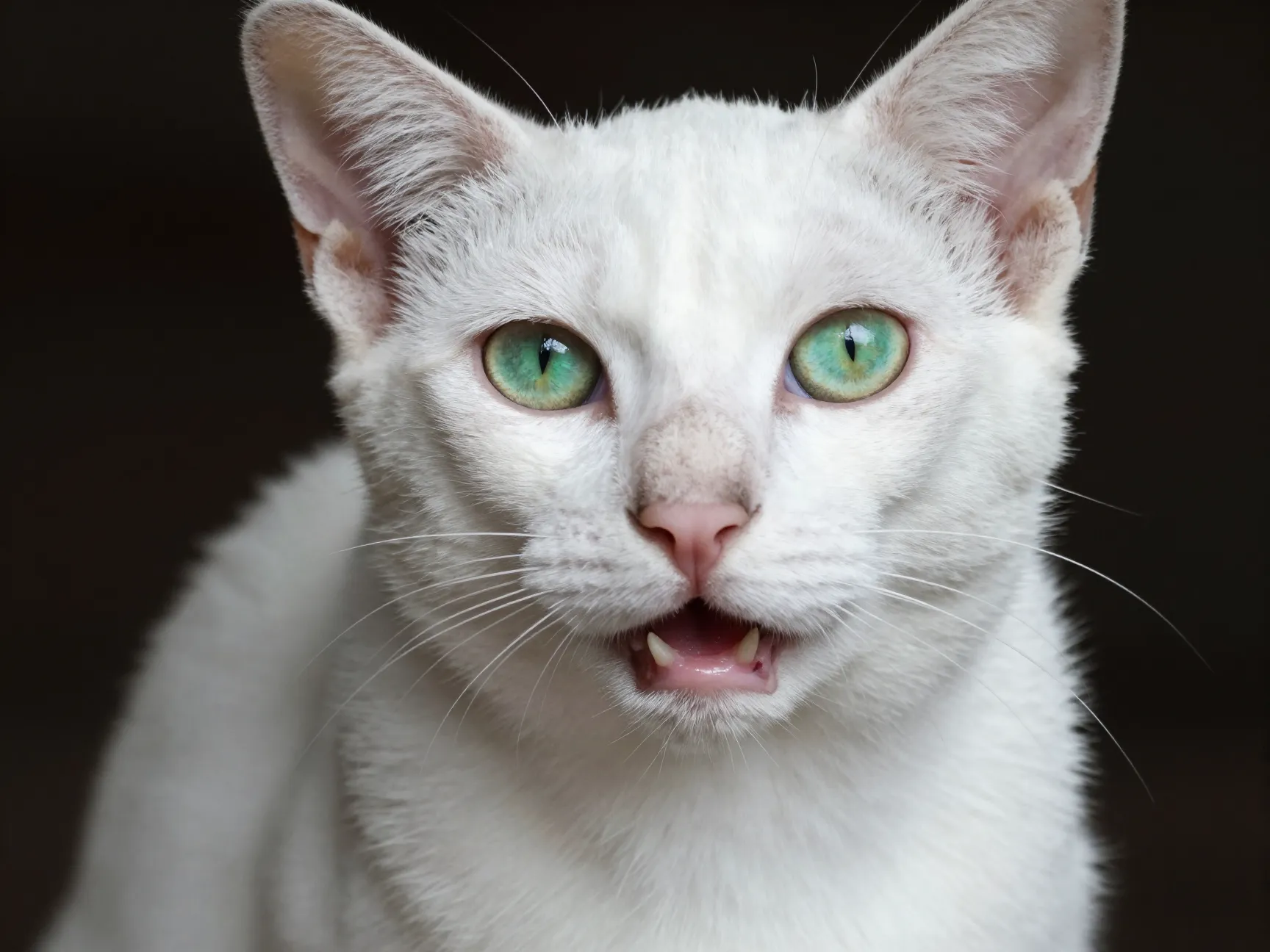
Oriental Shorthairs are close relatives of the Siamese, sharing the same wedge-shaped head and long, tubular body, but bred in a much wider range of colors and patterns, including solid white. Breed standards for Orientals typically call for green eyes as the default, though white individuals may occasionally show blue or odd-colored eyes due to the same white-masking genetics discussed earlier. This makes white Oriental Shorthairs one of the more reliable examples of the green-eyed white look within a single breed standard.
Their short, fine coat requires very little grooming, just an occasional wipe with a damp cloth to remove loose hair. What Oriental Shorthairs demand instead is attention. This is a vocal, extroverted, highly social breed that does not do well left alone for long stretches. They form close bonds with their families and often “talk” throughout the day, making them a good fit for people who want an interactive, conversational companion rather than an independent cat.
5. Khao Manee
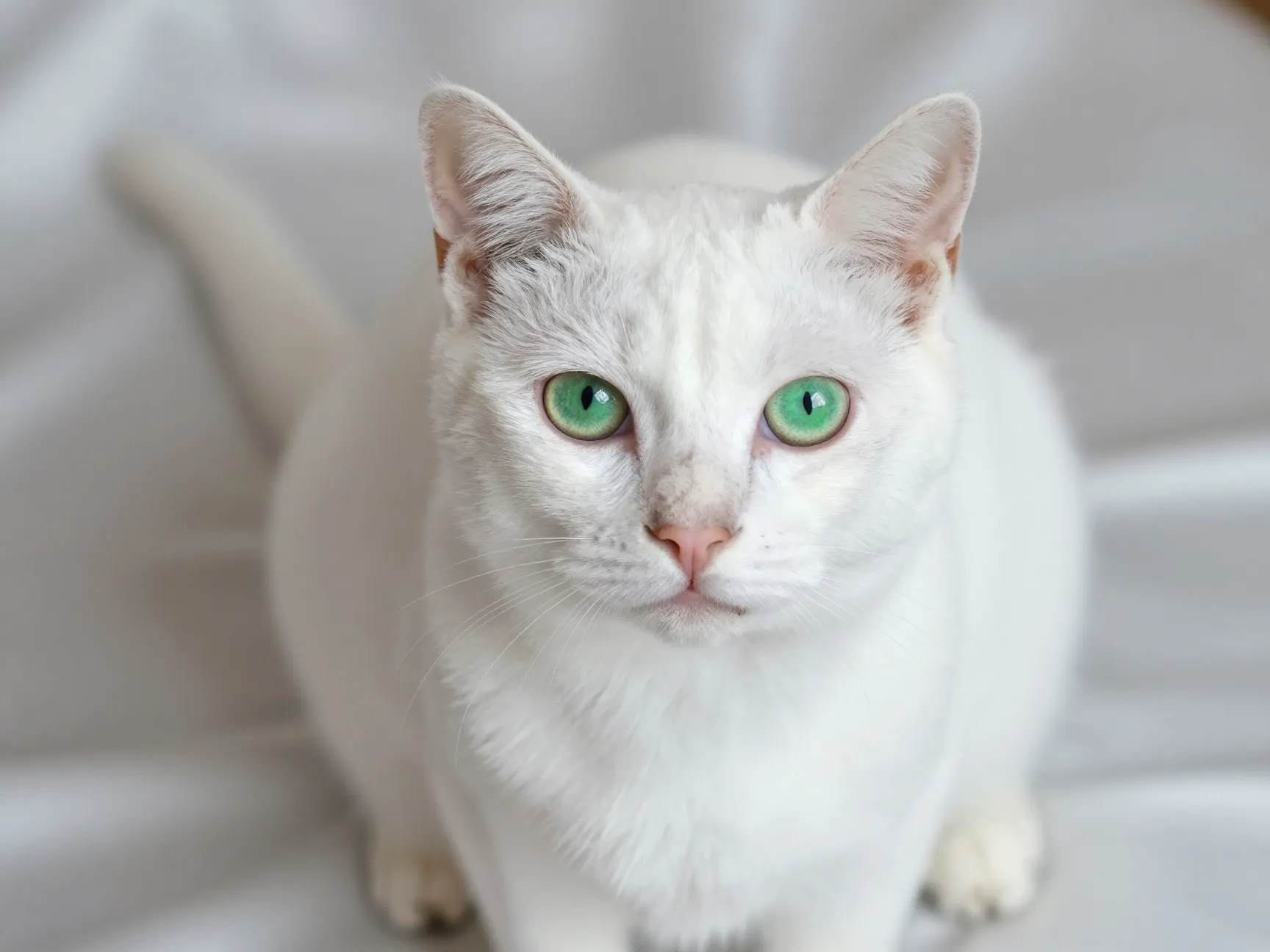
Known as the “White Jewel” of Thailand, the Khao Manee is a naturally occurring breed with a centuries-long history in Southeast Asia, once reserved for royalty. This breed is always solid white, and while its eyes can be blue, gold, green, or famously odd-eyed (one blue, one gold or green), green-eyed Khao Manees represent one of the purest expressions of this look because the coat color is fixed rather than variable.
The Khao Manee’s coat is short and requires minimal grooming, similar to other Southeast Asian breeds like the Siamese. Personality is lively, curious, and highly people-oriented; these cats are known for forming strong attachments and following their owners around the house. Because odd-eyed and blue-eyed variations exist within the same litters, prospective owners specifically wanting the green-eyed version should confirm eye color with breeders once kittens are old enough for permanent eye color to stabilize, usually around three to four months of age.
6. Turkish Van
The Turkish Van rounds out this list, though with a caveat worth noting: the breed’s hallmark pattern actually involves color only on the head and tail, with the body remaining white. However, all-white Turkish Vans do exist and are recognized in some registries, and when they occur, green or amber eyes are common alongside blue and odd-eyed variations. The semi-long, water-resistant coat and famously enthusiastic swimming behavior make this breed distinctive well beyond coat color.
Turkish Vans are active, athletic, and often described as dog-like in their loyalty and playfulness. Their coat lacks a heavy undercoat, so despite its length, it resists matting and needs brushing only once or twice weekly. This breed suits active households that can provide climbing structures, play sessions, and enough space for a genuinely energetic cat to burn off steam.
Comparing the 6 Breeds Known For That Stunning White Cat With Green Eyes Look
The table below summarizes the core differences among these six breeds, useful for anyone comparing options side by side before choosing a companion.
| Breed | Coat Length | Typical Eye Colors | Grooming Needs | Temperament |
|---|---|---|---|---|
| Russian White | Short, plush | Vivid green (standard) | Low | Reserved, loyal, quiet |
| Turkish Angora | Semi-long, silky | Green, blue, amber, odd | Moderate | Energetic, vocal, affectionate |
| Norwegian Forest Cat | Long, double coat | All colors, green common | High | Gentle, patient, playful |
| Oriental Shorthair | Short | Green (standard), blue in whites | Very low | Social, talkative, people-focused |
| Khao Manee | Short | Green, gold, blue, odd-eyed | Low | Curious, lively, attached |
| Turkish Van | Semi-long | Green, amber, blue, odd-eyed | Low to moderate | Active, athletic, dog-like |
Reviewing this table alongside individual breed sections makes it easier to weigh grooming commitment against temperament fit, which matters more for long-term satisfaction than eye color alone.
Health Considerations for White, Green-Eyed Cats
Beyond aesthetics, prospective owners should understand a few practical health points tied specifically to white coat genetics. First, the lower deafness risk associated with green eyes compared to blue eyes is well documented, but it is a statistical tendency, not an absolute guarantee. Reputable breeders of all six breeds discussed here should be able to provide BAER (Brainstem Auditory Evoked Response) test results for breeding cats and, ideally, kittens.
Second, white cats generally face a higher risk of sunburn and skin cancer on unpigmented skin, particularly on the ears and nose, since they lack the melanin that provides some natural UV protection. Indoor housing or supervised, shaded outdoor time reduces this risk substantially. Third, because the dominant white gene masks other color genes entirely, a white cat’s genetic background can be harder to predict; this makes working with breeders who test for breed-specific conditions, such as polycystic kidney disease in certain lines, especially important.
Finally, while the phrase “6 Breeds Known For That Stunning White Cat With Green Eyes Look” focuses on appearance, responsible ownership means treating that appearance as one factor among many, alongside temperament compatibility, activity level, and grooming realism.
Frequently Asked Questions
Are all six of these breeds guaranteed to have green eyes?
No. Only the Russian White and, in most cases, the Oriental Shorthair have green eyes as a strict breed standard requirement. The other four breeds accept a range of eye colors, with green being common but not universal, especially in solid white individuals.
Why do white cats have such a wide variety of eye colors?
The dominant white gene reduces melanin in the iris to varying degrees. Depending on how much pigment remains, eyes can appear blue, green, gold, copper, or even two different colors in the same cat, a trait called odd-eyed.
Is a green-eyed white cat healthier than a blue-eyed one?
Not healthier overall, but green-eyed white cats do have a statistically lower rate of congenital deafness than blue-eyed white cats, based on the specific genetic pathway involved. Other health factors are unrelated to eye color.
Which of these six breeds requires the least grooming?
The Oriental Shorthair and Khao Manee both have short coats that need minimal upkeep, making them good choices for people who want the look without a heavy grooming routine.
Can mixed-breed cats also have this look?
Yes. The white coat and green eye combination is a genetic outcome, not something exclusive to purebred cats. Many shelter and rescue cats display this same striking appearance.
Conclusion
The 6 Breeds Known For That Stunning White Cat With Green Eyes Look, Russian White, Turkish Angora, Norwegian Forest Cat, Oriental Shorthair, Khao Manee, and Turkish Van, each arrive at the same striking visual result through slightly different genetic and historical paths. Some, like the Russian White and Oriental Shorthair, hold green eyes as a written breed standard. Others, like the Norwegian Forest Cat and Khao Manee, offer green eyes as one appealing possibility among several accepted variations.
Anyone drawn to this look should move beyond appearance alone. Compare grooming demands, temperament, and activity needs against daily routine and living space before choosing a breed. Equally important, work with breeders who perform hearing tests and disclose health screening results, since the same genetics that create that vivid green-eyed, snow-white appearance also carry specific, well-documented health considerations. Whether the choice lands on a reserved Russian White or an athletic Turkish Van, understanding the biology behind the look leads to a better-informed, healthier match between cat and owner.