Sketch Ideas For Animals When You’re Feeling Uninspired
A blank sketchbook page can feel louder than a crowded room. Ask any working illustrator and they will admit that the hardest animal to draw is not a lion or a hummingbird. It is the first mark on an empty sheet when the brain refuses to cooperate. Creative block is not a character flaw. It is a predictable, well-documented part of the drawing process, and animal subjects are especially prone to triggering it because artists often feel pressure to get anatomy “right” before they even pick up a pencil. This guide breaks down six sketch ideas for animals when you’re feeling uninspired, pulled from sketchbook educators, museum art programs, and daily-drawing communities that have spent years studying exactly how artists climb out of a creative slump.
Disclosure: This post contains affiliate links. As an Amazon Associate, we earn from qualifying purchases, and at no extra cost to you.
The goal here is not perfection. It is momentum. Each of the six prompts below is designed to lower the stakes, shorten the time commitment, and give the hand something specific to do while the imagination catches up. By the end of this article, there will be no excuse left for staring at an empty page.
Key Takeaways
- Animal sketching ideas work best when they remove the pressure for realism and focus on small, specific tasks like a paw, a tail, or a five-second gesture pose.
- Drawing the same animal five different ways, such as from memory, a photo, or the non-dominant hand, builds skill while keeping sessions playful.
- Quick, time-boxed exercises, often two to five minutes per sketch, are proven tools for breaking through artistic block according to multiple sketchbook educators.
- Narrative prompts, like imagining what story an animal is telling, add emotional engagement that pure technical practice often lacks.
- Random prompt generators and daily drawing wheels can eliminate choice paralysis, which is frequently the real reason artists feel stuck.
Why Creative Block Hits Animal Sketchers Hardest
Animal subjects carry a unique kind of pressure compared to still life or landscape work. Fur, feathers, and fluid movement demand both observation skills and confident mark-making, and many artists freeze because they expect finished-gallery-quality results from a warm-up sketch. Sketchbook educators who study this problem consistently point to one fix: shrink the task. Instead of “draw a tiger,” the brief becomes “draw a tiger’s paw for ninety seconds.” That single shift, from whole-animal realism to a narrow, low-stakes detail, is the foundation behind nearly every strategy in this article.
Research-style curation from sketchbook communities, including large prompt banks with dozens of animal-specific suggestions, shows a clear pattern. The prompts that actually get used are specific, time-limited, and forgiving of mistakes. Vague instructions like “draw an animal” rarely work because the brain has too many options and defaults to doing nothing. Specific instructions like “draw three quick gesture poses of a running dog” work because there is nothing left to decide. The six sketch ideas for animals when you’re feeling uninspired below follow that exact formula.
6 Sketch Ideas For Animals When You’re Feeling Uninspired
Each of the following prompts can be completed in under fifteen minutes, which means there is no real barrier to trying all six in a single sitting. They are ordered roughly from quickest and most forgiving to slightly more involved, so artists can start wherever their energy allows.
1. Sketch a Sleeping Pet in Three Quick Poses
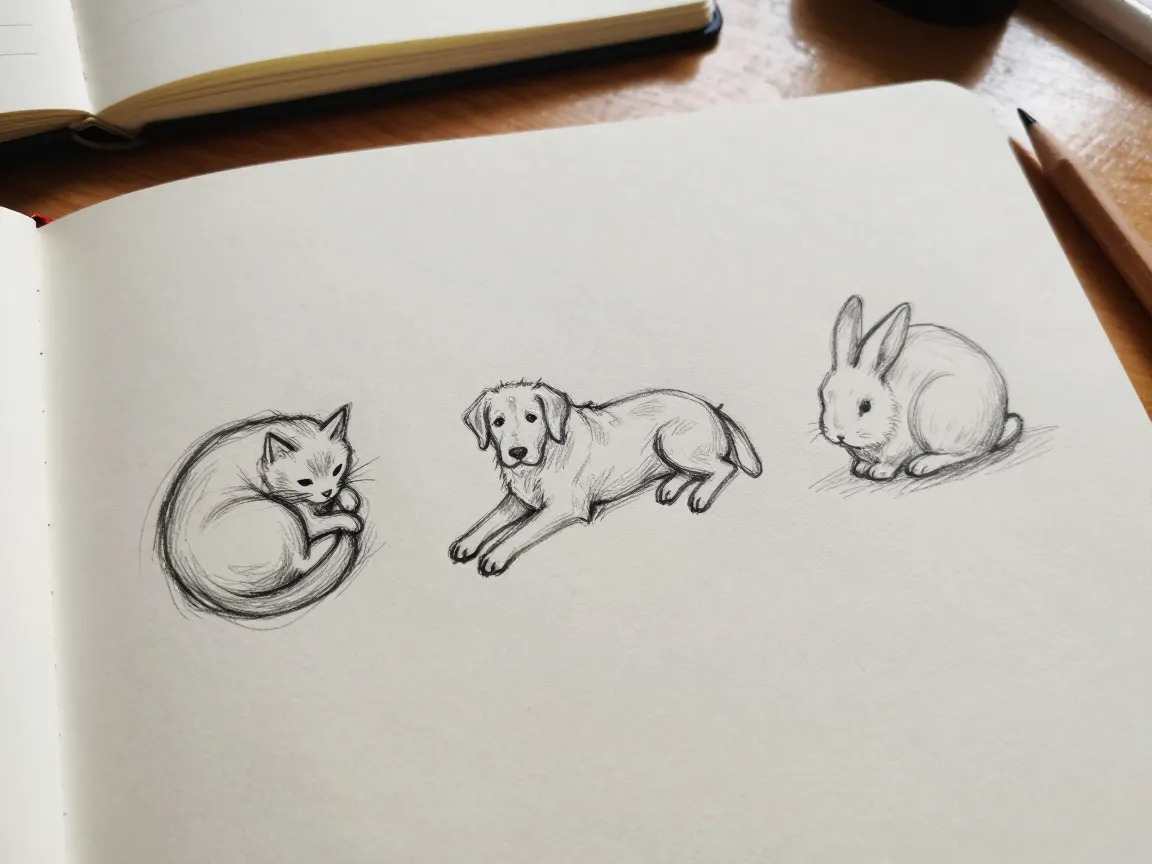
A sleeping animal is the single most forgiving subject available to any artist. There is no motion to capture, no tricky joint angles, and no need to guess at musculature because the body is curled, relaxed, and soft-edged. Curated sketchbook idea lists consistently recommend this as a go-to starting exercise precisely because it removes the two biggest sources of anxiety: movement and proportion.
To try this, find a photo of a cat or dog curled into a circle, a dog sprawled flat on its side, or a rabbit tucked into a tight ball. Spend no more than four minutes per pose and resist the urge to erase. The point is not an anatomically perfect pet. The point is reconnecting the hand to the page without judgment. Many artists report that after two or three of these quick sleeping-pet studies, the fear of starting fades and the next, slightly harder sketch becomes much easier.
2. Zoom In on One Small Body Part
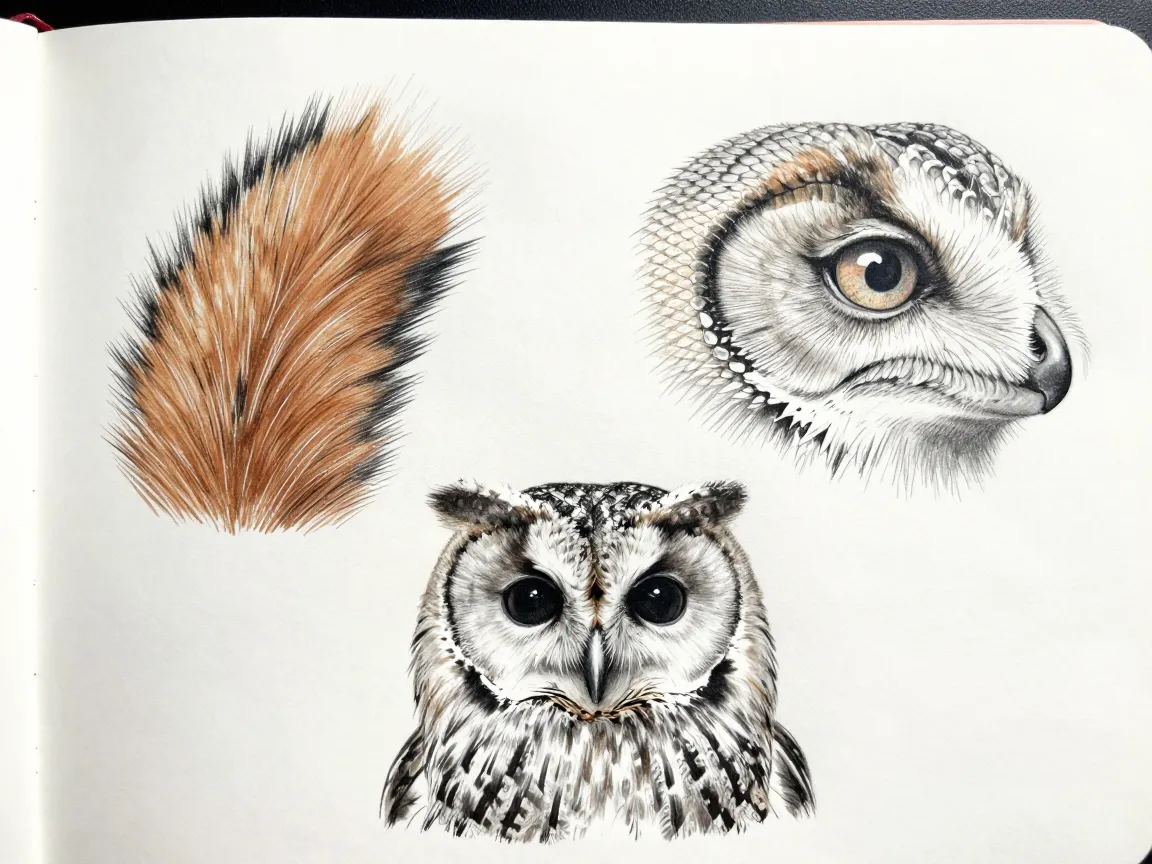
Instead of attempting a full animal, pick a single piece of it. A paw with its pads and claws. A tail with its specific fur pattern. An eye surrounded by feathers or fur. A beak catching light from one angle. This is a favorite technique among sketchbook educators who describe it as training the eye to work like a “science detective,” noticing texture, edge, and shadow rather than worrying about the whole creature.
This idea works particularly well for anyone intimidated by full-body anatomy. A fox’s tail alone can take up an entire small page and still feel like a complete, satisfying drawing. Try picking three different textures in one sitting, such as smooth scales, coarse fur, and soft downy feathers, and sketch each for five minutes. This builds genuine observational skill while sidestepping the pressure of composing a whole animal.
3. Draw One Favorite Animal Five Different Ways
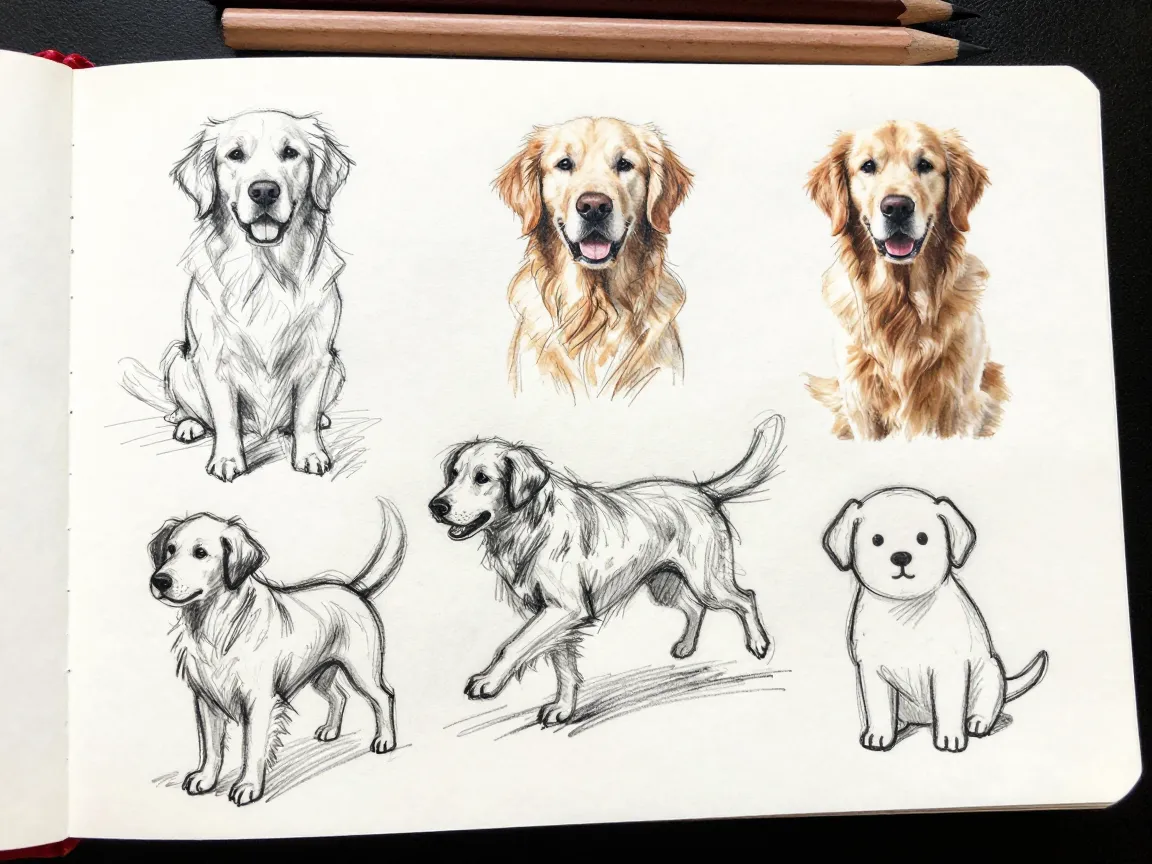
This prompt turns a single subject into five separate mini-challenges, and it is one of the most frequently recommended animal sketching ideas among sketchbook coaches. Pick one animal, something personally meaningful works best, and draw it:
- From life, if a pet or local animal is available.
- From a reference photo.
- From a paused video frame, which captures an unusual mid-motion pose.
- Using the non-dominant hand, which forces loose, playful lines.
- Entirely from memory, with no reference at all.
The value here is contrast. The memory version will look nothing like the photo version, and that is the point. Seeing five wildly different interpretations of the same animal on one page is often the moment artists realize perfection was never the goal. According to several sketchbook-prompt educators, this exercise is particularly effective for intermediate artists who have grown too reliant on reference images and want to rebuild confidence in memory-based drawing.
4. Capture Movement With Gesture Drawing
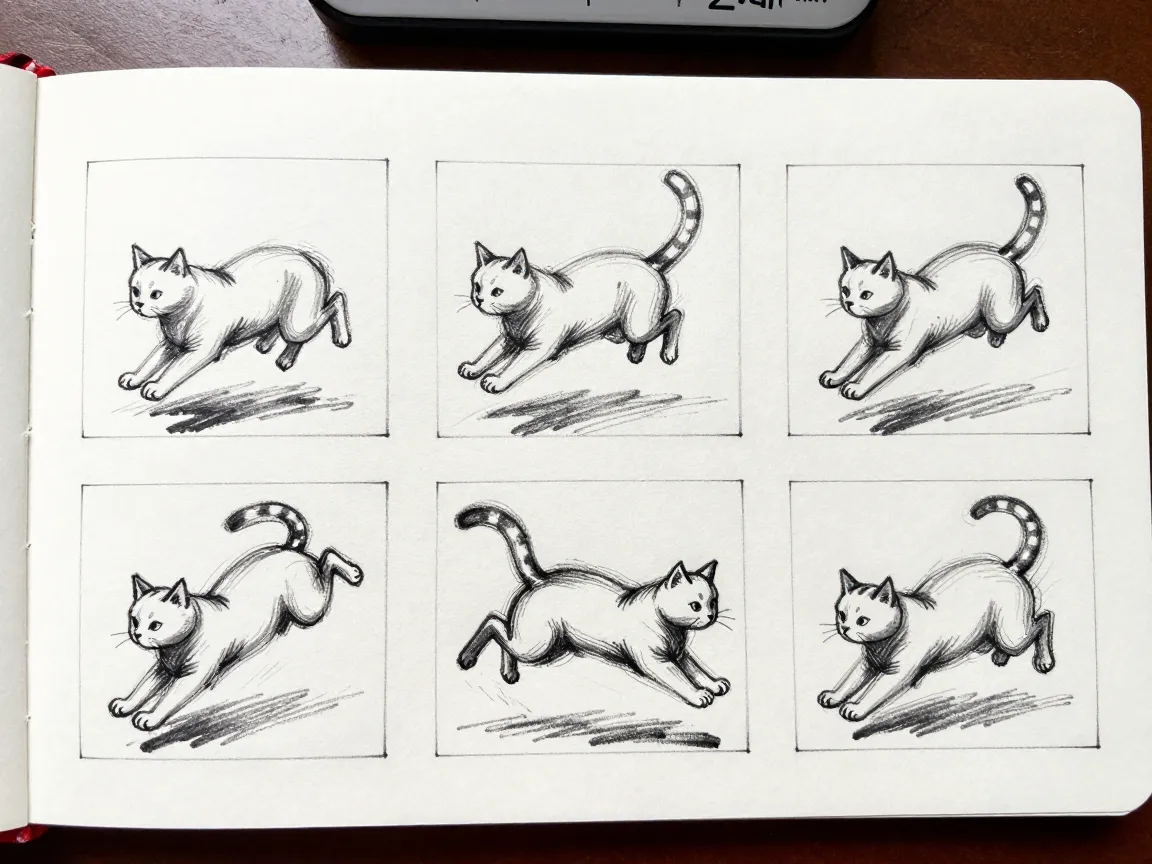
Static poses are easier, but dynamic ones build far more skill, and they are often more fun once the fear of a “wrong” line is removed. Gesture drawing means capturing the energy of a pose in ten to thirty seconds, using loose, confident strokes rather than careful outlines. Think of a cat leaping, a bird taking off, a horse mid-gallop, or a dog rolling in grass.
Sketchbook theme guides built around animal anatomy consistently list gesture drawing as a core technique because it trains the artist to see the whole shape of movement before worrying about detail. A simple way to practice this is to find a short video clip of an animal in motion, pause it every few seconds, and spend no more than twenty seconds sketching each paused frame. The sketches will look rough. That roughness is exactly what makes gesture drawing valuable; it strips away the pressure to finish and leaves only the challenge of capturing motion.
A quick comparison of gesture drawing versus detailed studies shows why both have a place in a sketchbook practice:
| Approach | Time per sketch | Best for | Pressure level |
|---|---|---|---|
| Gesture drawing | 10 to 30 seconds | Movement, energy, loosening up | Low |
| Detail study (paw, tail, eye) | 3 to 5 minutes | Texture, observation skills | Low to moderate |
| Full animal from reference | 15 to 40 minutes | Proportion, structure | Moderate to high |
| Hybrid or imaginative creature | 10 to 20 minutes | Creativity, play | Very low |
5. Invent a Hybrid or Storytelling Creature
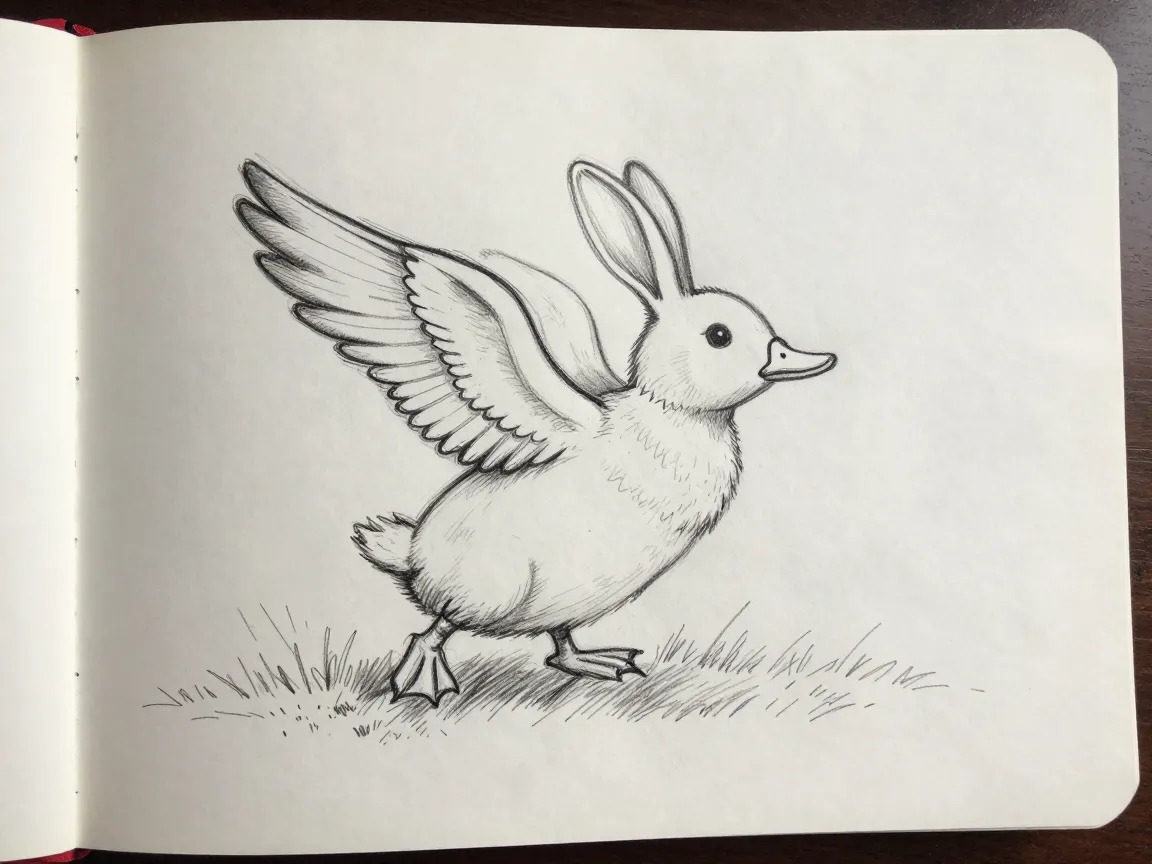
When technical pressure is the real blocker, invention is often the fastest escape route. Combine two animals into one creature, a rabbit with duck wings, a fox with an owl’s face, or a deer with butterfly markings. Because hybrid creatures do not exist in reality, there is no “correct” version to compare against, which removes nearly all performance anxiety.
Museum-backed education resources that build animal sketchbook curricula often push this one step further by asking artists to think about story rather than just form. What is this creature doing? Where does it live? What is it afraid of? Framing a sketch around a tiny narrative, even a single sentence of backstory, tends to produce looser, more expressive linework than a purely technical study. Art-education prompt collections aimed at students report similar results when animals are given playful scenarios, such as an animal taking a human for a walk, living inside a kitchen appliance, or playing in a tiny orchestra. The absurdity is intentional. It bypasses the internal critic that usually shows up when a drawing is expected to look “realistic.”
6. Let a Random Prompt Pick the Animal
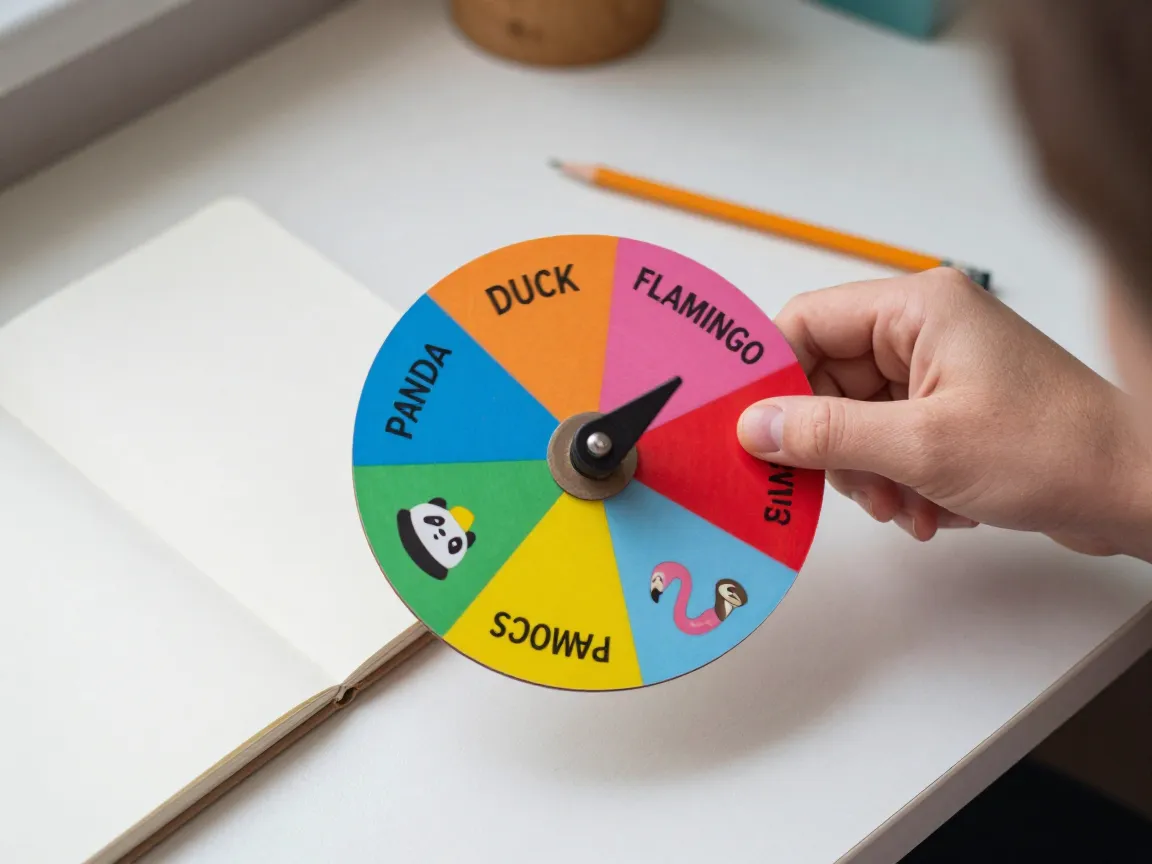
Sometimes the real obstacle is not skill or inspiration. It is decision fatigue. Staring at an infinite list of possible animals to draw can be more paralyzing than staring at a blank page. This is where random prompt tools earn their place in a sketchbook routine. Spinning wheels that land on a panda, duck, sloth, or flamingo, or scrolling through a daily prompt archive that assigns a single animal like a goose or a frog, remove the decision entirely.
The appeal of this method is speed. There is no deliberation, no second-guessing which animal is “worth” drawing. A number or a wheel decides, and the artist simply responds. Many daily-drawing communities built entire habits around this exact mechanic, assigning one animal per day for months at a time. Over a year, that consistency builds far more skill than occasional, carefully planned sessions ever could, simply because the barrier to starting drops to almost zero.
Making the Most of These 6 Sketch Ideas For Animals When You’re Feeling Uninspired
Trying one of these prompts occasionally will help in the moment, but turning them into a small rotating system produces lasting results. A simple weekly structure might look like this:
- Monday: quick sleeping-pet pose, three sketches, four minutes each.
- Wednesday: one small body-part study, chosen at random.
- Friday: gesture drawing session using a short animal video clip.
- Weekend: one favorite animal, five different ways, or a hybrid creature invention session.
The specific schedule matters less than the pattern itself: short, low-pressure, frequent sessions beat rare, high-pressure attempts at a “perfect” animal drawing. Sketchbook coaches who track long-term skill growth consistently find that artists who use quick, playful prompts several times a week improve faster than those who wait for a burst of inspiration before drawing at all.
It also helps to keep a small running list of animals, textures, and poses noticed throughout the day. A dog shaking off water, a bird perched oddly on a wire, a cat stretching across a sunbeam. These everyday observations become the raw material for the next uninspired day, turning the search for a sketch idea into something that happens automatically rather than something that requires fresh motivation every single time.
Frequently Asked Questions
What is the fastest way to beat a creative block when sketching animals?
Shrink the task. Instead of a full animal, sketch a single paw, tail, or sleeping pose for under five minutes. Lower stakes almost always restart motivation faster than waiting for inspiration to appear on its own.
Do these sketch ideas work for beginners?
Yes. Several of the six ideas, particularly sleeping pets and simple shape-based studies, were specifically designed for new or blocked artists because they avoid complex anatomy and focus on forgiving, rounded forms.
How long should an animal warm-up sketch take?
Most effective warm-up prompts run between two and five minutes. Gesture drawings can be as short as ten seconds. The short time limit is intentional; it prevents overthinking and keeps the session light.
Is it better to draw from a photo or from memory?
Both have value. Photos build accuracy, while memory sketches build confidence and looseness. Rotating between the two, as described in the “five different ways” prompt, develops a more complete skill set than relying on just one method.
What if nothing on this list sounds appealing today?
Try a random prompt generator or an animal-drawing wheel instead. Removing the decision of which animal to draw often solves the block faster than searching for the “right” idea.
Conclusion
Running out of animal ideas is rarely about a lack of imagination. It is almost always about pressure, whether that is pressure to achieve realism, pressure to pick the “best” subject, or pressure to produce something finished. The six sketch ideas for animals when you’re feeling uninspired outlined here, sleeping pets, close-up body parts, one animal drawn five ways, gesture-based movement studies, hybrid storytelling creatures, and random prompt selection, work because each one removes a different type of pressure while still building real skill.
The next step is simple. Pick whichever idea feels least intimidating right now, set a timer for five minutes, and start. No reference check, no planning, no second-guessing the subject. The page will not stay blank for long once the first small, forgiving sketch is underway, and that single sketch is usually all it takes to break the slump wide open.