Adorable Red Panda Art Sketches To Warm Your Heart
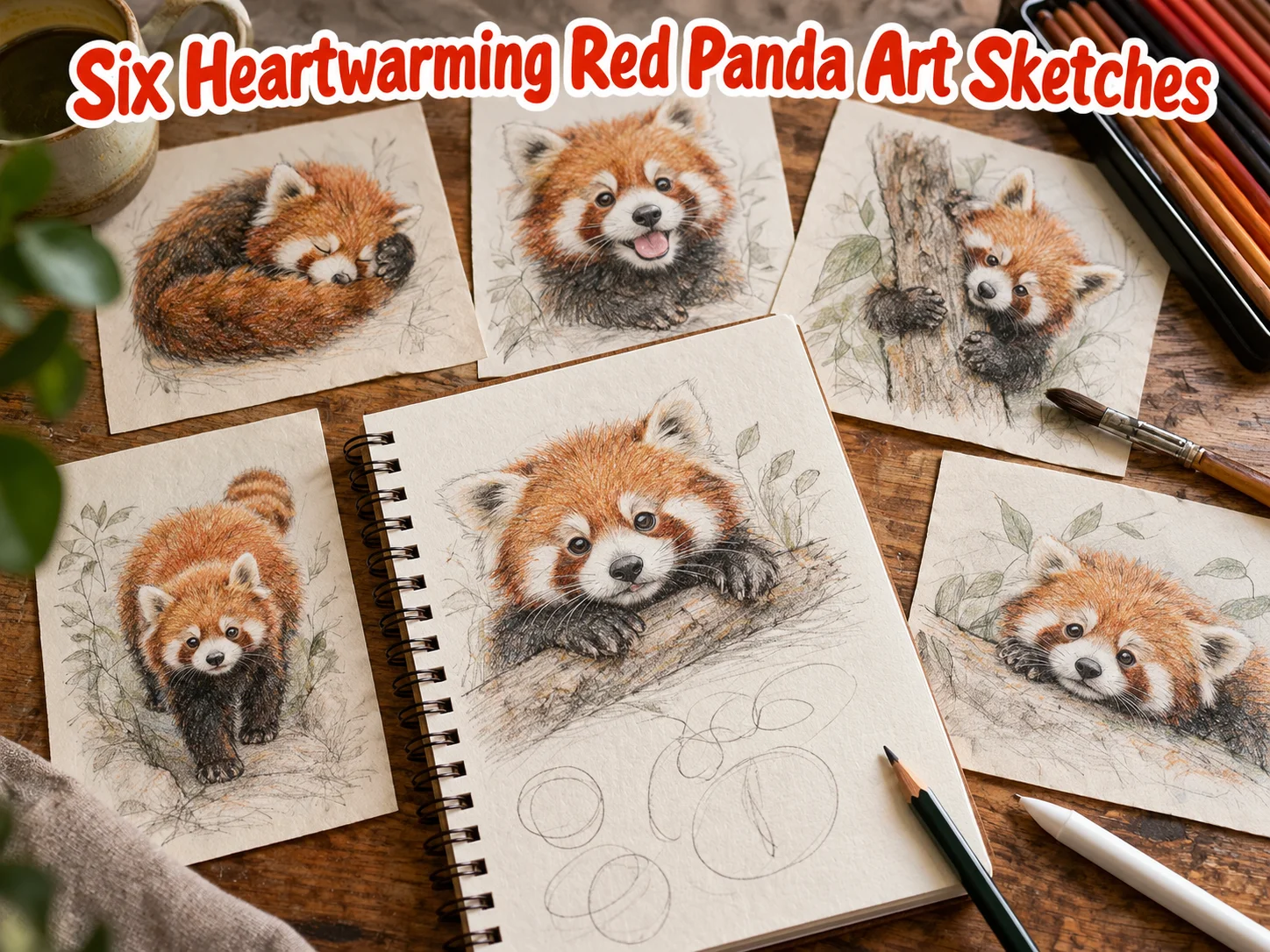
A single red panda drawing posted online can rack up tens of thousands of likes within hours, and stock art libraries now list thousands of panda-themed illustrations because demand simply will not slow down. That appetite for fluffy, round-eyed charm is exactly why this roundup of 6 Adorable Red Panda Art Sketches To Warm Your Heart exists. Whether the goal is finding inspiration, learning a new drawing technique, or simply enjoying cute animal art during a stressful week, these six sketch styles show why red pandas have become one of the internet’s favorite subjects to draw, paint, and share.
Disclosure: This post contains affiliate links. As an Amazon Associate, we earn from qualifying purchases, and at no extra cost to you.
Red pandas are not actually closely related to giant pandas, but their rust-colored fur, white-rimmed ears, and curled tails give artists endless material to work with. From quick pencil doodles to polished digital illustrations, each sketch style on this list brings something different to the table. This guide breaks down what makes each approach special, the tools artists typically use, and simple tips for recreating the look at home.
Key Takeaways
- Red panda art sketches remain popular because the animal’s round face, big ears, and curled tail naturally create a “cute” visual formula artists love to use.
- The six featured styles range from beginner-friendly oval-based pencil sketches to advanced vector illustrations with gradient-shaded ears.
- Traditional tools like toned paper and colored pencils can make a sketch feel warmer and more emotionally inviting.
- Digital programs such as vector editors and tablet apps like Procreate allow artists to build detailed, shareable red panda characters quickly.
- Anyone can start sketching a red panda today using simple shapes: a circle for the head, an oval for the body, and small half-circles for the ears.
Why Red Panda Art Sketches Are Capturing Hearts Everywhere
Cute animal illustrations are nothing new, but red pandas have carved out a specific niche. Their proportions already lean toward “adorable” by default: a round head, oversized ears, short limbs, and a thick ringed tail. Artists do not need to exaggerate much to make a red panda look endearing, which is part of why this animal shows up so often in beginner tutorials and professional portfolios alike.
Market data backs up the trend. Stock illustration sites host thousands of panda-related clip art pieces, and dedicated marketplaces sell red panda artwork as a standalone category. That level of commercial interest signals something important for artists and hobbyists: there is a real audience hungry for fresh red panda content, and sketching one well can open doors for shared art, commissions, or simply a mood-boosting creative project.
Part of the appeal also comes from flexibility. A red panda sketch can be as simple as a few pencil ovals or as detailed as a fully shaded digital illustration with gradient fur. This range makes the subject approachable for total beginners while still offering room for advanced artists to push realism, color theory, or character design further. The following six styles reflect that spectrum.
6 Adorable Red Panda Art Sketches To Warm Your Heart
This section walks through six distinct approaches artists use when tackling red panda subjects. Each one pulls from real tutorials, community art, and professional techniques, so the list doubles as both inspiration and a loose how-to guide. The goal across every example in 6 Adorable Red Panda Art Sketches To Warm Your Heart is the same: capture that unmistakable warmth and charm red pandas bring to a page.
1. The Classic Oval-Based Pencil Sketch
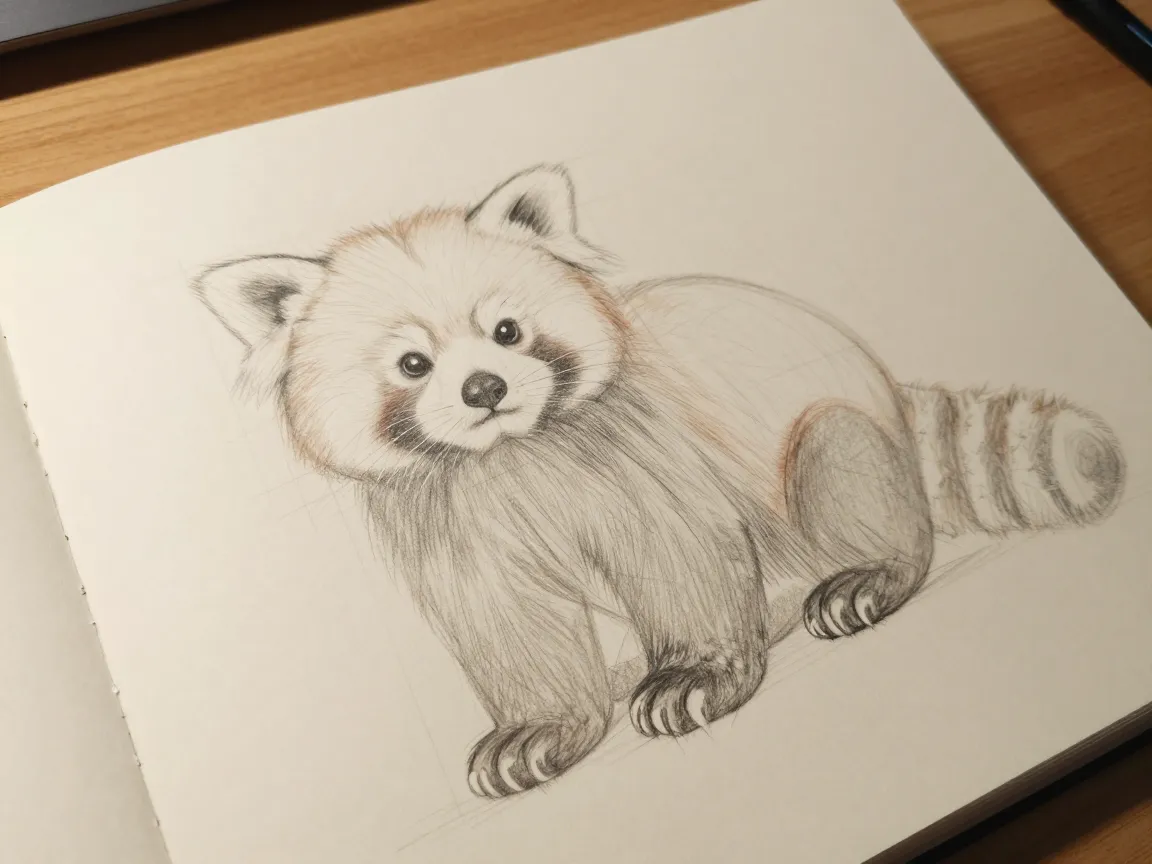
This is the most beginner-friendly style on the list and the foundation many artists return to even after years of practice. The technique starts with basic shapes: a circle for the head, a larger oval for the body, smaller ovals for the hands and feet, and two rounded shapes for the ears. Once the skeleton is in place, the artist refines the outline, adds facial features, and layers in fur texture with light, feathery pencil strokes.
What makes this style so charming is its simplicity. Because the construction lines are so basic, the final sketch keeps a soft, approachable look rather than a stiff or overly technical one. Traditional tutorials that teach this method emphasize working slowly and lightly at first, since early marks are easy to erase and adjust before committing to darker lines. This approach works especially well for anyone new to animal anatomy, since red pandas forgive small proportion mistakes thanks to their naturally round features.
2. The Digital Vector Illustration With Gradient Ears
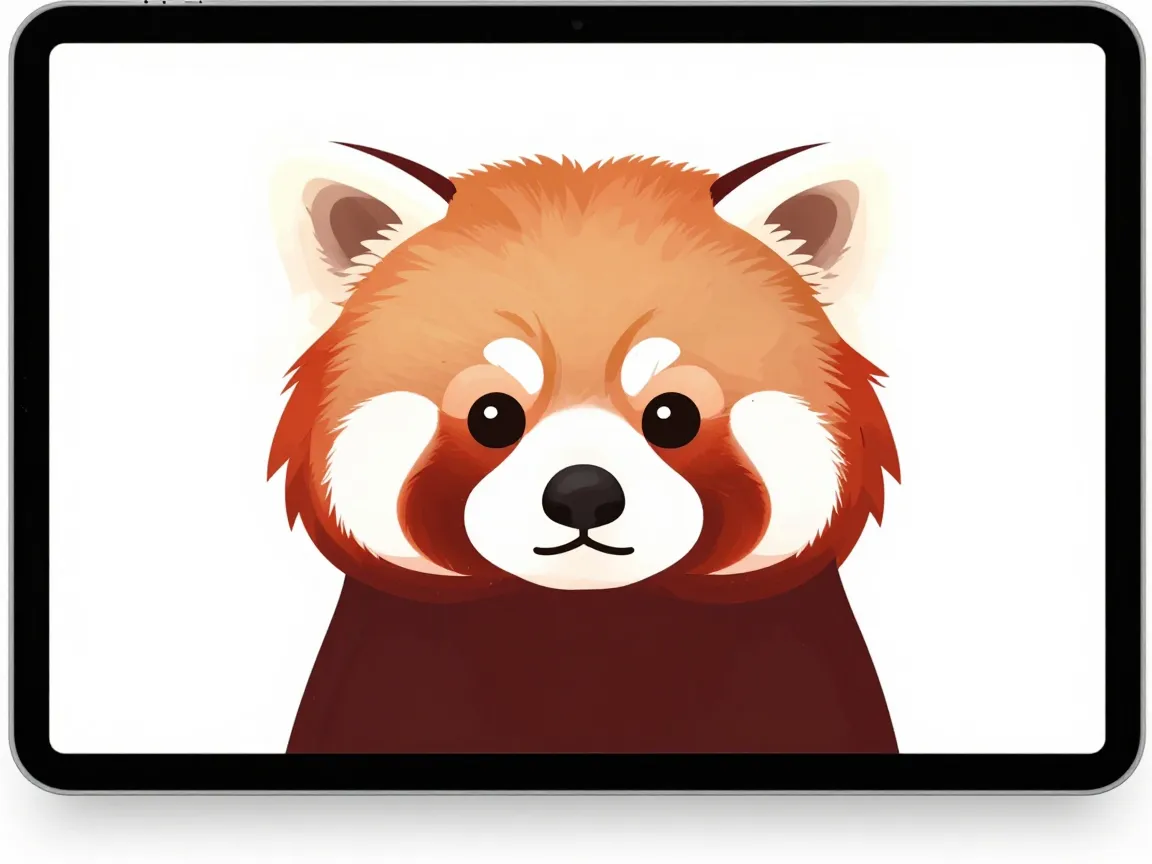
For artists working in programs built around vector tools, red panda sketches take on a cleaner, more polished look. This style relies on shaping and duplicating basic forms, particularly for the ears, which are often rendered with smooth color gradients rather than flat fill. A common technique uses a warm tan-to-white gradient on the inner ear and a deep brown-to-coral gradient on the outer edge, giving the ears a soft, almost glowing quality.
Vector-based red panda art tends to look sharper and more consistent than hand-drawn work, which makes it popular for logos, stickers, and app icons. The trade-off is a steeper learning curve, since artists need to understand anchor points, paths, and layering before the illustration starts to look professional. Still, once the basic shapes are mastered, duplicating and adjusting them to create variations, like a wide-eyed version or a sleepy version, becomes fast and efficient.
3. The Side-View Character Sketch
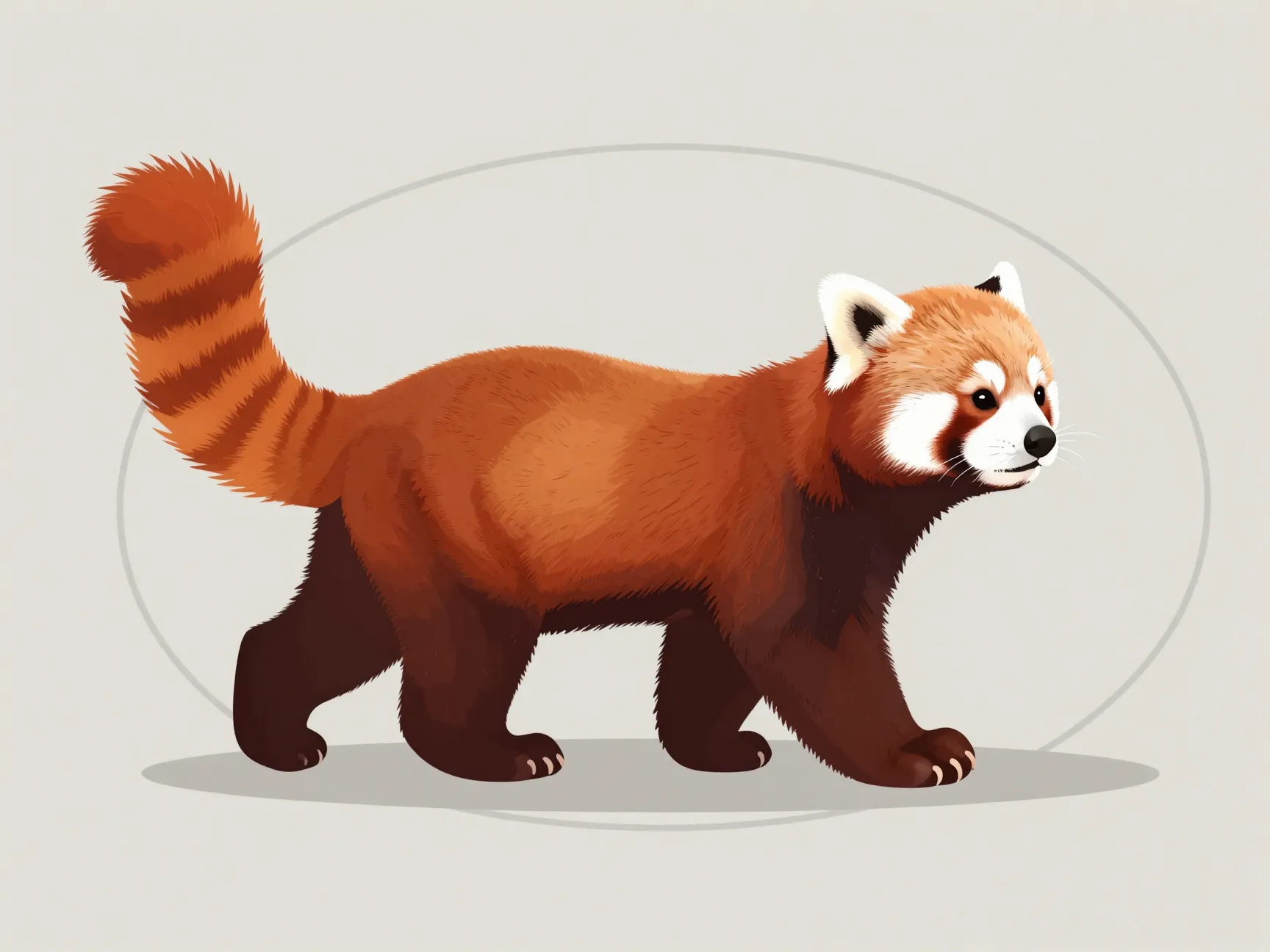
Side-view red panda sketches focus on capturing the animal’s distinctive silhouette, especially its curled tail and angled body posture. This style typically begins with a circle for the head and a larger, angled oval for the body, connected with simple guideline strokes. From there, the artist adds tail stripes, facial markings, and limb details before moving into color.
This approach is especially useful for artists who want to practice storytelling through pose. A side view naturally suggests movement or personality, like a red panda mid-walk or caught looking over its shoulder. Coloring guides for this style usually stick to three main tones: a warm orange for the body, soft gray for the face and belly, and dark brown for the paws and ear tips. Because the color palette is simple, the sketch stays easy to follow even for viewers who are not familiar with red pandas.
“The simplest shapes often produce the warmest results. A red panda sketch does not need complex anatomy to feel alive; it needs personality in the eyes and softness in the lines.”
4. The Colored Pencil Portrait on Toned Paper
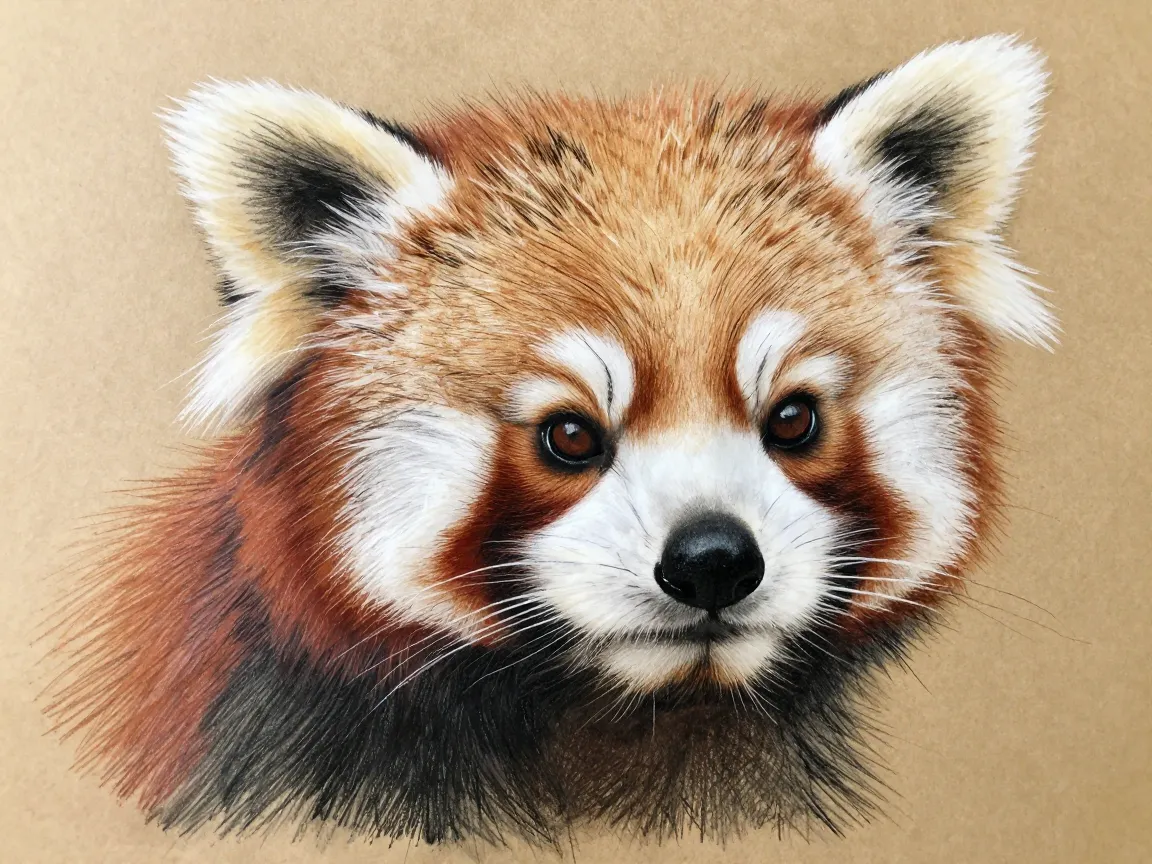
Traditional artists have found that toned paper, often tan, gray, or warm beige, adds an instant layer of warmth to animal portraits. Working on colored paper means the artist no longer needs to fill in every background detail with pencil; the paper itself becomes part of the color story. For red pandas specifically, a tan or light brown base paper pairs naturally with the animal’s fur tones, reducing the amount of shading needed to make the piece look rich and complete.
This style typically focuses tightly on the face, highlighting the distinctive white and brown facial markings that make each red panda look slightly different from the next. Artists build up color in layers, starting with the lightest tones and gradually adding darker browns and blacks around the eyes and nose. The result feels more like a detailed study than a quick doodle, which is part of why toned-paper portraits are often shared as standalone art pieces rather than tutorial examples.
5. The Watercolor and Ink Wash Sketch
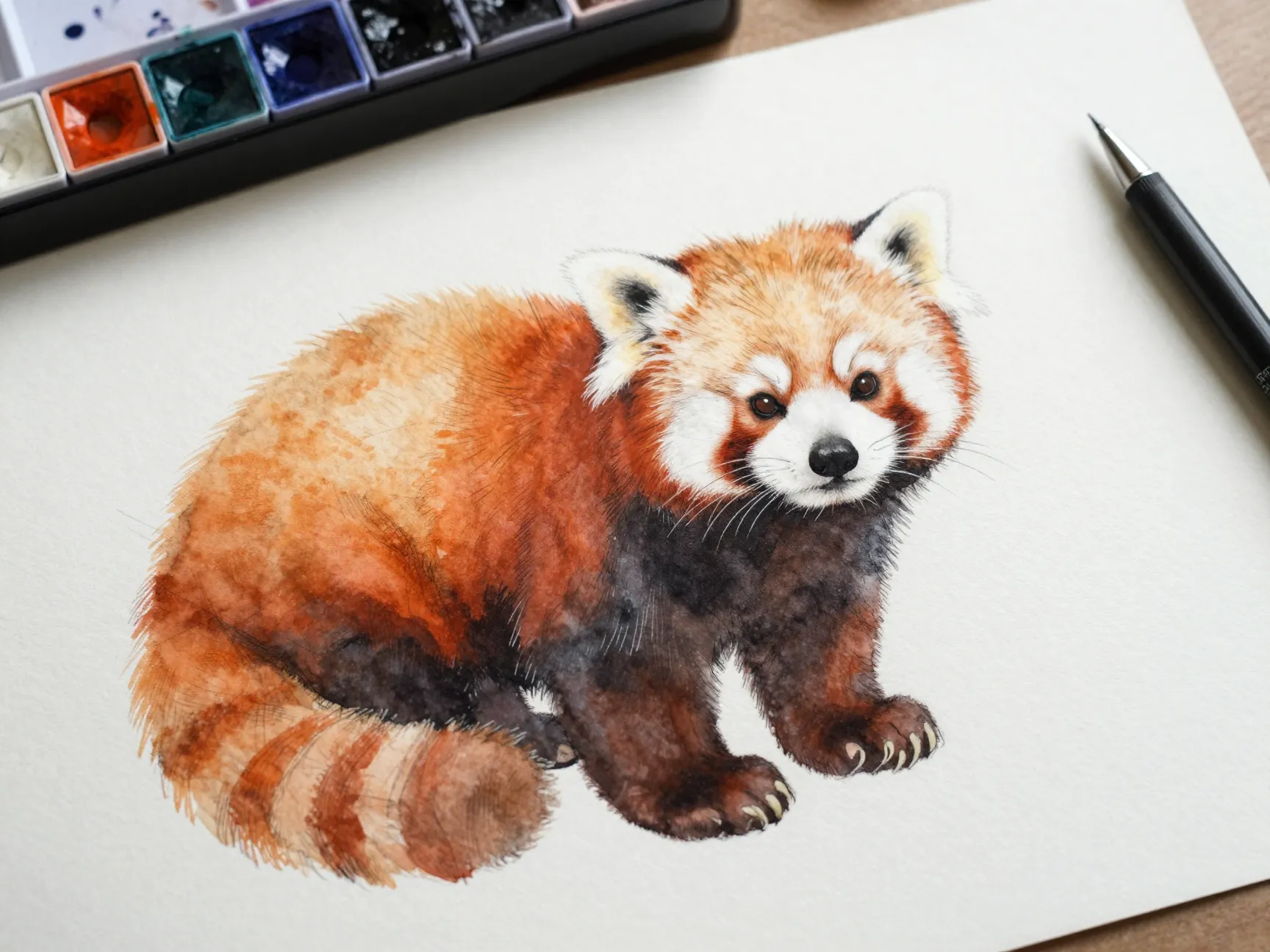
Watercolor and ink approaches trade precision for mood. Instead of carefully outlining every shape, artists using this style often begin with very light pencil guides, just enough to establish where the head, body, and limbs will sit, before moving straight into paint. Simple circles and ovals still form the underlying structure, but the final look is softer and less defined than a pencil or vector sketch.
This method is frequently recommended for beginners because light, loose ink and watercolor marks are forgiving. Mistakes blend into the overall texture rather than standing out as obvious errors. The warm orange and brown tones used for red panda fur also happen to work beautifully with watercolor, since the paint naturally pools and blends to create a soft, fuzzy texture that mimics real fur. Many artists finish these pieces with a thin ink outline once the paint has dried, adding just enough definition to bring the face and features into focus.
6. The Big-Eyed Cartoon or Chibi Sketch
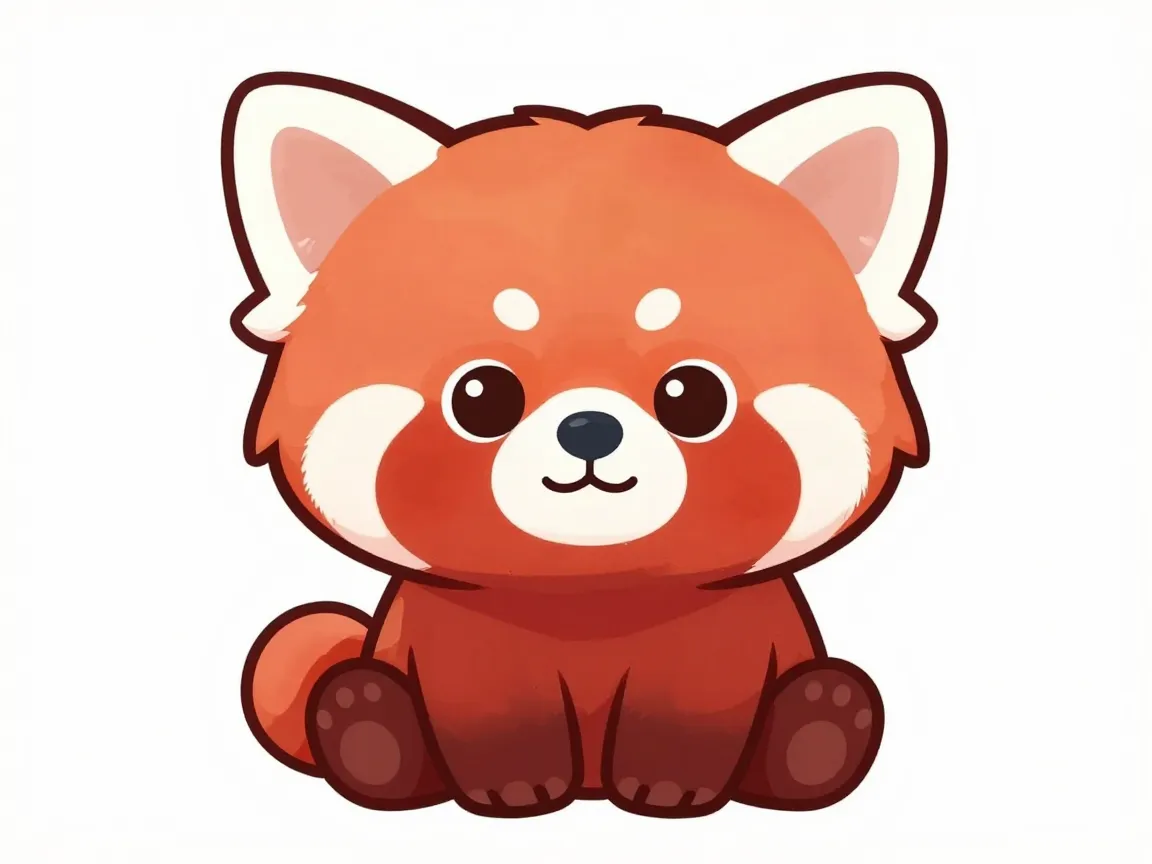
The final style on this list leans fully into exaggerated cuteness. Often called a “dough ball” technique, this approach starts with a soft, rounded head shape, almost like a ball of dough, before adding oversized ears, a compact sitting body, and large, expressive eyes. Proportions here are intentionally unrealistic: the head is often as big as the body, and the eyes take up a significant portion of the face.
This cartoon formula shows up constantly in fan art, stickers, and character design, including interpretations inspired by animated films featuring red panda characters. The process usually involves sketching basic construction lines first, inking clean outlines once the proportions feel right, and finishing with flat or lightly shaded color. Because the style depends so heavily on exaggeration, it is one of the most recognizable and widely imitated approaches to drawing red pandas, especially among artists creating mascots, emojis, or social media avatars.
How to Start Your Own Red Panda Sketch
Anyone inspired by these six styles can start practicing right away, even without advanced materials. A pencil, eraser, and plain paper are enough to begin experimenting with the basic shapes described above. The table below breaks down a simple starting process that works across most of the styles covered in this guide.
| Step | What to Draw | Why It Matters |
|---|---|---|
| 1 | Circle for the head | Sets the overall size and placement of the face |
| 2 | Larger oval for the body | Establishes posture, whether sitting, standing, or walking |
| 3 | Two rounded shapes for the ears | Red panda ears are large and rounded, a key feature for cuteness |
| 4 | Small ovals for hands and feet | Keeps limbs proportional without overcomplicating anatomy |
| 5 | Light guideline for the tail | The curled, striped tail is one of the most recognizable traits |
| 6 | Facial features and fur texture | Adds personality and brings the sketch to life |
Working lightly during the early steps makes adjustments easier. Many tutorials recommend keeping the first round of shapes faint, since red panda proportions can shift slightly depending on the pose. Once the structure feels balanced, darker outlines and color can be added with more confidence.
Tools and Techniques Used by Red Panda Artists
Different styles call for different tools, and matching the right medium to the right technique makes a noticeable difference in the final result. Below is a quick breakdown of common tool choices based on the six styles covered earlier.
- Graphite pencils and erasers work best for classic oval-based sketches and quick studies, since they allow for easy correction during the construction phase.
- Vector software with gradient and shape tools suits digital illustrations that need smooth color transitions, especially around the ears and fur highlights.
- Colored pencils paired with toned paper are ideal for portrait-style work that leans into warmth and realism.
- Watercolor paint and fine ink pens create the soft, blended textures seen in looser, mood-driven sketches.
- Digital tablets and apps like Procreate give artists the flexibility to combine sketching, inking, and coloring in one workflow, which is especially useful for cartoon or chibi-style characters.
No single tool is “better” than another; the right choice depends entirely on the look an artist wants to achieve. Beginners often find that starting with pencil and paper builds a stronger foundation before moving into digital tools, since understanding basic shapes and proportions translates across every medium.
Frequently Asked Questions
What is the easiest red panda sketch style for beginners?
The oval-based pencil sketch is generally the easiest starting point. It relies on simple shapes like circles and ovals, which make it easier to fix proportion mistakes before adding detail.
Do red panda sketches require special art supplies?
No. A basic pencil, eraser, and paper are enough to start. Colored pencils, watercolor paint, or digital tools can be added later once the basic shapes feel comfortable.
Why do red pandas look so cute in art?
Their natural proportions, including a round head, large ears, and short limbs, already match common “cute” design principles used in character art. Artists do not need to exaggerate much to achieve a heartwarming look.
Can toned paper really change how a sketch looks?
Yes. Toned paper adds warmth and reduces the amount of shading needed, which often makes colored pencil portraits feel softer and more inviting compared to work on plain white paper.
Are digital or traditional red panda sketches more popular?
Both remain popular, but for different reasons. Traditional sketches are often shared as personal studies or portfolio pieces, while digital illustrations dominate commercial use like stickers, clip art, and character design.
Conclusion
Red pandas continue to inspire artists because their natural features already do most of the emotional work; round faces, oversized ears, and curled tails create warmth without much extra effort. This roundup of 6 Adorable Red Panda Art Sketches To Warm Your Heart covered a wide range of techniques, from simple pencil construction sketches to detailed vector illustrations and expressive cartoon designs, proving there is no single “right” way to capture this animal’s charm.
For anyone ready to try sketching a red panda, the best next step is simple: pick one style from this list, gather basic supplies, and start with the foundational shapes outlined in the step-by-step table above. Progress comes from practice, not perfection, and even a rough first attempt can capture some of that same heartwarming appeal that makes red panda art so widely loved.