Japanese Bobtail Cat Aesthetic Traits That Define This Artistic Breed
A cat with a tail shorter than a human thumb has inspired centuries of Japanese art, temple statues, and good-luck folklore. That single physical quirk, the pom-pom tail, is only the beginning of what makes this breed a living sculpture. Breed historians and cat fanciers alike describe the Japanese Bobtail as looking almost hand-painted, and that impression is not an accident. It comes from a specific, recognizable set of physical features that judges, breeders, and owners point to again and again.
Disclosure: This post contains affiliate links. As an Amazon Associate, we earn from qualifying purchases, and at no extra cost to you.
This article breaks down the 6 Japanese Bobtail Cat Aesthetic Traits That Define This Artistic Breed, explaining exactly what each trait looks like, why it exists, and how it contributes to the breed’s reputation as a walking piece of art. Whether the goal is understanding a breed standard, preparing to adopt one, or simply appreciating a cat that looks like it stepped out of an ukiyo-e woodblock print, these six traits explain the visual language of the Japanese Bobtail.
Key Takeaways
- The pom-pom tail, ranging from 2 to 4 inches, is the single most defining and non-negotiable trait of the breed.
- A long, slender body paired with a triangular head creates the breed’s signature “Japanese cast” facial expression.
- Coat color and pattern, especially calico (mi-ke) and bicolor, add a painterly, artistic quality that few other breeds match.
- Eye color variety, including blue, gold, and odd-eyed combinations, intensifies the breed’s expressive, almost human-like gaze.
- Recent 2025-2026 breed standard updates refine descriptions of these traits rather than introduce anything new, confirming the aesthetic has remained stable for decades.
Understanding the 6 Japanese Bobtail Cat Aesthetic Traits That Define This Artistic Breed
Before listing each trait individually, it helps to understand why this breed earns comparisons to fine art rather than just “a cute cat.” The Japanese Bobtail is one of the oldest natural cat breeds, believed to have arrived in Japan over a thousand years ago and later refined through selective breeding starting in the mid-20th century. Unlike many modern breeds engineered for a single dramatic feature, the Japanese Bobtail’s look developed as a complete package: tail, body, face, coat, color, and movement all working together.
Breed standards from major cat registries describe this combination as producing a triangular, geometric appearance paired with fluid, almost choreographed motion. That is precisely why judges and breed clubs use the word “artistic” rather than just “distinctive.” Each of the six traits below plays a specific role in creating that impression, and none of them work in isolation.
1. The Signature Pom-Pom Tail
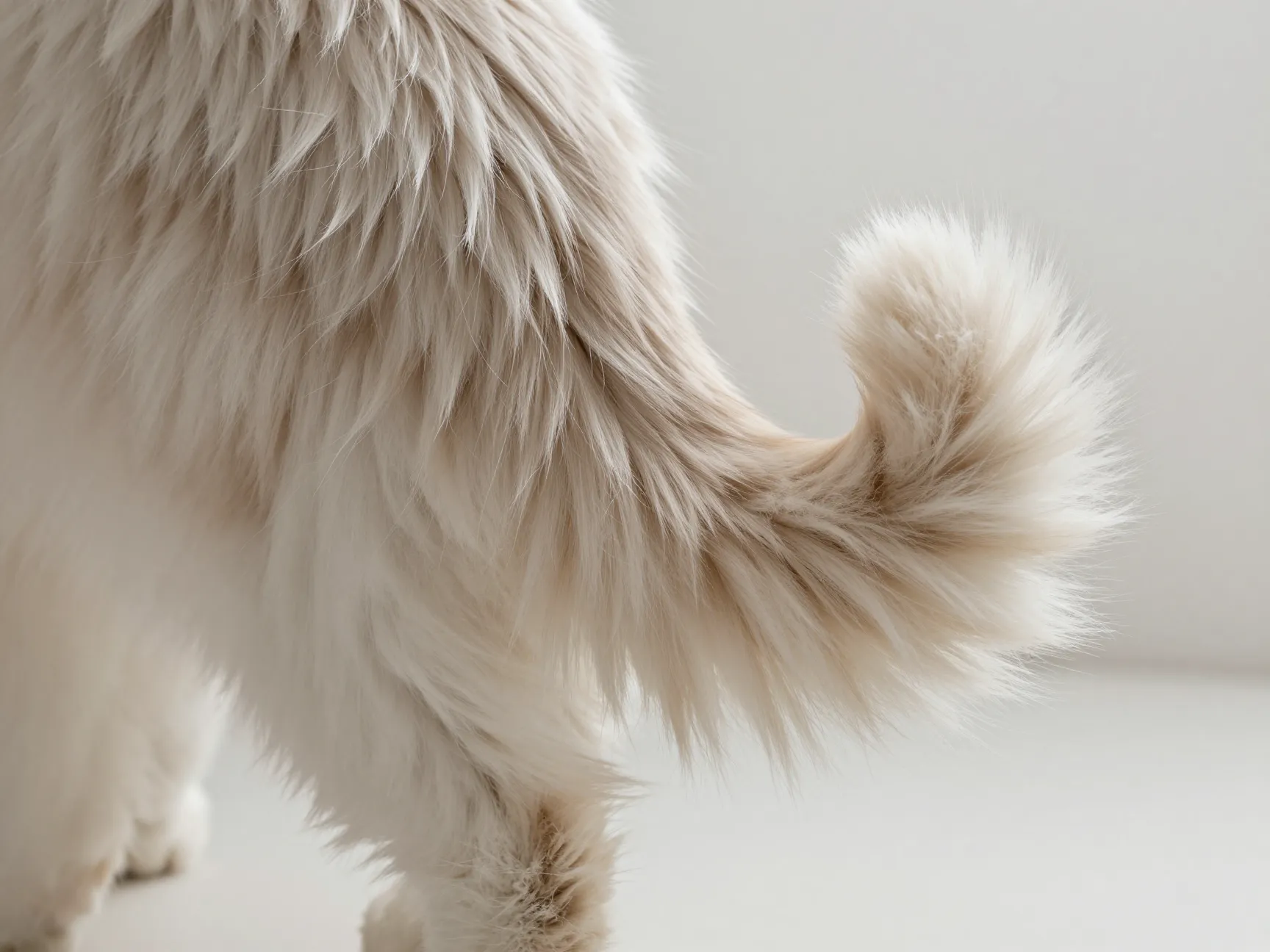
The single feature that separates the Japanese Bobtail from every other domestic cat breed is its short, fluffy tail. Measuring roughly 2 to 4 inches (about 5 to 8 centimeters), the tail is made up of tightly curled, kinked, or angled vertebrae covered in longer fur that fans outward, creating what breeders call a “pom-pom” or “bunny tail” appearance.
This is not a docked or surgically altered tail. It is a natural genetic trait caused by a recessive gene, distinct from the dominant gene responsible for tail shortening in breeds like the Manx. Each Japanese Bobtail’s tail is unique, almost like a fingerprint. No two cats have identical curls, kinks, or fur patterns on their tail, which adds to the sense that every individual cat is a one-of-a-kind artistic subject.
The tail also serves a functional purpose beyond appearance. It acts as a visual exclamation point during play and movement, flicking and bouncing in a way that draws the eye and adds motion and rhythm to the cat’s overall silhouette. Breed standards score this tail heavily, and it remains the most scrutinized trait in any competition or evaluation.
Quick facts about the pom-pom tail:
- Length ranges from 2 to 4 inches, never fully absent and never long.
- Fur on the tail is often longer and fluffier than the body coat, creating the pom-pom look.
- The tail can be straight, curved, kinked, or a mix, but always appears expressive rather than stiff.
- It is genetically distinct from Manx-type taillessness, avoiding the health complications sometimes linked to that gene.
2. A Long, Slender, “Clean-Line” Body
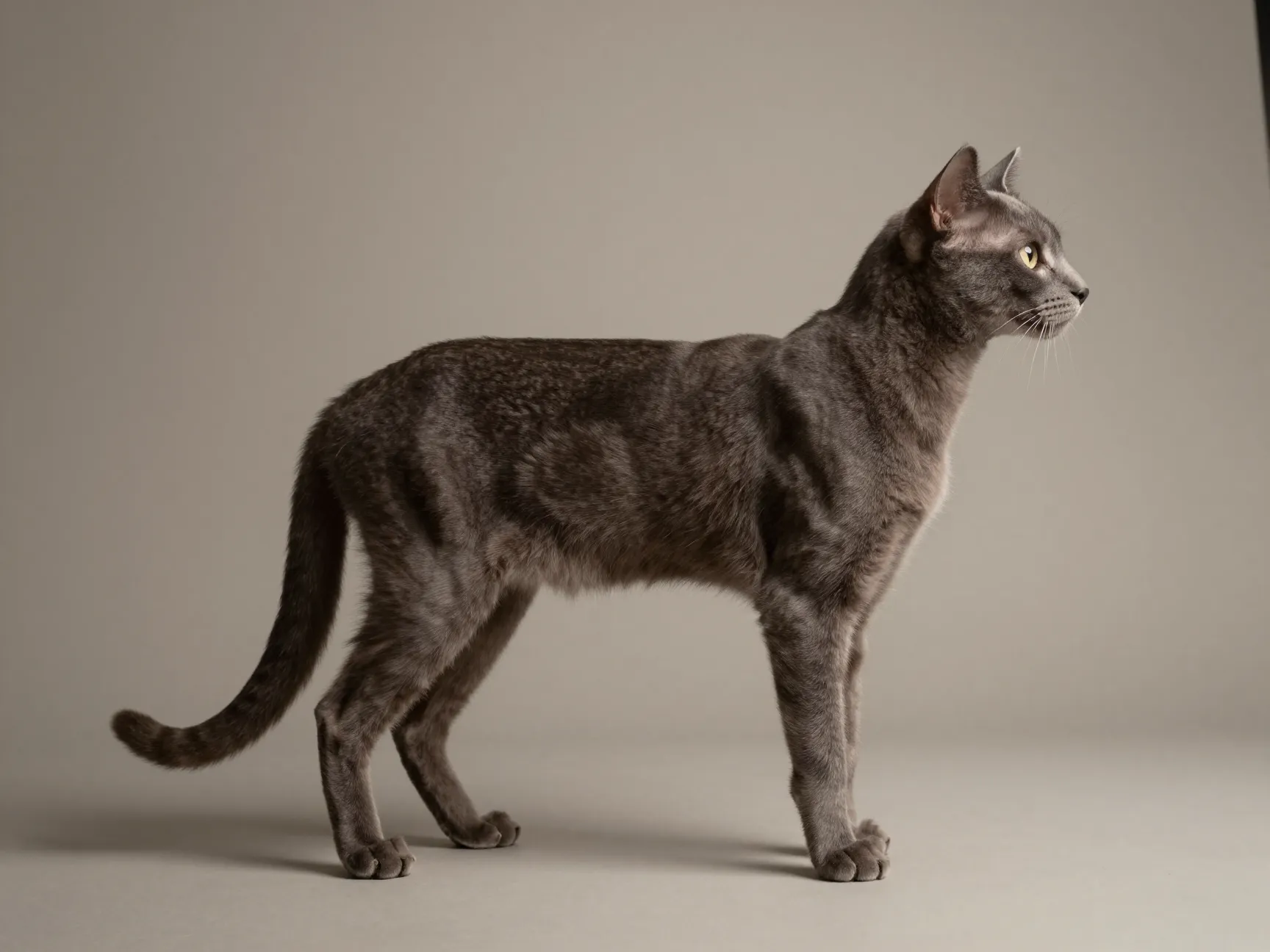
Where the tail provides a visual accent, the body provides the artistic canvas. The Japanese Bobtail has a medium, long, slender torso often described using the phrase “clean-line,” referring to the smooth, unbroken silhouette that flows from shoulders to hindquarters without bulk or excess muscle definition breaking up the shape.
Despite the slenderness, the body is far from fragile. The hind legs are notably longer and more powerful than the front legs, giving the cat a slightly elevated rear stance when standing still. This structural asymmetry is intentional in the breed standard and contributes directly to the athletic, coiled-spring appearance the breed is known for.
“The body should appear long and svelte, not tubular or coarse, carried with a bearing of dignity and grace rather than raw bulk.”
This body type also affects how the cat carries itself day to day. Because the frame is lean rather than dense, the Japanese Bobtail tends to look sculptural even at rest, with visible lines along the spine, shoulders, and hips that mirror the aesthetic vocabulary used to describe traditional Japanese ink paintings, economical, precise, and never excessive.
3. The Triangular Head With High Cheekbones and “Japanese Cast”
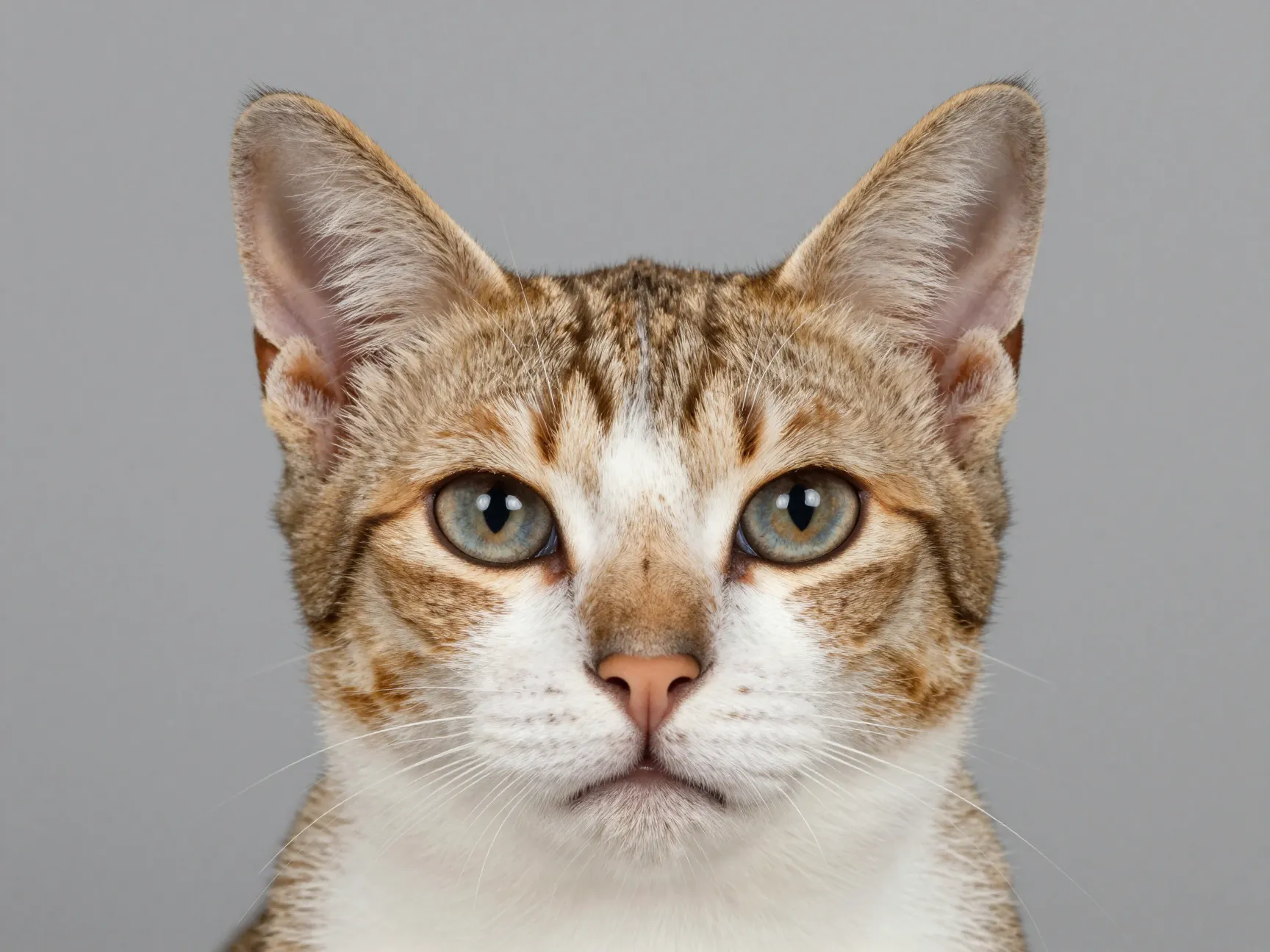
The face of the Japanese Bobtail is arguably its most emotionally expressive trait, and it is built around a distinct geometric shape: a triangle formed by high cheekbones, a defined muzzle, and ears set wide apart at an angle that follows the sides of the triangle upward.
Breed literature frequently uses the phrase “Japanese cast” to describe this facial structure. It refers to a specific combination of features rarely seen together in other breeds: prominent cheekbones, a long nose that continues in a straight line from the forehead without a sharp stop, and slightly slanted eyes that give the face an alert, almost painted-on quality reminiscent of classical Japanese art depicting cats and foxes.
The ears themselves are large, upright, and set at an angle that adds to the triangular geometry rather than disrupting it. When viewed from the front, the head shape should form a near-perfect triangle, with cheekbones as the widest point and the chin as a firm, well-defined base rather than a receding point.
This facial architecture is not just about looks. It contributes to the breed’s reputation for being unusually communicative and expressive compared to other cats, since the wide-set eyes and defined cheekbones make subtle facial movements more visible to human observers.
4. Soft, Silky Coat in Short and Long Varieties
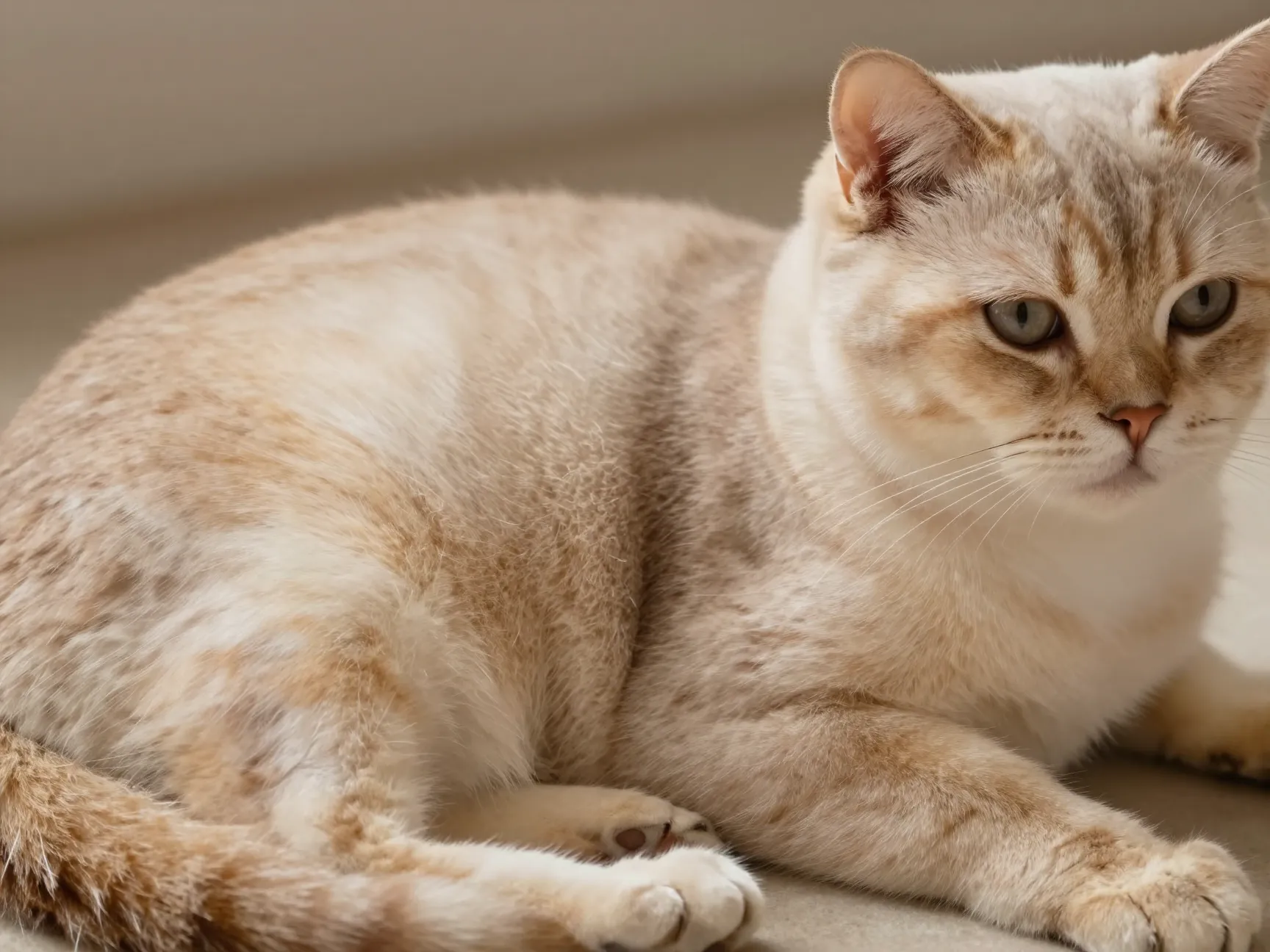
Coat texture is the fourth defining trait among the 6 Japanese Bobtail Cat Aesthetic Traits That Define This Artistic Breed, and it plays a major supporting role in the breed’s overall visual softness. The coat comes in two accepted lengths, shorthair and longhair, but both share the same underlying texture: soft, silky, and notably low on undercoat density.
This minimal undercoat matters for two reasons. First, it means the coat lies closer to the body, emphasizing the clean-line silhouette described earlier rather than adding visual bulk. Second, it results in comparatively lower shedding and matting than breeds with dense double coats, making grooming considerably easier for owners.
| Coat Type | Texture | Maintenance Level | Visual Effect |
|---|---|---|---|
| Shorthair | Soft, silky, close-lying | Low, weekly brushing sufficient | Sharp, sculptural body lines |
| Longhair | Silky, flowing, minimal undercoat | Moderate, twice-weekly brushing | Softer, more romantic silhouette |
The longhair variety, while less commonly seen than the shorthair, adds a flowing quality to the tail pom-pom and britches (the fur on the back legs), which many owners and judges describe as giving the cat an even more painterly, almost feathered appearance in motion.
5. Striking Color Patterns, Especially Calico and Bicolor
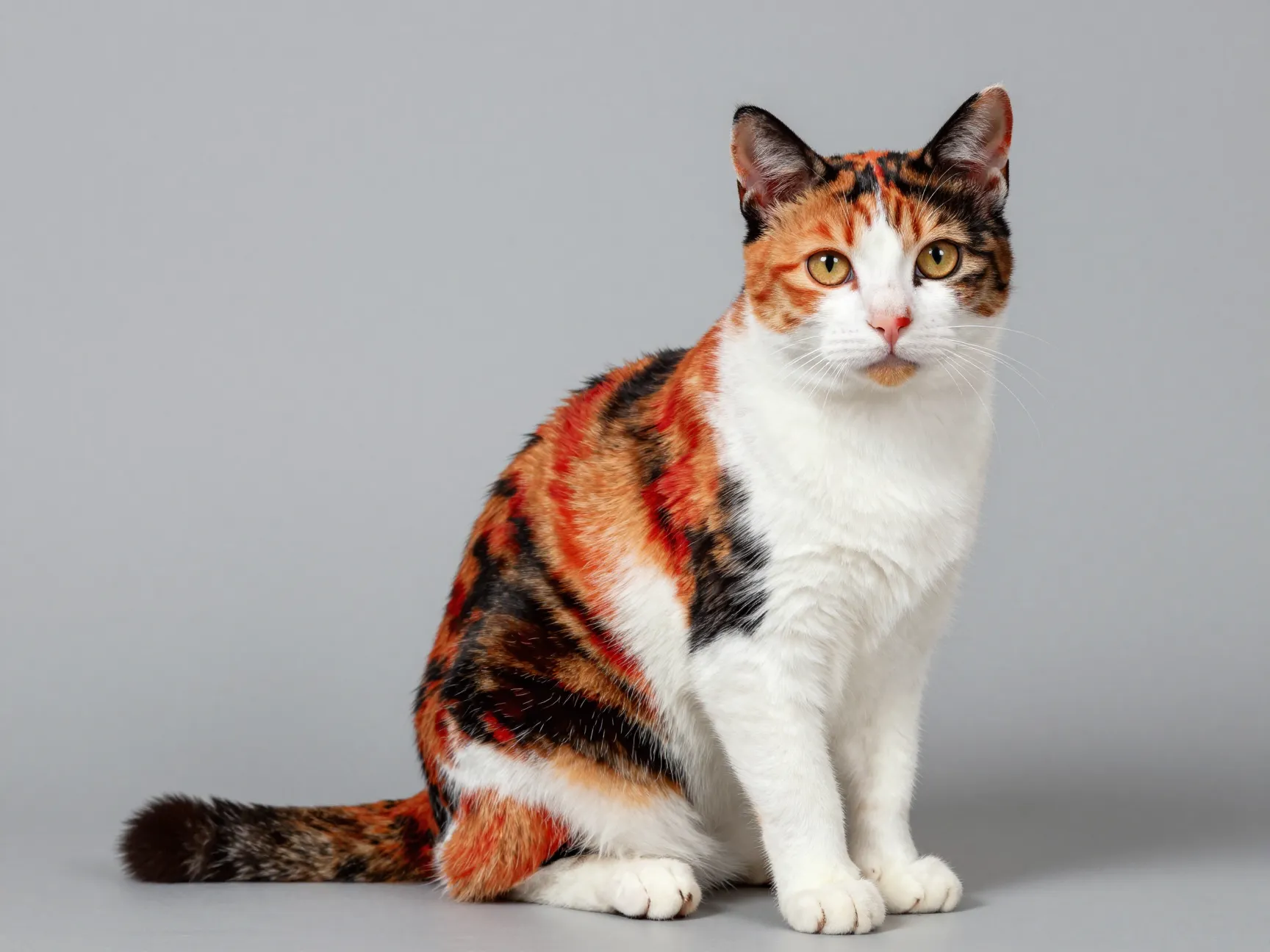
No discussion of the breed’s artistic reputation is complete without addressing coat color and pattern, which many consider the most visually dramatic of the 6 Japanese Bobtail Cat Aesthetic Traits That Define This Artistic Breed. While the breed is accepted in nearly every color and pattern combination, two stand out culturally and aesthetically above the rest.
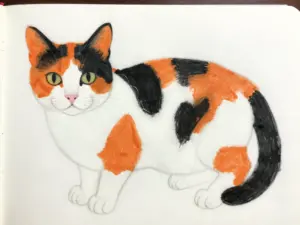
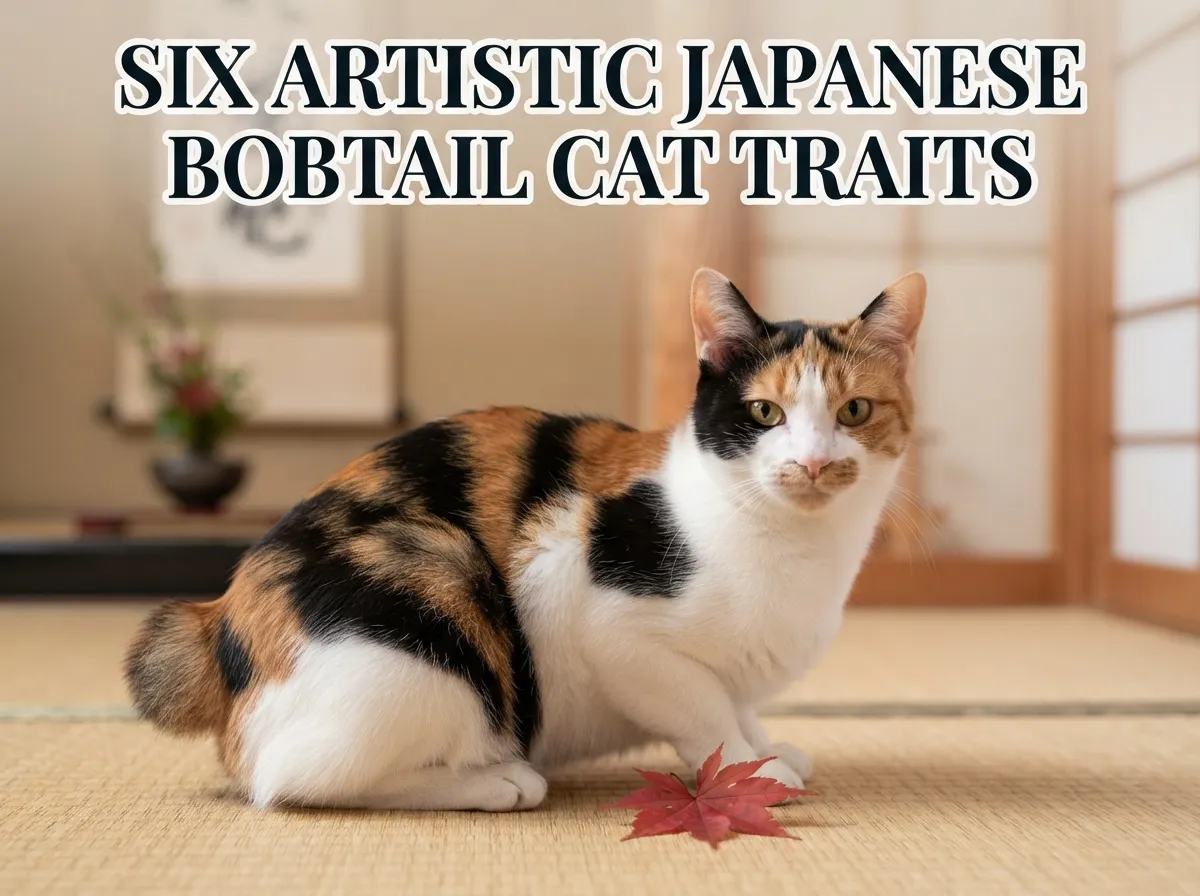
The first is calico, known in Japan as “mi-ke” (pronounced mee-kay), meaning “triple fur.” This tri-color pattern of white, black, and orange (often red or cream) is considered the most traditional and celebrated color combination for the breed, deeply tied to Japanese folklore where calico bobtails are viewed as symbols of good fortune. The classic “Maneki-neko” beckoning cat figurines seen in shops and restaurants worldwide are almost always depicted in this exact coloring, cementing the visual association between calico patterning and the breed’s cultural identity.
The second standout pattern is bicolor, typically featuring bold, high-contrast patches of white combined with one other solid color. This pattern tends to emphasize the geometric quality of the triangular head and clean-line body, since sharp color divisions naturally draw attention to the cat’s underlying structure.
Common color and pattern categories recognized in the breed:
- Calico (mi-ke): white, black, and red/orange in bold irregular patches.
- Bicolor: white paired with black, red, or blue in defined sections.
- Solid colors: less traditional but still accepted, including white, black, and red.
- Tabby and tabby-bicolor combinations, adding striped detail to the coat.
This variety means that no two Japanese Bobtails look exactly alike, reinforcing the sense that each cat is an individual work of visual art rather than a mass-produced template.
6. Expressive Eyes and Dynamic, Agile Movement
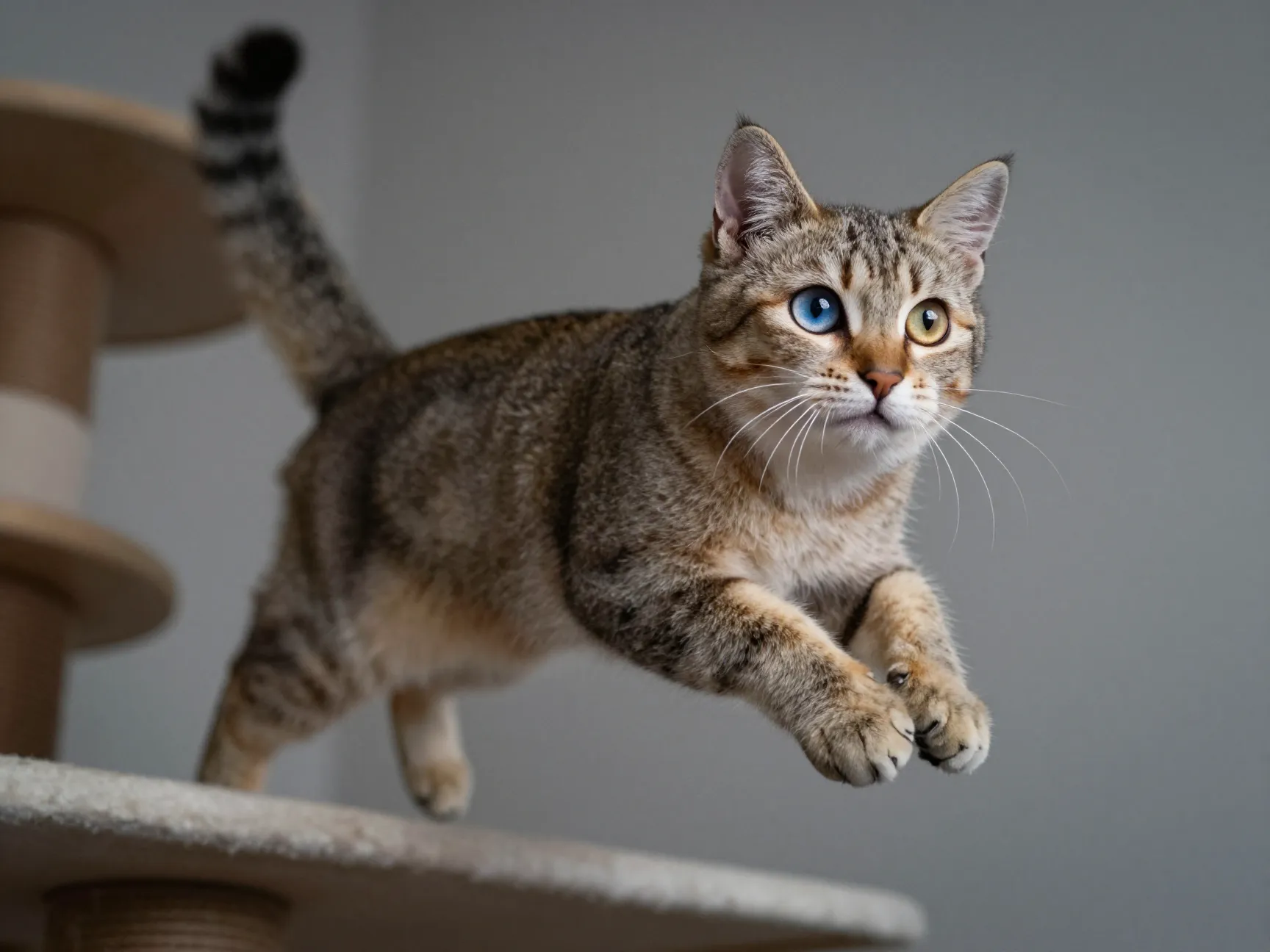
The final defining trait combines two closely related features: eye color and physical movement. The Japanese Bobtail’s eyes are large, oval, and set at a slight slant that matches the angle of the cheekbones, contributing to the overall triangular facial geometry. Accepted eye colors include blue, gold, green, and odd-eyed combinations, where each eye is a different color, most commonly one blue and one gold.
Odd-eyed cats, in particular, draw significant attention in the breed community because the effect is especially striking against the sharp facial lines and bold coat patterns already described. This combination of a geometric face, contrasting eye colors, and bold coat coloring is part of why photographs of Japanese Bobtails frequently circulate as examples of naturally “artistic” or “painterly” cats.
Movement is the second half of this trait, and it should not be underestimated. The breed is known for dynamic, agile motion, largely thanks to those powerful hind legs discussed earlier. Japanese Bobtails are frequently described as moving with a bouncing, almost rabbit-like gait, especially when playing or running, which causes the pom-pom tail to bob visibly. Many owners note their cats enjoy jumping to elevated surfaces and appear to move with intentional grace rather than random energy.
Adding to this presentation is the breed’s well-documented “songlike” vocalization. Japanese Bobtails are known for a wide range of chirps, trills, and modulated meows that many owners describe as almost melodic compared to the flatter vocalizations of other breeds. This vocal expressiveness pairs naturally with the visual expressiveness of the eyes and face, reinforcing the overall impression of a cat that communicates and performs rather than simply exists.
How These Traits Work Together
Individually, each of the six traits above is interesting on its own. Together, they create something more than the sum of their parts. The following table summarizes how each trait contributes to the breed’s artistic reputation.
| Trait | Primary Visual Contribution |
|---|---|
| Pom-pom tail | Unique focal point and movement accent |
| Slender, clean-line body | Sculptural silhouette and athletic grace |
| Triangular head, high cheekbones | Geometric, alert facial structure |
| Soft, silky coat | Smooth surface that emphasizes body lines |
| Calico and bicolor patterns | Bold, painterly color contrast |
| Expressive eyes and agile movement | Emotional connection and dynamic presence |
Breed size also plays a supporting role here. Japanese Bobtails are small to medium cats, typically weighing 6 to 10 pounds and standing 10 to 14 inches at the shoulder. This refined, moderate size means none of the six traits ever appear exaggerated or cartoonish. Everything stays proportionate, which is a key reason the breed reads as elegant rather than novel.
Distinguishing the Japanese Bobtail From Other Bobtail Breeds
Because “bobtail” appears in several breed names, it is worth clarifying how the Japanese Bobtail’s specific traits set it apart. The American Bobtail, Kurilian Bobtail, and Manx all have short or absent tails, but each achieves this through different genetics and pairs it with a different body type and facial structure.
Key differences to note:
- The Manx uses a dominant gene linked to potential spinal health issues; the Japanese Bobtail’s gene is recessive and not associated with the same risks.
- The American Bobtail typically has a stockier, more muscular body compared to the Japanese Bobtail’s slender, clean-line frame.
- The Kurilian Bobtail has a denser double coat suited for cold climates, contrasting with the Japanese Bobtail’s minimal undercoat.
- Facial structure is the clearest separator, since the triangular head and high cheekbones of the Japanese Bobtail are not replicated in these other breeds.
This distinction matters for anyone researching the breed online, since visual and genetic confusion between bobtail breeds is common. The six traits detailed in this article are specific enough that, once learned, they make identification straightforward.
Longevity, Health, and the Sustained Artistic Presence
An aesthetic only remains meaningful if the animal carrying it lives long enough to display it. Fortunately, the Japanese Bobtail is generally considered a hardy, healthy breed with a typical lifespan of 12 to 16 years, and some individuals living longer with good care. The recessive tail gene, unlike the dominant Manx gene, is not linked to spinal or digestive complications, which removes one of the more serious health concerns associated with other short-tailed breeds.
Routine care that supports the breed’s long-term appearance includes:
- Weekly brushing for shorthairs and twice-weekly brushing for longhairs to maintain coat softness and shine.
- Regular nail trims and dental checkups, standard for any breed but especially important given the active, jumping lifestyle these cats maintain.
- Balanced nutrition to preserve the lean, clean-line body type without allowing excess weight to obscure the breed’s natural silhouette.
- Routine veterinary visits to monitor for common feline health issues unrelated to the tail gene, such as heart or kidney conditions that can affect any breed.
Because the breed tends to remain playful and physically active well into adulthood, owners often find that the dynamic, agile movement described earlier continues throughout most of the cat’s life, rather than fading quickly with age as seen in some heavier-bodied breeds.
What Recent Breed Standard Updates Say
Cat fancier organizations periodically revisit breed standards to ensure written descriptions match what judges and breeders observe in real cats. Updates circulating in the 2025 to 2026 period around the Japanese Bobtail have focused on refining language around tail structure, coat texture, and head geometry rather than introducing any new physical traits.
This is an important distinction. The core identity of the breed, the six traits covered in this article, has remained fundamentally stable for decades. What has changed is the precision of the language used to judge and describe them, helping ensure consistency across different registries and countries. For anyone researching the breed today, this means the traits described here reflect both historical breed identity and current, actively maintained standards.
Conclusion
The Japanese Bobtail earns its reputation as an artistic breed through a deliberate, well-balanced combination of physical traits rather than any single standout feature. The pom-pom tail draws initial attention, but it is the slender clean-line body, triangular head with high cheekbones, soft silky coat, striking calico or bicolor patterning, and expressive eyes paired with agile movement that complete the picture. Together, these 6 Japanese Bobtail Cat Aesthetic Traits That Define This Artistic Breed create a cat that looks intentional in every detail, much like a piece of considered artwork rather than a random assortment of features.
For anyone considering adding a Japanese Bobtail to their home, the next step is straightforward: connect with a reputable breeder or rescue organization familiar with the breed standard, ask to see both parents if possible to confirm tail and coat quality, and prioritize a veterinary health check regardless of how visually striking the kitten appears. Aesthetic beauty and long-term health should always go hand in hand, and this breed offers both when sourced responsibly.