Animal Drawings And Sketches To Build Your Sketchbook Portfolio
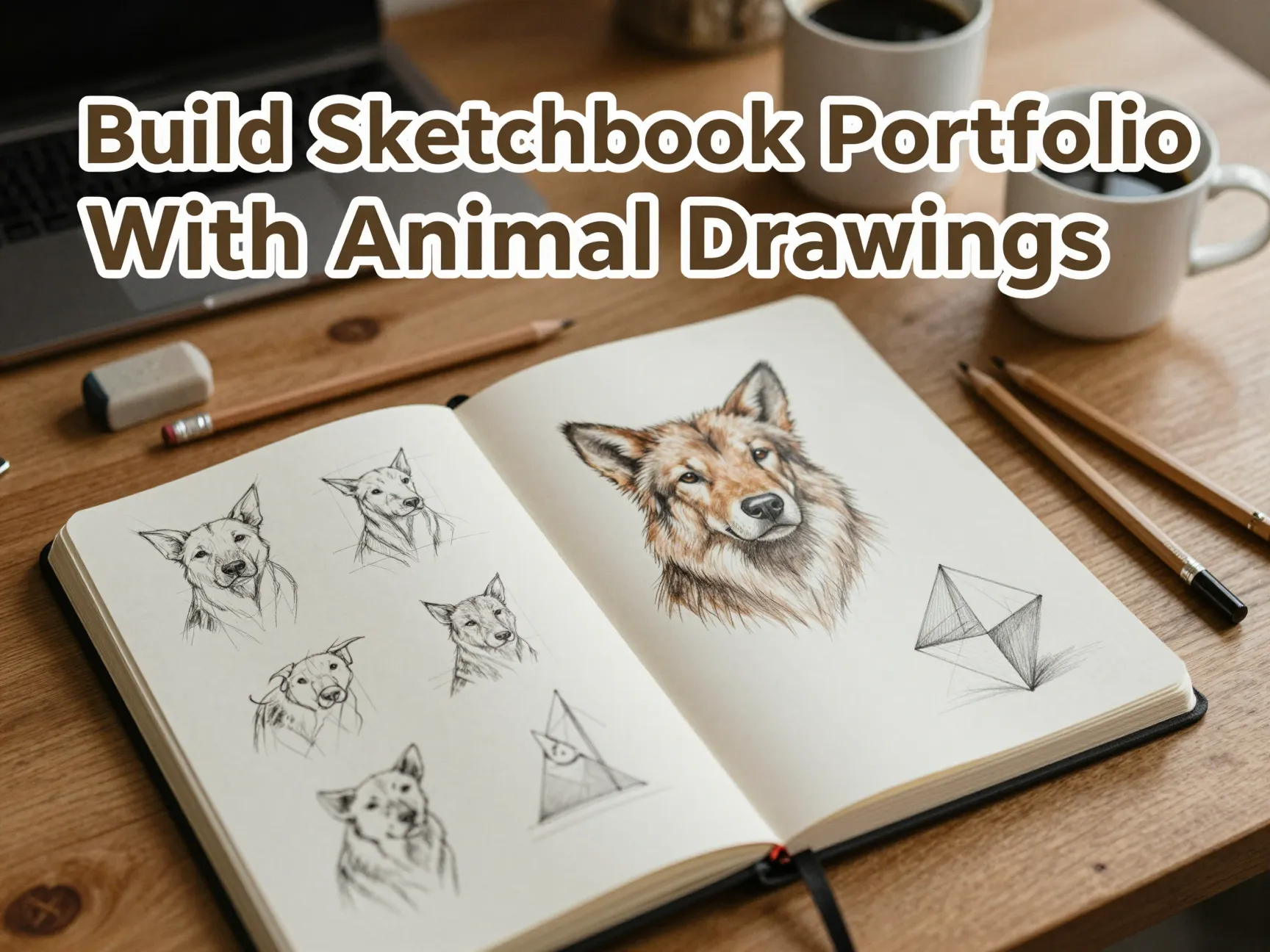
A sketchbook filled with twenty nearly identical cat heads will not get an artist into a top design program. A sketchbook with six carefully chosen animal studies, each proving a different skill, often will. That distinction matters more than most aspiring illustrators realize, and it is the foundation of this guide to 6 Animal Drawings And Sketches To Build Your Sketchbook Portfolio.
Disclosure: This post contains affiliate links. As an Amazon Associate, we earn from qualifying purchases, and at no extra cost to you.
Design schools, animation studios, and illustration agencies do not count pages. They look for range, control, and observation. A portfolio reviewer flipping through a sketchbook in under ninety seconds needs to see proof that the artist can draw what they see, invent what they imagine, and handle texture, gesture, and structure with equal confidence. Six well-chosen animal drawings, spread across different techniques and subjects, can demonstrate all of that without padding the pages with repetition.
This article breaks down exactly which six types of animal drawings belong in a competitive sketchbook, why each one matters to reviewers, and how to sequence them for maximum impact.
Key Takeaways
- A strong sketchbook portfolio needs variety, not volume; six distinct animal drawings often outperform twenty similar ones.
- Reviewers at schools like ArtCenter explicitly ask for observational animal studies alongside people and environments.
- The ideal set mixes gesture sketches, realistic portraits, texture studies, geometric interpretations, stylized characters, and narrative sequences.
- Drawing animals observed in real life produces more convincing movement and storytelling than copying reference photos alone.
- Process pages showing construction and refinement are often more persuasive to reviewers than a single polished final image.
Why Animal Drawings Still Matter for a Modern Sketchbook Portfolio
Animal subjects have stayed a core portfolio requirement for decades because they test skills that figures and landscapes cannot always reveal. Fur, feathers, and scales demand careful value control. Four-legged anatomy forces an artist to understand weight distribution and movement in ways that differ from human figures. Expressive animal faces test an artist’s grasp of emotion without relying on familiar human cues.
Major institutions still treat this seriously. Current undergraduate portfolio requirements from leading art schools call for several pages of observational drawings of people, animals, places, or everyday objects. Animal studies sit on equal footing with figure drawing and environmental sketching, not as a lesser category.
Animation and illustration recruiters look for something slightly different than fine art schools, but animals remain central to their evaluations too. Portfolio guidance from animation educators consistently highlights gesture-style animal drawings in motion, personality captured in a pose, and the ability to shift between realistic and cartoon styles. A sketchbook that only shows static, symmetrical animal portraits misses a major opportunity to demonstrate range.
The throughline across every current source, from school admissions pages to professional illustration courses, is the same: reviewers want to see process, not just polish. A rough gesture page sitting next to a refined tonal study tells a more convincing story about growth and skill than six finished drawings that all look the same.
The 6 Animal Drawings And Sketches To Build Your Sketchbook Portfolio
The following six categories were chosen because together they cover every skill a portfolio reviewer checks for: observation, anatomy, texture, conceptual thinking, personality, and storytelling. Treat this list as a framework rather than a rigid checklist. The specific animals can change, but the variety of approach should not.
1. Gesture Sketches Capturing Movement And Weight
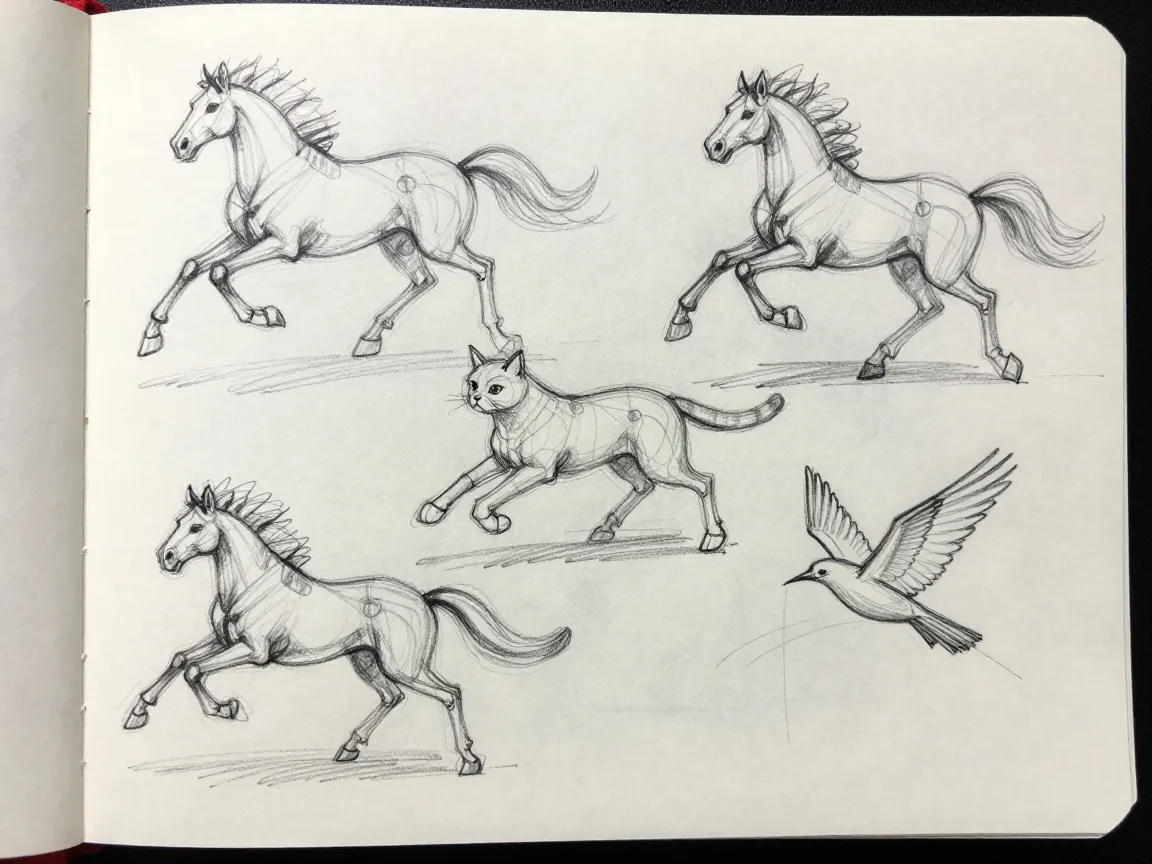
The first drawing in a strong six-piece set should be fast, loose, and alive. Gesture sketches are quick studies, usually completed in under two minutes, that capture how an animal’s body moves and balances rather than how it looks in precise detail. A galloping horse, a cat mid-stretch, or a bird taking off are classic subjects because they force the artist to simplify a complex form into a few confident lines.
Teaching resources consistently recommend starting any animal drawing with simple shapes, circles for joints and ovals for the torso, before refining anatomy. This construction-based approach is exactly what reviewers want to see in a gesture page. It proves the artist understands the skeleton underneath the fur, not just the surface silhouette.
A single sketchbook spread with five or six small gesture studies of the same animal in different poses often carries more weight than one large, labored drawing. It shows speed, confidence, and a grasp of anatomy under pressure.
2. A Detailed Realistic Portrait Showing Anatomical Control
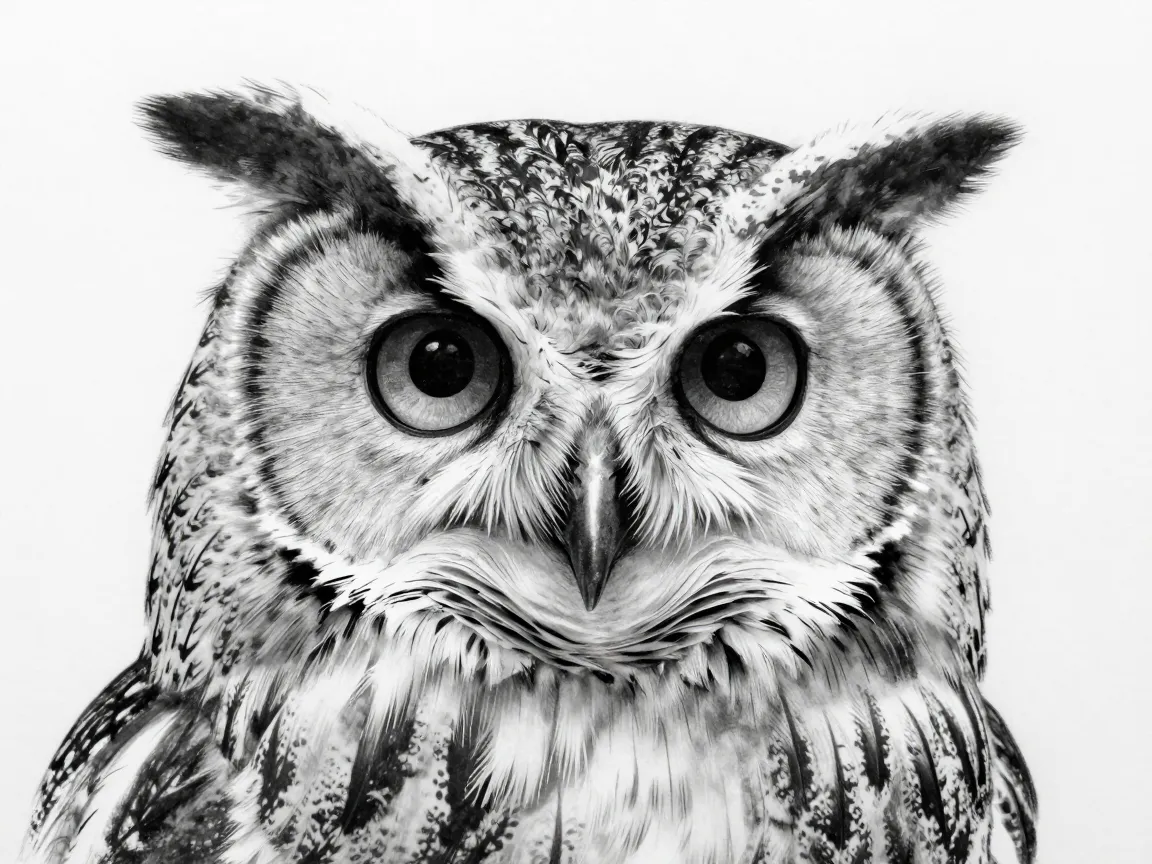
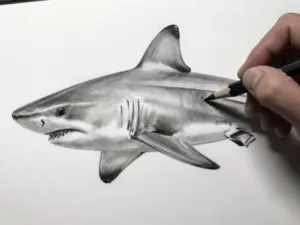
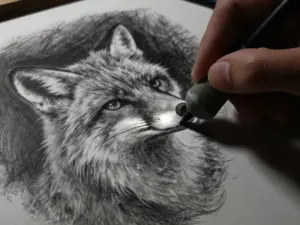
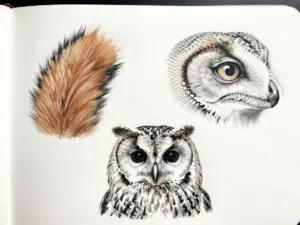
The second drawing should slow things down completely. A realistic animal portrait, rendered in graphite, charcoal, or ink, demonstrates patience and technical control that gesture sketches cannot. This is the piece where fine details matter: the structure of an eye, the direction of fur growth, the subtle shading around a nose or beak.
Current illustration courses dedicate entire modules to this kind of work, with lessons specifically focused on rendering lifelike eyes, reflective surfaces, and fur texture. That level of specialization exists because a convincing animal portrait is genuinely difficult, and reviewers know it.
Choose an animal with distinctive features for this piece. Owls, wolves, and domestic cats are popular choices because their faces have strong contrast between light and dark fur or feather patterns, which gives the artist more opportunity to show tonal range.
3. A Fur, Feather, Or Skin Texture Study
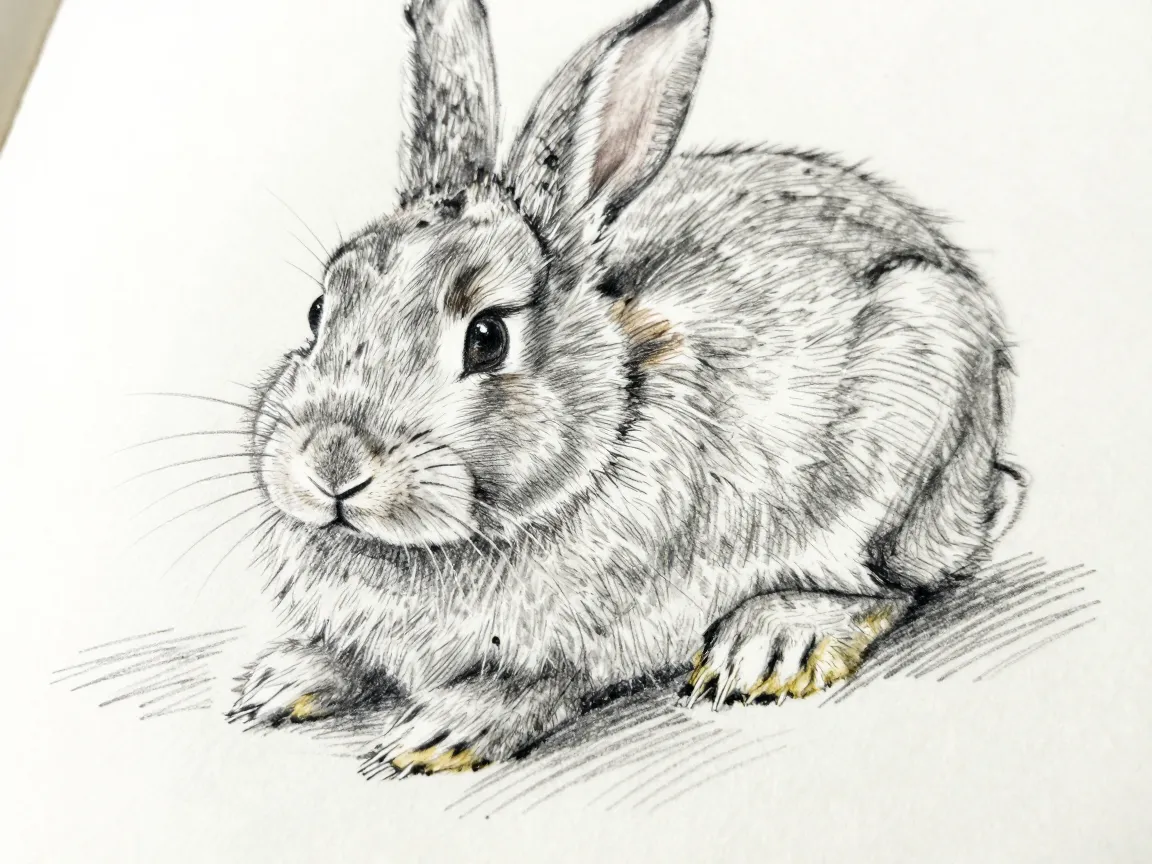
The third piece should isolate texture as the main subject. Rather than drawing a full animal, this study zooms into a patch of fur, a wing section, or scaled skin and renders it with extreme attention to mark-making. This is less about the animal as a whole and more about proving mastery of a specific rendering technique.
Educational units on animal portraits often require exactly this kind of focused attention to texture and background integration. A texture study can be small, even a single sketchbook quarter-page, but it should show clear technical intention: cross-hatching for short fur, soft blending for feathers, or stippling for reptilian skin.
This drawing matters because it separates artists who can render surfaces convincingly from those who rely on outline and basic shading. Reviewers specifically look for this kind of technical evidence when assessing readiness for illustration or concept art roles.
4. A Geometric Or Abstract Reinterpretation Of An Animal
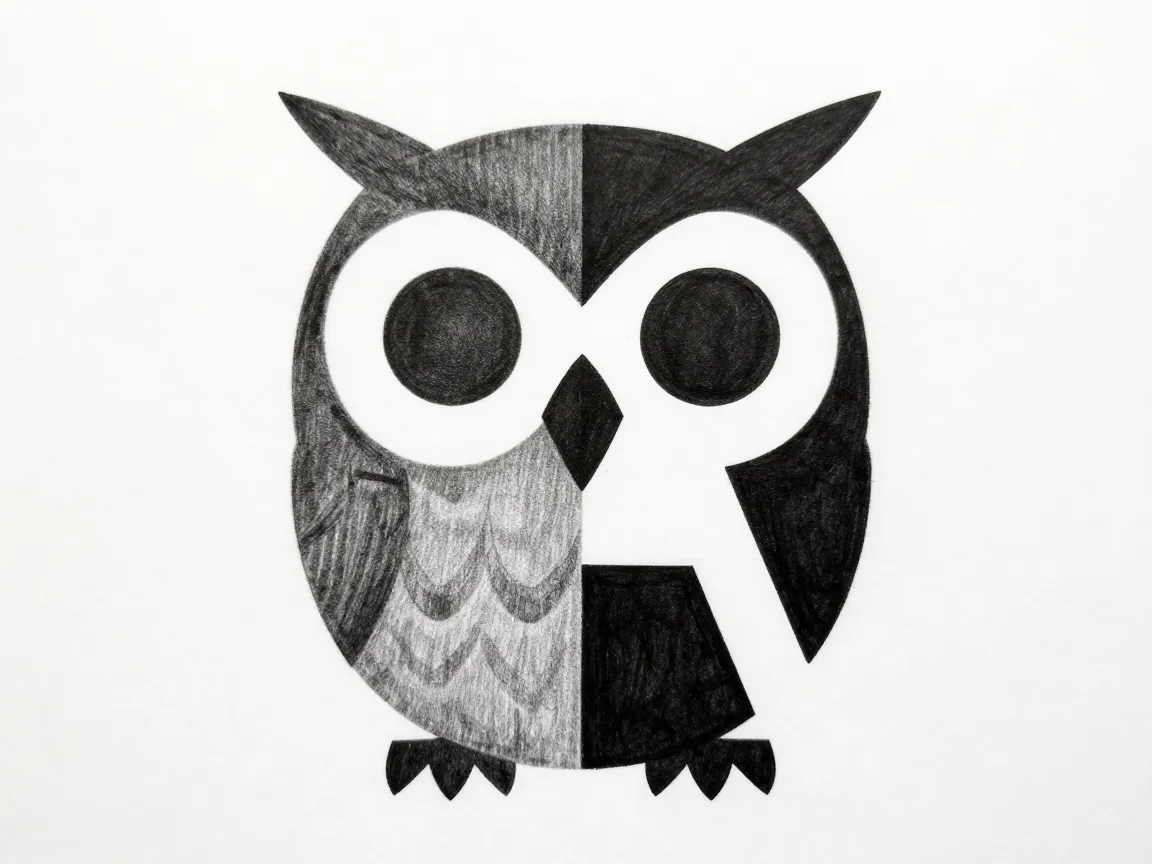
The fourth drawing should pivot away from pure observation and into design thinking. A popular and effective format splits a single animal head down the middle, rendering one half realistically and the other half as simplified geometric shapes. This single image proves two skills at once: the ability to observe accurately and the ability to abstract and simplify for design purposes.
This approach has become a favorite in recent sketchbook-idea collections precisely because it is efficient. One drawing does double duty, showing both observational draftsmanship and conceptual flexibility. For students applying to programs with a strong design or animation focus, this piece often becomes the most memorable page in the entire sketchbook.
An alternative version of this idea uses bold color blocking or flat shapes to reinterpret an animal’s form entirely, moving further from realism. Either version works, as long as it clearly contrasts with the realistic portrait already included in the set.
5. A Stylized Or Character-Based Animal Drawing
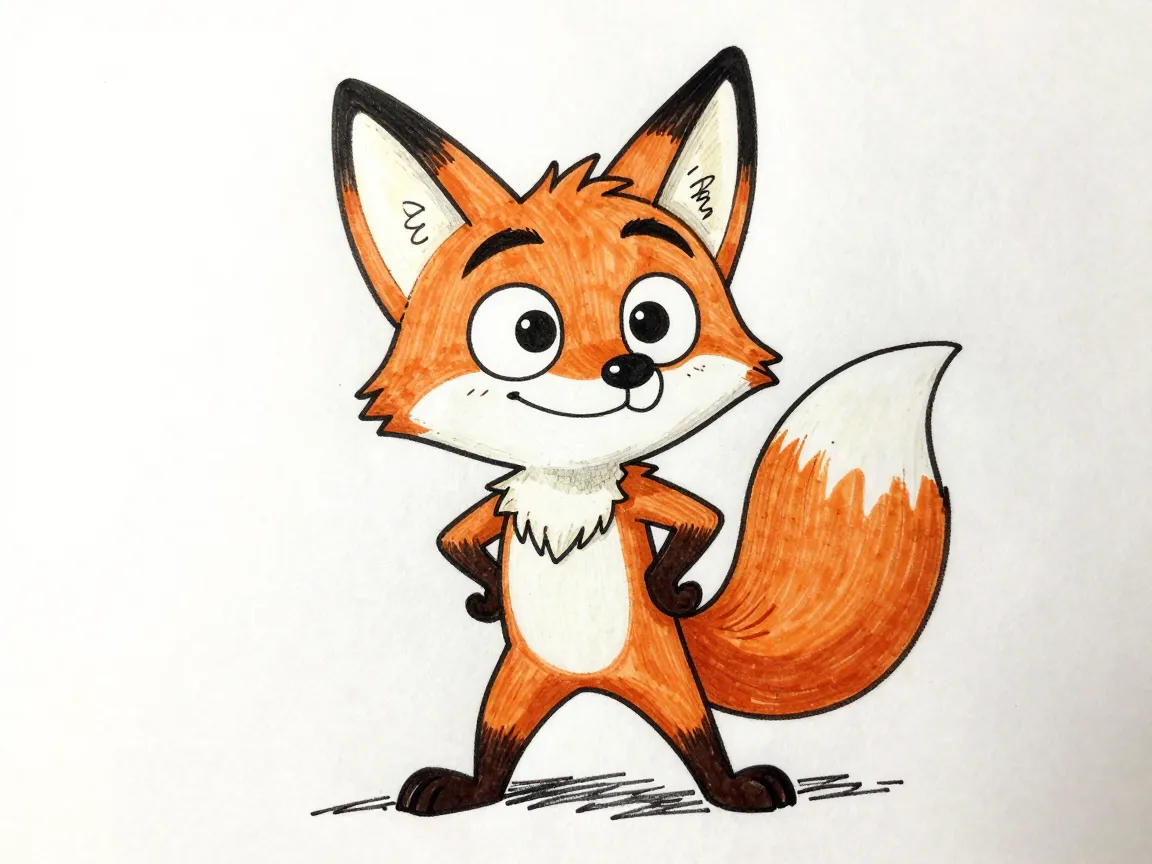
The fifth drawing should inject personality. This is the piece aimed squarely at animation, game art, and character design reviewers, who want proof that an artist can push an animal beyond pure observation into expressive, exaggerated design. A cartoon fox with oversized eyes, a grumpy bulldog with slouched posture, or an anthropomorphized bird with human-like gesture all fall into this category.
Portfolio advice from animation professionals repeatedly emphasizes personality in pose and the ability to work in multiple styles, realistic and cartoon, as key evaluation criteria. A sketchbook that only contains realistic animal studies, no matter how technically accomplished, can read as narrow to a reviewer looking for character design potential.
This drawing should feel playful and confident rather than tentative. Reviewers are not grading this piece on anatomical accuracy; they are checking whether the artist can take creative liberties while still keeping the animal recognizable and appealing.
6. A Multi-Pose Narrative Sequence From Direct Observation
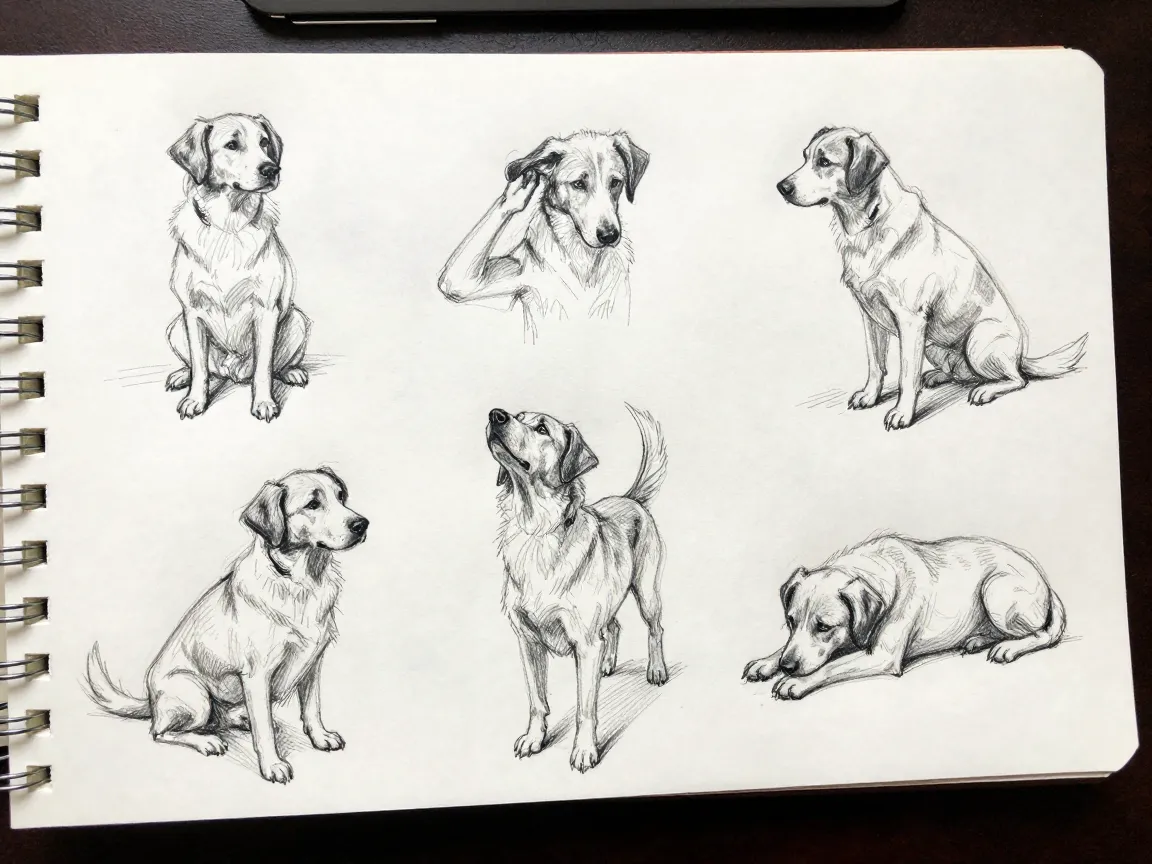
The sixth and final drawing should tie the whole set together by proving the artist works from real-life observation, not just reference photos. This piece involves sketching the same animal multiple times on one page, capturing it in several poses as it moves, rests, or reacts over a short period of time.
Recent guides on wildlife drawing stress that every example sketch should come from an animal the artist personally observed, arguing that this produces more convincing gesture and storytelling than copying static photographs. Watching a dog shift between sitting, scratching, and lying down, then sketching each moment quickly on the same page, creates a page that feels alive and specific.
This sequence also functions as a mini narrative. Reviewers can see decision-making in real time: which pose was captured first, how the artist adjusted proportions between sketches, and how confidently the hand moved as the animal changed position. Few single drawings communicate growth and attentiveness as efficiently as a well-executed observation sequence.
How To Choose And Sequence Your Six Portfolio Drawings
Selecting the right six pieces from 6 Animal Drawings And Sketches To Build Your Sketchbook Portfolio matters as much as drawing them well. A reviewer flipping through a sketchbook forms an impression within seconds, so sequencing affects perception even when every individual drawing is strong.
A practical approach is to open with the gesture sketches, since they communicate energy immediately and set a confident tone. Follow with the realistic portrait and texture study together, since they build on each other and show escalating technical depth. Place the geometric reinterpretation next as a surprising mid-point that resets the viewer’s attention. Close with the stylized character piece and the narrative sequence, ending on personality and storytelling rather than pure technical display.
Consider this simple comparison when deciding which subjects to pair with each drawing type.
| Drawing Type | Best Animal Subjects | Primary Skill Demonstrated |
|---|---|---|
| Gesture sketch | Horses, cats, birds in flight | Movement and weight |
| Realistic portrait | Owls, wolves, domestic cats | Anatomical control |
| Texture study | Rabbits, reptiles, parrots | Surface rendering |
| Geometric reinterpretation | Owls, foxes, elephants | Design thinking |
| Stylized character | Dogs, foxes, small mammals | Personality and range |
| Narrative sequence | Pets, backyard birds, farm animals | Direct observation |
Mixing domestic pets with slightly more challenging subjects like birds or wildlife is a recurring recommendation across current drawing-idea collections. Cats and dogs are accessible and familiar, which makes them useful for the stylized and narrative pieces. Owls and foxes bring more complex anatomy and markings, making them better suited for the realistic portrait and geometric study.
Institutions reviewing full portfolios often cap total page counts, sometimes around twenty-five pages, with sketchbooks counted as a single unit. That constraint is exactly why a focused set of six strong animal drawings, rather than an overwhelming stack of similar studies, tends to perform better during review.
Common Mistakes To Avoid When Building An Animal Sketchbook Portfolio
Even strong technical drawing can be undermined by poor selection or presentation choices. The following mistakes show up repeatedly in weaker sketchbook submissions.
Relying entirely on reference photos without ever sketching from life is one of the most common issues. Photo-only work can look stiff, and experienced reviewers notice the difference between an animal drawn from observation and one traced or copied closely from an image.
Over-finishing every page is another frequent problem. Polishing every drawing to the same glossy finish removes the sense of process that reviewers specifically look for. A rough gesture page has value precisely because it is rough; sanding away that rawness defeats its purpose.
Choosing six nearly identical poses of the same animal wastes an opportunity to show range. A portfolio with six cat drawings, all sitting and facing forward, tells a reviewer far less than two cat drawings paired with a bird, a horse, a fox, and a reptile, each handled differently.
Ignoring composition on the page itself is also an easy trap. Sketchbook pages with cramped, overlapping drawings and no breathing room read as disorganized, even if the individual drawings are skilled. Leaving margin space and arranging multiple studies thoughtfully on a page improves the overall impression significantly.
Finally, skipping texture and surface rendering entirely leaves a noticeable gap. An artist who can draw accurate proportions but cannot convincingly render fur, feathers, or skin will struggle to stand out in illustration-focused reviews, where that specific skill is heavily weighted.
“A sketchbook should read like a story about how an artist thinks, not a gallery of finished trophies.”
Frequently Asked Questions
Does every drawing in the six-piece set need to be the same medium?
No. Mixing pencil, ink, charcoal, and even digital work across the six drawings is encouraged. Reviewers generally value seeing comfort across multiple tools rather than mastery of only one.
Should the six animal drawings all feature different species?
Variety helps, but it is not mandatory. A set built entirely around one animal, shown through gesture, portrait, texture, abstraction, character design, and narrative sequence, can be just as strong as six different species, as long as the techniques clearly vary.
How long should each drawing take to complete?
Timing varies by category. Gesture sketches should take minutes, while a detailed realistic portrait or texture study may take several hours across multiple sessions. The contrast in time investment is part of what demonstrates range.
Is it better to draw from life or from photographs?
Direct observation tends to produce more convincing movement and storytelling, particularly for gesture sketches and narrative sequences. Photographs remain useful for detailed portraits and texture studies where an animal needs to hold still for extended rendering.
Can digital drawings replace traditional sketchbook pages?
Many programs now accept digital work, but traditional analog sketches still carry strong credibility because they show unfiltered mark-making. A blended set, some traditional and some digital, often performs well if the program accepts both formats.
Conclusion
Building a sketchbook portfolio around 6 Animal Drawings And Sketches To Build Your Sketchbook Portfolio is not about drawing six impressive animals. It is about proving six different skills through animal subjects: movement, anatomy, texture, design thinking, personality, and observation. Each of the six categories covered here, gesture sketches, realistic portraits, texture studies, geometric reinterpretations, stylized characters, and narrative sequences, targets a specific capability that reviewers actively look for.
The next step is practical. Choose one animal to observe directly this week, whether a pet at home or birds in a local park, and complete a quick gesture page. Follow it with a slower, detailed portrait of the same or a different animal. Build toward the full set of six over several weeks rather than rushing all of them in one sitting. Quality and variety, developed with patience, will always outperform a rushed stack of similar sketches when a portfolio lands in front of a reviewer.