Stunning Polar Bear Art Projects For Wildlife Artists
A single polar bear painting sold at a conservation auction in 2026 raised more public attention for Arctic sea ice loss than several scientific press releases combined. That is the quiet power wildlife artists hold. Paint, charcoal, resin, and even shaving cream have become tools of climate storytelling, and nowhere is that clearer than in the surge of fresh techniques built around the Arctic’s most recognizable predator.
Disclosure: This post contains affiliate links. As an Amazon Associate, we earn from qualifying purchases, and at no extra cost to you.
This guide breaks down 6 Stunning Polar Bear Art Projects For Wildlife Artists who want to move beyond generic snow scenes and create work with scientific accuracy, emotional weight, and gallery-ready polish. Each project draws on real-world references, from conservation murals to zoo-based biological research, so the final pieces feel authentic rather than decorative. Whether the goal is a single framed portrait or a full Arctic-themed series, these approaches give structure to an otherwise intimidating subject.
Key Takeaways
- Polar bear art in 2026 increasingly blends conservation messaging with technique, following models set by organizations like Artists for Conservation and Polar Bears International.
- Texture is everything: fur, ice, and fog each require different materials, from watercolor salt effects to dimensional shaving-cream sculpting.
- Scientific data, such as hormone research from the Cincinnati Zoo’s CREW program, can inform more accurate, believable depictions of a healthy versus stressed polar bear.
- Large-scale mural work, exemplified by artist Dulk’s Churchill, Manitoba piece, shows how polar bear imagery scales from sketchbook to building wall without losing impact.
- Mixing branded design principles with fine art, as seen in Canada Goose’s collaboration with Polar Bears International, can help artists create work with commercial and advocacy appeal.
What Makes 6 Stunning Polar Bear Art Projects For Wildlife Artists Worth Exploring
Polar bears are not an easy subject. Their white-on-white coloring, dense fur, and icy habitat make lighting and texture genuinely difficult to render convincingly. Many beginner attempts end up flat or cartoonish because the artist focuses on the animal’s outline rather than the layered environment around it.
The current wave of serious polar bear art projects solves this by borrowing from three distinct worlds: conservation storytelling, fine art mural work, and biological science. Vickie Henderson’s long-running polar bear conservation project, highlighted by Artists for Conservation, uses visual media paired with scientific messaging to build public concern for Arctic sea ice loss. Meanwhile, Dulk’s large mural in Churchill, Manitoba, known globally as the Polar Bear Capital of the World, shows how a single image can carry a heritage and climate narrative at monumental scale. Add in hard data from zoo research programs studying hormone levels in female polar bears, and wildlife artists now have an unusually rich toolkit for building work that is both beautiful and credible.
The six projects below translate these influences into practical studio exercises. Each one targets a specific technical challenge, from fur texture to atmospheric lighting, while keeping the broader conservation context in view.
1. Conservation Storytelling Portrait Inspired by Advocacy-Driven Polar Bear Art
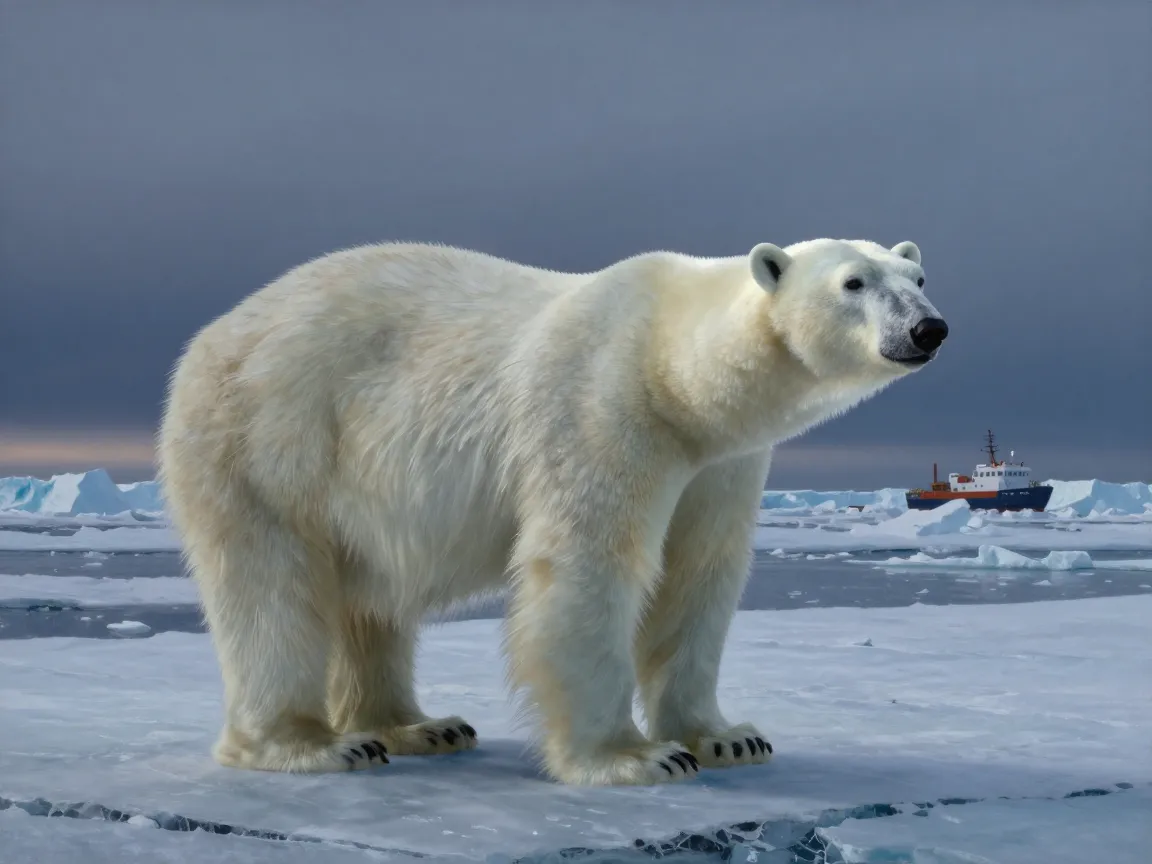
The first of the 6 Stunning Polar Bear Art Projects For Wildlife Artists is a single-subject portrait built around a conservation message rather than a decorative scene. This approach mirrors the work highlighted by Artists for Conservation, where visual storytelling is paired directly with scientific and advocacy content to build public awareness of sea ice decline.
To start, select a reference photo showing a polar bear in a habitat context rather than an isolated studio shot, ideally one showing thinning ice, open water, or a visibly lean body frame. Block in the animal using warm grays and cool blues rather than pure white, since true white paint flattens form. Reserve the brightest highlights for areas catching direct light, such as the top of the skull and the ridge of the back.
The advocacy element comes from the background choice. Instead of a generic snowy field, incorporate a visual cue tied to climate change, such as a cracked ice shelf, a distant research vessel, or a subtly fading horizon line. A short artist statement accompanying the finished piece, explaining the ecological detail included, adds credibility and turns the artwork into a communication tool rather than a purely aesthetic object.
Materials typically used for this project include acrylic or oil paint, a limited cool-toned palette, and a varnish finish suited for gallery or print display.
2. Large-Scale Mural Composition Drawing on Churchill’s Polar Bear Street Art Legacy
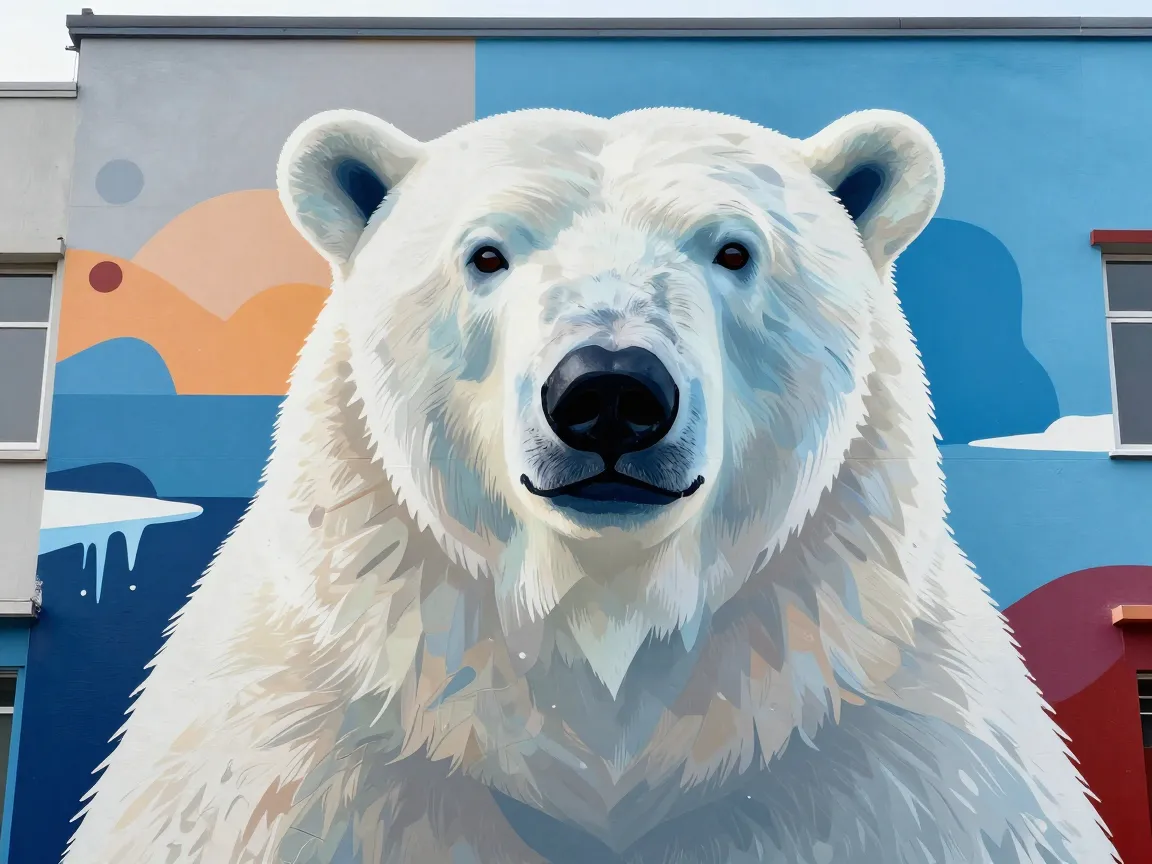
The second entry among these 6 Stunning Polar Bear Art Projects For Wildlife Artists scales the subject up dramatically. Spanish artist Dulk’s well-known mural, originally painted in Churchill, Manitoba for the SeaWalls Festival and revisited in recent heritage project coverage, demonstrates how a polar bear image can dominate an entire building face while still carrying detailed symbolism about climate and heritage.
Wildlife artists without access to an actual wall can practice this technique on a large canvas, plywood panel, or even a digital mural mockup. The key skill is working at scale while maintaining proportion accuracy, since small errors in a sketchbook become glaring at mural size. Start with a grid transfer method: divide a small reference sketch into a numbered grid, then replicate that grid at large scale on the final surface, filling in one square at a time.
Color choice matters enormously in mural work. Dulk’s style leans into bold, almost psychedelic color blocking layered over a recognizable animal form, blending realism with symbolic abstraction. Wildlife artists adapting this approach might use a reduced palette of three or four saturated colors against a dominant white-and-blue polar bear form, allowing the symbolism (melting ice, human impact, Arctic heritage) to emerge through background elements rather than literal detail.
This project works well for artists building a portfolio aimed at public art commissions, conservation nonprofits, or large community spaces such as schools and nature centers.
3. Branded Arctic Landscape Illustration Inspired by Corporate Conservation Partnerships
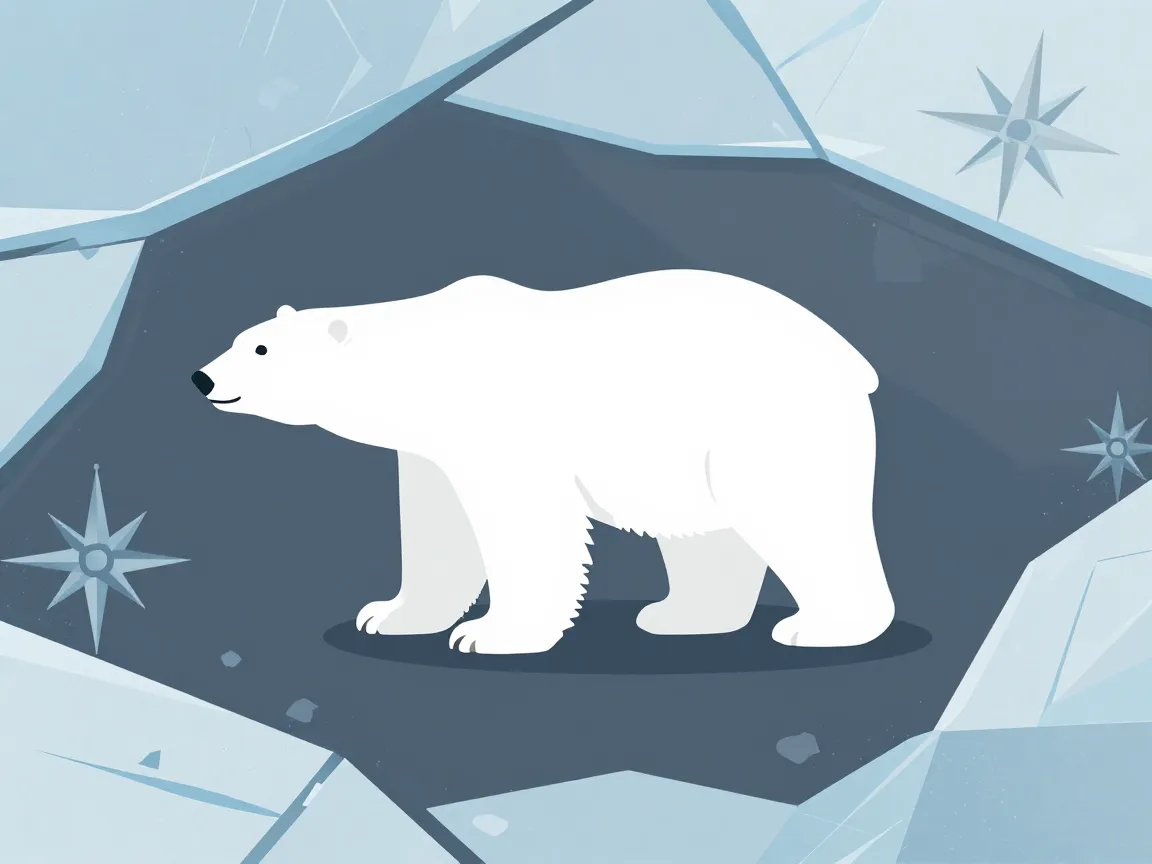
The third project among the 6 Stunning Polar Bear Art Projects For Wildlife Artists borrows from the commercial design world. Canada Goose’s partnership page with Polar Bears International features a stylized polar bear graphic paired with a top-down view of Arctic terrain, built specifically to symbolize the fragile habitat polar bears depend on. This kind of branded illustration blends flat design sensibility with wildlife accuracy, making it useful for artists interested in licensing, merchandise, or editorial illustration work.
To build a similar piece, start with a simplified polar bear silhouette rather than a fully rendered painting. Reduce the form to clean, confident linework, then build the Arctic environment around it using geometric or aerial-view elements, such as fractured ice patterns viewed from above, a stylized compass rose, or minimal line-art waves.
Color palettes for this style tend to favor a restrained combination of white, ice blue, charcoal, and a single accent color, often used for a logo-style mark or typographic element if the piece is intended for branded use. Vector illustration software works well here, though the same effect can be achieved with gouache and fine-tip ink pens for a hand-drawn version.
| Technique Focus | Best Medium | Skill Level |
|---|---|---|
| Conservation portrait | Acrylic or oil | Intermediate to advanced |
| Mural composition | Large canvas or digital mockup | Advanced |
| Branded illustration | Vector software or gouache | Beginner to intermediate |
This project suits wildlife artists aiming to collaborate with outdoor brands, conservation nonprofits, or publishers seeking modern, recognizable Arctic imagery.
4. Textured Fur Study Using Dimensional Mixed-Media Techniques
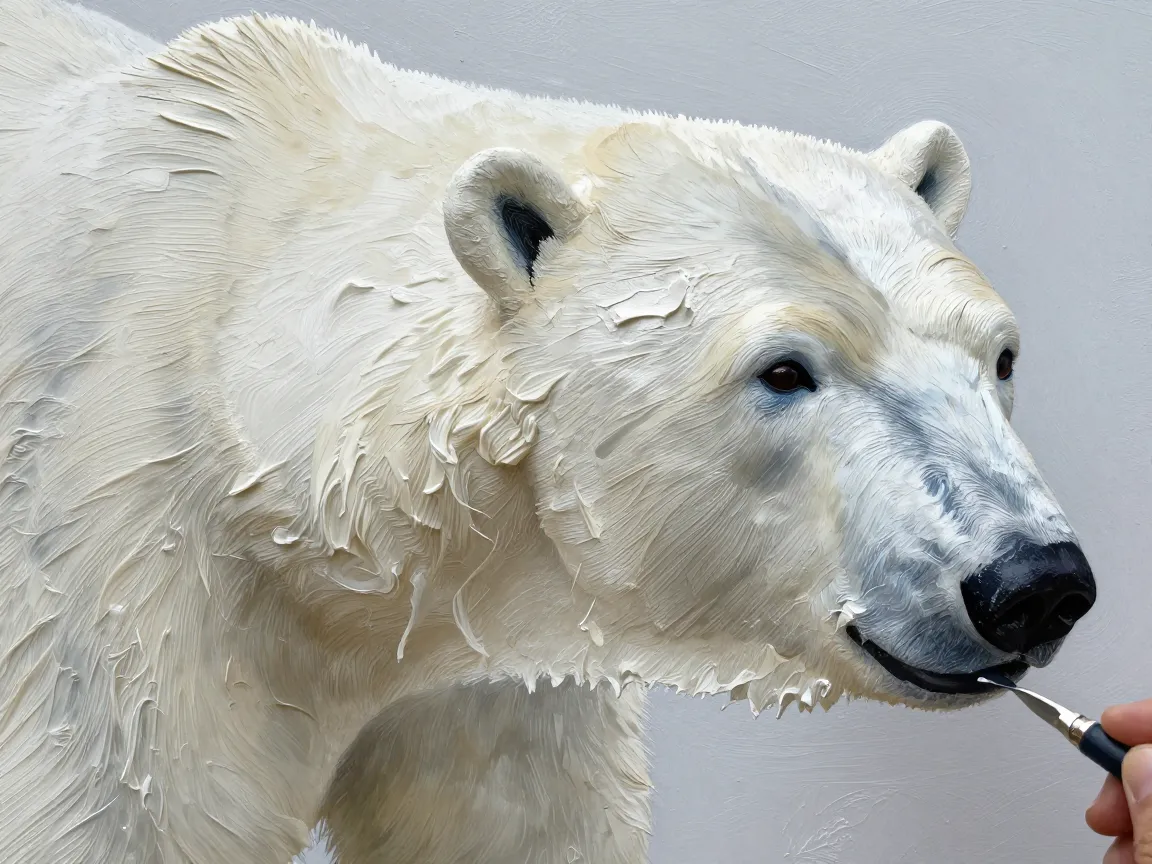
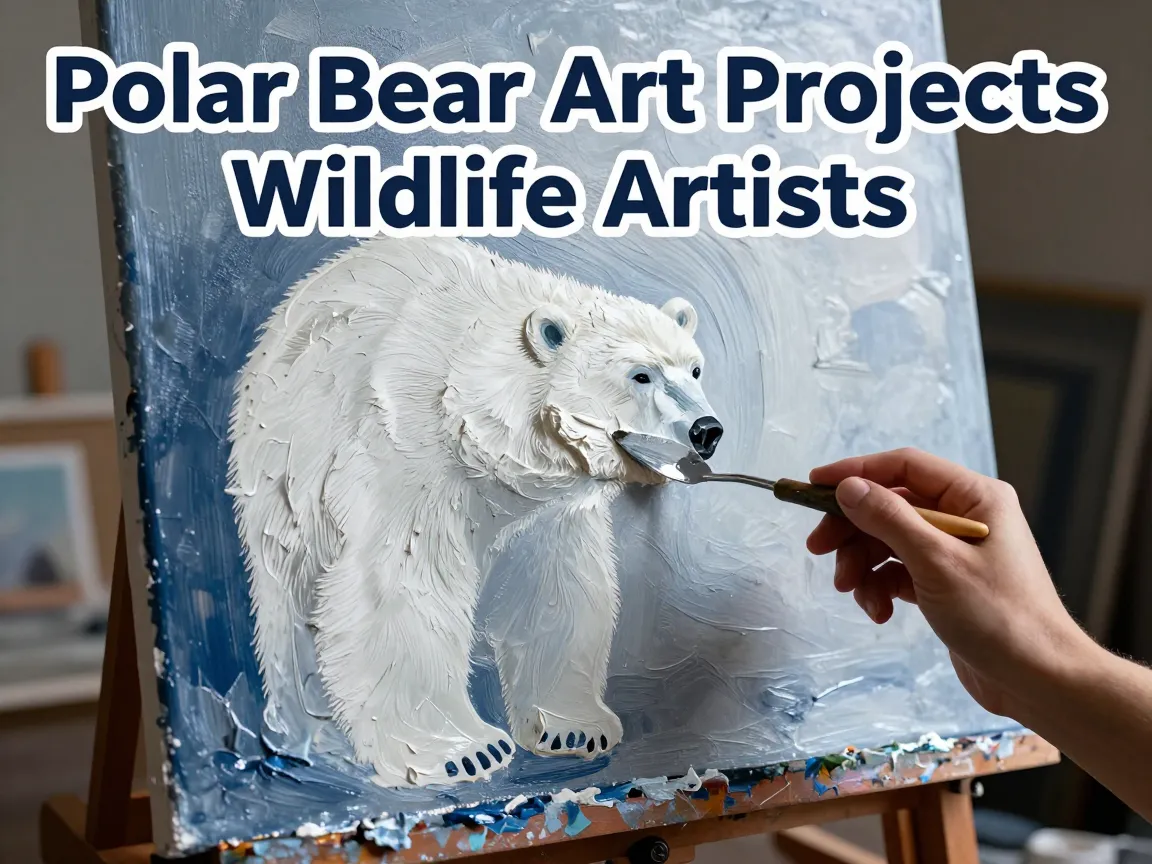
Fourth on this list of 6 Stunning Polar Bear Art Projects For Wildlife Artists tackles the single hardest technical problem in polar bear art: convincing fur texture. Several current craft and art tutorials, including Crafty Morning’s winter polar bear collection and I’m the Chef Too’s cozy polar bear crafts, use shaving cream mixed with white glue or paint to create a puffy, dimensional surface that mimics thick Arctic fur far better than flat brushwork.
For a studio-level adaptation, mix equal parts shaving cream and white acrylic paint, then apply it to a primed canvas or board using a palette knife in short, directional strokes that follow the natural lay of a polar bear’s coat, from the shoulders down the flank and along the legs. Once the base layer dries, add shadow glazing in thin, diluted gray-blue paint into the recessed texture to bring out depth, then finish with dry-brushed white highlights along the raised ridges.
This technique also pairs well with collage elements for secondary features. Several classroom-level lesson plans suggest adding separate cut-paper or felt pieces for the ears, nose, and eyes once the fur texture is complete, a method that can be elevated in fine art practice by using sculpted paper clay or thin leather for those same features.
The result is a tactile, almost sculptural surface that reads as genuinely furred from a distance, rather than relying purely on illusionistic brushwork.
“Texture is the difference between a polar bear that looks painted and one that looks alive.” This idea drives much of the current experimentation happening in wildlife art studios working with mixed media.
5. Watercolor Arctic Night Scene With Salt-Texture Ice Effects
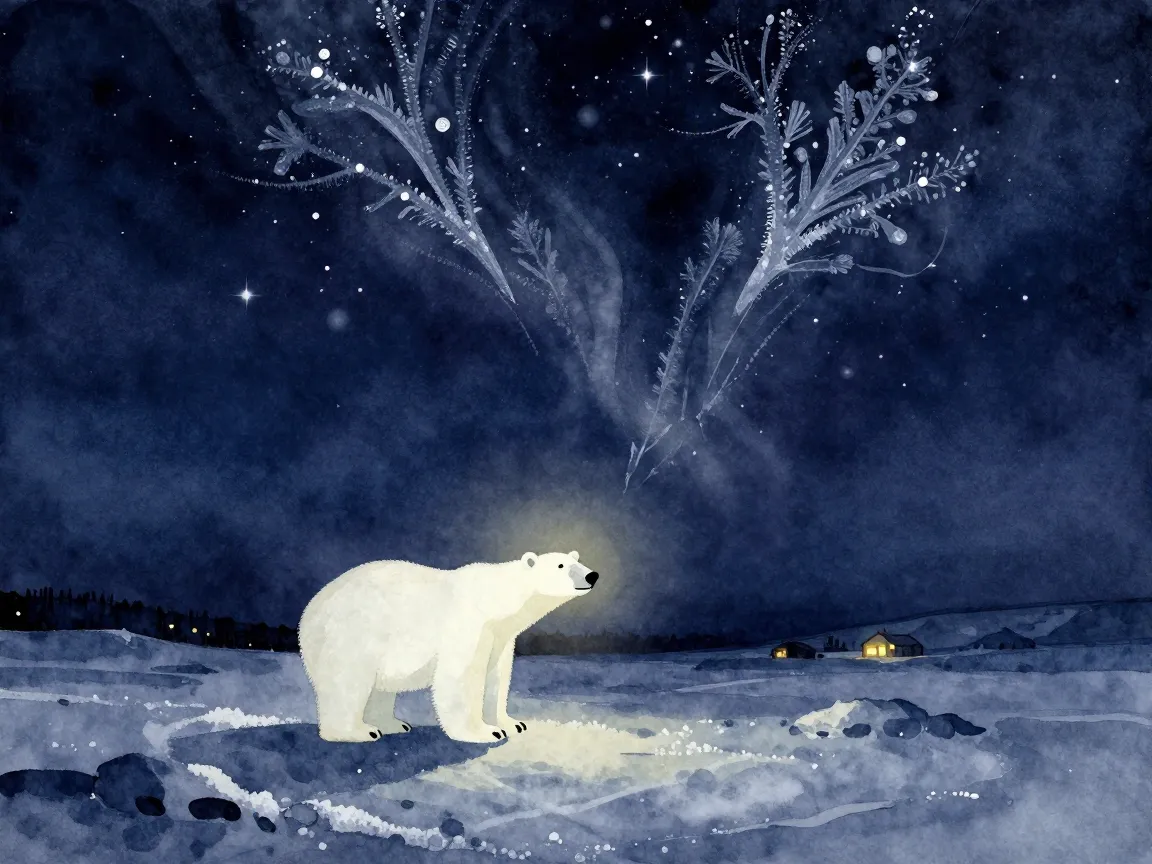
The fifth of the 6 Stunning Polar Bear Art Projects For Wildlife Artists focuses on atmosphere rather than the animal itself. A detailed tutorial method popularized through classroom art programs uses crayon-resist stars, watercolor washes, and salt sprinkled into wet paint to create naturally occurring icy, crystalline textures across the sky and snow.
To build this scene, first apply white or light-colored wax crayon in small dots and star shapes across the paper before painting, since the wax will resist the watercolor and preserve bright highlights for stars and moonlight. Next, lay down a deep indigo-to-black gradient wash for the night sky using wet-on-wet technique, letting the colors bleed naturally. While the sky layer is still damp, sprinkle coarse salt across the wet pigment; as the paint dries, the salt crystals absorb pigment and leave behind organic, frost-like patterns that closely resemble ice crystals or snow glitter.
The polar bear itself should be added after the background has fully dried, using opaque white gouache or a white colored pencil layered over the watercolor base so the figure stands out crisply against the textured night sky. A subtle warm light source, such as a faint aurora glow or distant cabin light, adds a focal point and emotional warmth to an otherwise cool composition.
This project works particularly well for artists building a series of Arctic night scenes intended for print sales, greeting cards, or illustrated storybooks, since the salt-texture technique photographs and reproduces beautifully at smaller scales.
6. Science-Informed Anatomical Study Using Current Polar Bear Research Data
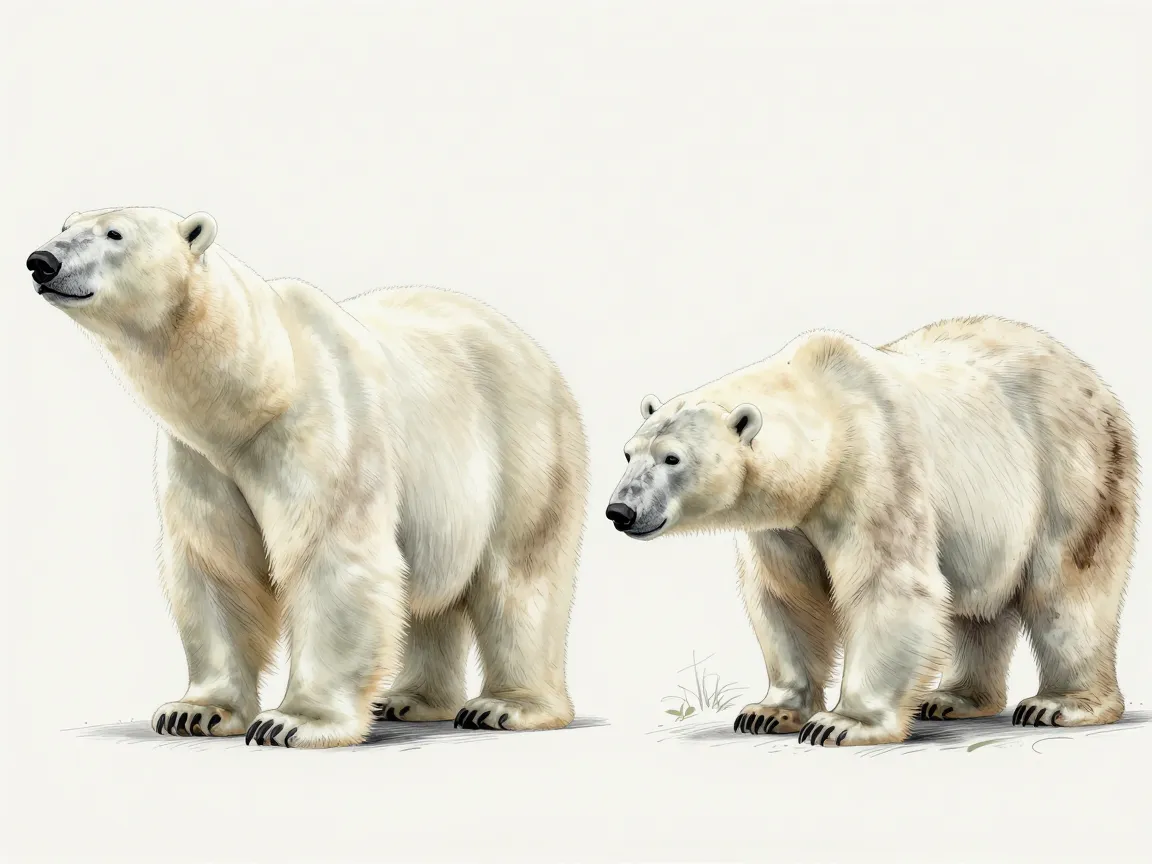
The sixth and final entry among the 6 Stunning Polar Bear Art Projects For Wildlife Artists steps away from decorative technique entirely and focuses on biological accuracy. The Cincinnati Zoo’s CREW Polar Bear Signature Project has published detailed hormone data on female polar bears, tracking markers such as follicle-stimulating hormone, growth hormone, leptin, luteinizing hormone, and prolactin. While this research is not art-focused, it gives wildlife artists concrete physiological context for distinguishing a healthy, well-conditioned polar bear from one under nutritional or environmental stress.
For this project, create a comparative anatomical study, essentially a side-by-side sketch pairing a visibly healthy polar bear with a leaner, stressed individual. Key visual markers informed by current research include differences in muscle definition along the shoulders and haunches, the visible presence or absence of a fat layer along the flank, coat condition (thick and glossy versus patchy or dull), and posture, since stressed animals often carry their head lower and show more visible rib or hip structure.
This study format works especially well for artists producing educational materials, conservation presentations, or gallery pieces designed to spark conversation about Arctic habitat loss. Pairing the finished artwork with a short, factual caption referencing body condition science adds a layer of credibility that purely decorative polar bear art often lacks.
Artists interested in this approach should treat it as a research exercise first and a painting exercise second. Reviewing multiple verified reference photographs showing polar bears at different body conditions, rather than relying on a single idealized image, produces far more convincing and scientifically honest results.
Comparing Techniques Across the 6 Stunning Polar Bear Art Projects For Wildlife Artists
Choosing which of these six projects to start with depends largely on available materials, skill level, and intended use for the finished piece. The table below summarizes the core differences to help artists pick a reasonable starting point.
| Project | Primary Challenge | Typical Time Investment |
|---|---|---|
| Conservation portrait | Emotional storytelling and symbolism | Several sessions |
| Mural composition | Scale and proportion accuracy | Multi-day project |
| Branded illustration | Simplification without losing identity | One to two sessions |
| Textured fur study | Dimensional material handling | One extended session |
| Watercolor night scene | Controlled wet media and salt timing | One to two sessions |
| Anatomical study | Research accuracy and comparative drawing | Several sessions |
Artists new to wildlife subjects often find the most success starting with the textured fur study or the watercolor night scene, since both rely on relatively forgiving, experimental materials. More advanced artists, particularly those building a conservation-focused portfolio, tend to gravitate toward the anatomical study or the storytelling portrait, both of which demand stronger reference research and anatomical understanding.
Practical Tips for Bringing These Projects to Life
A few consistent lessons emerge across all six projects, regardless of medium or skill level.
Reference quality matters more than technique. A high-resolution, well-lit photograph of a real polar bear in a natural or zoo habitat will produce better results than a low-quality internet image, no matter how skilled the artist is at rendering fur or ice.
Color temperature controls realism. True white paint almost always flattens a polar bear’s form. Mixing in subtle blues, grays, and even warm ochres for shadow areas keeps the coat looking three-dimensional rather than cartoonish.
Background context adds meaning. Several current projects, from Dulk’s Churchill mural to the Canada Goose and Polar Bears International collaboration, demonstrate that the environment surrounding a polar bear often carries as much narrative weight as the animal itself. Cracked ice, open water, or a stark horizon line can communicate climate urgency without needing explicit text.
Texture techniques transfer across skill levels. Methods originally designed for classroom craft projects, such as shaving-cream fur or salt-textured watercolor skies, scale up surprisingly well into fine art practice when combined with more refined materials like artist-grade acrylics or professional watercolor paper.
Research strengthens credibility. Incorporating real biological or ecological data, even loosely, gives finished artwork a stronger foundation and makes it more compelling for conservation-minded audiences, galleries, and publishers alike.
Conclusion: Turning Inspiration Into Finished Polar Bear Artwork
Polar bear art has moved well beyond simple snow-scene illustration. The six approaches outlined above, drawn from conservation advocacy, large-scale mural work, branded design, mixed-media texture techniques, atmospheric watercolor methods, and current biological research, give wildlife artists a genuinely comprehensive toolkit for 2026 and beyond.
The strongest next step is simple: pick one project from this list that matches current skill level and available materials, then commit to finishing it before moving to the next. Artists building a portfolio around Arctic wildlife should aim to eventually complete all six, since each one strengthens a different technical muscle, from color temperature control to large-scale composition planning. Exploring 6 Stunning Polar Bear Art Projects For Wildlife Artists is ultimately less about mastering a single style and more about building a flexible, well-rounded approach to one of nature’s most visually demanding and emotionally resonant subjects.