Simple Black Cat Drawing Ideas for Beginners: Easy Step-by-Step Projects
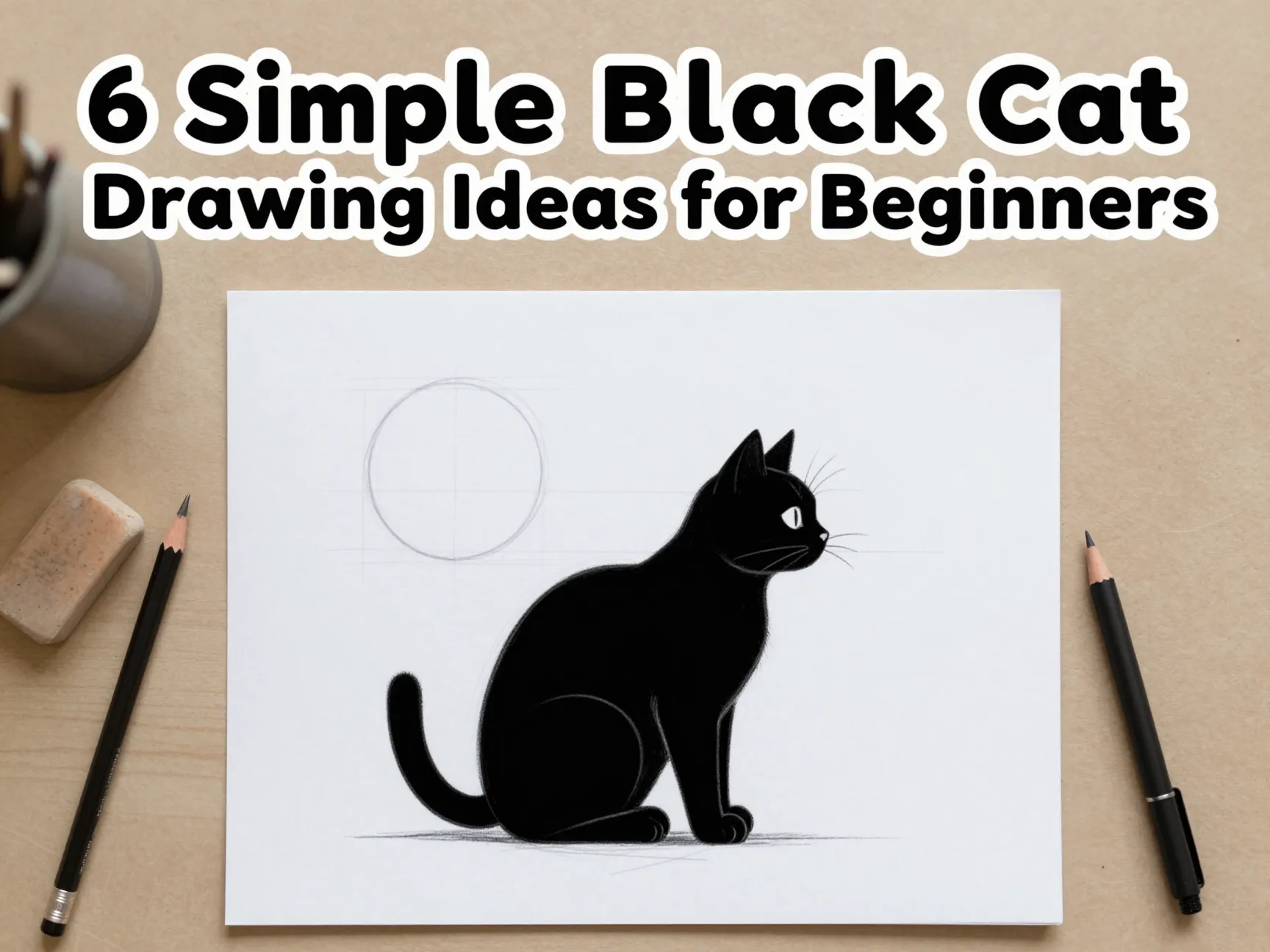
A blank sheet of paper intimidates more new artists than any complicated subject ever could. Yet a black cat, arguably one of the most forgiving shapes in all of drawing, can be built from nothing more than a circle, two curves, and a triangle. That simplicity is exactly why art teachers and online tutorials keep returning to this subject for absolute beginners. This guide collects 6 Simple Black Cat Drawing Ideas for Beginners drawn from classroom-tested lessons, kid-friendly video tutorials, and construction-based drawing methods, so anyone with a pencil and a few minutes can produce a finished, confident-looking cat.
Disclosure: This post contains affiliate links. As an Amazon Associate, we earn from qualifying purchases, and at no extra cost to you.
Whether the goal is a Halloween card, a doodle in the margins of a notebook, or the first step toward more advanced animal illustration, these six approaches cover different poses, styles, and skill-building goals. Each one breaks the cat down into shapes a beginner already knows how to draw: circles, ovals, triangles, and simple curved lines.
Key Takeaways
- All 6 Simple Black Cat Drawing Ideas for Beginners rely on basic shapes like circles, ovals, and triangles rather than complex anatomy.
- Only a pencil, eraser, plain paper, and optionally a black pen or markers are needed to complete any of these projects.
- Beginners can choose from sitting, standing, front-facing, silhouette, construction-line, and head-only cat styles depending on their comfort level.
- Building confidence with simple shapes now creates a foundation for more advanced, realistic black cat drawings later.
- Common beginner mistakes, such as skipping guidelines or rushing the coloring stage, are easy to avoid with a few practical adjustments.
Why Black Cats Make Perfect Subjects for Beginner Artists
Black cats solve two problems that trip up new artists constantly: proportion anxiety and color complexity. Because the entire body is eventually filled in with solid black or dark shading, small errors in line placement often disappear once the coloring stage begins. There is no need to blend multiple fur tones or worry about matching a reference photo’s exact markings.
This forgiving nature explains why so many long-running tutorials, from classroom-style lessons to short video walkthroughs, keep choosing black cats as an entry point for new artists. Recent updates to several beginner guides in 2026 continue to emphasize the same core idea: start with rounded shapes for the head, then build outward using curves rather than sharp, technical lines. That approach keeps the drawing process approachable, especially for kids, hobbyists returning to art after years away, or anyone who has never taken a formal drawing class.
A black cat’s silhouette does most of the storytelling, which means a beginner’s early mistakes rarely ruin the final result.
What You’ll Need to Try These 6 Simple Black Cat Drawing Ideas for Beginners
Materials guidance across nearly every beginner tutorial stays remarkably consistent. No specialty tools are required, and most households already have everything needed on hand.
| Item | Purpose | Optional Alternative |
|---|---|---|
| Regular pencil | Sketching guidelines and shapes | Colored pencil for a softer line |
| Eraser | Removing guideline shapes after sketching | Kneaded eraser for cleaner cleanup |
| Plain paper | Drawing surface | Sketchbook or printer paper |
| Black ink pen | Outlining the final drawing | Fine-tip marker |
| Black marker or crayon | Filling in solid color | Colored pencils for a softer black |
Nothing on this list requires a trip to a specialty art store. Several widely used tutorials specifically point out that a standard pencil, an eraser, and a sheet of paper are the only true requirements, making this one of the most accessible drawing projects for a first attempt. The pen and marker are useful for a cleaner final look, but early practice sketches can stay in pencil only.
6 Simple Black Cat Drawing Ideas for Beginners to Start With Today
The first three ideas below focus on classic poses that appear again and again in classroom art lessons and beginner tutorials. Each one introduces a slightly different skill, from basic body proportion to expressive facial features.
1. Sitting Profile Cat
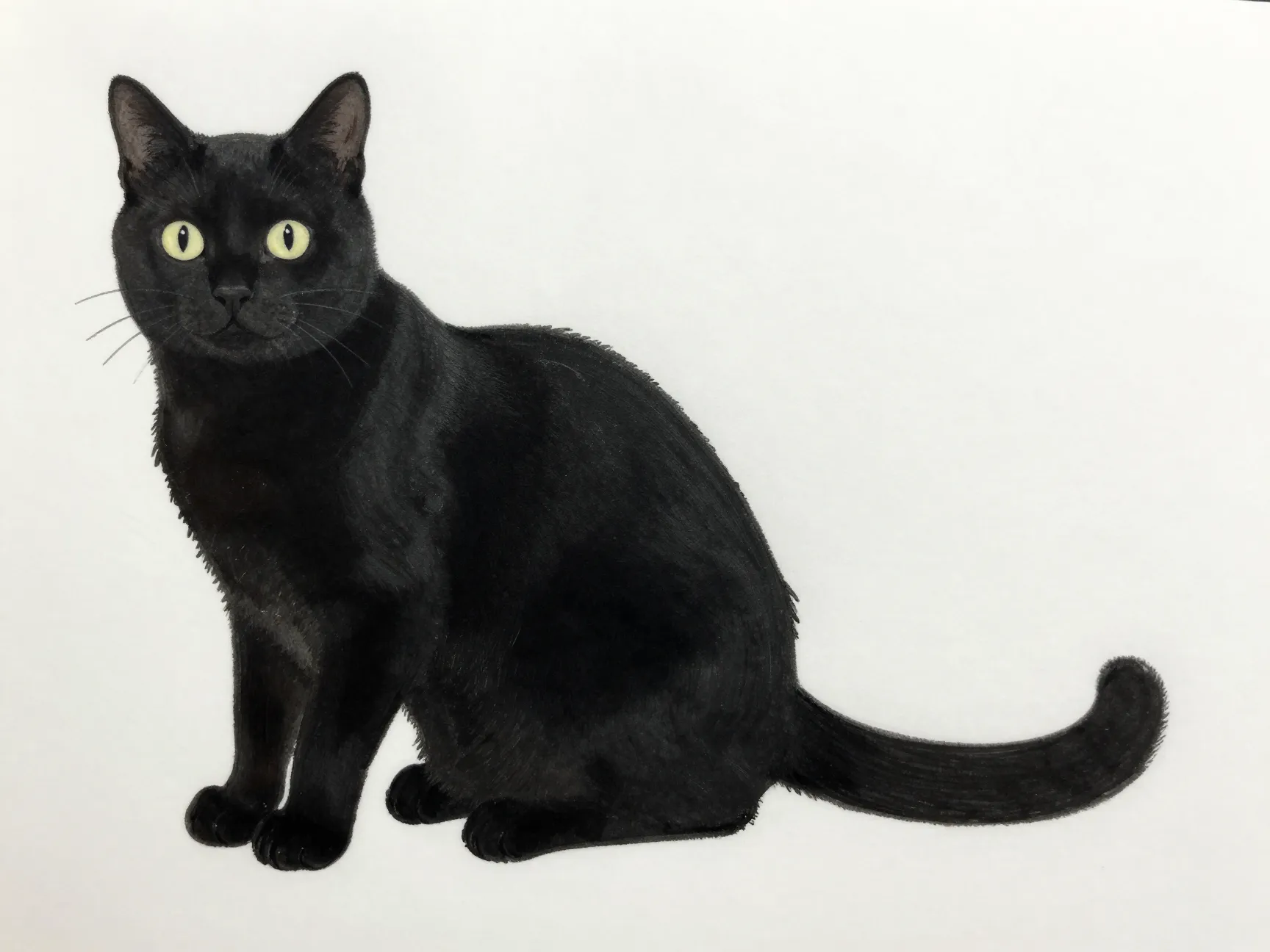
The sitting profile cat is one of the most frequently taught poses in classroom-style drawing lessons, and for good reason. Start with a rounded head shape, then add a curved back that flows down into a rounded haunch. Two front legs extend straight down to the ground, while the tail curls around the body in a simple C-shape. After the main shapes are sketched lightly in pencil, guideline shapes get erased, leaving clean curves ready for facial details like pointed ears, a small triangular nose, and whisker dots. This pose teaches proportion and balance without requiring any complicated leg positioning, since only two legs are visible from the side.
2. Front-Facing Cute Cartoon Cat
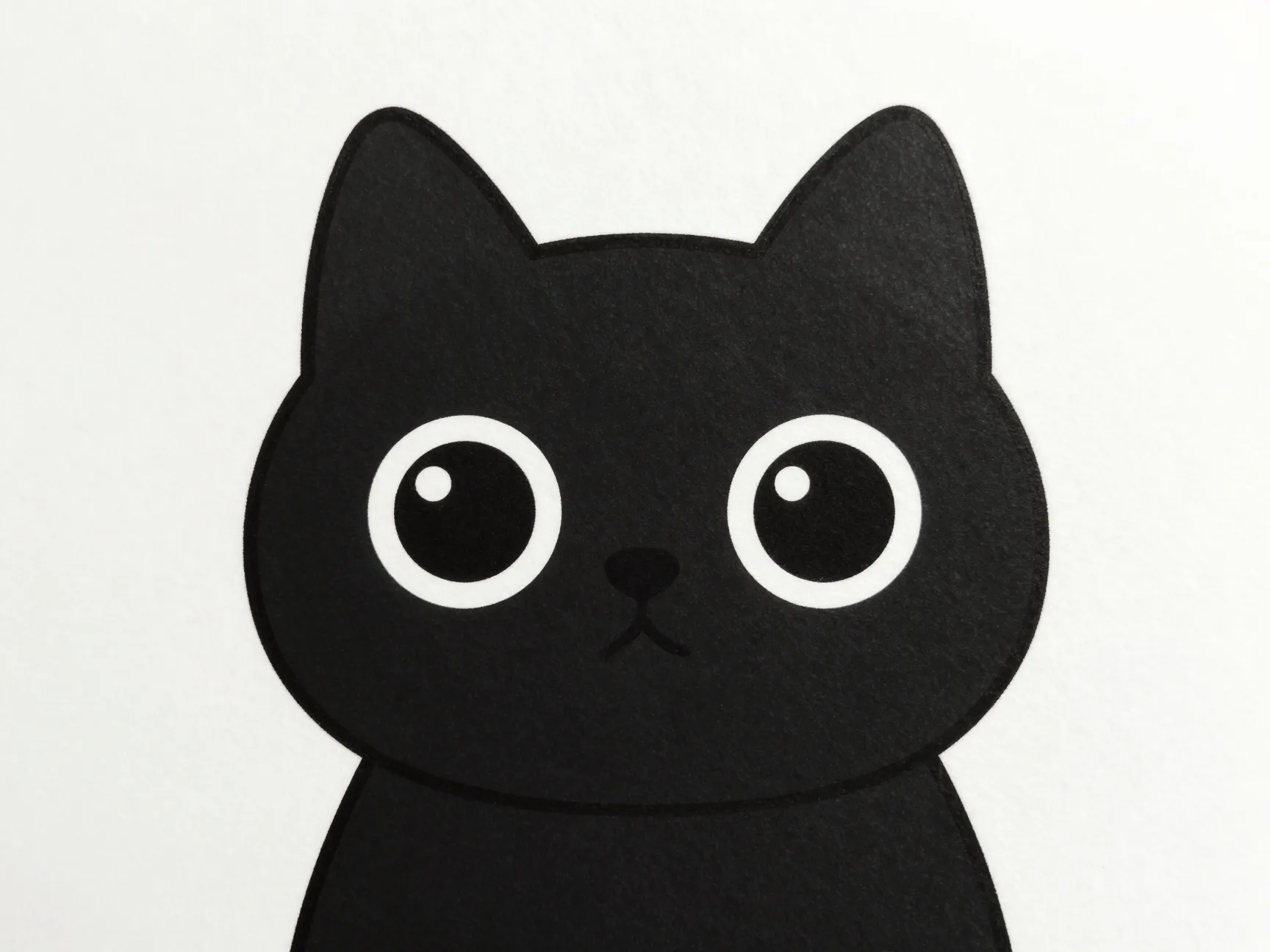
A front-facing cartoon cat trades realism for charm. Begin with a rounded head, almost like a wide oval, and add two triangular ears at the top. The body becomes a slightly larger oval beneath the head, often without a visible neck line, which keeps the drawing simple and approachable. Large circular eyes with small white highlight dots give the cat an appealing, friendly expression. This idea works particularly well for greeting cards, stickers, or any project where a cute, approachable design matters more than anatomical accuracy.
3. Tall Stylized Cat with Sparkling Eyes
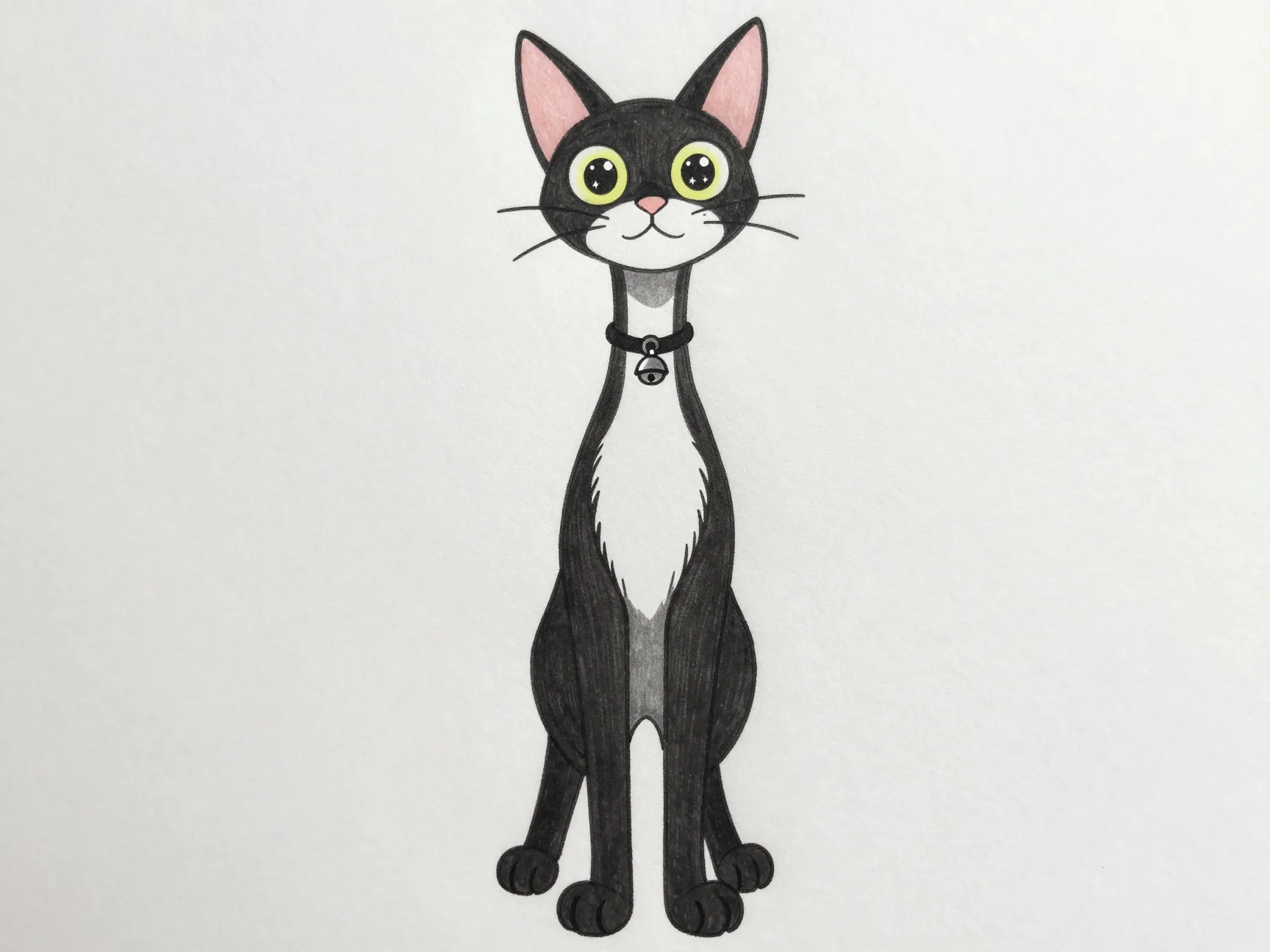
This version stretches the body vertically, creating a taller, more elegant silhouette. The head sits on a slightly extended neck, and the body narrows toward the bottom before flaring out into simple paw shapes. The defining feature here is the eyes: instead of plain circles, they include small star-shaped highlights or extra sparkle marks, giving the drawing a lively, animated quality. A thin collar with a small bell or bow can be added at the neck for extra personality. This idea is popular in kid-focused tutorials because it rewards a bit of creative decoration without demanding advanced technique.
Three More Simple Black Cat Drawing Ideas for Beginners
The next three ideas shift focus toward construction methods and stylistic choices rather than specific poses, giving beginners tools they can reuse across many future drawings.
4. Simple Silhouette Cat for Coloring
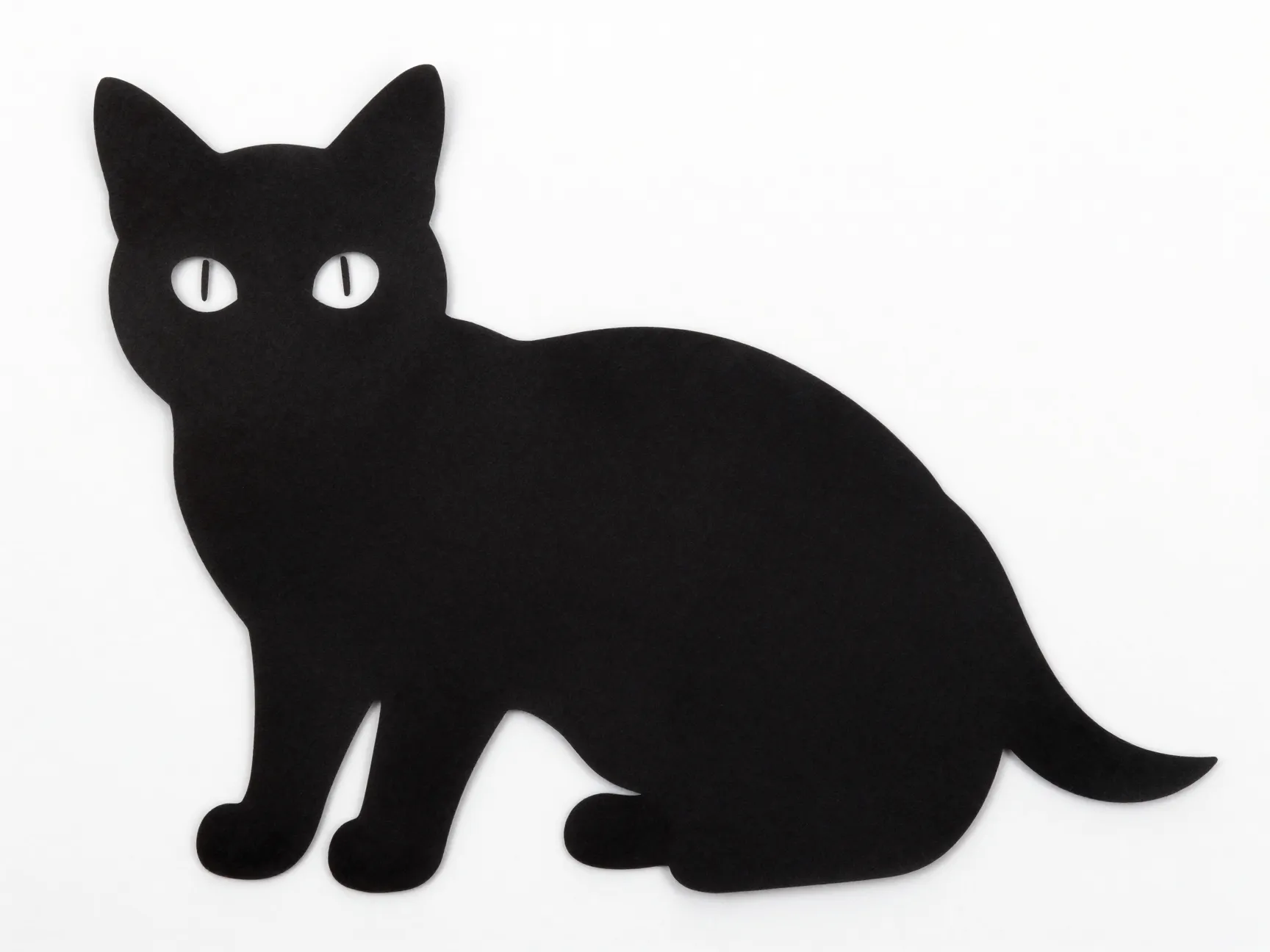
Sometimes the fastest way to build confidence is to skip detailed facial features entirely. The silhouette method uses two curved lines that meet in points, forming the basic head-and-ear shape, followed by a simple curved body outline. Once the shape looks balanced, the entire form gets filled in solid black, leaving only the eyes as small colored or white shapes. This method is ideal for younger learners or for anyone who wants a fast, satisfying result in under five minutes. It also transfers well to stamps, stencils, or Halloween decorations, since the strong silhouette reads clearly from a distance.
5. Construction-Line Cat from Rectangles and Ovals
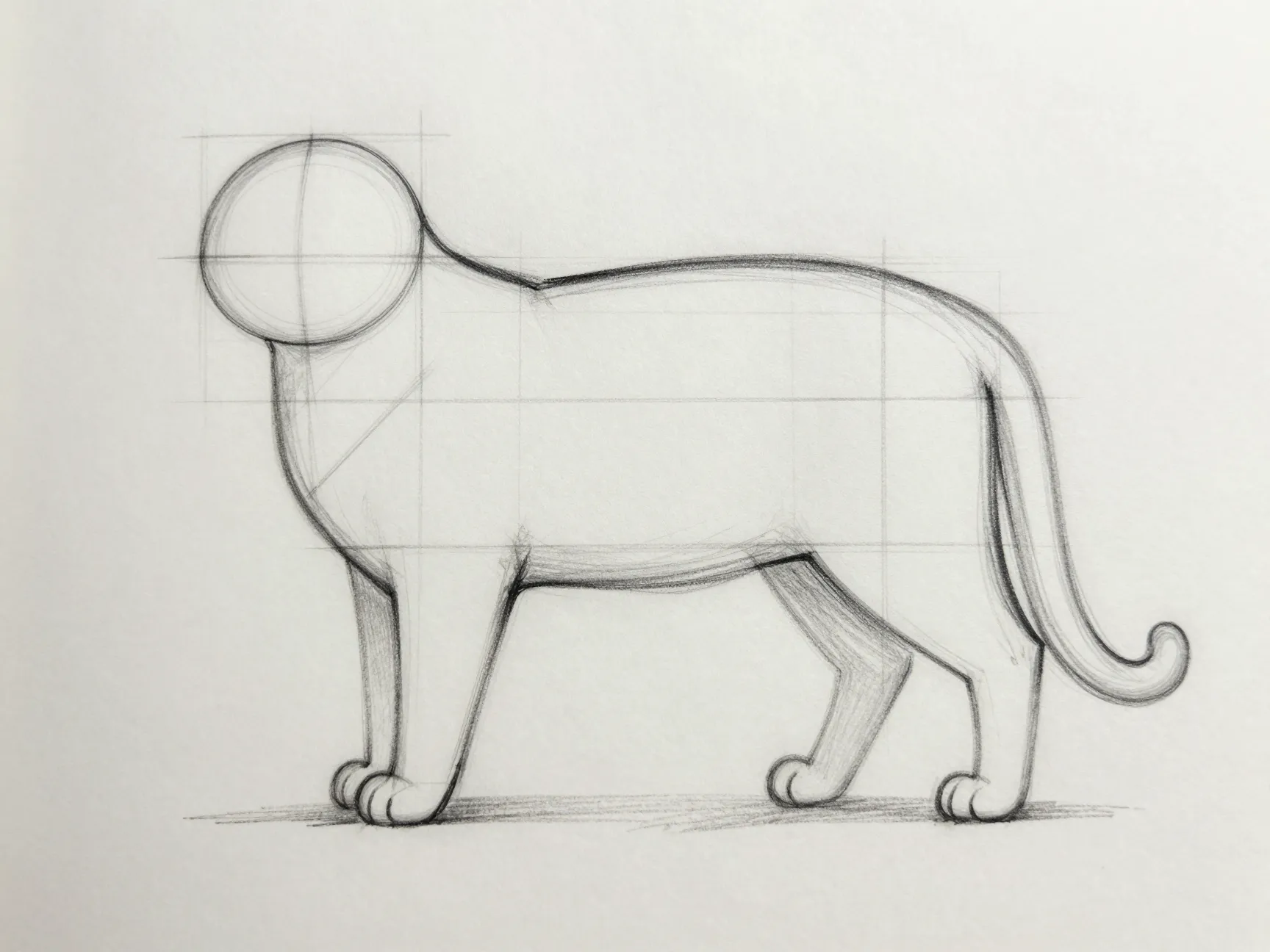
This idea introduces a more structured drawing method used in several step-by-step guides. Instead of freehand curves, the cat is built from a rectangle for the body and ovals for the head, legs, and tail base. These shapes act as scaffolding, similar to how figure artists block in human proportions before refining details. Once the basic rectangle-and-oval skeleton looks correct, the straight edges get rounded off and blended into smoother, cat-like curves. This method takes slightly longer than the freehand approaches above, but it teaches a transferable skill: almost any animal can be blocked in using the same rectangle-and-oval logic, which makes this one of the more valuable long-term lessons among these 6 Simple Black Cat Drawing Ideas for Beginners.
6. Head-Only Cat for Practicing Facial Features
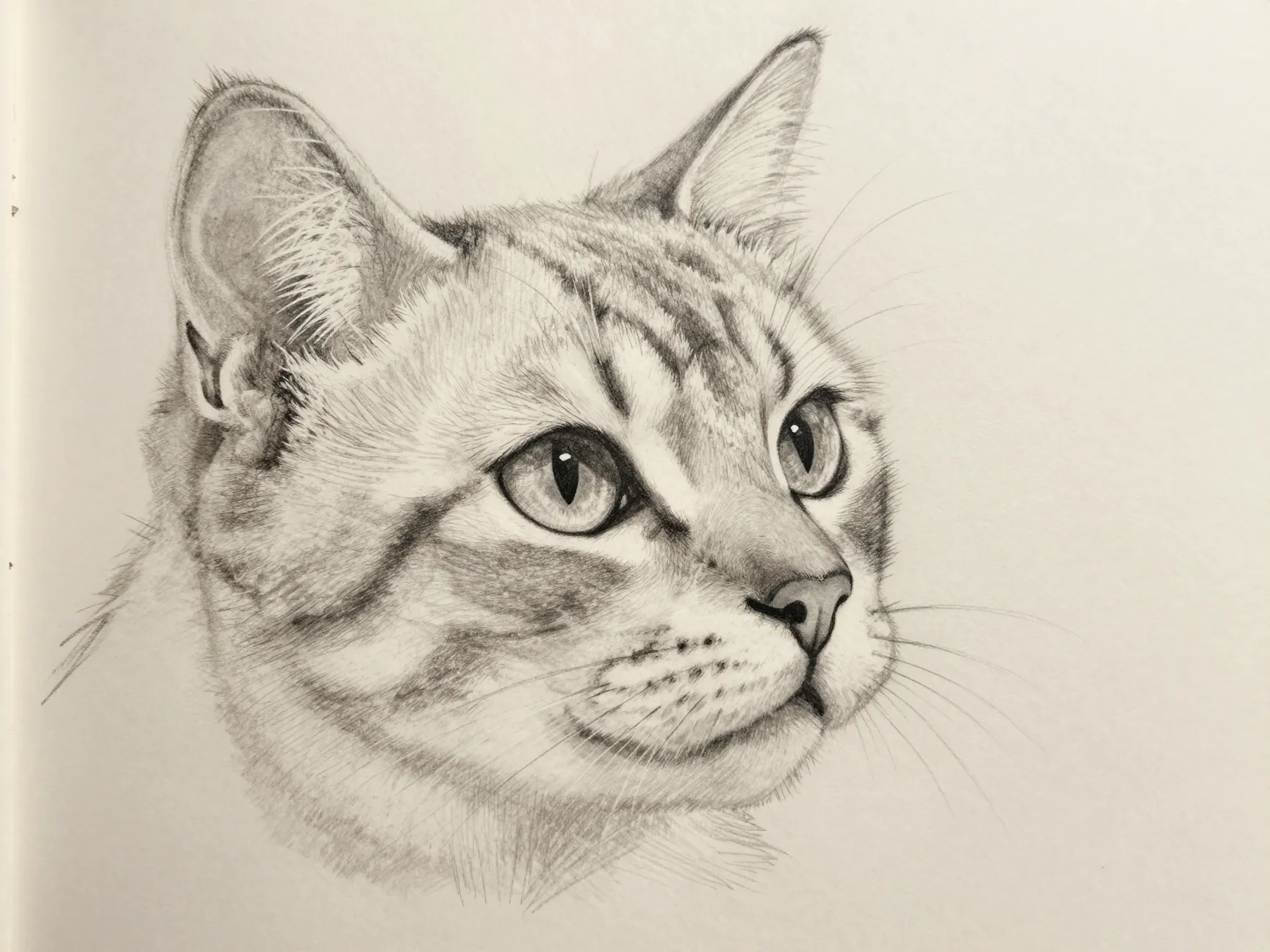
Not every drawing needs a full body. Focusing on just the head allows a beginner to spend all their attention on the details that give a cat personality: almond-shaped or round eyes, a small triangular or heart-shaped nose, short whisker lines, and the exact angle of the ears. This idea works well as a warm-up exercise before attempting a full-body drawing, or as a standalone project for a profile picture, sticker, or small greeting card illustration. Practicing several head-only sketches in a row is one of the fastest ways to build comfort with facial proportion before tackling a more complex pose.
Tips to Make Your Black Cat Drawings Look Polished
A few small adjustments separate a rough sketch from a finished-looking illustration. These tips apply across all 6 Simple Black Cat Drawing Ideas for Beginners listed above.
- Sketch lightly first. Guideline shapes should be barely visible so they erase cleanly without leaving smudge marks behind.
- Keep ear shapes slightly asymmetrical. Perfectly matched, geometric ears often look stiffer than ears with a small natural variation in angle or size.
- Add highlight dots to the eyes. A single small white or light-colored dot inside each eye instantly makes a flat black shape look alive.
- Vary line weight on the outline. Slightly thicker lines along the back and tail, with thinner lines near the paws and whiskers, add visual depth without any shading.
- Wait until the pencil sketch is fully approved before switching to pen or marker. Rushing the ink stage locks in mistakes that pencil could have fixed.
A confident black cat drawing rarely comes from talent alone. It comes from a clean, simple shape foundation built one guideline at a time.
Common Mistakes Beginners Make and How to Avoid Them
Even with simple shapes, a few recurring errors show up across almost every beginner’s first few attempts.
Skipping the guideline stage. Jumping straight to final lines without a rough shape sketch usually leads to uneven proportions. Every one of the 6 Simple Black Cat Drawing Ideas for Beginners works better when a light pencil skeleton comes first.
Making the head too small. Cats have proportionally large heads compared to many other animals. A head that looks slightly oversized in the sketch stage usually reads as correctly proportioned once the body and legs are added.
Overcomplicating the ears. Beginners sometimes try to add fur texture or shading inside the ears immediately. Simple filled triangles or curves work better until basic shape confidence improves.
Rushing the black fill-in stage. Coloring in a solid black cat shape takes patience. Uneven pressure with a marker or crayon can leave streaky patches. Slow, layered coloring produces a cleaner, more professional-looking result.
Ignoring the tail’s role in balance. The tail is not just decoration. A well-placed curved tail helps a sitting or standing cat look grounded rather than tipped over.
Where These Ideas Can Lead Next
Beginners who work through all six ideas above often find themselves ready for slightly more advanced projects. Some tutorials extend the same shape-building logic into detailed, realistic black cat faces, layering shading over the same basic head and eye construction used in simpler cartoon versions. The core lesson carries forward: even highly detailed, shaded artwork usually starts from the same simple shapes taught in beginner lessons.
Seasonal themes also offer natural next steps. Because black cats are strongly associated with Halloween, many artists eventually experiment with variations like a cat wearing a small witch hat, a cat silhouette against a full moon, or a cat perched on a simple pumpkin shape. These seasonal twists use the exact same construction methods covered in this guide, just with a themed background or small costume accessory added at the end.
Frequently Asked Questions
What is the easiest black cat drawing idea for a complete beginner?
The simple silhouette cat is generally the fastest and most forgiving option, since it relies on just two curved lines and a solid black fill, with no detailed shading required.
Do these drawing ideas work for kids?
Yes. Several of the tutorials referenced in beginner drawing guides are specifically designed for children, using large simple shapes, sparkling cartoon eyes, and bold outlines that are easy for young artists to replicate.
What materials are required to try these 6 Simple Black Cat Drawing Ideas for Beginners?
A regular pencil, an eraser, and plain paper are enough to complete any of the six ideas. A black ink pen and a marker or crayon are helpful for a cleaner final result but are not strictly necessary.
Can these simple ideas be turned into more advanced drawings later?
Yes. The same shape-building approach used in beginner tutorials, starting with basic circles and ovals, also forms the foundation for more advanced and realistic black cat illustrations that add detailed shading and fur texture.
Which idea teaches the most transferable drawing skill?
The construction-line method using rectangles and ovals tends to offer the most long-term value, since the same blocking technique applies to drawing many other animals beyond cats.
Conclusion
Learning to draw does not require complicated tools or years of formal training. As this collection of 6 Simple Black Cat Drawing Ideas for Beginners demonstrates, a circle, a few curves, and a triangle are enough to produce six distinct, satisfying black cat drawings. Start with whichever idea feels most approachable, whether that is the fast silhouette method or the more structured rectangle-and-oval construction technique. Practice each pose a few times, apply the polish tips above, and watch how quickly small shape-building skills turn into confident, finished artwork. The next step is simple: pick up a pencil, choose one idea from this list, and start sketching today.