Golden Doodle Puppy Care Tips For Your New Furry Family Member
A Goldendoodle puppy’s brain absorbs more life-shaping information in its first four months than at almost any other point in its life. What happens during weeks eight through sixteen, in particular, quietly determines whether an owner ends up with a confident, easygoing family dog or a nervous, reactive adult. Most new owners do not realize this window even exists until it has already closed. That is exactly why a structured approach matters, and these 6 Golden Doodle Puppy Care Tips For Your New Furry Family Member are built around the routines, feeding schedules, and health checks that veterinarians and experienced breeders consistently point to in 2026 as the difference between a smooth first year and a stressful one.
Disclosure: This post contains affiliate links. As an Amazon Associate, we earn from qualifying purchases, and at no extra cost to you.
Golden Doodles combine the intelligence of the Poodle with the warmth of the Golden Retriever, which makes them wonderfully trainable but also sensitive to inconsistency. A puppy that is fed on a random schedule, exercised too hard too soon, or left ungroomed for weeks develops habits and health issues that are far harder to correct later. The tips below translate current veterinary and breeder guidance into a practical, week-one-ready plan.
Key Takeaways
- Set up the home, crate, and a predictable feeding and nap routine before the puppy ever walks through the door.
- Feed three to four small meals daily using slow-feeder bowls, and follow the one-ounce-of-water-per-pound guideline for hydration.
- Protect growing joints with the five-minute exercise rule instead of long walks or intense play before 12 to 18 months.
- Prioritize socialization between 8 and 16 weeks, aiming for roughly ten new sounds, surfaces, and people each week.
- Build a proactive potty and nap schedule, since overtired puppies are more likely to bite, scream, and have accidents.
- Start grooming, dental, and vet-visit routines early to prevent painful mats, ear infections, and gaps in vaccination protection.
Why These 6 Golden Doodle Puppy Care Tips For Your New Furry Family Member Matter
New owners often assume puppy care is mostly instinct and affection. In reality, a Goldendoodle’s temperament, joint health, coat condition, and house-training success are shaped by specific, time-sensitive decisions made in the first few weeks at home. Skipping a scheduled potty break, over-exercising a five-month-old puppy, or delaying the first grooming session may seem minor in the moment, but each of these choices compounds over time. A puppy that is not properly socialized by 16 weeks may struggle with fear-based reactivity for life. A Goldendoodle exercised too hard before its growth plates close may develop early joint problems. The sections below break down exactly how to avoid these outcomes, one practical step at a time.
1. Prepare The Home And Set A Predictable Routine
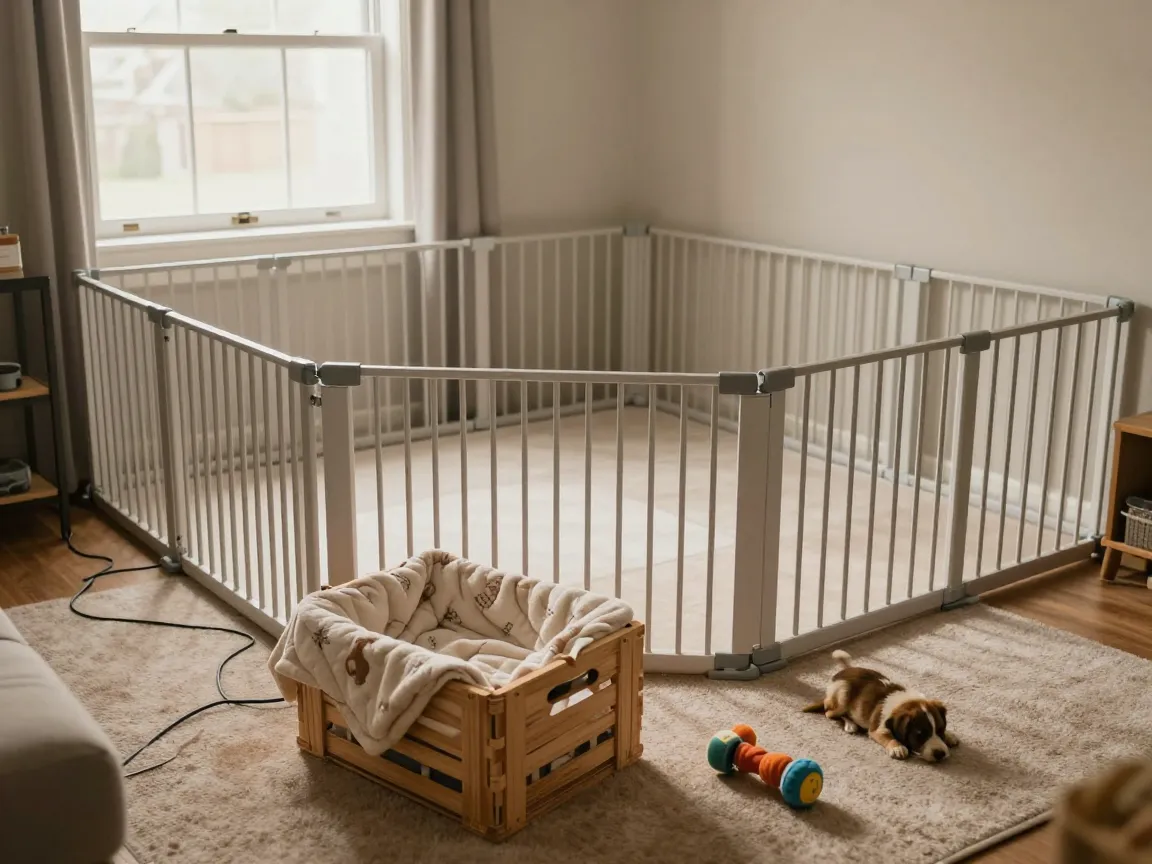
The single most overlooked step in Golden Doodle puppy care happens before the puppy even arrives. Homes need to be puppy-proofed the same way they would be for a toddler: electrical cords tucked away, toxic houseplants removed, and small swallowable objects picked up off floors and low tables. Baby gates or exercise pens should divide the home into clear zones for eating, playing, and resting, so the puppy always knows what behavior belongs in which space.
The car ride home sets the emotional tone for everything that follows, so it should be kept calm and quiet, without excited chatter or loud music. Upon arrival, the puppy should be taken directly to the designated potty spot before entering the house, reinforcing from the very first minute where bathroom breaks happen. Crate training should begin that same first night, with the crate placed in the bedroom for at least the first two weeks so the puppy feels close to its new family during a vulnerable transition.
Visitors should be limited for the first one to three days. As exciting as a new puppy is, a steady stream of guests, noise, and handling can overwhelm a young dog that is still adjusting to a new environment, new smells, and a new family structure. A quiet, predictable first few days pays off with a calmer, more secure puppy in the weeks ahead.
2. Feed Small, Frequent Meals With Bloat-Safe Feeding Tools
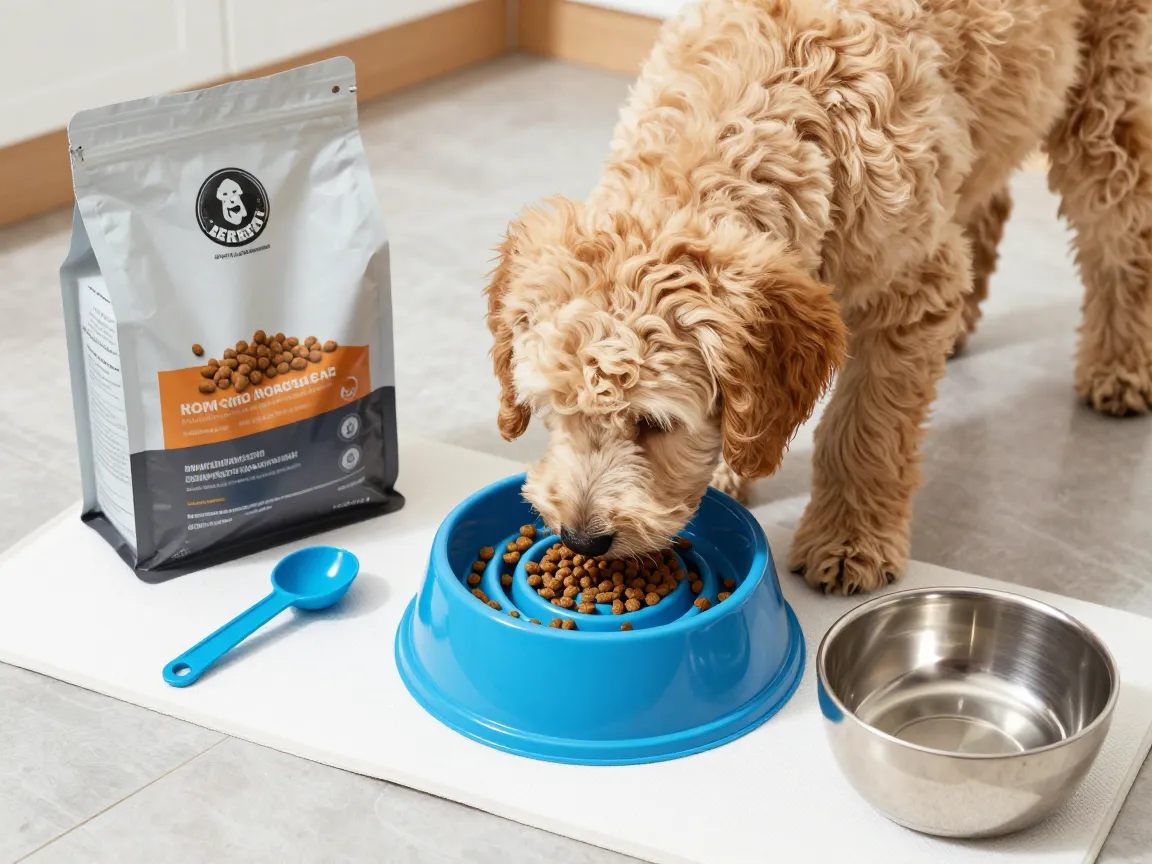
Free feeding might seem convenient, but current feeding guidance for Goldendoodle puppies favors scheduled, portioned meals instead. Puppies under 12 weeks generally do best with four meals per day, tapering to three meals through the middle puppy months, then settling into two meals daily by around six months of age and continuing that schedule into adulthood.
For the first two weeks at home, it is worth sticking with whatever food the breeder was already using, even if a switch is planned later. Sudden diet changes are a common cause of upset stomachs in new puppies. When a transition is desired, it should happen gradually over about seven days, mixing increasing amounts of the new food with the old to avoid digestive stress. Treats are useful for training, but they should never exceed roughly 10 percent of a puppy’s total daily calories, since overuse can quietly lead to excess weight gain in a breed already prone to joint sensitivity.
Hydration deserves just as much attention as food. A general rule of thumb is about one ounce of water per pound of body weight per day, adjusted upward for hot weather, high activity, or growth spurts. Because Goldendoodles, especially standard-sized ones, can be prone to bloat, slow-feeder bowls, snuffle mats, or food puzzles are strongly recommended. These tools force a puppy to eat more slowly, which reduces the amount of air swallowed during meals and lowers the risk of digestive complications later in life.
The table below summarizes a typical age-based feeding schedule for reference.
| Puppy Age | Meals Per Day | Feeding Focus |
|---|---|---|
| Under 12 weeks | 4 meals | Small portions, breeder’s original food |
| 3 to 6 months | 3 meals | Gradual food transition if needed |
| 6 to 12 months | 2 meals | Large-breed formula, controlled treats |
| Adult (12+ months) | 2 meals | Consistent schedule, slow-feeder tools |
3. Protect Growing Joints With The Five-Minute Exercise Rule
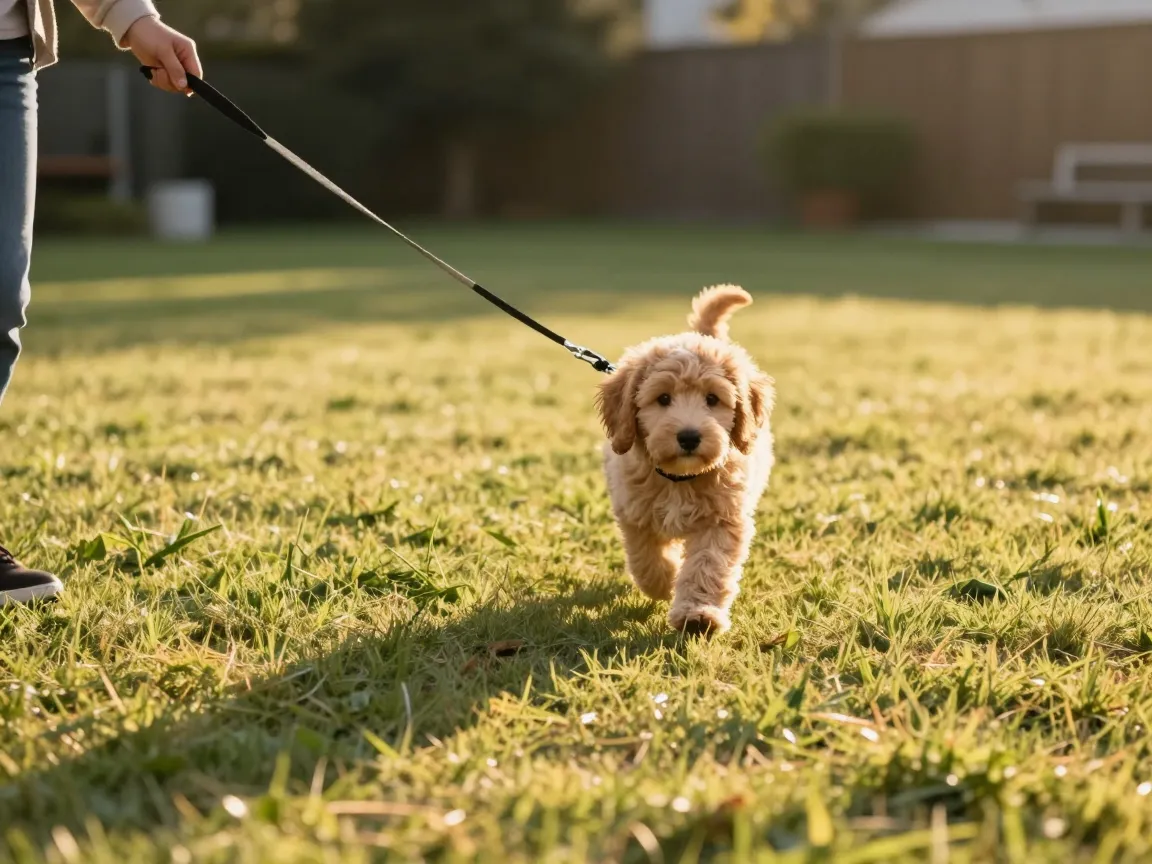
It is tempting to think a tired puppy is a well-behaved puppy, but excessive exercise before a Goldendoodle’s growth plates close can cause lasting joint damage. Standard-size Goldendoodles in particular benefit from large-breed puppy food formulas with controlled calcium and phosphorus levels, since these nutrients directly influence how bones and joints develop during the first year to eighteen months.
The widely recommended guideline in 2026 Goldendoodle care resources is the five-minute rule: no more than five minutes of structured, leash-based walking per month of age, performed twice daily. A two-month-old puppy, for example, should get two 10-minute walks per day, while a six-month-old puppy can handle two 30-minute walks. This is not a hard ceiling on all activity, but it does mean formal walking distance should scale gradually rather than jumping straight to adult-length outings.
Beyond structured walks, most of a young Goldendoodle’s energy should be burned through gentle, low-impact play rather than forced jogging, repeated stair climbing, or long hikes. Tug games, short fetch sessions on soft grass, and puzzle toys all provide mental and physical stimulation without the repetitive joint stress of high-impact activity. Waiting until at least 12 to 18 months before introducing more intense exercise, such as long-distance running or agility training, gives bones and joints time to mature properly and can meaningfully reduce the risk of hip or elbow problems later in life.
4. Prioritize Socialization During The 8 To 16 Week Window

Of all six Golden Doodle puppy care tips for your new furry family member, socialization carries perhaps the highest long-term stakes. Between roughly 8 and 16 weeks of age, a puppy’s brain is unusually receptive to new experiences, and how it responds to novelty during this window tends to set the tone for its adult temperament. This is often called a critical or sensitive period, and it does not last long.
A practical target used in several 2026 Goldendoodle guides is exposing a puppy to about ten new sounds, ten new surfaces, and ten new people every week during this window. New sounds might include a vacuum cleaner, a doorbell, traffic noise, or thunder recordings played at low volume. New surfaces could be grass, gravel, tile, metal grates, or a wobbly cushion. New people should vary in age, height, and appearance, always paired with calm, positive interactions such as treats or gentle praise rather than forced petting.
The pairing matters just as much as the exposure itself. A puppy that hears a loud noise while also receiving a treat learns to associate novelty with good things, while a puppy that is startled and comforted anxiously may learn the opposite. Basic cues such as sit, stay, and a reliable name response should also start immediately rather than being postponed until the puppy is “old enough,” since puppies that are not actively taught good manners tend to rehearse unwanted habits, like jumping or mouthing, simply because no one interrupted the pattern in time.
5. Build A House-Training And Nap Schedule That Prevents Accidents

House-training a Goldendoodle puppy is far less about scolding accidents and much more about proactive scheduling. Because young puppies have small bladders, they generally need a potty break roughly every two hours during waking hours, with more frequent trips of every 30 to 45 minutes recommended during especially active or high-water-intake periods. Potty breaks should also happen immediately after waking up, right after every meal, and following play sessions, since digestion and activity both trigger the urge to go.
Heavy praise for successful outdoor potty trips reinforces the desired behavior far more effectively than punishment for indoor accidents. Puppies do not connect a scolding minutes later with something that happened earlier, so consistency and timing matter more than correction.
Nap scheduling is an underrated part of house-training success. A puppy that is allowed to become overtired is more likely to bite harder during play, scream in frustration, and struggle to settle down, which often leads directly to missed potty signals and indoor accidents. Building in crate naps roughly every two hours, and using a timer as a reminder if needed, helps prevent the overtired spiral before it starts. The crate should always be framed as a safe personal den rather than a punishment, which also supports calmer, more independent sleep habits as the puppy matures.
6. Master Grooming, Vet Care, And Preventive Health Checks
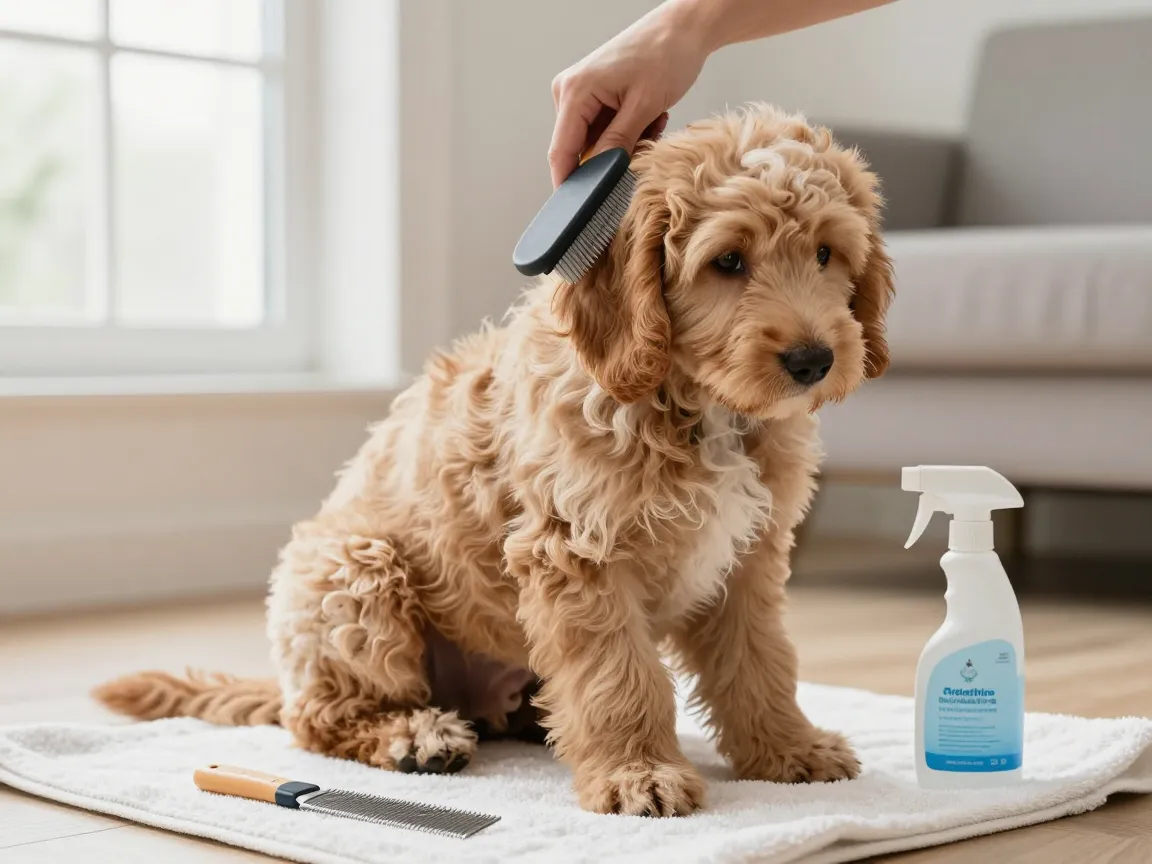
Goldendoodle coats range from wavy to tightly curled, and nearly all of them mat easily without regular attention. Daily five-minute brushing sessions using a slicker brush followed by a steel comb are recommended, with special attention paid to mat-prone areas like behind the ears, under the armpits, and around the collar line. Brushing should always happen on a dry coat, or ideally with a light detangling spray, since brushing wet or dirty fur can worsen matting rather than fix it. At minimum, brushing two to three times per week is necessary to keep the coat manageable between more thorough sessions.
A first “puppy groom” is typically scheduled between 12 and 16 weeks of age, timed after the second round of vaccinations to reduce exposure risk at the salon. From there, professional grooming appointments every four to eight weeks help manage coat length, prevent painful mats close to the skin, and give a groomer the chance to spot early skin issues. Bathing at home roughly every six to eight weeks with a dog-specific shampoo keeps the coat clean without stripping natural oils.
Preventive health checks belong in the same routine. Ears should be inspected weekly and dried gently after baths or swimming, since floppy-eared breeds like Goldendoodles are prone to trapped moisture and infection. Regular tooth brushing and nail trims, started early and paired with treats, make these routine tasks far less stressful as the puppy grows. On the veterinary side, the first wellness visit should happen within about 72 hours of bringing the puppy home, followed by a vaccination schedule around 6, 10, and 14 weeks, with follow-up visits every three to four weeks until the core series wraps up around 16 to 20 weeks. Heartworm and flea prevention typically begins around 8 weeks of age as well.
It is also worth asking any breeder about health testing behind the puppy’s parents, including hip evaluations and annual eye certifications, since conditions like hip dysplasia and certain allergies are among the more common inherited concerns in the breed. A breeder who can produce documentation of these tests is generally a stronger indicator of a healthier puppy long term.
Putting These 6 Golden Doodle Puppy Care Tips For Your New Furry Family Member Into Action
Reading through six categories of care can feel like a lot at once, so it helps to think in terms of daily habits rather than a checklist to finish in one sitting. A simple way to combine these tips into a workable week looks something like this:
- Morning routine covering wake-up potty break, breakfast, and a short structured walk sized to the five-minute rule.
- Mid-morning socialization exposure, such as a new surface or a calm visitor, paired with praise or a treat.
- Midday nap in the crate, followed immediately by another potty break upon waking.
- Afternoon grooming touch-up, even if just two or three minutes of brushing around the ears and legs.
- Evening meal, potty break, and a low-impact play session using a puzzle toy or gentle tug game.
- Bedtime wind-down with a final potty trip and settling into the crate for the night.
Repeating a version of this structure daily, while gradually increasing walk times and socialization variety as the puppy ages, builds the consistency that Goldendoodle puppies need to thrive both physically and emotionally.
Frequently Asked Questions
How many meals should a Goldendoodle puppy eat per day?
Puppies under 12 weeks generally do best with four small meals daily, tapering to three meals through the middle puppy months, and settling into two meals by around six months and into adulthood.
When should socialization start and end?
The most critical socialization window runs from about 8 to 16 weeks of age, though continued positive exposure to new people, places, and sounds should continue well beyond this period.
How much exercise is safe for a young Goldendoodle?
A common guideline is five minutes of structured walking per month of age, performed twice daily, with intense exercise like running or agility delayed until at least 12 to 18 months.
How often should a Goldendoodle puppy be groomed?
Daily brushing for five minutes is ideal, with professional grooming appointments starting around 12 to 16 weeks and continuing every four to eight weeks afterward.
When does vaccination and vet care typically start?
Most Goldendoodle puppies begin vet visits around 8 weeks of age, with a first wellness check within 72 hours of coming home and follow-up vaccinations around 6, 10, and 14 weeks.
Conclusion
Raising a Goldendoodle puppy successfully is less about grand gestures and more about small, repeated decisions made correctly from the very first day. Preparing the home before arrival, feeding on a consistent schedule, protecting growing joints, socializing deliberately during the critical window, managing potty breaks and naps proactively, and staying on top of grooming and veterinary care together form a complete foundation. These 6 Golden Doodle Puppy Care Tips For Your New Furry Family Member are not a one-time task list but a rhythm that, once established, becomes second nature for both puppy and owner.
The best next step is a simple one: pick a single tip from this list that has not yet been put into practice, whether that is switching to a slow-feeder bowl or scheduling that first professional groom, and implement it this week. Small, consistent adjustments made early tend to prevent the biggest behavioral and health challenges later, giving a new Goldendoodle the strongest possible start in its forever home.