Drawing Ideas To Fill Your Animal Sketches Sketchbook
Five to six sketchbook pages a day. That is the pace several 2026 drawing guides say separates artists who finish a full sketchbook in a month from those whose notebooks stall after a dozen half-finished sketches. The difference rarely comes down to talent. It comes down to having a ready list of subjects instead of staring at a blank page wondering what to draw next. That is exactly what this guide to 6 Drawing Ideas To Fill Your Animal Sketches Sketchbook offers: six proven, repeatable categories that turn empty pages into finished studies, fast.
Disclosure: This post contains affiliate links. As an Amazon Associate, we earn from qualifying purchases, and at no extra cost to you.
Animal subjects are especially good for this kind of practice. They move, they rest, they show personality, and they are everywhere, from a pet curled on a couch to a bird outside a window. The six ideas below pull from the most current animal-drawing guidance available in 2026, combining everyday observation, motion studies, speed drills, themed spreads, shape-based construction, and expressive character work into one practical system.
Key Takeaways
- Everyday pet poses such as sleeping, eating, or waiting by a door are the fastest way to fill pages because they are easy to observe repeatedly.
- Dynamic gesture sketches of running, jumping, or flying animals build energy and improve a sense of movement.
- Short, timed drills using simple shapes help artists loosen up and sketch many animals quickly without overthinking.
- Themed spreads, such as wild birds or backyard insects, keep a sketchbook organized and give each session a clear focus.
- Combining structural shape studies with expressive, character-driven sketches keeps technical skill and creative fun growing side by side.
Why Filling an Animal Sketchbook Starts With the Right Ideas
A sketchbook does not fill itself. Many beginners buy a notebook with good intentions, draw two or three animals, and then set it aside because they run out of ideas. Current animal-drawing resources from 2026 point to a simple fix: work from a short, repeatable list of subject categories instead of trying to invent something new every session.
This approach matters for three reasons. First, repetition builds skill faster than variety alone, since drawing the same type of pose several times sharpens proportion and confidence. Second, animals offer an almost unlimited supply of easy, observable material, from a cat stretching to a dog watching a door. Third, having a plan removes the mental friction that causes many sketchbooks to stall after just a few pages. The six ideas that follow were chosen because they appear consistently across current drawing guides and because each one can generate multiple sketches in a single sitting.
6 Drawing Ideas To Fill Your Animal Sketches Sketchbook
The list below organizes the most reliable animal sketchbook strategies into six clear categories. Each one can stand alone or be mixed with the others across a week of practice. Together, they form a complete system for anyone searching for 6 Drawing Ideas To Fill Your Animal Sketches Sketchbook that actually get used, page after page.
1. Everyday Pet Poses That Are Easy to Observe
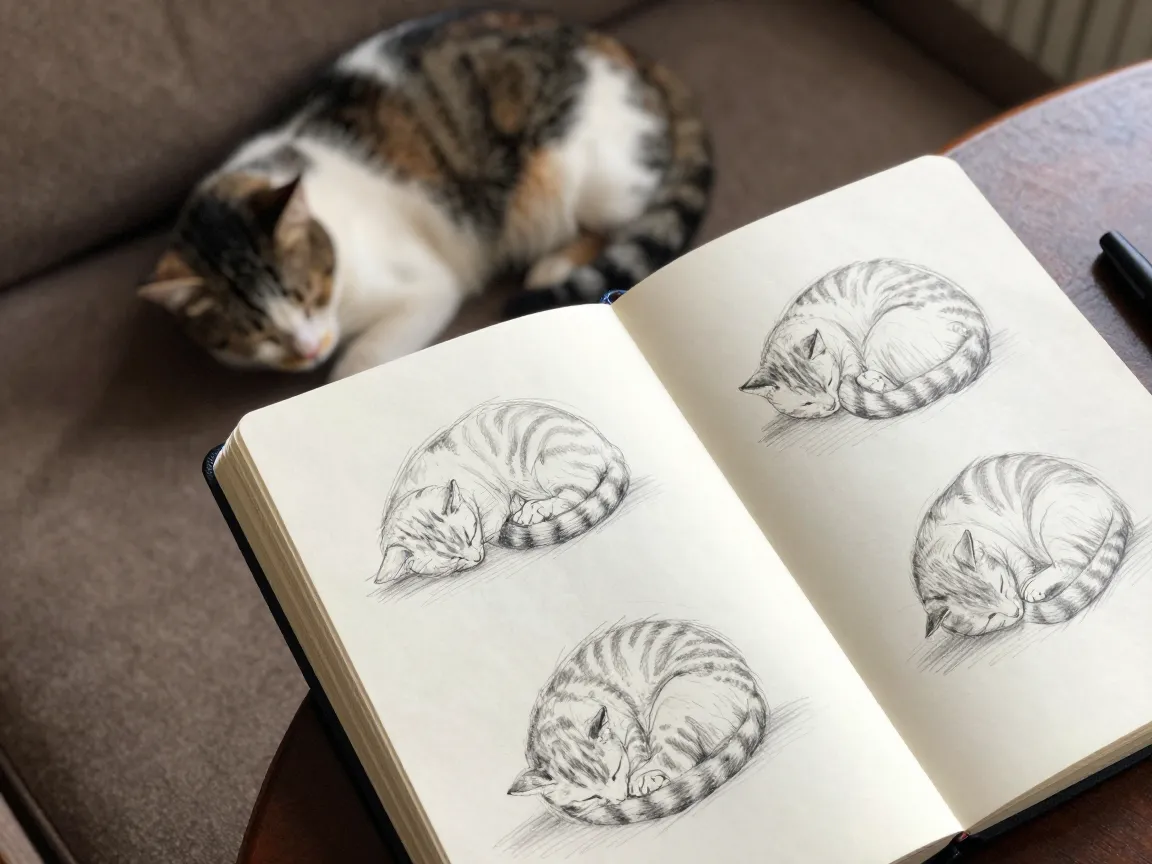
The single most recommended starting point across current drawing guides is sketching pets in ordinary, repeatable situations. A dog does the same handful of things every day: it sleeps, eats, waits by the door, watches out a window, or leans against a person it trusts. These moments repeat constantly, which means there is always another chance to study them if the first sketch does not turn out well.
Strong subjects in this category include a dog staring at its owner or its food bowl, a cat curled into a sleeping ball, paws resting or gripping a toy, and pets lying stretched out on the floor. Because these poses hold still for longer stretches than active play, they are ideal for beginners who need extra time to study proportions.
A practical trick recommended by several current guides is to start several small sketches on one double-page spread at the same time. If a pet shifts position midway through a drawing, the artist can simply move to a second or third sketch already in progress on the same page rather than losing the study entirely. This keeps a full page productive even when the model will not stay still.
2. Dynamic Gesture Drawings of Animals in Motion
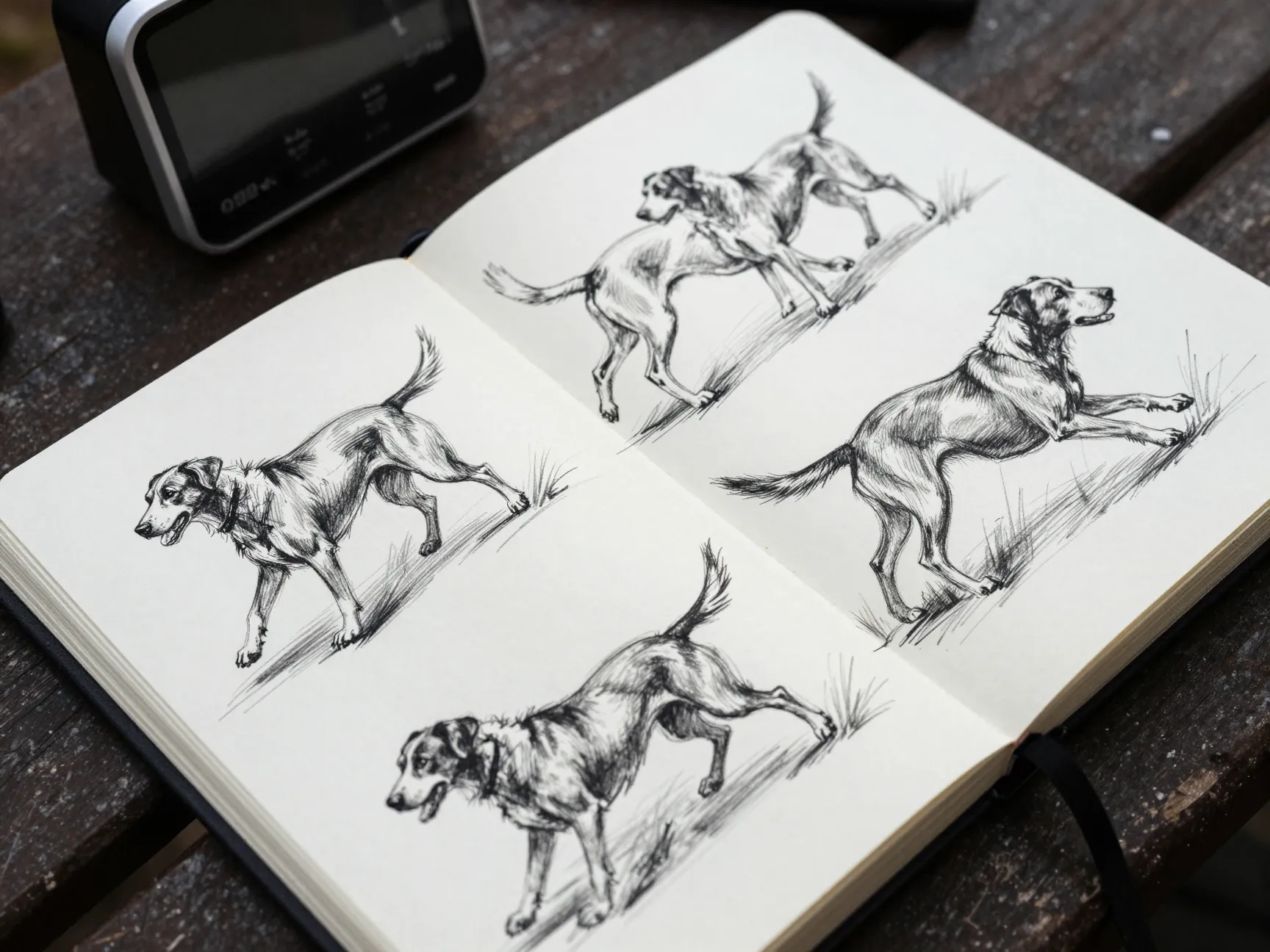
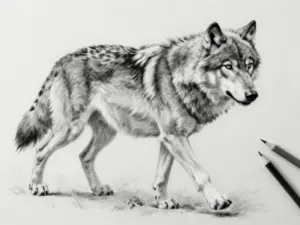
Once a few calm poses are on paper, it is time to add energy. Gesture drawing captures the feeling of movement rather than exact detail, and animals offer dramatic examples: a dog sprinting across grass, a deer leaping over a fence, a bird launching into flight, or a cat mid-pounce.
The goal with gesture work is speed, not precision. A useful method is comparing how the head, legs, and tail change position at different speeds, from a slow walk to a full run. Drawing the same animal moving through several stages of one motion, almost like a flipbook, builds a strong sense of how weight shifts and limbs stretch during action.
Because gesture sketches are meant to be quick, usually completed in under two minutes each, this idea alone can fill several pages in a single session. Many artists keep a small timer running and aim for ten or more gesture sketches before moving to a slower study.
“Energy on the page comes from how fast the hand moves, not how much detail it adds.”
3. Timed Simplification Drills and Brain-Dump Sessions
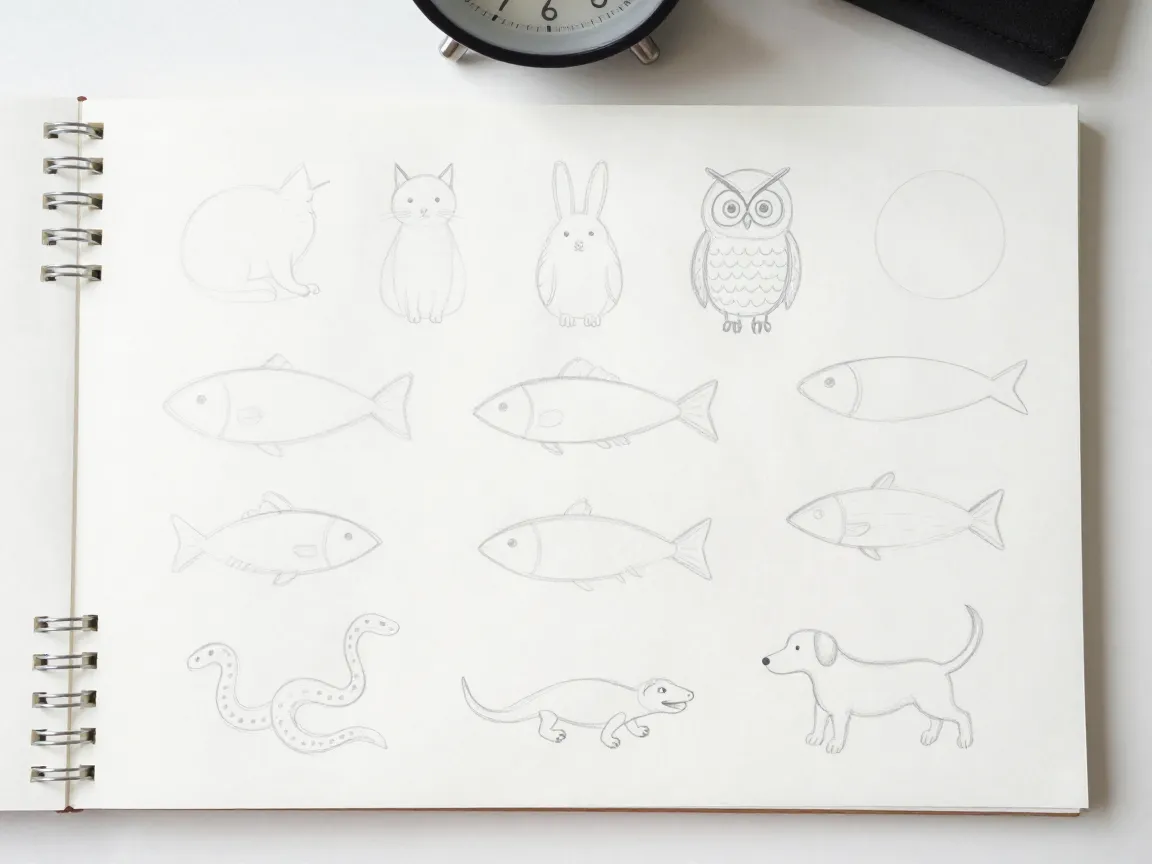
The third idea addresses a common sketchbook problem: overthinking. Timed drills solve this by setting a short limit, often around ten minutes, during which the artist draws as many simplified animal shapes as possible without worrying about accuracy.
This method, sometimes called a brain-dump session, works well because it removes the pressure of making every sketch perfect. The focus shifts to volume and fluency. A simple version involves sketching basic animal forms using only circles and ovals, such as a round body and head for a bird or a long oval for a fish, before any detail is added.
Current guidance also suggests tracking output as a goal, aiming for roughly five to six finished pages per day when trying to fill an entire sketchbook within a month. Timed drills are one of the fastest ways to hit that pace because they lower the mental barrier to starting a new sketch.
Below is a simple structure for a ten-minute brain-dump session:
| Time | Focus | Example Subjects |
|---|---|---|
| Minutes 1 to 3 | Round body shapes | Cat, rabbit, owl |
| Minutes 4 to 6 | Long or stretched shapes | Fish, snake, lizard |
| Minutes 7 to 10 | Mixed quick poses | Dog running, bird landing |
4. Themed Animal Spreads Built Around One Subject
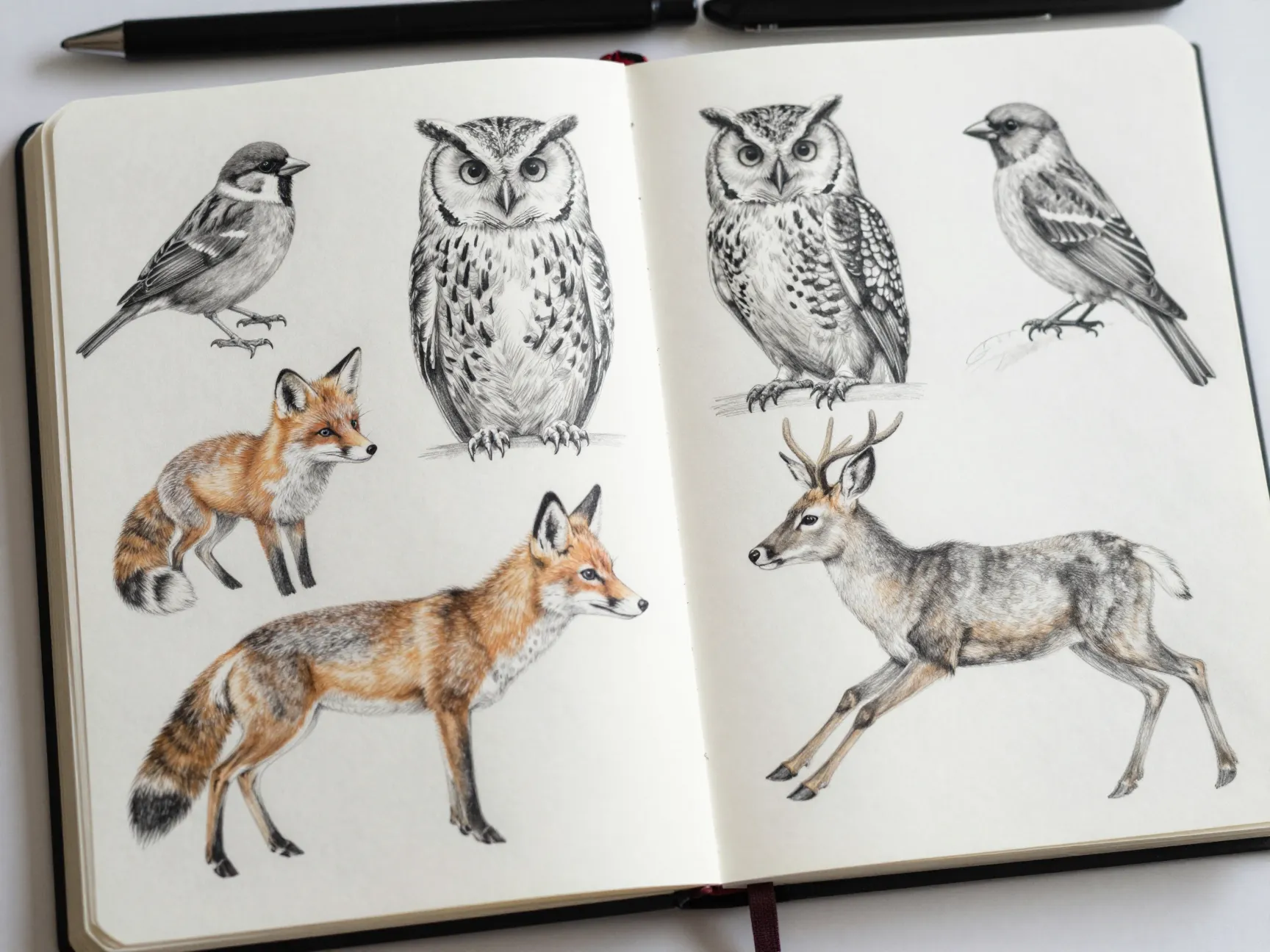
The fourth idea brings organization to a sketchbook by grouping related subjects onto one page or a connected set of pages. Instead of drawing random animals in no particular order, a themed spread focuses on one category at a time, such as wild birds, aquatic animals, insects, or a single pet in multiple poses.
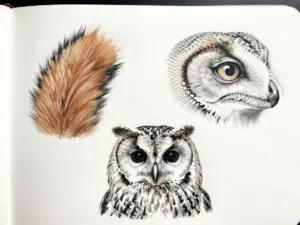
Examples pulled from current prompt collections include a page dedicated entirely to one pet shown in five or six different positions, a spread featuring foxes, owls, bears, and deer mid-leap, or a smaller-scale page covering bees, butterflies, snails, ladybirds, and dragonflies. Zoo visits, backyard wildlife sightings, and curated photo references are all useful sources for building these themed sets.
Themed spreads are especially helpful for artists who want their sketchbook to feel cohesive rather than scattered. They also make it easier to notice patterns, such as how wing shapes differ between a sparrow and an owl, because similar subjects sit side by side for direct comparison.
5. Structural Studies Using Simple Geometric Construction
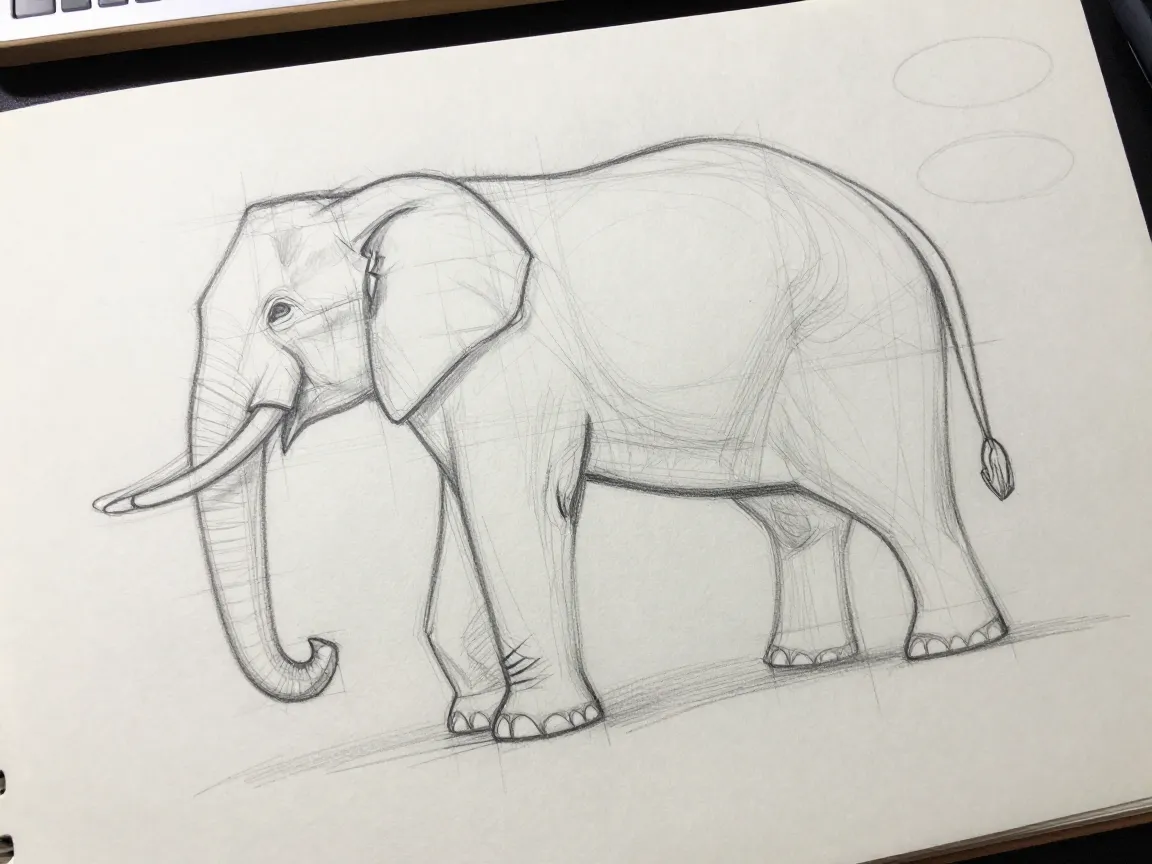
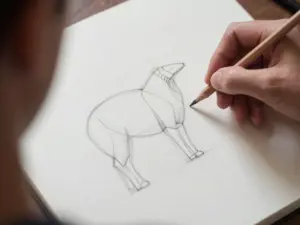
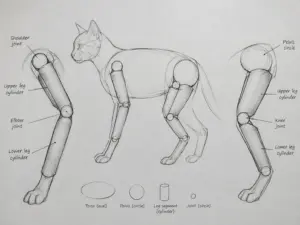
The fifth idea focuses on accuracy through structure. Many animals can be broken down into basic geometric shapes before any fine detail is added. A cat, for instance, is often described as little more than circles and curves: a round head, an oval body, and curved lines for the tail and legs. A sleeping cat is almost entirely made of soft, overlapping ovals, which makes it one of the most forgiving subjects for a beginner.
Larger animals benefit from the same approach. An elephant, for example, can start as a rough sketch using thick lines for the legs and one connected central shape for the body before ears, wrinkles, and a trunk are refined. This method keeps proportions believable even when working quickly, since the underlying shapes act as a scaffold for everything added later.
Structural studies pair naturally with the timed drills from idea three, since both rely on simplified forms. The difference is that structural studies usually slow down slightly to check proportion, while brain-dump drills prioritize raw speed.
6. Expressive and Character-Driven Animal Sketches
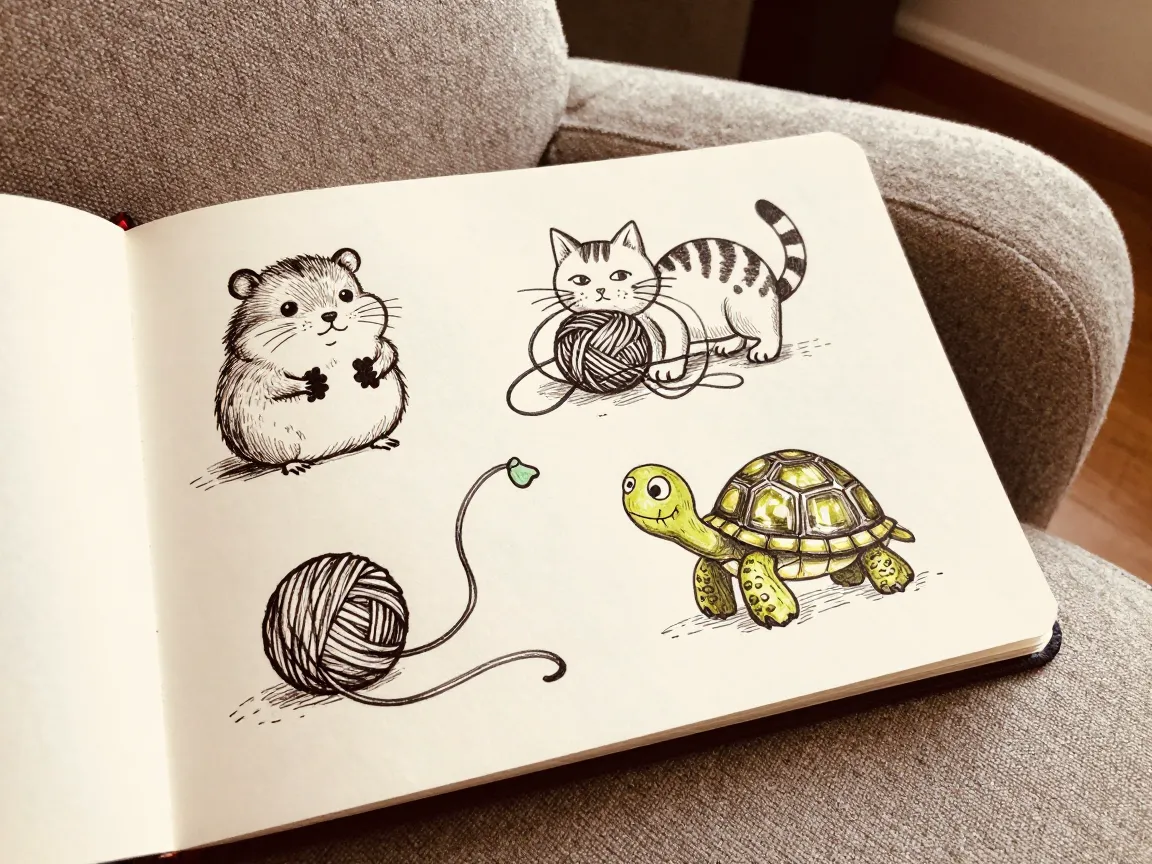
The sixth and final idea shifts the focus from accuracy to personality. Once an artist feels comfortable with poses, motion, and structure, adding expression and character keeps a sketchbook enjoyable rather than purely technical.
This category includes playful, stylized subjects such as a chubby hamster stuffing its cheeks, a cat hopelessly tangled in a ball of yarn, or a turtle with an oversized grin. It also covers more ambitious character studies, like capturing the calm confidence of a lion or the bouncy excitement of a puppy through exaggerated poses and expressions rather than strict realism.
Expressive sketches are valuable because they reconnect drawing practice with enjoyment. A sketchbook filled only with precise studies can start to feel like homework. Mixing in a few loose, funny, or imaginative animal characters on nearly every page keeps motivation high, which matters just as much as technical skill when the goal is consistently filling pages over weeks or months.
Mastering the 6 Drawing Ideas To Fill Your Animal Sketches Sketchbook Routine
Knowing six categories is useful, but combining them into a routine is what actually fills a sketchbook. A simple weekly structure helps balance observation, movement, speed, organization, structure, and expression without any single idea taking over.
A sample weekly plan might look like this:
| Day | Idea Focus | Suggested Session Length |
|---|---|---|
| Monday | Everyday pet poses | 20 to 30 minutes |
| Tuesday | Dynamic gesture sketches | 15 minutes |
| Wednesday | Timed simplification drill | 10 minutes |
| Thursday | Themed animal spread | 30 minutes |
| Friday | Structural shape study | 20 minutes |
| Saturday | Expressive character sketch | 20 minutes |
| Sunday | Flexible review or favorite idea | 15 to 30 minutes |
This rotation keeps every session fresh while still working toward the goal of five to six completed pages a day across a full week. Artists drawing from life should also mix in photo references and even paused video footage, since these sources make it easier to catch compressed or extended body positions that would otherwise disappear in seconds during live observation. Repeatedly sketching the same species from both life and photos over time also makes proportions and natural movement easier to judge by instinct rather than careful measurement.
Starting with forgiving subjects also helps maintain momentum. Sleeping cats, rabbits, fish, turtles, golden retrievers, hedgehogs, owls, and sloths are frequently recommended because their simple shapes and slower movements make them approachable even on a day when confidence is low.
Common Mistakes That Stall an Animal Sketchbook
Even with six solid ideas on hand, certain habits can slow progress. Recognizing these early helps keep a sketchbook moving forward instead of stalling halfway through.
- Waiting for the perfect pose01. Many artists delay starting because an animal is not sitting in an ideal position. Drawing whatever pose is actually available almost always produces more useful practice than waiting.
- Over-detailing early sketches02. Adding fine detail before the basic shape and proportion are correct often wastes time and leads to frustration when the final drawing looks off.
- Relying only on memory03. Skipping reference photos or live observation in favor of guessing from memory tends to produce stiff, inaccurate poses, especially for motion-based gesture work.
- Avoiding themed organization04. Jumping between unrelated subjects without any grouping can make a sketchbook feel disjointed and harder to review later for progress.
- Treating every sketch as final05. Forgetting that brain-dump and gesture drawings are meant to be rough practice, not finished art, adds unnecessary pressure that slows down page count.
Frequently Asked Questions
How many animal sketches should fill one sketchbook page?
There is no fixed number, but many current guides suggest aiming for several small, quick studies per page rather than one large, highly detailed drawing. This approach, especially when paired with timed drills, makes it realistic to complete five to six pages in a single day.
What animals are easiest to start with for a beginner’s sketchbook?
Sleeping cats, rabbits, fish, turtles, and simple birds perched on a branch are commonly recommended because their shapes are soft, rounded, and slow-moving, which makes them forgiving subjects while skills are still developing.
Is it better to draw from a live pet or from photos?
Both methods work well together. Live observation builds a direct sense of scale and behavior, while photos and paused video allow for closer study of poses that happen too quickly to capture in person, such as a jump or a sudden turn.
How can gesture drawing improve an animal sketchbook?
Gesture drawing trains the eye to see movement and weight rather than fine detail. Practicing quick sketches of running, jumping, or flying animals builds a stronger foundation for more detailed work later on.
What is the fastest way to fill a sketchbook in a short amount of time?
Timed simplification drills, sometimes called brain-dump sessions, are widely recommended as the fastest method. Setting a short time limit and sketching as many simple animal shapes as possible removes hesitation and builds page count quickly.
Conclusion
A sketchbook does not need endless inspiration to stay full. It needs a short, dependable list of ideas that can be reused again and again, which is exactly what these 6 Drawing Ideas To Fill Your Animal Sketches Sketchbook provide. Starting with everyday pet poses builds comfort, dynamic gesture work adds energy, timed drills build speed, themed spreads bring order, structural studies improve accuracy, and expressive sketches keep the process enjoyable.
The most effective next step is simple: pick one idea from this list, set aside fifteen to thirty minutes, and fill at least one page today. Repeating that small habit across a week, using the rotation outlined above, is enough to turn a blank sketchbook into a finished one filled with confident, varied animal studies.