Tips For Introducing A Golden Retriever And An Orange Cat
A rushed introduction between a dog and a cat can set the tone for years of tension in a household. Animal behaviorists who track shelter return rates report that a large share of failed pet adoptions trace back to one mistake: skipping the slow, structured introduction period in favor of a single “let’s see how they do” meeting. For anyone bringing home a bouncy, affectionate golden retriever to live alongside an established orange cat, that shortcut is a gamble not worth taking. These 6 tips for introducing a golden retriever and an orange cat draw on current veterinary behavior guidance and humane society protocols to help both animals build a calm, trusting relationship from day one.

Disclosure: This post contains affiliate links. As an Amazon Associate, we earn from qualifying purchases, and at no extra cost to you.
Golden retrievers are famous for their friendly, people-pleasing temperament, but that same enthusiasm can feel overwhelming to a cat encountering a large, fast-moving dog for the first time. Orange cats carry no special behavioral traits tied to coat color, despite popular myths, but every individual cat has its own comfort threshold. Following a deliberate, staged process rather than hoping personalities simply “work it out” is the difference between a peaceful multi-pet household and months of hiding, hissing, or stress-related illness.
Key Takeaways
- Successful introductions rely on gradual staging: separation, scent exchange, visual contact, then supervised leashed meetings.
- Give the cat a dog-free safe room with vertical escape routes like shelves or a cat tree before any face-to-face contact begins.
- Keep the golden retriever leashed during early in-room meetings, capping sessions at 5 to 10 minutes.
- Reward calm behavior in both animals with treats to build a positive association with each other’s presence.
- Watch body language closely; staring, lunging, hissing, or tail puffing means it is time to slow down, not push forward.
1. Prepare Separate Territories Before Introducing A Golden Retriever And An Orange Cat
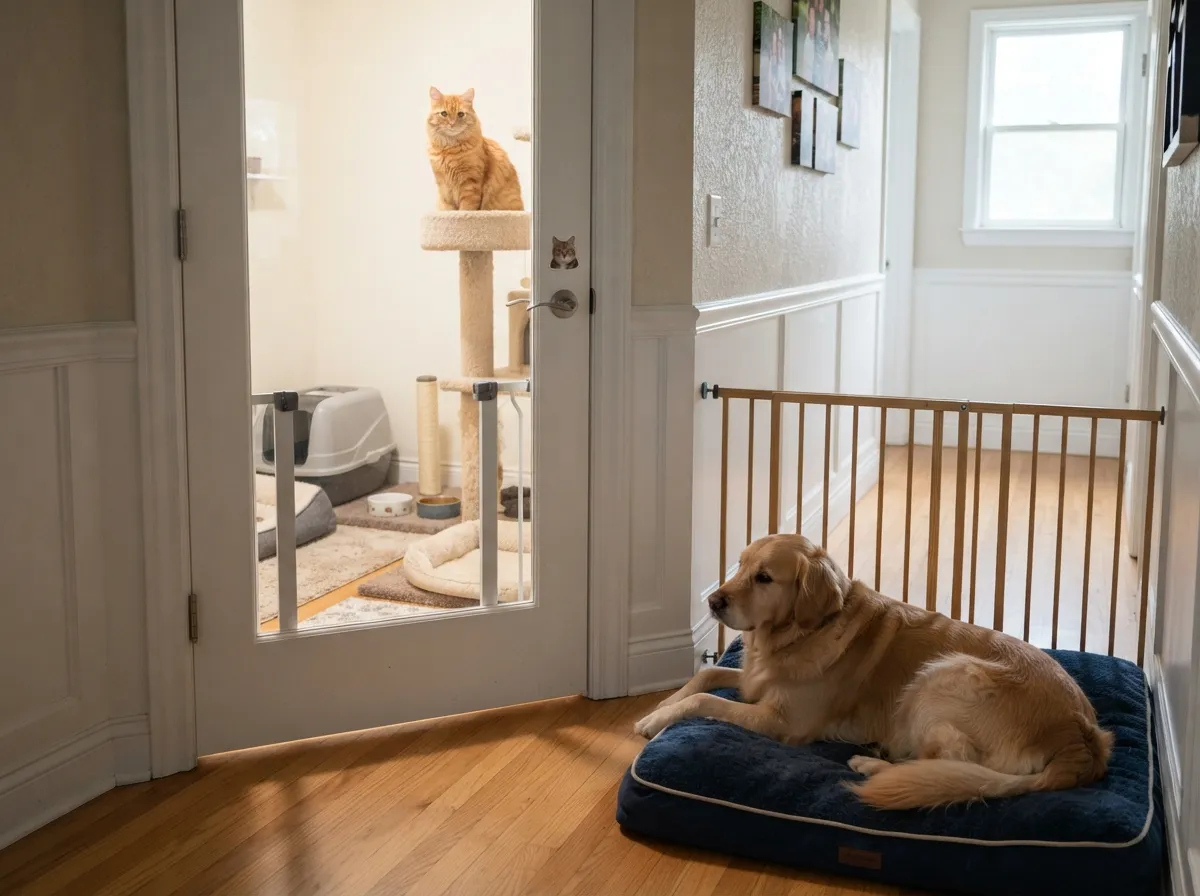
Before the first sniff or glance is exchanged, the cat needs a fully stocked, dog-free zone. This is not a temporary inconvenience; it is the foundation for everything that follows. Choose a room the cat already feels comfortable in, ideally with a door that closes securely, and stock it with a litter box, food and water bowls, a scratching post, and familiar bedding.
Vertical space matters enormously here. Cats manage stress by gaining height and distance, so a cat tree, wall shelf, or even the top of a wardrobe gives the cat a way to observe the world without feeling trapped. This single detail is repeatedly emphasized in current humane society guidance because a cat that can retreat upward is far less likely to panic or lash out defensively when a large, energetic breed like a golden retriever is nearby.
On the dog’s side of the preparation, confine the golden retriever to specific rooms during this early phase using baby gates or closed doors. This prevents accidental encounters in hallways and gives the cat freedom to move through shared spaces on its own schedule. It also helps to give the dog plenty of exercise and mental stimulation beforehand; a tired, mentally satisfied golden retriever is calmer and less likely to bound toward the cat with unchecked excitement the first time they meet.
Setting up these separate territories typically takes a single afternoon, but the payoff extends for weeks. Skipping this step is one of the most common reasons early introductions go poorly, because the cat never gets the chance to feel secure in its own space before a much larger animal enters the picture.
Why Separate Spaces Matter So Much
A cat that feels cornered is a cat that reacts defensively, often through hissing, swatting, or hiding for days. Giving the cat full control over its safe room removes the single biggest source of fear: the feeling of having nowhere to go. This groundwork applies directly to anyone following these 6 tips for introducing a golden retriever and an orange cat, since a secure cat is far more likely to approach later stages of the process with curiosity rather than dread.
2. Use Scent Exchange As The First Real Introduction
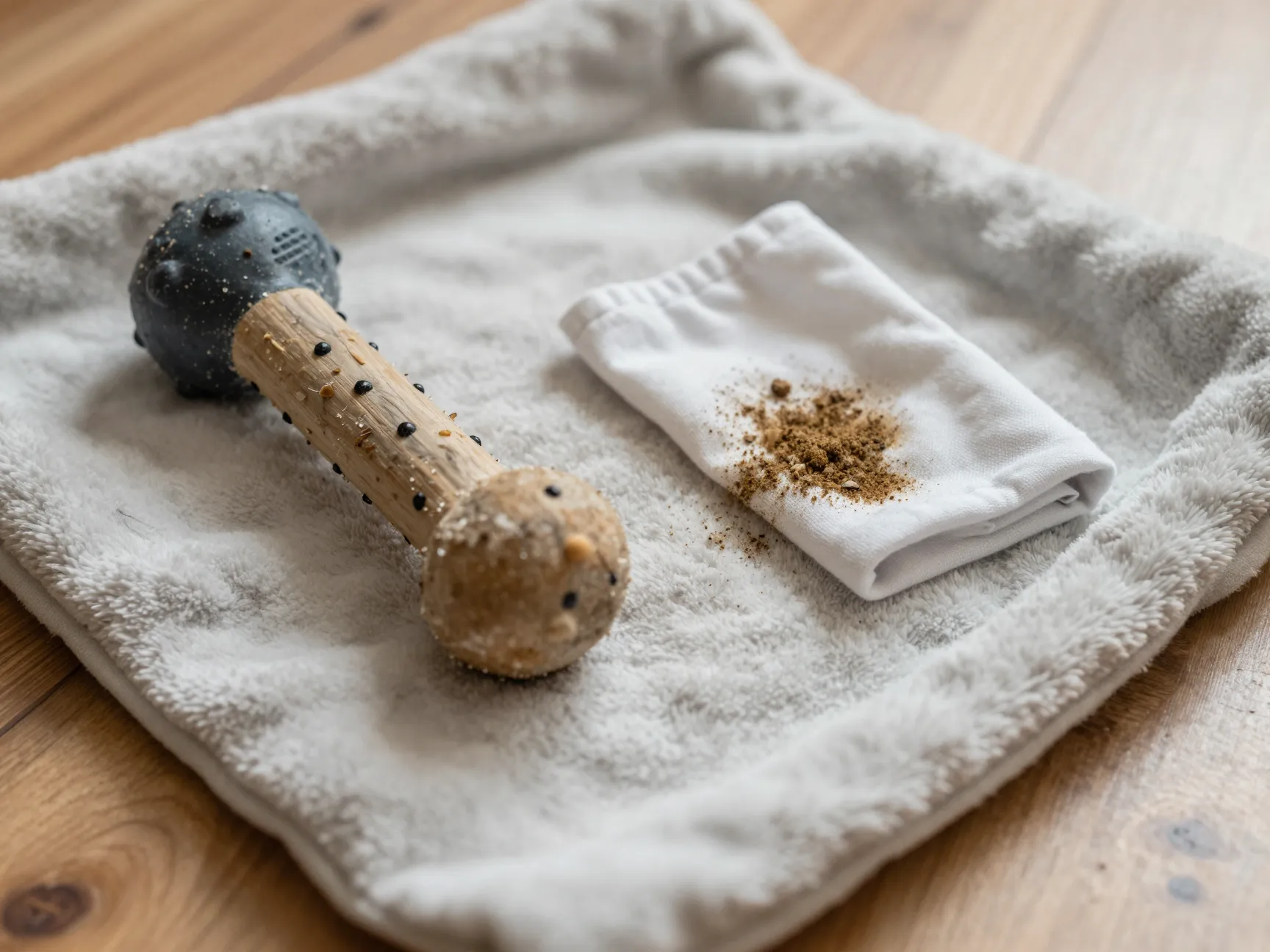
Long before the animals see each other, they should get to know each other’s smell. Scent is a cat’s primary way of gathering information, and a golden retriever also relies heavily on smell to assess the world. Swapping bedding, blankets, or a favorite toy between the dog’s space and the cat’s safe room lets each animal investigate the other from a place of total safety.
A particularly effective method involves feeding both animals on opposite sides of a closed door at the same time. This pairs the presence of the other animal’s scent with something enjoyable, laying early groundwork for a positive association. Over several days, that association starts to shift the emotional response from “unknown threat” to “something linked with good things.”
Another simple technique: gently rub a cloth on the cat’s cheeks, where scent glands are concentrated, then place that cloth near the dog’s resting area, and do the reverse with a cloth carrying the dog’s scent placed near the cat’s bed. Neither animal needs to interact directly with the object right away; simply allowing them to approach and sniff at their own pace, retreating whenever they choose, builds familiarity without pressure.
Current 2026 guidance from veterinary behavior programs treats this scent phase as non-negotiable, not optional. Skipping straight to visual or physical contact without this groundwork tends to produce sharper, more startled reactions once the animals do finally meet. Most households need three to four days of dedicated scent work, though a slower cat or an especially exuberant golden retriever may need longer before moving forward.
Signs The Scent Phase Is Working
Watch for the cat sniffing the dog’s scented item without immediate retreat, or the golden retriever settling calmly near the cat’s cloth rather than pawing or barking at it. These small, quiet reactions signal readiness to progress to the next stage.
3. Introduce Visual Contact Through A Barrier
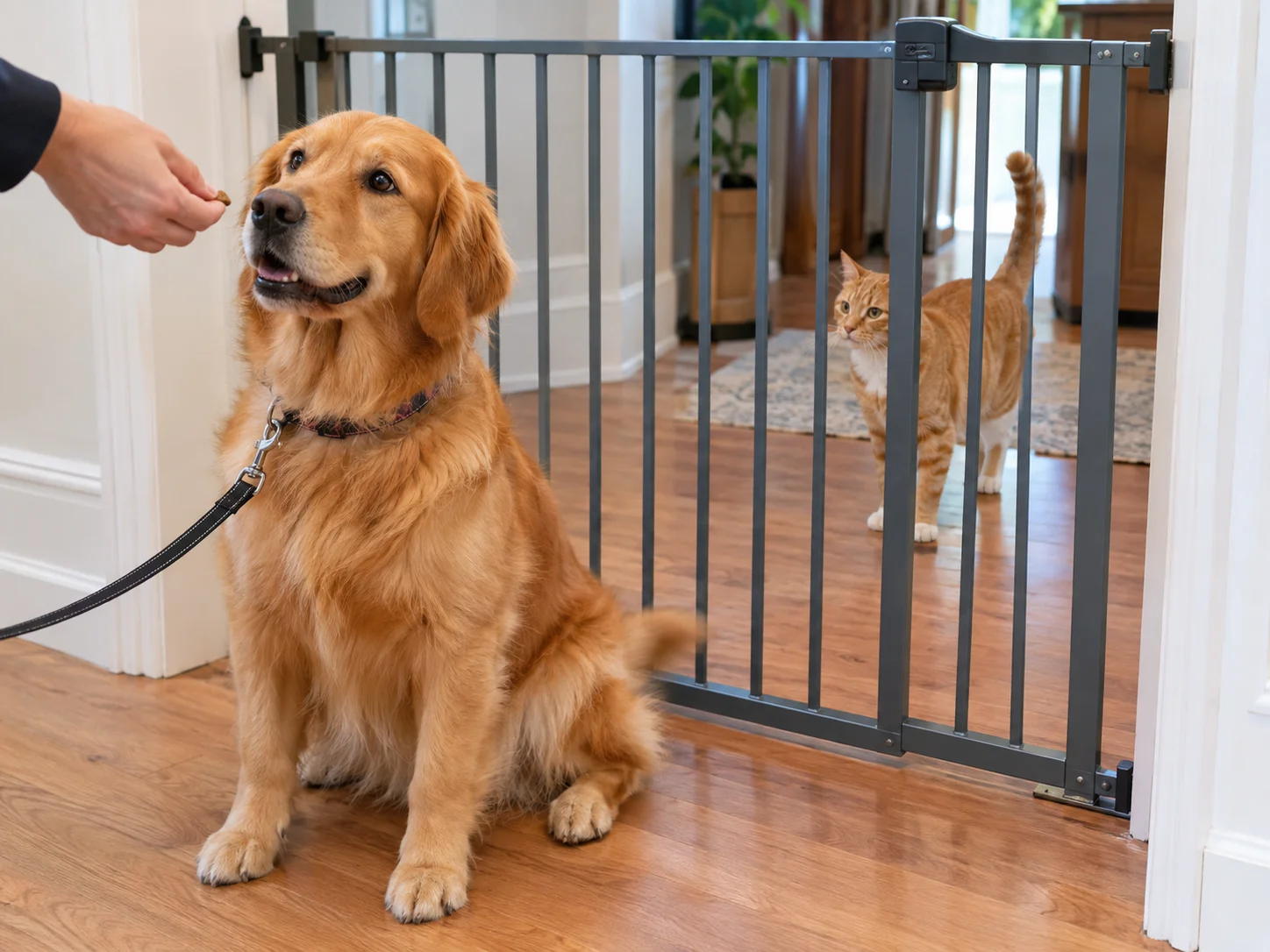
Once both animals seem neutral or mildly curious about each other’s scent, it is time to let them see one another without any risk of direct contact. A sturdy baby gate, a cracked door with a secure stop, or a screen door works well for this stage. The goal is simple: let them observe each other from a safe distance and gauge each other’s reactions.
Keep these visual sessions short at first, just a minute or two, and end on a calm note rather than waiting for signs of stress to appear. Some behavior plans recommend an entire second week dedicated to nothing but these barrier sessions, gradually increasing duration as both animals stay relaxed. A golden retriever’s tail wagging and loose, relaxed posture is a good sign, as is a cat that chooses to stay in the room rather than immediately fleeing.
During these sessions, treats become a powerful tool. Offer the golden retriever a treat for calm, non-fixated behavior, and give the cat a high-value treat, something like a small piece of cooked chicken or a favorite cat treat, whenever the dog is visible but calm. This is one of the clearest applications of positive reinforcement in the entire process: both animals begin learning that the other’s presence predicts something rewarding rather than something threatening.
If either animal reacts with intense fixation, such as the dog barking and lunging at the gate or the cat hissing and puffing up, end the session immediately and go back to scent-only work for a few more days. Pushing forward despite these signals almost always backfires.
Below is a simple reference for what calm versus concerning behavior looks like during barrier introductions.
| Animal | Calm Signals | Warning Signals |
|---|---|---|
| Golden Retriever | Loose wagging tail, soft eyes, sitting or lying down | Stiff body, intense staring, barking, lunging at barrier |
| Orange Cat | Slow blinking, upright tail, choosing to stay in room | Flattened ears, puffed tail, hissing, hiding immediately |
4. Hold Short, Leashed Face-To-Face Meetings
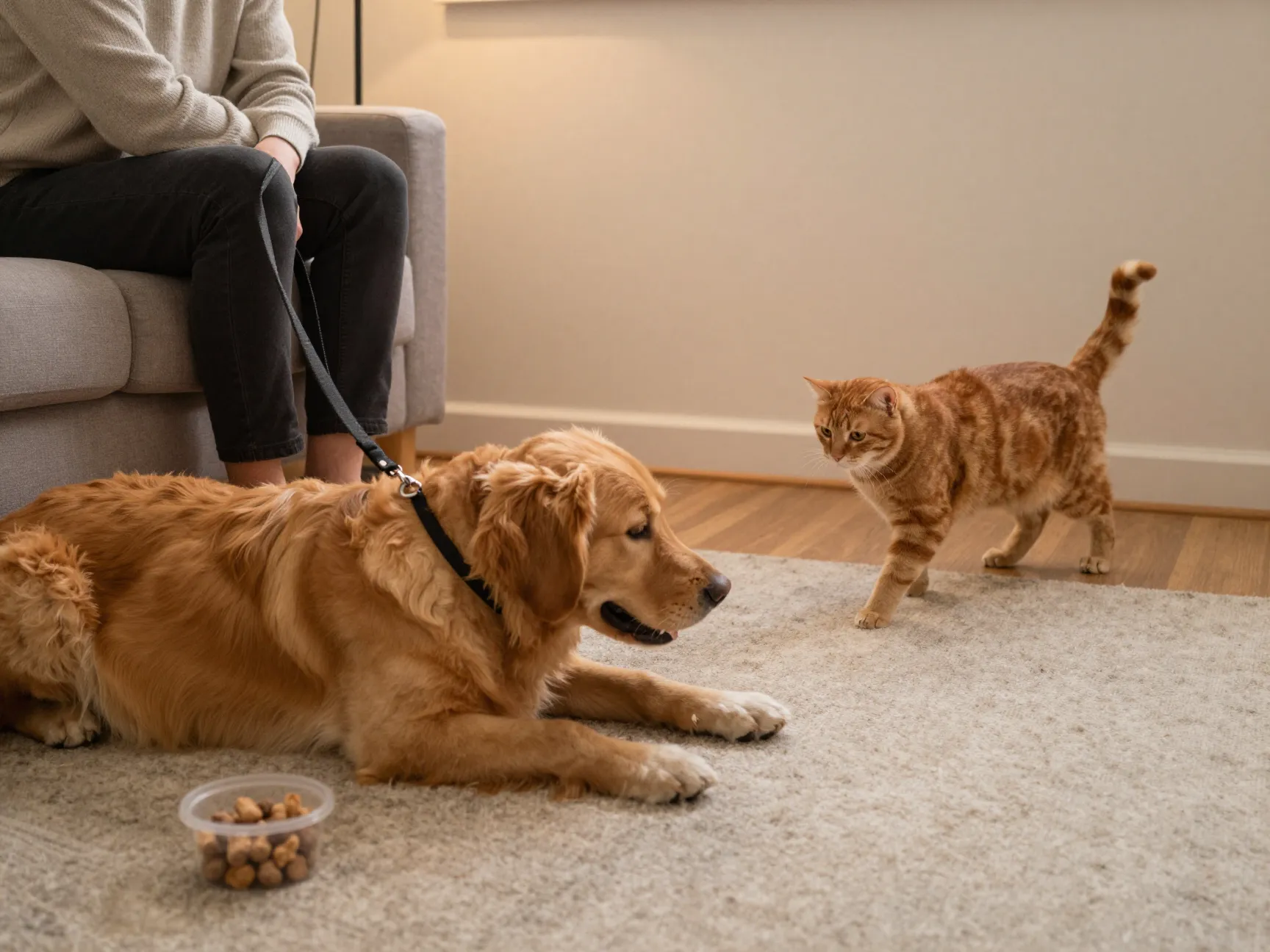
This is the stage most people associate with “introducing” pets, but it should only happen after scent and visual work have gone smoothly for several days. The golden retriever should always be on a leash during these early meetings, even indoors, even if the dog has a generally gentle temperament. A leash gives the handler instant control if the dog surges forward out of excitement rather than aggression, which is common with this breed’s naturally enthusiastic personality.
Choose a moderately sized room, not the cat’s safe room, and let the cat enter on its own terms rather than carrying it in. Keep the golden retriever seated or lying down at a distance, rewarding calm behavior continuously with small treats. Allow the cat to approach as closely as it wants, or to stay far away and simply observe; never force proximity.
Limit these sessions to five to ten minutes. This short window keeps both animals below their stress threshold and ends the interaction while it is still going well, which builds a positive memory to carry into the next session. Over repeated meetings across several days, gradually extend the time only if both animals remain loose, curious, and food-motivated rather than fixated or frozen.
A practical routine many households use looks like this:
- Days one through three: five-minute leashed sessions once or twice daily, dog seated at a distance.
- Days four through seven: extend to eight to ten minutes, allow closer approach if the cat initiates it.
- Week two: introduce brief off-leash moments in a controlled space, dog still under close verbal control, only if all prior sessions were calm.
This measured pacing reflects the multi-week progression that many current step-by-step plans recommend, particularly for a breed as physically large and socially eager as the golden retriever.
5. Reinforce Calm Behavior With Positive Reinforcement
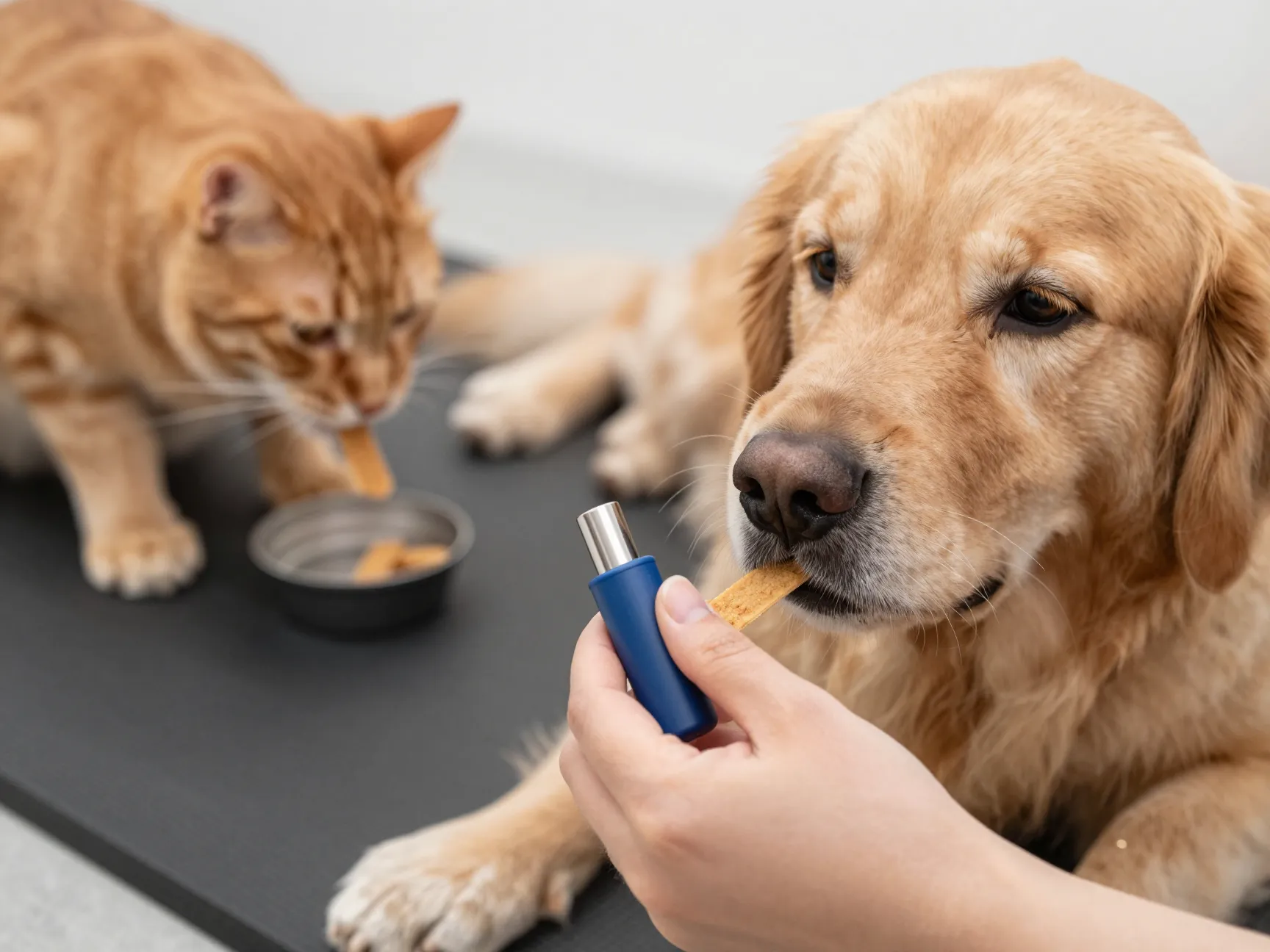
Rewards are not just a bonus during this process; they are one of the central mechanisms that make a lasting peaceful relationship possible. Every stage of these 6 tips for introducing a golden retriever and an orange cat benefits from consistent positive reinforcement, because it directly shapes how each animal emotionally files away the other’s presence.
For the golden retriever, reward calm sitting, lying down, or simply glancing at the cat without fixating. Avoid rewarding excited jumping, whining, or pulling toward the cat, since that would reinforce the exact behavior that could frighten a cat during future encounters. A clicker or a consistent verbal marker paired with a treat helps the dog understand precisely which behavior earned the reward.
For the cat, high-value treats offered specifically when the dog is present, but calm, help build the association that the dog’s presence signals good things rather than danger. Some owners find success placing a small treat trail leading toward, but not directly next to, the dog’s resting spot, letting the cat choose how close to venture.
This conditioning process takes time and repetition. Veterinary behavior programs describe it as building a “conditioned emotional response,” meaning the animals aren’t just tolerating each other out of habit, they are actively learning that proximity brings positive outcomes. Consistency matters far more than intensity here; five short, well-managed sessions per week produce better results than one long, chaotic session.
A Quick Reference For Reward Timing
- Reward the dog the instant it notices the cat and remains relaxed, not after several seconds of staring.
- Reward the cat for choosing to stay in the room or take a step closer, not for retreating.
- Never use treats to lure either animal into forced closeness; rewards should follow voluntary calm behavior only.
6. Watch Body Language And Scale Back When Needed
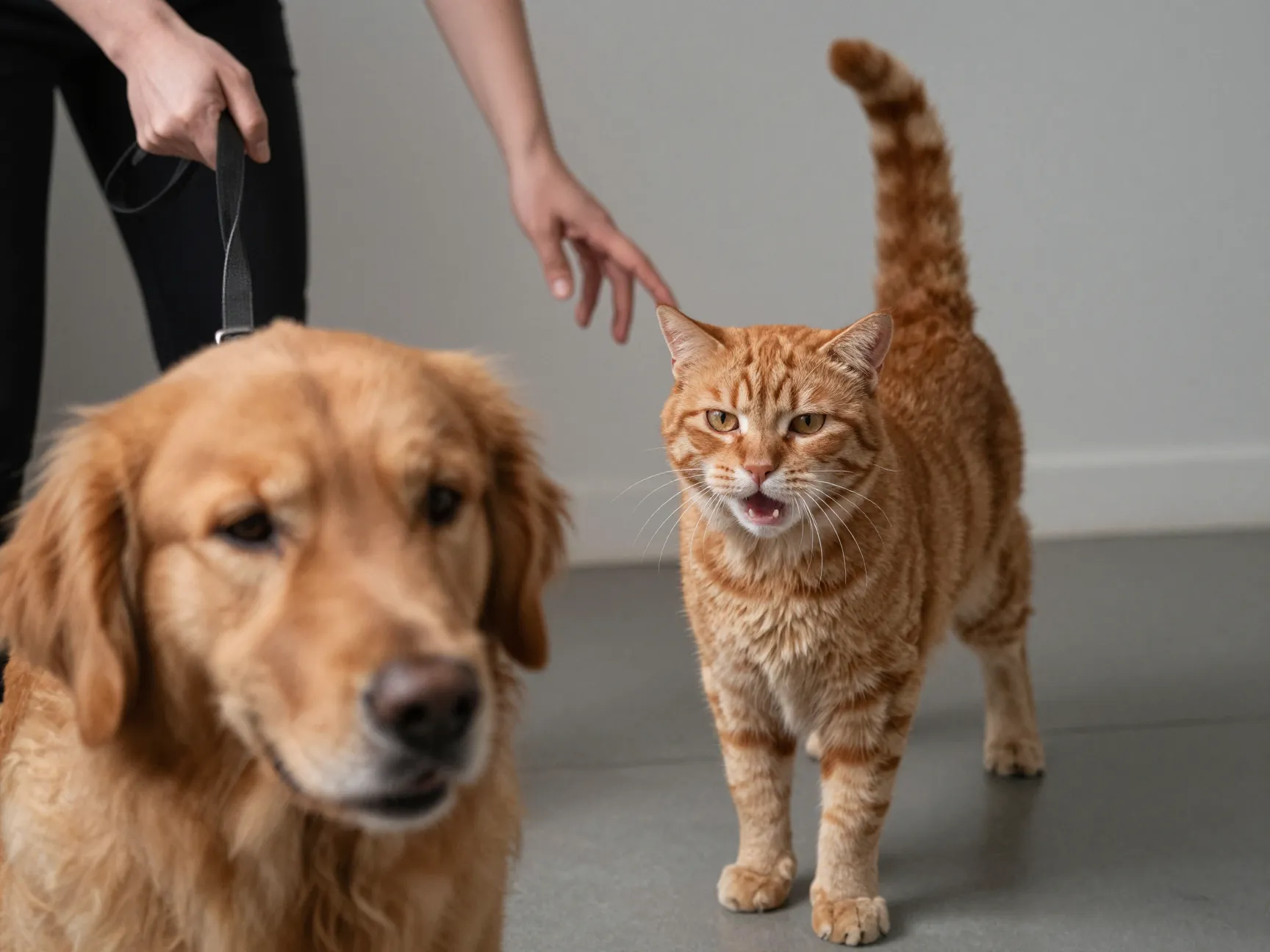
Even the most carefully staged introduction can hit a rough patch, and recognizing warning signs early prevents a minor setback from becoming a serious incident. This tip is arguably the most important of all 6 tips for introducing a golden retriever and an orange cat, because it determines the pace of every other step.
In the golden retriever, watch for stiffening posture, intense unblinking staring, raised hackles, barking, or lunging toward the cat. Even a friendly breed can become overstimulated, and excitement-driven chasing can be just as frightening to a cat as genuine aggression, even if the dog has no harmful intent.
In the cat, key warning signs include flattened ears, a puffed or thumping tail, hissing, swatting, freezing in place, or bolting to hide. A cat that goes silent and rigid rather than fleeing may actually be closer to a defensive reaction than one that calmly walks away, so stillness should not be mistaken for calm.
If any of these signals appear, calmly end the session, separate the animals, and return to an earlier stage, often back to visual-barrier work or even scent exchange, for several more days before attempting closer contact again. This is not a failure; it is simply the process working as intended.
In the rare case of an actual fight or serious scuffle, current humane society guidance is clear: separate the animals completely for three to six days, allow everyone to decompress, and then restart the entire introduction protocol from the very beginning at a noticeably slower pace. Attempting to push through immediately after a scary incident almost always makes the fear response worse, not better.
“Success depends far more on individual temperament, gradual exposure, and owner management than on coat color or breed alone.”
That principle, echoed across veterinary schools, national animal charities, and breed-specific experts, is the clearest reassurance available: a golden retriever and an orange cat can very often build a genuinely peaceful, even affectionate, relationship. Coat color carries no behavioral significance, and golden retrievers as a breed tend to score well for sociability with other animals when introductions are managed with patience. Individual personality, past experiences, and the pace of the introduction matter far more than any general breed or color trait.
Common Mistakes That Undermine The Process
Even well-meaning owners fall into a few predictable traps that slow down or derail an otherwise solid introduction plan.
- Rushing timelines because the animals “seem fine” after only a day or two of scent work.
- Allowing the dog off-leash too early, before calm behavior has been demonstrated across multiple sessions.
- Failing to give the cat an escape route during in-room meetings, trapping it in a corner without vertical options.
- Punishing the dog for excitement rather than redirecting and rewarding calmer alternatives.
- Resuming introductions immediately after a scary incident instead of pausing for several days.
Avoiding these pitfalls keeps the process on track and prevents small setbacks from compounding into lasting fear or resentment between the two animals.
Conclusion
Bringing a golden retriever and an orange cat together into a shared home is entirely achievable, but it depends on patience rather than optimism. The households that succeed follow a deliberate sequence: separate territories first, scent exchange next, then visual contact through a barrier, followed by short leashed meetings, all reinforced with consistent rewards and close attention to body language. These 6 tips for introducing a golden retriever and an orange cat are not a rigid script to rush through in a weekend; they are a flexible framework that bends to each animal’s individual pace.
Anyone starting this process should resist the urge to compare timelines with other households. Some pairs settle into calm coexistence within two weeks, while others need a month or more of careful, incremental progress. What matters is the trend, not the speed: are both animals showing more curiosity and less fear over each session? If so, the process is working exactly as it should. Start with the safe room and scent swap today, track behavior honestly, and let the golden retriever and orange cat set the true pace of their own friendship.