Easy Golden Retriever Doodle Drawing Tutorials For Beginners
A search for golden retriever drawing tutorials turns up thousands of results, yet fewer than a handful are actually built for someone who has never sketched a dog before. Most assume the artist already understands proportion, shading, or anatomy. That gap is exactly why a curated list matters: beginners need a starting point that will not frustrate them within the first five minutes.
Disclosure: This post contains affiliate links. As an Amazon Associate, we earn from qualifying purchases, and at no extra cost to you.
This guide solves that problem. It compiles 6 Easy Golden Retriever Doodle Drawing Tutorials For Beginners, pulled from some of the most reliable art-instruction sources active between 2023 and 2026. Each tutorial breaks the process into small, manageable steps, so a person holding a pencil for the first time in years can still finish a recognizable, charming sketch of a golden retriever or goldendoodle.
Whether the goal is a quick cartoon doodle for a greeting card or a slightly more detailed pencil study, this roundup covers a full range of skill levels within the “beginner” category. It also explains the tools needed, common mistakes to avoid, and how to progress once the basics feel comfortable.
Key Takeaways
- Six curated tutorials cover everything from rounded-head cartoon doodles to more structured, nine-step realistic sketches.
- Beginners get the best results by starting with basic shapes, circles and ovals, before adding facial features or fur texture.
- Zigzag lines and wavy strokes are the go-to techniques for suggesting a golden retriever’s or goldendoodle’s fluffy coat.
- Several tutorials are specifically designed for children and first-time artists, making them ideal low-pressure entry points.
- Progressing from cartoon-style doodles to more detailed, shaded drawings is a natural next step once basic proportions feel comfortable.
Why These 6 Easy Golden Retriever Doodle Drawing Tutorials For Beginners Work
Golden retrievers and goldendoodles are popular drawing subjects for a simple reason: their rounded faces, floppy ears, and fluffy coats are forgiving. Small proportion mistakes rarely ruin the overall look, because the breed’s soft, curved features hide imperfect lines better than sharper-featured animals do.
The tutorials selected for this list share a few traits that make them genuinely beginner-friendly:
Each one starts with basic geometric shapes, such as circles for the head and ovals for the body, rather than jumping straight into detailed outlines. Each one breaks fur, facial features, and limbs into separate, sequential steps instead of expecting the artist to render everything at once. And each one offers some visual or written reference, whether through video, static images, or numbered instructions, so learners are never guessing what comes next.
This combination of forgiving anatomy and structured instruction is precisely why golden retriever and goldendoodle doodles remain some of the most searched dog-drawing subjects year after year.
The 6 Easy Golden Retriever Doodle Drawing Tutorials For Beginners
The following list moves roughly from simplest to slightly more advanced, so beginners can pick a starting point that matches their current comfort level and work upward as confidence builds.
1. HelloArtsy’s Rounded Head Golden Retriever Tutorial

HelloArtsy’s golden retriever lesson, last updated in January 2026, is one of the most current step-by-step guides available for this breed. It begins with a simple rounded head outline, then gradually layers in facial features, a tongue, and body details.
This structure makes it especially approachable because learners are never asked to draw more than one new element per step. The rounded head shape also forgives shaky lines, since golden retrievers naturally have soft, curved skulls rather than angular ones.
Beginners who prefer working from static images rather than video will likely find this tutorial’s pacing comfortable. Each stage builds directly on the last, so there is little risk of losing track of proportions partway through.
Best for: Visual learners who like following printed or on-screen step images at their own pace.
2. HowToDrawForKids’ Nine-Step Golden Retriever Lesson
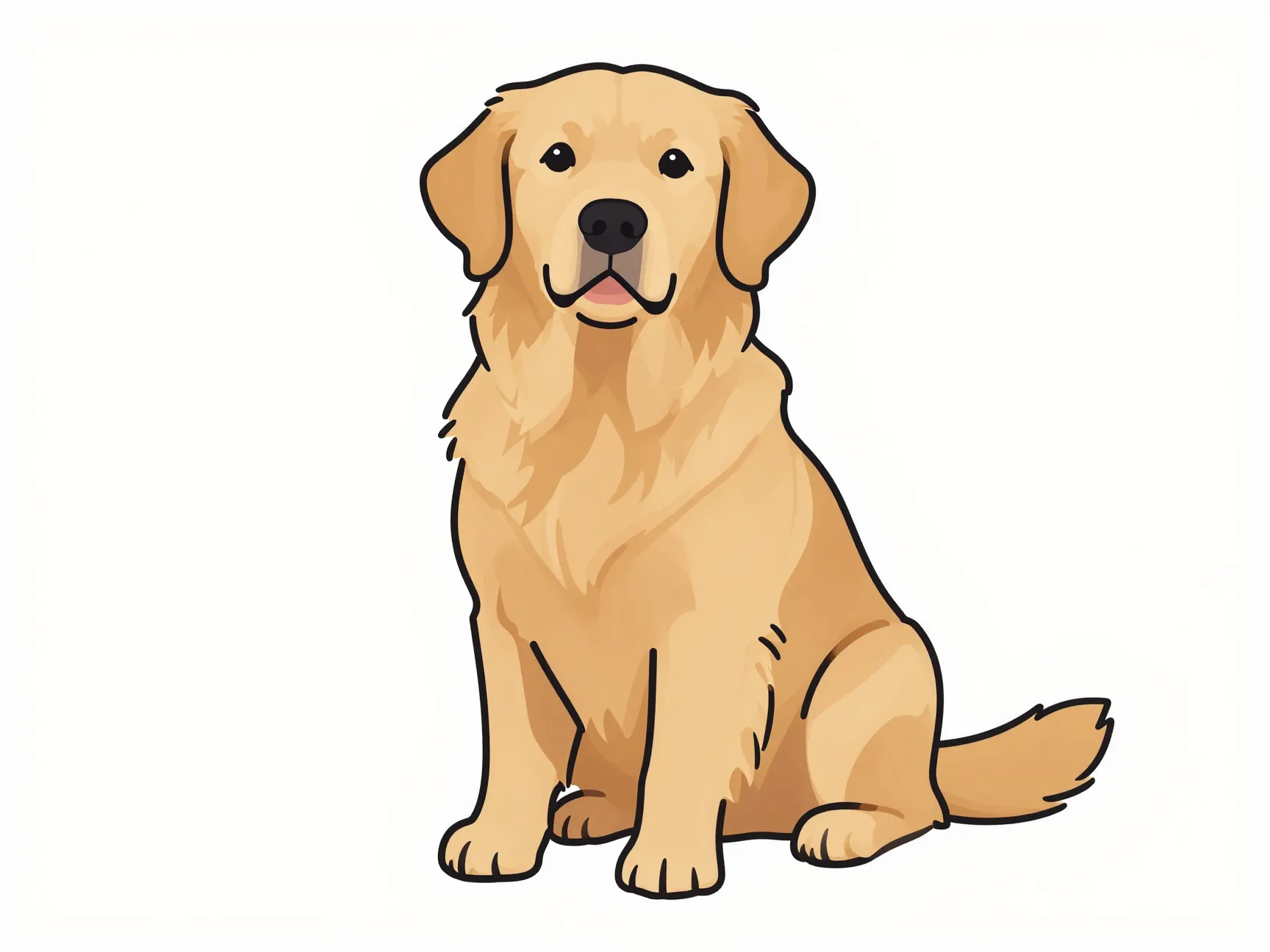
This nine-step lesson, updated in April 2026, was designed with children and novice artists in mind, but its clear sequencing benefits adult beginners just as much. The steps move through head outlines, facial features, the torso, forelimbs, hind legs, paws, and finally simple coloring.
What sets this tutorial apart is its emphasis on breaking the body into small, separate zones. Rather than treating the dog as one continuous shape, it isolates each limb and section, which reduces the intimidation factor for anyone who has never attempted a full-body animal drawing before.
The coloring stage at the end is intentionally simple, using flat color rather than complex shading, which keeps the entire exercise within true beginner territory.
Best for: First-time artists who want a complete, full-body drawing without tackling advanced shading.
3. DIY.org’s Fourteen-Step Golden Retriever Activity
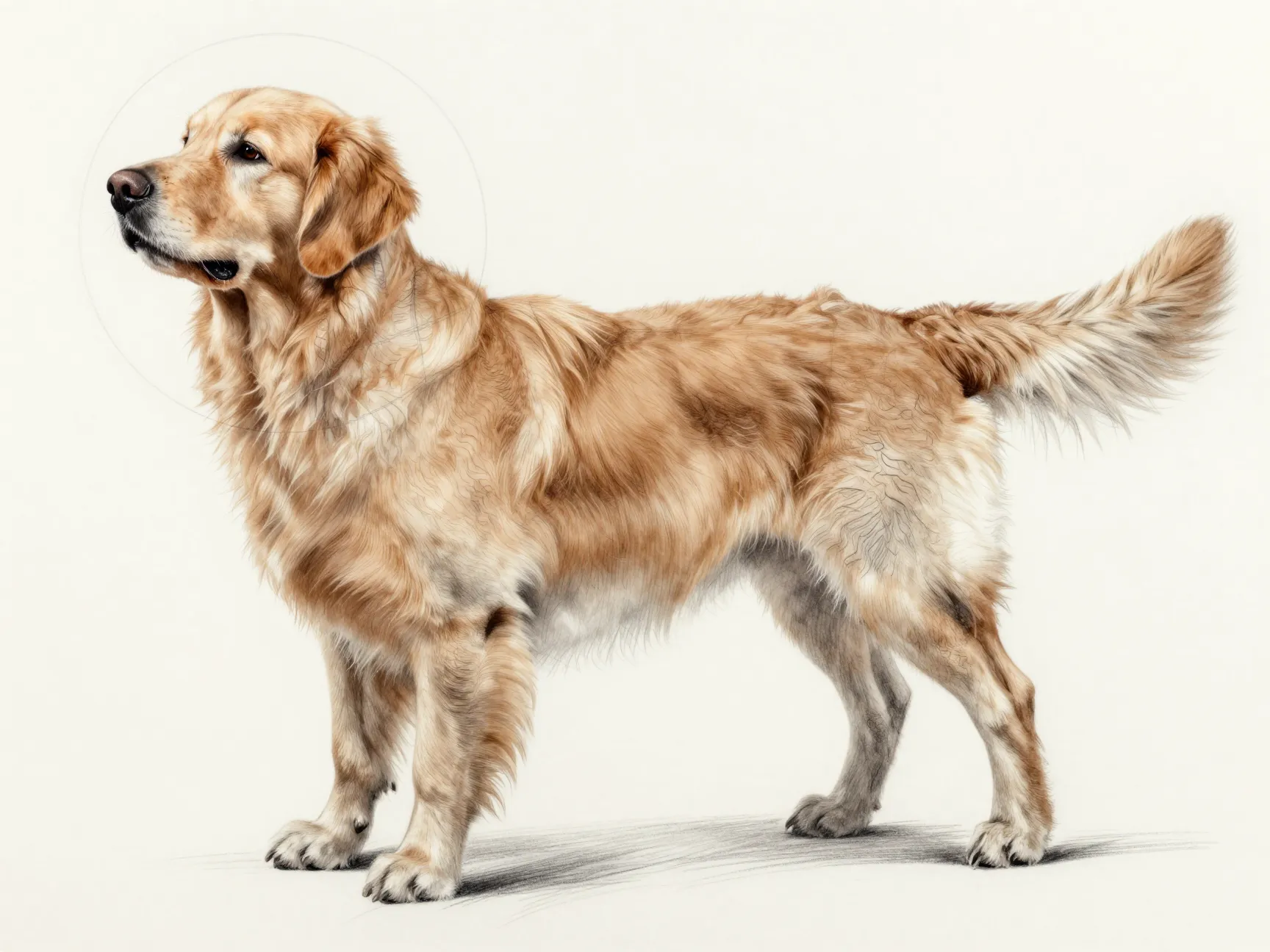
DIY.org frames its golden retriever lesson as a structured activity rather than a traditional art class, and that framing works well for reluctant beginners. Dated November 2025, the fourteen-step guide starts with materials selection, then moves through a head circle, an overlapping body oval, facial guidelines, floppy ears, snout, nose, eyes, legs, paws, a fluffy tail, fur texture, and coloring.
Because it treats drawing as a guided challenge, complete with encouragement to share the finished piece, this tutorial suits people who respond better to activity-style instruction than to formal art lessons. The extra steps devoted to fur texture and the fluffy tail also make it slightly more detailed than some of the other entries on this list, without becoming difficult.
Best for: Learners who want a slower, more thorough walkthrough with extra attention paid to fur and tail texture.
4. Art for Kids Hub’s Goldendoodle Puppy Video Tutorial
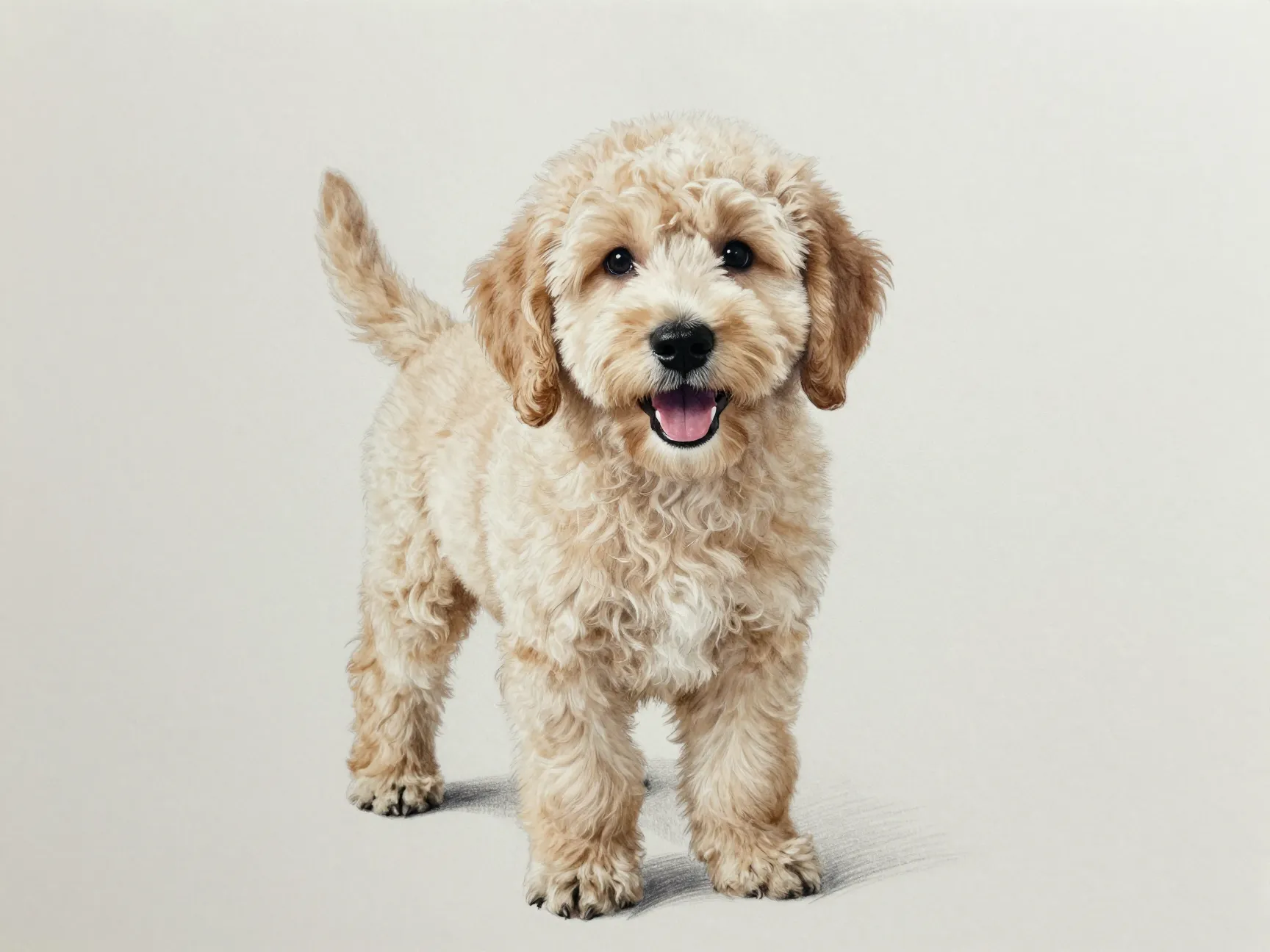
Art for Kids Hub’s May 2025 video, “How To Draw A Goldendoodle Puppy,” takes a slightly different angle by focusing on the goldendoodle rather than the purebred golden retriever. The channel describes the breed as “one of the fluffiest and friendliest dogs ever,” and the lesson matches that friendly tone.
The video begins with a penciled head shape before refining outlines, which mirrors the structure used in several other tutorials on this list. Because it is video-based, learners can pause, rewind, and match their pencil movements directly to the instructor’s, which many beginners find easier than working from static images alone.
The channel markets this lesson as suitable for “artists of all ages,” and the pacing supports that claim. Nothing moves too quickly, and each stroke is demonstrated clearly on camera.
Best for: Anyone who learns better by watching real-time pencil movement rather than reading numbered steps.
5. OodleLife’s Step-By-Step Written Goldendoodle Guide
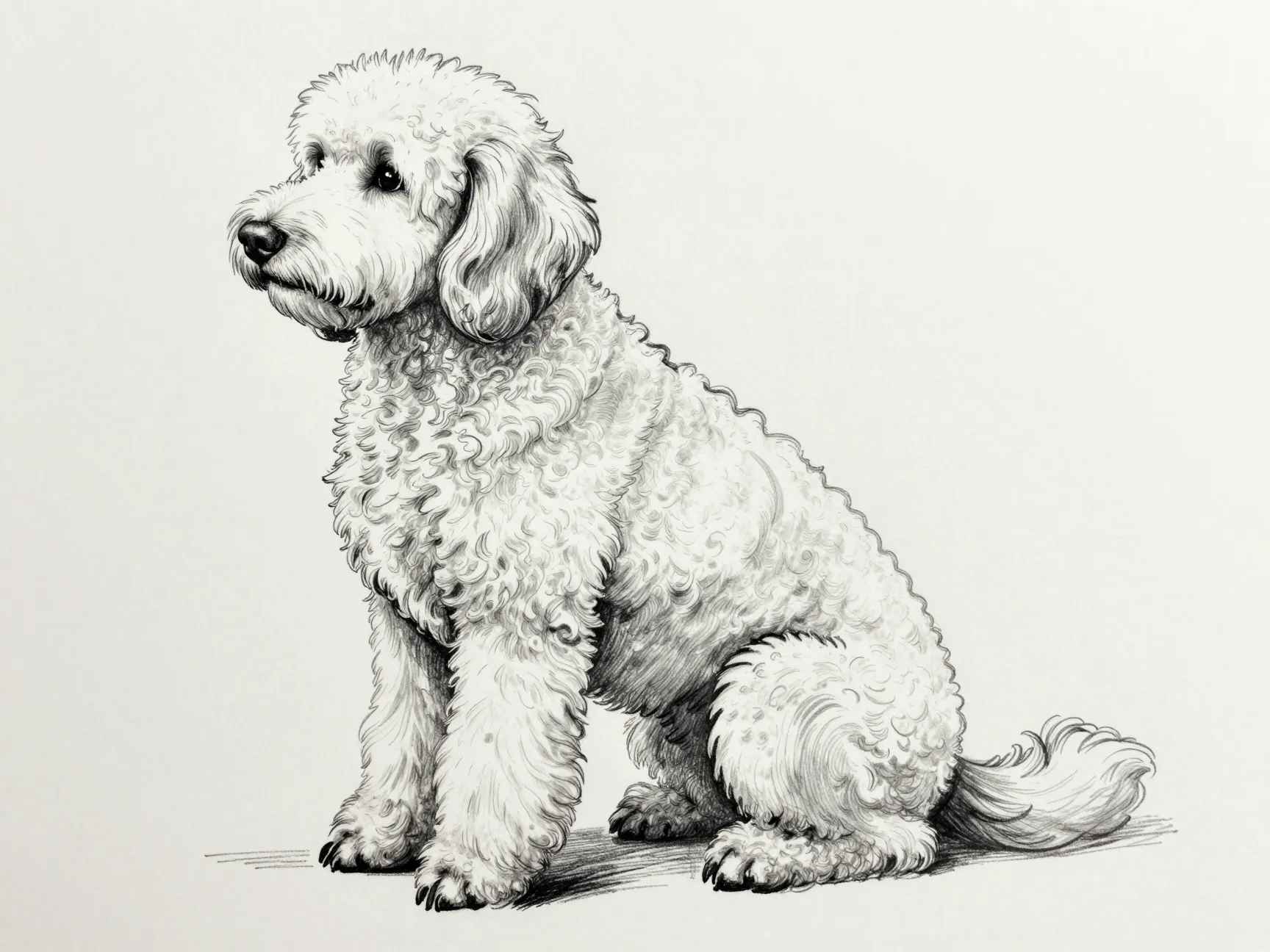
For beginners who prefer reading over watching, OodleLife’s March 2024 article offers detailed written instructions for drawing a goldendoodle. It begins with a practical tip often skipped elsewhere: choosing the right drawing paper before starting.
From there, the guide outlines the head using wavy lines, shapes expressive eyebrows and eyes, constructs the muzzle and nose, and builds a sitting body with textured fur. The consistent use of loose, wavy strokes throughout is intentional. It is the guide’s primary technique for suggesting the goldendoodle’s characteristic curliness and volume without requiring advanced shading skills.
This written format also makes it easy to reference specific steps later, which is useful for beginners who want to revisit just one section, such as the eyes or the fur texture, rather than restarting the entire lesson.
Best for: Readers who prefer text-based instructions they can bookmark and revisit section by section.
6. Rocky Kanaka’s Fifteen-Step Simple Golden Retriever Guide
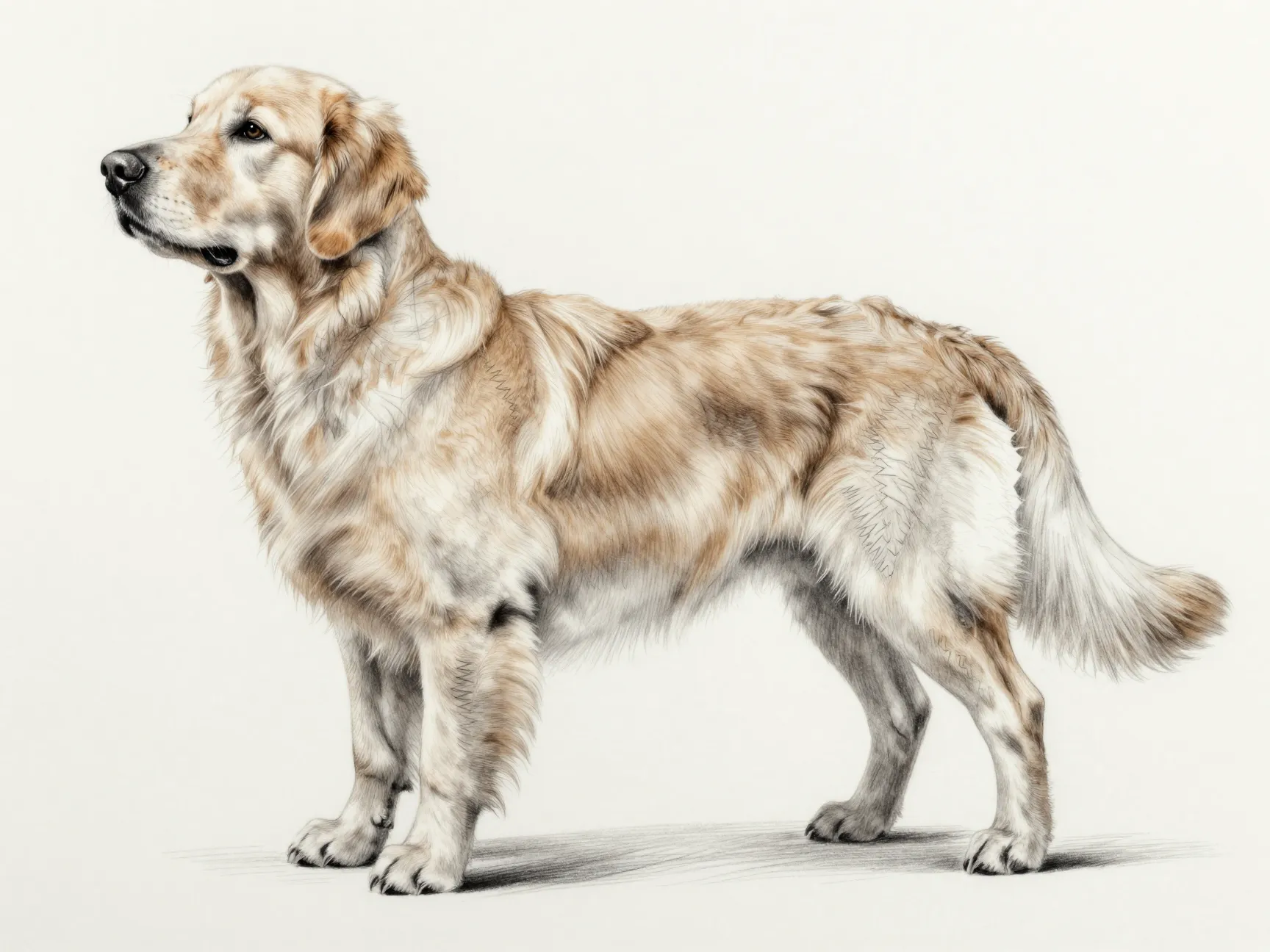
Rounding out the list is Rocky Kanaka’s guide, “Master the Art of Golden Retriever Drawing: Simple & Easy,” which breaks the process into fifteen numbered actions. These include eye placement, forehead and nose curves, U-shaped ear construction, the neck, front and back legs, the belly, the tail, and zigzag fur details.
The emphasis on small, incremental steps sets this tutorial apart. Rather than grouping several features into one instruction, each numbered action covers a single, specific movement of the pencil. The zigzag technique used for fur is also worth noting, since it is one of the simplest ways to suggest texture without shading.
Because it edges slightly closer to a realistic rendering than a cartoon doodle, this guide works well as a bridge tutorial for beginners who have already completed one or two simpler lessons and want a bit more challenge.
Best for: Beginners ready to move from cartoon-style doodles toward a slightly more realistic sketch.
Comparing the 6 Easy Golden Retriever Doodle Drawing Tutorials For Beginners
The table below summarizes each tutorial’s format, difficulty within the beginner range, and ideal learner type, making it easier to choose a starting point.
| Tutorial | Format | Step Count | Best Suited For |
|---|---|---|---|
| HelloArtsy Rounded Head Guide | Static images | Multiple simple stages | Visual, self-paced learners |
| HowToDrawForKids Nine-Step Lesson | Static images | Nine steps | Kids and true beginners |
| DIY.org Fourteen-Step Activity | Written activity guide | Fourteen steps | Slower, thorough learners |
| Art for Kids Hub Goldendoodle Video | Video | Real-time demonstration | Learners who watch and copy |
| OodleLife Written Guide | Written article | Sequential written steps | Text-based, revisit-friendly learners |
| Rocky Kanaka Fifteen-Step Guide | Numbered written steps | Fifteen steps | Beginners ready for more detail |
Tools and Materials for Golden Retriever Doodle Drawing
None of these tutorials require expensive supplies. In fact, part of what makes golden retriever and goldendoodle doodles so beginner-friendly is how little equipment is needed to get started.
A basic beginner kit typically includes:
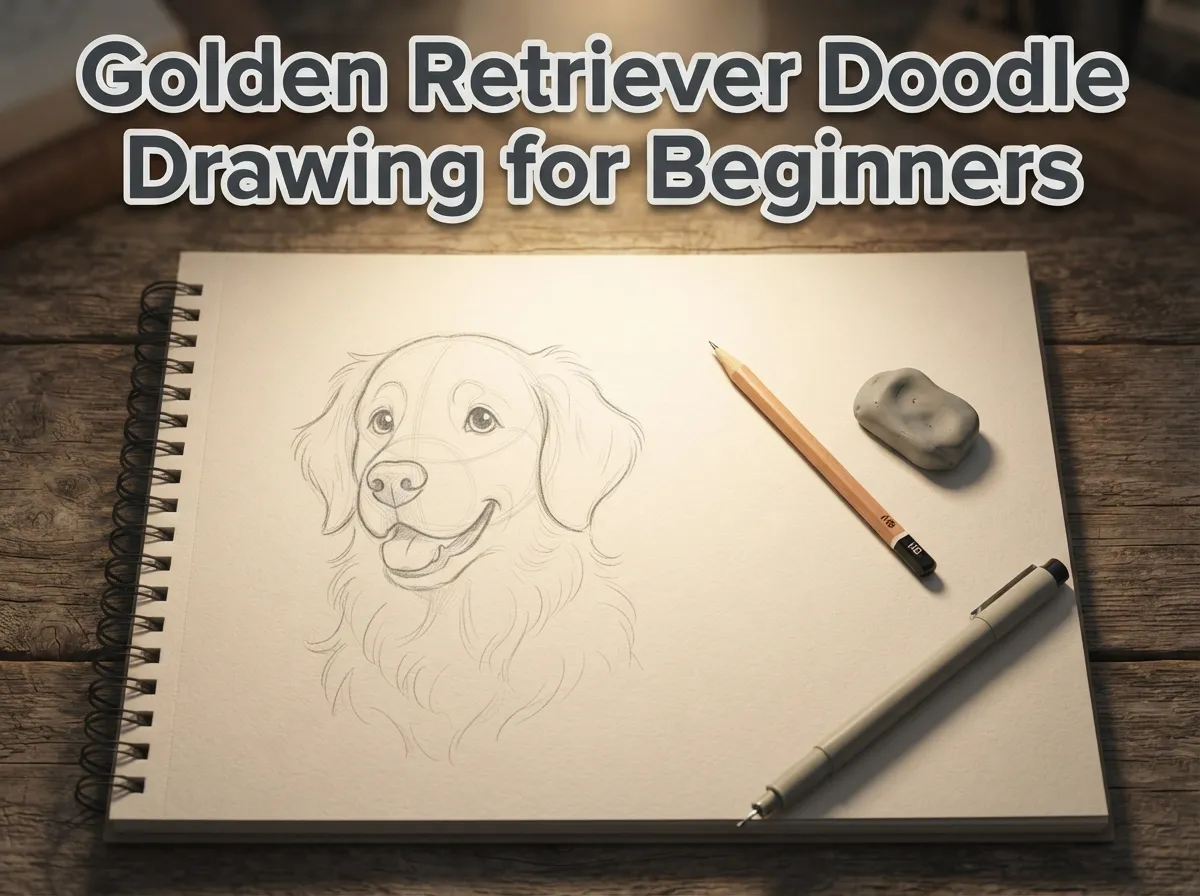
A standard graphite pencil, ideally something in the HB or 2B range for sketching lines that are dark enough to see but easy to erase. A kneaded eraser, which lifts graphite cleanly without smudging the surrounding paper. A sketchbook or plain printer paper, since fancy paper is not necessary for practice doodles. A fine-tip black marker or pen, useful for tracing over final pencil lines once the sketch feels right. Optional colored pencils or markers, for anyone who wants to add golden-brown or cream tones to finish the drawing.
Digital artists have an additional option worth mentioning. Some tutorials, including stylized “doodle” lessons that use apps like FlipaClip, demonstrate the same golden retriever and Pomeranian-style doodles using animation software instead of paper. This approach appeals to beginners who prefer working on a tablet and want the ability to undo mistakes instantly rather than erasing by hand.
Step-By-Step Tips for Getting Started With Golden Retriever Doodles
Following a tutorial helps, but a few general principles make any of the 6 Easy Golden Retriever Doodle Drawing Tutorials For Beginners easier to complete successfully.
Start with light guideline shapes. Every tutorial in this list begins with basic circles or ovals for the head and body. Pressing too hard with the pencil at this stage makes later corrections difficult, so keep initial guidelines faint.
Build the face before the fur. Facial features such as eyes, nose, and ears establish the dog’s expression and personality. Adding fur texture too early can bury these features under unnecessary lines.
Use zigzag or wavy strokes for texture. Both the Rocky Kanaka guide and the OodleLife goldendoodle tutorial rely on this technique. Straight, uniform lines tend to look stiff on a breed known for its soft, fluffy coat.
Work in the same order each time. Most of these tutorials follow a similar sequence: head, ears, facial features, neck, body, legs, paws, tail, then fur detail. Repeating this order across multiple practice sketches helps build muscle memory faster than jumping between different structures.
Do not skip the erasing step. Nearly every tutorial includes a stage where initial guideline shapes are erased once the final outline is complete. Skipping this step leaves visible construction lines that can make an otherwise clean doodle look unfinished.
Common Mistakes Beginners Make With Golden Retriever Doodles
Even with clear instructions, certain mistakes show up repeatedly among first-time artists attempting these tutorials. Recognizing them in advance can save time and frustration.
Drawing the ears too small is one of the most frequent errors. Golden retrievers and goldendoodles have noticeably large, floppy ears, and undersized ears can make the finished doodle look like a different breed entirely.
Overworking the fur texture is another common issue. Adding too many zigzag or wavy lines in one small area creates a cluttered, muddy appearance rather than a soft, fluffy one. Most tutorials suggest applying texture sparingly, focusing on the edges of the body, ears, and tail rather than covering the entire form evenly.
Ignoring proportion checks before finalizing lines also trips up beginners. Because several of these tutorials build the drawing in stages, it helps to pause after the basic shapes are in place and compare the head-to-body ratio before adding details. A head that is too small relative to the body is a frequent cause of dissatisfaction with the final result.
Finally, many beginners rush the eyes. Since golden retrievers are known for their warm, expressive gaze, spending extra care on eye shape and placement pays off disproportionately compared to other features.
Moving Beyond the 6 Easy Golden Retriever Doodle Drawing Tutorials For Beginners
Once a beginner feels comfortable with two or three of these tutorials, more advanced resources become worth exploring. How2DrawAnimals, for example, offers a golden retriever guide that leans toward realism, using construction lines, careful erasing, and detailed shading rather than simplified cartoon shapes. This kind of tutorial suits artists who have already internalized basic proportion and want to add depth, fur shading, and more accurate anatomy.
Cartoon-style guides, such as those simplifying the retriever into character-like shapes with friendly expressions, remain useful even at intermediate stages. They offer a lower-pressure way to experiment with personality and expression before committing to a fully realistic piece.
The overall pattern across 2023 through 2026 content shows sustained demand for both realistic and cartoon-style dog tutorials, which means beginners who master these six easy lessons will have no shortage of next-step material to continue building their skills.
Frequently Asked Questions
Are these tutorials suitable for children?
Several of them, including the HowToDrawForKids and DIY.org lessons, were designed specifically with young or first-time artists in mind. The Art for Kids Hub video is also marketed as suitable for artists of all ages.
Do I need to know how to draw dogs already?
No. Every tutorial on this list starts from basic geometric shapes like circles and ovals, assuming no prior experience with animal anatomy.
What is the easiest tutorial to start with?
The HelloArtsy rounded head guide and the HowToDrawForKids nine-step lesson are generally the most approachable, since both break the process into small, single-focus steps.
Can these tutorials be done digitally instead of on paper?
Yes. While most are demonstrated with pencil and paper, the same principles apply to digital tools, and some stylized doodle tutorials specifically use animation apps rather than traditional media.
How long does it take to complete one of these drawings?
Most beginners can finish a simple doodle in fifteen to thirty minutes, while the more detailed fourteen-step or fifteen-step guides may take closer to forty-five minutes for a first attempt.
Conclusion
Learning to draw a golden retriever or goldendoodle does not require artistic talent, just a clear set of steps and a little patience. The 6 Easy Golden Retriever Doodle Drawing Tutorials For Beginners covered in this guide each offer a slightly different path toward the same friendly, floppy-eared result, whether through video demonstration, written instructions, or numbered activity steps.
The best way to start is simple: pick one tutorial that matches a preferred learning style, whether that means watching a video, reading step-by-step text, or following a structured activity guide. Complete it once without worrying about perfection, then try a second tutorial from this list to compare techniques like zigzag fur strokes versus wavy line texture.
After a few practice rounds, moving toward more detailed or realistic golden retriever guides becomes a natural next step. Keep a sketchbook nearby, revisit favorite steps often, and treat each doodle as practice rather than a final product. Progress in drawing, much like training a golden retriever puppy, comes from consistent, small repetitions rather than a single perfect attempt.