Black Cat Funny Pics That Perfectly Debunk the Superstition
Roughly one in four Americans still hesitates before crossing paths with a black cat, according to long-running folklore surveys, yet millions of these same cats are curled up on couches right now, purring, photobombing dinner tables, and generally acting like the least ominous creatures on the planet. That contradiction is exactly why 6 Black Cat Funny Pics That Perfectly Debunk the Superstition has become such a satisfying corrective to centuries of bad press. Instead of arguing with folklore, these images simply show black cats being ridiculous, clumsy, and lovable, which turns out to be a far more effective myth-buster than any lecture on probability.
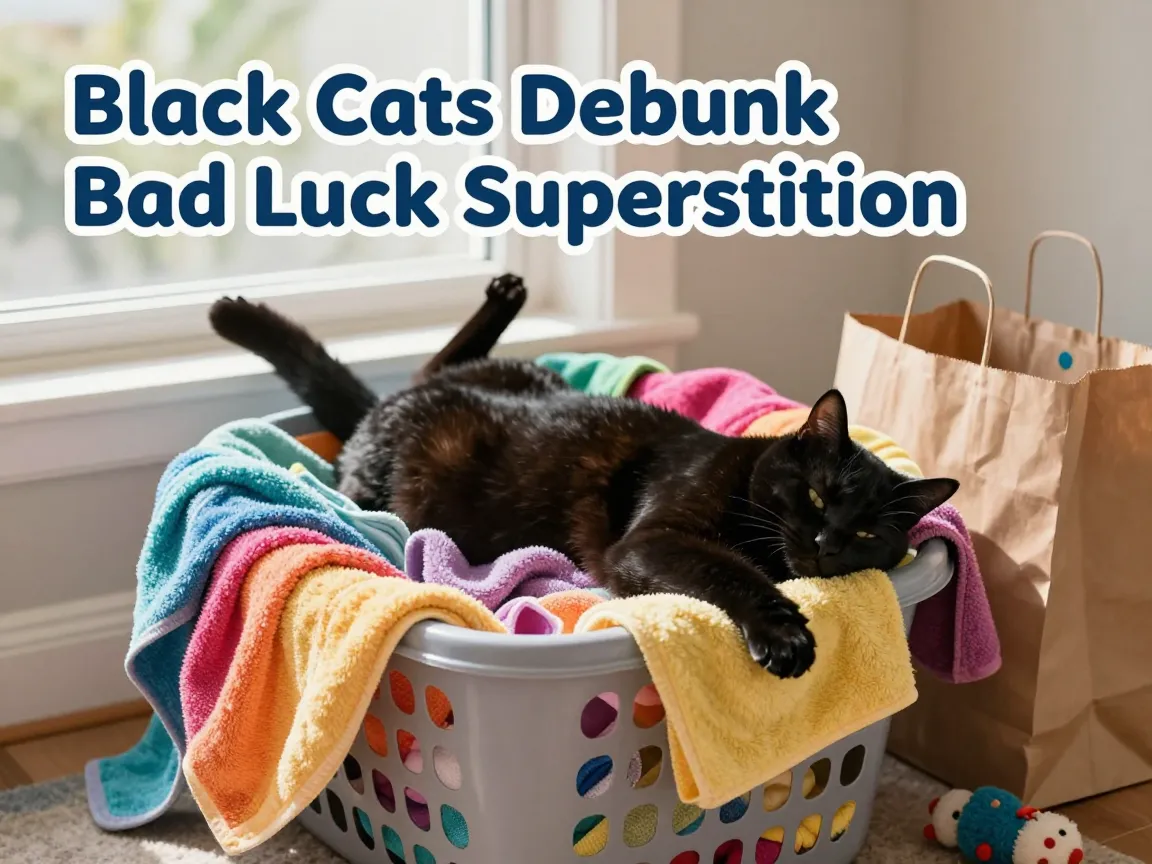
Disclosure: This post contains affiliate links. As an Amazon Associate, we earn from qualifying purchases, and at no extra cost to you.
This article breaks down six specific categories of black cat photos that have become internet favorites precisely because they contradict the bad-luck stereotype. Along the way, it explains where the superstition came from, what global folklore actually says about black cats, and why humor has become the sharpest tool for changing public perception in 2026.
Key Takeaways
- Black cat superstitions have no scientific backing and stem entirely from medieval folklore and cultural bias, not from any trait of the animal itself.
- 6 Black Cat Funny Pics That Perfectly Debunk the Superstition works because humor lowers defenses faster than factual arguments, making people rethink old beliefs without feeling lectured.
- Many cultures, including Japan, Scotland, France, and Russia, actually associate black cats with good fortune, not misfortune.
- Large meme collections and short-form videos from 2023 through 2026 show a clear trend: creators are using comedy specifically to challenge the bad-luck myth.
- Sharing funny black cat photos has real-world impact, since the bad-luck stereotype still contributes to black cats being passed over in shelters.
Why Black Cats Got Branded as Bad Luck
Superstitions rarely come from nowhere, and the black cat myth is no exception. During the medieval period in parts of Europe, black cats became tangled up with fears about witchcraft. People believed witches could transform into cats or kept them as supernatural companions, and because black was already associated with darkness and the unknown, black-coated cats absorbed the suspicion. Over centuries, that fear calcified into a folk belief that simply seeing or crossing paths with a black cat invited misfortune.
The problem is that this belief has zero scientific evidence behind it. It is a product of imagination, cultural storytelling, and fear passed down through generations, not an observed pattern of actual bad outcomes. A black cat crossing your path means exactly one thing: an animal is walking somewhere. It is not a bad omen, a warning sign, or a curse. It is a cat going about its day, often looking for food, sunlight, or a nap spot.
What makes the modern debunking effort so interesting is that it does not rely on scientific papers or statistics. Instead, creators lean on something far more persuasive for casual audiences: visual comedy. When someone sees a black cat faceplanting off a couch or staring cross-eyed at a laser pointer, the idea that this same creature could summon misfortune starts to feel absurd on its face.
Social platforms have picked up on this shift aggressively. Instagram posts in mid-2026 have started labeling the bad-luck belief outright as a “myth” while pairing that claim with genuinely funny cat imagery. Short-form video platforms have gone even further, building entire clips structured like mini debunking arguments: a dramatic opening claim about bad luck, followed by a montage of a black cat being goofy or affectionate, closing with on-screen text that gently mocks the original superstition. One widely viewed clip from July 2026 shows someone calling a black cat “so scary” before cutting to several beautiful, gentle shots of the same cat, ending on a caption praising its beauty instead of fearing it.
The 6 Black Cat Funny Pics That Perfectly Debunk the Superstition
Large meme compilations published between 2023 and 2026 have settled into a fairly consistent pattern. Collections ranging from 45 to 50 images at a time keep circulating specifically because they frame black cats as lovable goofballs rather than omens. Based on what recurs most often across these collections, the following six categories represent the funniest and most persuasive examples of 6 Black Cat Funny Pics That Perfectly Debunk the Superstition currently making the rounds.
1. The Laundry Basket Ambush
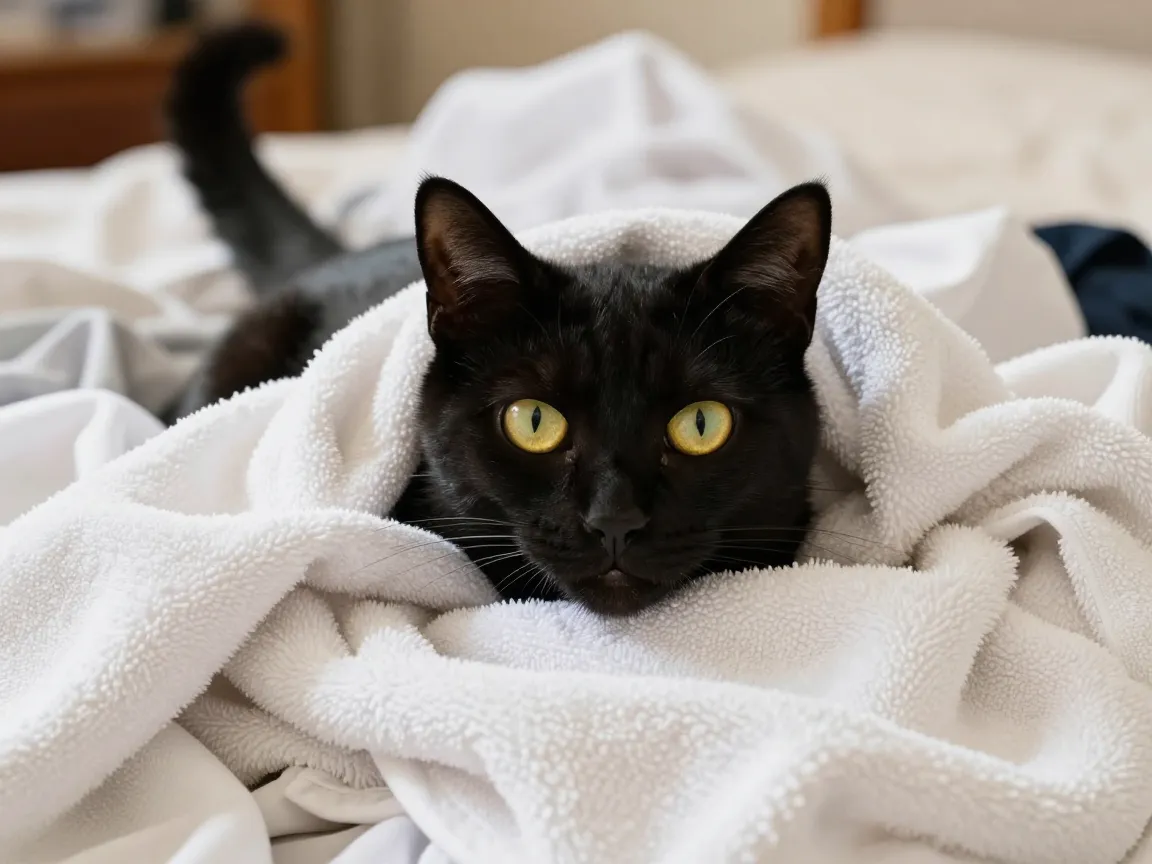
Nothing undercuts a menacing reputation faster than a cat burrowed so deep into a pile of clean towels that only two eyes and a twitching tail are visible. This category shows up constantly in meme collections because it captures something universally relatable about cat ownership. The cat is not plotting anything sinister. It is simply warm, comfortable, and mildly annoyed that laundry duty has been interrupted.
2. The Accidental Photobomb
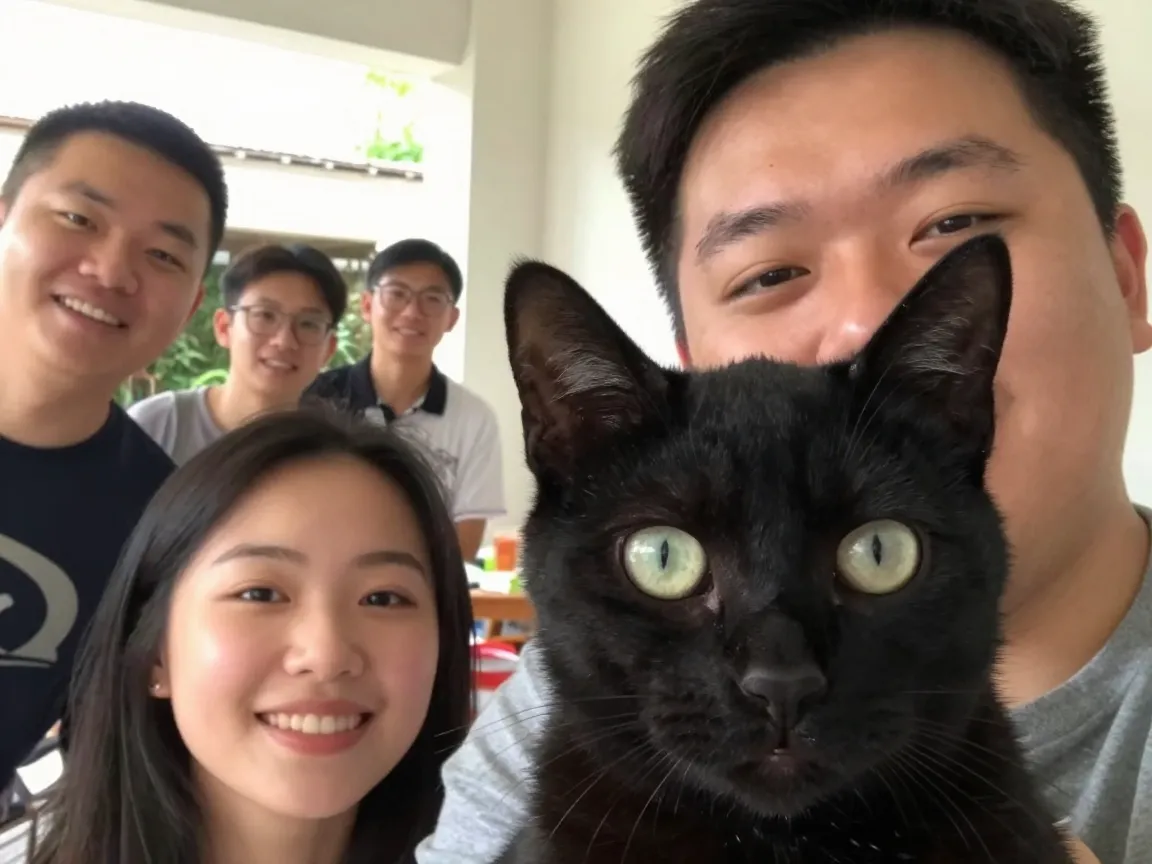
Family photos, vacation selfies, and even serious professional headshots occasionally get hijacked by a black cat’s head popping into frame at the worst possible moment. These images are funny precisely because they show the cat behaving like an attention-seeking sibling rather than a supernatural entity. A creature that ruins a perfectly good photo by shoving its face into the lens is not lurking in shadows plotting misfortune. It is just trying to get in on the fun.
3. The Keyboard Takeover
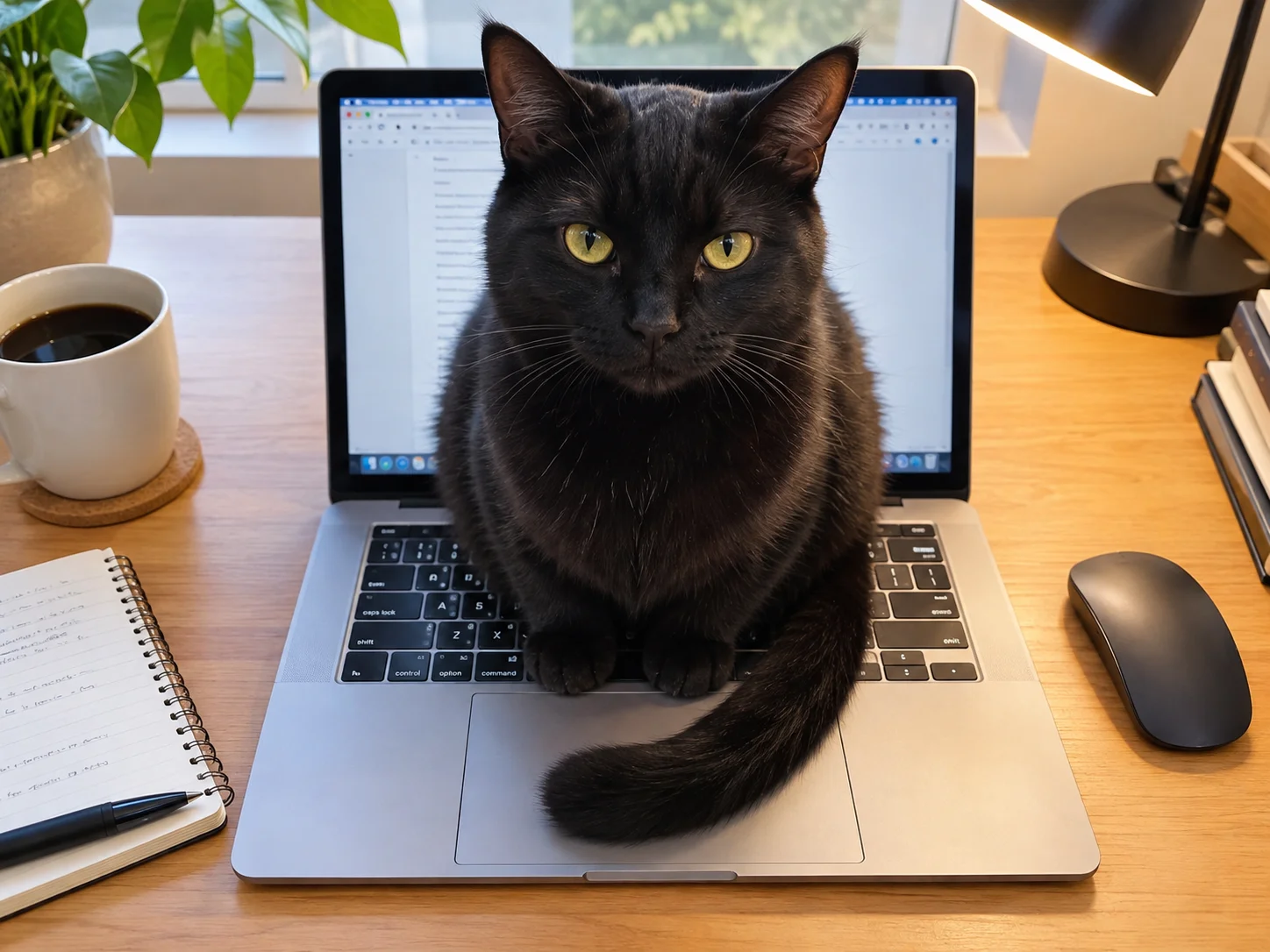
Anyone who has tried to work from home with a cat in the house recognizes this scenario instantly. The cat waits until the laptop is open, then calmly walks across the keys, sits directly on the spacebar, and refuses to move. This category of photo has become a favorite specifically because it flips the “mysterious and aloof” stereotype on its head. These cats are needy, demanding, and hilariously unbothered by deadlines.
4. The Suspicious Side-Eye
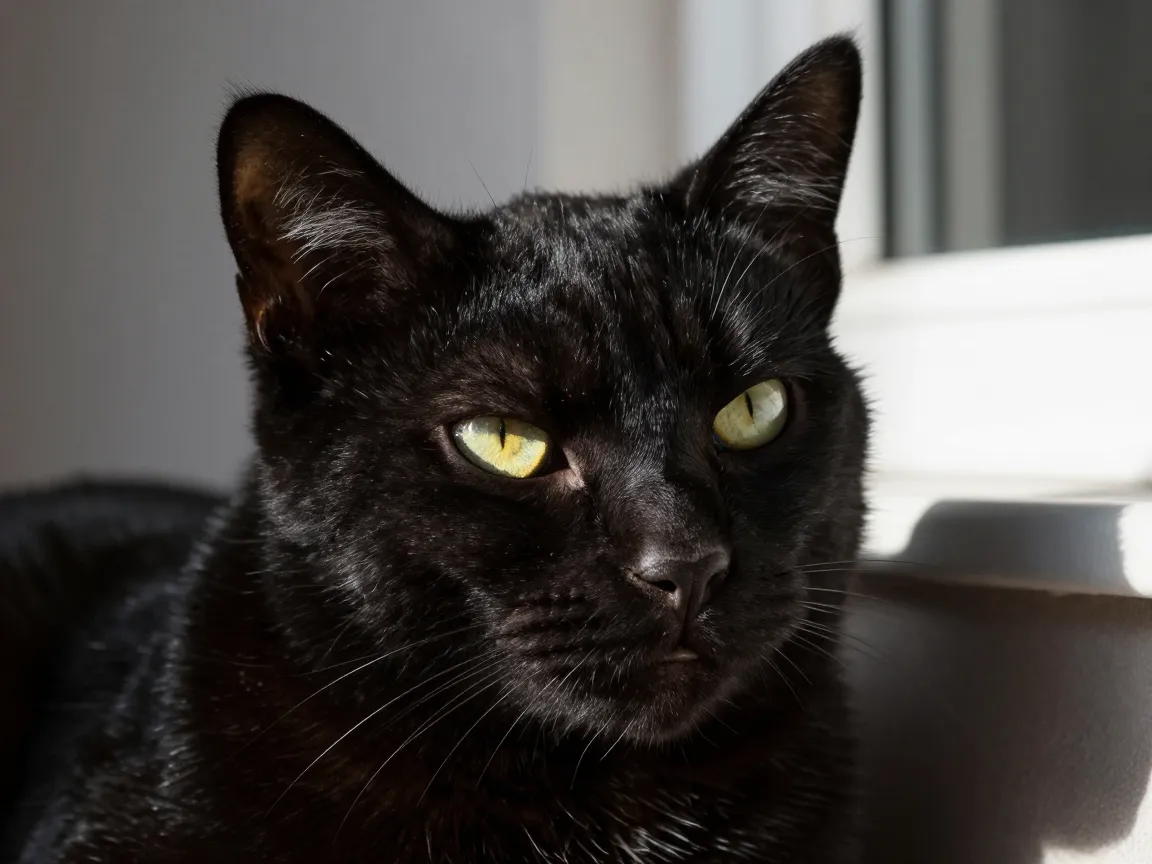
A slightly narrowed gaze, caught at just the right angle, can make any cat look like it is scheming. Black cats get an extra dose of this treatment because dark fur makes expressions read as more dramatic in photos. Meme collections use this expression constantly, but always paired with captions that undercut the drama, something like accusing the cat of stealing a sock or judging a bad haircut. The humor works because it acknowledges the “spooky” stereotype while immediately deflating it with something mundane.
5. The Belly-Up Nap
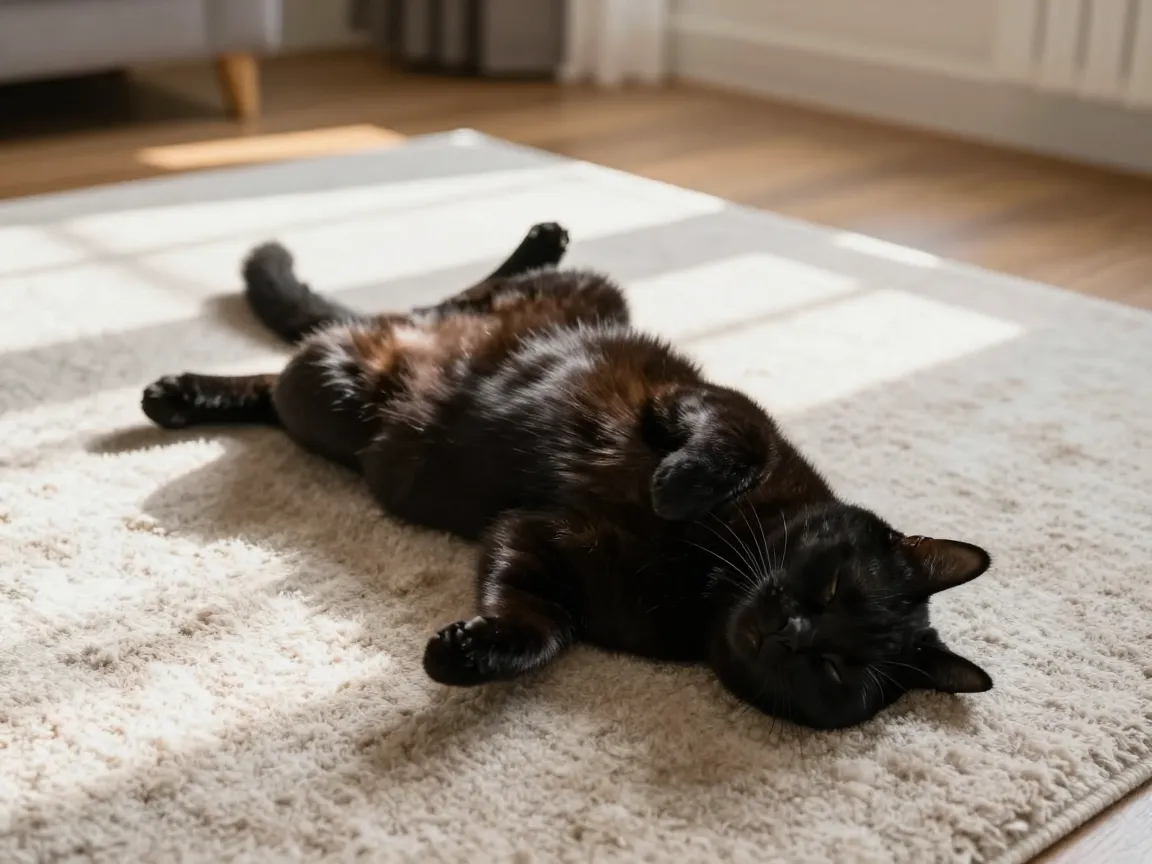
Few images fight the bad-luck myth harder than a black cat sprawled on its back, paws in the air, completely defenseless and trusting. This pose signals comfort and safety, the exact opposite of a creature associated with danger or curses. Photo collections built specifically to counter black cat stereotypes lean heavily on this pose because it visually communicates vulnerability rather than menace.
6. The Grocery Bag Ambush
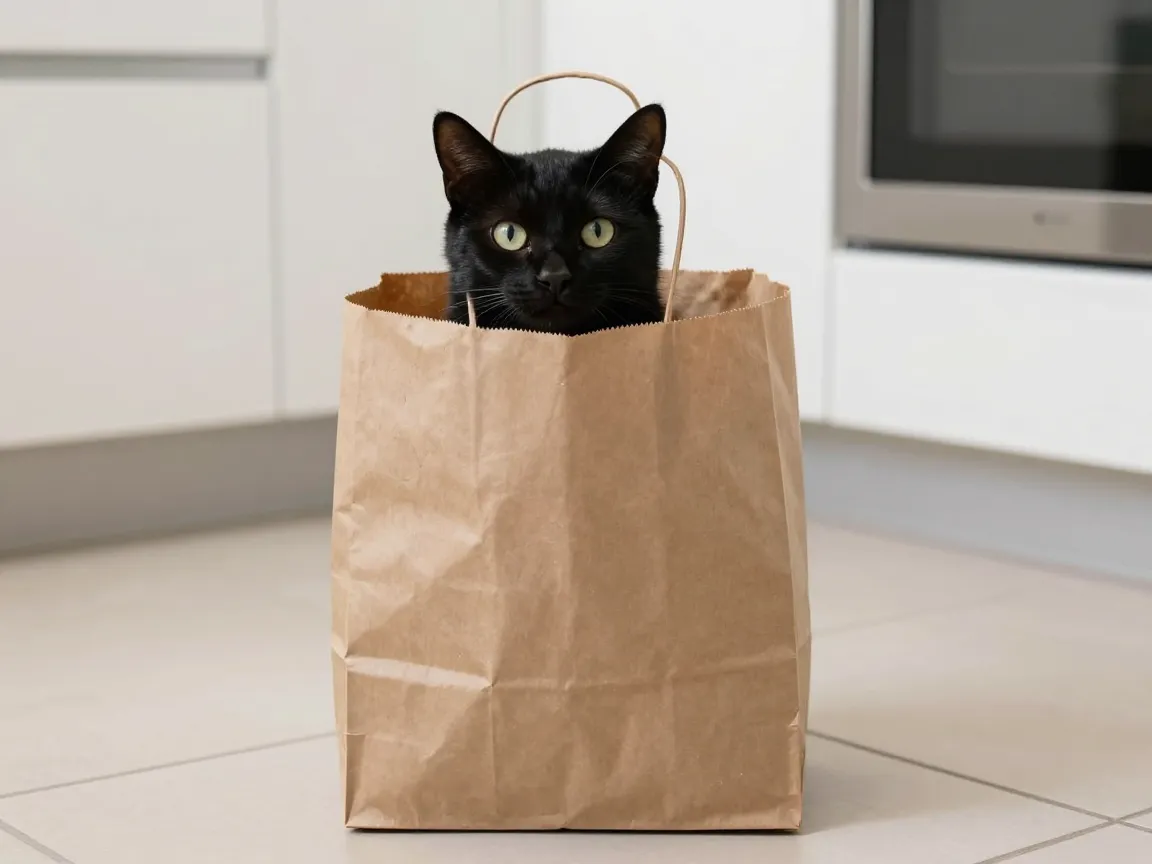
The final category involves a black cat squeezing into a paper grocery bag, sometimes getting stuck, sometimes just sitting inside staring out with wide eyes. This is peak “silly pet” content, and it appears again and again across large meme compilations because it captures a black cat behaving exactly like any other house cat: curious, a little dumb, and endlessly entertaining. Nothing about a cat wedged into a bag reads as ominous.
Together, these six categories form a fairly complete portrait of why 6 Black Cat Funny Pics That Perfectly Debunk the Superstition resonates so widely. Each image swaps out mystery and fear for clumsiness and affection, and that swap is doing real cultural work.
What Global Folklore Really Says About Black Cats
One detail that rarely makes it into casual conversation about black cat superstition is how inconsistent the belief actually is across cultures. The bad-luck framing common in parts of the United States and Western Europe is far from universal. In fact, several major cultural traditions view black cats as symbols of good fortune.
| Region | Belief About Black Cats |
|---|---|
| Japan | Symbol of prosperity and good fortune |
| Scotland | A black cat arriving at your door in the morning signals good luck ahead |
| France | Known as magician cats, said to bring luck if treated well |
| Russia | Bringing a black cat into a new home is thought to attract luck and prosperity |
| 19th-century parts of Europe | Considered a positive sign rather than a warning |
This table matters because it exposes the bad-luck belief for what it really is: a regional cultural habit, not a universal truth. If a black cat can mean prosperity in Tokyo, good fortune in Edinburgh, and magical favor in rural France, then the idea of it being an automatic bad omen collapses under its own inconsistency.
“Labeling black cats as evil says far more about human prejudice than it ever says about the animal.”
That line, echoed across several 2026 meme collections, captures the core argument behind the entire debunking movement. The cat is not the problem. The story humans have told about the cat is the problem, and it is a story that changes depending on which country you happen to be standing in.
Why Humor Works Better Than Facts Alone
Public health researchers and communication experts have long noted that people rarely change deeply held beliefs because someone presented them with a statistic. Beliefs tied to folklore, fear, or tradition tend to be emotional rather than logical, which means the most effective counter-argument is often emotional as well.
This is exactly why 6 Black Cat Funny Pics That Perfectly Debunk the Superstition succeeds where a dry paragraph of facts might fail. A funny photo does three things simultaneously that a factual statement cannot:
- It creates positive feelings, which get associated with the subject of the photo rather than argued into someone’s head.
- It lowers defensiveness, since a joke does not feel like a lecture or a correction.
- It spreads easily, because funny content gets shared far more often than educational content on most social platforms.
Short-form video platforms in 2026 have leaned into this pattern aggressively. One recent trend opens with a dramatic voice claiming black cats bring bad luck, then cuts immediately to a black cat doing something silly, like tripping over its own tail or falling asleep mid-play session. Another format shows a person joking about bad luck before flipping the script entirely, leaning into the idea of “beginner’s luck” instead during something like a card game, essentially turning the superstition into a punchline rather than a warning.
Community-driven content plays a role here too. On dates traditionally associated with bad luck, such as Friday the 13th, social media pages regularly ask followers to post photos of their black cats as a way of publicly rejecting the superstition. These crowd-sourced galleries function as an informal but genuinely widespread form of myth-busting, built entirely from ordinary pet owners rather than professional creators.
The Real-World Cost of the Superstition
It would be easy to treat this entire topic as harmless fun, but the bad-luck stereotype has consequences that go beyond internet jokes. Animal shelters have long reported that black cats face longer wait times for adoption compared to cats of other colors. Part of this comes down to photography, since black fur is genuinely harder to photograph well in typical shelter lighting, but part of it comes down to lingering superstition that still makes some potential adopters hesitant without fully realizing why.
This is precisely why photography-driven campaigns matter. Projects built around showcasing black cats in warm, funny, or affectionate settings are not just entertainment. They are deliberately designed to counter a bias that has real consequences for real animals sitting in shelters waiting for homes. Large photo collections from major content platforms have increasingly framed their black cat features around a simple argument: these animals bring everything except bad luck, including companionship, comic relief, and a surprising amount of personality.
How to Use These Photos to Change Minds
Sharing funny black cat content is not just about getting a laugh. It can be a genuinely useful tool for shifting perception among friends, family, or social media followers who still hold onto old superstitions. A few practical approaches work particularly well.
- Pair a funny photo with a short factual note, such as mentioning that the bad-luck belief has no scientific backing and originated from medieval fears rather than any real observation.
- Highlight the global folklore contradiction, pointing out that black cats are considered lucky in places like Japan, Scotland, and Russia.
- Use the photo to start a lighthearted conversation rather than a correction, since people respond better to shared humor than to being told they are wrong.
- If someone is hesitant about adopting a black cat specifically because of superstition, share adoption-focused photo collections that show black cats thriving as beloved pets.
- Participate in community photo days, such as Friday the 13th galleries, where posting a black cat photo becomes a small but visible statement against the myth.
These steps turn a simple funny picture into a small act of myth-busting, one shared image at a time.
Frequently Asked Questions
Why are black cats considered unlucky in the first place?
The belief traces back to medieval European fears about witchcraft, when black cats became associated with witches and dark magic. Over time, that fear became a widespread folk superstition, even though it has no scientific basis.
Do all cultures view black cats as bad luck?
No. Many cultures view them as symbols of good fortune. Japan associates them with prosperity, Scotland considers a black cat at the door a sign of good luck, France calls them magician cats that bring fortune when treated well, and Russia sees bringing one into a new home as a way to attract luck.
Why do funny black cat photos help debunk the superstition?
Humor tends to be more persuasive than facts alone because it creates positive emotional associations and lowers defensiveness. Seeing a black cat acting silly or affectionate makes the idea of it being an omen of misfortune feel absurd rather than requiring a factual argument.
Does the bad-luck superstition actually affect black cats today?
Yes. Some shelters report that black cats face longer adoption wait times, partly due to lingering superstition. Photo campaigns showing black cats as lovable pets aim to directly counter this bias.
What is the best way to challenge someone’s belief in the black cat superstition?
Pairing a genuinely funny or heartwarming photo with a brief factual note tends to work better than a direct argument. Sharing global folklore examples that contradict the bad-luck belief can also help shift perspective without feeling confrontational.
Conclusion
The case against the black cat superstition does not need a courtroom or a scientific study, though both would side firmly against the myth anyway. It needs exactly what this article has laid out: six specific, relatable, and genuinely funny categories of photos that show black cats behaving like every other house cat, minus the bad reputation. From laundry basket ambushes to grocery bag mishaps, 6 Black Cat Funny Pics That Perfectly Debunk the Superstition works because it replaces centuries-old fear with something far more accurate, a picture of a clumsy, affectionate, occasionally ridiculous pet.
Anyone still hesitant about black cats has a simple next step. Look up a local shelter’s adoptable black cats, scroll through a recent meme collection, or simply watch a short video of a black cat falling off a couch. The evidence, and the laughter, speaks for itself.