Simple Bird Drawing Ideas For Kids To Try Today
A single oval and one small circle are all it takes to build almost any bird a child will ever want to draw. That is not an exaggeration. Across dozens of children’s art tutorials published and refreshed through 2026, the same core technique keeps showing up: start with basic shapes, then layer on a beak, wings, and tail one step at a time. No fancy supplies, no art-school training, and no wasted paper required.
Disclosure: This post contains affiliate links. As an Amazon Associate, we earn from qualifying purchases, and at no extra cost to you.
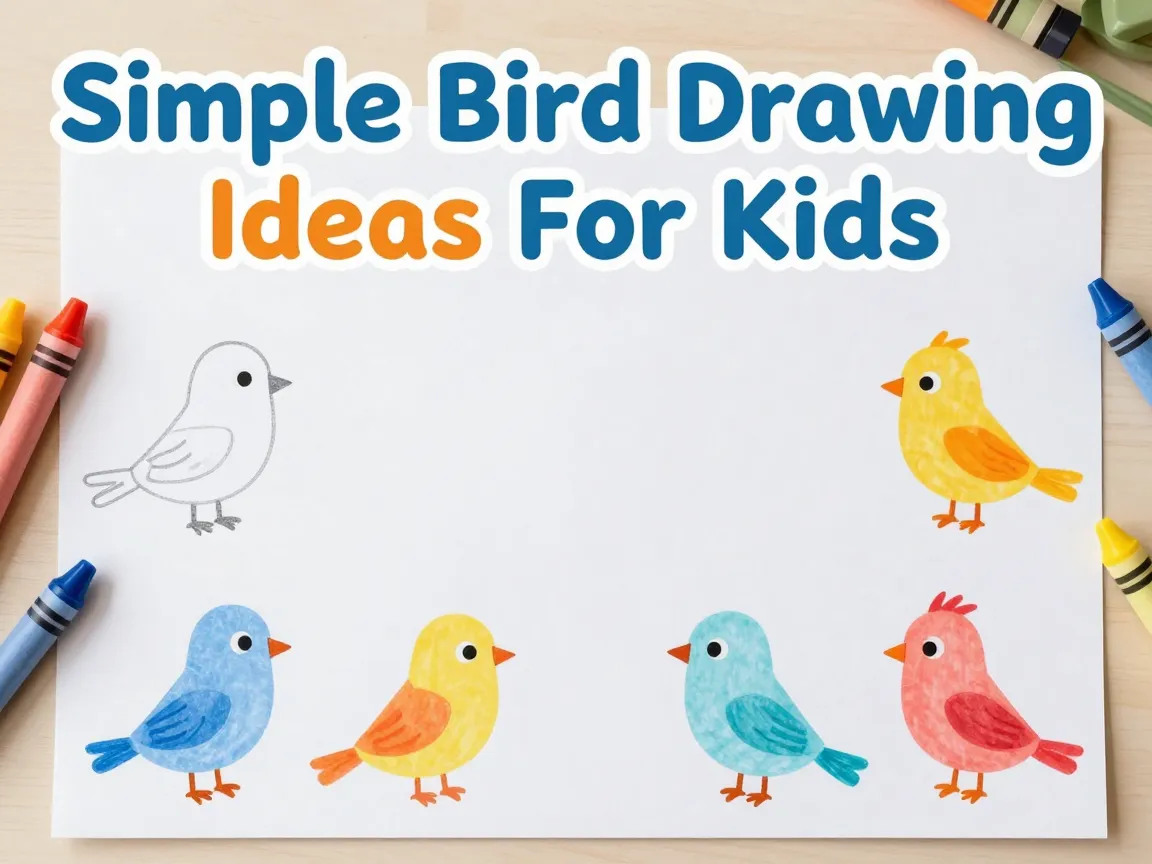
This guide collects six simple bird drawing ideas for kids to try today, pulled from the most current and widely used children’s art resources available right now. Each project takes less than twenty minutes, uses shapes most kids already know how to draw, and can be finished with whatever crayons or markers happen to be sitting in the craft drawer. Whether the goal is a quiet rainy-afternoon activity, a classroom art lesson, or a simple way to introduce basic biodiversity concepts, these six bird drawing ideas for kids to try today offer an easy entry point that grows with a child’s confidence.
Key Takeaways
- All six bird drawing ideas for kids to try today rely on basic shapes like ovals, circles, triangles, and simple lines rather than complex freehand sketching.
- Most projects can be completed in under twenty minutes, making them ideal for short attention spans or classroom time blocks.
- Starting with one large shape for the body and a smaller one for the head is the single most repeated technique across current children’s drawing resources.
- Several ideas double as learning tools, connecting basic art skills to nature study, color recognition, and even early biodiversity awareness.
- No special art supplies are needed. Plain paper, a pencil, and any coloring tool a household already owns will work.
Why Simple Bird Drawing Ideas Help Kids Learn Fast
Children’s art educators keep returning to birds as a subject for one practical reason: a bird’s basic form breaks down into shapes kids already recognize. An oval becomes a body. A circle becomes a head. A triangle becomes a beak or a wing tip. That predictability is exactly why bird drawing tutorials remain a staple on children’s art platforms heading into 2026, with resources ranging from printable diagram sets to step-by-step video walkthroughs.
This shape-first approach does more than make drawing easier. It also builds a child’s visual problem-solving skills, since every bird, no matter how different it looks in real life, can be broken into the same handful of building blocks. One well-known children’s drawing guide reinforces this by teaching kids to outline the body, head, wings, and tail using nothing but circles, ovals, triangles, and straight lines before any detail work begins. Another popular resource structured around printable diagrams shows how a child can move from a few simple lines to a finished bird drawing in just minutes, which matters enormously for young learners who lose focus quickly.
There is also a developmental benefit worth mentioning. Breaking a complex subject into simple, sequential steps mirrors how children learn most skills, from tying shoes to reading. A 2025 roundup of creative drawing projects for kids specifically called out birds as an especially engaging subject because of their varied forms, ranging from basic cartoon shapes to more detailed parrots and owls, while still recommending the same simple starting technique: ovals and triangles for the body and wings, with some educators even suggesting a child trace their own thumb to form the bird’s head.
Put simply, bird drawing works because it rewards small, achievable wins. A child finishes a recognizable bird in minutes, feels proud, and is ready to try the next idea. That momentum is the real engine behind these six simple bird drawing ideas for kids to try today.
6 Simple Bird Drawing Ideas For Kids To Try Today
The following six projects were chosen because they appear consistently across multiple current children’s art resources, use only basic shapes, and can each be completed in a single short sitting. They move from easiest to slightly more detailed, so kids can work through them in order or jump straight to a favorite.
1. Oval-Body Standing Bird
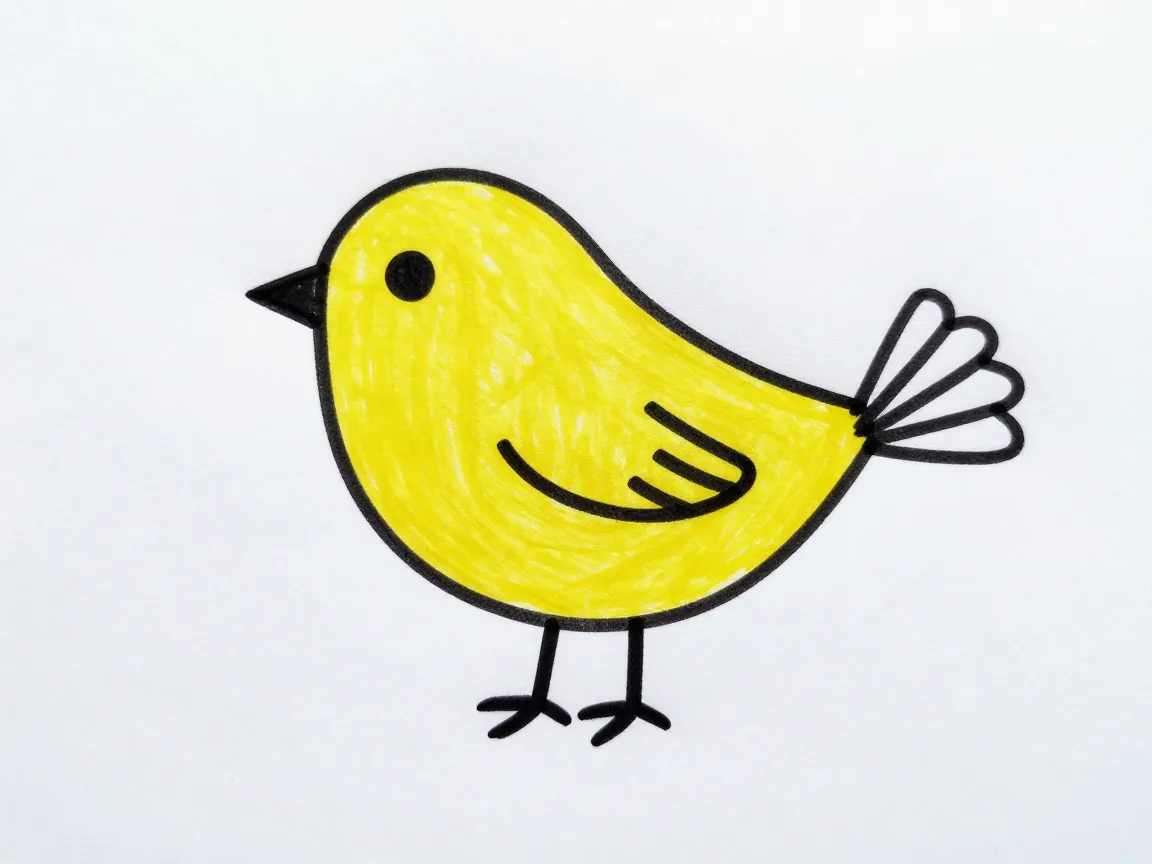
This is the most widely recommended starting point across children’s drawing guides, and for good reason. Begin with one tilted oval for the body. Add a smaller circle overlapping the top for the head. Draw a small triangle pointing outward for the beak, two thin lines with tiny arcs underneath for the feet, and a simple curved line or small half-circle for the wing resting against the body. Finish with a short, fan-shaped tail made of three or four lines.
Once the outline is done, kids can trace over the final shape in marker and erase the guide lines before adding color. This exact structure, an oval for the body and a smaller circle for the head followed by beak, wings, and tail, shows up across printable bird guides, parent-focused drawing roundups, and shape-based lesson plans, which makes it a safe first project for any beginner.
Why it works for beginners:
- Only two shapes are needed before any detail work starts.
- The standing pose avoids tricky angles like flight or motion.
- It is easy to repeat with different bird colors to create a whole flock on one page.
2. Candy-Cane Line Bird
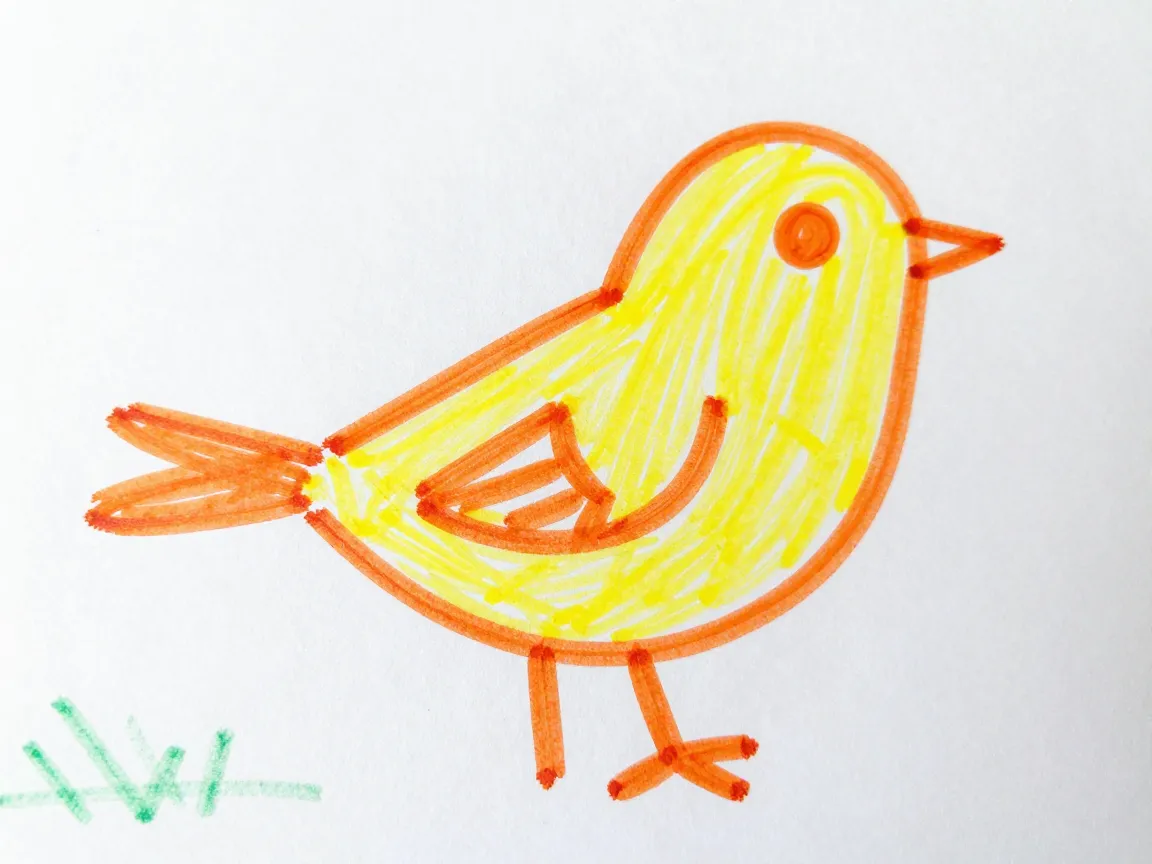
This idea starts differently from most bird drawing methods, which makes it a fun second project. Instead of a separate head and body shape, a child draws one long curved line shaped like a candy cane. This single line becomes both the head and the body outline in one smooth motion.
From there, add a small circle for the eye near the top curve, a short curved beak at the tip, two semi-circles along the side for wings and tail, and simple leg lines ending in small arcs for feet. This technique is popular in current step-by-step guides aimed specifically at young beginners because it reduces the number of separate shapes a child has to manage, replacing two shapes with one fluid line.
Once outlined, this bird looks great colored in bright orange and yellow, giving it a cheerful, sunny look that pairs nicely with a simple background like a tree branch or a patch of grass.
3. Letter-Shape Flying Dove
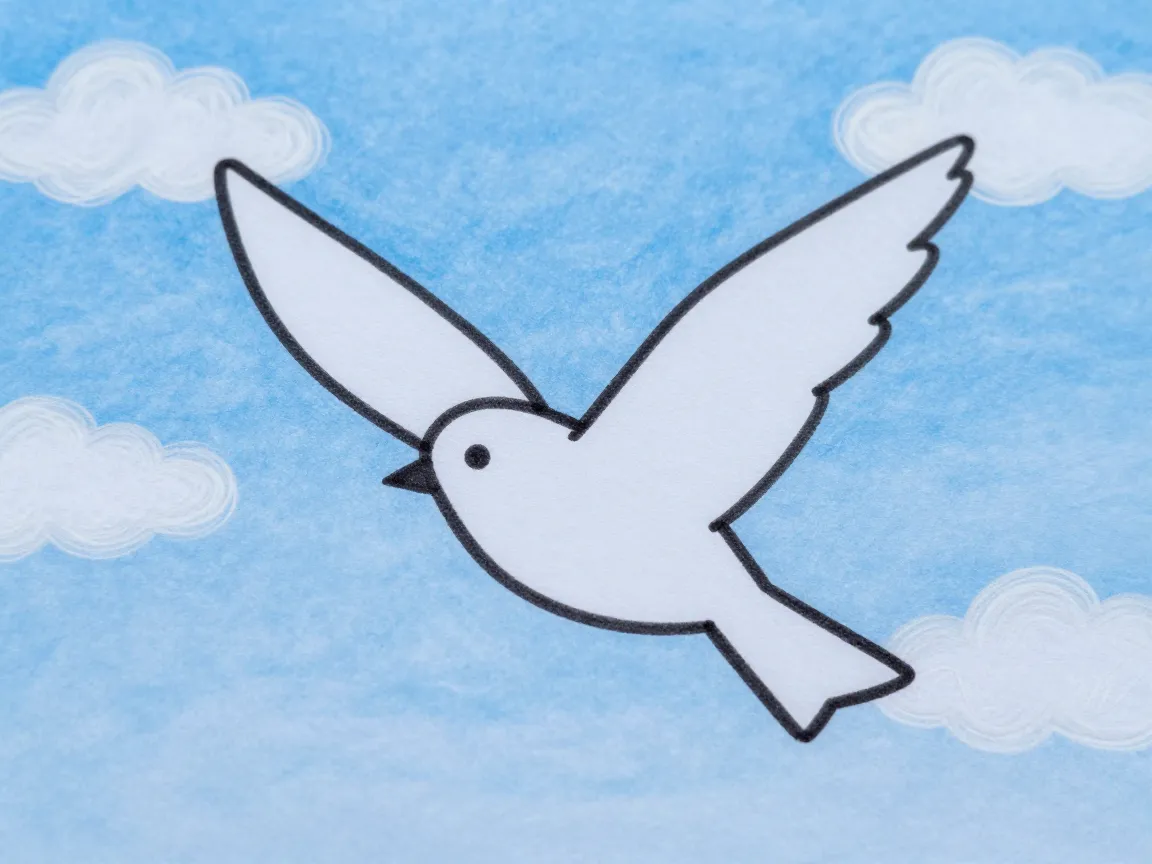
Flying birds intimidate a lot of young artists because wings in motion look complicated. The fix used across several children’s craft sites is clever: build the flying bird from a letter shape instead of freehand wings.
Start by drawing a wide, shallow letter “M” shape for the two spread wings. Add a small oval body dipping down from the center point of the M, then a tiny circle head poking out to one side with a small triangle beak. A short forked tail line finishes the silhouette. The result reads instantly as a bird in flight, even though the entire drawing is built from one letter shape and two small ovals.
This project pairs well with a simple sky background, a few scribbled clouds, or a sun in the corner. It is also a strong option for younger kids still building fine motor control, since the letter-shape wings are far more forgiving than freehand curved lines.
4. Stack of Three Cute Birds
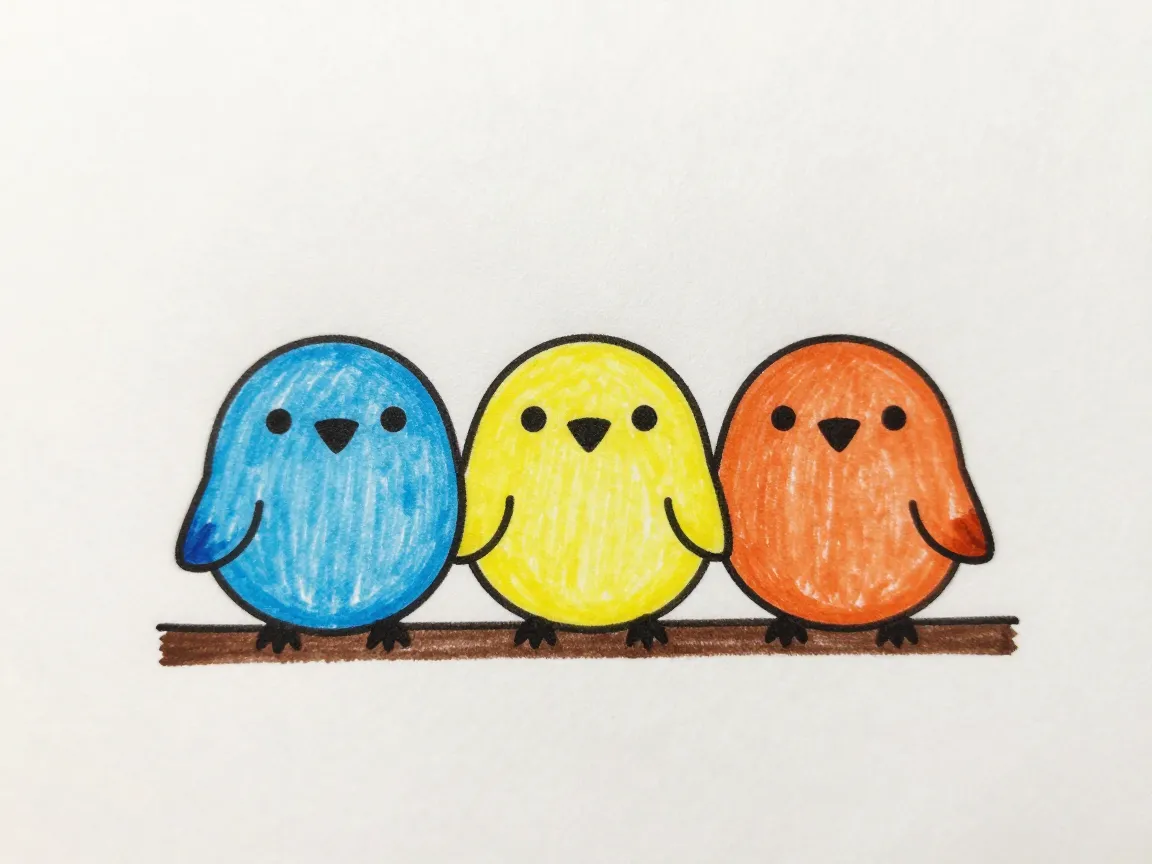
This idea trades realism for charm, and kids tend to love it immediately. Instead of drawing one detailed bird, a child draws three small, round birds stacked or lined up in a row, each one a simple circle or egg shape with a tiny triangle beak, two dot eyes, and small wing lines.
Because each individual bird is extremely simple, almost nothing more than a circle with a face, kids can give each one a different color, a different size, or a different expression. This turns one drawing into a mini-series, which keeps the activity fresh even for kids who get bored quickly. It also introduces basic composition skills, since the child has to decide how the three birds sit together on the page, whether perched on a branch, lined up on a wire, or simply floating in a row.
This project works especially well as a greeting card design or a decorative border for other artwork, giving the drawing a practical use beyond the page itself.
5. Bright Cartoon Parakeet or Hummingbird
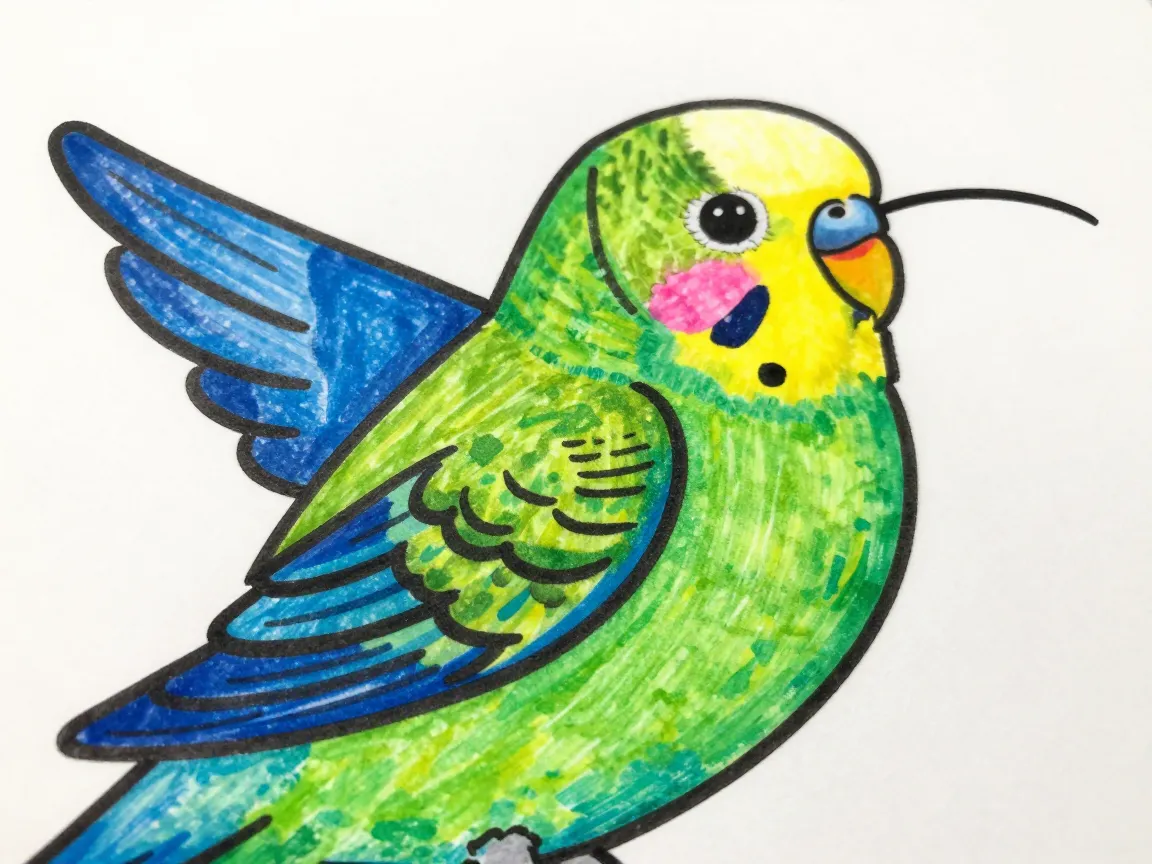
For kids ready for a slightly more detailed project, a cartoon-style parakeet or hummingbird is a strong next step. Current children’s video tutorials break this down into small, sequential steps: a rounded body shape, a distinct head with a short curved beak, layered wing shapes instead of one simple curve, and in the case of a hummingbird, a thin curved line extending from the beak to suggest motion or nectar-sipping.
The appeal here is color. Parakeets and hummingbirds give kids a reason to reach for bright greens, blues, pinks, and yellows, and to experiment with blending or layering colors rather than using one flat shade per section. Bold outlines help keep the shapes clean even if the coloring goes outside the lines a little, which matters for younger artists still building precision.
This idea also introduces a small layering concept: instead of one wing shape, the wing is built from two or three overlapping curved shapes to suggest feather texture. That small addition is a natural bridge between simple cartoon birds and more detailed nature drawings.
6. Nature-Study Bird With Sketched Habitat
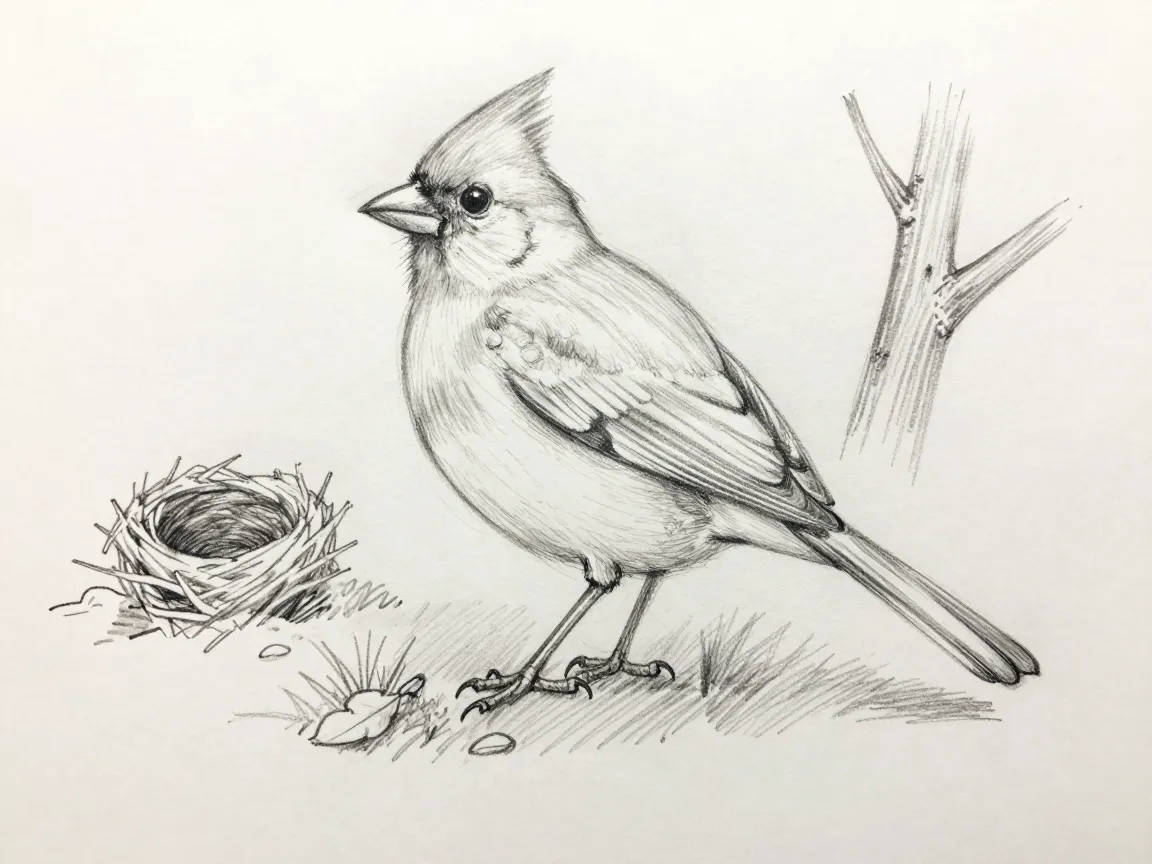
The sixth idea shifts from cartoon style to light nature study, and it works well for slightly older kids or classroom settings. Instead of drawing an imaginary bird, the child picks a real bird, a robin, a cardinal, an owl, or any favorite species, and sketches it using the same basic shape-first method: a posture line to establish the body’s angle, then an oval body and smaller head shape built around that line.
What makes this idea different is the addition of habitat details around the main bird. A small nest, a tree branch, a patch of grass, or a few scattered leaves placed around the central bird sketch turns a simple drawing into a mini nature study. Some nature-focused lesson plans take this further by having kids research their chosen bird first, then surround the main sketch with smaller drawings of related behaviors, like eating, perching, or flying.
This approach also opens the door to simple biodiversity lessons. A child could draw one bird per week, choosing a different continent, color, or bird type each time, such as a flightless bird one week and a brightly colored bird the next. That kind of light structure turns a basic drawing skill into an ongoing project rather than a one-time activity.
Materials and Setup Tips for These 6 Simple Bird Drawing Ideas For Kids To Try Today
None of these six simple bird drawing ideas for kids to try today require special art supplies. A basic setup takes less than five minutes and works equally well at a kitchen table or a classroom desk.
Here is a simple materials list that covers every project in this guide:
- Plain white paper or a sketchbook, since lined paper can distract from shape placement.
- A pencil for the initial outline, so mistakes can be erased before adding color.
- An eraser, ideally a soft one that will not tear thin paper.
- A black marker or fine-tip pen for tracing the final outline once the shapes look right.
- Crayons, colored pencils, or washable markers for filling in color.
- Optional printed reference sheets showing simple bird outlines, which several children’s art sites offer as free downloads for extra guidance.
A few setup tips make these sessions run more smoothly, especially with younger children:
Keep the first attempt light. Encourage kids to sketch the basic shapes lightly in pencil first, then trace over the final lines once the proportions look right. This avoids the frustration of a messy first draft turning into a ruined drawing.
Work at a comfortable table height. Birds drawn while hunched over a low coffee table tend to come out lopsided simply because the child’s arm angle is awkward. A proper table and chair height makes a bigger difference to drawing quality than most parents expect.
Have backup paper ready. Especially for the first two or three attempts, kids may want to redo a drawing once they get the hang of the shapes. Keeping a small stack of extra paper on hand prevents the activity from stalling while someone searches for more.
Quick Comparison of the Six Bird Drawing Ideas
The table below summarizes each project’s difficulty, main shapes, and best use case, making it easy to decide which idea to try first.
| Idea | Main Shapes Used | Best For |
|---|---|---|
| 1. Oval-Body Standing Bird | Oval, circle, triangle | First-time drawers |
| 2. Candy-Cane Line Bird | Single curved line, semi-circles | Kids who struggle with multiple shapes |
| 3. Letter-Shape Flying Dove | Letter M, oval, circle | Drawing motion and flight |
| 4. Stack of Three Cute Birds | Circles, egg shapes | Younger kids, cards, and borders |
| 5. Bright Cartoon Parakeet or Hummingbird | Rounded body, layered wings | Color exploration and detail practice |
| 6. Nature-Study Bird With Habitat | Posture line, oval, habitat sketches | Older kids and classroom nature lessons |
“A bird drawn from three simple shapes still looks like a bird. A bird drawn from ten complicated lines often looks like nothing at all.” This is the core principle behind nearly every current children’s bird drawing tutorial, and it explains why shape-first methods consistently outperform freehand approaches for young artists.
Frequently Asked Questions
What age group are these six bird drawing ideas best suited for?
Most of these projects work well for children roughly four to ten years old. The oval-body standing bird, candy-cane bird, and stack of three birds are especially forgiving for younger kids still developing fine motor control, while the nature-study bird with habitat sketching suits slightly older kids who can handle a bit more detail and patience.
Do kids need to know how to draw before trying these ideas?
No prior drawing experience is needed. Every idea in this guide starts with shapes most children already recognize, such as ovals, circles, and triangles. The entire point of a shape-first method is to remove the need for freehand skill at the start.
How long does each bird drawing project usually take?
Most of these six simple bird drawing ideas for kids to try today take between ten and twenty minutes from first pencil line to finished coloring. The nature-study bird with a sketched habitat may take slightly longer if a child adds multiple small habitat details.
Can these ideas be adapted for a classroom setting?
Yes. Several current children’s art resources are specifically designed for classroom use, including printable diagram sets that let a teacher hand out the same reference sheet to an entire group. The nature-study idea in particular pairs well with a short lesson on a specific bird species or habitat.
What is the easiest of the six ideas to start with?
The oval-body standing bird is generally considered the easiest entry point, since it uses only two main shapes before any detail work begins and avoids tricky angles like flight or motion.
Conclusion
Bird drawing remains one of the most reliable art activities for kids precisely because it rewards simplicity. Every one of these six simple bird drawing ideas for kids to try today starts with the same basic principle: build the overall shape first, then add detail gradually. That approach removes the intimidation factor that often keeps young kids from picking up a pencil in the first place.
A practical next step is to pick just one idea from this list, gather the short materials list above, and set aside fifteen quiet minutes today. Once a child finishes one bird confidently, moving to the next idea on the list becomes much easier, and before long, a full page of different birds, standing, flying, stacked, or sketched alongside a tiny habitat, becomes a realistic weekend project rather than an overwhelming task. Keep a small folder or sketchbook dedicated to these drawings, and revisit the list every few weeks. Most kids will notice their own improvement quickly, which is often the best motivation to keep drawing.