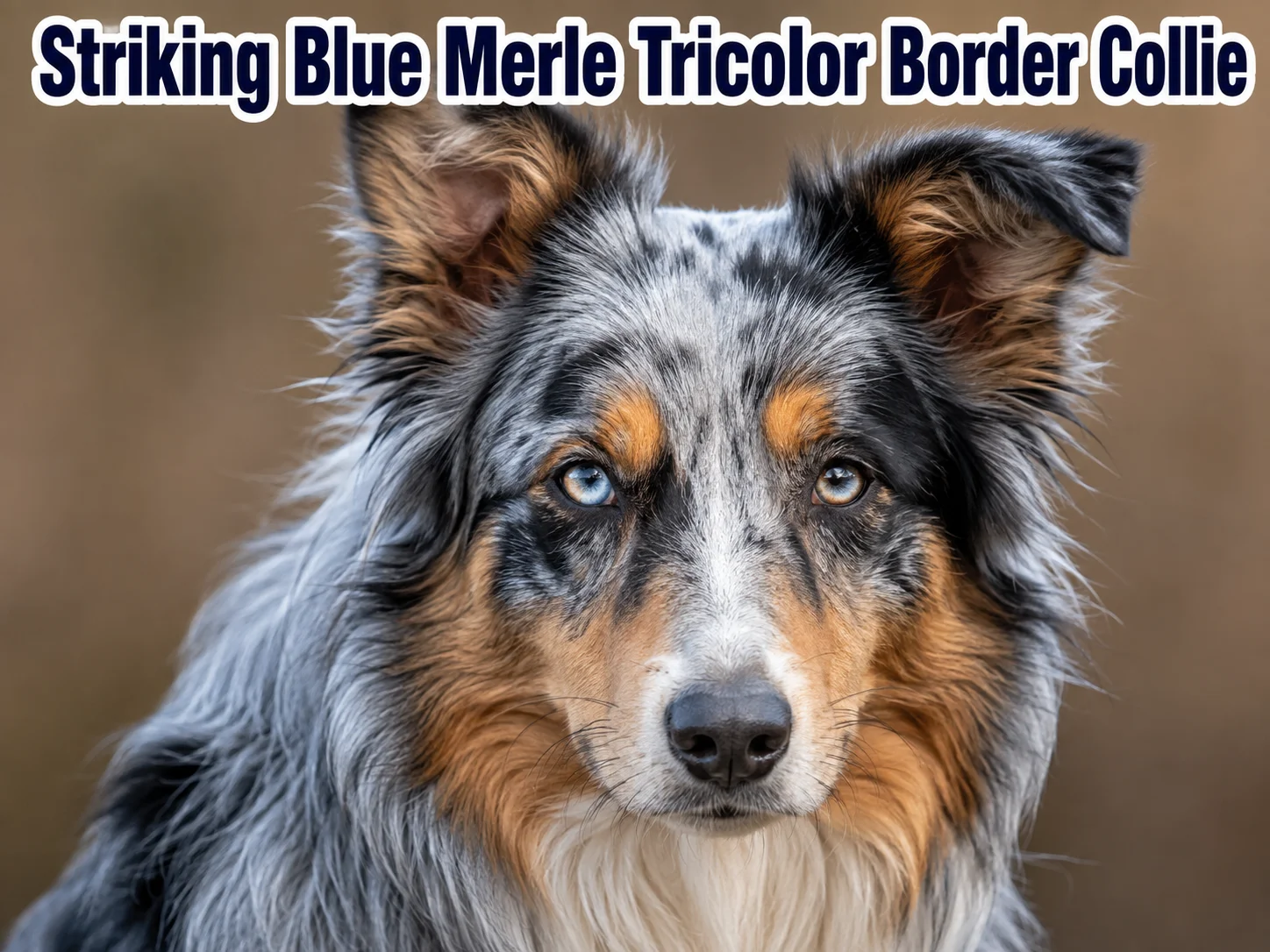
Striking Examples Of The Border Collie Blue Merle Tricolor Coat
Only a small fraction of Border Collies ever display the exact genetic combination needed to produce a true blue merle tricolor coat, which is why breed enthusiasts consider it one of the rarest and most photographed color patterns in the entire breed. Three separate genes have to line up in just the right way for a puppy to be born with the soft slate-blue base, dark mottled patches, and warm tan points that define this look. This article breaks down 6 Striking Examples Of The Border Collie Blue Merle Tricolor Coat, explains the science behind the pattern, and clarifies why this coloring generates so much attention among owners, breeders, and casual admirers alike.
Disclosure: This post contains affiliate links. As an Amazon Associate, we earn from qualifying purchases, and at no extra cost to you.
The Border Collie blue merle tricolor coat is not an official breed variety recognized separately by major kennel clubs. It is simply a color combination, but it is a combination that stands out immediately in a field of black-and-white herding dogs. Understanding how it forms, what it looks like, and how to tell it apart from similar patterns helps anyone evaluating a puppy, researching the breed, or simply appreciating one of nature’s more elegant coat designs.
Key Takeaways
- The blue merle tricolor coat forms when three separate genes interact: the dilution gene, the merle gene, and the tricolor gene.
- Distinct visual traits include a soft gray-blue base, irregular dark patches, and tan markings above the eyes, on the cheeks, and on the legs.
- Most examples of this coat come with a gray or slate-colored nose and lighter eye shades, including blue, amber, or partially blue “split” eyes.
- Breed clubs classify this coloring as a variety of coat color, not a separate breed type, which affects show eligibility in some organizations.
- Responsible breeding matters because merle-to-merle pairings carry documented health risks, making genetic testing essential before producing this pattern.
Understanding the Genetics Behind the Border Collie Blue Merle Tricolor Coat
Getting a Border Collie blue merle tricolor coat is a bit like winning a genetic lottery. Three separate coat genes have to combine correctly, and each one plays a distinct role.
The first gene involved is the dilution gene. This gene takes what would otherwise be a black coat and lightens it to a soft blue-gray shade. Without this gene, a dog carrying the merle and tricolor combination would show up as a standard black-and-tan merle instead of the paler, smoky blue version.
The second gene is the merle gene itself. Merle is technically a dilution pattern that creates patches of darker pigment scattered across a lighter background, along with mottled or marbled sections. It is this gene that produces the irregular, almost painted-on appearance seen across the body, ears, and back.
The third gene is the tricolor gene, sometimes called the tan-point gene. This gene adds the classic tan or copper markings above the eyebrows, on the cheeks, along the chest, and down the legs. When this gene combines with the diluted merle base, the result is a three-color coat: blue-gray, dark gray-blue patches, and tan points.
Because all three genes must be present and expressed together, this exact coat is genuinely rare compared to standard black-and-white, red-and-white, or plain black tricolor Border Collies. Breeders who specialize in producing this coloring often track pedigrees carefully across multiple generations just to increase the odds of a litter producing even one puppy with the full pattern.
It is worth noting that merle is what geneticists call an incomplete dominant trait. A dog with one copy of the merle gene displays the mottled pattern, while a dog with two copies (often called a double merle) tends to have excessive white and a higher risk of vision and hearing problems. This is one reason reputable breeders avoid merle-to-merle breeding pairs entirely.
6 Striking Examples Of The Border Collie Blue Merle Tricolor Coat You Should Know
The following six variations show just how much range exists within a single color category. While every dog on this list technically carries the same three genes described above, small differences in gene expression, white patterning, and pigment distribution create noticeably different looks.
1. The Classic Slate Blue Merle Tricolor
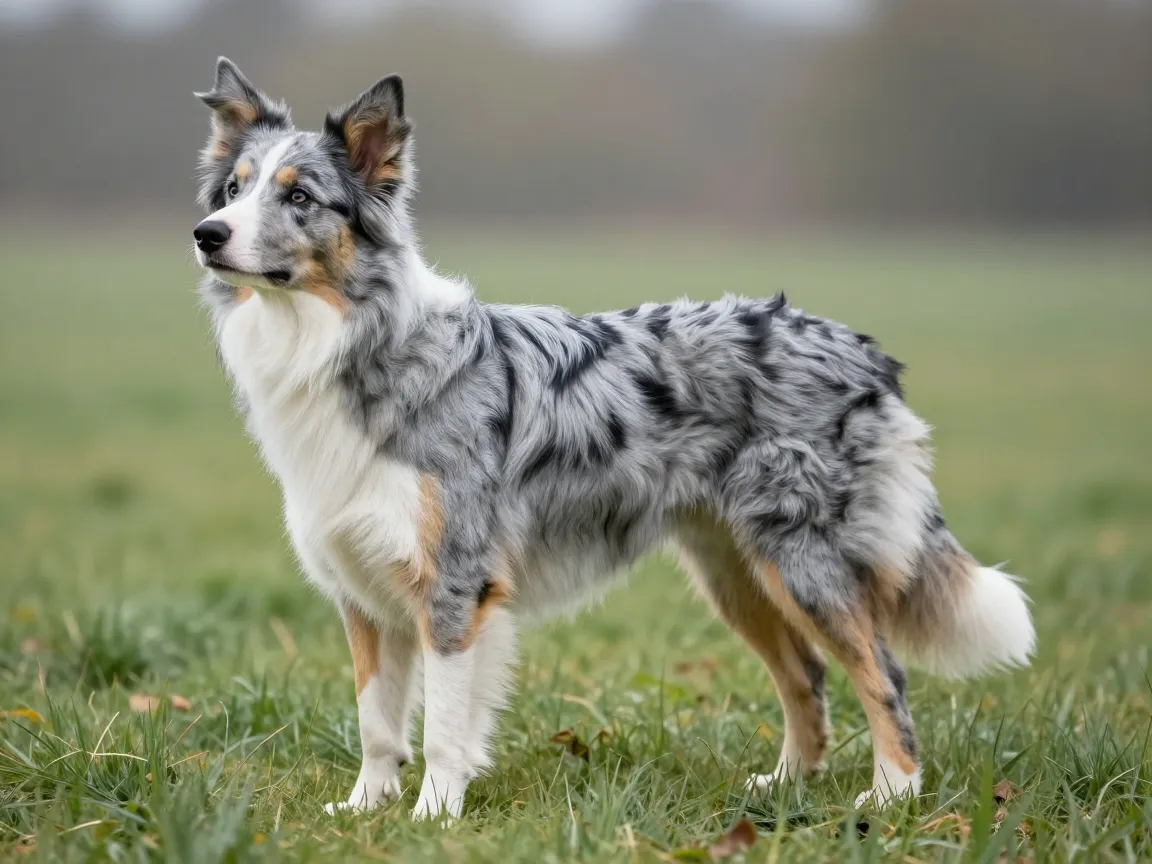
This is the version most people picture when they hear the phrase blue merle tricolor. The base coat carries an even, silvery blue-gray tone across the back and sides. Dark charcoal patches appear in irregular shapes over the shoulders, hips, and ears. Tan points sit cleanly above each eye, along the muzzle, and on the lower legs. The overall balance between blue, dark gray, and tan makes this the benchmark example breed clubs and photographers reference most often.
2. The Copper-Point Blue Merle Tricolor
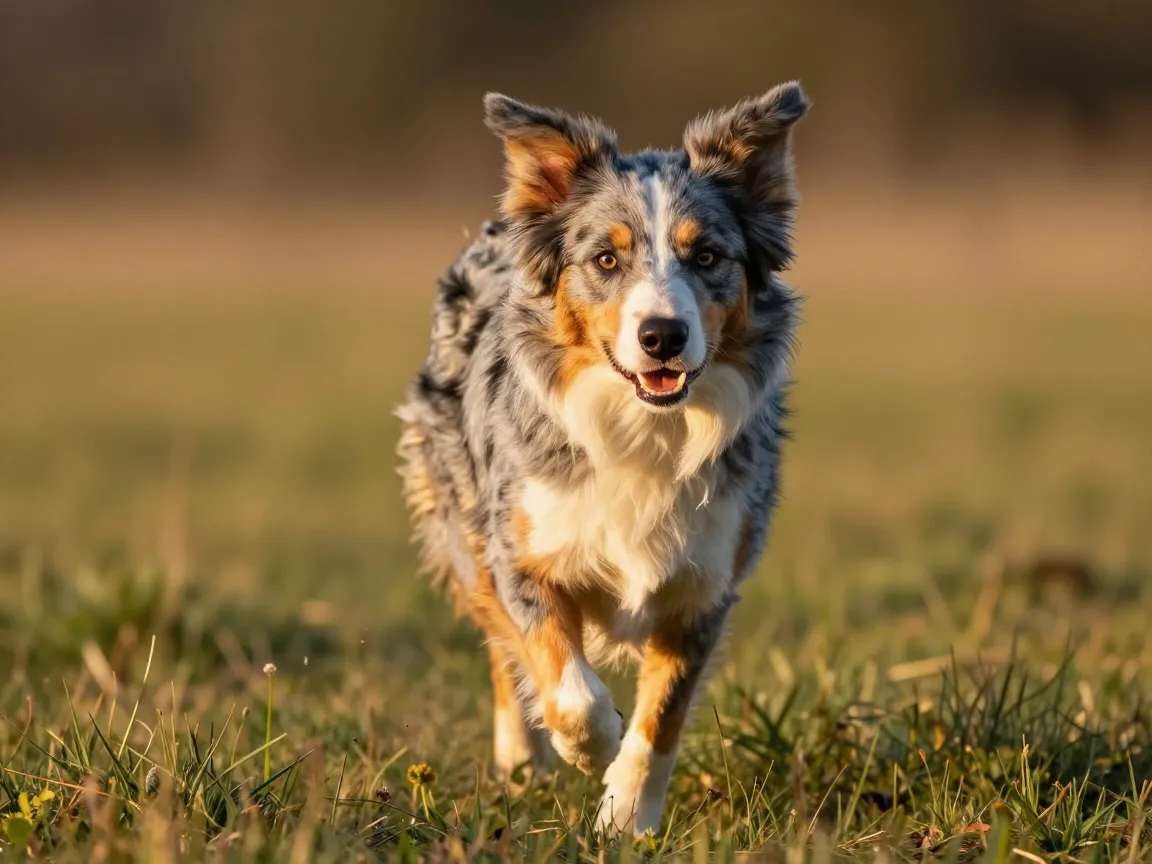
In this variation, the tan markings shift toward a deeper copper or rust shade rather than the softer tan seen in the classic version. This happens because of slight differences in how the tricolor gene expresses pigment intensity. The copper points tend to stand out more dramatically against the blue-gray base, giving the dog a warmer, richer overall appearance that many owners describe as looking almost hand-painted.
3. The Piebald Blue Merle Tricolor
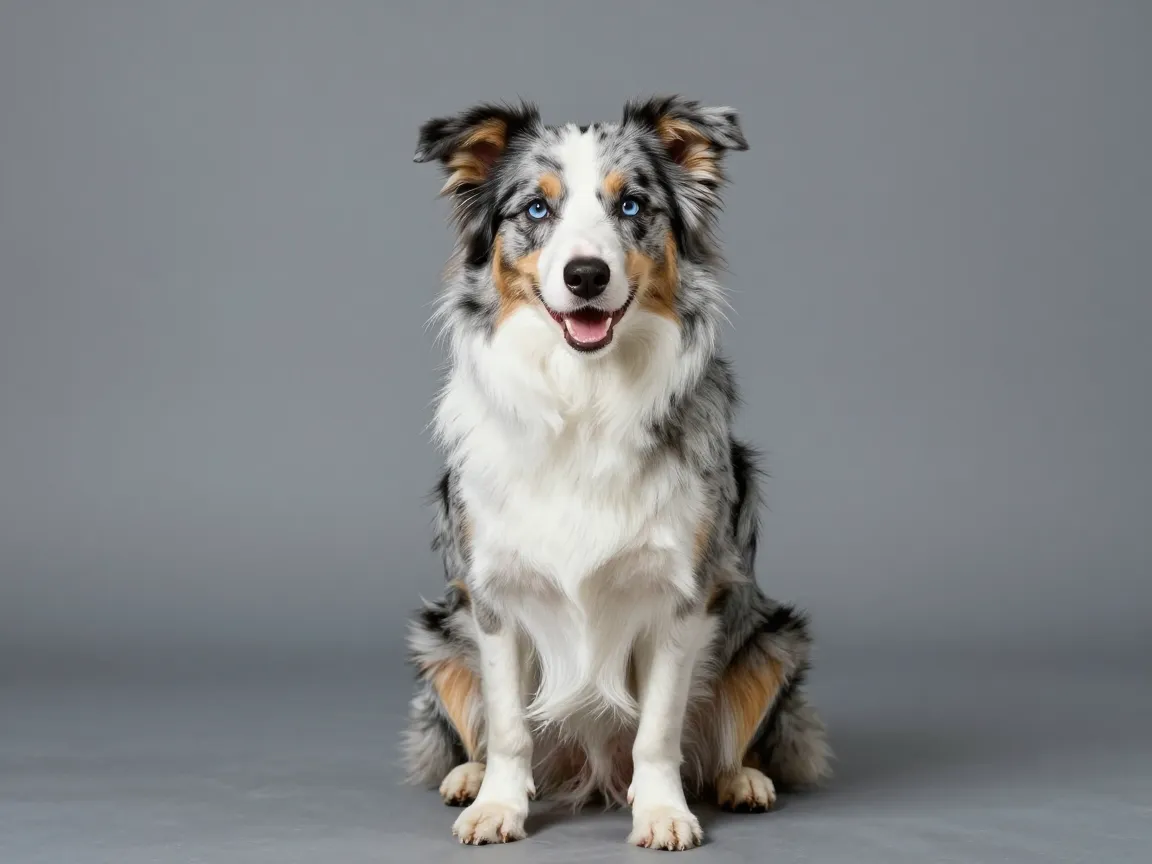
This example includes larger patches of white mixed into the blue merle tricolor base, typically covering the chest, belly, legs, and sometimes a large blaze on the face. The piebald pattern comes from a separate white-patterning gene working alongside the merle, dilution, and tricolor genes. The result is a coat that looks almost like a puzzle, with blue-gray, dark merle patches, tan points, and clean white sections all appearing in the same dog.
4. The Minimal White Blue Merle Tricolor
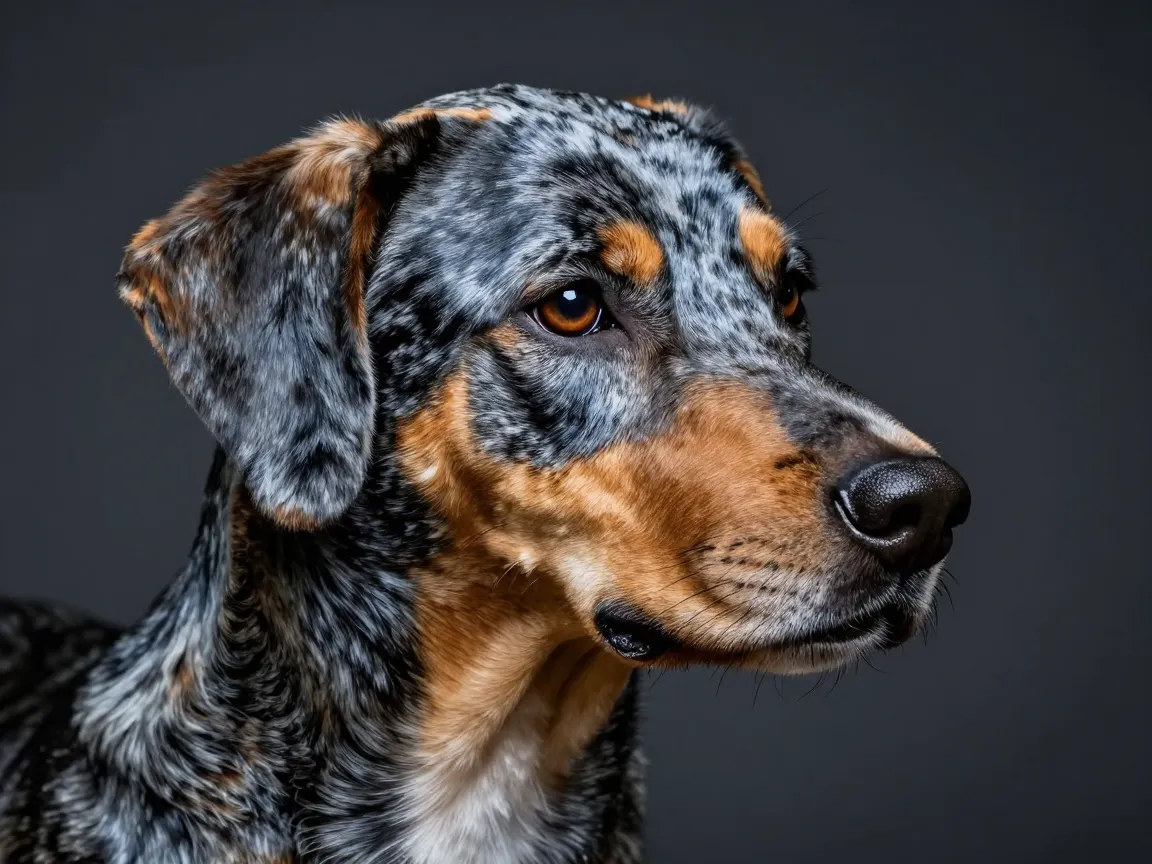
At the opposite end of the spectrum from the piebald version, this example shows very little white at all. The blue-gray base and dark patches cover most of the body, with tan points remaining but white restricted to perhaps a small chest spot or a few toes. Breeders sometimes refer to this as a “solid” merle tricolor, and it tends to make the tan points look especially vivid because there is less white to compete visually with the blue and gray tones.
5. The Heavily Mottled Blue Merle Tricolor
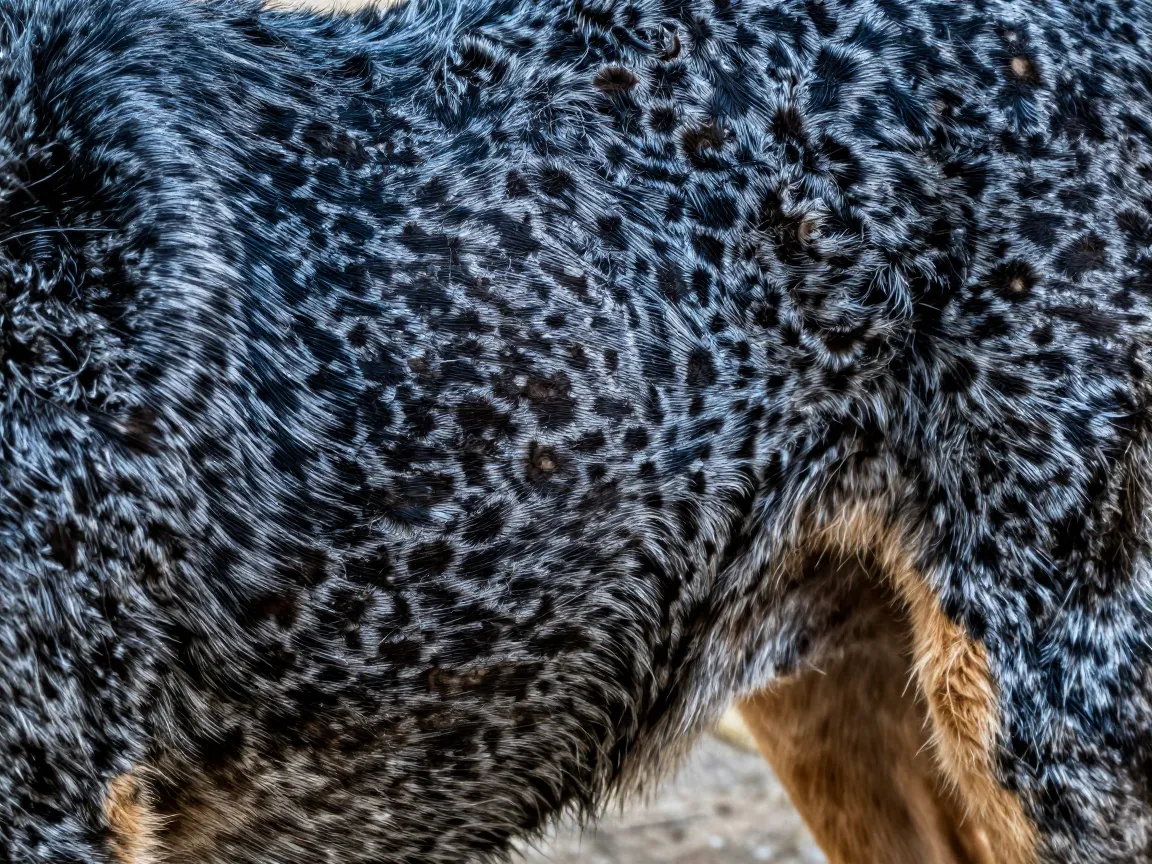
This variation features an unusually high concentration of dark patches, creating a marbled or almost lace-like texture across the coat. Instead of a few larger dark sections, the pattern breaks into many smaller irregular spots that blend closely together. This dense mottling is one of the more photogenic versions of the pattern, since the contrast between light and dark creates striking visual texture from nearly every angle.
6. The Ghost Merle Blue Merle Tricolor
The rarest example on this list, the ghost merle pattern occurs when the merle patches fade to a much lighter, almost invisible shade against the blue-gray base. Instead of bold dark patches, the coat shows only faint shadowing, sometimes visible only in certain lighting. Tan points usually remain clearly defined even when the merle patches are nearly undetectable, which is part of what makes this version so unusual and sought after by collectors of unique coat patterns.
“The blue merle tricolor pattern is proof that genetics can create something that looks almost hand-painted, yet every mark follows a predictable biological rule.”
How the Blue Merle Tricolor Pattern Differs From Standard Tricolor
A common point of confusion involves the difference between a standard tricolor Border Collie and a blue merle tricolor Border Collie. Both patterns include three colors, but the underlying genetics and appearance differ significantly.
| Feature | Standard Tricolor | Blue Merle Tricolor |
|---|---|---|
| Base coat color | Solid black | Diluted blue-gray |
| Pattern type | Solid, no mottling | Merle mottling with dark patches |
| Tan points | Present | Present |
| Nose color | Black | Gray or slate |
| Eye color | Typically brown | Often blue, amber, or split |
| Genetic requirement | Tricolor gene only | Dilution, merle, and tricolor genes together |
Standard tricolor Border Collies get their look from just the tricolor gene layered over a solid black base. There is no mottling, no patchiness, and no dilution involved. Blue merle tricolor dogs require the additional dilution and merle genes to create both the lighter base color and the irregular dark patches.
This distinction matters for anyone researching a puppy’s expected adult coloring, since a tricolor parent does not guarantee merle offspring, and a merle parent does not guarantee tricolor markings without the correct gene combination from both parents.
Nose, Eye Color, and Other Identifying Features
Coat pattern is the most obvious identifying feature, but the blue merle tricolor combination also affects pigmentation elsewhere on the body.
The nose is typically gray or slate-colored rather than solid black. This happens because the dilution gene affects pigment production throughout the body, not just in the fur. A black-nosed dog with a blue merle coat would be unusual and might indicate a slightly different genetic makeup than expected.
Eye color also tends to differ from standard black-and-white Border Collies. While brown eyes still appear in some blue merle tricolor dogs, it is common to see:
- Fully blue eyes in one or both sockets
- Amber or light hazel eyes
- Split or “heterochromatic” eyes, where one eye is blue and the other is brown, or a single eye contains both colors
This variety in eye color adds to the overall striking appearance of the pattern and is one reason photographs of blue merle tricolor Border Collies circulate so widely online.
Skin pigmentation around the nose, lips, and eye rims often shows a similar gray or slate tone rather than the deep black seen in non-diluted dogs. None of these traits affect health or function on their own, but they do serve as useful visual confirmation that a dog carries the full genetic combination rather than a partial or visually similar pattern.
Health and Breeding Considerations for Blue Merle Tricolor Border Collies
The striking appearance of this coat pattern comes with responsibilities that every prospective owner and breeder should understand before pursuing it.
Merle genetics are generally safe when a dog inherits only one copy of the merle gene, which is the case in a properly bred blue merle tricolor Border Collie. Problems arise specifically when two merle-carrying parents are bred together, producing puppies with two copies of the merle gene. These double merle puppies frequently show excessive white in the coat and face a significantly higher risk of deafness, vision impairment, and other developmental issues tied to pigment-related nerve and eye development.
Reputable breeders working with merle-patterned Border Collies use genetic testing to confirm each parent’s merle status before planning a litter. This single step prevents accidental double merle pairings and protects the health of future puppies. Anyone considering a blue merle tricolor Border Collie should ask directly whether both parents were tested and confirmed as single merle carriers.
Beyond the merle gene itself, blue merle tricolor Border Collies carry the same general health profile as the breed at large. Hip dysplasia, certain eye conditions, and exercise-related joint concerns remain relevant regardless of coat color. Coat pattern does not change a dog’s herding drive, energy level, or trainability, so buyers should evaluate temperament and working ability independently of color preference.
Is the Blue Merle Tricolor Coat Recognized as a Separate Variety?
Major breed organizations and kennel clubs classify the blue merle tricolor pattern as a color variation within the Border Collie breed standard, not as a separate variety or subtype. This means a Border Collie with this coat is judged in conformation settings using the same structural, movement, and temperament criteria applied to any other coat color.
Breed histories and museum-style breed guides typically describe the pattern alongside other recognized merle combinations, including red merle and standard blue merle without tan points. The tricolor addition is simply an extra layer of pigmentation on top of the base merle pattern, rather than a distinct genetic lineage.
This classification matters practically for two reasons. First, it confirms that no additional registration category exists specifically for merle tricolor dogs, so standard breed registration paperwork applies. Second, it reinforces that judging and breeding standards focus on structure and function first, with coat color treated as a secondary characteristic rather than a defining trait of quality or working ability.
Educational resources updated throughout 2026 continue to reflect this same standard treatment, emphasizing that while the coloring draws attention for its visual appeal, it holds no special status within formal breed evaluation.
Cross-Breed Parallels That Reinforce the Pattern’s Definition
The same genetic combination responsible for the Border Collie blue merle tricolor coat also appears in other herding breeds, which helps confirm how the pattern is defined biologically rather than breed-specifically.
Australian Shepherds frequently display an almost identical blue merle tricolor pattern, driven by the same dilution, merle, and tricolor gene interactions. Rough Collies and Shetland Sheepdogs can also carry versions of this combination, though breed-specific standards and typical coat length change the overall visual effect.
Seeing this same genetic formula repeat across multiple herding breeds reinforces an important point: the blue merle tricolor coat is a color outcome tied to specific, well-documented genes, not something unique to a single breed’s ancestry. This cross-breed consistency is part of why the pattern is so well understood by veterinary geneticists and breed researchers.
Conclusion
The blue merle tricolor coat remains one of the most visually distinctive results possible within Border Collie genetics, produced by a precise interaction between the dilution, merle, and tricolor genes. Across the 6 Striking Examples Of The Border Collie Blue Merle Tricolor Coat covered here, from the classic slate blue pattern to the rare ghost merle variation, the underlying science stays consistent even as the visual results vary widely.
Anyone drawn to this coloring should prioritize responsible breeding practices above appearance alone. Confirming genetic testing, understanding double merle risks, and evaluating temperament and structure remain far more important than coat pattern when choosing a puppy. For current owners, appreciating the science behind the coat can deepen understanding of the breed as a whole, turning a simply beautiful pattern into a genuinely fascinating example of canine genetics at work.
Prospective buyers should request health clearances and merle testing documentation directly from breeders, while current owners can use this genetic knowledge to better anticipate coat changes as puppies mature into adulthood.