British Short Haired Cat Care Secrets For A Glossy, Healthy Coat
A British Shorthair’s coat contains roughly twice the density of guard hairs found in many single-coated breeds, which is exactly why so many owners struggle to keep it mat-free and shiny. That plush, teddy-bear texture people fall in love with is also a maintenance challenge hiding in plain sight. Without the right approach, that famous “crisp” double coat can turn dull, patchy, or clumped with loose undercoat in a matter of weeks.
Disclosure: This post contains affiliate links. As an Amazon Associate, we earn from qualifying purchases, and at no extra cost to you.
This guide breaks down 6 British Short Haired Cat Care Secrets For A Glossy, Healthy Coat that go beyond generic grooming advice. These are the specific habits, tools, and warning signs that separate a merely brushed cat from one with a truly healthy, photograph-ready coat. Whether raising a kitten or caring for a senior British Shorthair, these strategies apply at every life stage.
Key Takeaways
* Brushing frequency should flex with the seasons; twice-weekly upkeep during normal months should increase to near-daily sessions during spring and autumn shedding peaks.
* The right tools matter as much as the technique; a slicker brush, a wide-tooth comb, and a de-shedding tool each serve a different purpose on a dense double coat.
* Short, positive sessions of five to ten minutes build lifelong cooperation and prevent the stress that leads cats to avoid grooming altogether.
* Bathing should be limited and purposeful; over-bathing strips natural oils that keep the coat glossy, while thorough drying prevents skin problems when a bath is necessary.
* Diet, hydration, and weight management directly influence coat shine, and sudden changes in coat texture often signal an underlying health issue worth a vet visit.
1. Brush Regularly, Then Increase During Spring And Autumn Moults
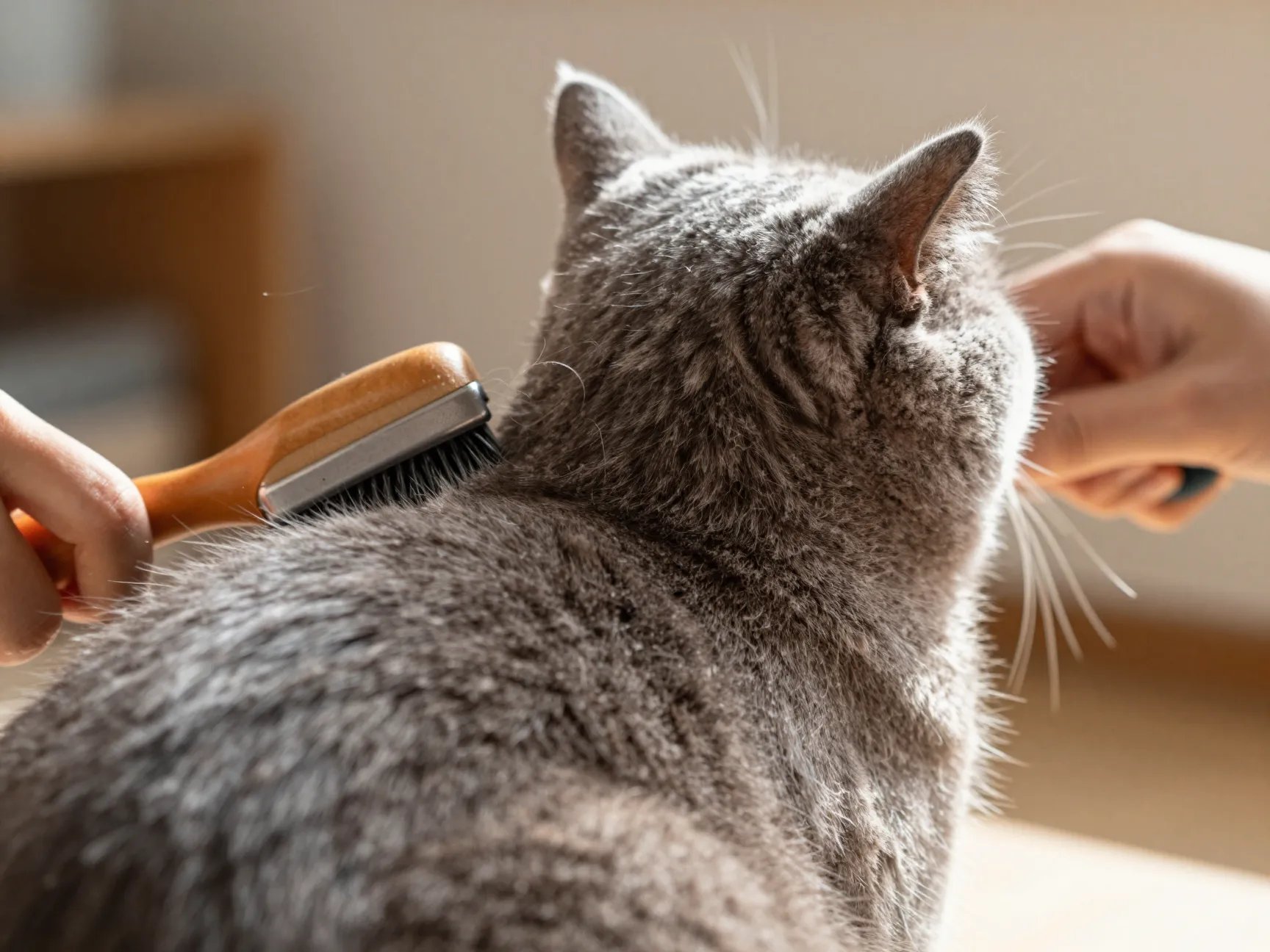
A British Shorthair’s coat is not static. It follows a seasonal rhythm shaped by daylight exposure, indoor heating, and natural shedding cycles. Understanding this rhythm is the foundation of 6 British Short Haired Cat Care Secrets For A Glossy, Healthy Coat, because timing determines how effective every other grooming step will be.
During most of the year, brushing two to three times weekly is generally sufficient to manage loose hair and distribute natural skin oils along the coat shaft. However, during the spring and autumn moults, when cats shed their winter or summer undercoat in preparation for the new season, that frequency should increase substantially. Many experienced groomers and breed specialists recommend brushing daily, or close to it, during these transitional weeks.
Skipping this seasonal ramp-up is one of the most common mistakes owners make. Loose undercoat that is not removed quickly becomes compacted near the skin, creating the felted mats that are notoriously difficult and sometimes painful to remove. It also means more hair ends up on furniture, clothing, and inevitably swallowed during self-grooming, raising the risk of hairballs.
Practical moult-season schedule:
| Season Stage | Brushing Frequency | Focus |
|---|---|---|
| Off-peak months | 2 to 3 times per week | Maintenance and oil distribution |
| Early moult onset | 4 to 5 times per week | Loosening early shed hair |
| Peak shedding | Daily or near-daily | Preventing undercoat compaction |
| Post-moult settling | 2 to 3 times per week | Returning to baseline |
Recognizing the early signs of a moult, such as slightly increased hair on bedding or a duller coat texture, allows an owner to adjust before matting sets in rather than reacting after the fact.
2. Use The Right Tools And Gentle Technique For The Double Coat
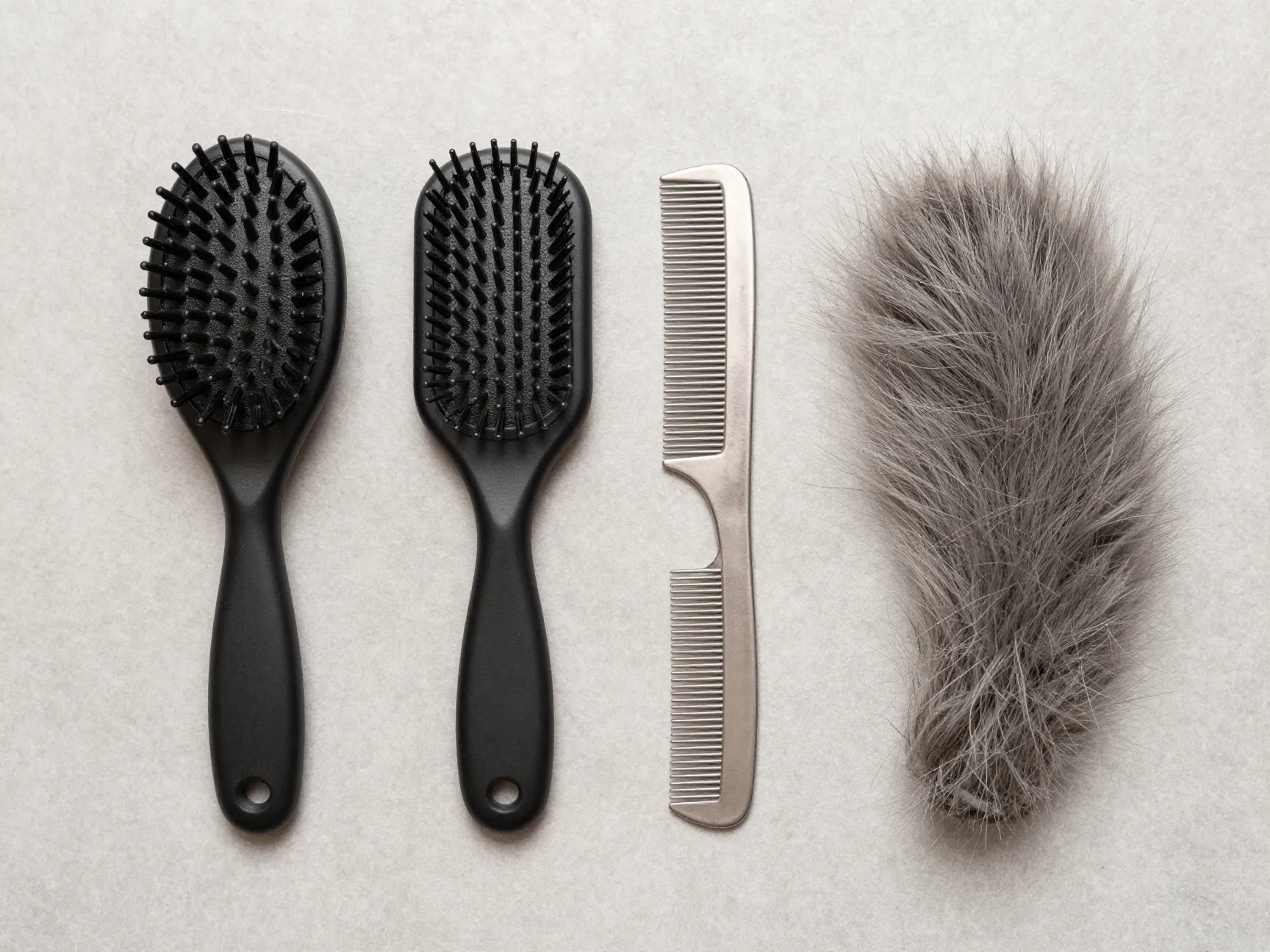
Not all brushes are created equal, and using the wrong one on a British Shorthair’s dense double coat can do more harm than good. This second pillar of 6 British Short Haired Cat Care Secrets For A Glossy, Healthy Coat centers on matching the tool to the coat’s structure rather than grabbing whatever brush happens to be nearby.
The British Shorthair coat has two distinct layers: a coarse, protective topcoat and a soft, insulating undercoat. Effective grooming requires reaching both layers without scratching the skin or pulling uncomfortably.
- Rubber curry brush or grooming mitt. Best for the first pass, this tool loosens surface debris and dead hair while feeling like a gentle massage, which helps cats relax into the session.
- Slicker brush. A fine-wired slicker brush is essential for reaching into the undercoat. Light, short strokes in the direction of hair growth prevent skin irritation while still pulling loose fur free.
- Wide-tooth metal comb. Following the slicker brush, a comb helps detect any early tangles near the legs, belly, or behind the ears, areas the slicker brush may miss.
- De-shedding tool. Reserved primarily for moulting season, this tool removes loose undercoat efficiently but should be used sparingly and with a light hand to avoid damaging the topcoat.
Technique matters as much as equipment. Always brush in the direction hair naturally grows, use short and controlled strokes rather than long aggressive pulls, and check pressure regularly, particularly around bony areas like the spine, hips, and shoulder blades. Applying too much pressure can cause discomfort that makes a cat wary of future grooming sessions.
Pull quote: “The tool is only half the equation. A slicker brush used with a heavy hand causes more coat damage than no brushing at all.”
3. Keep Sessions Short, Positive, And Consistent
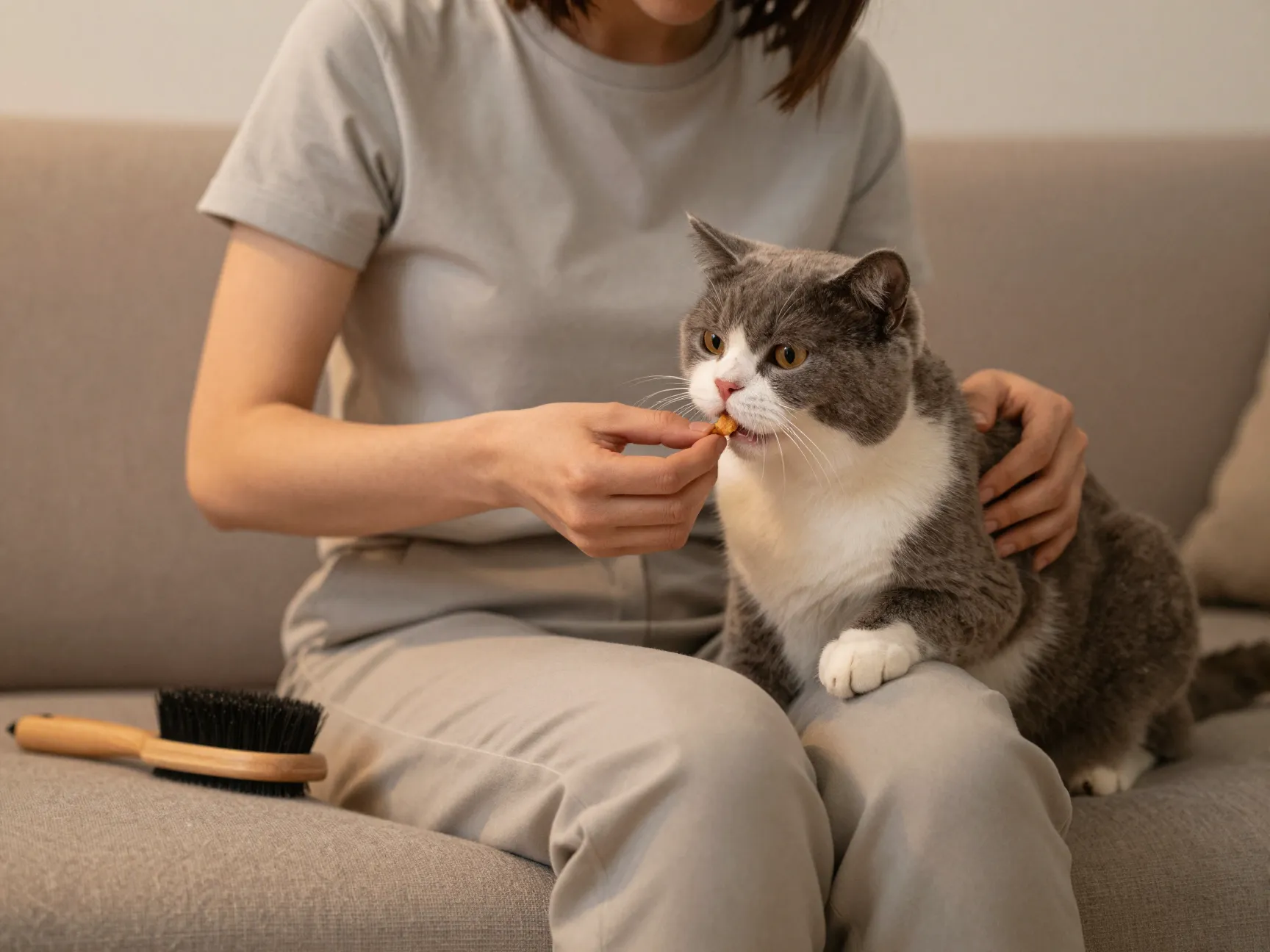
Grooming success depends heavily on the cat’s emotional experience, not just the mechanics of brushing. This is where many owners inadvertently sabotage their own efforts by grooming inconsistently or for too long at once.
Veterinary behaviorists and grooming professionals widely recommend keeping each session between five and ten minutes. This window is long enough to make meaningful progress on the coat but short enough to avoid overwhelming a cat’s patience, particularly for individuals who are naturally more sensitive to handling.
Consistency reinforces the routine as a normal, low-stress part of life rather than an occasional ordeal. Cats thrive on predictability, and a grooming session that happens at roughly the same time each day, perhaps after a meal or during a quiet evening lull, becomes an expected ritual rather than a surprise.
Building a positive grooming routine:
- Choose a calm moment. Avoid grooming right after play, visitors, or loud noises when a cat’s stress threshold is already elevated.
- Start with a few strokes. Even 30 seconds counts as a win in the early stages of building tolerance, especially with kittens or newly adopted cats.
- Pair with rewards. A small treat, a favorite scratch spot, or verbal praise immediately after grooming builds a positive association.
- Watch body language. Flattened ears, tail flicking, or skin twitching are signals to pause, not push through.
- End on a good note. Stopping while the cat is still relaxed, rather than continuing until they struggle away, preserves trust for next time.
Cats that learn early that grooming is brief and rewarding are significantly more cooperative throughout their lives, which matters enormously given how frequently double-coated breeds need attention.
4. Limit Bathing And Prioritize Thorough Brushing And Drying
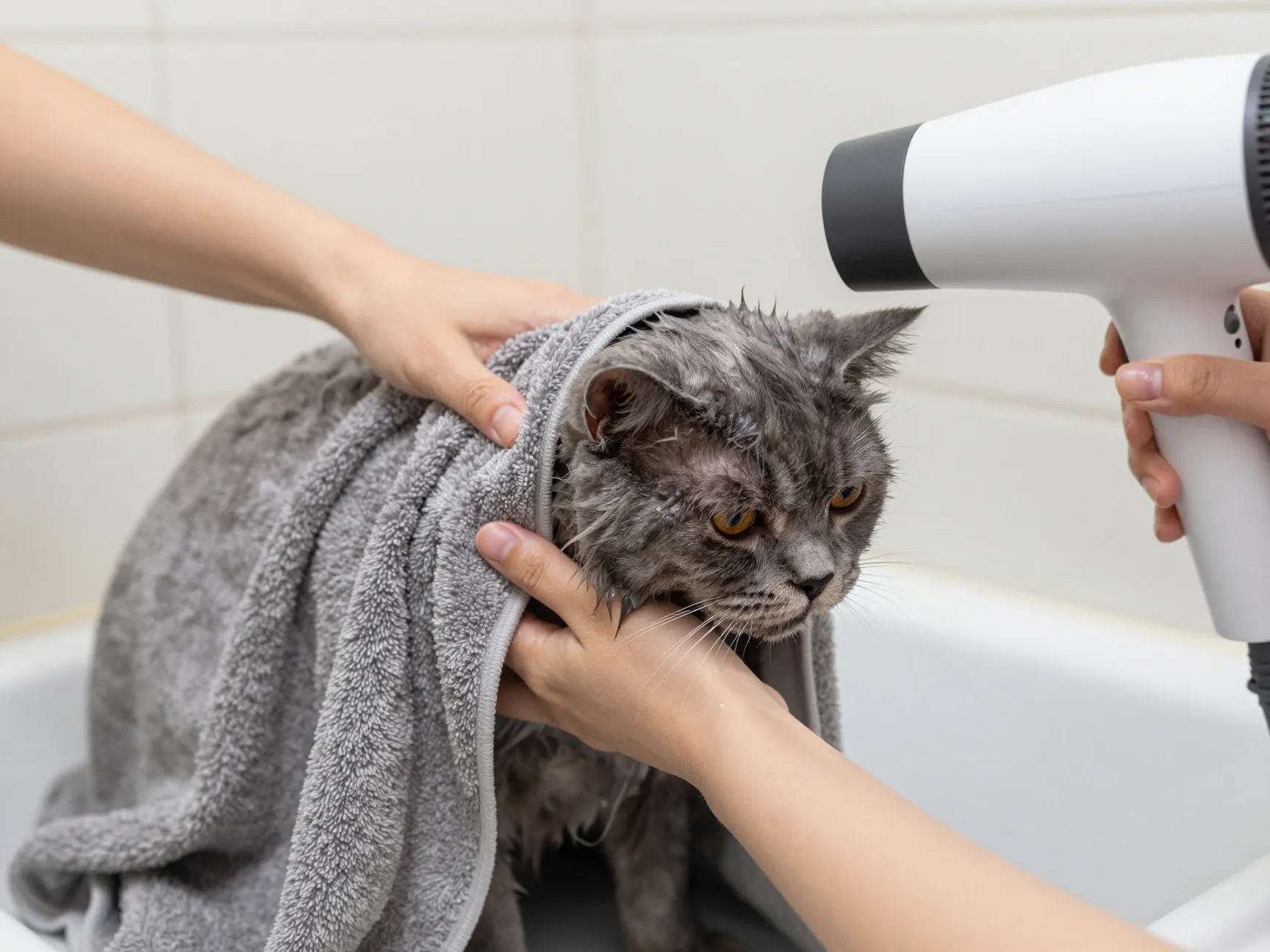
A persistent myth suggests that frequent bathing is the secret to a shiny coat. For British Shorthairs, the opposite is closer to the truth. This breed’s skin produces natural oils that are essential for coat sheen and skin barrier health, and over-bathing strips those oils away, leaving the coat looking dull and potentially causing dry, irritated skin.
Most healthy British Shorthairs living primarily indoors do not need routine baths at all. Thorough, consistent brushing does the heavy lifting of removing dirt, distributing oils, and preventing the buildup that baths are often mistakenly assumed to solve. Bathing becomes appropriate mainly in specific situations, such as after exposure to something sticky or toxic on the fur, before a cat show, or under veterinary direction for a skin condition.
When a bath truly is necessary, technique determines whether it helps or harms the coat.
Bath and dry checklist:
- Brush thoroughly first. Removing loose hair and tangles before wetting the coat prevents mats from tightening during washing.
- Use a cat-specific shampoo. Human shampoo and even some dog shampoos have a pH that is too harsh for feline skin.
- Rinse completely. Leftover residue is a common cause of post-bath itching and a coat that looks greasy rather than glossy.
- Dry fully and gently. A double coat traps moisture close to the skin, and incomplete drying can lead to a musty smell or skin irritation. Low-heat blow drying combined with towel drying, done patiently, is far safer than letting a cat air dry in a cool room.
- Brush again once dry. This final pass fluffs the coat back into its natural texture and catches any hair loosened during the bath.
Limiting baths while mastering brushing and drying is a cornerstone of 6 British Short Haired Cat Care Secrets For A Glossy, Healthy Coat that surprises many first-time owners who assume more washing equals more shine.
5. Support Coat Quality With Nutrition And Weight Control

Coat health is built from the inside out. No amount of external grooming can fully compensate for a diet that lacks the nutrients needed to produce strong, glossy hair. This makes nutrition one of the most overlooked yet powerful levers in a cat’s grooming routine.
High-quality protein forms the structural basis of hair itself, so a diet with adequate, digestible animal protein supports steady coat growth and strength. Fatty acids, particularly omega-3 and omega-6, contribute directly to coat shine and skin barrier function. Cats fed diets low in these fats often develop coats that look dry, flaky, or lackluster despite regular brushing.
Hydration plays a supporting role as well. Cats that drink too little water can develop drier skin, which in turn affects coat texture. Wet food, water fountains, and multiple water stations around the home can all encourage better hydration in cats that are naturally less inclined to drink compared to dogs.
Weight control deserves particular attention in this breed. British Shorthairs have a stocky, dense body type that can make excess weight easy to overlook until it becomes significant. Overweight cats often struggle to reach and groom certain areas of their own body, particularly the lower back and hindquarters, leading to localized matting and an uneven, unkempt coat appearance in those spots. A body condition that allows a cat to comfortably reach all areas of its body supports both self-grooming and the effectiveness of assisted brushing sessions.
Nutrition factors that influence coat quality:
| Factor | Effect on Coat | Practical Step |
|---|---|---|
| Protein quality | Builds hair structure | Choose diets with named animal protein sources |
| Omega fatty acids | Adds shine, reduces flakiness | Look for fish oil or flaxseed inclusion |
| Hydration | Supports skin elasticity | Offer wet food and multiple water sources |
| Healthy weight | Enables full-body self-grooming | Monitor body condition regularly, consult vet on ideal range |
Any sudden change in diet should be introduced gradually, and persistent coat dullness despite good nutrition and grooming warrants a veterinary conversation rather than simply switching foods repeatedly.
6. Target High-Risk Areas For Undercoat Compaction And Hairballs
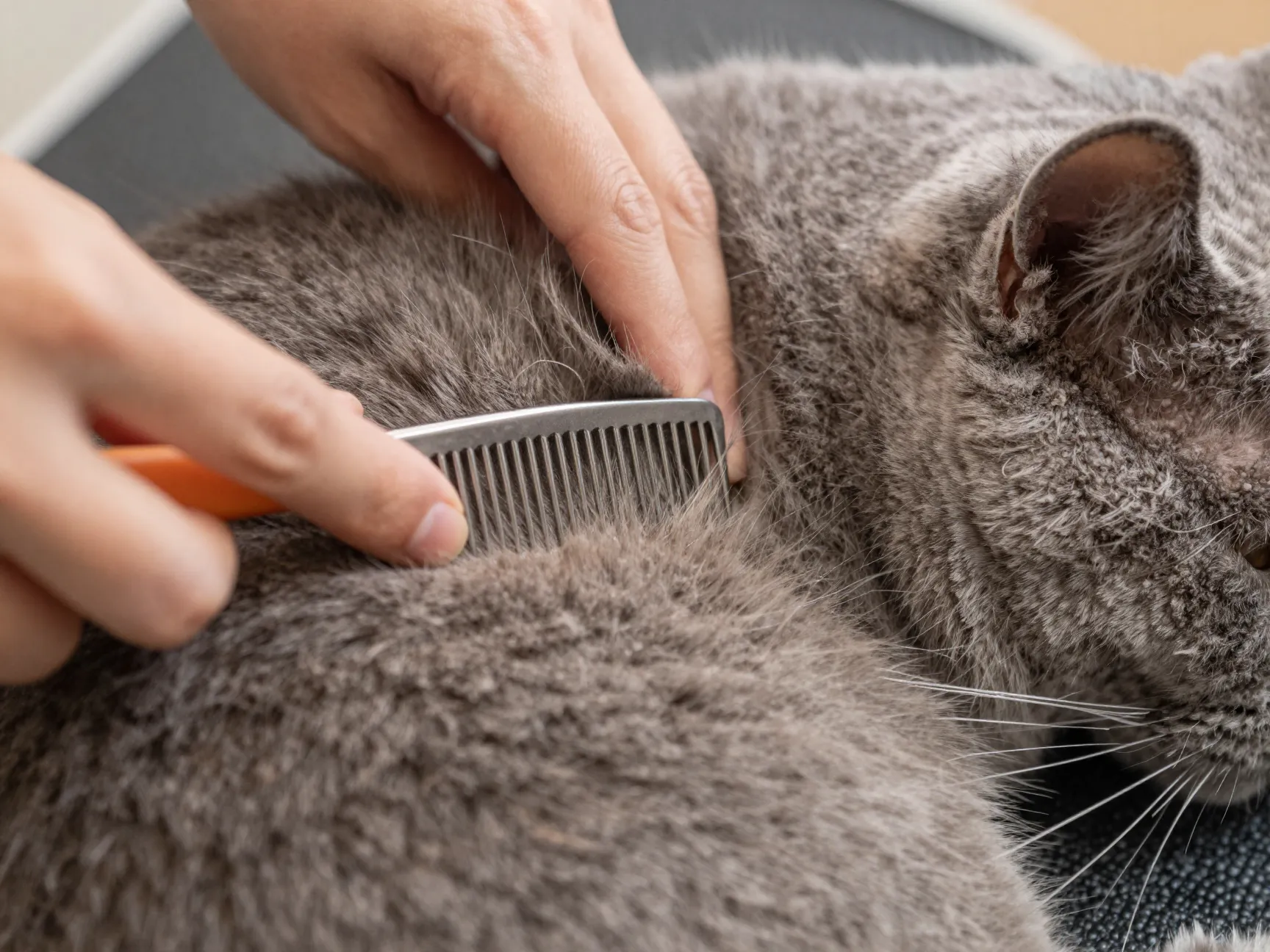
Certain zones on a British Shorthair’s body are disproportionately prone to problems, and giving them extra attention prevents the majority of serious coat issues before they start.
The areas most vulnerable to undercoat compaction include behind the ears, under the armpits, around the groin, and at the base of the tail. These spots experience more friction from movement and are harder for cats to reach effectively during self-grooming, making them prime locations for mats to develop unnoticed. A quick daily check of these zones, even on days when a full brushing session is not planned, can catch early tangles while they are still easy to comb out.
Hairballs are a related concern directly tied to coat density. As a British Shorthair grooms itself, loose undercoat hair is swallowed, and during heavy shedding periods, the volume of ingested hair can overwhelm the digestive system’s natural ability to pass it. This can lead to more frequent hairball vomiting or, in more serious cases, digestive blockages.
Reducing hairball frequency:
- Increase brushing during shedding season. Less loose hair available to swallow directly reduces hairball formation.
- Consider hairball-control diets. Some formulas include added fiber that helps move ingested hair through the digestive tract naturally.
- Encourage regular water intake. Proper hydration supports healthy digestion and easier passage of hair.
- Watch for frequency changes. An increase in hairball incidents, especially outside of moulting season, is worth mentioning to a veterinarian.
Paying attention to these targeted zones and digestive signs rounds out a comprehensive approach to 6 British Short Haired Cat Care Secrets For A Glossy, Healthy Coat, connecting external grooming with internal health signals.
Building A Whole-Body Care Routine Beyond The Coat
A glossy coat does not exist in isolation. Nails, ears, eyes, and the surrounding environment all influence how healthy and attractive a British Shorthair’s coat ultimately looks and feels.
Overgrown nails can cause a cat to groom awkwardly or avoid certain movements, indirectly affecting coat maintenance in hard-to-reach spots. Regular nail trims, done every few weeks, keep a cat comfortable and mobile enough to self-groom effectively. Ear cleaning, checked weekly for wax buildup or debris, prevents irritation that can lead to excessive head shaking and scratching, which in turn can damage fur around the ears and face. Eye area cleaning, particularly for tear staining, keeps the fur around the eyes from becoming discolored or matted.
The home environment matters too. Low humidity from indoor heating during winter can dry out skin and coat, while a clean, allergen-reduced living space minimizes skin irritation that might otherwise trigger excessive scratching and localized fur damage. Providing scratching posts and safe climbing structures also supports natural stretching and movement that keeps a cat’s body limber enough to reach all grooming zones independently.
Following Official Guidance And Adapting To The Individual Cat
Veterinary associations and animal welfare organizations generally agree on baseline grooming standards for double-coated breeds like the British Shorthair, even though exact recommendations can vary slightly between sources. The consistent theme across professional guidance is that grooming is not optional or purely cosmetic; it is a component of basic welfare, alongside nutrition, veterinary care, and appropriate housing.
That said, official minimums should be treated as a floor, not a ceiling. Every cat is an individual, and factors such as age, activity level, indoor versus outdoor lifestyle, and general health all influence how much grooming is genuinely needed.
Factors that justify adjusting frequency:
- Age. Senior cats often groom themselves less effectively due to reduced flexibility, requiring more owner assistance.
- Activity level. Highly active cats may naturally distribute oils and manage loose hair better than sedentary ones.
- Indoor versus outdoor access. Outdoor cats pick up more debris and may need more frequent checks for tangles and foreign material in the coat.
- Health status. Cats recovering from illness or with mobility limitations from arthritis often need significantly more grooming support.
Staying within modern expert ranges while adjusting for these individual factors ensures that grooming remains both effective and appropriate, rather than following a rigid schedule that ignores the specific cat in front of an owner.
Recognizing When Coat Problems Signal A Health Issue
A dull, thinning, or unusually matted coat is sometimes simply a grooming gap. Other times, it is the first visible sign of an underlying health problem. Learning to distinguish between the two is an essential, often underemphasized, part of coat care.
Coat changes that warrant a veterinary visit:
* Sudden, unexplained hair loss in patches rather than gradual, even shedding
* Coat that remains greasy or dull despite consistent brushing and good nutrition
* Excessive scratching, licking, or chewing at the skin beneath the fur
* Visible flaking, redness, or scabbing on the skin
* A noticeable increase in hairball frequency outside of normal moulting periods
* Changes in coat texture accompanying other symptoms like lethargy, appetite changes, or weight loss
Conditions ranging from parasites and allergies to thyroid imbalances and nutritional deficiencies can all manifest first as changes in coat quality. Because British Shorthairs are a generally robust breed, owners sometimes delay seeking care when something seems slightly off, assuming it will resolve on its own. Prompt veterinary evaluation when these signs appear allows for earlier diagnosis and treatment, which is almost always associated with better outcomes than waiting until symptoms progress.
Conclusion
A glossy, healthy coat on a British Shorthair is rarely the product of one single habit. It comes from combining seasonal awareness, the right tools and gentle handling, short and positive grooming sessions, sensible bathing limits, solid nutrition, targeted attention to high-risk areas, and a willingness to seek veterinary input when something changes unexpectedly.
These 6 British Short Haired Cat Care Secrets For A Glossy, Healthy Coat work best as an integrated routine rather than isolated tips applied occasionally. Start by assessing current brushing frequency against the seasonal calendar, audit the grooming toolkit for gaps, and take note of how the cat responds during sessions. Small, consistent adjustments made now compound into a visibly healthier, shinier coat within just a few weeks, and a stronger foundation for lifelong coat and skin health over the years ahead.