Best Small To Medium Dog Breeds For Apartments & Active Families
A dog that thrives in a 700-square-foot apartment can fail miserably with a family that hikes every weekend, and a dog bred for stamina can shred a small living room out of sheer boredom. The mismatch between breed and lifestyle is the single biggest reason shelters see so many “good dogs” returned within the first year. Choosing correctly the first time matters more than most new owners realize.

Disclosure: This post contains affiliate links. As an Amazon Associate, we earn from qualifying purchases, and at no extra cost to you.
This guide breaks down the 6 Best Small To Medium Dog Breeds For Apartments & Active Families based on current veterinary guidance, trainer consensus, and real-world apartment living data from 2026. Each breed profile covers temperament, exercise needs, noise tendencies, and grooming demands so a decision can be made with confidence rather than guesswork.
Key Takeaways
- The 6 Best Small To Medium Dog Breeds For Apartments & Active Families include the French Bulldog, Cavalier King Charles Spaniel, Bichon Frise, Shih Tzu, Beagle, and Cocker Spaniel or Pembroke Welsh Corgi as sturdier alternatives.
- Size alone does not determine apartment suitability; barking tendency, energy level, and trainability matter just as much, according to 2026 veterinary and retail pet guidance.
- French Bulldogs remain a top 2026 apartment pick for their compact build and calm indoor demeanor, though heat sensitivity requires care.
- Active families with more space or time for daily exercise may do better with a Beagle, Cocker Spaniel, or Corgi than with a purely low-energy toy breed.
- Recent expert commentary confirms that calm medium breeds, and even some sighthounds, can outperform tiny high-strung dogs in apartment settings.
What Makes a Dog Breed Right for Apartments and Active Families
Picking from the 6 Best Small To Medium Dog Breeds For Apartments & Active Families starts with understanding what actually predicts success in a shared-wall living situation. Apartment living puts pressure on three things: noise, space, and boredom-driven destruction. A family’s activity level adds a fourth variable, since an under-exercised dog in a small space is a recipe for chewed furniture and anxious barking.
Veterinary behaviorists and trainers who publish updated breed guidance each year point to a handful of measurable traits rather than size charts alone.
Noise tendency ranks near the top of every 2026 apartment-dog guide. A twenty-pound dog that alerts at every hallway footstep causes more neighbor complaints than a fifty-pound dog that sleeps through the day. Trainability is the second major factor, because a dog that responds well to house rules adapts faster to elevator rides, shared courtyards, and leash manners in tight hallways.
Energy level needs to be matched against the family’s actual weekly routine, not their aspirational one. A family that walks twice daily and hikes on weekends can handle a livelier breed than a family working long hours with only evening walks available. Grooming and shedding matter more in small spaces too, since dander and loose fur circulate faster in a compact apartment than in a house with more square footage and airflow.
Finally, adaptability to routine changes, such as travel, guests, and noise from neighbors, separates dogs that settle into apartment life from those that struggle with it long-term. Keeping these five factors in mind while reviewing each of the 6 Best Small To Medium Dog Breeds For Apartments & Active Families below will make the final choice far more reliable.
The 6 Best Small To Medium Dog Breeds For Apartments & Active Families Ranked
The following breeds represent the current consensus shortlist among vets, trainers, and major pet retailers publishing 2026 guidance. Each entry includes practical notes on space needs, noise, and family fit.
1. French Bulldog

The French Bulldog holds its position as a top apartment pick through much of 2026, and for good reason. Its compact, muscular body needs only modest daily exercise, typically two short walks and some indoor playtime. French Bulldogs are famously low-barkers compared to many small breeds, which makes them easier on shared walls and thin apartment ceilings.
Kid-friendly temperament is another major point in their favor. French Bulldogs tend to be affectionate, sturdy enough for gentle rough-housing, and patient with younger children. The tradeoff comes from their flat-faced structure, which makes them sensitive to heat and humidity. Families in warmer climates need to plan walks for cooler parts of the day and avoid over-exertion, especially during summer months.
Grooming is minimal thanks to a short coat, though skin folds require regular cleaning to prevent irritation. For a family wanting a low-noise, low-exercise, high-affection apartment dog, the French Bulldog is difficult to beat.
2. Cavalier King Charles Spaniel

The Cavalier King Charles Spaniel is often described as the gentlest of the 6 Best Small To Medium Dog Breeds For Apartments & Active Families. This breed was developed as a companion dog, and it shows in its adaptable, affectionate nature. Cavaliers do well with moderate daily exercise, roughly thirty to forty-five minutes split across walks and play, making them a strong fit for families who are active but not extreme.
Their silky coat requires weekly brushing to prevent matting, and their long ears need periodic checks for cleanliness. Cavaliers are known for getting along well with children, other dogs, and even cats, which makes them a flexible choice for multi-pet apartment households.
One health consideration worth noting is a predisposition to certain heart and joint conditions common in the breed, so regular veterinary checkups are especially important. Beyond that, the Cavalier’s calm indoor behavior and moderate barking tendency make it one of the safer choices for shared living spaces.
3. Bichon Frise

Families managing allergy sensitivities while still wanting an active companion often land on the Bichon Frise. This breed is widely recognized as hypoallergenic due to its curly, low-shedding coat, which traps dander rather than releasing it into the air the way many double-coated breeds do.
Bichon Frises are cheerful, playful, and genuinely enjoy interactive games, making them a good match for families who want a dog that can join in on daily activity without needing miles of exercise. A twenty to thirty minute walk plus some indoor play typically covers their needs.
The tradeoff is grooming demand. Their coat requires brushing several times a week and professional grooming every four to six weeks to prevent matting and skin issues. For allergy-conscious active families in apartments, though, the Bichon Frise consistently ranks among the best-suited breeds because of its manageable size, friendly temperament, and low dander output.
4. Shih Tzu

The Shih Tzu is best suited to apartment families with moderate or mixed activity levels rather than families chasing high-intensity exercise routines. This breed was bred as a companion lapdog, and its low energy needs reflect that history. Short walks and indoor playtime are usually enough to keep a Shih Tzu content.
Shih Tzus are affectionate, loyal, and generally calm indoors, which suits apartment living well. They do bark to alert, though typically less persistently than some other toy breeds once properly trained. Their long, flowing coat requires daily brushing or a shorter clip maintained through regular grooming visits.
Families with very active schedules, frequent long runs, or off-leash hiking plans may find the Shih Tzu mismatched to their pace. But for apartment dwellers wanting a small, low-key companion with steady affection, the Shih Tzu remains a dependable and popular choice.
5. Beagle

The Beagle stands out on this list as the most genuinely active breed among the smaller options, and it deserves a place among the 6 Best Small To Medium Dog Breeds For Apartments & Active Families specifically for families who exercise daily and want a dog that can keep pace. Beagles are famously child-friendly, sturdy, and playful, with a nose-driven curiosity that makes them engaging companions on walks and hikes.
Apartment living with a Beagle requires more intention than with the calmer breeds above. Beagles are scent hounds bred for tracking, and that instinct translates into a strong prey drive and a tendency to vocalize, including baying, when bored or under-stimulated. Without at least sixty minutes of real exercise daily and consistent mental stimulation, Beagles can become noisy and destructive in confined spaces.
For families who already have an active routine, daily runs, weekend hikes, or a nearby dog park, the Beagle’s energy is an asset rather than a liability. The key is matching the breed’s real needs to an apartment setup that includes enough daily outdoor time to burn off that famous Beagle drive.
6. Cocker Spaniel and Pembroke Welsh Corgi
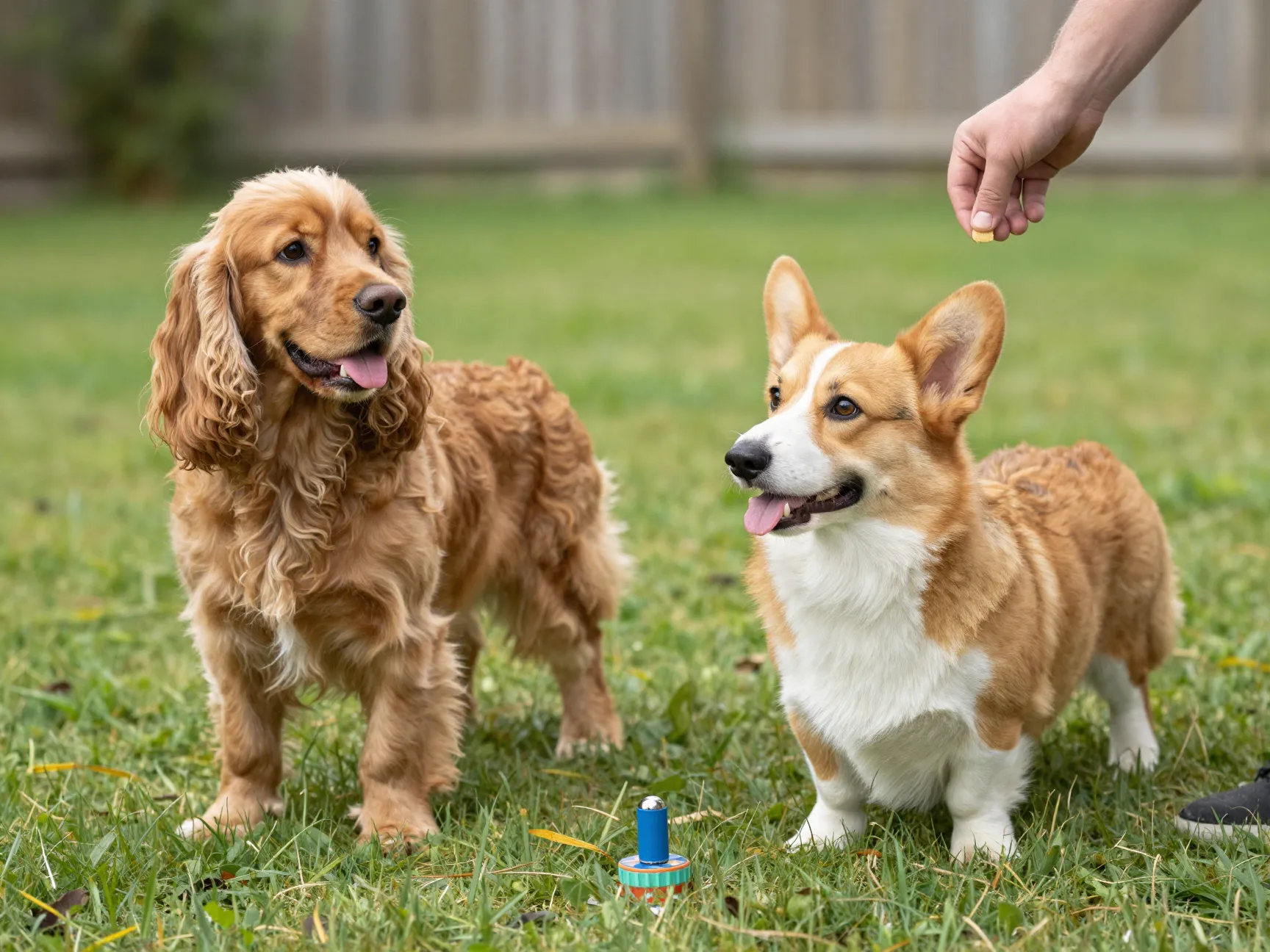
Rounding out the shortlist are two sturdier small-to-medium options that suit families wanting more stamina than the toy breeds offer without stepping into large-breed territory. The Cocker Spaniel is affectionate, trainable, and enjoys retrieving games, swimming, and long walks, making it a strong fit for families with an active weekend routine. Its silky coat needs regular grooming, and its friendly, eager-to-please temperament makes house training and apartment etiquette relatively straightforward.
The Pembroke Welsh Corgi brings herding-breed intelligence and stamina in a low-slung, compact frame. Corgis are highly trainable, alert, and loyal, though their herding instincts can produce nipping at heels during play if not redirected early. They need consistent daily exercise, around forty-five to sixty minutes, to stay balanced indoors.
Both breeds shed moderately and benefit from families who enjoy structured training and regular outdoor activity. For active families who find the smaller breeds above too low-key, either the Cocker Spaniel or the Corgi offers a satisfying middle ground between companionship and genuine physical capability.
Below is a quick side-by-side summary of how these six breeds compare on the factors that matter most for apartment living.
| Breed | Daily Exercise Needed | Barking Tendency | Best Fit For |
|---|---|---|---|
| French Bulldog | Low | Low | Low-activity, kid-friendly homes |
| Cavalier King Charles Spaniel | Moderate | Low to moderate | Moderate-activity, gentle families |
| Bichon Frise | Moderate | Low to moderate | Allergy-sensitive, active families |
| Shih Tzu | Low | Moderate | Low to mixed-activity families |
| Beagle | High | Moderate to high | Very active, child-friendly homes |
| Cocker Spaniel / Corgi | Moderate to high | Moderate | Energetic, training-oriented families |
How to Choose Among the 6 Best Small To Medium Dog Breeds For Apartments & Active Families
Selecting the right fit from the 6 Best Small To Medium Dog Breeds For Apartments & Active Families comes down to matching honest lifestyle habits against each breed’s real needs, not just its size on paper. A few structured questions can help narrow the decision quickly.
- Realistic daily exercise time. Families with under thirty minutes of daily walking time available should lean toward the French Bulldog or Shih Tzu, while those with sixty minutes or more can comfortably consider a Beagle, Cocker Spaniel, or Corgi.
- Noise sensitivity of the building. Apartments with thin walls or strict noise policies favor the French Bulldog and Cavalier King Charles Spaniel, both known for calmer indoor behavior compared to alert-driven or vocal breeds.
- Allergy concerns among household members. If anyone in the home reacts to pet dander, the Bichon Frise is the clearest choice among this list due to its low-shedding coat and hypoallergenic reputation.
- Grooming commitment. Families wanting minimal grooming upkeep should favor the French Bulldog, while those comfortable with weekly or biweekly grooming sessions can consider the Bichon Frise, Shih Tzu, or Cocker Spaniel without concern.
- Presence of young children. Beagles and French Bulldogs both carry strong reputations for patience and resilience with kids, making them frequent recommendations for families with children under ten.
Working through these five questions in order, rather than starting from breed popularity or appearance, produces a far more reliable match. A dog chosen for its looks alone is far more likely to end up mismatched with a family’s actual daily rhythm.
Beyond Size: What Vets and Trainers Say About Apartment Dogs in 2026
Mainstream guidance published in September 2026 makes a point worth repeating: the best apartment dog is not always the smallest one. Veterinary sources, including guidance from Royal Canin, have highlighted that calm medium breeds such as Basset Hounds can be excellent apartment residents despite their larger frame, because their low energy and steady temperament outweigh their size when it comes to noise and space compatibility.
Pet retail guidance from Chewy published in August 2026 echoes this shift, noting that quietness and trainability are now considered more critical to apartment success than raw size. That guidance specifically calls out medium sighthounds, breeds built for short bursts of speed followed by long periods of rest, as underrated apartment candidates precisely because they are naturally low-energy indoors despite their athletic build.
This matters for anyone comparing the 6 Best Small To Medium Dog Breeds For Apartments & Active Families against other options they might see recommended elsewhere. A Jack Russell Terrier, for example, is technically small enough to fit the size criteria, but its extremely high energy and strong prey drive make it demanding in confined spaces, often requiring far more exercise and mental engagement than a typical apartment routine can provide. Vet-curated 2025 and 2026 breed lists increasingly place Jack Russell Terriers in a caution category for apartment living despite their compact size, precisely because temperament and energy level outweigh physical dimensions.
The broader takeaway from this shift in expert guidance is straightforward: size labels are a starting point, not a final answer. Families evaluating any dog breed for apartment life should weigh barking tendency, trainability, and true energy needs at least as heavily as the number on a weight chart.
Frequently Asked Questions
Are small dogs always better for apartments than medium dogs?
Not necessarily. Current 2026 veterinary guidance shows that calm medium breeds can outperform small, high-energy breeds in apartment settings. Temperament and noise level often matter more than size alone.
Which of the 6 Best Small To Medium Dog Breeds For Apartments & Active Families needs the least exercise?
The French Bulldog and Shih Tzu both require the least daily exercise on this list, typically needing only short walks and some indoor play to stay content.
Is the Beagle really suitable for apartment living?
Beagles can do well in apartments, but only with families committed to at least sixty minutes of daily exercise and mental stimulation. Without that commitment, their vocal tendencies and prey drive can create challenges in shared living spaces.
What is the best hypoallergenic option among these breeds?
The Bichon Frise is the clearest hypoallergenic choice among the 6 Best Small To Medium Dog Breeds For Apartments & Active Families, thanks to its low-shedding curly coat.
Should active families avoid low-energy breeds like the Shih Tzu entirely?
Not entirely, but families with very high activity levels may find a low-energy breed under-stimulating to match their pace. In those cases, a Cocker Spaniel, Corgi, or Beagle is typically a better fit.
Conclusion
Matching a dog breed to an apartment lifestyle and a family’s real activity level is less about finding the “cutest” or most popular option and more about being honest about daily routines, noise tolerance, and grooming capacity. The 6 Best Small To Medium Dog Breeds For Apartments & Active Families covered here, the French Bulldog, Cavalier King Charles Spaniel, Bichon Frise, Shih Tzu, Beagle, and the Cocker Spaniel or Pembroke Welsh Corgi pairing, each serve a distinct lifestyle rather than competing for a single “best overall” title.
Families should start by mapping out their actual weekly exercise time, checking their building’s noise tolerance, and being realistic about grooming commitment before falling in love with a specific breed’s appearance. From there, cross-referencing that lifestyle against the breed profiles above, and consulting a local veterinarian or reputable breeder about individual temperament, will lead to a far more successful long-term match. The right choice is the one that fits daily life as it actually is, not as it might look on a weekend hike photo.