Kawaii And Easy Cute Animal Drawings For Instant Joy
A single circle and two dot eyes can lift a mood faster than a scroll through social media. That is the quiet power behind kawaii art, and it is exactly why 6 Kawaii And Easy Cute Animal Drawings For Instant Joy has become such a popular starting point for anyone who wants a fast, low-pressure creative win. No art degree required. No expensive supplies. Just a pencil, a blank page, and six simple shapes that turn into something adorable in minutes.
Disclosure: This post contains affiliate links. As an Amazon Associate, we earn from qualifying purchases, and at no extra cost to you.
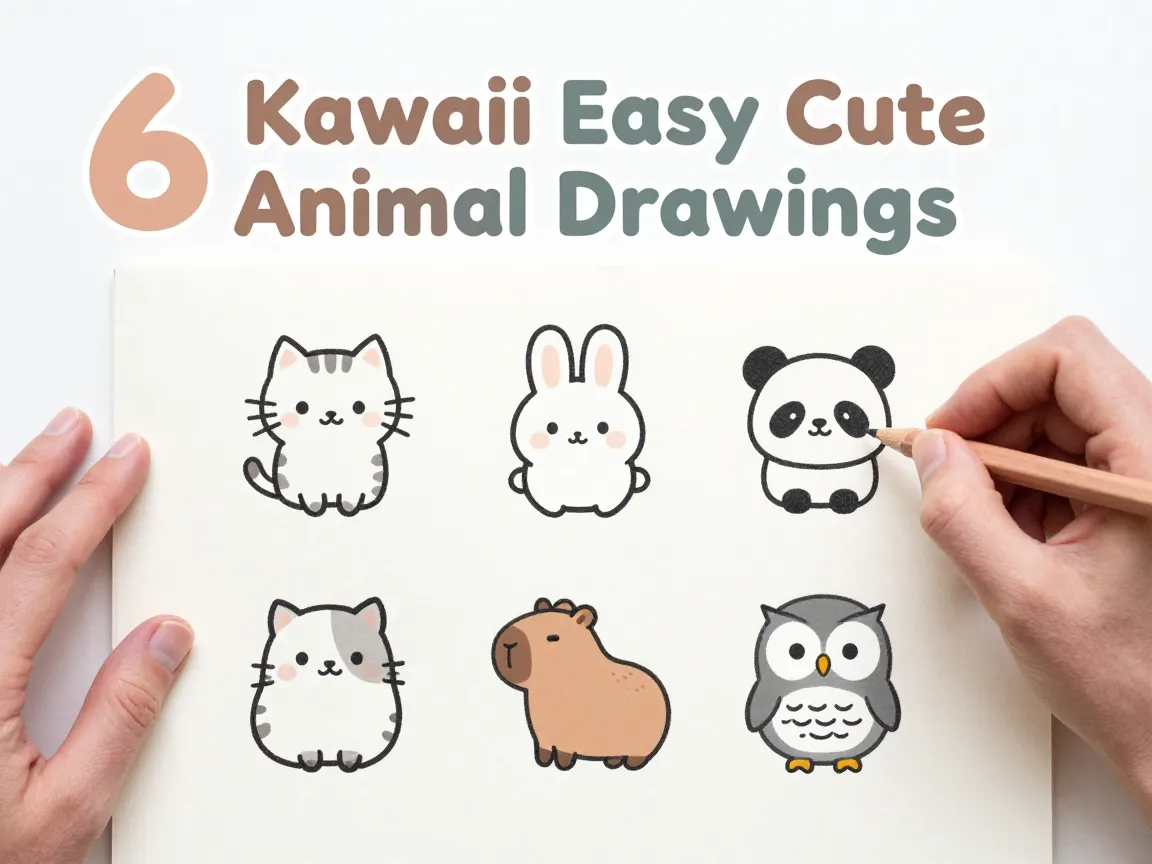
This style of drawing has quietly grown from a niche doodle trend into a recognized micro-genre used in branding, classrooms, and stress-relief programs worldwide. The appeal is not complexity. It is the opposite. These drawings work because they strip animals down to their most endearing basics: round bodies, oversized eyes, and the smallest hint of a smile. The result is a guide to 6 Kawaii And Easy Cute Animal Drawings For Instant Joy that anyone, at any skill level, can finish in a single sitting.
Key Takeaways
- Kawaii animal drawings rely on simple shapes like circles, ovals, and rounded rectangles, making them accessible to beginners of all ages.
- The six animals featured here, cat, bunny, bear, panda, capybara, and owl, each take fewer than ten steps to complete.
- Oversized eyes, small mouths, light blush, and short limbs are the core design choices that create the “instant joy” effect.
- 2026 design trends favor soft pastel palettes and gentle, expressionless faces, a style known as yuru-kawaii or “loose cute.”
- These drawings work well for stress relief, classroom activities, journaling, and quick social content because they require no advanced technique.
What Makes Kawaii Animal Drawings So Joyful
Kawaii, a Japanese term often translated as “cute,” has shaped visual culture far beyond its origins for decades. But what makes these animal sketches feel so emotionally satisfying to draw and look at is not mysterious. It comes down to a predictable set of design choices that researchers in visual communication and illustration consistently point to.
The formula is almost mathematical. Take a round or oval base. Add two large eyes positioned low on the face, closer to the center than real anatomy would suggest. Keep the mouth tiny, often just a “u” shape or a single dot. Add light blush circles on the cheeks. Shorten the limbs. Soften every line. The brain reads these proportions as infant-like, which triggers a caretaking instinct and a warm emotional response almost instantly.
This is why 6 Kawaii And Easy Cute Animal Drawings For Instant Joy works so well as a concept. It is not asking artists to master shading, perspective, or anatomy. It is asking them to repeat a simple formula across six different animals, which builds confidence quickly while producing results that genuinely look good.
Recent design trend reports from 2026 confirm that this approach is not fading. If anything, it has matured. Illustrators and brands are now blending the classic bright, candy-colored kawaii palette with a more minimalist, desaturated pastel aesthetic. Soft textures, muted pinks, sage greens, and dusty blues are replacing the neon tones that once defined the style. The goal remains the same: create instant visual comfort. But the execution has become quieter and more sophisticated, which actually makes it easier for beginners to replicate with basic pencils or markers.
There is also a newer trend worth noting. Illustrators are moving beyond static cute faces and adding tiny narrative details, a bear holding a teacup, a cat mid-yawn, an otter floating on its back. These micro-stories do not require extra drawing skill. They require one small added detail, and that detail is often what makes a drawing memorable rather than generic.
6 Kawaii And Easy Cute Animal Drawings For Instant Joy
Below is a practical, step-friendly breakdown of six animals that consistently appear across beginner tutorials, library art programs, and 2026 illustration trend reports. Each one follows the same core method: simple shapes first, cute details second.
1. Kawaii Cat
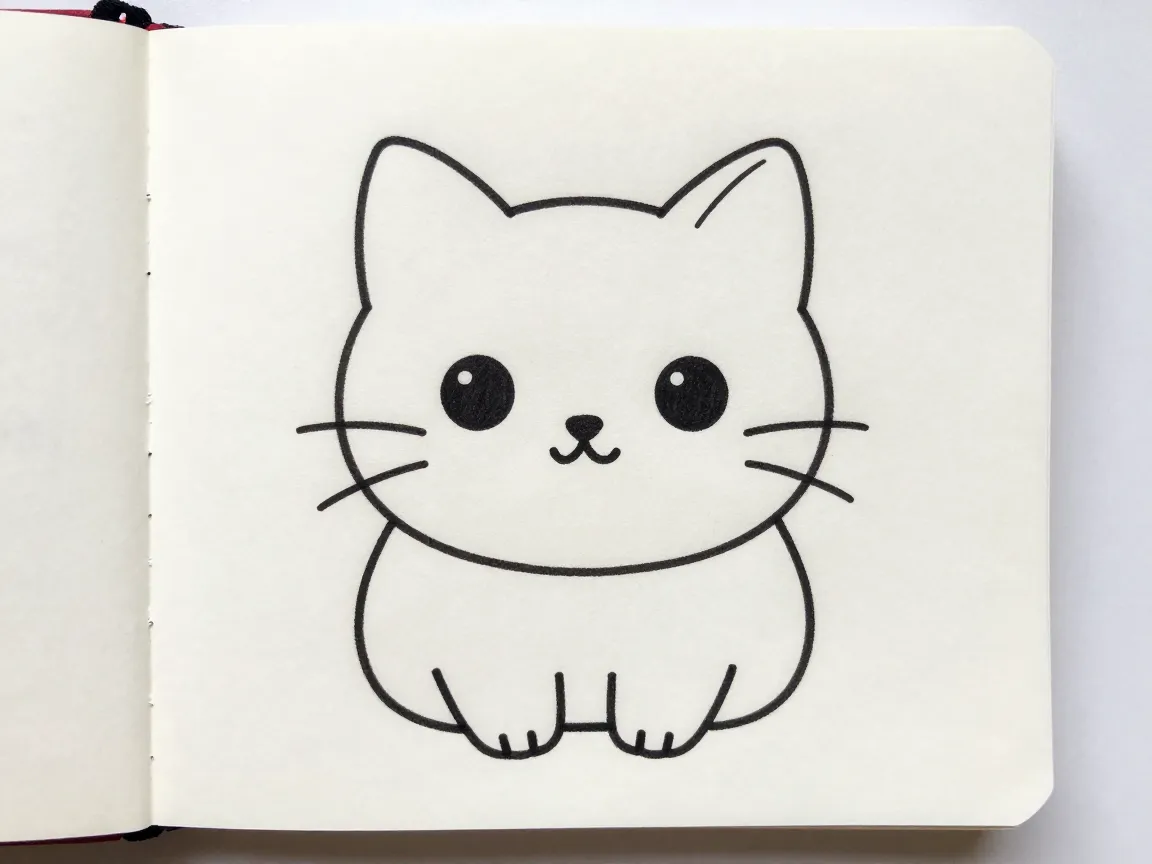
The cat is the unofficial mascot of kawaii art, and for good reason. It requires only a circle for the head, two triangle ears, and a slightly smaller oval for the body.
Start with a circle. Add two triangular ears on top, slightly rounded at the tips rather than sharp. Draw two large oval eyes low on the face, leaving generous space between them. Add a tiny “w” or two short curved lines for the nose and mouth area. Three whisker lines on each cheek finish the face. For the body, draw a soft oval beneath the head, with two small paw shapes peeking out at the bottom.
What makes this version joyful rather than generic is restraint. Skip detailed fur texture. Skip sharp angles. The softer and rounder every line is, the more the drawing reads as kawaii rather than realistic.
2. Kawaii Bunny
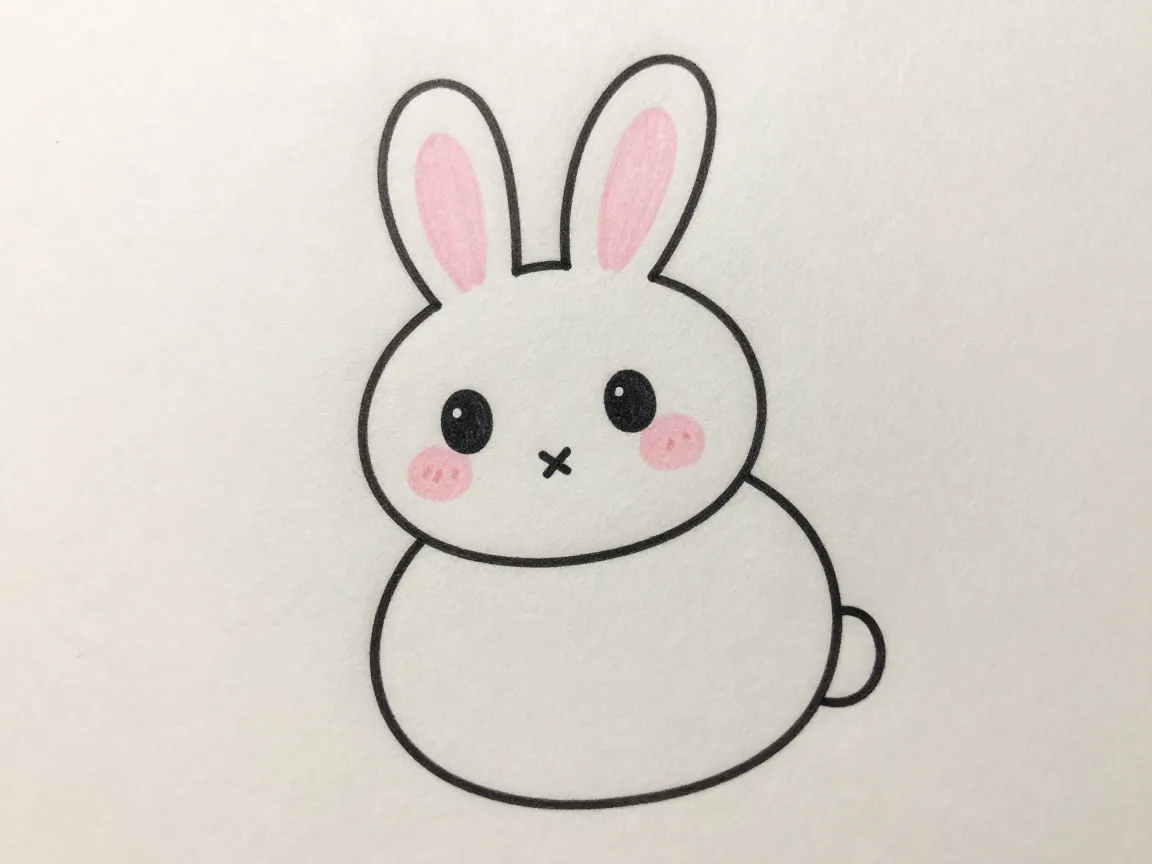
Bunnies are a near-permanent fixture in cute animal collections because the long ears create an immediate visual signature, even before the face is added.
Begin with an oval for the head and a slightly larger oval for the body, stacked like a snowman. Add two tall, slightly curved ears on top, leaving the inner ear outline as a thin, rounded shape. Eyes should be large, oval, and positioned close together near the center of the face. A small triangle or “y” shape works for the nose. Two tiny lines represent the front paws, tucked close to the body.
For extra charm, add a small round puff for the tail and a few short whisker lines. Light pink shading inside the ears and on the cheeks adds warmth without requiring any blending skill.
3. Kawaii Bear
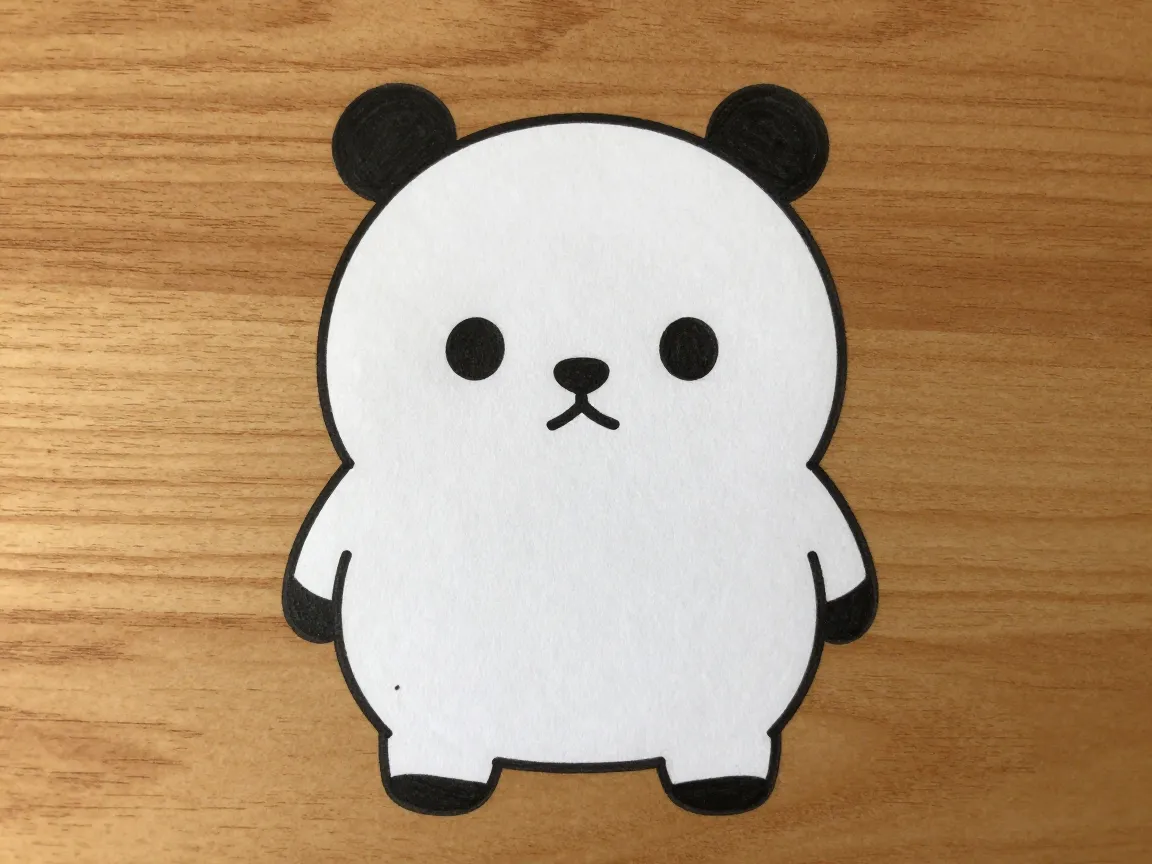
The bear is one of the most forgiving animals to draw because its proportions are naturally round, making errors far less noticeable than with more angular animals.
Draw a large circle for the head. Add two small, rounded circles on top for the ears. Place two medium oval eyes slightly below the center of the face, with a small oval snout area containing a tiny triangle nose and a short curved mouth line. The body is a slightly wider oval, often drawn larger than the head in classic chibi proportion to maximize cuteness.
Short stubby limbs, little more than curved rectangles with rounded ends, complete the look. Many tutorials suggest adding a small round belly patch or a tiny accessory, like a bow or a scarf, to introduce a hint of personality without adding real complexity.
4. Kawaii Panda
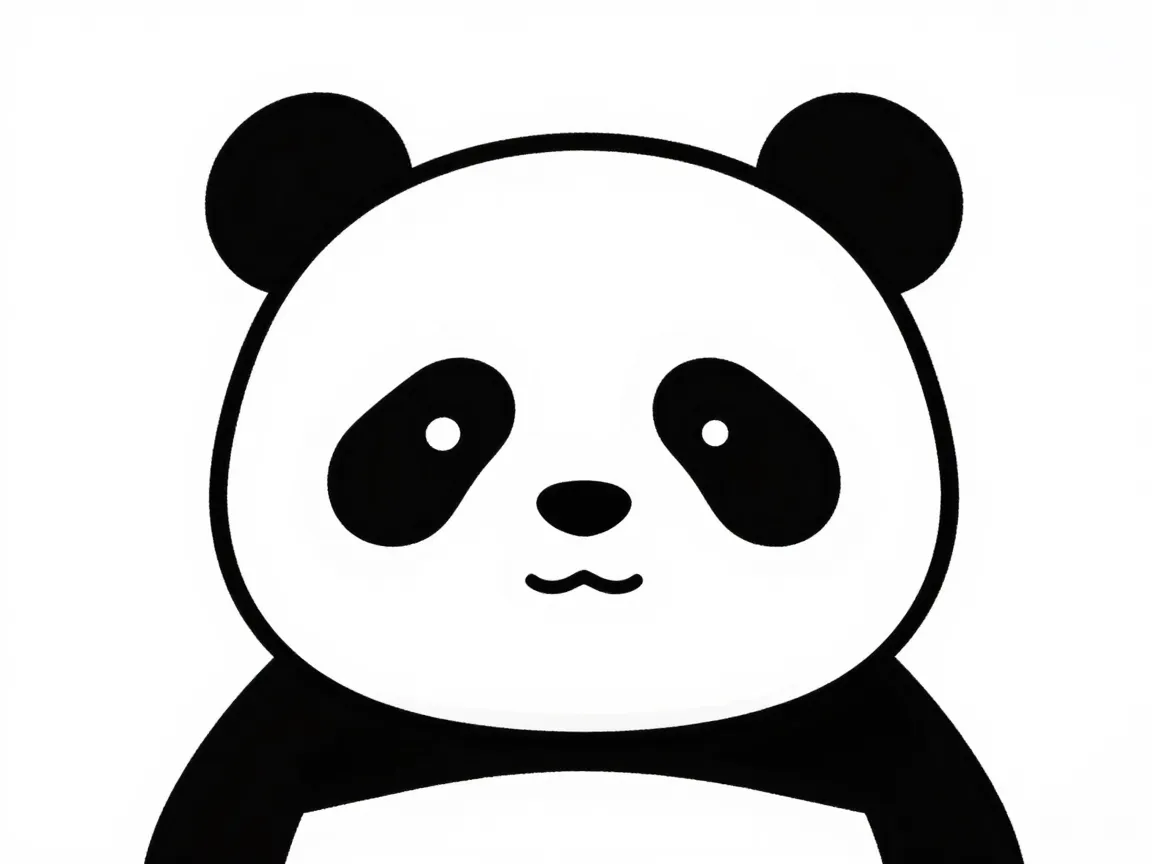
Pandas are popular in easy drawing guides because the black-and-white pattern does the visual work, meaning the line art itself can stay extremely simple.
Start with a circle for the head and a larger oval for the body, similar to the bunny’s structure. Add two round ears, then shade them solid black. Draw two large circular eye patches, slightly elongated, and shade them black as well, leaving small white highlights inside for the eyes. A tiny black oval nose sits between them. The body can remain mostly white, with two black oval patches for the front limbs resting at the sides.
This animal is an excellent example of how kawaii art uses contrast rather than detail to create visual interest. Because so much of the panda’s face is already two large black shapes, there is very little room for the drawing to look “wrong,” which makes it ideal for younger artists or first-time sketchers.
5. Kawaii Capybara
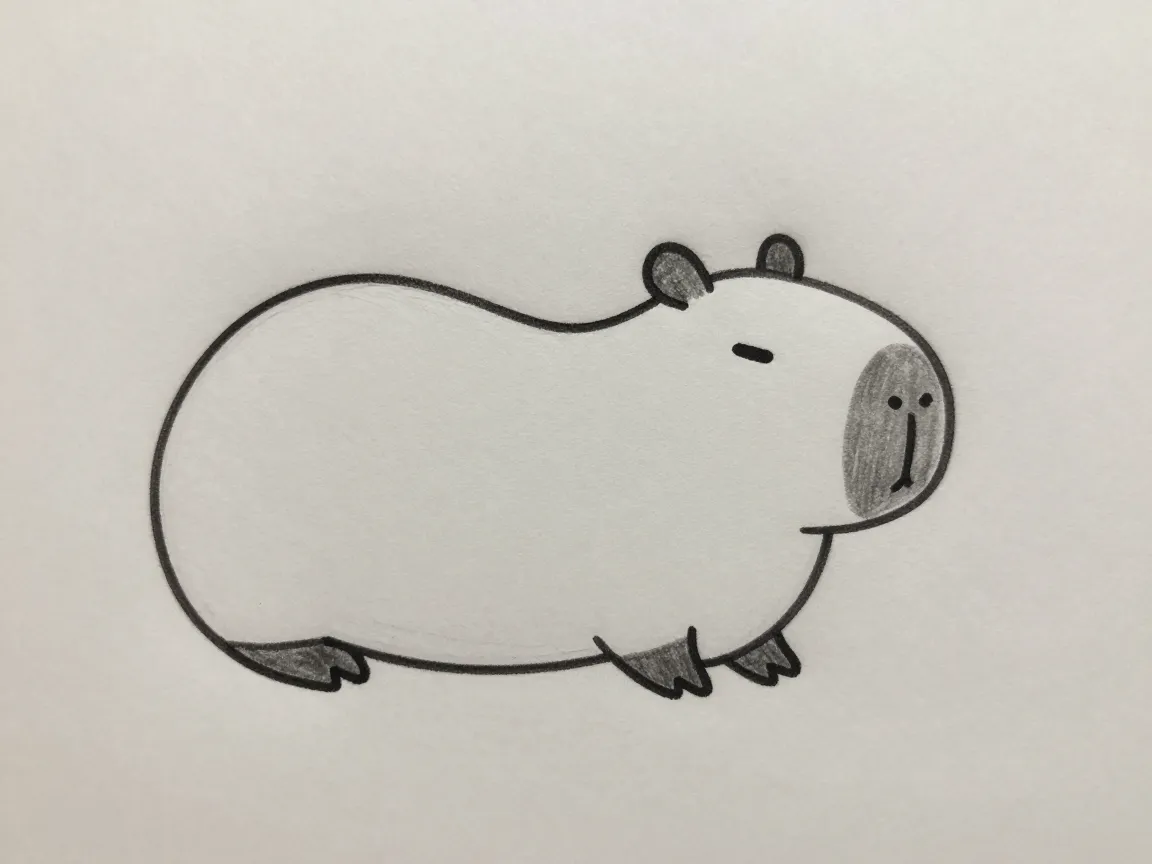
Capybaras have become one of the breakout stars of 2026 cute-animal illustration trends, prized for their plump, expressionless charm that signals calm rather than excitement.
Draw a wide, flattened oval for the body, noticeably longer and lower than the other animals on this list. The head blends almost seamlessly into the body, so add only a subtle curve to separate them. Small rounded ears sit high and close together. The eyes are small and simple, often just two short curved lines or small dots, since part of the capybara’s appeal is its sleepy, unbothered expression. A short, wide snout with a small nose line completes the face.
Unlike the cat or bunny, the capybara benefits from looking slightly “unimpressed.” This matches the real-world trend toward gentle, understated faces that convey quiet contentment rather than exaggerated excitement.
6. Kawaii Owl
The owl rounds out this set by introducing a slightly different body shape while keeping the same beginner-friendly technique.
Draw one large oval for the entire body, since owls do not need a separate head shape. Add two large circular eyes near the top third of the oval, each with a small black pupil and a tiny white highlight dot for sparkle. A small triangle beak sits between the eyes. Two short, pointed shapes at the top represent ear tufts, and two simple wing shapes, like elongated teardrops, sit on either side of the body. Small V-shaped lines at the bottom suggest feet.
Because the owl’s entire body is built from one oval, it is often the fastest of the six to complete, making it a satisfying final sketch when practicing the full set in one sitting.
Quick Comparison of the 6 Kawaii Animals
The table below summarizes the core shapes and defining features for each animal, useful as a quick reference while practicing.
| Animal | Base Shape | Signature Feature | Estimated Steps |
|---|---|---|---|
| Cat | Circle head, oval body | Triangle ears, whiskers | 5 to 6 |
| Bunny | Stacked ovals | Tall curved ears | 6 to 7 |
| Bear | Large circle head | Round ears, stubby limbs | 5 to 6 |
| Panda | Circle and oval | Black eye patches | 6 to 7 |
| Capybara | Wide flat oval | Sleepy, simple eyes | 4 to 5 |
| Owl | Single large oval | Big sparkling eyes | 4 to 5 |
“The fewer lines a cute drawing needs, the more universally appealing it tends to become.” This principle, echoed across illustration tutorials and 2026 design trend reports, explains why these six animals remain staples of beginner kawaii art.
Tips to Maximize Cuteness and Instant Joy
Technique matters less than proportion in kawaii art. The following adjustments consistently make the difference between a drawing that looks flat and one that feels genuinely joyful.
- Oversized eyes first. Eyes should take up a noticeably large portion of the face, often 20 to 30 percent of the total facial area. This is the single most important factor in making any animal look kawaii rather than simply cartoonish.
- Small mouth, minimal detail. A tiny “u” shape, a single dot, or a short curved line is almost always more effective than a detailed mouth. Overworking this feature tends to reduce cuteness rather than add to it.
- Short limbs, rounded edges. Chibi-style proportions, where limbs and features are compressed and bodies are rounded, consistently outperform realistic proportions in cute illustration. Sharp corners should be avoided entirely.
- Light blush accents. Two small pink or peach circles on the cheeks add warmth instantly and require no shading skill, just a light colored pencil or marker dot.
- Soft, pastel-forward color choices. Current 2026 trend data points toward desaturated pastels, think dusty rose, sage, and soft lavender, rather than bright primary colors. This palette choice supports the calming, comforting effect that many artists are now intentionally designing for.
- One small narrative detail. Adding a single prop, a teacup, a flower, a tiny hat, can transform a static cute face into something with personality, following the micro-storytelling trend seen in recent kawaii illustration.
Following these six adjustments consistently turns a technically simple sketch into something that reads as genuinely charming, regardless of the artist’s experience level.
Why This Small Set of Animals Works So Well
There is a practical reason tutorials and collections repeatedly group four to six animals together rather than presenting dozens at once. A compact set is achievable in a single sitting, which matters enormously for motivation. Finishing six small drawings in twenty or thirty minutes creates a sense of accomplishment that a single, more detailed piece often cannot match.
This also explains why 6 Kawaii And Easy Cute Animal Drawings For Instant Joy functions well as both a drawing exercise and a mood-lifting activity. Classroom art programs, library workshops, and stress-relief initiatives have increasingly adopted kawaii animal drawing specifically because it delivers quick, visible results. Confidence builds fast when the first attempt already looks recognizable and appealing, which is rarely true of more technical drawing exercises.
There is also a documented connection between repetitive, low-stakes creative tasks and short-term stress reduction. Drawing six simple animals back to back, each one taking only a few minutes, mirrors the structure of other calming repetitive activities like coloring books or simple pattern doodling. The low technical demand means the mind can relax into the process rather than focus on getting details “right.”
Materials That Make the Process Easier
No special equipment is required, but a few simple tools noticeably improve the experience.
- A basic graphite pencil for rough shapes before committing to final lines.
- A fine-tip black pen, around 0.3 to 0.5 millimeters, for clean outlines.
- A soft eraser that will not smudge or tear thin paper.
- Pastel-toned colored pencils or markers for shading and blush accents.
- Plain or lightly dotted sketch paper, which keeps focus on shapes rather than lines.
None of these items require a significant investment, which reinforces why this style of drawing remains one of the most accessible entry points into visual art for beginners of any age.
Frequently Asked Questions
Is kawaii animal drawing suitable for complete beginners with no art background?
Yes. The entire method relies on basic shapes like circles and ovals rather than technical skills such as shading or perspective. Most tutorials assume no prior experience and can be completed with only a pencil and paper.
How long does it take to draw all six animals?
Most beginners complete each animal in three to seven steps, meaning the full set of six can realistically be finished in twenty to forty minutes, depending on how much color and detail is added.
What supplies are absolutely necessary to get started?
Only a pencil, an eraser, and paper are required. A fine-tip pen and a few pastel-colored pencils or markers improve the final result but are optional for the core sketching process.
Why do kawaii animals always have such large eyes?
Large, low-positioned eyes mimic infant facial proportions, which naturally trigger a warm, caretaking emotional response in viewers. This single design choice does more to create “cuteness” than any other feature.
Can this drawing style be used for more than personal enjoyment?
Yes. Kawaii animal illustrations are widely used in branding, mascot design, classroom materials, social media content, and even minimalist professional presentations, often in simplified black-and-white line art form.
Conclusion
Joy, in this case, does not require talent, expensive tools, or hours of practice. It requires six simple shapes, a handful of proportion rules, and a willingness to keep every line soft and rounded. The cat, bunny, bear, panda, capybara, and owl outlined here each take only a few minutes to complete, yet together they form a reliable, repeatable method for turning a blank page into something genuinely cheerful.
The next step is simple. Pick up a pencil, choose one animal from this list, and sketch it without worrying about perfection. Then move to the next. By the time all six are finished, the page will hold tangible proof that 6 Kawaii And Easy Cute Animal Drawings For Instant Joy is not just a concept, but a practical, achievable creative habit worth returning to again and again.