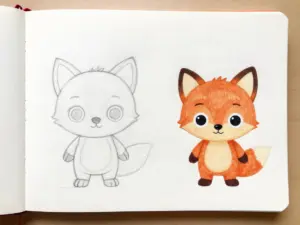
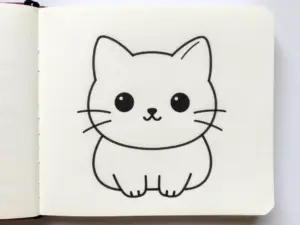
Cute Animal Drawings To Master Simple Doodles In Minutes
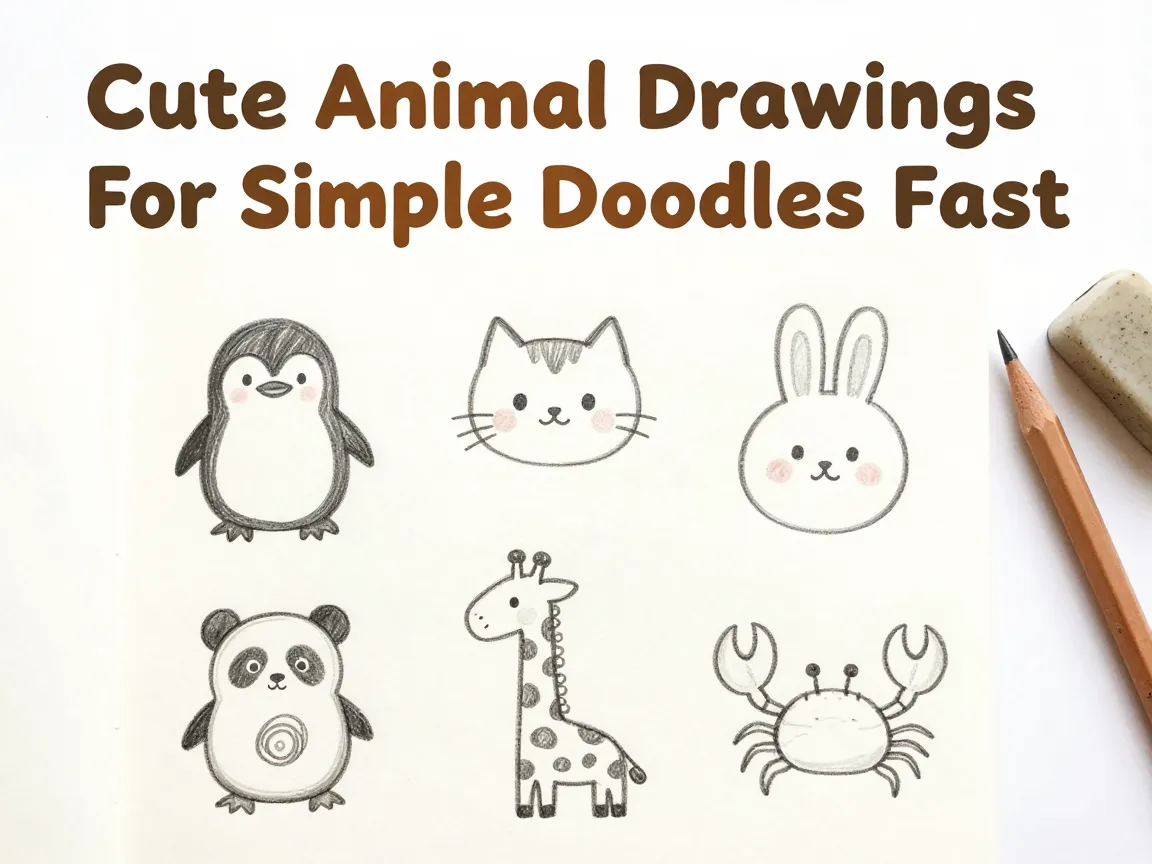
A single circle and two dots can become a kitten in under sixty seconds. That is not an exaggeration pulled from a marketing headline. It is the actual math behind the fastest-growing category of drawing tutorials online right now, where creators break down entire animals into three or four pencil strokes and finish the whole sketch before a one-minute timer even runs out. This article walks through 6 Cute Animal Drawings To Master Simple Doodles In Minutes, using the same shape-first method that beginner-friendly tutorials have relied on throughout 2026 to turn total drawing novices into confident doodlers in a single sitting.
Disclosure: This post contains affiliate links. As an Amazon Associate, we earn from qualifying purchases, and at no extra cost to you.
Nobody needs art school training to draw something adorable. The real secret is structure. Every cute animal doodle, from a kawaii star cat to a bow-wearing puppy in a cup, starts from the same handful of basic shapes: circles, ovals, and the occasional letter or number. Once that pattern clicks, drawing stops feeling intimidating and starts feeling like a quick, satisfying habit.
Key Takeaways
- 6 Cute Animal Drawings To Master Simple Doodles In Minutes relies on basic shapes like circles, ovals, and even letters or numbers as the starting structure for every animal.
- Exaggerated features such as oversized eyes, round cheeks, and tiny ears are what make a doodle look “cute” rather than realistic, and they require no advanced skill.
- Each of the six animals in this guide can be completed in under five minutes using four to six simple steps.
- Light pencil shading and small details like blush marks or texture lines add polish without adding complexity.
- Repetition, not talent, is the fastest path to mastering simple doodles; drawing the same shape-based animal two or three times locks in the muscle memory.
Why Simple Shapes Make 6 Cute Animal Drawings To Master Simple Doodles In Minutes Easy
Cute animal doodling has quietly become one of the most popular entry points into drawing, and the reason has nothing to do with raw talent. It comes down to a method. Instead of trying to copy a photograph of a real raccoon or bunny with accurate proportions and shading, beginner tutorials strip the subject down to its simplest possible form: a circle for the head, an oval for the body, and a few small shapes layered on top for ears, paws, or a tail.
This shape-first approach shows up again and again across current drawing content. A February 2026 tutorial compilation that teaches six pencil-shaded animals, including a penguin, a kitty cat, and a bow cat, builds every single one from rounded bases before adding detail. A separate October 2025 lesson, later refreshed in April 2026, walks through five cats and a bunny using the exact same logic: start round, stay round, add small accents last. Even kid-oriented videos lean on this principle by using familiar letters and numbers, such as the number 6 or the letter B, as the skeleton for pandas, pigs, and dogs. If a shape is already recognizable, the brain does less work figuring out where to draw next.
There is also a psychological reason this method makes animals look instantly adorable. Illustration guides consistently point to “exaggerated features” as the real trick behind cuteness. Big eyes, oversized cheeks, stubby limbs, and tiny mouths mimic the proportions of baby animals, which the human brain is wired to find endearing. A technically accurate drawing of a lion looks impressive. A lion with giant round eyes and a tiny mane looks charming, and it takes a fraction of the time to create.
“The fastest way to make any animal look cute is to shrink the body, enlarge the eyes, and round every corner you can find.”
That single principle explains why 6 Cute Animal Drawings To Master Simple Doodles In Minutes works as a learning framework. Learners are not memorizing anatomy. They are memorizing a repeatable formula: shape, feature, accent, done.
6 Cute Animal Drawings To Master Simple Doodles In Minutes
Below are six animals chosen specifically because each one reinforces a different basic shape or technique. Draw them in order and the skills stack naturally, from simple circles in the first drawing to slightly more layered shapes by the sixth.
1. Chubby Penguin Built From Two Stacked Ovals
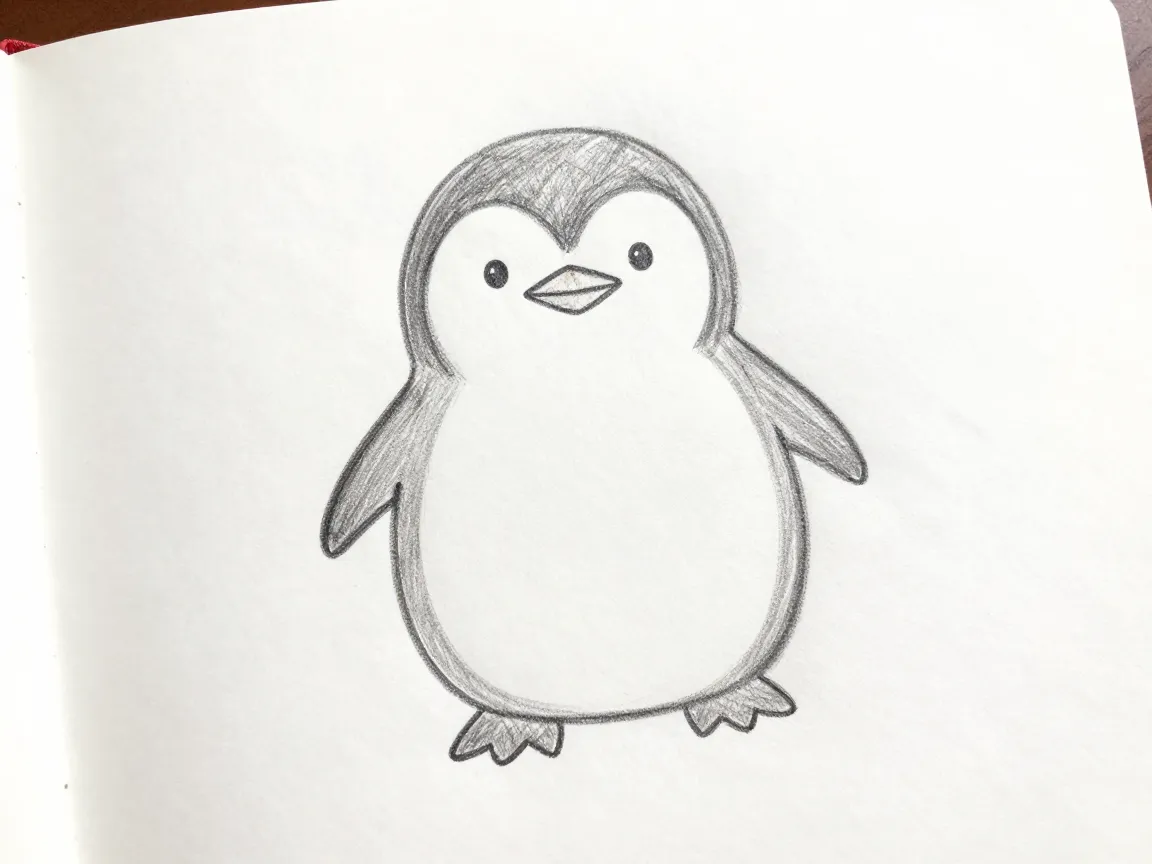
Start with one oval for the body and a smaller rounded shape on top for the head, slightly overlapping so there is no visible neck gap. Add two small triangle-shaped wings on the sides and a tiny orange triangle for the beak. Draw two oval feet peeking out from the bottom. Finish with two dot eyes placed close together near the top of the head, since close-set eyes read as “cute” far more effectively than widely spaced ones.
This penguin appears in several current tutorials because it teaches a core doodling lesson: most animals are just two ovals of different sizes stacked or overlapped. Light pencil shading along one side of the body adds dimension in about ten extra seconds, giving the sketch a slightly more finished look without any real added difficulty.
Total time: roughly two minutes once the shape sequence is familiar.
2. Kawaii Kitty Cat With Triangle Ears
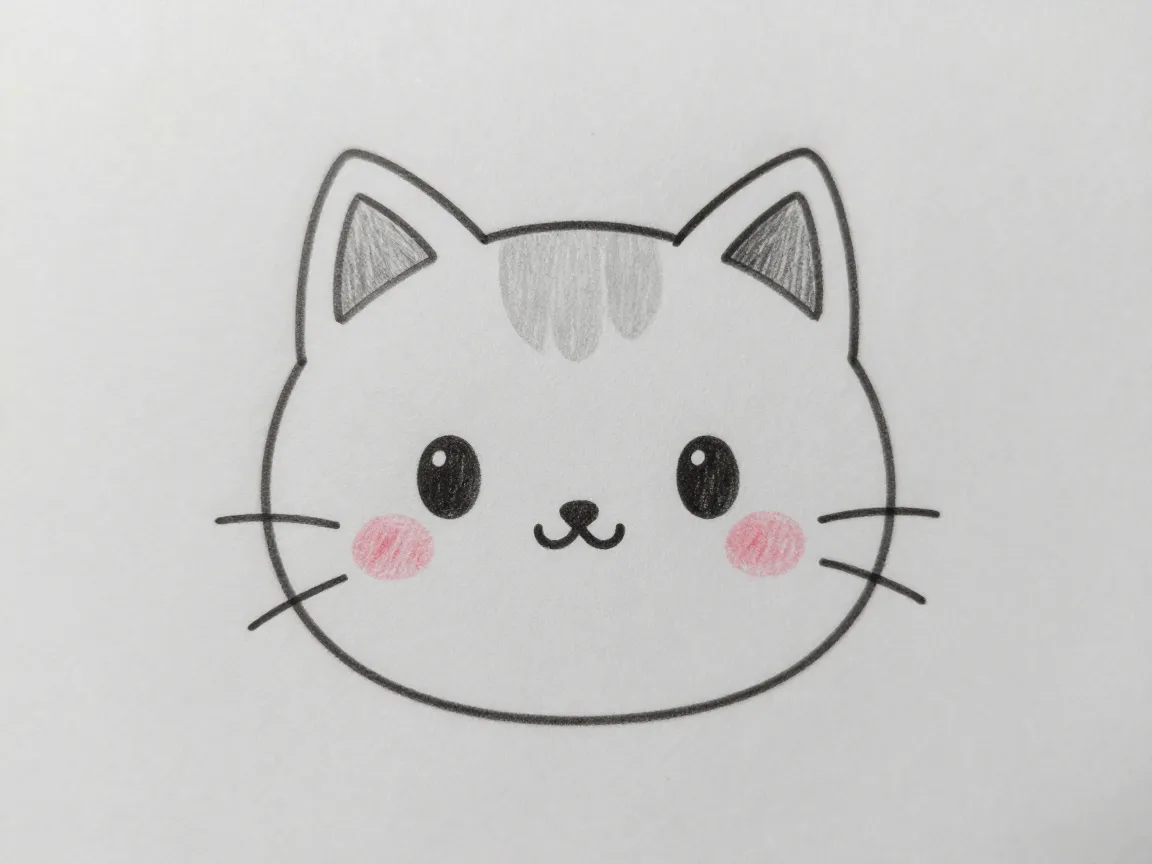
Draw one large circle for the head. Add two small triangles on top, angled slightly outward, for ears. Inside the ears, add a smaller triangle to suggest the inner ear shape. Give the cat two oval eyes, a tiny “w” shape for the mouth and nose combined, and two small curved lines on each cheek for whiskers. A couple of tiny circles on the cheeks, lightly shaded pink, instantly boost the cuteness factor.
This drawing is one of the most repeated subjects across current tutorials, showing up in multiple 2026 video guides because the triangle-ear circle-head combination transfers directly to foxes, bears, and mice with only minor adjustments. Mastering this one shape pattern effectively teaches three or four other animals at the same time.
Total time: under two minutes.
3. Soft Bunny With Long Oval Ears
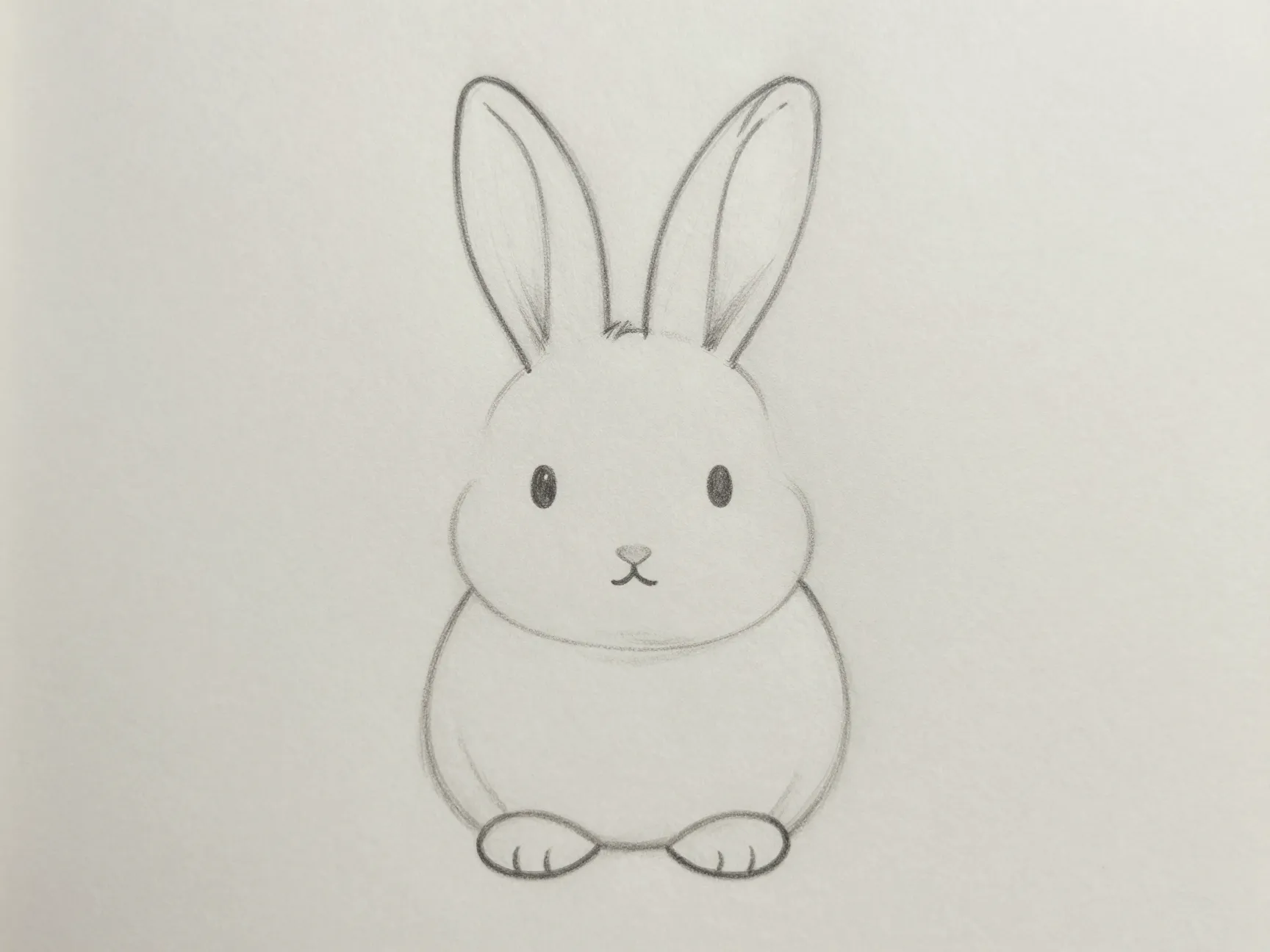
Draw a medium circle for the head and a slightly larger oval below it for the body, overlapping slightly at the neck. Add two long, narrow ovals on top of the head for ears, leaving them open at the base so they look soft rather than stiff. Draw two small oval feet at the bottom of the body. Give the bunny two small dot eyes, a tiny triangle nose, and a single curved line beneath the nose for the mouth.
Bunnies consistently appear in beginner doodle collections because the long-ear shape is a useful variation on the basic circle-and-oval structure. Once the ear shape is comfortable, it adapts easily into cat tails, puppy ears, or even simple flower petals for background decoration.
Total time: about two to three minutes with shading.
4. Round Panda Using the Number 6 as a Guide
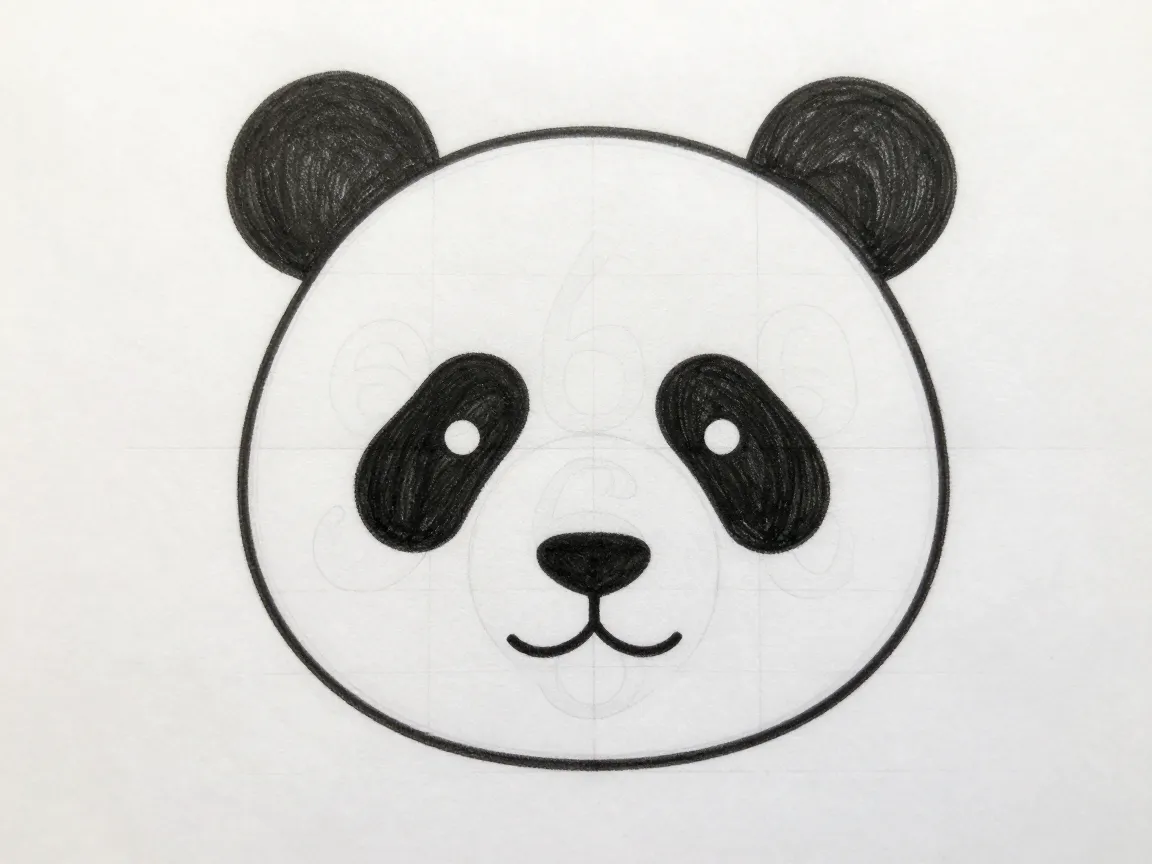
This is where letter-and-number tricks come in handy. Lightly sketch the number 6 twice, mirrored, to form the rough outline of two overlapping circular shapes for the panda’s head and body, then clean up the lines into smooth circles. Add two small circles on top of the head for ears, shaded solid black. Draw two oval eye patches, each with a small dot inside for the eyes, and a small black oval nose.
Letter-and-number-based construction shows up frequently in kid-focused drawing videos because it gives absolute beginners a familiar starting point. If someone already knows how to write the number 6, they already know how to start this panda. That removes the single biggest barrier for new doodlers: not knowing where the first line should go.
Total time: roughly three minutes.
5. Long-Necked Giraffe With Simple Spot Patterns
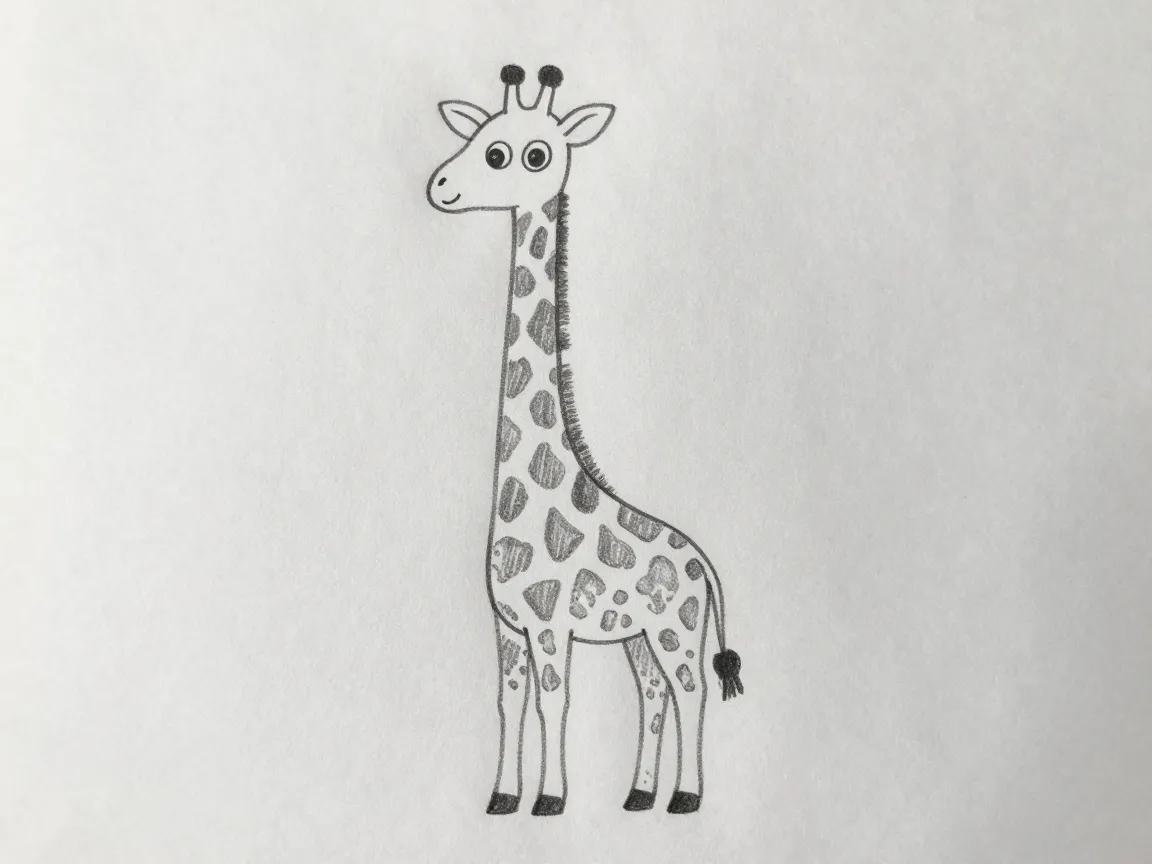
Draw a tall, narrow oval for the neck connecting a small circle head to a slightly larger oval body. Add four short, stubby legs beneath the body. Give the giraffe two small oval ears and a pair of short, rounded horn shapes on top of the head. Dot in two large oval eyes and a small smile. Finish by scattering a few irregular rounded spots across the neck and body.
A May 2026 tutorial that teaches six animals, including a giraffe alongside an ant, a pig, a butterfly, a lion, and a crab, uses this exact spotted-giraffe approach to demonstrate how a single long oval can completely change an animal’s silhouette while keeping the drawing process just as fast as the rounder animals on this list.
Total time: about three minutes, slightly longer due to the spot detailing.
6. Smiling Crab With Two Simple Pincers
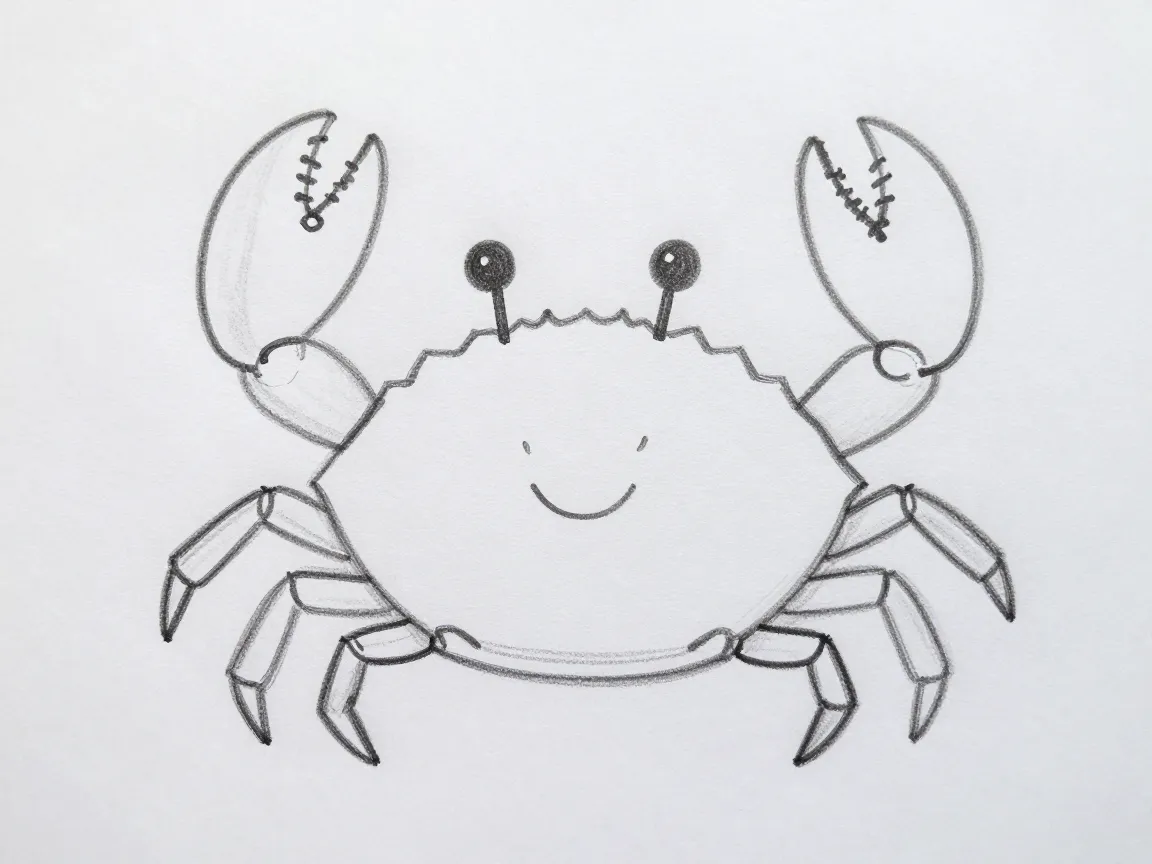
Draw one wide oval for the crab’s shell, flattened slightly at the bottom. Add two small circles on top for eyes on short stalks. Draw four short, bent lines on each side for legs. Finish with two curved pincer shapes extending from the front of the body, each ending in a small open claw. A simple curved smile across the center of the shell finishes the face.
Crabs and other sideways-shelled creatures are useful because they introduce asymmetry, teaching that not every cute animal doodle has to be perfectly symmetrical to look appealing. The wide, flat oval also reinforces the lesson from earlier drawings: start wide and round, then add small distinguishing features on top.
Total time: around two minutes.
Quick Comparison of All Six Drawings
| Animal | Base Shape | Key Feature | Approx. Time |
|---|---|---|---|
| Penguin | Stacked ovals | Triangle beak and wings | 2 minutes |
| Kitty Cat | Circle head | Triangle ears | 2 minutes |
| Bunny | Circle and oval | Long soft ears | 2-3 minutes |
| Panda | Number 6 outline | Black eye patches | 3 minutes |
| Giraffe | Tall oval neck | Scattered spots | 3 minutes |
| Crab | Flattened oval | Asymmetric pincers | 2 minutes |
Tips to Master Simple Doodles Even Faster
Speed comes from repetition, not from rushing the first attempt. The following habits, pulled from the patterns found across current beginner tutorials, make the difference between a shaky first try and a confident fifth one.
Keep pencil lines light during the first pass. Nearly every current tutorial on cute animal doodles starts with a faint, loose sketch before committing to darker outlines. This makes mistakes easy to erase and keeps the whole process low-pressure.
Favor rounded shapes over angular ones wherever possible. Sharp corners read as mature, serious, or even a little intimidating. Rounded corners read as soft, friendly, and approachable, which is the entire point of a cute doodle.
Place facial features low and close together. Animals with eyes positioned in the lower half of the head, close to each other, consistently look younger and more endearing than animals with widely spaced, centered eyes. This single adjustment can make an average sketch look noticeably more charming.
Add one small accent per drawing, not five. A single blush mark, a tiny bow, or one patch of texture adds personality. Piling on too many extra details slows the process down and works against the “minutes, not hours” goal behind mastering these doodles.
Practice the same animal twice in a row before moving to the next one. The first attempt builds awareness of the shape sequence. The second attempt is almost always noticeably cleaner and faster, since the hand has already rehearsed the motion once.
Common Mistakes to Avoid When Drawing Cute Animals in Minutes
Even with a simple shape system, a few recurring errors slow beginners down or make finished doodles look less polished than they could be.
Pressing too hard with the pencil on the first sketch line is one of the most common issues. Heavy lines are difficult to erase and correct, which discourages experimentation. A light touch keeps the early stages flexible.
Drawing features too large relative to the head is another frequent mistake. While exaggeration is part of the cute-doodle formula, there is a balance point. Eyes that take up more than half the face can start to look distorted rather than endearing. Comparing proportions against a reference sketch, even a rough one, helps keep features in a pleasing range.
Skipping the light pencil shading step is a missed opportunity. Several current tutorials specifically highlight shading as the detail that separates a flat-looking doodle from one with a bit of dimension, and it typically adds less than fifteen seconds per drawing.
Trying to perfect symmetry on every single animal can also backfire. The crab drawing in this list, for example, works precisely because its pincers and legs do not need to match perfectly on both sides. Chasing unnecessary symmetry slows the process and adds stress that has no place in a quick doodling session.
Frequently Asked Questions
How long does it really take to learn all six animal doodles?
Most beginners can work through all six drawings in this guide in under twenty-five minutes total, including a few warm-up attempts. Individual animals typically take between two and three minutes once the shape sequence feels familiar.
Do these doodles require any special art supplies?
No special supplies are needed. A regular pencil, an eraser, and plain paper are enough for every drawing in this guide. Light pencil shading, mentioned throughout current tutorials, only requires the side of a standard pencil tip.
Is it better to trace these shapes first or draw them freehand?
Freehand practice builds muscle memory faster over time, but tracing a printed reference once or twice can help beginners understand proportion before switching to freehand attempts.
Why do letters and numbers work as a starting point for animal shapes?
Letters and numbers are shapes the hand already knows how to draw automatically. Using a number 6 or a letter B as an invisible guide removes the guesswork of where to start, which speeds up the entire sketching process for beginners.
Can these techniques be used for animals beyond the six featured here?
Yes. The same circle, oval, and exaggerated-feature principles apply to dozens of other animals, including seals, raccoons, foxes, and turtles. Once the underlying shape logic is understood, it transfers to almost any cute animal subject.
Conclusion
Mastering 6 Cute Animal Drawings To Master Simple Doodles In Minutes is less about artistic talent and more about recognizing a repeatable pattern: start with a basic shape, exaggerate the features, add one small accent, and stop before overcomplicating the sketch. The penguin, kitty cat, bunny, panda, giraffe, and crab covered in this guide each reinforce that pattern from a slightly different angle, which is exactly why working through all six builds real, transferable doodling skill rather than six isolated tricks.
The next step is simple. Grab a pencil, set a five-minute timer, and draw the kitty cat and bunny back to back using the steps above. Notice how the second attempt comes out faster and cleaner than the first. That small improvement is the entire method working exactly as intended, and it is the fastest, lowest-pressure way to build real confidence on the page.