Rare Cat Breeds You’ve Probably Never Seen (But Will Instantly Love)
Only three Kanaani cats exist on Earth right now. Not three thousand. Three. All of them live at a single cattery in Israel, and as of March 2026, the World Record certification body officially recognized this trio as the rarest registered cat breed on the planet. That single fact reframes what “rare” really means in the cat world, it is not a marketing buzzword, it is a hard number tied to pedigree registries.
Disclosure: This post contains affiliate links. As an Amazon Associate, we earn from qualifying purchases, and at no extra cost to you.
Most cat lovers can name a Persian, a Maine Coon, or a Siamese without hesitation. But beyond the familiar faces at the front of every pet-supply catalog sits an entire category of felines that even seasoned cat owners have never encountered in person. This guide to 6 Rare Cat Breeds You’ve Probably Never Seen (But Will Instantly Love) pulls back the curtain on six genuinely uncommon breeds, explains why they remain so scarce, and shows why each one deserves a spot on any cat enthusiast’s radar.
Key Takeaways
- Rarity in cat breeds is measured by registration numbers, not just unusual looks, breeds like the Egyptian Mau have fewer than 7,000 cats registered with the Cat Fanciers’ Association.
- The six featured breeds, Lykoi, Selkirk Rex, Khao Manee, Toyger, Chausie, and LaPerm, combine striking, unusual appearances with genuinely affectionate, adaptable temperaments.
- Some rare breeds, like the Van Cat, are part of active conservation breeding programs, while others, like the Kanaani, exist in populations as small as three known cats worldwide.
- Owning a rare breed usually means working with a specialty cattery, budgeting for higher acquisition costs, and understanding breed-specific health and grooming needs.
- Interest in 6 Rare Cat Breeds You’ve Probably Never Seen (But Will Instantly Love) content has grown steadily through 2025 and 2026, reflecting rising curiosity about uncommon pedigreed cats.
What Makes a Cat Breed Officially Rare
Rarity is not about how strange a cat looks in a photo. It comes down to registration data kept by organizations like the Cat Fanciers’ Association (CFA), The International Cat Association (TICA), and the World Cat Federation (WCF). A breed becomes officially rare when very few individual cats are registered, bred, or shown compared with mainstream breeds like the Ragdoll or British Shorthair.
The CFA itself highlights breeds such as the American Bobtail, American Wirehair, LaPerm, Khao Manee, and Turkish Van among its least frequently registered pedigrees. These are not obscure internet rumors, they come directly from the organization’s own registration figures. The Egyptian Mau offers a clear example of how rarity is quantified: fewer than 7,000 individuals are registered with the CFA, a tiny figure compared with breeds numbering in the hundreds of thousands.
Some breeds sit at even more extreme ends of the scale. The Kanaani, recognized by the WCF back in 2008 but still only tracked in TICA’s Foundation Registry, had just three pedigree-registered cats as of the March 2026 world-record certification. Meanwhile, breeds like the Tennessee Rex carry a coat mutation so uncommon that global population estimates remain in the dozens, and the Serengeti, while more established, still numbers only in the low thousands worldwide. For most people, encountering these cats in person simply is not going to happen, they exist almost entirely in catalogs, breeder websites, and articles like this one.
This is exactly the backdrop against which 6 Rare Cat Breeds You’ve Probably Never Seen (But Will Instantly Love) makes sense as a category of its own. These are not fictional or exaggerated curiosities. They are documented, registry-tracked breeds with real histories, real temperaments, and, in several cases, real conservation efforts behind them.
The 6 Rare Cat Breeds You’ve Probably Never Seen (But Will Instantly Love), Ranked by Rarity and Charm
Each of the following breeds combines a distinctive look with genuine companionship qualities. They are numbered here not by strict population rank but by how likely a typical cat owner is to have crossed paths with one, starting with the most visually startling.
1. Lykoi: The Werewolf Cat
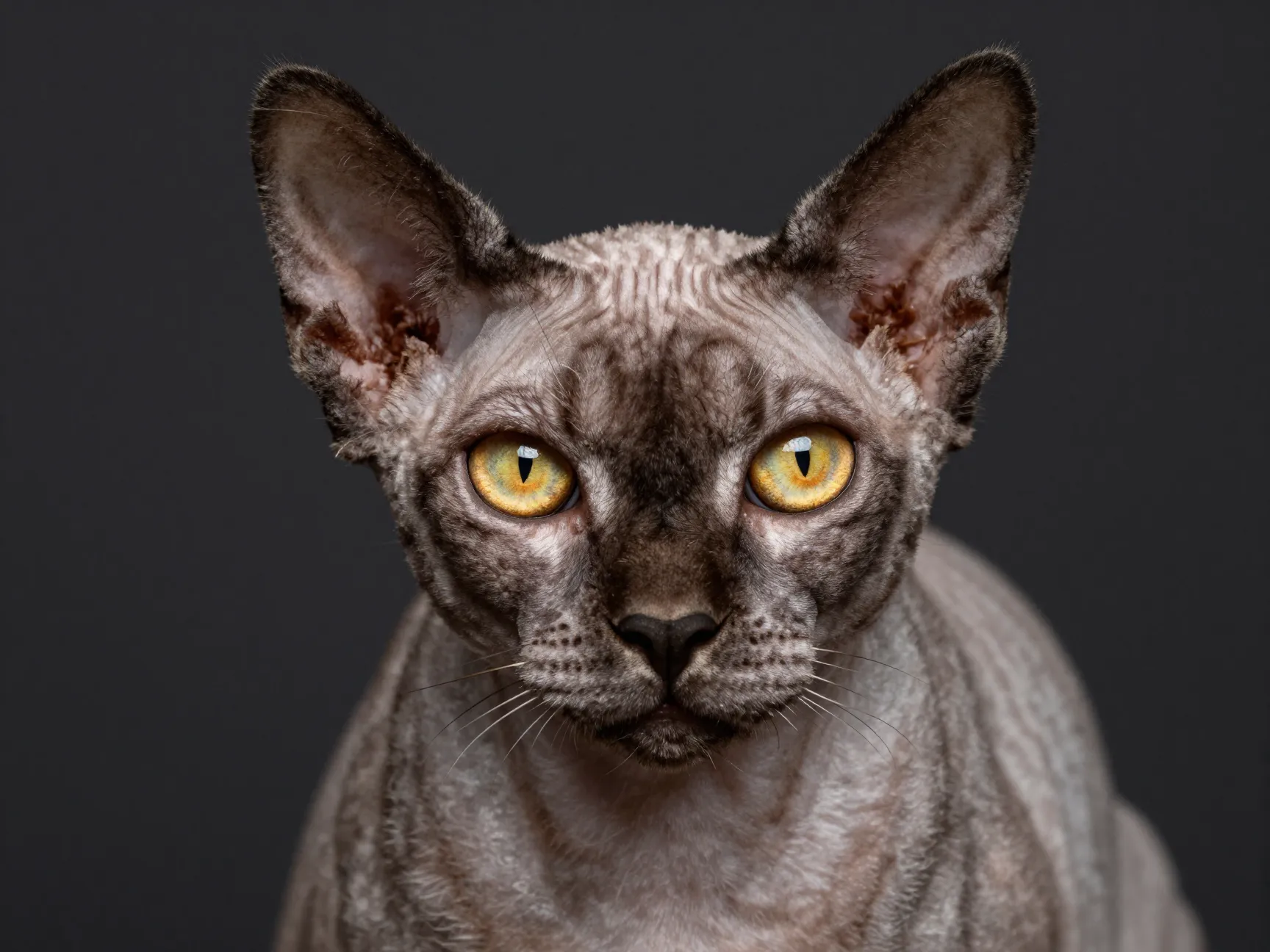
The Lykoi earns its nickname honestly. A natural genetic mutation causes patchy, sparse fur that gives this breed a wolf-like, almost hairless-in-places appearance, paired with piercing golden or amber eyes. Despite the intimidating look, Lykoi cats are known for being highly social, curious, and dog-like in their attachment to owners. They often follow people from room to room and enjoy interactive play well into adulthood.
Because the mutation is recessive and still relatively new to organized breeding programs, Lykoi litters remain small and hard to find outside specialty catteries. Their thin coat also means they benefit from warmer indoor environments and occasional skin care, since they lack the insulating undercoat most cats rely on.
2. Selkirk Rex: The Curly-Coated Cuddler
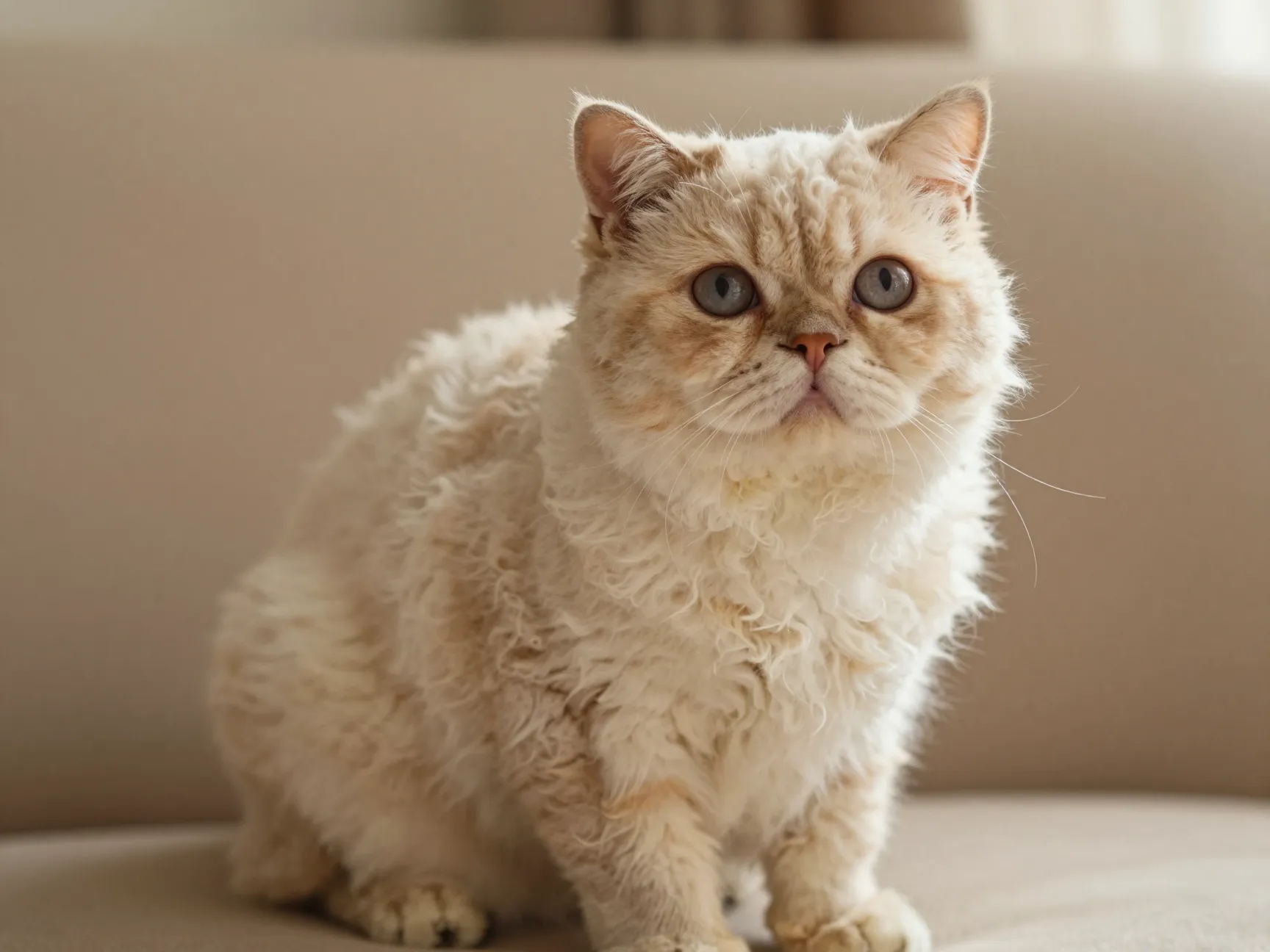
Where most rare-coat mutations produce sparse fur, the Selkirk Rex does the opposite, its coat forms loose, plush curls that make the cat look almost like a woolly teddy bear. First discovered in a Montana shelter litter in 1987, the breed has grown slowly, remaining one of the less frequently registered pedigrees tracked by major cat associations.
Selkirk Rex cats are typically calm, patient, and tolerant of handling, making them a popular choice for families, though their limited breeding population keeps waiting lists long. Grooming requires a light touch, since over-brushing can loosen the natural curl pattern.
3. Khao Manee: Thailand’s “White Gem”
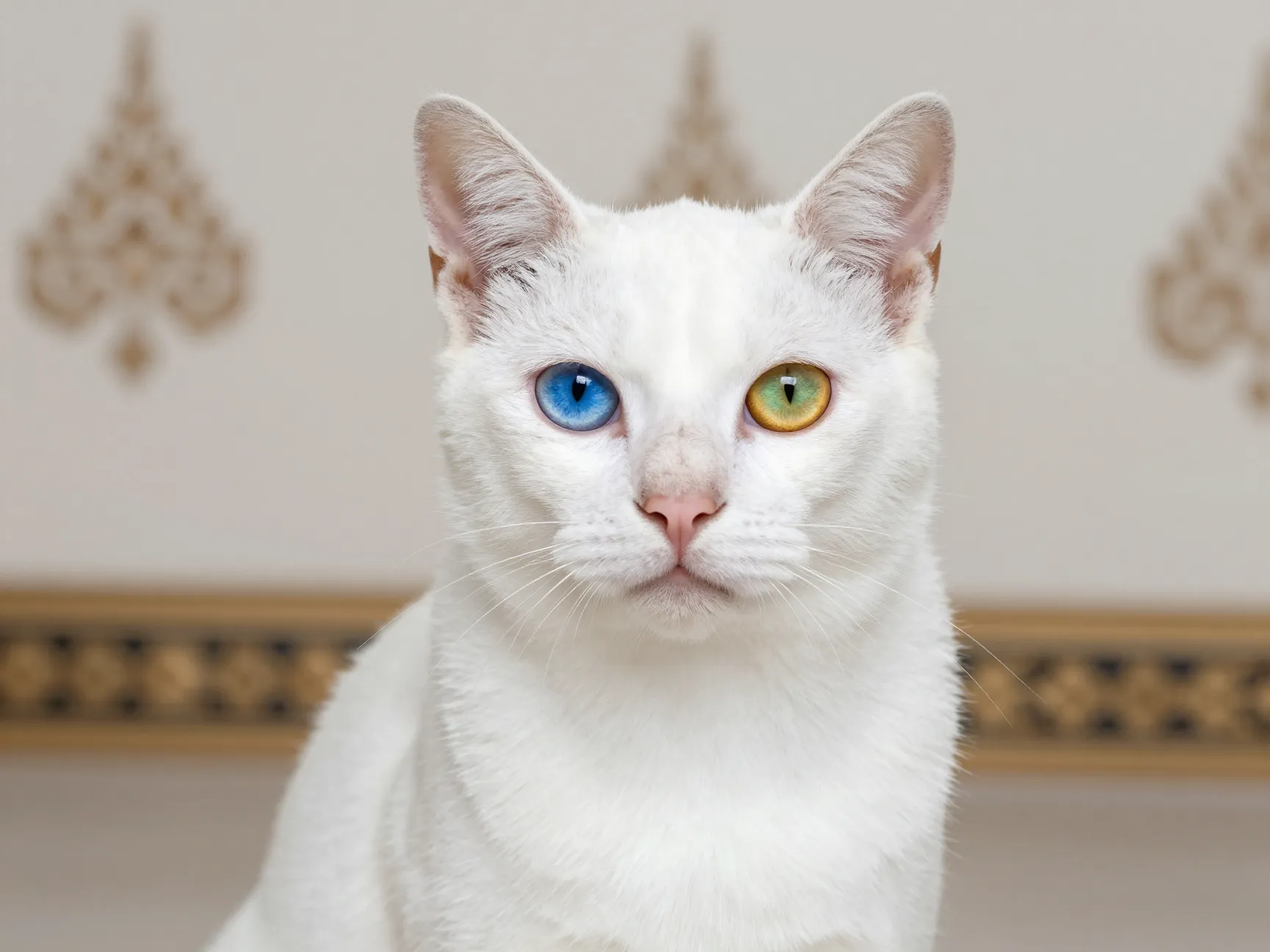
Khao Manee translates roughly to “white gem,” and the name fits. This all-white breed is best known for its odd-eyed trait, often pairing one blue eye with one gold or green eye, though some individuals have matching eye colors. Historically associated with Thai royalty and considered a symbol of good fortune, the Khao Manee only began appearing in Western catteries in meaningful numbers within the last few decades.
The CFA lists it among its least frequently registered breeds, and global population estimates remain small. Owners describe the Khao Manee as vocal, energetic, and deeply bonded to its household, often greeting family members at the door.
4. Toyger: The Miniature Tiger
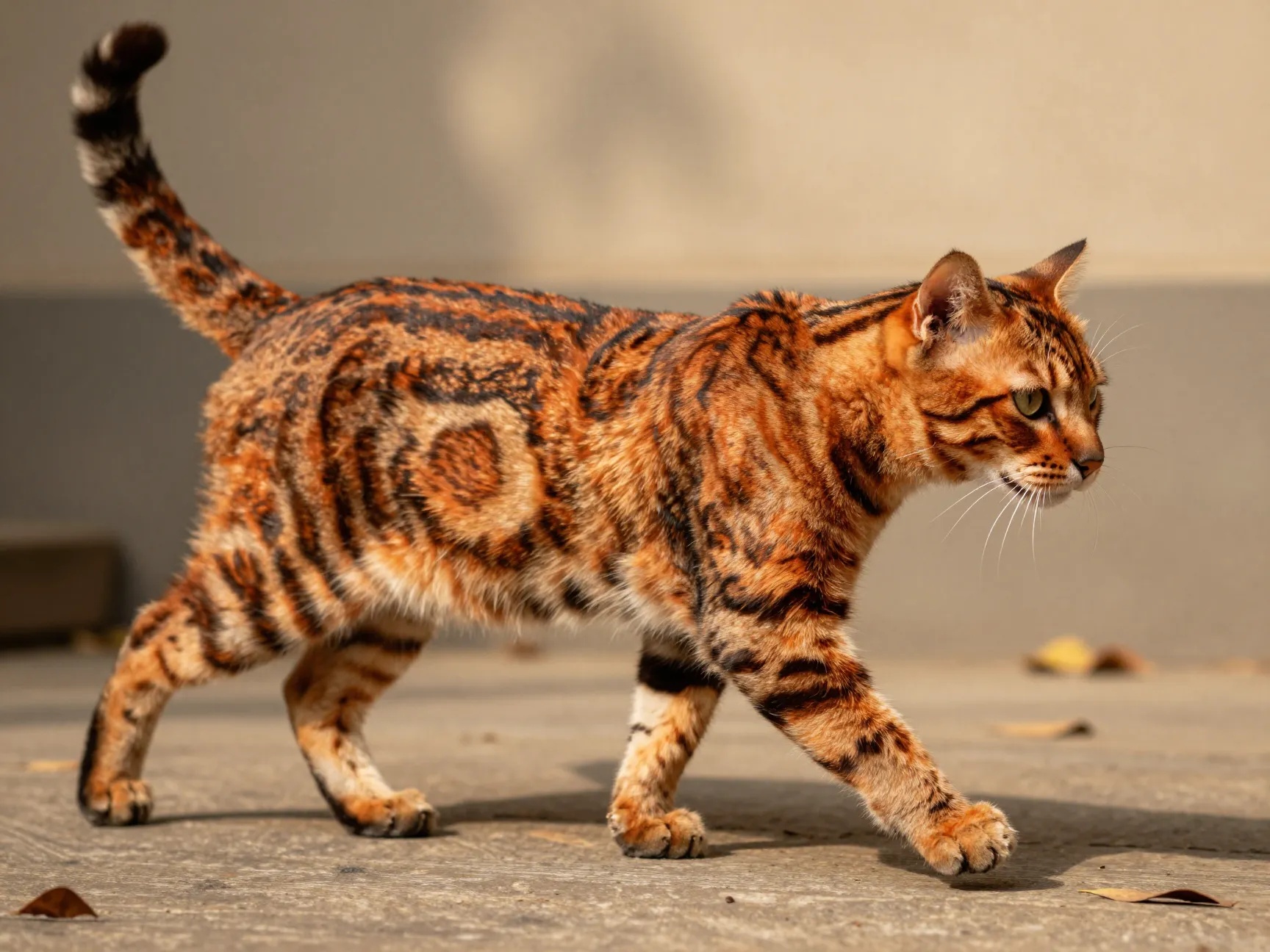
The Toyger was deliberately bred to resemble a miniature tiger, with bold, flowing stripes and a muscular, athletic build. Unlike some rare breeds that emerged from spontaneous mutations, the Toyger is the product of a carefully planned breeding program designed to combine striking wild-cat aesthetics with a fully domestic temperament.
Toygers tend to be confident, playful, and highly trainable, often enjoying leash walks and puzzle toys. Because the breeding program remains relatively young and selective, Toygers are still uncommon outside dedicated cat shows and specialty breeders.
5. Chausie: The Wildcat Descendant
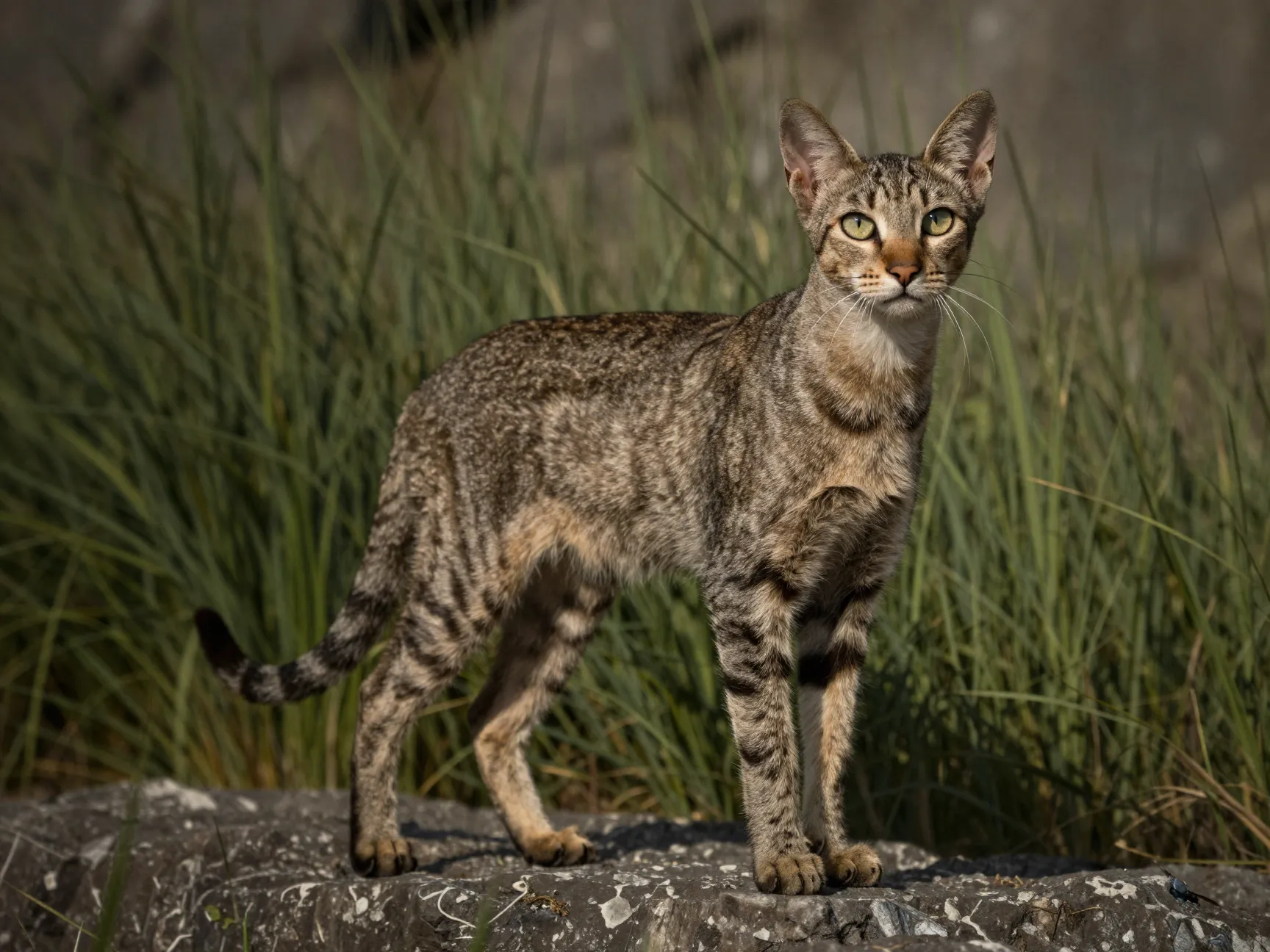
The Chausie descends from crosses involving the jungle cat (Felis chaus), giving it a lean, long-legged build and an unmistakable wild presence. Despite the exotic ancestry, later generations of Chausie cats are fully domesticated and registered as a distinct breed by TICA.
These cats are athletic, intelligent, and require substantial mental stimulation, a bored Chausie can become mischievous. Their hybrid origins and the careful multi-generation breeding required to stabilize temperament keep population numbers low and prices relatively high compared with mainstream breeds.
6. LaPerm: The Accidental Curl
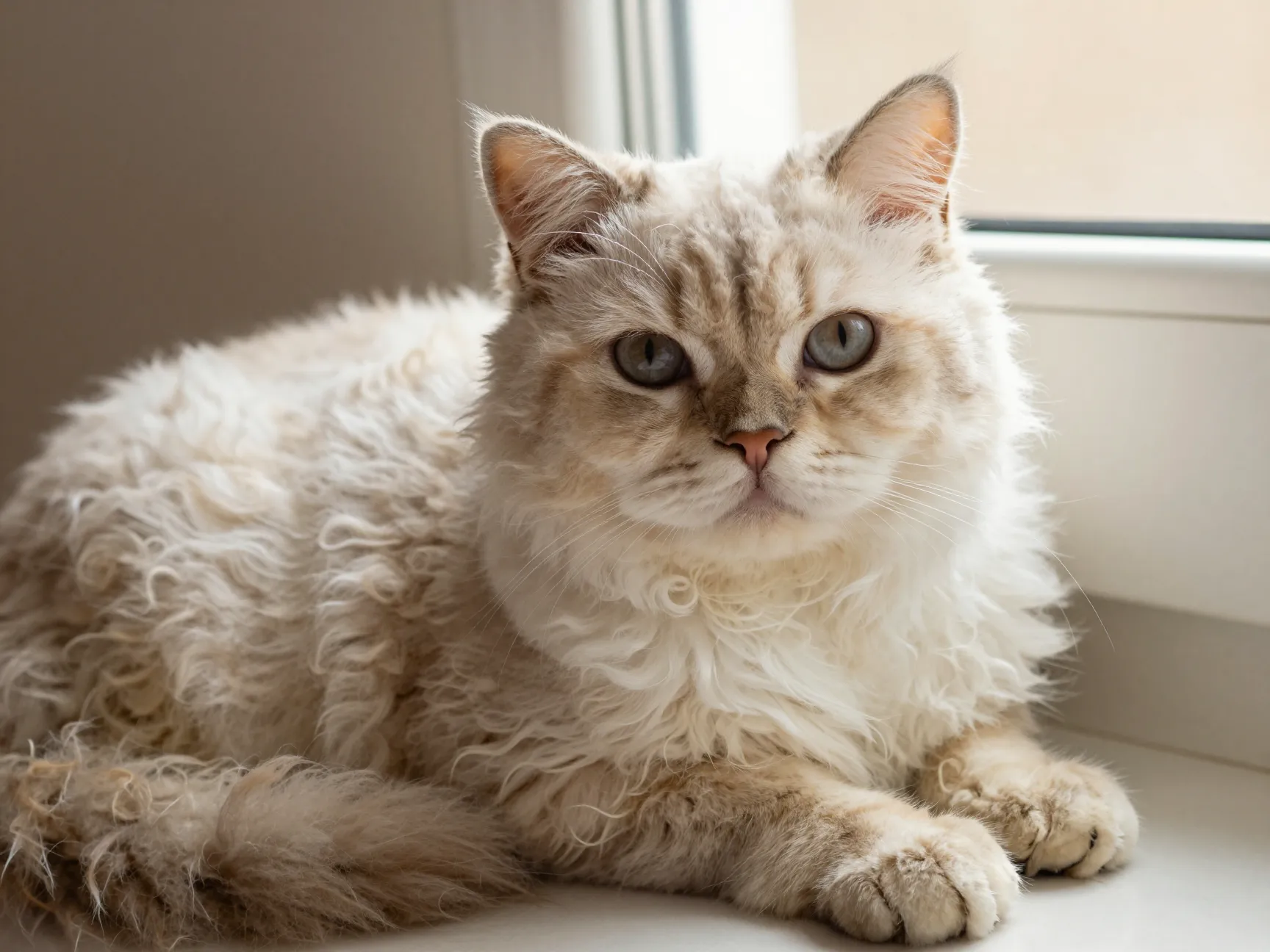
The LaPerm’s curly coat, much like the Selkirk Rex’s, arose from a spontaneous mutation, this time on an Oregon farm in the 1980s. Unlike many rare breeds bred for a specific look, the LaPerm developed almost by accident, and its population has grown slowly ever since.
The CFA explicitly names the LaPerm among its rare and unusual pedigreed cats. LaPerms are known for being unusually gentle and affectionate, often described as “Velcro cats” for how closely they stick to their owners. Their loose curls also make them a lower-shedding option, appealing to allergy-conscious households.
The table below summarizes how these six breeds compare at a glance.
| Breed | Signature Trait | Temperament | Coat Care |
|---|---|---|---|
| Lykoi | Sparse werewolf-like coat | Social, dog-like, attentive | Warmth needed, occasional skin care |
| Selkirk Rex | Plush curly coat | Calm, patient, tolerant | Gentle, minimal brushing |
| Khao Manee | Odd-colored eyes, pure white coat | Vocal, energetic, bonded | Low maintenance |
| Toyger | Tiger-like stripes | Confident, playful, trainable | Weekly brushing |
| Chausie | Wildcat ancestry, lean build | Athletic, intelligent, active | Low shedding |
| LaPerm | Loose natural curls | Gentle, affectionate, low-shed | Minimal brushing |
Beyond the List: Even Rarer Cat Breeds You’ve Probably Never Seen
The six breeds above are only the beginning. Several other pedigrees push the definition of “rare” even further, and they help illustrate just how wide the spectrum runs within the world of 6 Rare Cat Breeds You’ve Probably Never Seen (But Will Instantly Love).
The Kanaani remains the extreme case. With only three registered cats, named Haifa, Arbuz, and Laila, all housed at a single cattery, it holds formal recognition as the world’s rarest officially registered cat breed as of the March 2026 certification. The breed was recognized by the World Cat Federation in 2008, yet more than a decade and a half later, TICA still tracks it only in its Foundation Registry rather than granting full breed status, underscoring how slowly some rare breeds move toward mainstream recognition.
The Sokoke, originating in Kenya’s Arabuko-Sokoke Forest, is another breed most enthusiasts will only ever see in photographs. Its tabby-like coat and lean, athletic frame reflect genuine wild-forest ancestry, and its global population remains tiny. The Korat, a naturally occurring breed from Thailand long associated with good luck, and the Turkish Van, prized for its water-loving nature and plush coat, round out a group of breeds that combine cultural history with genuinely small numbers.
Conservation efforts are actively working to protect some of these bloodlines. In Türkiye, the Van Cat Research and Application Center reported 120 Van cat kittens born in 2025, a 16 percent increase over the previous year, with plans to keep expanding the program through 2026. This is a rare, odd-eyed, white-coated breed whose survival depends heavily on dedicated institutional breeding rather than casual private ownership.
Other ultra-rare pedigrees, like the Tennessee Rex with its distinctive coat mutation and extremely small worldwide population, or the Serengeti, whose global numbers sit only in the low thousands, show that rarity exists on a spectrum. Some breeds are simply new and still growing; others are being deliberately preserved against the threat of disappearing altogether.
Caring for a Rare Cat Breed: What Owners Should Know
Bringing home one of these uncommon cats is different from adopting a common shorthair from a local shelter. A few practical realities apply across nearly every rare breed.
First, expect to work directly with a specialty cattery rather than a general pet store. Because breeding populations are small, waiting lists are common, and prospective owners often need to apply, provide references, or agree to specific care commitments before being approved.
Second, budget for higher upfront costs. Limited breeding populations mean supply rarely matches demand, and responsible breeders invest heavily in health testing, genetic screening, and proper socialization before kittens are ever placed in homes.
Third, learn the specific care profile of the breed in question. Practical data from breed guides makes this concrete: the Cornish Rex, for example, typically weighs between 5 and 10 pounds with a lifespan of 10 to 15 years, while the Kurilian Bobtail runs larger at 8 to 15 pounds and often lives 15 to 20 years. These numbers matter because they influence everything from feeding portions to expected veterinary care over the cat’s lifetime.
Finally, understand that “rare” does not mean “fragile” or “high maintenance” across the board. Many of these breeds, including the LaPerm and Khao Manee, are described by owners and breed clubs as easygoing, adaptable companions. Rarity reflects population numbers and breeding history, not necessarily difficulty of care.
Frequently Asked Questions About Rare Cat Breeds You’ve Probably Never Seen
What officially makes a cat breed “rare”?
A breed is considered rare when it has low registration numbers with major cat associations such as the CFA, TICA, or WCF, compared with common breeds. It is a statistical measure tied to breeding population size, not simply an unusual appearance.
Which cat breed is currently considered the rarest in the world?
As of the March 2026 world-record certification, the Kanaani holds the title of the world’s rarest officially registered cat breed, with only three pedigree-registered individuals known to exist.
Are rare cat breeds harder to take care of than common breeds?
Not necessarily. Care requirements depend on the specific breed’s coat type, activity level, and health profile rather than its rarity. Some rare breeds, like the LaPerm, are considered especially easygoing and low maintenance.
Where can someone find one of these six rare cat breeds?
Specialty catteries registered with organizations like the CFA or TICA are the most reliable source. Because population numbers are small, expect waiting lists, application processes, and higher costs than adopting a common breed.
Is the Egyptian Mau one of the six breeds featured in this list?
No, but it is a useful reference point for understanding rarity. With fewer than 7,000 cats registered with the CFA, the Egyptian Mau illustrates how registry numbers define rarity even for breeds that are somewhat more familiar than the six profiled here.
Conclusion
The world of pedigreed cats extends far beyond the familiar breeds seen in commercials and social media feeds. From the werewolf-like Lykoi to the tiger-striped Toyger, this look at 6 Rare Cat Breeds You’ve Probably Never Seen (But Will Instantly Love) shows that scarcity and charm often go hand in hand. Registration data from organizations like the CFA and WCF confirms what breed enthusiasts have long suspected: some of the most captivating cats on the planet remain genuinely hard to find, whether due to recent genetic mutations, deliberate small-scale breeding programs, or active conservation work like Türkiye’s Van Cat initiative.
Anyone drawn to these breeds should start by researching reputable, association-registered catteries rather than pursuing quick online listings. Reach out to breed-specific clubs, ask about health testing and lineage documentation, and be prepared for a waiting period that reflects just how limited these populations truly are. Whether the goal is simply admiring these cats from afar or eventually welcoming one into a home, understanding the real numbers behind their rarity makes the appreciation that much deeper.