
8 Must-Watch German Shepherd Dogs Training Videos for Obedience
German Shepherds rank as the second most popular dog breed in the United States — yet they also appear disproportionately in bite statistics and shelter surrender records, almost always due to a single cause: inadequate training. The good news? High-quality obedience instruction has never been more accessible. The 8 must-watch German Shepherd dogs training videos for obedience listed in this guide cut through the noise of thousands of mediocre uploads and deliver real, proven techniques from professional trainers.
Whether you own a bouncy 8-week-old pup or a reactive 3-year-old adult, these videos cover every stage of the journey. I’ve analyzed each one for training methodology, handler clarity, and real-world applicability so you can spend less time scrolling and more time training.
Key Takeaways 🐾
- Start early — obedience training as young as 8 weeks produces dramatically better adult behavior outcomes.
- Consistency beats intensity — short, frequent sessions outperform long, sporadic ones every time.
- Video learning works — watching professional handlers model correct technique helps owners avoid the most common mistakes.
- Reactivity and high energy are manageable — with the right video guidance, even challenging behavioral issues can be corrected systematically.
- Socialization is a training skill — it must be actively taught, not just passively hoped for.
Why Video-Based Training Works for German Shepherd Owners
German Shepherds are a working breed. They were developed to herd, guard, and problem-solve — which means they need mental engagement just as much as physical exercise. Without it, they create their own “jobs,” and those jobs usually involve chewing furniture, barking at strangers, or bolting through open doors.
Video-based training gives owners something a written guide simply cannot: visual modeling. You can read about a proper sit-stay a hundred times, but watching a skilled handler execute it cleanly with a real dog — and seeing the dog respond — rewires your own instincts as a handler.
💬 “The most common mistake new German Shepherd owners make isn’t being too strict or too lenient — it’s being inconsistent. Video training helps because you can pause, rewind, and practice the exact same technique your trainer is using.”
The 8 must-watch German Shepherd dogs training videos for obedience featured below were selected based on three criteria:
| Criteria | What We Looked For |
|---|---|
| Trainer Credibility | Professional background, clear methodology |
| Dog Relevance | German Shepherd-specific content or direct application |
| Practical Value | Techniques owners can replicate at home |
The 8 Must-Watch German Shepherd Dogs Training Videos for Obedience
1. High-Drive Puppy Board & Train Program — Gemini K9 Obedience
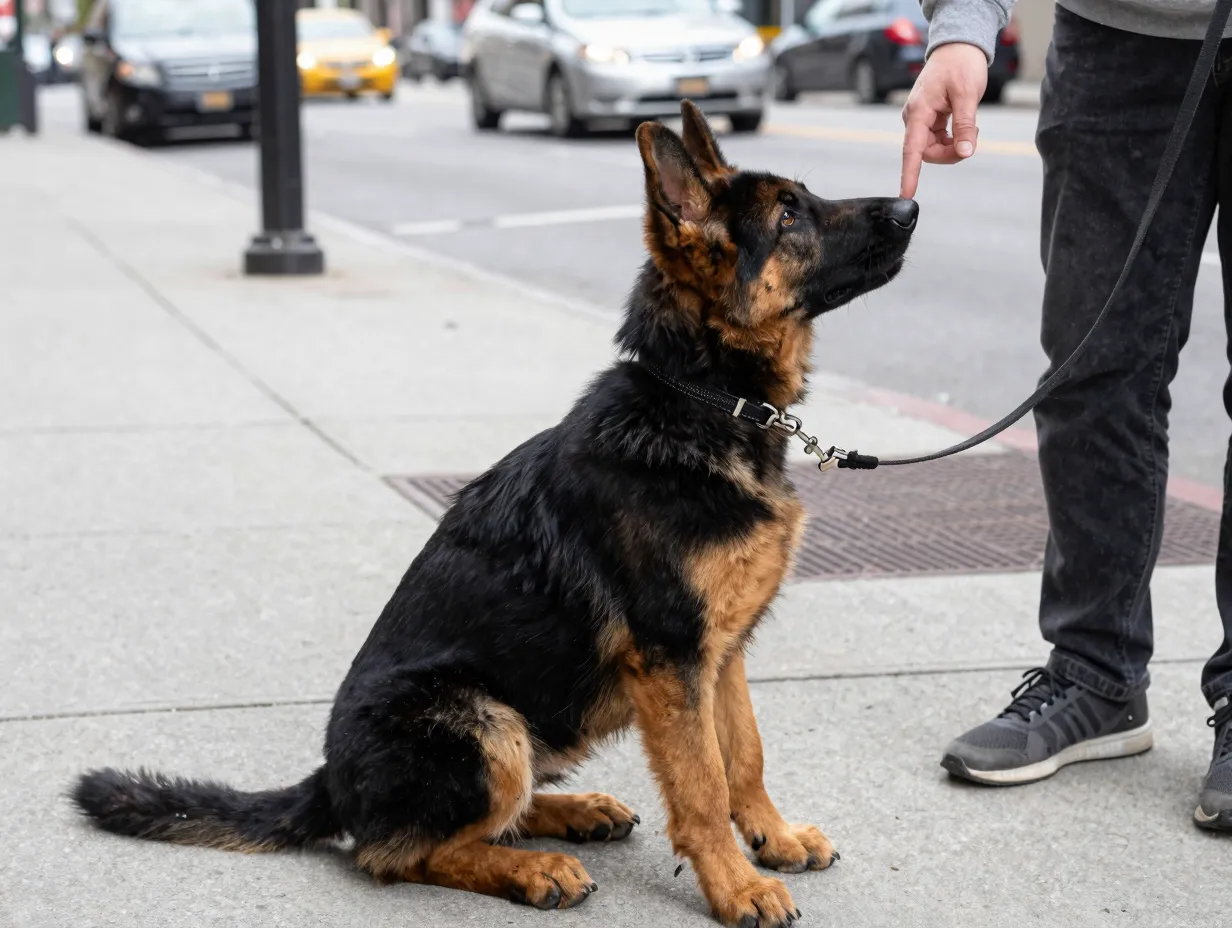
Best for: Owners of young, high-energy German Shepherd puppies (3–6 months)
This video from Gemini K9 Obedience Inc. is one of the most thorough demonstrations of early-stage obedience training available online [1]. The subject is a 5½-month-old German Shepherd going through a board-and-train program, and the footage covers real training sessions — not highlight reels.
What you’ll learn:
- How to establish leash limits without frustration
- Proper sit-stay and down-stay duration building
- The “come” command in multiple real-world environments
- How to transition skills from a controlled setting to distracting outdoor spaces
What makes this video stand out is the multi-environment approach. The trainer doesn’t just work in a quiet backyard — the dog is shown performing commands near traffic, other dogs, and unfamiliar people. This mirrors the real challenges German Shepherd owners face daily.
⚡ Pro Tip: Watch this video with your leash in hand. Mirroring the handler’s body language while you watch accelerates your own muscle memory.
2. Advanced Obedience & Agility Training — Kraftwork K9 Pro
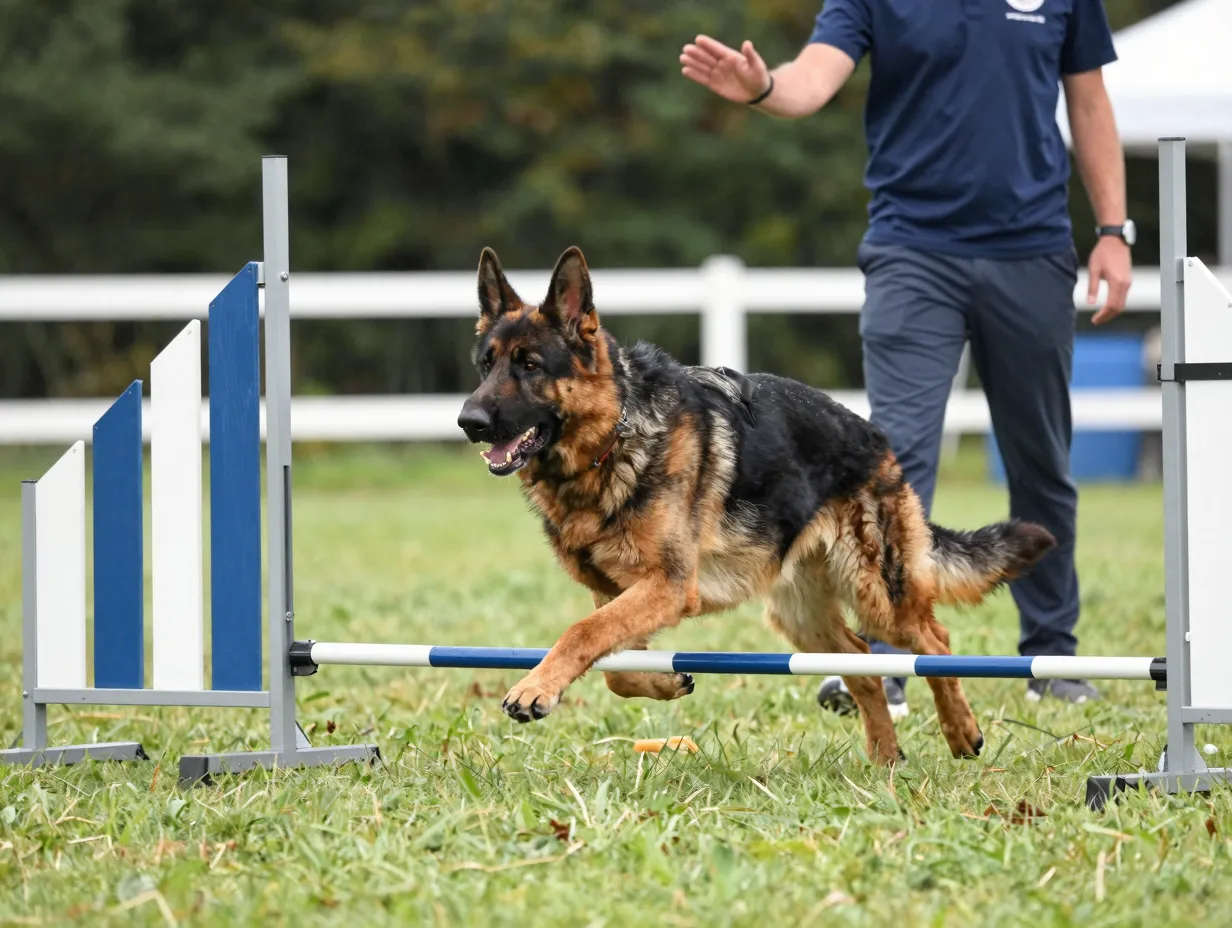
Best for: Owners ready to take their German Shepherd beyond basic commands
Kraftwork K9 Pro’s advanced training video is a masterclass in what a well-trained German Shepherd actually looks like in motion [2]. This isn’t beginner content — it’s a showcase of precision obedience combined with agility work, and it sets a powerful visual benchmark for what’s possible.
Skills demonstrated include:
- Off-leash heel work at various speeds
- Agility obstacle navigation with voice commands only
- Distance control and recall under distraction
- Handler-dog synchronization that looks almost effortless
Kraftwork K9 Pro also offers trained puppies and fully trained adult German Shepherds through their professional program, making this video doubly useful — both as a training guide and as a quality benchmark if you’re considering purchasing a pre-trained dog.
💬 “Seeing what ‘finished’ looks like is one of the most motivating things you can do as a dog owner. It transforms training from a chore into a goal.”
3. Basic Obedience — Teaching the Sit Command to an 8-Week-Old Puppy
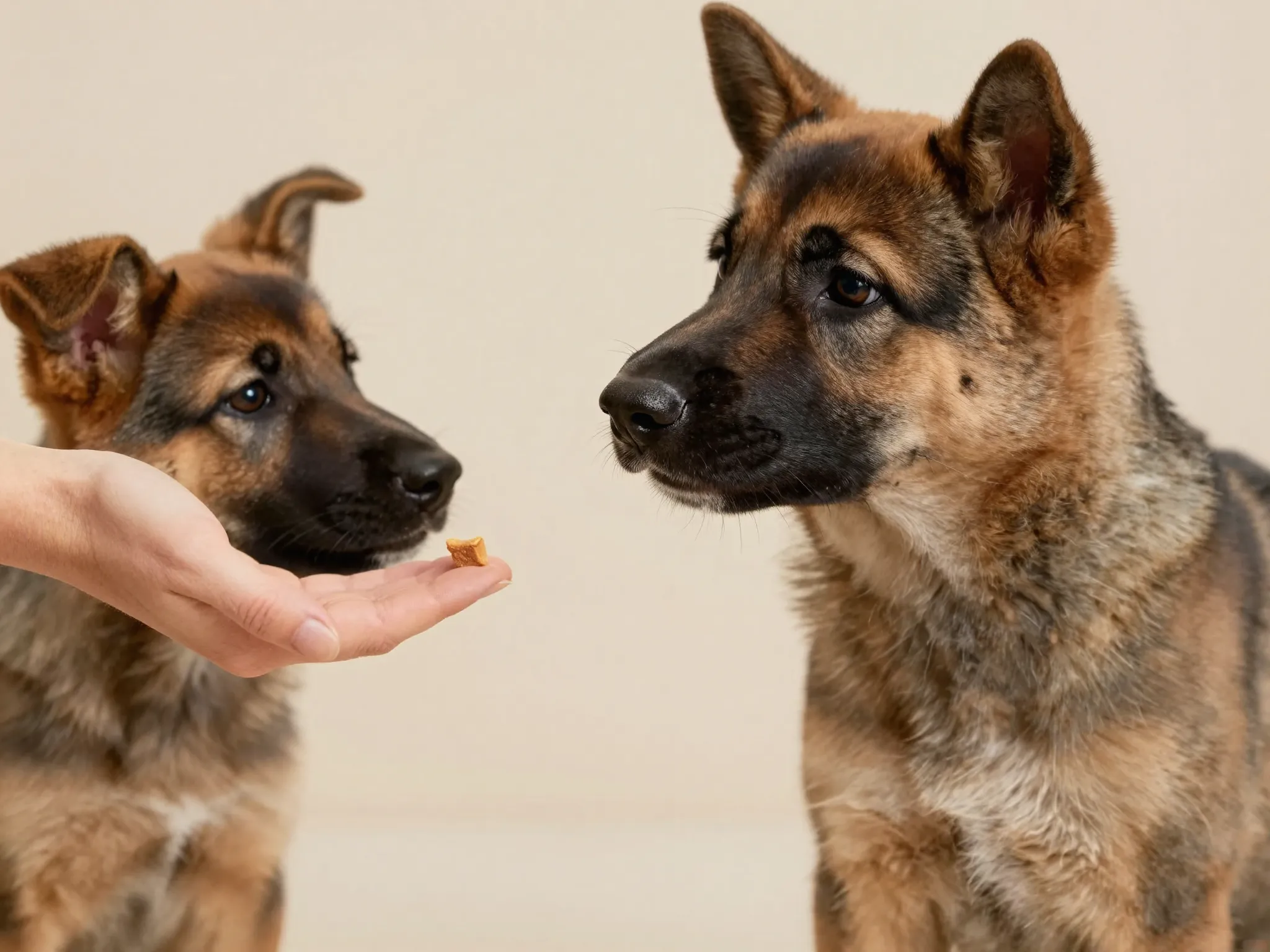
Best for: Brand-new puppy owners, first-time German Shepherd handlers
Many owners wait until their puppy is 4–6 months old before starting formal training. This video from Kraftwork K9 Pro proves that’s too long to wait [3]. An 8-week-old German Shepherd puppy is shown learning the sit command using positive reinforcement, and the results are immediate and clear.
Key lessons from this video:
- Puppies can learn formal commands from day one — their brains are already wired for it.
- Short sessions (2–3 minutes) are more effective than long ones at this age.
- Lure-and-reward technique works faster than pressure-based methods for young dogs.
- Timing of the reward is everything — even a half-second delay changes what the puppy thinks it’s being rewarded for.
This is the video I’d recommend sending to every new German Shepherd puppy owner before they even bring their dog home. Starting right means you spend far less time correcting problems later.
4. Reactivity Correction — Fixing Problem Behavior in German Shepherds
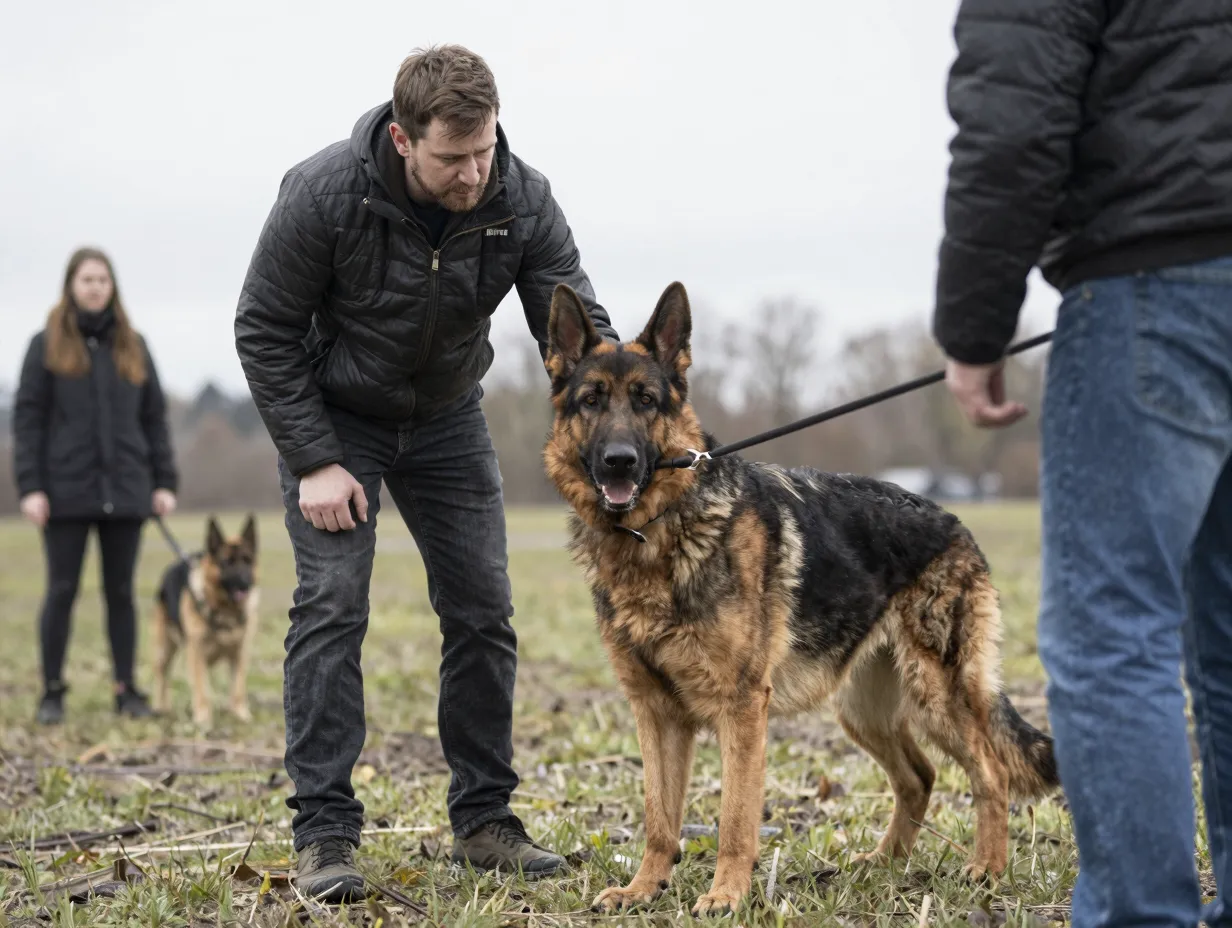
Best for: Owners dealing with barking, lunging, or aggressive responses on leash
Reactivity is one of the most common — and most misunderstood — behavioral issues in German Shepherds. This training video tackles it directly, and its core insight is one that changes how most owners think about the problem [4].
The central lesson: A reactive German Shepherd isn’t a “bad dog.” It’s a dog whose handler hasn’t yet established the communication and trust needed to override its instincts. The video demonstrates how handler behavior directly shapes dog behavior — often in ways owners don’t realize.
Techniques covered:
- Reading early warning signs before a reactive episode escalates
- Threshold management — keeping the dog below its reaction point
- Counter-conditioning with controlled exposure
- Building a reliable “look at me” command as an interrupt
⚠️ Important: If your German Shepherd shows reactivity toward people (not just other dogs), consider working with a certified professional trainer alongside video-based learning. Reactivity toward humans carries different risks and requires careful management.
5. Foundational Puppy Training — Gates, Doors, and Impulse Control
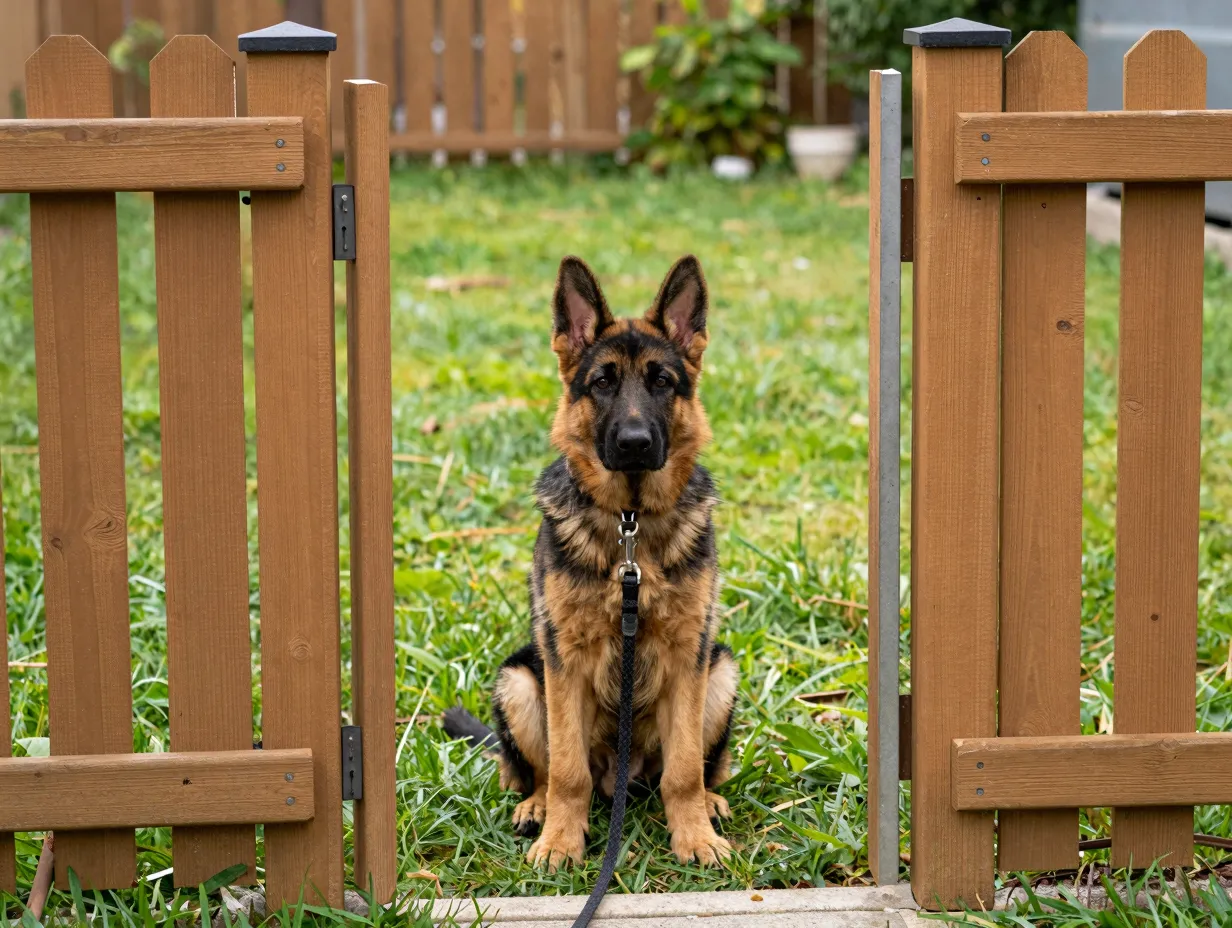
Best for: Puppy owners who want strong adult-dog manners
Published in March 2026, this video from Germanshepherdman.com makes a compelling case for one specific training priority: impulse control at thresholds [5]. The video explains how teaching a puppy to wait at gates and doors — rather than bolting through — creates a foundation for virtually every other obedience skill.
Why threshold training matters:
- It teaches the dog that your permission governs its movement
- It prevents dangerous door-bolting behavior that can lead to accidents
- It builds the mental discipline required for stays, recalls, and off-leash work
- It establishes you as the decision-maker in the relationship
The trainer demonstrates this with puppies at various ages, showing how early training translates directly into reliable adult behavior. The contrast between trained and untrained dogs at a gate is striking — and motivating.
Simple threshold training steps shown in the video:
- Approach the gate or door with your dog on leash.
- Ask for a sit or stand-stay before opening.
- Open the door/gate slowly — if the dog moves, close it and reset.
- Release with a clear word (“okay” or “free”) before allowing passage.
- Repeat until the dog waits automatically without the sit cue.
6. Socialization Training — German Shepherd Puppies with Older Dogs
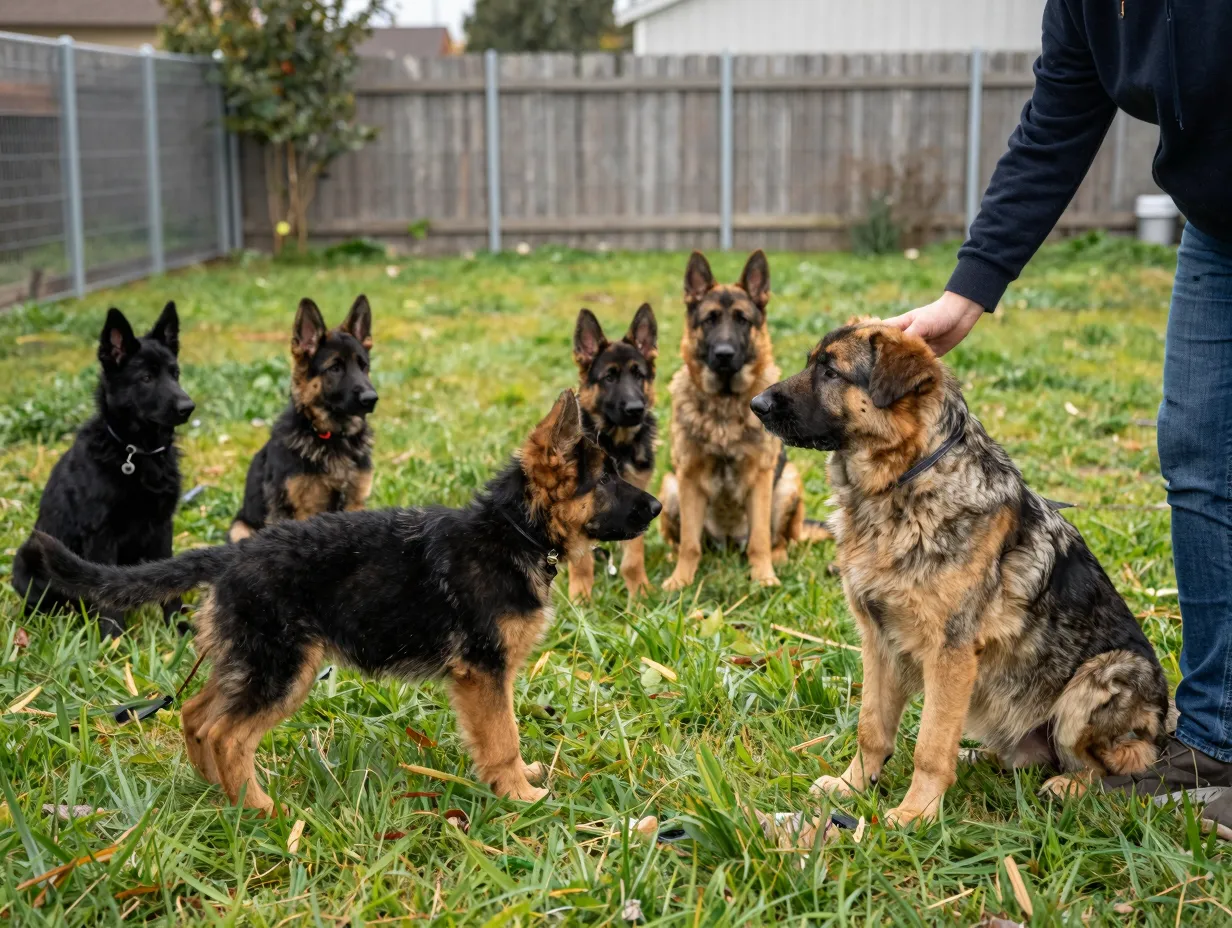
Best for: Puppy owners concerned about dog-to-dog social skills
The Online Dog Trainer’s socialization video series addresses a gap that most basic obedience guides skip entirely: how to teach a German Shepherd puppy to interact appropriately with other dogs [6]. This isn’t just about being “friendly” — it’s about teaching appropriate greeting behavior, reading canine body language, and preventing the fear or aggression that develops when socialization is neglected.
What this video series shows:
- German Shepherd puppies meeting larger, older dogs in controlled settings
- How trainers manage the interaction to prevent negative experiences
- The difference between healthy play and escalating tension
- How to use these interactions to build confidence, not fear
| Socialization Stage | Age Range | Key Focus |
|---|---|---|
| Primary | 3–5 weeks | Littermate interaction |
| Critical | 6–12 weeks | New people, surfaces, sounds |
| Secondary | 3–6 months | Other dogs, environments |
| Ongoing | 6 months+ | Maintenance and reinforcement |
💬 “A German Shepherd that wasn’t properly socialized as a puppy can still be helped — but it takes significantly more time and patience than getting it right from the start.”
7. High-Energy Dog Training — Competitive Play for Driven German Shepherds
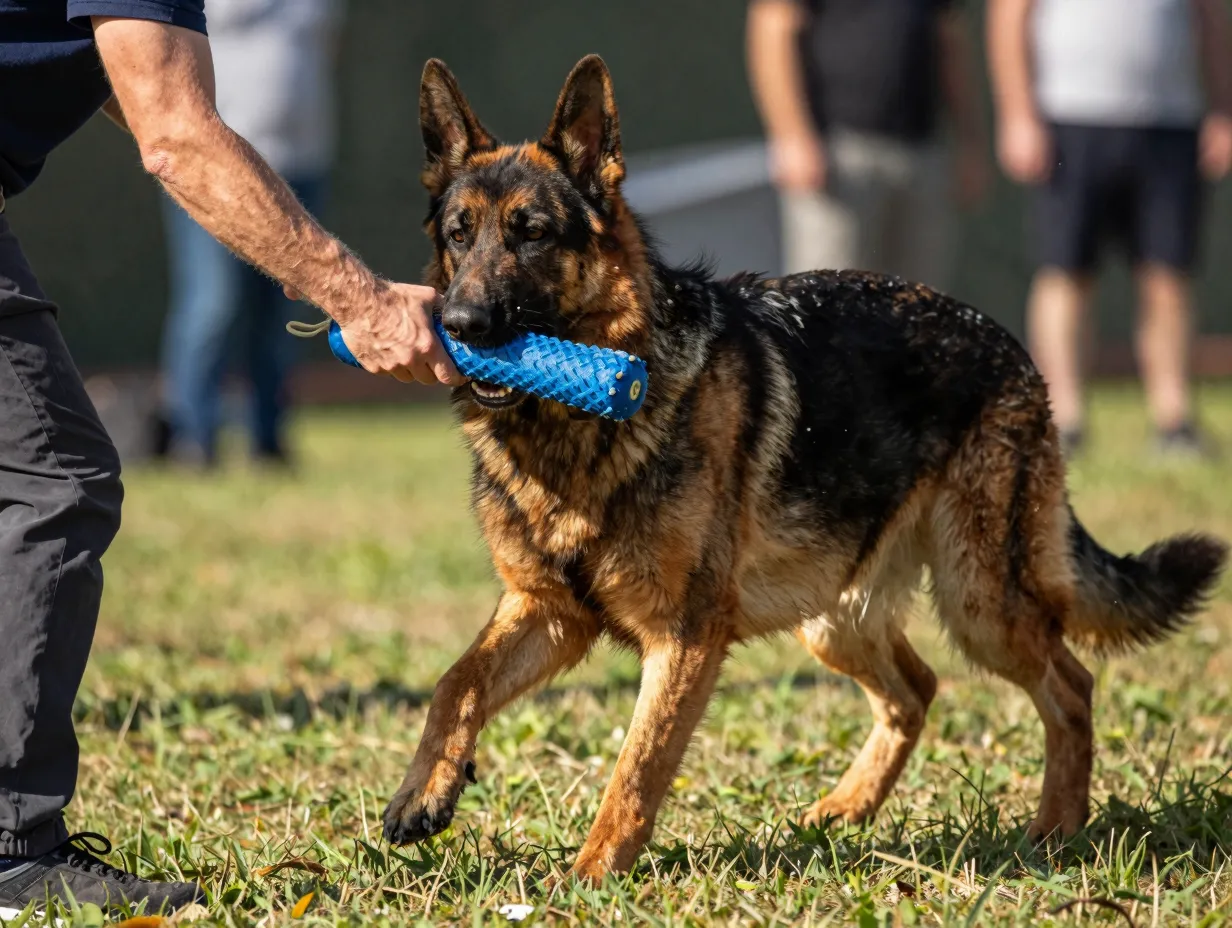
Best for: Owners of extremely high-drive, high-energy German Shepherds
Some German Shepherds are genuinely difficult to train using conventional methods — not because they’re stubborn, but because their drive level is so high that standard treat rewards barely register. Pakmasters’ video on competitive play training was made specifically for these dogs [7].
The core concept: Instead of fighting a high-drive dog’s energy, this method channels it. Play becomes the reward. Tug toys, chase games, and structured prey drive engagement are used to motivate obedience behaviors that the dog then performs with enthusiasm rather than reluctant compliance.
Skills demonstrated:
- Building a reliable “out” (release) command through play
- Using structured tug sessions as reward for obedience commands
- Managing arousal levels so the dog can focus
- Transitioning from play-reward to real-world obedience scenarios
This approach is particularly effective for German Shepherds with working dog or sport dog lineage, where food motivation may be lower than drive motivation. If your GSD seems bored by treats but goes wild for a ball or tug toy, this video is essential viewing.
⚡ Pro Tip: Keep play sessions short and end them while the dog still wants more. This keeps drive high for the next training session.
8. German Shepherd Training Playlist — Comprehensive Obedience Library
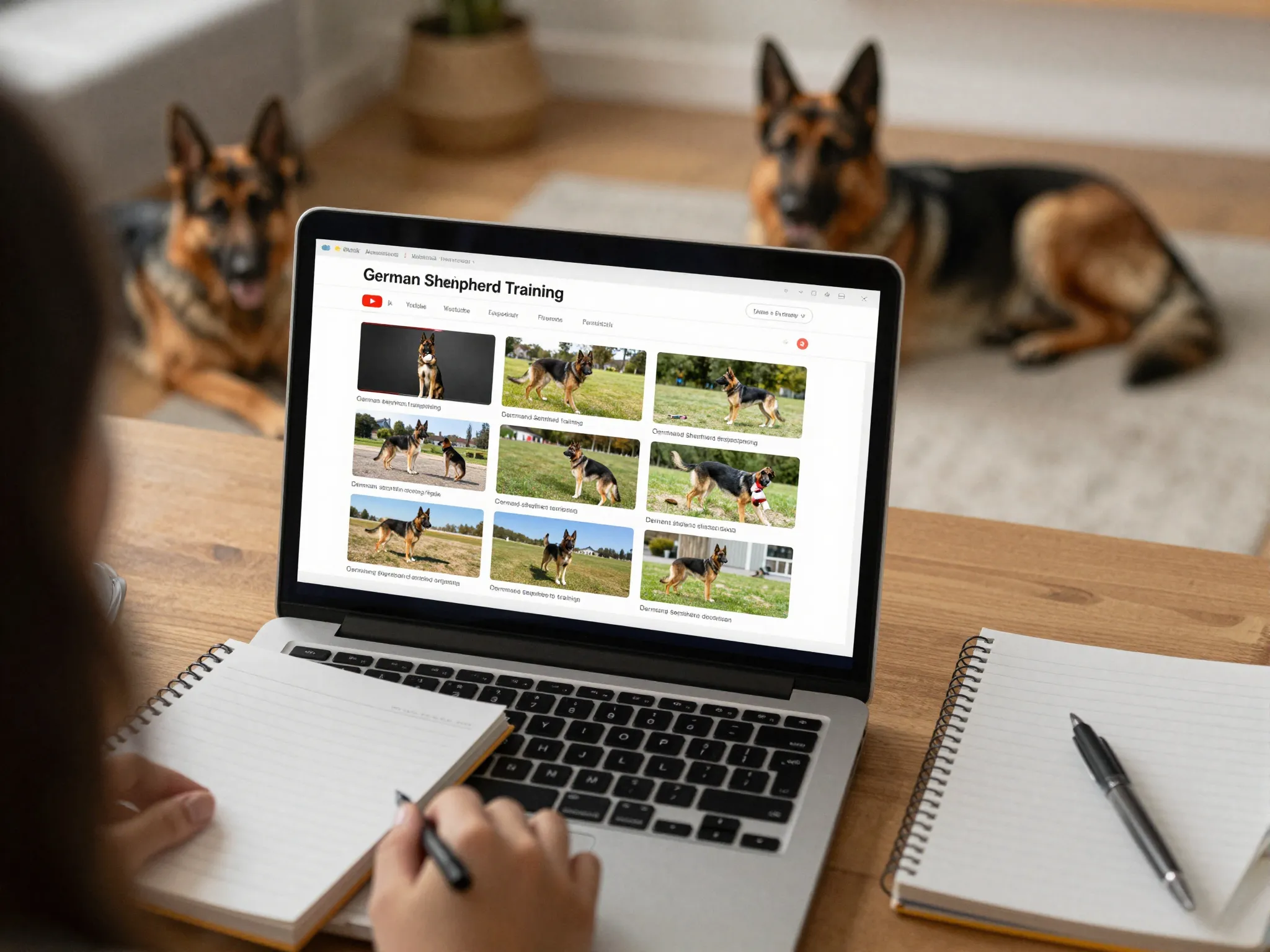
Best for: Owners who want a structured, progressive training curriculum
Rather than a single video, this curated YouTube playlist functions as a complete German Shepherd obedience training library [8]. It includes content on:
- Leash pulling correction techniques
- Aggressive dog training protocols
- Progressive obedience skill building
- Real-world distraction training
Why a playlist matters: Single videos teach single skills. A well-organized playlist gives you a training roadmap — a sequence you can follow week by week as your German Shepherd progresses. This is especially valuable for owners who feel overwhelmed by the volume of training content available and don’t know where to start.
Suggested playlist usage schedule:
| Week | Focus Area | Sessions Per Day |
|---|---|---|
| 1–2 | Basic commands (sit, down, stay) | 3 × 5 minutes |
| 3–4 | Leash manners and loose-leash walking | 2 × 10 minutes |
| 5–6 | Recall and distance commands | 2 × 10 minutes |
| 7–8 | Distraction proofing | 1 × 15 minutes |
| 9+ | Advanced skills and maintenance | Daily practice |
How to Get the Most Out of These Training Videos
Watching is only step one. Here’s how to turn video learning into real results with your German Shepherd:
Before you watch:
- Have your training treats or tug toy ready.
- Choose a time when your dog is calm but not exhausted.
- Review what you worked on in your last session.
While you watch:
- Take notes on specific techniques or timing cues.
- Pause and practice short segments rather than watching a full video in one sitting.
- Pay attention to the trainer’s body language, not just their verbal commands.
After you watch:
- Practice the specific skill within 30 minutes of watching.
- Keep your first session short — 3 to 5 minutes maximum.
- End every session on a success, even if it’s a simple one.
💬 “The gap between watching a training video and actually training your dog is where most owners get stuck. Schedule your practice session before you press play — that commitment makes all the difference.”
Common German Shepherd Training Mistakes to Avoid
Even with the best video resources, certain habits undermine progress. Watch for these:
❌ Repeating commands — Saying “sit, sit, sit” teaches your dog that the first command is optional. Say it once, then guide the behavior.
❌ Training when frustrated — Dogs read emotional states with remarkable accuracy. A frustrated handler produces an anxious dog.
❌ Skipping socialization — Obedience without socialization creates a dog that responds to commands at home but falls apart in public.
❌ Inconsistent rules — If jumping on the couch is sometimes okay and sometimes not, your German Shepherd cannot learn the actual rule.
❌ Stopping too soon — German Shepherds need ongoing mental engagement throughout their lives. Training isn’t a phase — it’s a lifestyle.
Conclusion: Your Next Steps Toward an Obedient German Shepherd
The 8 must-watch German Shepherd dogs training videos for obedience featured in this guide represent a complete toolkit — from the first sit command at 8 weeks to advanced agility work and reactivity correction in adult dogs. Each video was selected because it delivers real technique from real trainers, not vague advice or entertainment-first content.
Here’s your action plan starting today:
- Identify your dog’s current stage — puppy, adolescent, or adult — and start with the video most relevant to that stage.
- Bookmark the full playlist [8] as your long-term training curriculum.
- Schedule daily training sessions of 5–15 minutes, depending on your dog’s age and attention span.
- Track progress — keep a simple training journal noting what you worked on and how your dog responded.
- Revisit videos when you hit a plateau. Watching the same technique with fresh eyes often reveals something you missed the first time.
A well-trained German Shepherd isn’t just easier to live with — it’s a genuinely happier animal. These dogs thrive when they have structure, purpose, and a handler they trust. The videos above give you everything you need to become that handler.
Start with one video today. Your German Shepherd is ready when you are. 🐕
References
[1] Watch – https://www.youtube.com/watch?v=LMqpuM6KyMM
[2] Watch – https://www.youtube.com/watch?v=GA6avMAIgG8
[3] Watch – https://www.youtube.com/watch?v=MfTCgwlx9ig
[4] Watch – https://www.youtube.com/watch?v=mmt10DhJS7E
[5] Watch – https://www.youtube.com/watch?v=gyupOu2-qyo
[6] Socialisation Video While Training German Shepherd Puppies – https://theonlinedogtrainer.com/socialisation-video-while-training-german-shepherd-puppies/
[7] Watch – https://www.youtube.com/watch?v=4fwrxXbpZpc
[8] Playlist – https://www.youtube.com/playlist?list=PLLuwNCisD0NjuCZqII_laZFm5av0MC9k4