Cute Frog Painting Projects For A Serene And Smiley Canvas
A single curved brushstroke can turn a plain green blob into a grinning frog that makes an entire room feel lighter. That small trick explains why frog motifs have quietly become one of the most requested subjects in beginner acrylic and watercolor classes over the past two years. Search interest in amphibian-themed art tutorials has climbed steadily since 2024, and art educators report that frog subjects now rank among the top five “easy animal” requests from students who want a cheerful, low-pressure painting session.
Disclosure: This post contains affiliate links. As an Amazon Associate, we earn from qualifying purchases, and at no extra cost to you.
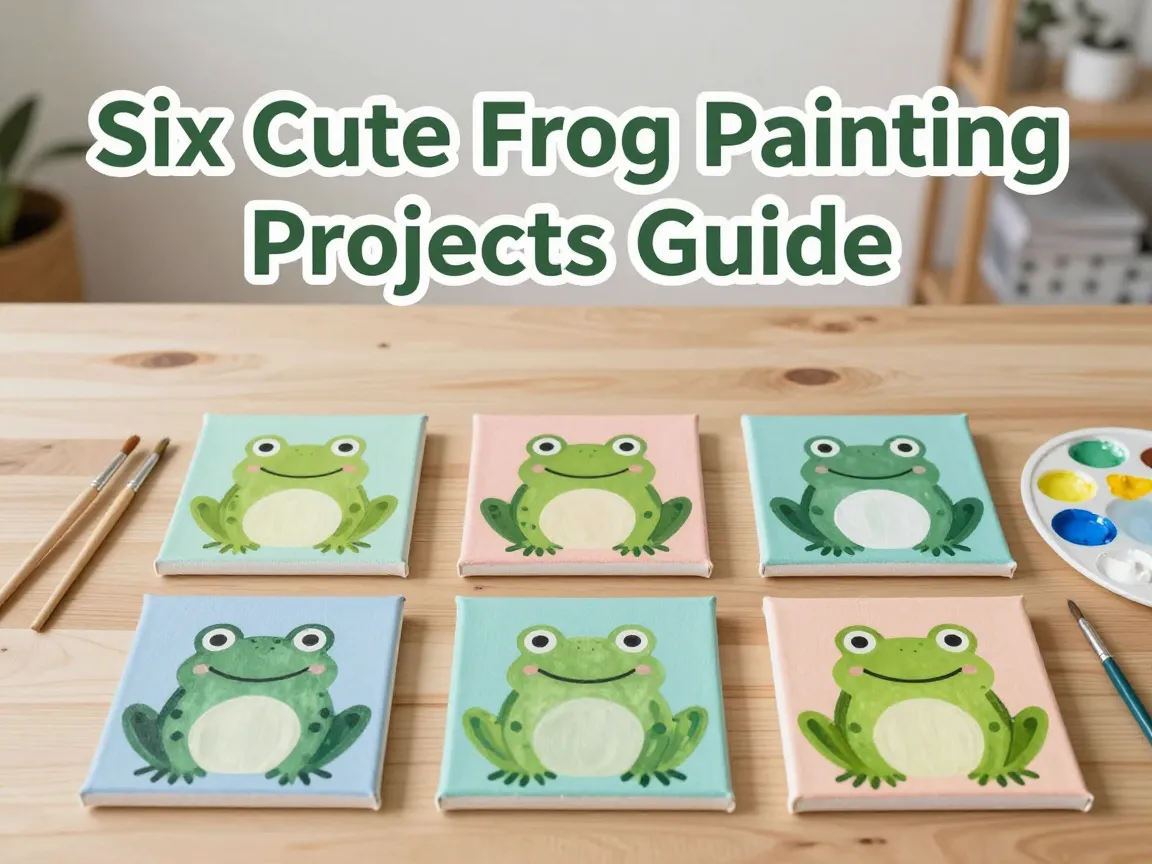
This guide collects 6 Cute Frog Painting Projects For A Serene And Smiley Canvas, each pulled from proven tutorials and adapted into a clear, beginner-friendly format. Whether the goal is a calming nursery piece, a quirky desk accent, or a first attempt at acrylic landscapes, these projects balance simplicity with genuine charm. No advanced art degree is required, just patience, a few basic supplies, and a willingness to let a frog’s smile come out a little wonky on the first try.
Key Takeaways
- 6 Cute Frog Painting Projects For A Serene And Smiley Canvas range from simple sky-and-grass scenes to detailed tree frogs on black canvas, suiting both total beginners and more confident painters.
- Acrylic paint is the most forgiving medium for smiley frog faces because mistakes can be painted over once dry, while watercolor projects work best for soft, whimsical sketchbook-style frogs.
- Big bright eyes, a simple curved smile, and layered green tones are the three features that make almost any frog painting look instantly cute.
- Basic supplies cost very little; most of these projects can be completed with six or fewer paint colors and a small canvas.
- A calm, uncluttered background, such as a plain sky or soft pond reflection, is what gives these frog paintings their signature serene feeling.
Why Frog Painting Projects Create Such Serene Canvas Scenes
Frogs occupy a strange sweet spot in art subjects. They are simple enough to paint in under an hour, yet expressive enough that a single change in eye shape can shift a painting from goofy to tranquil. Unlike portraits or detailed landscapes, a frog painting does not demand perfect anatomy. A rounded body, two bulging eyes, and a gentle smile are enough to read clearly as “frog” to any viewer, which removes a lot of the performance pressure that stops beginners from picking up a brush in the first place.
There is also a color psychology element at play. Most frog paintings lean on soft greens, pale blues, and muted earth tones, the same palette used in calming wellness branding and nursery decor. That overlap is not an accident. Green is widely associated with balance and renewal, while pastel blue skies signal openness and ease. When those colors surround a smiling character, the painting does double duty: it is cute enough to make people grin, and quiet enough to hang in a bedroom, office, or reading nook without feeling loud or distracting.
A frog painting rarely needs more than six colors and a steady hand to feel finished, warm, and genuinely happy.
Several current tutorials lean into this idea deliberately. One widely shared acrylic lesson builds a full scene with light blue sky, soft clouds, and mid-tone grass before the frog is even added, treating the background as the source of serenity and the frog as the source of charm. Another approach centers a single flower with a frog perched nearby, using reflections and light glimmers to create a gentle, nature-focused mood rather than a cartoonish one. Both strategies prove that “cute” and “calm” are not opposites in frog art. They are usually achieved together.
The 6 Cute Frog Painting Projects For A Serene And Smiley Canvas
Each of the following 6 Cute Frog Painting Projects For A Serene And Smiley Canvas uses a different technique, canvas size, or paint medium, so painters can choose based on skill level, available supplies, and how much time they want to spend. They are ordered from the most beginner-friendly concept to slightly more advanced studies, though none require professional training.
1. Sunny Sky Smiley Frog Acrylic Scene
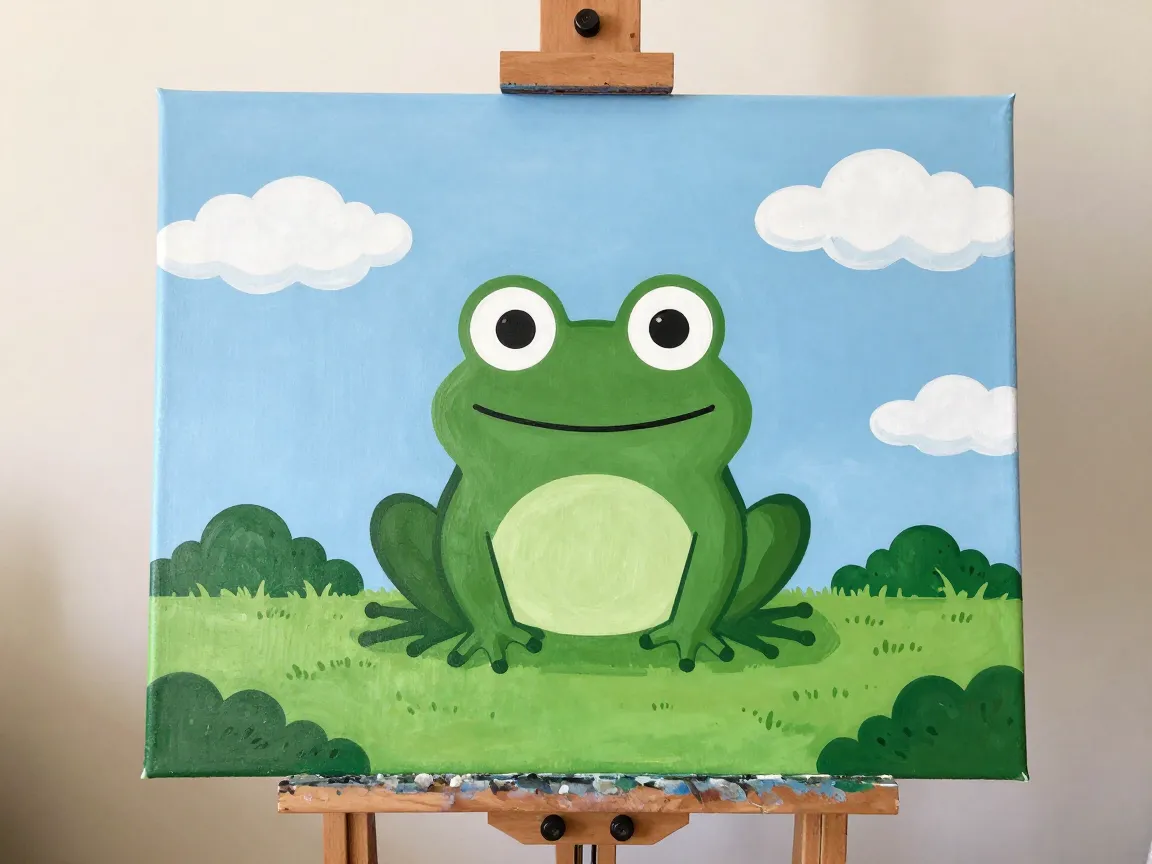
This project starts with the background, not the frog. Painters block in a light blue sky, dab in a few soft white clouds using a dry brush, then paint a strip of mid-tone green grass along the bottom third of the canvas. A few rounded bushes break up the grass line and give the scene some depth.
The frog itself is built in layers. A darker green base shape forms the body, followed by a slightly lighter green highlight down the center to suggest rounded form. Two large white circles with smaller black pupils become the eyes, placed high on the head for that classic cartoon-frog look. A single curved black line beneath the eyes becomes the smile, and that one stroke is what transforms the whole painting from “generic green shape” into “smiley frog.”
This project works well on an 8×10 or 11×14 canvas and typically takes under 90 minutes from blank canvas to finished piece.
2. Flower And Frog Pond Reflection
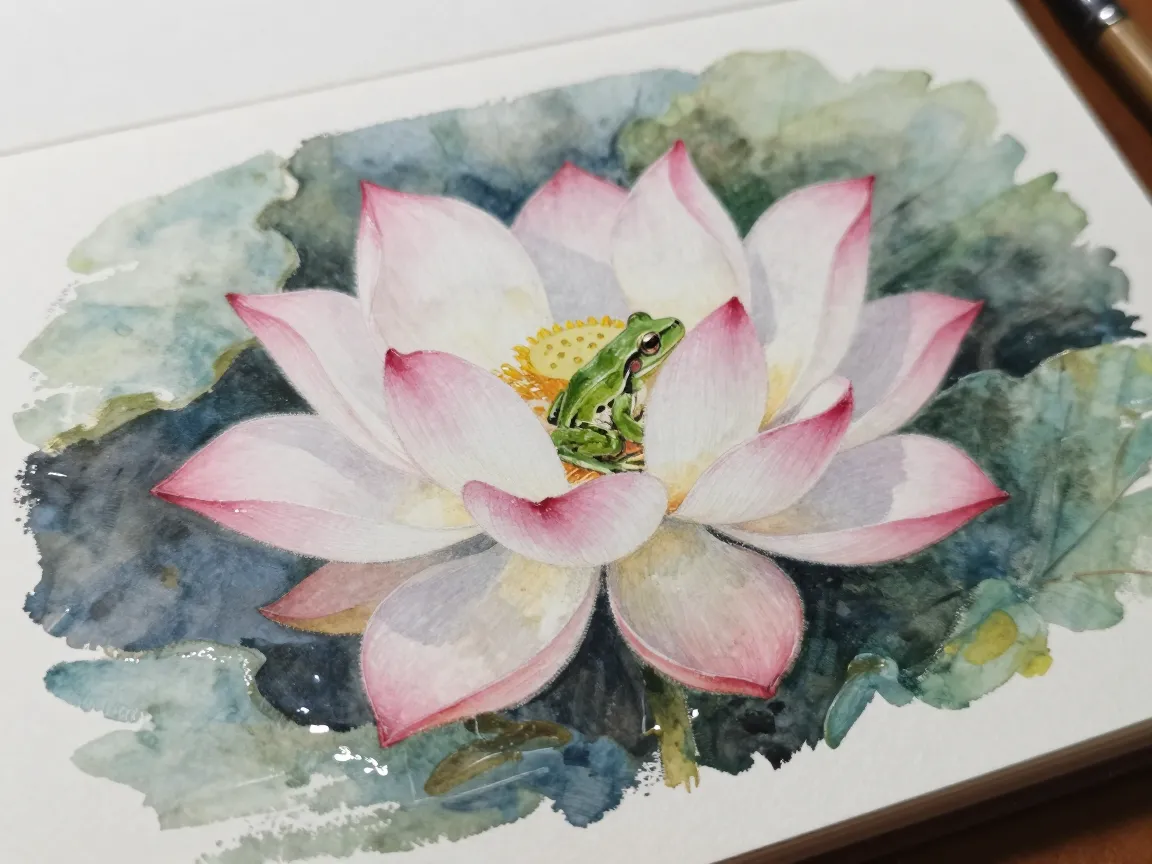
This project shifts the focus toward a single flower, usually a lotus or daisy, with a small frog tucked near the petals rather than centered in the frame. The composition starts with a light pencil sketch mapping out where the flower sits relative to the frog, keeping the frog smaller and slightly off to one side so the flower remains the visual anchor.
Painters block in the flower petals first using soft pinks or whites, then add the frog in layered greens once the petals are dry. Water reflections beneath both subjects are suggested with loose, horizontal brushstrokes in slightly darker tones of the background color. A final layer of acrylic gloss medium over the water area adds a subtle shine that mimics sunlight glimmering on a pond surface.
This is one of the more nature-journal-style entries among the 6 Cute Frog Painting Projects For A Serene And Smiley Canvas, and it suits painters who enjoy botanical subjects as much as animal ones.
3. Adorable Tree Frog On Black Canvas
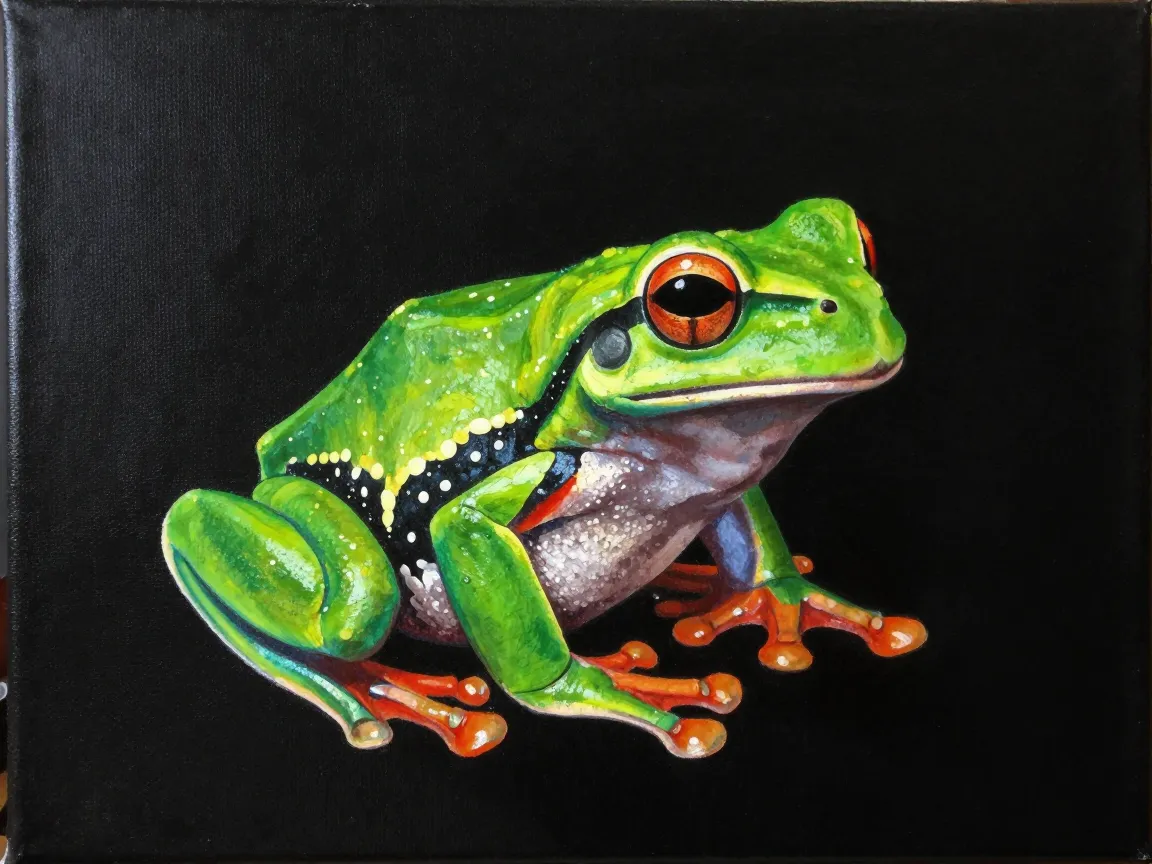
Switching to a black canvas changes the entire mood of a frog painting. Instead of blending into a daytime scene, the frog becomes the sole focal point, almost glowing against the dark background. This project typically uses a printable template to transfer the frog’s outline, which keeps proportions accurate for beginners who struggle with freehand sketching.
Painters build the body with contouring strokes, layering bright green over a slightly darker green base to create a rounded, three-dimensional look. Red-orange accents on the toe pads add a pop of contrast that mimics real tree frog coloring. Small clusters of white dots along the frog’s back suggest the bumpy texture many tree frogs actually have, added last with the tip of a small round brush or even a toothpick dipped in paint.
Because the black background hides small mistakes well, this project is forgiving for anyone nervous about clean edges.
4. Whimsical Watercolor Frog With Tiny Crown
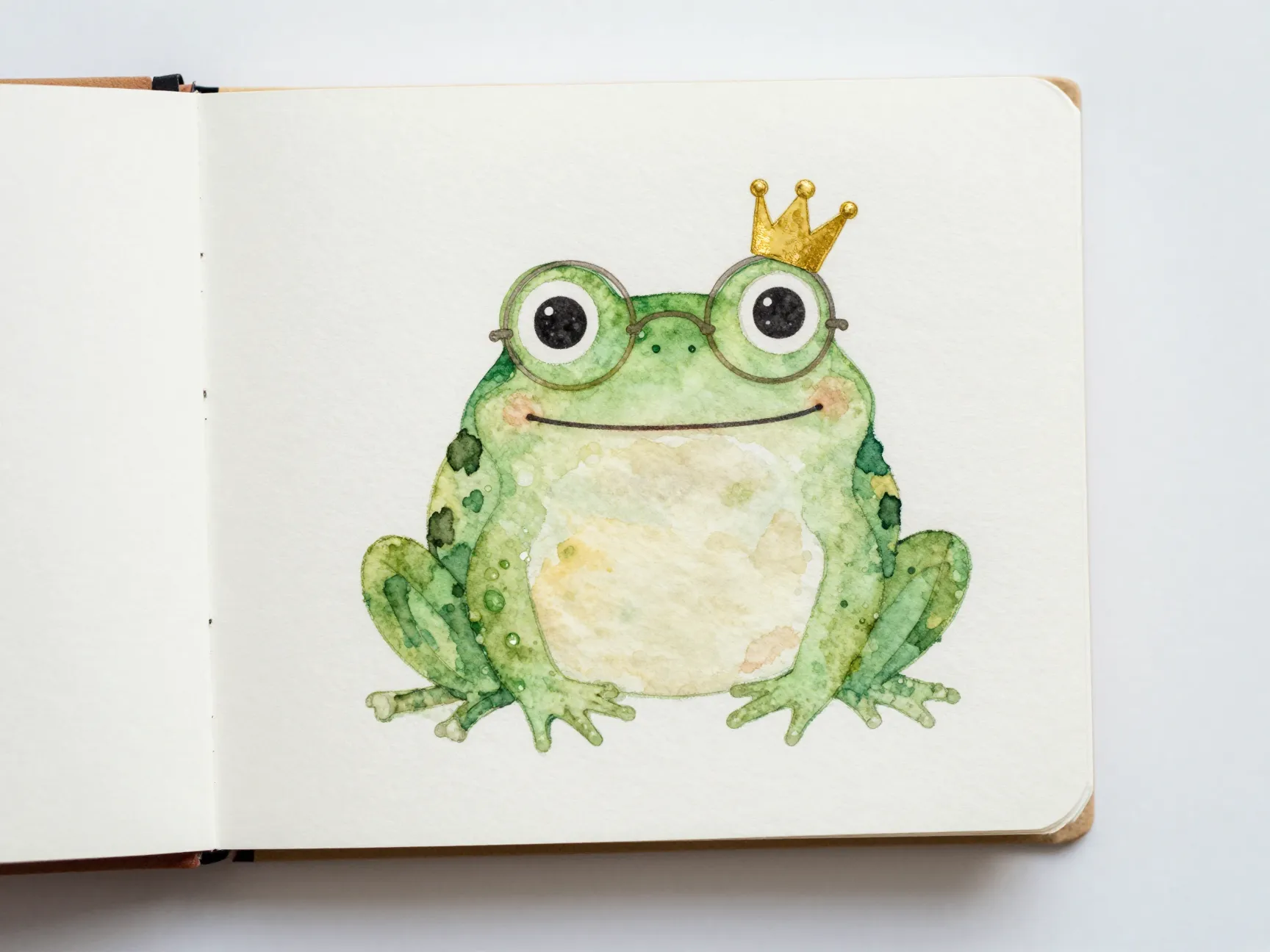
Watercolor softens everything, and that softness is exactly what makes this project feel calming rather than cartoonish. The frog begins as two simple shapes: a flattened circle for the head and an oval for the body, sketched lightly in pencil first.
Thin, layered washes of green are built up slowly, letting each layer dry before adding the next to keep colors from turning muddy. A light dry-brush technique or a few flicked droplets of water create a speckled texture across the frog’s back, mimicking natural skin patterning without needing fine detail work. The final and most playful step involves adding a small accessory, such as a tiny gold crown or a pair of round glasses, plus oversized eyes and a friendly curved smile.
This project is best suited to a small sketchbook page or a compact 5×7 watercolor canvas, making it ideal for anyone easing into frog subjects without committing to a large piece.
5. Realistic Six-Color Frog Study
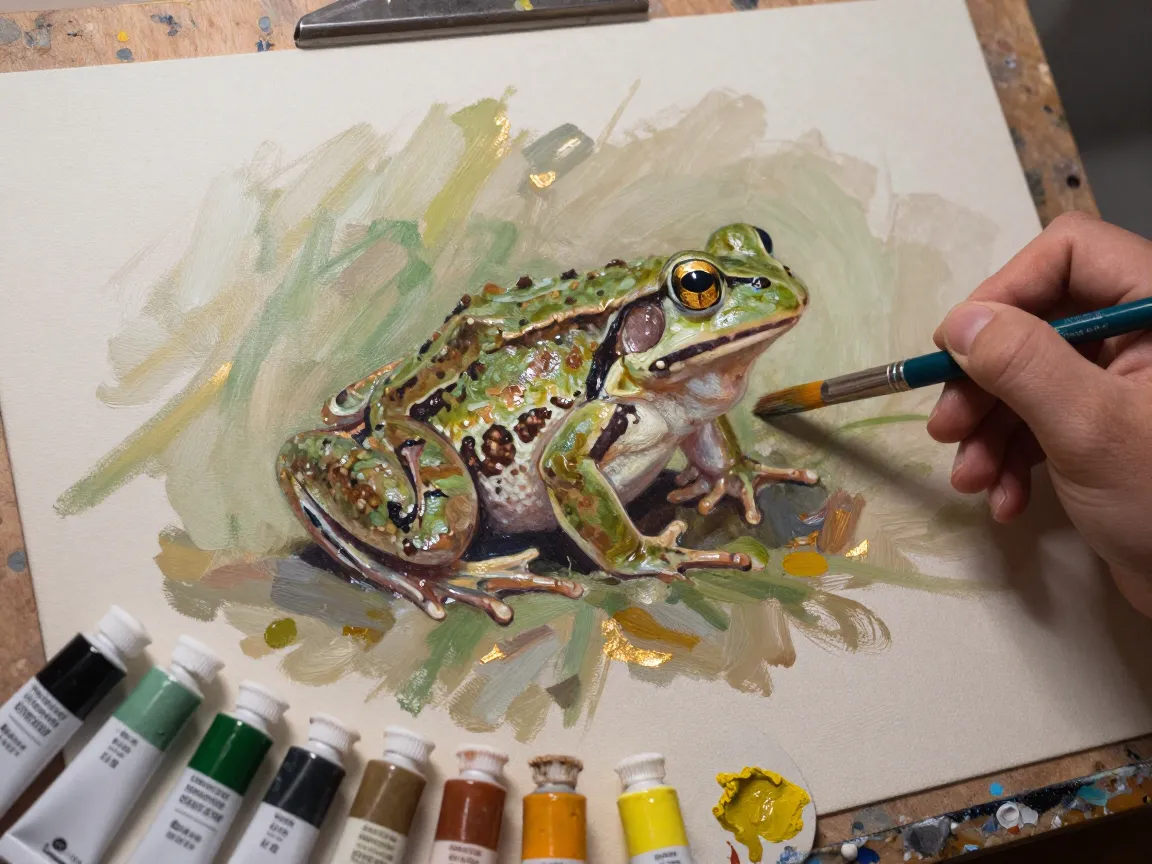
For painters who want something closer to wildlife art than cartoon art, this project organizes the painting process into four clear stages: lightest tones first, then darkest tones, followed by midtones, and finally small adjustments. Despite the realism goal, the entire piece uses only six paint colors mixed together to create natural, earthy greens, browns, and golds.
The key technique here is painting in the direction of the frog’s form, meaning brushstrokes follow the curve of the body and limbs rather than moving in flat, random directions. This small habit is what gives the finished frog a shiny, slightly damp appearance, as though it could leap off the page at any moment.
While more advanced than the other entries, this project still fits comfortably within a serene canvas theme because the muted, natural palette avoids anything harsh or overly bright.
6. Mini Canvas Pond Ripple Frog
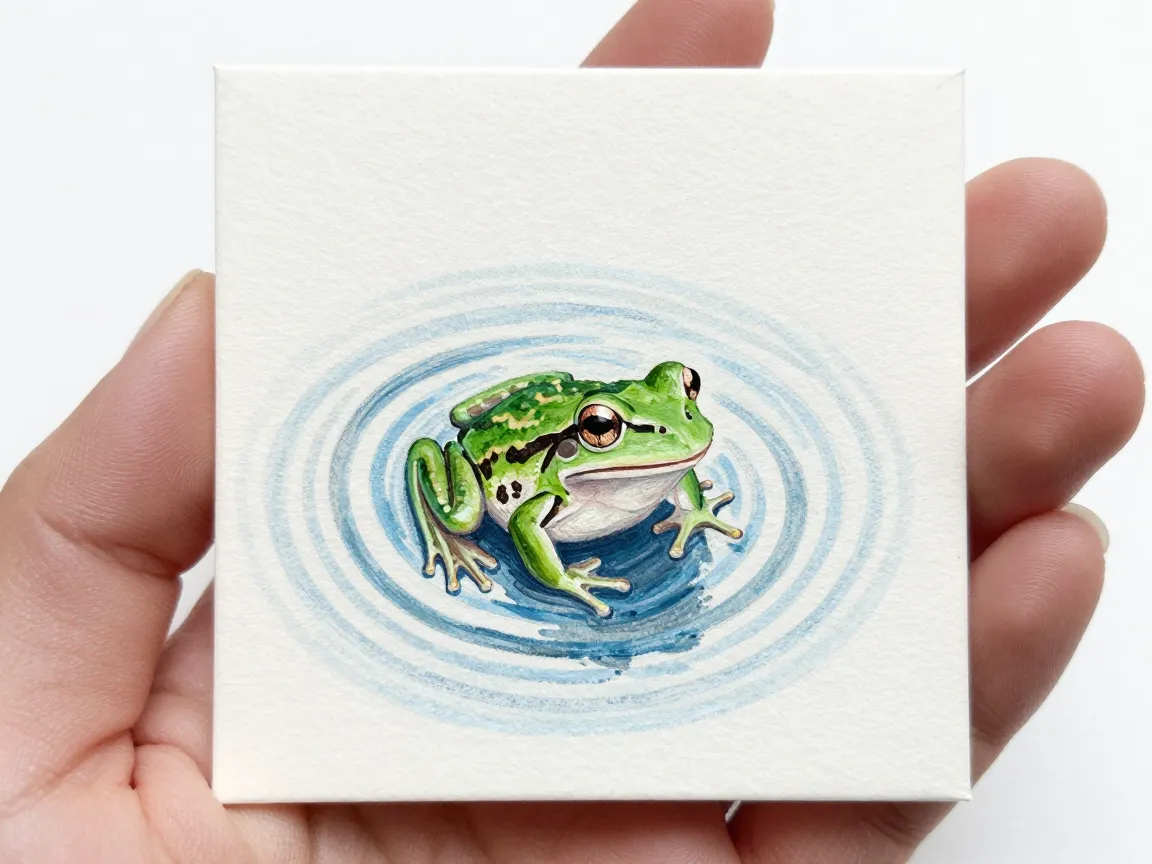
The final project scales everything down to a small canvas, often 4×4 or 5×5 inches, making it perfect for shelves, desks, or as a quick gift. The process starts with a light pencil sketch of the frog, taking care to preserve the pencil lines around the eyes and mouth so they remain visible as a guide once paint is applied.
Water ripples are painted first, using soft curved lines in blue-gray tones radiating outward from where the frog will sit. Once dry, the frog’s body is filled in with green paint, carefully working around the preserved pencil marks. The face is detailed last using black paint for the eye outlines, pupils, and that all-important curved smile.
Because of its small size, this project usually takes less than an hour and uses minimal paint, making it one of the most budget-friendly options among the 6 Cute Frog Painting Projects For A Serene And Smiley Canvas.
Essential Supplies for Any Cute Frog Canvas Project
Most of these projects share a short supply list, which is part of why frog painting has become such a popular beginner theme. The table below breaks down what is typically needed for acrylic versus watercolor versions.
| Supply | Acrylic Projects | Watercolor Projects |
|---|---|---|
| Canvas or paper | Stretched canvas, 5×5 to 11×14 | Watercolor paper or sketchbook |
| Core colors | White, black, two greens, light blue, brown | White, two greens, yellow, blue |
| Brushes | Round brush, flat brush, small detail brush | Small round brush, fine liner brush |
| Extras | Gloss medium, printable template, toothpick for dots | Masking fluid optional, spray bottle for texture |
| Typical time | 45 to 90 minutes | 30 to 60 minutes |
A few optional extras can elevate any of these projects without adding much cost. A fine liner pen works well for crisp outlines once paint has dried. A small natural sponge can stipple in grass or bush texture faster than a brush. And a soft pencil, rather than a dark one, helps sketches stay hidden once the first layer of paint goes down.
Tips to Keep Your Frog Painting Serene, Not Chaotic
A frog painting can tip from “charming” into “cluttered” fairly quickly if too many elements compete for attention. The following practical habits help keep any of the 6 Cute Frog Painting Projects For A Serene And Smiley Canvas feeling calm rather than busy.
Keep the background simple. A plain sky, a soft grass line, or a single flower is usually enough. Adding multiple flowers, extra animals, or busy patterns all at once tends to pull focus away from the frog’s expression, which is the real emotional core of the painting.
Limit the color palette. Most of the tutorials referenced in this guide use six colors or fewer. Sticking to a tight palette of two or three greens, one sky tone, and black and white for details keeps the whole piece visually cohesive.
Save the eyes and smile for last. Painting the body first and the face last means the frog’s expression can be adjusted freely without worrying about smudging the background. Even experienced painters often redo a frog’s smile two or three times before it looks right, and that is completely normal.
Let layers dry between steps. This matters most in watercolor, where wet-on-wet layering can turn clean washes into muddy brown blends. A hairdryer on a low, cool setting can speed up drying time between layers if patience runs short.
Work on a small scale first. Painters new to frog subjects often get better results starting on a 5×5 or 8×10 canvas rather than jumping straight to something large. Smaller canvases forgive proportion mistakes more easily and take less time to complete, which keeps motivation high.
Frequently Asked Questions
What skill level is needed for these frog painting projects?
None of the 6 Cute Frog Painting Projects For A Serene And Smiley Canvas require advanced training. The sky scene, mini canvas, and watercolor crown projects are especially suited to complete beginners, while the realistic six-color study is a better fit for someone who has painted at least a few times before.
Is acrylic or watercolor better for a cute frog painting?
Acrylic tends to be more forgiving for beginners since mistakes can be painted over once dry, making it a safer choice for bold, cartoonish smiley frogs. Watercolor produces softer, more whimsical results and suits sketchbook-style frogs with gentle washes and light texture.
How long does a typical frog painting project take?
Most projects in this guide take between 30 minutes and 90 minutes, depending on canvas size and detail level. The mini canvas ripple frog and the sunny sky scene are among the fastest, while the realistic study with layered tones takes longer due to its multi-stage process.
What makes a frog painting look cute rather than realistic?
Oversized eyes placed high on the head, a simple curved smile, and rounded, slightly exaggerated body proportions are the main features that shift a frog from realistic to cute. Accessories like tiny crowns or glasses push the whimsical feel even further.
Can these projects be adapted for kids?
Yes. The sunny sky scene and the mini canvas ripple frog are both commonly adapted for children’s art classes, since they rely on simple shapes and forgiving backgrounds. Adding white highlight dots to the eyes is a popular trick in kid-oriented lessons because it instantly makes a frog look friendlier.
Conclusion
Frog paintings succeed because they ask so little and give back so much. A rounded green body, two bright eyes, and one curved smile are often all it takes to produce a piece of art that feels genuinely cheerful without looking rushed or messy. Across these 6 Cute Frog Painting Projects For A Serene And Smiley Canvas, the common thread is restraint: simple backgrounds, tight color palettes, and a clear focus on expression over detail.
Anyone wanting to try this theme should start small. Pick one project from this list, gather the handful of colors listed in the supply table, and commit to finishing just the one piece before moving to the next. A first frog rarely looks perfect, and that is fine. The goal is not a flawless amphibian portrait. It is a small, smiling canvas that brings a little calm into a room, one soft green brushstroke at a time.