Cute Frog Doodles To Brighten The Margins Of Any Boring Notebook
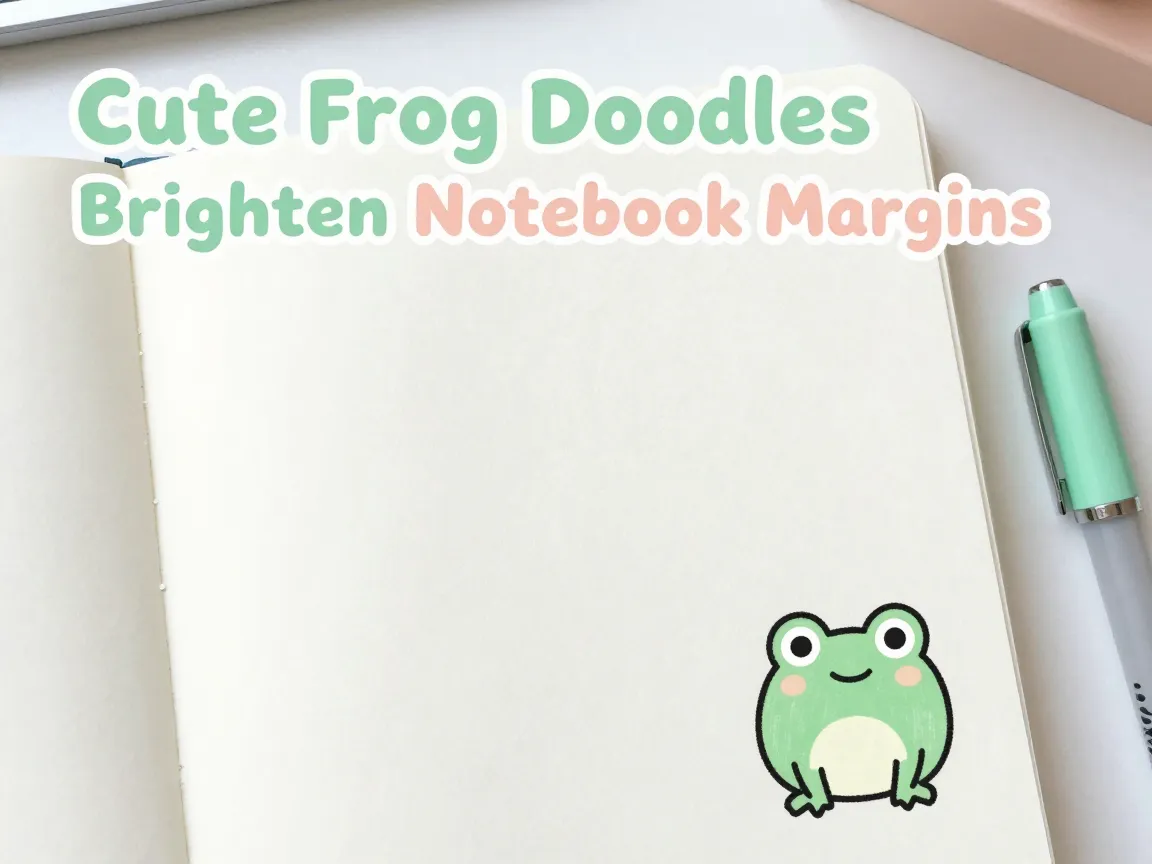
A single notebook page gets touched by the human eye for an average of three to five seconds before a reader decides whether it looks inviting or forgettable. That tiny window is exactly why so many journal keepers, students, and planner enthusiasts have started filling their margins with small, round, big-eyed creatures instead of leaving them blank. Among all the animal doodle trends circulating through sketchbooks and bullet journals this year, one amphibian keeps hopping to the top of the list. These 6 Cute Frog Doodles To Brighten The Margins Of Any Boring Notebook prove that a few curved lines and two oversized eyes can turn a dull page into something worth flipping back to.
Disclosure: This post contains affiliate links. As an Amazon Associate, we earn from qualifying purchases, and at no extra cost to you.
Frog doodles have quietly become one of the most recommended beginner-friendly characters in casual art tutorials published throughout 2026. They require no drawing background, no expensive supplies, and no more than a minute or two per sketch. This guide walks through six distinct frog styles, explains why they work so well in notebook margins, and offers practical tips for making each one look polished even on a rushed Tuesday afternoon.
Key Takeaways
- Frog doodles are built from basic shapes like ovals and circles, making them one of the easiest animal characters for beginners to draw in notebook margins.
- Oversized eyes and a small smile are the two features that make a frog doodle look instantly cute and expressive.
- Variations such as a frog on a lily pad, a jumping frog, or a peeking frog add variety without increasing drawing difficulty.
- Frog doodles work well as mood trackers, bullet journal icons, and decorative accents for otherwise plain pages.
- The popularity of frog-themed stationery on major marketplaces confirms this motif is a lasting trend, not a passing fad.
Why Frog Doodles Are Trending In Notebook Margins Right Now
Cute animal doodling has grown into a full subculture of casual art, and frogs have earned a steady spot near the top. Part of the appeal is practical. A frog’s body is essentially a rounded blob, which means there is very little room for a beginner to make a mistake that ruins the whole drawing. Compare that to animals with long necks, pointed ears, or complex fur patterns, and it becomes clear why frogs show up so often in beginner doodle guides.
Recent doodling tutorials published in late 2026 consistently point to the same formula: a round or oval body, two large circles for eyes, a simple straight or curved mouth, and tiny stub feet. One widely shared guide specifically walks through a “Round Frog” built this way, pairing it with rosy cheek dots for extra charm. Another collection from the same period groups frog doodles with lily pads, jumping poses, and surrounding leaf details, treating the frog as a flexible motif rather than a single fixed design.
Journaling communities have picked up on this too. Bullet journal tutorials now recommend frog and bear characters specifically because their round shapes can carry a wide range of expressions just by changing the eyebrows or mouth. A frog with a flat mouth looks calm. A frog with a wide open mouth and raised brow lines looks surprised. That flexibility makes a single frog template useful for mood trackers, habit logs, and random margin decoration all at once.
The commercial side of stationery backs up the trend as well. Searches for frog-themed notepads on major marketplaces return hundreds of results, including peeking frog designs and frog-print notebooks sold specifically for their kawaii appeal. Print-on-demand catalogs continue stocking frog doodle spiral notebooks labeled with phrases like “kawaii frog” and “frog on lilypad.” When a motif shows up this consistently across tutorials, journaling guides, and commercial products in the same year, it signals more than a short-lived fad. It points to a visual style with staying power.
The Formula Behind Every Good Frog Doodle
Before jumping into the six styles below, it helps to understand the shared formula that makes them all work. Nearly every simple frog doodle tutorial breaks the character into the same three steps.
- Start with a wide oval or rounded shape for the body.
- Add two large circles for the eyes, placed close together near the top of the body.
- Finish with a small mouth line and two tiny foot shapes at the bottom.
Everything else, including lily pads, cheeks, hearts, or bubbles, is decoration layered on top of that base. Once a person memorizes this three-step skeleton, drawing any of the six frog doodles below becomes a matter of swapping small details rather than relearning the whole character.
6 Cute Frog Doodles To Brighten The Margins Of Any Boring Notebook
The following six designs cover a range of moods and settings, from a calm sitting frog to a mid-air jumping frog. Each one uses the same basic shapes described above, so there is no need to master one style before moving to the next. Pick whichever fits the mood of the page.
1. The Classic Round Frog
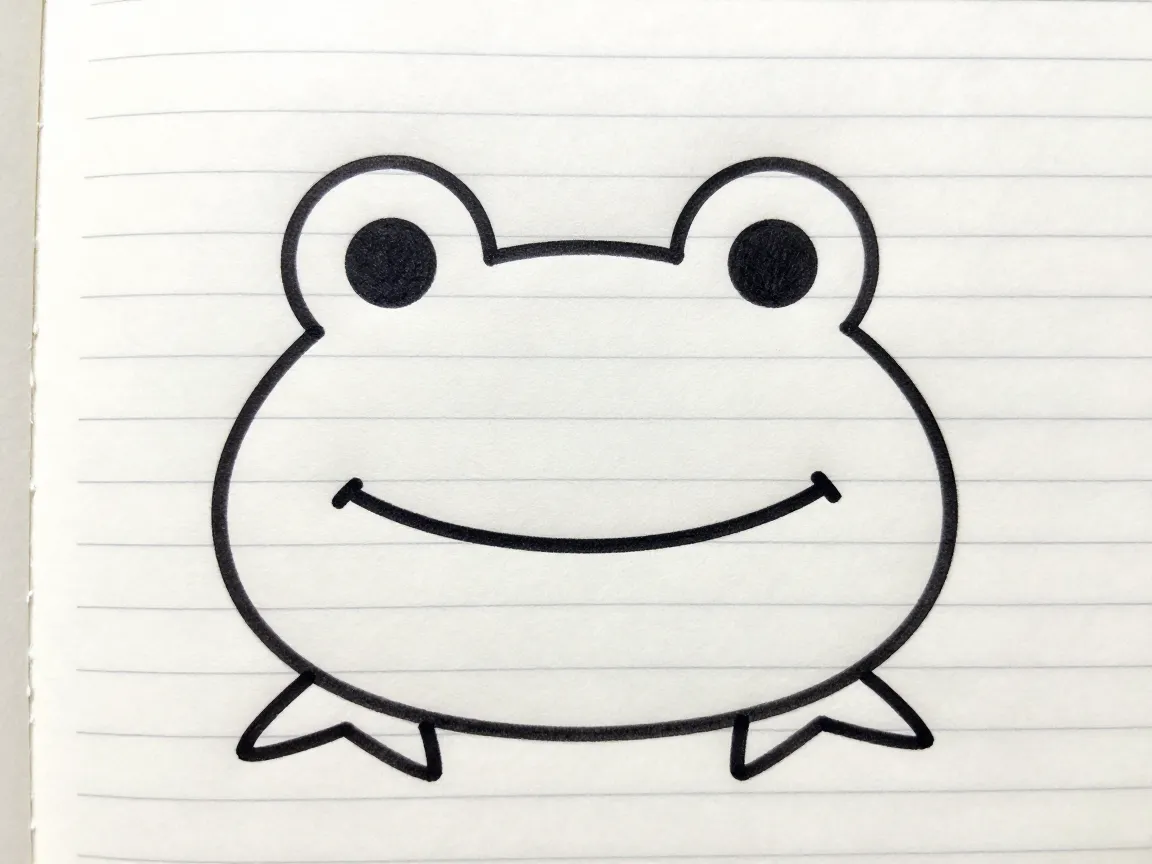
The classic round frog is the foundation style and the best place to start for anyone new to doodling. Draw a wide, slightly flattened oval for the body, then add two medium circles on top for the eyes, each with a small black dot inside. A short straight line or a gentle curve works for the mouth. Finish with two tiny triangle or oval feet peeking out from the bottom edge.
What makes this version so popular in margin art is its restraint. There is no background, no extra props, and no shading required. A single round frog can be placed anywhere on a page, from the corner of a to-do list to the edge of a calendar square, without competing for attention with the actual notes. Many beginner guides suggest adding two small pink circles on the cheeks as the only optional extra, which instantly pushes the design from “sketch” to “cute character.”
2. The Frog On A Lily Pad
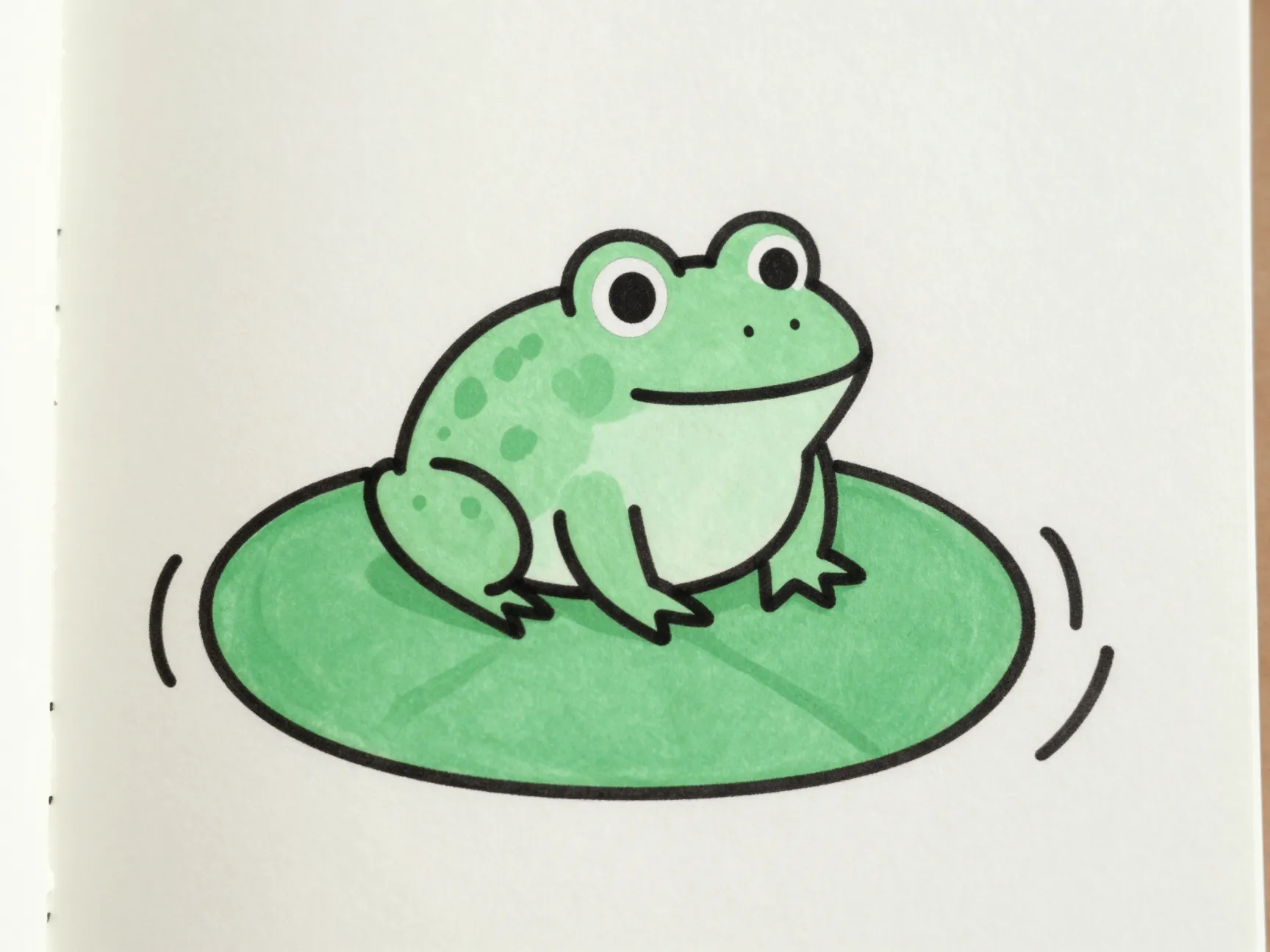
Building on the round frog, this second style adds a simple lily pad underneath the body. Draw the classic round frog first, then add a flattened green oval or scalloped circle beneath it to represent the pad. A small wavy line or two curved strokes beside the pad can suggest water without needing to draw an entire pond scene.
This version works especially well in the margins of nature journals, travel notebooks, or any page themed around outdoor topics. The lily pad gives the frog a sense of place, turning a floating character into a small scene. Doodle guides from 2026 repeatedly mention this exact combination, noting that the lily pad adds personality while staying just as easy to draw as the base frog shape. It takes maybe ten extra seconds of drawing time for a noticeably more finished look.
3. The Tiny Jumping Frog
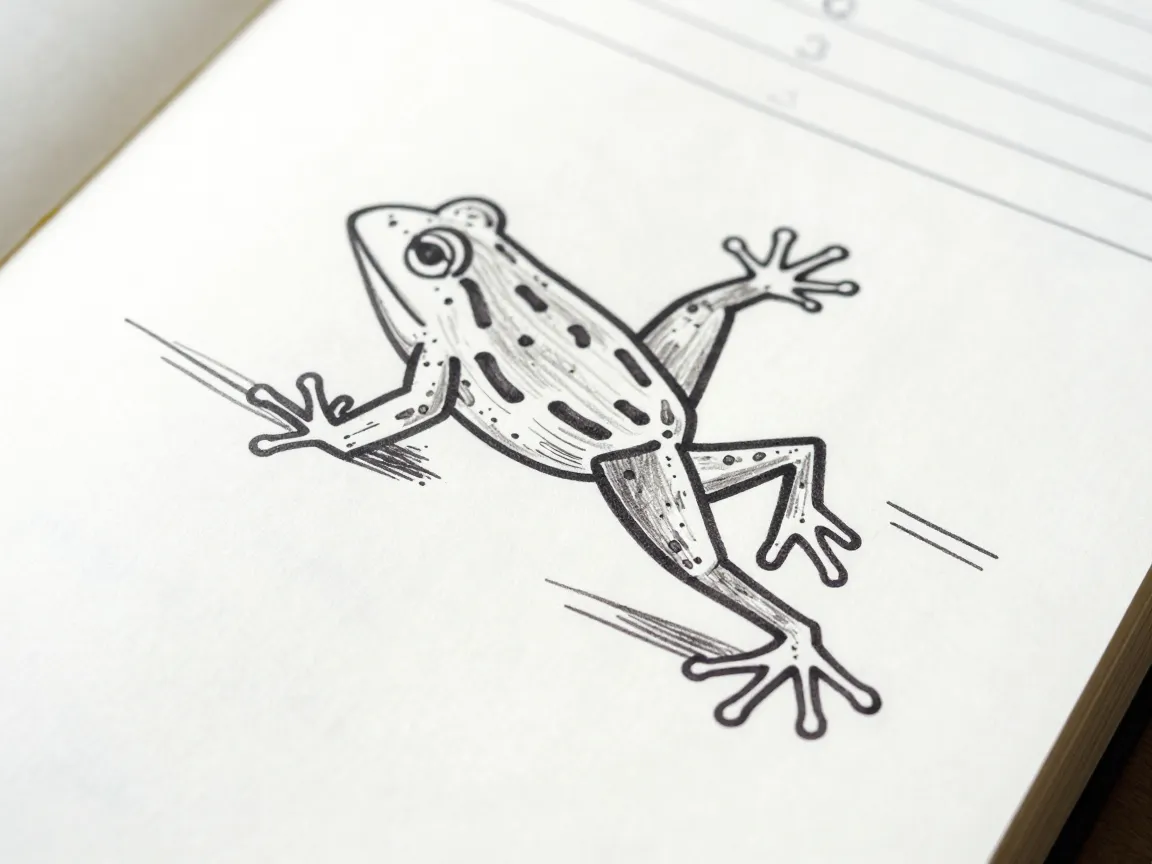
For pages that need a little more energy, the jumping frog style stretches the body into a slightly diagonal oval and bends the back legs into a mid-leap position. Instead of two small stub feet at the bottom, draw one or two bent lines suggesting kicked-back legs, and angle the eyes slightly upward to imply forward motion. A small motion line or two behind the frog can emphasize the jump without adding real complexity.
This design is ideal for margins near headers, checklists being crossed off, or any spot where a small burst of movement feels appropriate. Doodle collections that catalog frog variations specifically list jumping frogs as a go-to option when a page needs a more dynamic accent than the sitting round frog provides.
4. The Peeking Edge Frog
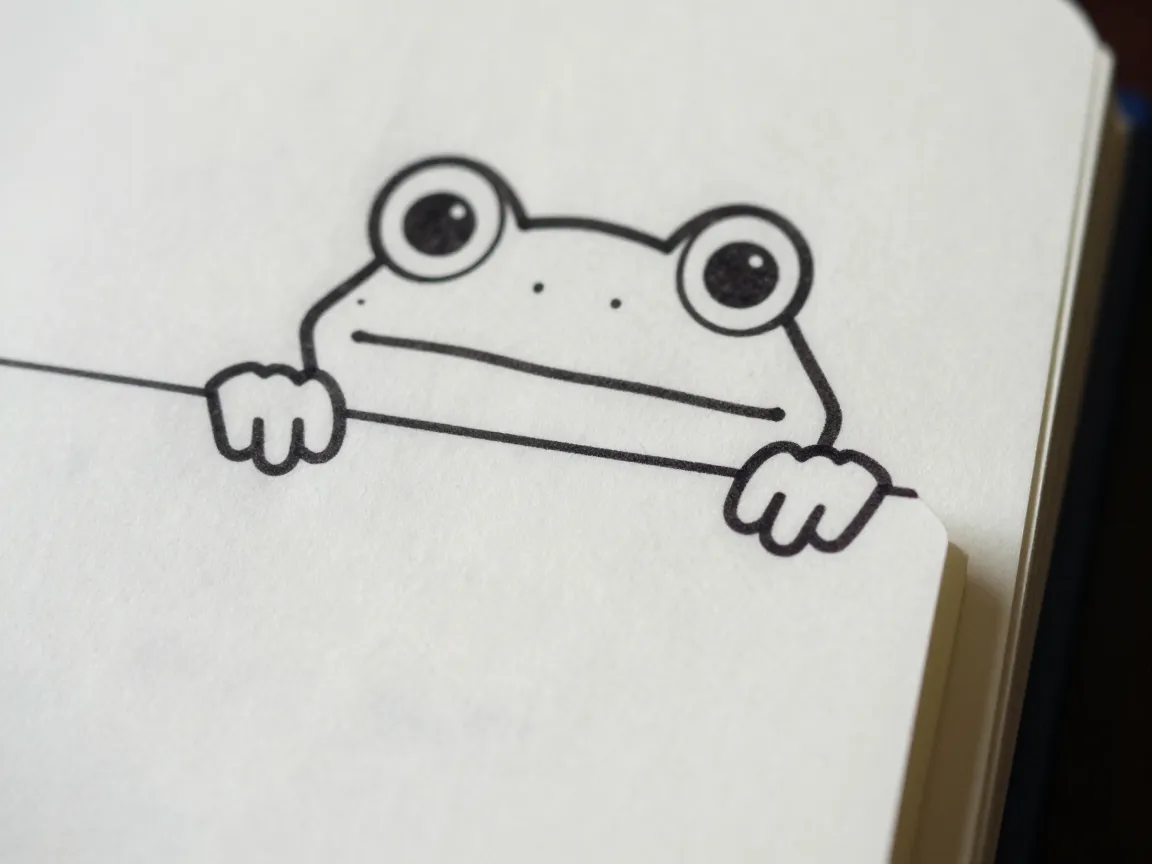
The peeking frog takes advantage of the margin itself rather than sitting fully within it. Draw only the top half of the round frog body, positioning it so the bottom edge lines up with the border of the page or the edge of a text box. Two large eyes peering over that line, paired with two small hands or feet gripping the edge, create the illusion that the frog is climbing into view.
This style gets specific praise in notebook doodle guides aimed at beginners, which suggest using this kind of peeking character along with other cute animals to decorate aesthetic margins. It works particularly well tucked into the corner of a page or peeking out from behind a sticky note, since the half-hidden body does more visual work than a fully drawn frog in the same space.
5. The Blushing Cheek Frog

This variation focuses entirely on expression rather than pose. Start again with the classic round frog shape, but add two prominent blush circles or soft diagonal lines on the cheeks, slightly curve the eyes into a happy squint, and turn the mouth into a small upward curve or tiny open smile. Some versions add a single sparkle mark near one eye for extra charm.
Expressive frog doodles like this one are frequently recommended in journaling posts that emphasize using simple circles, ovals, and varied eyebrow or mouth shapes to show emotion. Because the body shape stays identical to the classic round frog, this style is really about practicing facial details rather than learning a new structure. It is an excellent next step for anyone who has already mastered design number one and wants to add personality without starting from scratch.
6. The Froggy Mood Tracker Icon
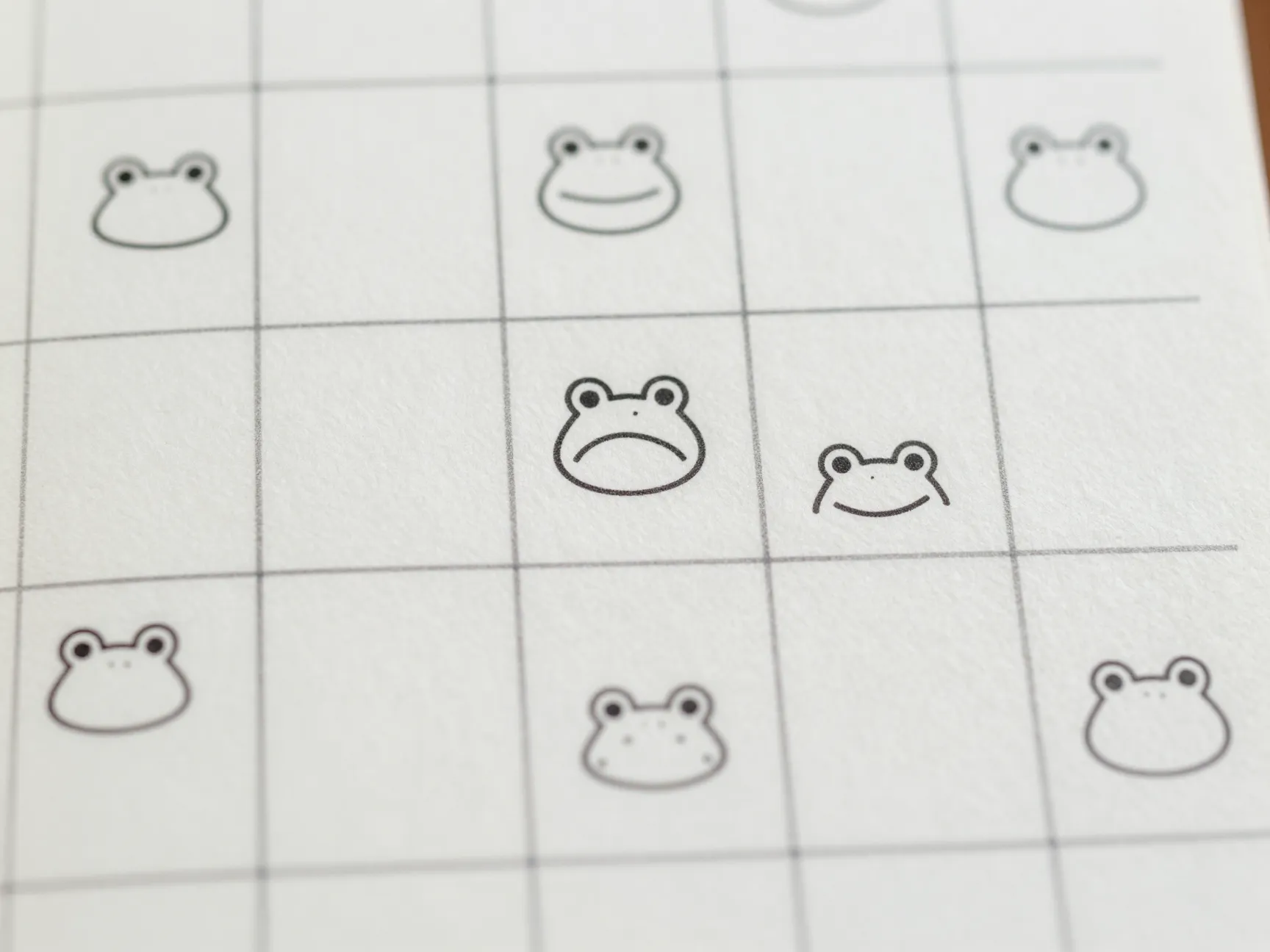
The sixth style shrinks the entire design down to its simplest possible form, built specifically for repeated use rather than one-time decoration. Draw a small round frog face only, without a full body, using two circle eyes, a single mouth line, and no feet at all. Keep the whole icon small enough to fit inside a single calendar box or checklist bullet.
This compact version is built for function. Bullet journal tutorials highlight frog icons as useful markers for mood trackers and special entries precisely because a tiny, repeatable shape can be drawn dozens of times across a month without becoming tedious. Changing only the mouth curve or eyebrow angle lets the same tiny frog represent a calm day, a tired day, or an excited day, all while taking less than five seconds to sketch each time.
Simple Tools And Techniques That Improve Any Frog Doodle
None of the six styles above require specialized art supplies, but a few small adjustments in technique make a noticeable difference in the final result.
Keep the eyes oversized. Across nearly every frog doodle tutorial referenced by journaling communities this year, the single most repeated piece of advice is to make the eyes larger than feels natural. Oversized eyes are what separate a cute cartoon frog from a realistic-looking sketch, and they are forgiving of shaky hand lines since imperfections blend into the rounded shape.
Use a fine-tip pen for outlines. A 0.3mm or 0.4mm pen keeps the small details, like feet and cheek blush, from looking muddy. Thicker markers work fine for the body outline but tend to overwhelm tiny features like mouth lines or sparkle marks.
Add color sparingly. A light green or mint marker for the body, paired with a soft pink for cheeks, is usually enough. Overloading a small margin doodle with five or six colors can make it compete with the actual notes on the page instead of quietly decorating it.
Practice the three-step skeleton before adding extras. Returning to the oval-body, circle-eyes, simple-mouth formula before layering on lily pads or jump poses keeps proportions consistent across multiple doodles, which matters most when frogs are repeated across several pages as recurring characters.
Vary expression before varying pose. Since changing a mouth curve or eyebrow angle is far faster than redrawing a whole new body position, it is often more efficient to build a small library of expressions on the same basic frog shape rather than constantly inventing new poses.
The table below summarizes the six styles side by side for quick reference.
| Frog Doodle Style | Best Used For | Key Feature To Focus On |
|---|---|---|
| 1. Classic Round Frog | General margin filler, any page | Oversized eyes, simple mouth |
| 2. Frog On A Lily Pad | Nature or travel journal pages | Flattened oval pad underneath |
| 3. Tiny Jumping Frog | Checklists, headers, active pages | Bent leg lines, motion marks |
| 4. Peeking Edge Frog | Page corners, sticky note accents | Half-visible body at page edge |
| 5. Blushing Cheek Frog | Emotional or personal journal entries | Rosy cheeks, squinted happy eyes |
| 6. Froggy Mood Tracker Icon | Calendars, bullet journal trackers | Tiny repeatable face only |
Frequently Asked Questions
What is the easiest frog doodle for a complete beginner to start with?
The classic round frog is the easiest starting point. It uses only one oval for the body, two circles for the eyes, and a single line for the mouth, making it nearly impossible to get wrong even for someone who has never doodled before.
Do frog doodles work in formal planners or only in casual notebooks?
Frog doodles fit best in casual bullet journals, personal planners, and sketchbook margins rather than formal business documents. They are designed to add warmth and personality to pages that already feel a little playful, such as habit trackers or personal to-do lists.
How long does it take to draw one of these frog doodles?
Most of the six styles take under a minute once the basic shapes are familiar. The froggy mood tracker icon is typically the fastest, often taking only a few seconds since it skips the body entirely and focuses on a small face.
Can these frog doodles be combined with other cute animal doodles on the same page?
Yes. Many journaling guides pair frogs with other simple animals like bears or bunnies on the same page, since they share the same basic circle-and-oval construction. Mixing a round frog with a round bear face, for example, creates visual variety without requiring different skill levels.
Why are frogs such a common choice for notebook margin art compared to other animals?
Frogs have naturally round, simple body shapes with no complex features like long ears, manes, or detailed fur. That makes them one of the fastest animals to draw convincingly, which is exactly why they appear so often across beginner doodle tutorials and stationery designs.
Conclusion
A blank margin does not have to stay blank, and it definitely does not require advanced drawing skills to fix. These 6 Cute Frog Doodles To Brighten The Margins Of Any Boring Notebook show that a few ovals, two oversized eyes, and a small curved mouth are enough to turn a plain page into something more personal and inviting. From the no-fuss classic round frog to the detail-focused blushing cheek version, each style builds on the same simple foundation, so skill carries over from one design to the next.
The next step is simple: grab whatever pen is closest, pick one of the six styles above, and sketch it into the nearest open notebook page. Starting with the classic round frog builds confidence fast, and once that basic shape feels comfortable, the lily pad, jumping pose, and mood tracker icon all become easy additions rather than new challenges. A notebook filled with small, cheerful frogs is a low-effort way to make page after page feel a little more worth opening.