Funny Looking Cats That Are Absolutely Hilarious to See
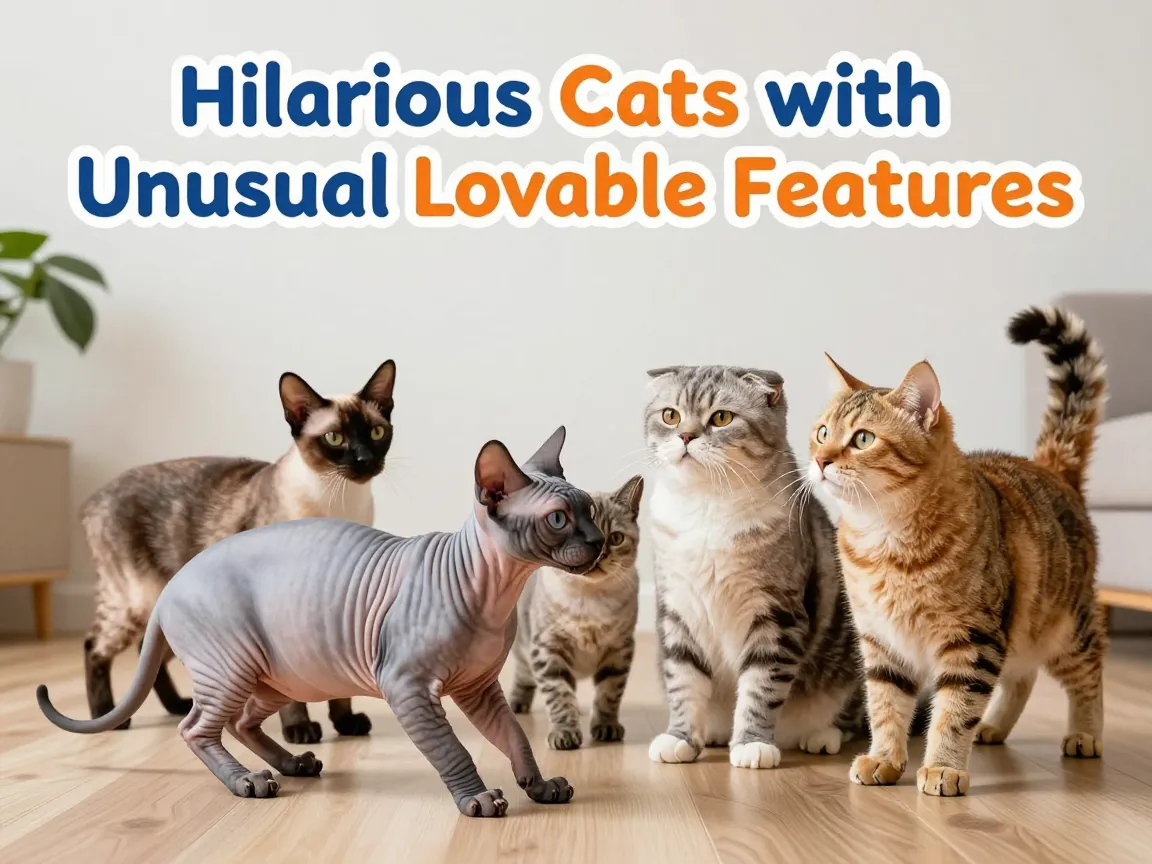
A cat with no fur, wrinkled skin, and ears the size of satellite dishes can still win Best in Show. That is not an exaggeration. The Sphynx, one of the breeds featured on nearly every “weirdest cat” list published in 2026, regularly places in international cat show finals despite looking like it wandered in from another planet. This is the strange paradox at the heart of feline fandom: the odder a cat looks, the more people seem to adore it. This roundup of 6 Funny Looking Cats That Are Absolutely Hilarious to See explores exactly why that happens, drawing on the latest breed guides and wildlife research to explain the genetics, temperament, and pure comedic charm behind some of the most unusual cats on the planet.
Disclosure: This post contains affiliate links. As an Amazon Associate, we earn from qualifying purchases, and at no extra cost to you.
Cat lovers scrolling through Bored Panda galleries or Catster’s regularly updated “silly cat pics” collections already know that funny-looking cats are a booming corner of pet culture. Breed clubs, veterinary writers, and wildlife researchers all agree that unusual appearance rarely equals unusual personality. In fact, some of the strangest-looking cats are also the most affectionate. This article breaks down six of the funniest looking domestic cats recognized by major breed authorities, plus a peek at their wild lookalikes, so readers can appreciate the science and the humor in equal measure.
Key Takeaways
- The Sphynx, Lykoi, Devon Rex, Munchkin, American Curl or Scottish Fold, and Japanese Bobtail are consistently named among the world’s funniest looking domestic cat breeds by breed authorities and pet publications updated through 2026.
- Unusual feline appearances almost always trace back to specific genetic mutations affecting hair growth, ear cartilage, leg length, or tail structure.
- Despite their comedic or unusual looks, these breeds are widely described as affectionate, playful, and people-oriented companions rather than difficult or fragile pets.
- Wild cats such as the serval, Pallas’s cat, and flat-headed cat share similarly strange features but remain distinct from domestic funny-looking breeds discussed here.
- Growing social media interest continues to fuel new “funny looking cat” roundups, suggesting these six breeds will remain popular subjects for years to come.
What Makes a Cat “Funny Looking”?
Before diving into the list, it helps to understand the biology behind feline comedy. Nearly every cat breed known for its unusual appearance owes that look to a single genetic mutation that changed one specific trait, whether that is hair growth, ear shape, leg length, or tail structure. Breeders did not set out to create “funny” cats; nature produced spontaneous mutations, and dedicated fanciers decided the results were worth preserving and refining.
According to veterinary and breed-standard sources, four mutation categories explain almost every entry on modern “weird cat” lists:
- Hairlessness01 A recessive gene reduces or eliminates the coat, leaving wrinkled skin exposed, as seen in the Sphynx, Peterbald, and Donskoy.
- Ear cartilage changes02 Dominant or recessive mutations cause ears to fold forward, curl backward, or grow unusually large, as seen in the Scottish Fold and American Curl.
- Dwarfism03 A mutation shortens the long bones of the legs while the body stays normal-sized, producing the low-slung Munchkin silhouette.
- Tail and coat texture shifts04 Kinked tails and curly or patchy coats, as seen in the Japanese Bobtail and Lykoi, come from separate mutations affecting keratin and skeletal development.
Because these traits are purely cosmetic in most cases, veterinary organizations and breed clubs typically emphasize that funny-looking cats can live full, healthy, active lives when responsibly bred and properly cared for. That reassurance matters, because it is exactly what makes it comfortable to laugh at (and with) these cats rather than feel guilty about it.
The 6 Funny Looking Cats That Are Absolutely Hilarious to See
This is the heart of the matter. Drawing on 2026 breed guides from World Animal Foundation, Cats.com, Catster, and Hepper, along with longstanding coverage from HowStuffWorks and Countryfile, the following six cats consistently top the lists of the most hilariously unusual felines in the world.
1. Sphynx01
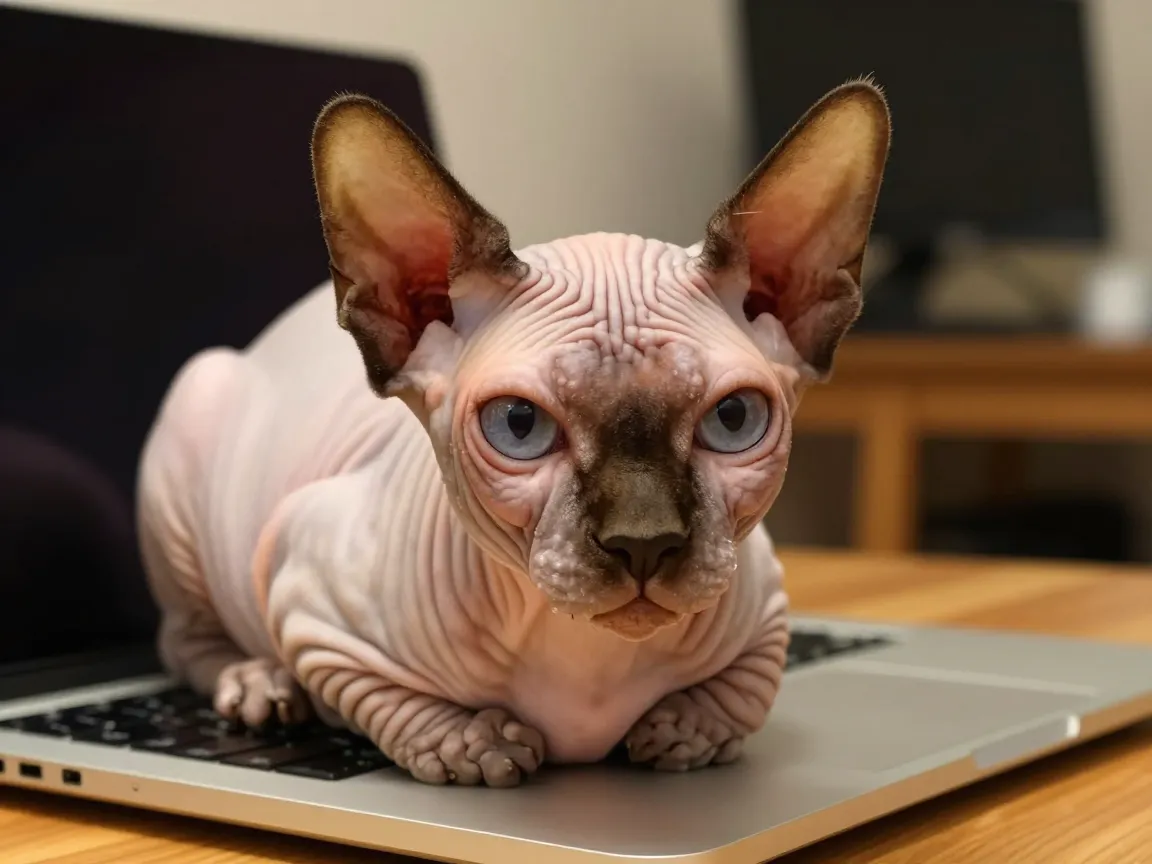
The Sphynx is arguably the most recognizable entry among 6 Funny Looking Cats That Are Absolutely Hilarious to See, and for good reason. Its completely hairless body reveals every wrinkle, fold, and muscle contour, giving it an almost alien silhouette. Large, bat-like ears sit atop a wedge-shaped head, and prominent whisker pads add to the exaggerated expression. Multiple 2026 breed guides classify the Sphynx among the strangest-looking cats in existence, yet nearly every source also describes the breed as extroverted, cuddly, and deeply attached to its humans. Sphynx cats crave warmth because they lack an insulating coat, so they are famous for burrowing under blankets or draping themselves across a laptop keyboard mid-typing session. Their skin also requires regular bathing since there is no fur to absorb natural body oils, which is a small trade-off for owners who adore the breed’s clownish energy.
2. Lykoi02
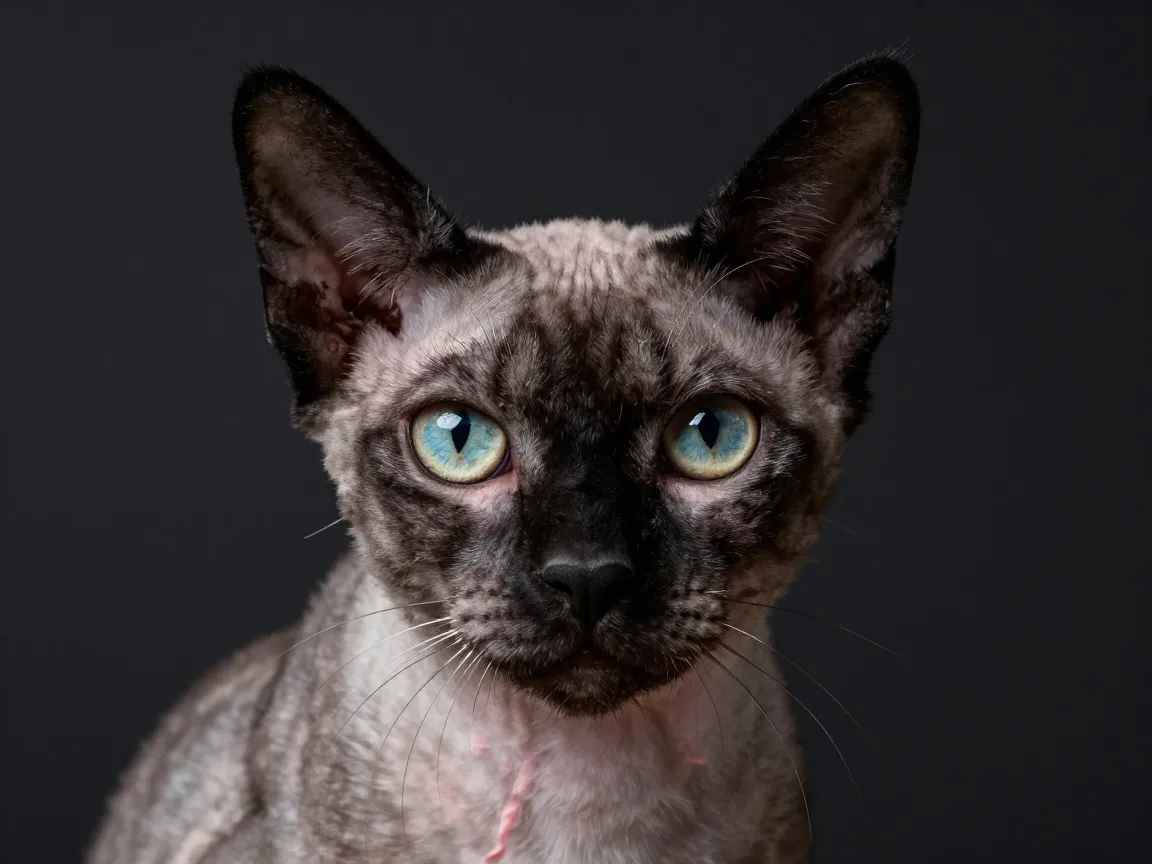
Nicknamed the “werewolf cat,” the Lykoi earns its spot on nearly every creepiest-or-funniest breed list published in the last several years. Its coat is partially hairless with irregular patches, giving it a scruffy, wolf-like appearance that is genuinely startling on first glance. The breed’s intense stare, sparse whiskers, and patchy fur pattern make it look like it stepped out of a horror movie prop department. Cats.com has called the Lykoi probably the “creepiest” recognized cat breed, while UK-based wildlife and pet publications note that the breed was only recently added to the Governing Council of the Cat Fancy’s recognized list, reflecting its growing formal status despite its rarity. Underneath the werewolf exterior, though, breeders consistently describe Lykoi cats as curious, dog-like in loyalty, and eager to interact with their families, which makes the contrast between appearance and personality one of the funniest parts of owning one.
3. Devon Rex03
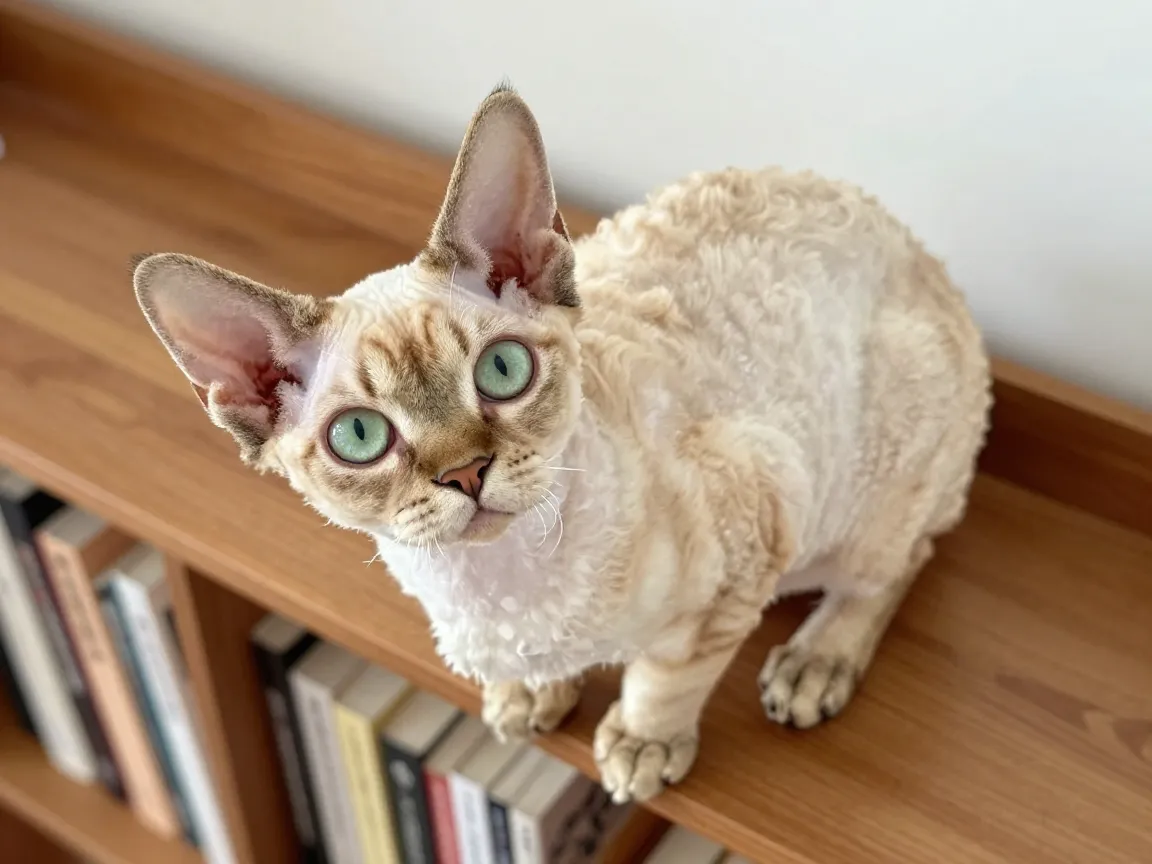
Often called the “pixie cat,” the Devon Rex combines oversized ears, huge eyes, high cheekbones, and a loosely curled coat into a face that looks perpetually mischievous. Several 2026 roundups of comedic and goofy cat breeds feature the Devon Rex prominently because its expression alone seems to invite laughter, even when the cat is doing nothing at all. The curly coat, caused by a different mutation than the one found in the Selkirk Rex or LaPerm, is soft and short, sometimes described as feeling like suede. Devon Rex cats are known for their high energy and love of heights, often perching on shoulders, door frames, or the tops of bookshelves like small curious gremlins supervising the household. Their playful, almost monkey-like antics reinforce the “pixie” nickname and make them a favorite among owners who want a cat with constant comedic presence.
4. Munchkin04
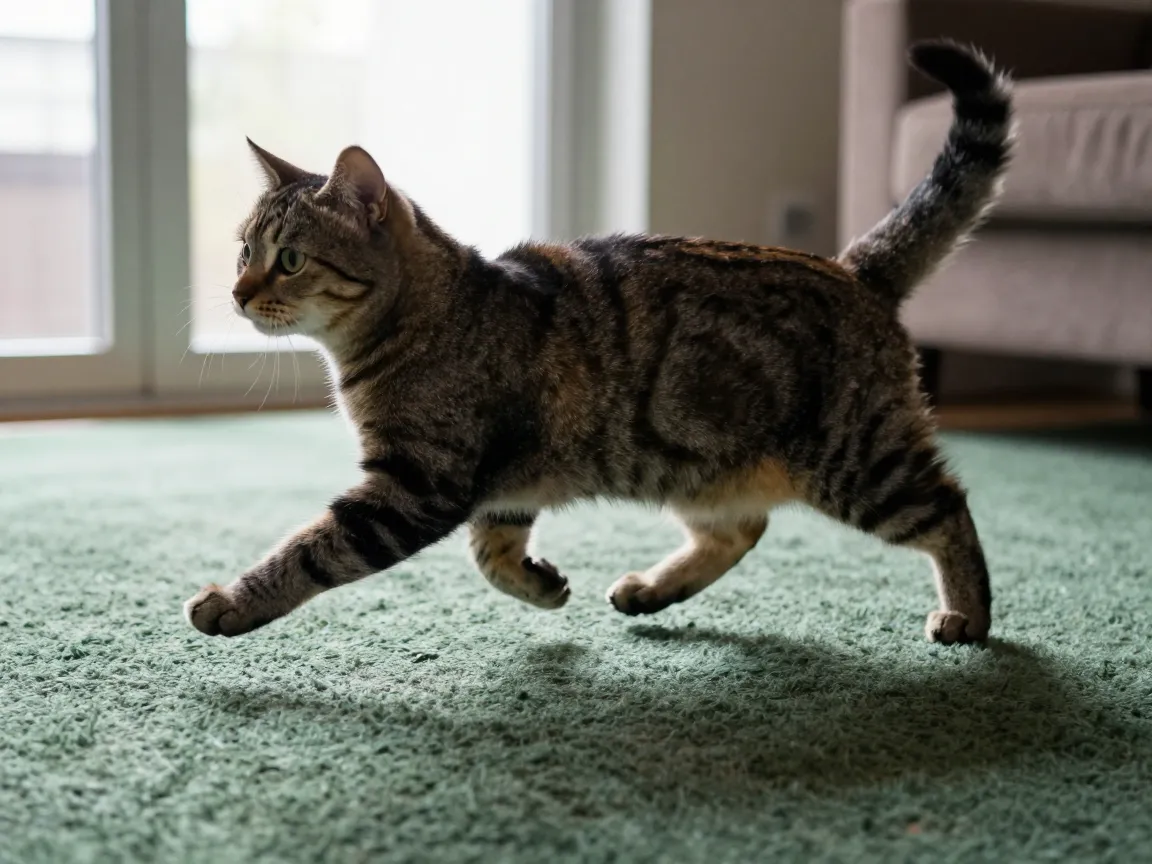
The Munchkin cat’s defining trait is impossible to miss: unusually short legs caused by a naturally occurring genetic mutation affecting bone growth. The result is a cat with a normal-sized body balanced on stubby legs, producing a silhouette that many breed guides describe as looking like a cat on tiny stilts, or as some fans joke, a feline dachshund. HowStuffWorks and several other breed authorities include the Munchkin on both “ugliest” and “most unique” cat lists, yet every source is quick to note that Munchkins are just as active, agile, and playful as long-legged breeds. They can run, jump, and climb with surprising speed, and their low center of gravity actually gives them impressive stability. Owners often say the Munchkin’s comedic waddle-run is one of the most entertaining things they have ever watched a pet do.
5. American Curl and Scottish Fold05
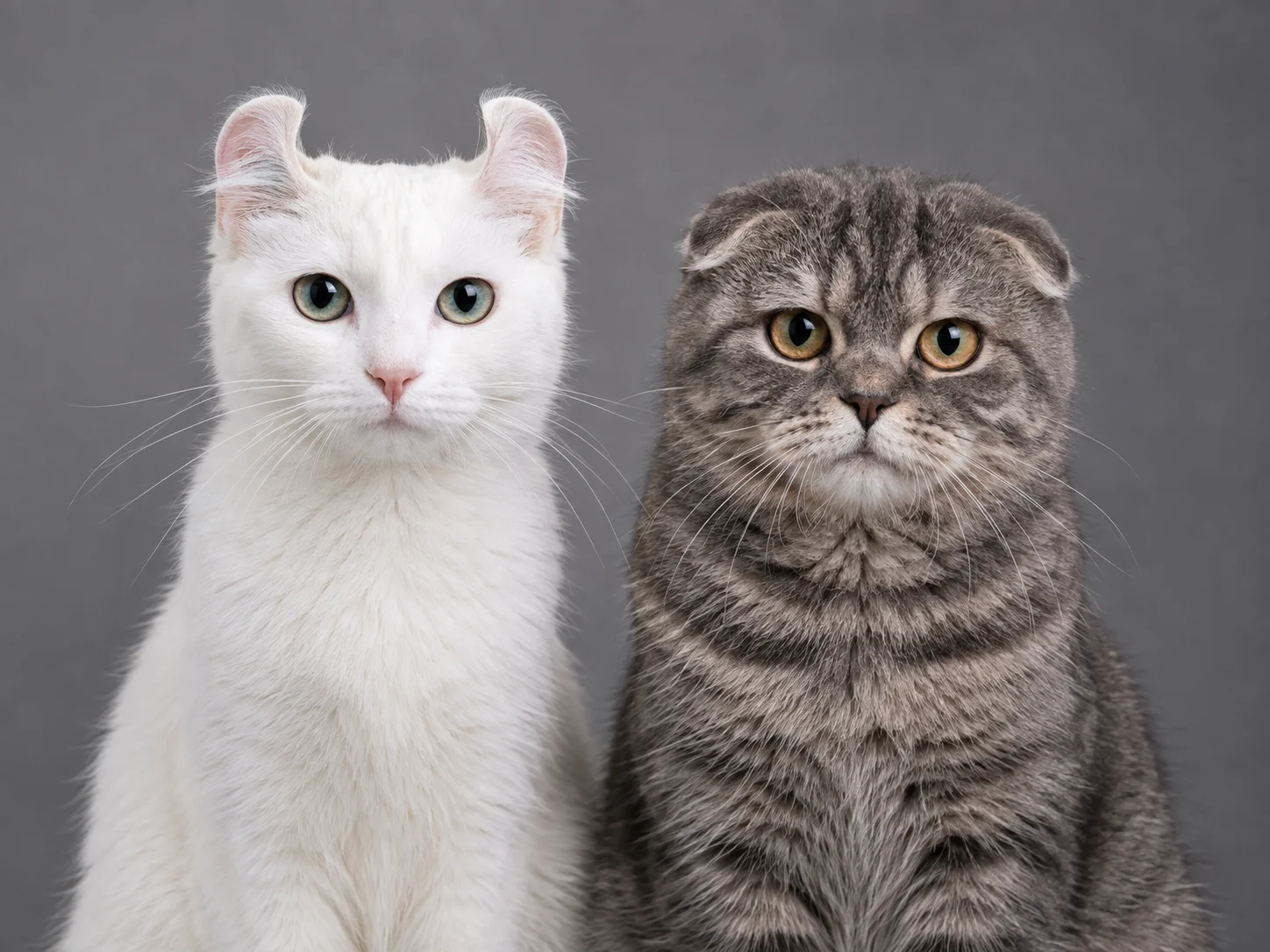
These two breeds are grouped together because both owe their signature look to ear cartilage mutations, just in opposite directions. The American Curl’s ears bend backward in a graceful arc, giving the cat a perpetually alert, almost surprised expression. The Scottish Fold’s ears fold forward and down, producing a rounded, owl-like face that many describe as looking perpetually worried or curious. Breed guides frequently cite these two cats alongside the Sphynx and Lykoi as among the most visually unusual recognized breeds, since ear shape dramatically changes how a cat’s face reads to human observers. Both breeds are generally described as calm, adaptable, and affectionate, though responsible breeders and veterinary organizations recommend careful breeding practices for Scottish Folds specifically, since the cartilage mutation can, in some cases, affect joint health if not managed properly.
6. Japanese Bobtail06
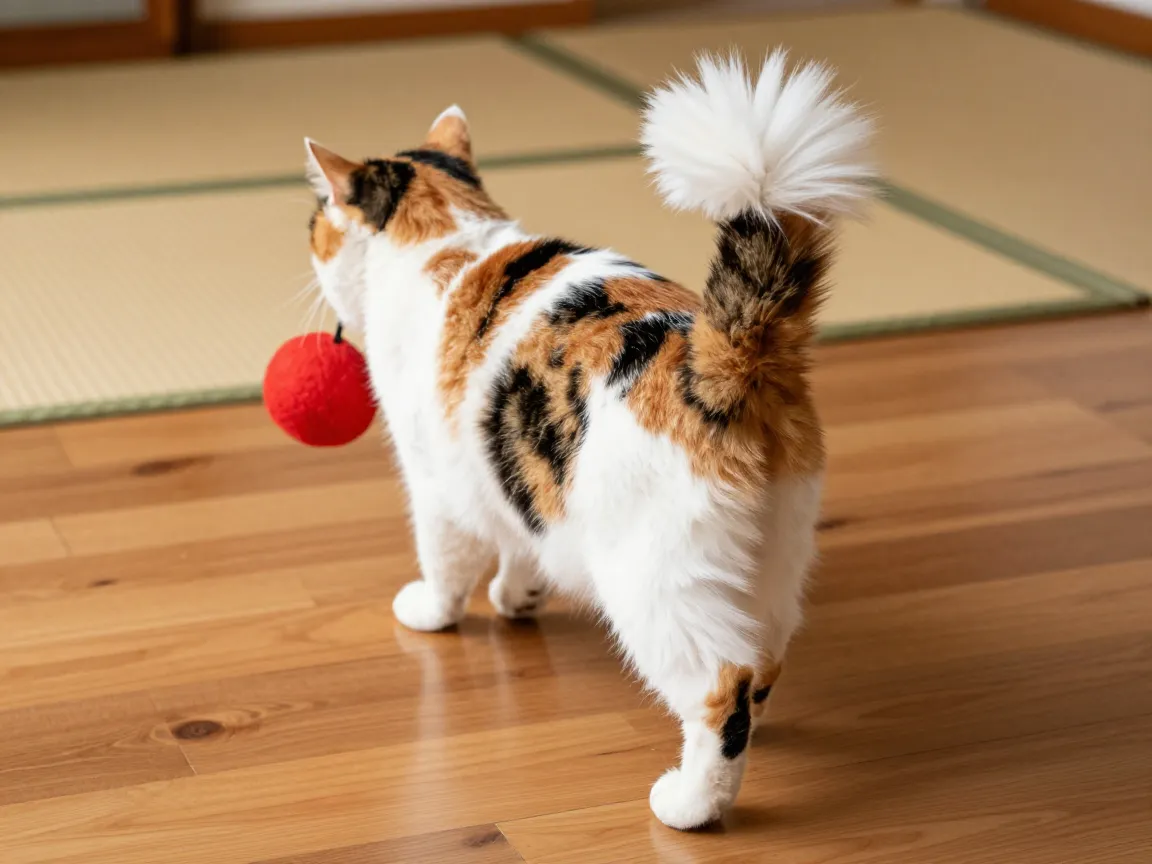
Rounding out this list of 6 Funny Looking Cats That Are Absolutely Hilarious to See is the Japanese Bobtail, prized for its short, kinked tail that fans out like a fluffy pom-pom. According to a Catster guide on strange-looking cat breeds published in March 2026, no two Japanese Bobtail tails look exactly alike, since the kink pattern is unique to each individual cat. The kinked structure spreads the fur outward in a way that resembles a rabbit’s tail more than a typical cat tail, creating an instantly recognizable and undeniably charming silhouette. Beyond the tail, Japanese Bobtails are known for their vocal, chatty personalities and their habit of carrying toys around the house while making distinctive chirping sounds, adding an audio layer to their already comedic presence.
Wild Cousins With Equally Funny Faces
Domestic breeds are not the only felines with unusual looks. Wildlife researchers have documented several wild cat species with features just as visually surprising, though they are studied for ecological reasons rather than comedic appeal. A February 2026 feature from Discover Wildlife on the world’s strangest wild cats highlights a handful of species worth knowing about, even though none of them make suitable household pets.
The serval, a slender African wild cat, has legs so long relative to its body that it looks almost stilt-like when walking, paired with enormous ears that help it detect prey moving through tall grass. Pallas’s cat, found across Central Asia, has an unusually flattened face and round pupils that give it a permanently startled or grumpy expression, made even more dramatic by its extremely dense, fluffy coat. The flat-headed cat, native to Southeast Asian wetlands, has a face that some researchers compare to a small lemur, with a low forehead and forward-set eyes suited for catching fish. The caracal, meanwhile, is known for its large, tufted black ears that stand upright like tiny antennae, giving it one of the most recognizable silhouettes among mid-sized wild cats.
These species share the same underlying theme as the domestic breeds above: unusual anatomy shaped entirely by survival needs, whether that means better hearing, camouflage, or hunting precision. The difference is that wild cats’ odd features evolved through natural selection over thousands of years, while domestic breeds’ quirky traits were preserved and refined through selective breeding after a spontaneous mutation appeared.
Why These Cats Make Wonderful (and Hilarious) Companions
A recurring theme across veterinary and breed-authority sources is that unconventional appearance rarely predicts personality. Vetstreet’s coverage of goofy cat breeds and Hepper’s guide to strange and funny cats both emphasize that most of the breeds featured here are described as affectionate, social, and eager to interact with their owners, sometimes even more so than traditional short-haired breeds.
The table below summarizes the personality traits most commonly associated with each breed, based on current breed-club descriptions and pet-care guides.
| Breed | Signature Funny Feature | Common Personality Traits |
|---|---|---|
| Sphynx | Hairless wrinkled body | Affectionate, extroverted, heat-seeking |
| Lykoi | Patchy werewolf-like coat | Curious, loyal, dog-like |
| Devon Rex | Curly coat, pixie face | Playful, energetic, mischievous |
| Munchkin | Short dwarfed legs | Active, friendly, agile |
| Scottish Fold / American Curl | Folded or curled ears | Calm, adaptable, affectionate |
| Japanese Bobtail | Kinked pom-pom tail | Vocal, chatty, playful |
This pattern is exactly why “so-ugly-it’s-cute” has become a genuine cultural phrase rather than an insult. Breeders and rescue organizations alike report that people who adopt funny-looking cats often become the most devoted advocates for the breed, largely because the personality so consistently exceeds expectations set by the unusual appearance.
The Ongoing Popularity of Funny Looking Cats
Interest in unusual and comedic cats shows no sign of slowing down. Media outlets including Bored Panda and Animal Channel maintain large, frequently refreshed photo galleries dedicated to goofy or “caught-in-the-act” cat expressions, while breed-focused publications like Catster and World Animal Foundation continue updating their strangest-cat roundups well into 2026. This steady stream of content suggests that funny-looking cats have moved beyond niche breed-club interest and into mainstream pop culture, driven largely by how easily these images and videos spread across social platforms.
Part of the appeal is timing. Short-form video content thrives on visual surprise, and a cat with wolf-like patches, stilt-like legs, or ears folded like origami delivers that surprise instantly, without needing any context or explanation. As a result, expect continued growth in curated “top five” or “top ten” funny cat lists rather than a single definitive ranking, since new breeds, individual cats, and viral moments keep refreshing the pool of contenders.
Frequently Asked Questions About Funny Looking Cats
Are funny looking cats less healthy than typical breeds?
Not inherently. Most traits discussed here, including hairlessness, curly coats, and folded ears, are cosmetic mutations that do not automatically cause health problems. Responsible breeding practices and regular veterinary checkups remain important for any breed, but funny appearance alone does not equal poor health.
Which of the 6 Funny Looking Cats That Are Absolutely Hilarious to See is the rarest?
The Lykoi is widely considered the rarest breed on this list. Its recent formal recognition by cat fancy organizations reflects both its novelty and the careful, limited breeding programs currently producing it.
Do funny looking cats require special grooming?
Some do. Sphynx cats need regular bathing since they lack fur to absorb skin oils. Devon Rex and Lykoi coats are typically low-maintenance despite their unusual texture. Munchkin, Scottish Fold, American Curl, and Japanese Bobtail cats generally follow standard grooming routines based on their coat length.
Are these breeds good for first-time cat owners?
Yes, in most cases. Breed guides consistently describe all six cats as sociable and adaptable, making them reasonable choices for owners willing to research breed-specific needs before adopting.
Where can someone find these funny looking cat breeds?
Reputable breed-specific rescues and registered breeders affiliated with recognized cat fancy organizations are the safest sources. Buyers should always ask for health testing documentation, particularly for breeds like the Scottish Fold, where cartilage-related joint health should be monitored carefully.
Conclusion
Unusual does not mean unlovable. Every entry among these 6 Funny Looking Cats That Are Absolutely Hilarious to See proves that a strange silhouette, a patchy coat, or an unexpected ear shape can coexist with warmth, playfulness, and genuine companionship. The Sphynx, Lykoi, Devon Rex, Munchkin, American Curl, Scottish Fold, and Japanese Bobtail each carry a distinct genetic quirk that shapes their appearance, yet breed authorities and everyday owners alike describe these cats as affectionate, energetic, and endlessly entertaining to live with.
Anyone considering adding one of these breeds to their home should start by researching a specific breed’s health considerations, connecting with a reputable breeder or breed-specific rescue, and spending time with the breed in person whenever possible before making a decision. Funny looking cats may draw stares and laughs, but the people who actually live with them tend to agree on one thing: the comedy is only the beginning of the appeal.