Easy Cat Sketch Tutorials For Absolute Drawing Beginners
Ninety percent of people who try to draw a cat quit within the first two minutes because they attempt to draw the whole animal at once instead of breaking it into shapes. That single habit separates frustrated beginners from people who finish a recognizable cat sketch on their first try. The good news: cats are one of the most forgiving subjects in beginner art, built almost entirely from circles, ovals, and triangles.
Disclosure: This post contains affiliate links. As an Amazon Associate, we earn from qualifying purchases, and at no extra cost to you.
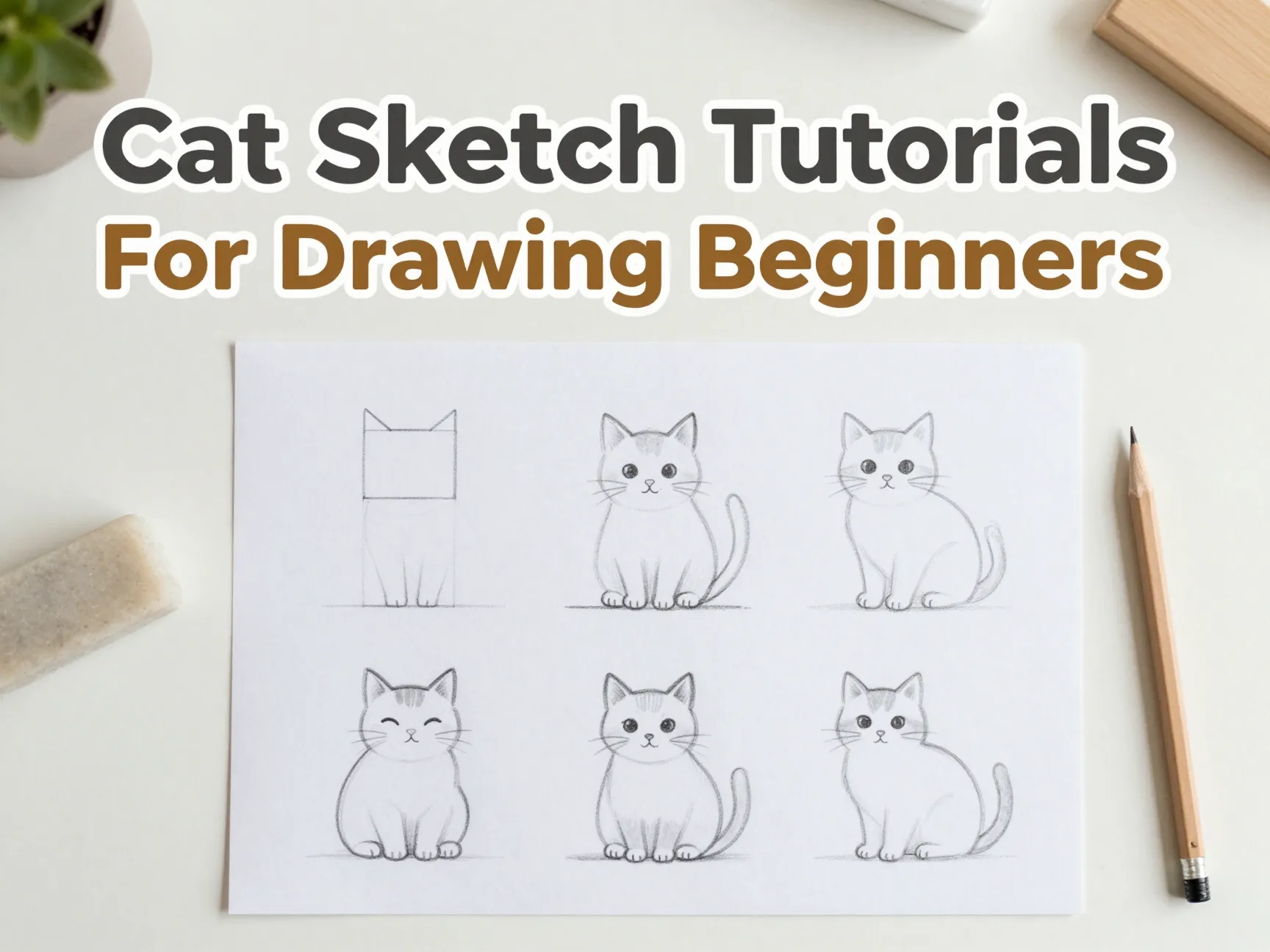
This guide rounds up 6 easy cat sketch tutorials for absolute drawing beginners, pulled from some of the most trusted step-by-step drawing resources available in 2026. Each tutorial listed below was chosen because it uses simple construction shapes, requires no advanced shading skills, and can realistically be finished in under 30 minutes by someone who has never picked up a sketch pencil before. Whether learning from a printable diagram, a multi-guide hub, or a short video, these six options give new artists a low-pressure path into drawing.
Key Takeaways
* Cats are drawn from basic shapes first: circles for the head, ovals for the body, and triangles for ears, making them ideal subjects for first-time sketchers.
* Multi-project hubs like SketchOk’s 19-guide collection and Finebrushes’ 13+ idea list let beginners practice several difficulty levels without switching resources.
* Video-based tutorials work well for visual learners who want to watch pencil movement in real time rather than follow static diagrams.
* Every tutorial in this roundup can be completed with just a pencil, eraser, and plain paper, no special art supplies required.
* Erasing construction lines before adding final details and color is the step beginners skip most often, and it is the one that makes the biggest visual difference.
What Makes a Cat Sketch Tutorial Beginner-Friendly
Not every drawing guide labeled “easy” is actually appropriate for someone starting from zero. A genuinely beginner-friendly tutorial follows a specific structure: it starts with light guideline shapes, adds features in a logical order, and never asks the learner to freehand a complex curve without a shape reference underneath it. This is why the most respected drawing resources of 2026, including wikiHow’s refreshed cat-drawing guide and Easypeasyandfun’s simplified cartoon lesson, all rely on the same underlying method even though they present it differently.
The pattern is consistent across nearly every reputable source: draw a circle or oval for the head, add a slightly larger oval for the body, place two triangles for ears, sketch almond or oval eyes, add a simple triangular or rounded nose, draw a few whisker lines, and finish with oval paw shapes and a curved tail. Only after all of that is lightly sketched does a beginner darken the final outline and erase the leftover guidelines.
This shape-first approach matters because it removes the guesswork. Instead of worrying about proportion while also worrying about detail, beginners handle one problem at a time. It is the same reason art teachers have used geometric construction for decades, and it explains why every tutorial featured in this list of 6 easy cat sketch tutorials for absolute drawing beginners follows nearly identical bones despite differing in style, length, and platform.
The 6 Easy Cat Sketch Tutorials For Absolute Drawing Beginners You Can Start Today
Each of the following six tutorials was selected for a different reason, some for their step count, some for their format, and some for how they layer in extra elements like color or props. Together they form a well-rounded starter set for anyone building basic drawing confidence.
1. Simple Cartoon Cat From SketchOk’s 19-Guide Collection
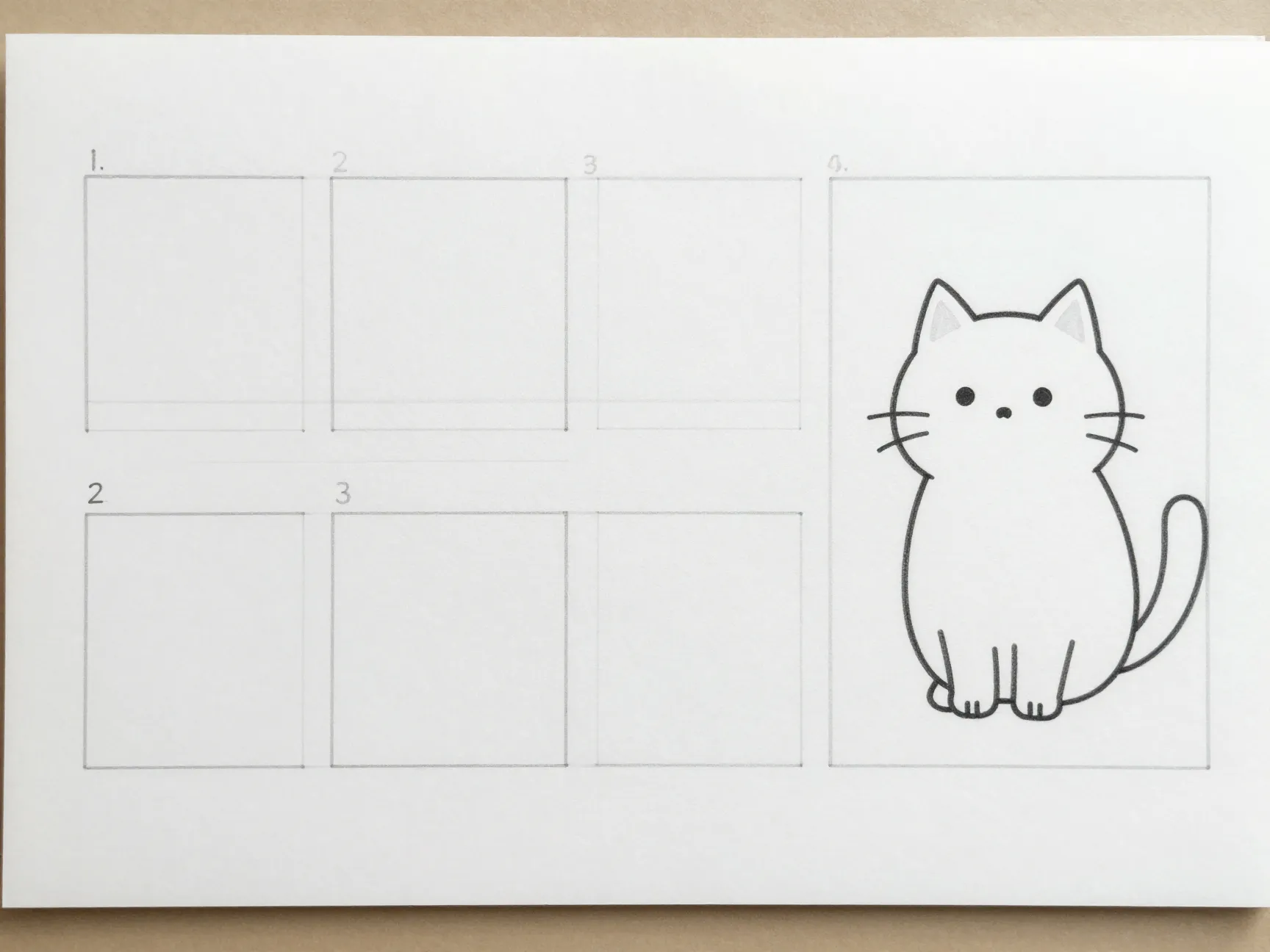
SketchOk’s “How to Draw Cats” hub, last updated on 8 August 2026, groups 19 separate cat projects into one organized resource, and the standout for absolute beginners is its five-step simple cartoon cat. The project uses a rounded head shape, two small triangle ears, dot eyes, and a simple curved body, making it one of the fastest complete drawings on this list. Because the hub also includes an eight-step lying cat, learners can move directly from the five-step version into a slightly more detailed pose without switching resources or relearning a new drawing philosophy. This makes SketchOk particularly useful for anyone who wants a natural progression rather than a single isolated lesson.
2. Basic Standing Cat From wikiHow’s Four-Tutorial Series
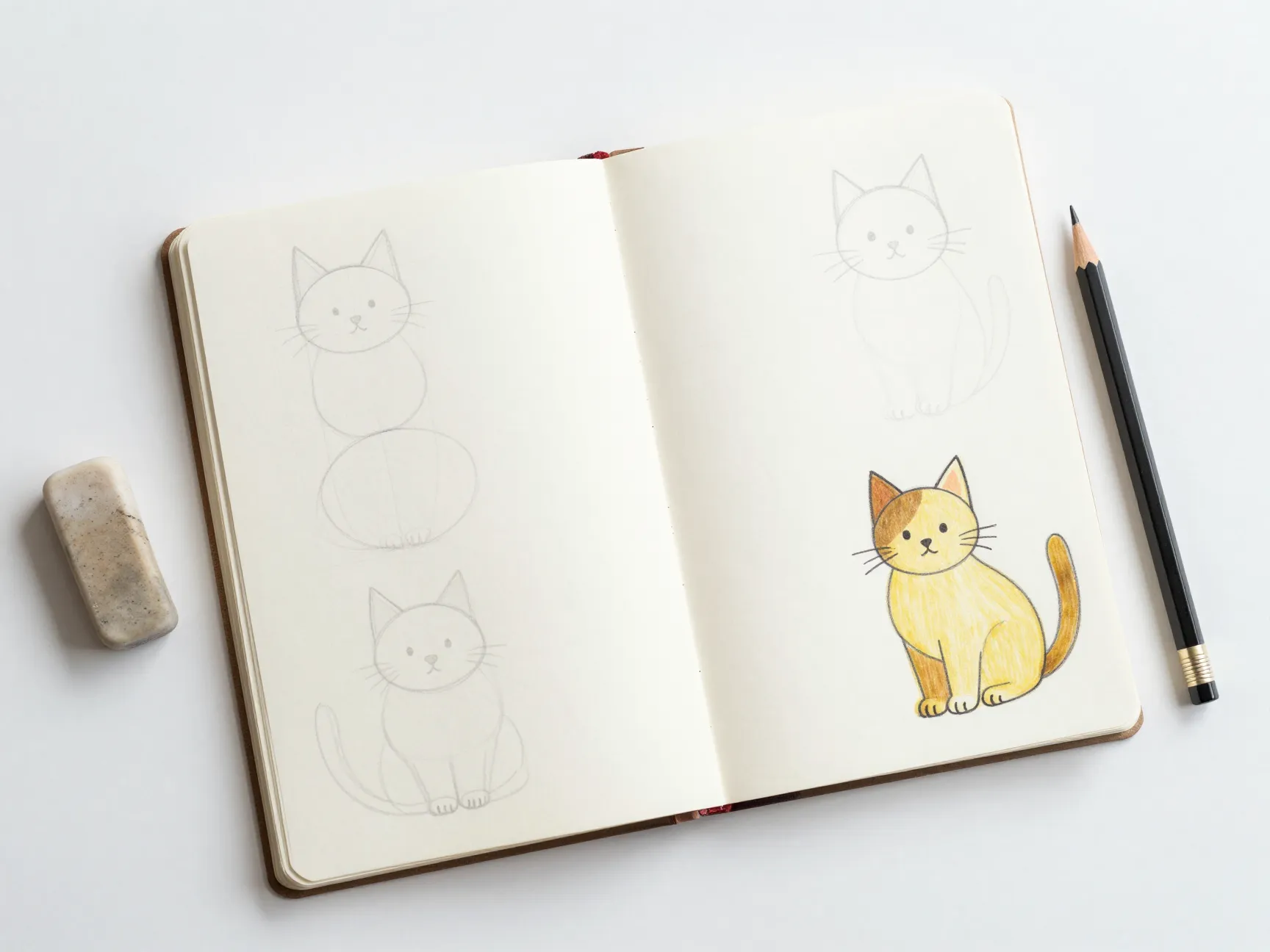
wikiHow released a refreshed “How to Draw a Cat” guide on 12 June 2026, updated again on 4 July 2026, that presents four distinct beginner projects in one place. The basic standing cat tutorial is the most approachable of the four, built from overlapping circles for the head and body, triangles for the ears, and ovals for the paws. It breaks the process into eight clearly defined steps, moving from loose construction lines all the way to a finished, colored drawing. This step count strikes a good balance: detailed enough to avoid confusion, short enough to avoid overwhelm.
3. Cute Cartoon Kitten From Easypeasyandfun
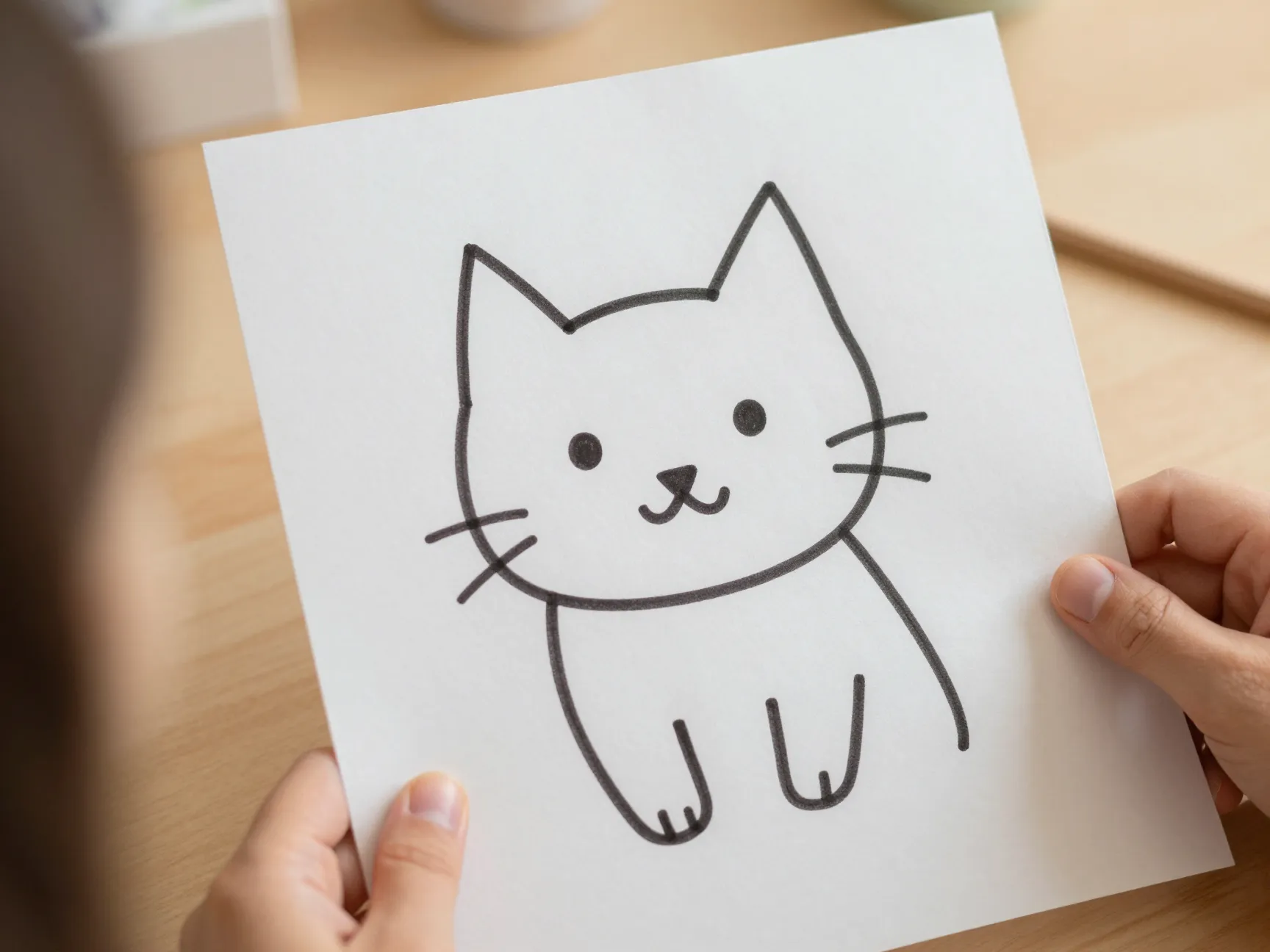
Easypeasyandfun’s cat-drawing guide, updated on 7 September 2026, is aimed squarely at children and absolute beginners who are only comfortable with the most basic geometric forms. The kitten in this tutorial starts with an oval or slightly boxy head shape, adds triangle ears and a small triangle nose, and finishes with simplified facial features. Because the shapes are so forgiving, imperfect circles and slightly uneven ears still produce a recognizable, charming result. This tutorial works especially well for anyone drawing alongside a young learner or for adults who simply want zero pressure while practicing pencil control.
4. Really Easy Cute Cat From Easy Drawing Guides
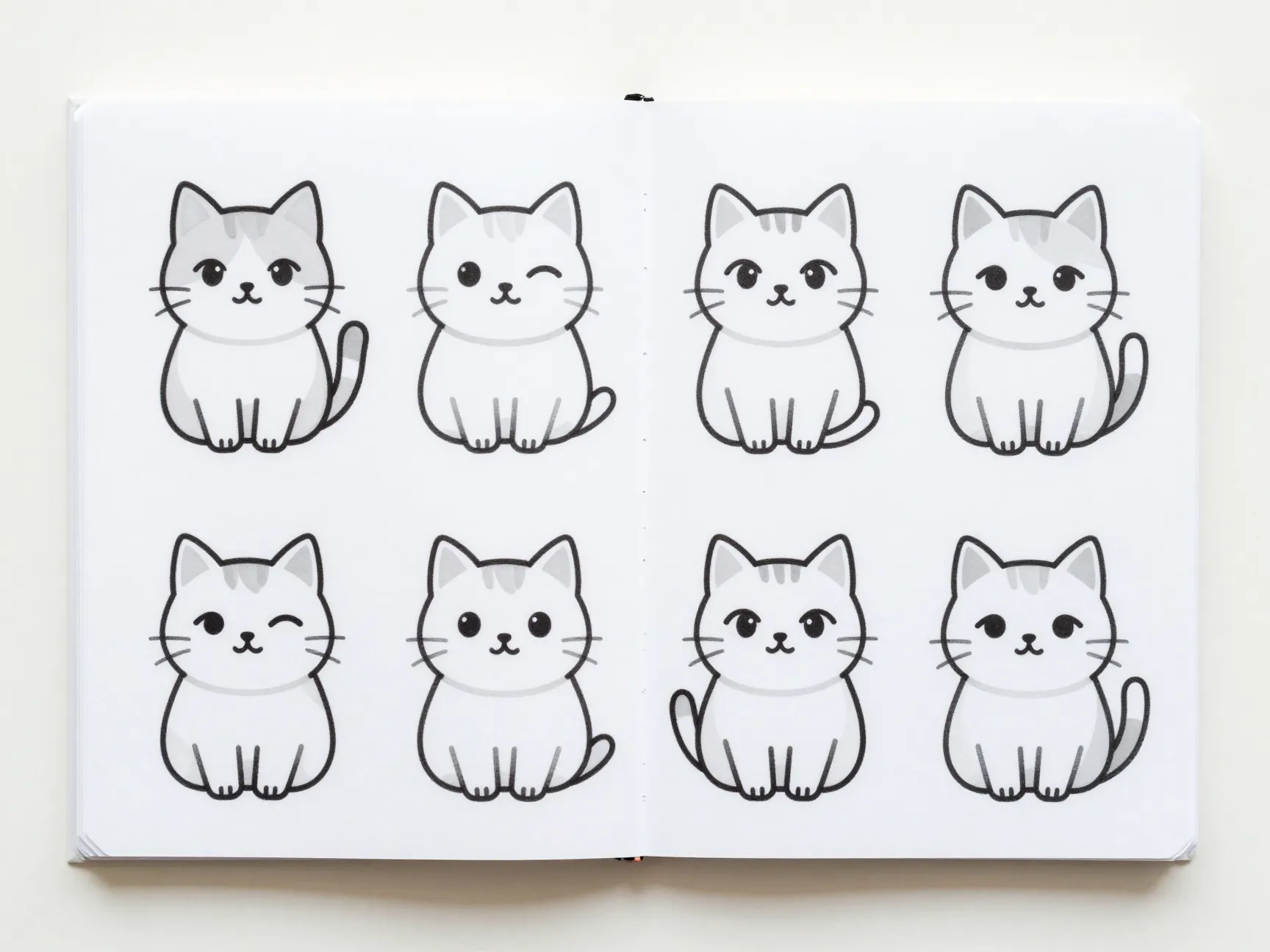
Easy Drawing Guides introduced its “How to Draw an Easy Cute Cat” tutorial on 3 June 2026, and it earns a spot on this list because of how it handles facial detail. Rather than full circles for eyes, it uses partial ovals combined with curved lines for the cheeks, giving the cat a softer, more expressive look without adding technical difficulty. The tutorial is presented in labeled diagram panels, meaning each stage sits next to the previous one for easy comparison. This layout is ideal for beginners who prefer to see the whole drawing journey at a glance rather than scrolling through separate steps one at a time.
5. Oval-Body Cat From How to Draw for Kids
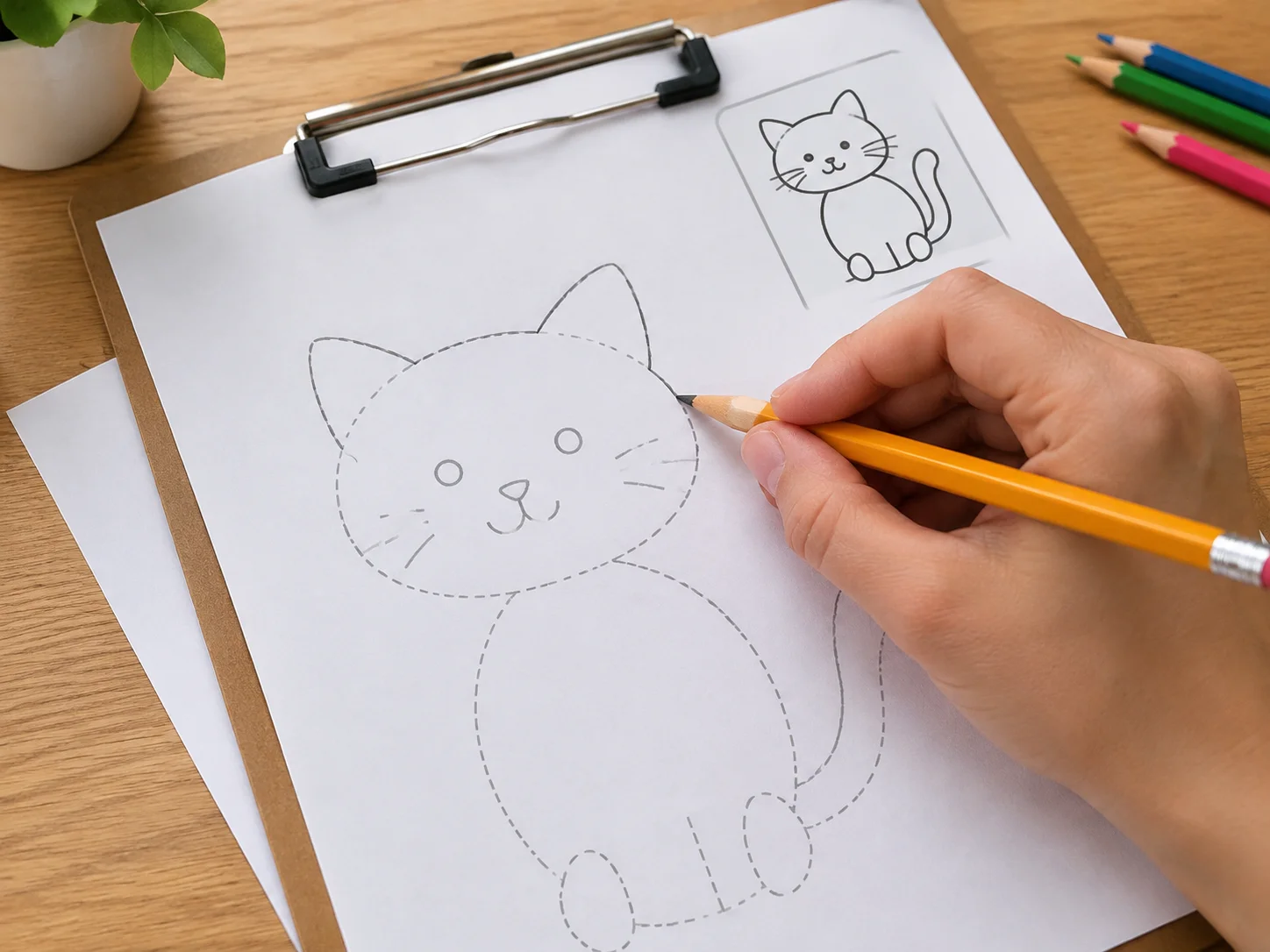
How to Draw for Kids updated its cat lesson in March 2026, and it remains one of the most structured options for true first-timers. The cat is built from a simple oval body plus a rounded head shape, with each stage explained in plain, child-friendly language and supported by printable practice sheets. Because the instructions avoid technical art vocabulary entirely, this tutorial suits absolute beginners of any age who want plain-language guidance rather than artistic jargon. The printable component also makes it easy to trace first and freehand later, a proven technique for building muscle memory before attempting an unaided sketch.
6. Pencil Sketch Kitten From the Easy Video Tutorial Series
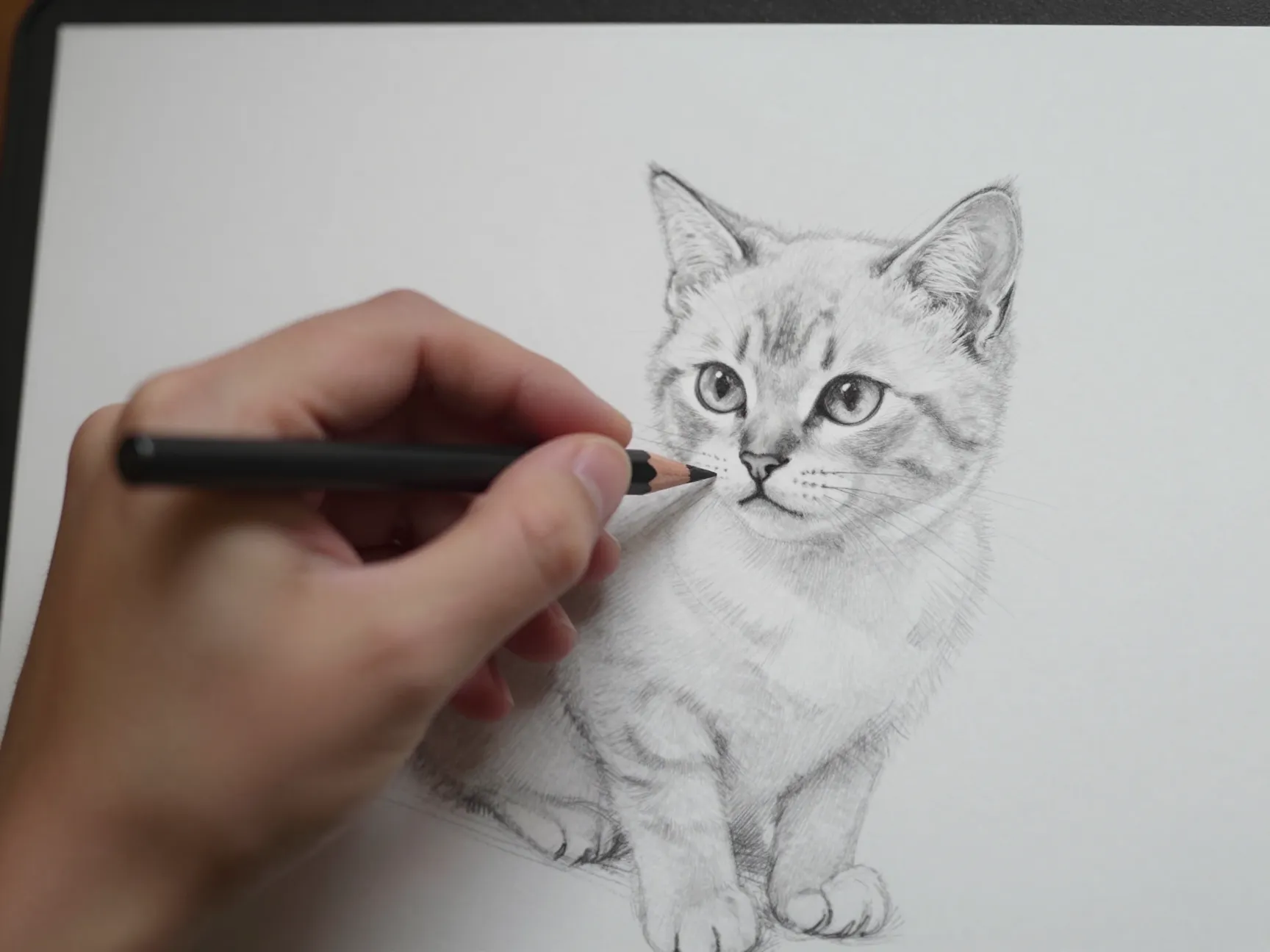
For visual learners, the 6 May 2026 video tutorial “How to Draw a Cute Cat Step by Step” offers a real-time pencil sketch demonstration rather than static images. It begins with basic head-and-body shapes, then gradually layers in ears, eyes, whiskers, paws, and tail while narrating each decision. A related January 2026 video adds a small twist by placing the cat inside a cardboard box, giving slightly more advanced beginners an extra prop to practice without changing the core drawing skills required. Watching a pencil move stroke by stroke often clarifies pressure and pacing questions that static diagrams cannot answer, which is why this format rounds out the list.
Comparison Table of the 6 Easy Cat Sketch Tutorials For Absolute Drawing Beginners
The table below summarizes format, step count, and best-fit learner for each of the six tutorials, making it easier to choose a starting point.
| Tutorial | Format | Approx. Steps | Best For |
|---|---|---|---|
| 1. SketchOk Simple Cartoon Cat | Static image hub | 5 steps | Fastest complete drawing |
| 2. wikiHow Standing Cat | Written + diagrams | 8 steps | Balanced detail and pacing |
| 3. Easypeasyandfun Kitten | Illustrated guide | 6 steps | Kids and total beginners |
| 4. Easy Drawing Guides Cute Cat | Panel diagrams | 7 steps | Visual side-by-side learners |
| 5. How to Draw for Kids Oval Cat | Printable lesson | 6 steps | Tracing and plain-language guidance |
| 6. Pencil Sketch Video Tutorial | Video demonstration | 9 steps | Visual and audio learners |
“Cats forgive imperfect circles better than almost any other animal, which is exactly why they belong at the top of every beginner drawing list.”
Essential Tools and Materials for Beginner Cat Sketches
None of the six tutorials above require expensive supplies. A basic list covers everything needed:
- A regular graphite pencil, ideally an HB or 2B for light construction lines and a softer 4B for final dark outlines.
- A soft eraser, since construction guidelines need to disappear cleanly without smudging the paper.
- Plain white paper, though lightly gridded paper can help beginners keep proportions even, a method also recommended in Finebrushes’ geometric grid-based cat projects.
- Optional colored pencils or markers for the final layer, useful once the outline stage from tutorials like Color Made Happy’s guide is complete.
- A sharpener kept nearby, since fine details like whiskers and eye shapes need a crisp point.
Pencil hardness matters more than most beginners expect. A pencil that is too hard leaves faint lines that are hard to see while sketching, while one that is too soft smudges before the drawing is finished. Testing a few grades on scrap paper before starting any of these six tutorials saves frustration later.
Common Mistakes Beginners Make (and How to Avoid Them)
Even with a clear tutorial in hand, certain habits slow progress. Recognizing them early prevents wasted practice time.
- Pressing too hard on construction lines, which makes them impossible to erase cleanly later.
- Drawing the head and body at the wrong scale relative to each other, usually because the guideline shapes were skipped entirely.
- Adding fine detail like whiskers or fur texture before the basic proportions are locked in.
- Rushing through the erasing stage, leaving visible guideline smudges in the finished sketch.
- Comparing a first attempt to a finished tutorial image instead of to a personal previous attempt.
Working through two or three of the six easy cat sketch tutorials for absolute drawing beginners back to back is one of the fastest ways to notice these mistakes disappearing. Repetition across slightly different poses, such as a sitting cat followed by a lying cat, builds shape memory faster than repeating the exact same drawing multiple times.
Frequently Asked Questions
Do these tutorials require any prior drawing experience?
No. Every tutorial listed here was chosen specifically because it starts from basic geometric shapes and assumes zero prior skill.
Which tutorial is fastest to finish?
The SketchOk five-step simple cartoon cat is the quickest complete drawing on this list, often finishable in under 10 minutes.
Is it better to learn from a video or a written diagram?
Both work equally well; the choice comes down to personal learning style. Visual and auditory learners often prefer the video-based pencil sketch tutorial, while learners who like to control their own pace tend to prefer static diagrams like those from wikiHow or Easy Drawing Guides.
Should color be added while learning to draw a cat for the first time?
Color is optional and best added after the pencil outline is confident, as demonstrated in Color Made Happy’s structured guide, which places color as the final layer rather than an early step.
How many times should a beginner repeat the same tutorial before moving on?
Two to three repetitions of a single tutorial is usually enough before switching to a new pose, since repeating the identical drawing too many times can create memorized shapes rather than transferable skill.
Conclusion
Learning to draw a cat does not require talent, expensive tools, or years of practice. It requires the right starting shapes and a tutorial structure that respects how beginners actually learn, one step at a time, guideline before detail, and color last if at all. The six easy cat sketch tutorials for absolute drawing beginners covered here, spanning static hubs, printable lessons, and video walkthroughs, give new artists a realistic path from a blank page to a finished, recognizable cat.
The best next step is simple: pick one tutorial from this list, gather a pencil and paper, and complete a single drawing from start to finish before judging the result. Then repeat with a second tutorial from the list to compare poses and difficulty. Progress in drawing comes from finished attempts, not perfect ones, and every artist who now sketches confidently once started with the exact same wobbly circles and uneven triangles described in this guide.