Easy Black Cat Doodles to Adorn Your Journals and Notes
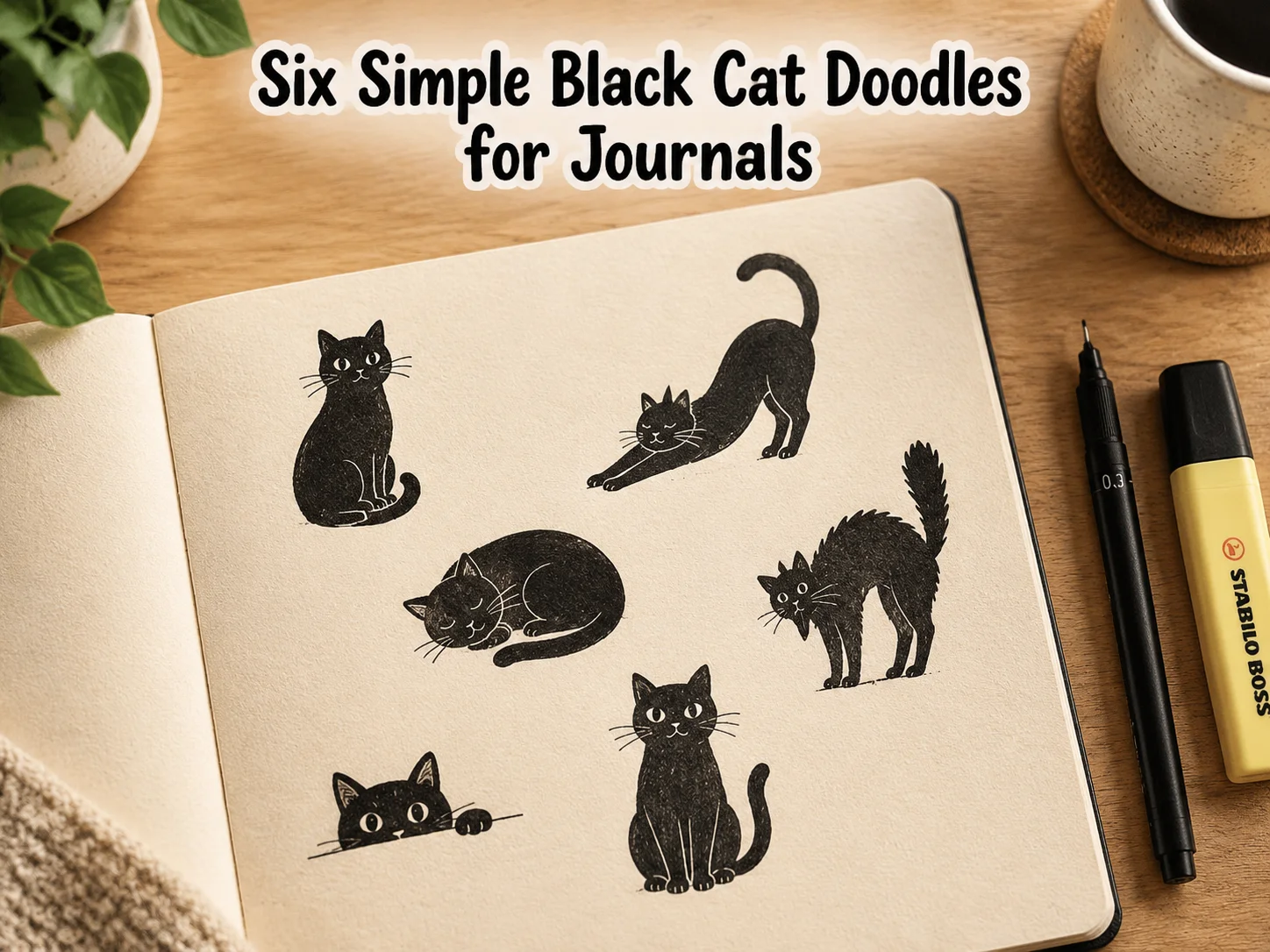
Stationery shelves have quietly shifted. Hardback journals with fully printed black cat covers now sit beside plain notebooks in craft stores, and lined notebooks branded with “cute black cat” themes ship with a hundred sheets of pre-printed feline doodles before a single owner picks up a pen. That is not a coincidence. Black cats have become one of the most requested motifs in journaling communities, prized for their high contrast, minimal detail, and instant seasonal charm. This guide breaks down 6 Easy Black Cat Doodles to Adorn Your Journals and Notes, showing exactly how to draw each one with basic shapes, common pens, and a few minutes of practice.
Disclosure: This post contains affiliate links. As an Amazon Associate, we earn from qualifying purchases, and at no extra cost to you.
Whether the goal is a Halloween-themed spread, a monthly bullet journal grid, or a simple border around class notes, these designs are built for beginners. No prior art training is needed. Each doodle relies on ovals, triangles, and curved lines that most people already know how to draw.
Key Takeaways
- Black cat doodles work well in journals because their solid silhouettes create strong contrast against white or cream paper, making them easy to spot and repeat across spreads.
- All 6 Easy Black Cat Doodles to Adorn Your Journals and Notes featured here use basic shapes such as circles, ovals, and triangles, so no advanced drawing skill is required.
- Black cats are a recognized staple of fall and Halloween journal themes, often paired with ghosts, candles, moon phases, and autumn leaves for thematic consistency.
- Simple tools like a fine-tip black Micron pen, a mechanical pencil, and a highlighter such as a Zebra Mildliner are enough to produce polished results.
- Beyond decoration, black cat doodles now function as date markers, section dividers, and page borders in bullet journals and everyday notes.
Why Black Cat Doodles Work So Well in Journals and Notes
Black cats hold a specific advantage over most other doodle subjects: they can be drawn almost entirely as a filled-in silhouette. There is no need to shade fur texture, blend colors, or worry about proportions the way a realistic animal drawing might demand. A single solid black shape, accented with two triangle ears and a curled tail, reads instantly as “cat” to any viewer.
This simplicity is exactly why black cat motifs have become a recurring feature in seasonal doodle guides, cat-themed bullet journal roundups, and even commercially printed notebooks. A recent update to a major cat doodle resource reinforced this point directly, walking through a step-by-step method for cute, easy cat doodles built from circles, ovals, and triangles, with explicit prompts for turning those same shapes into black cat designs for Halloween-style bullet journal pages.
There is also a practical reason black cats show up so often in fall spreads specifically. Guides on fall bullet journal doodles consistently list the black cat alongside ghosts, candles, moon phases, and autumn leaves as one of the standard seasonal motifs journalers repeat across multiple pages for visual cohesion. A single cat shape, once learned, can be resized and repositioned as a corner accent, a border repeat, or a full-page illustration without ever needing to be redrawn from scratch.
Beyond aesthetics, black cats have taken on a functional role. One popular cat-themed bullet journal spread format uses black cats in different poses, sitting, stretching, and staring, as visual anchors for each day of the month, turning what used to be pure decoration into an organizational tool.
6 Easy Black Cat Doodles to Adorn Your Journals and Notes
The following six designs move from the simplest silhouette shapes to slightly more detailed poses. Each one can be completed in under two minutes once the shapes feel familiar, and every design translates well to both digital note apps and physical paper.
1. The Sitting Silhouette Cat
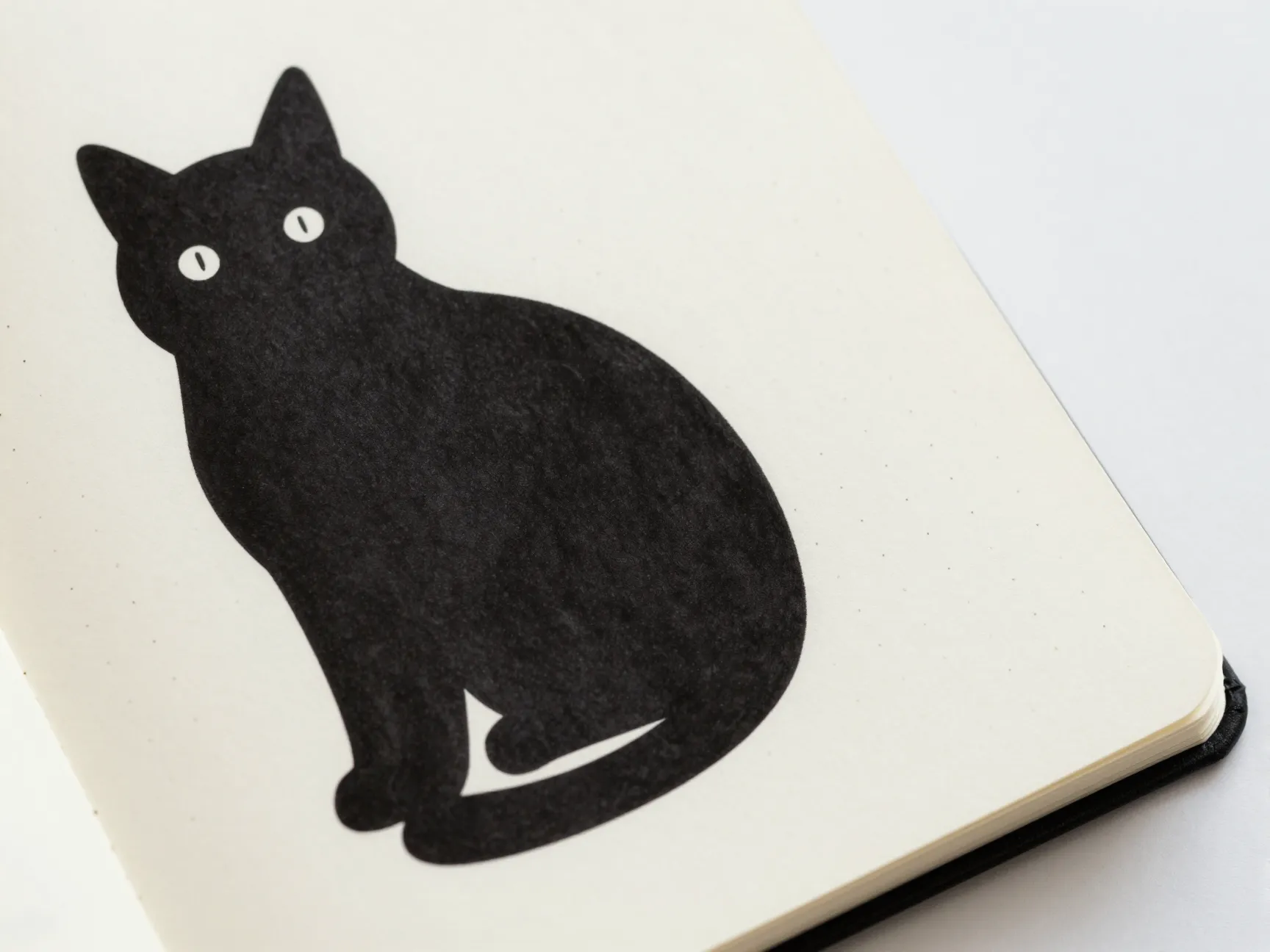
The sitting silhouette is the foundation of nearly every black cat doodle style, and it is the first design most beginner tutorials teach. Start with an oval for the body, positioned upright rather than sideways. Add a smaller circle on top for the head. From the top of the head, draw two triangles for ears, angled slightly outward. Fill the entire shape solid black, leaving only two small white or yellow dots for eyes and a thin curved line for the tail wrapping around the base of the body.
This pose is the one most often recommended for corner decorations on journal pages, since its compact, upright shape fits neatly into margins without disrupting written content. Beginner tutorials that focus specifically on cat drawing for bullet journals often start with this exact silhouette because it teaches the core shape vocabulary, circle head, oval body, triangle ears, used throughout every other cat doodle variation.
2. The Arched Stretching Cat
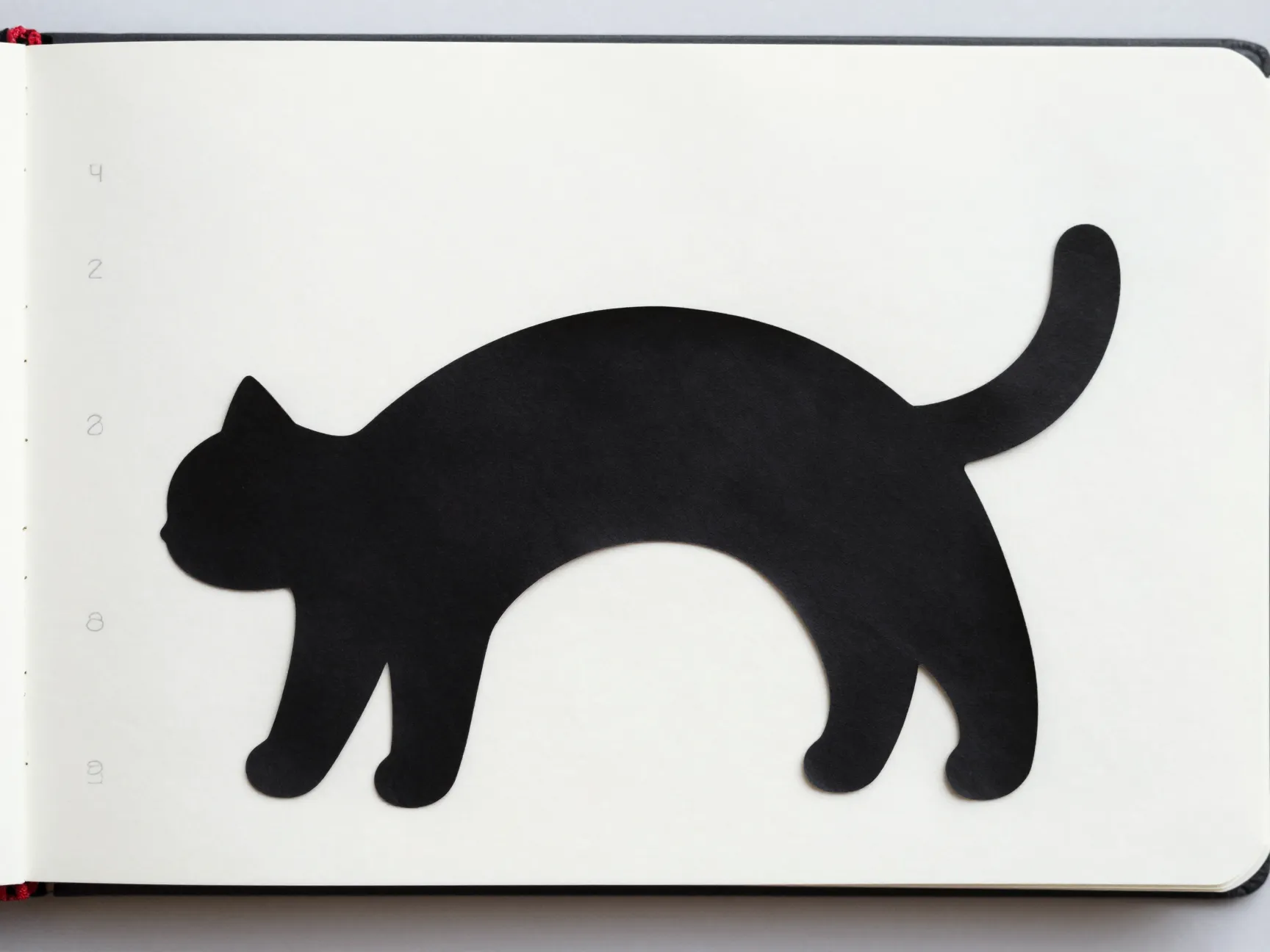
The stretching pose adds motion and personality without adding drawing difficulty. Draw a long, curved oval for the body, arched upward in the middle like a rainbow. Place the head at one end as a small circle with triangle ears, and add four short vertical lines beneath the arch for legs. The tail extends straight out from the opposite end, either straight or with a slight upward curl at the tip.
This design has become a favorite for monthly bullet journal spreads because it naturally spans a wider horizontal space, making it useful as a header decoration above a week’s worth of entries. Cat-themed monthly spread formats that rotate between sitting, stretching, and staring poses use this exact stretching silhouette to mark transition points, such as the start of a new week within a larger grid.
3. The Curled Sleeping Cat
For a softer, cozier feel, the curled sleeping cat works well in the corner of a page or tucked beside a to-do list. Draw a single large oval shape, then round off both ends so it resembles a comma or crescent. Add two small triangle ears peeking from the top curve and a thin tail that wraps around the bottom edge of the body, tucking under itself.
Because this design has no visible legs or facial detail beyond the ears, it is one of the fastest doodles to draw repeatedly, making it ideal for filling empty space at the bottom of a journal page or beside a short list of notes. Its rounded, compact form also mirrors the aesthetic emphasis found in monochrome black doodle trends, where minimalist, high-contrast shapes are valued over intricate detail.
4. The Halloween Arched-Back Cat

This is the classic “spooky cat” silhouette most associated with Halloween journal pages. Begin with two ovals overlapping slightly, one for the body and a smaller one angled upward for the arched back. Add four straight, slightly spread legs beneath the body, two pointed ears on top of a small round head, and a tail standing straight up with a slight curve at the very tip.
A recently updated Halloween doodle guide features this exact design as its dedicated black cat tutorial, presenting it as a simple, step-by-step drawing intended specifically for journal pages and Halloween-themed spreads. The arched back and raised tail give it more visual energy than the sitting or curled poses, making it a strong choice for a title page or the top of a themed weekly spread during October.
5. The Peeking Paw Cat
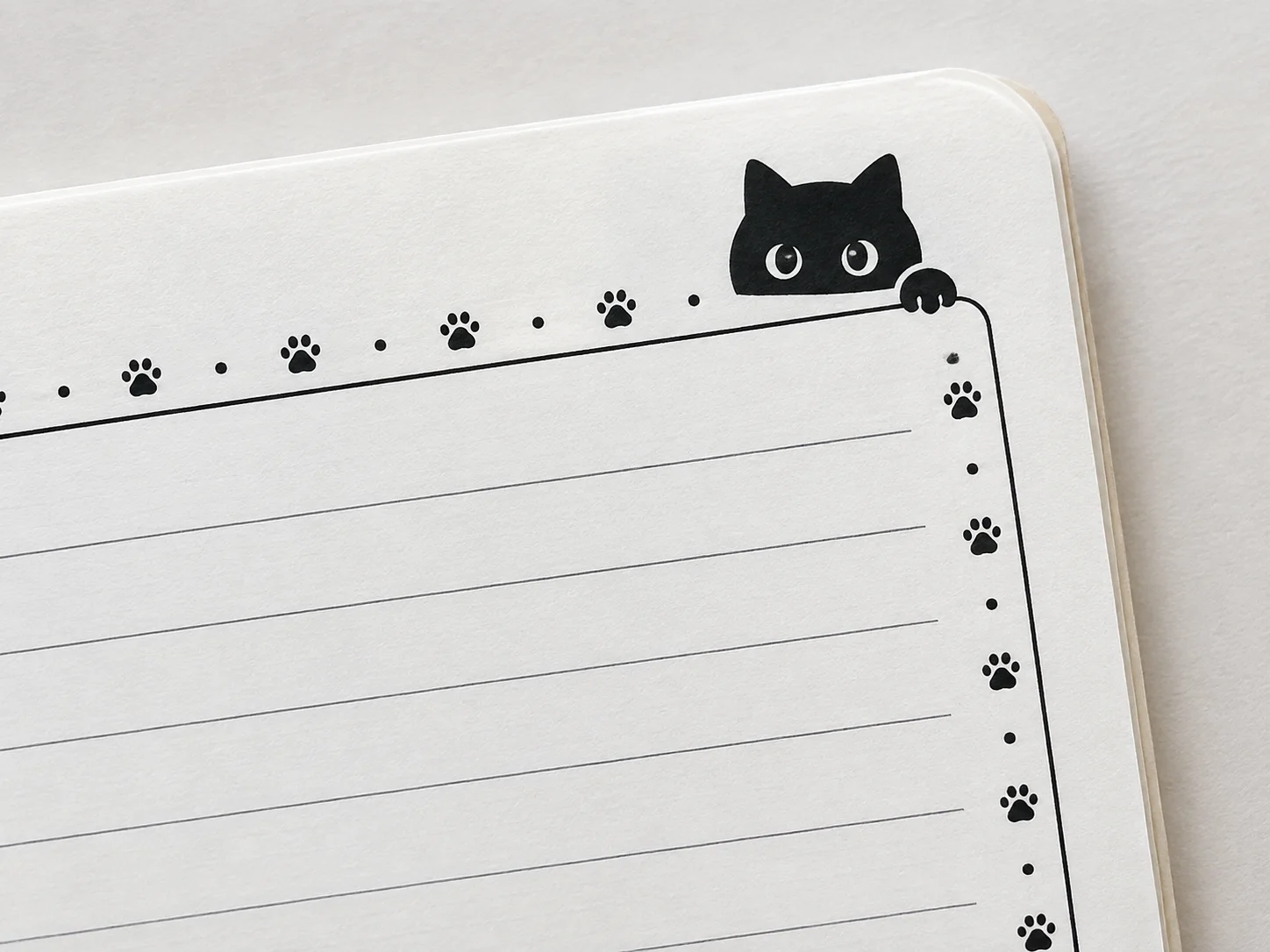
This design plays with negative space rather than showing a full cat body. Draw a black cat head, small circle with triangle ears, peeking over the edge of a text box, calendar box, or the corner of the page itself. Beneath the head, add one small black paw print resting on the border line, as if the cat is climbing into view.
This half-hidden approach has become popular in short-form doodle content, including border designs that use small black cat elements paired with paw prints, hearts, and playful accents specifically marketed for school notes, college journaling, and bullet journals. The peeking paw cat works especially well as a repeating border motif since only a small portion of the design needs to be drawn at each interval.
6. The Staring Front-Facing Cat
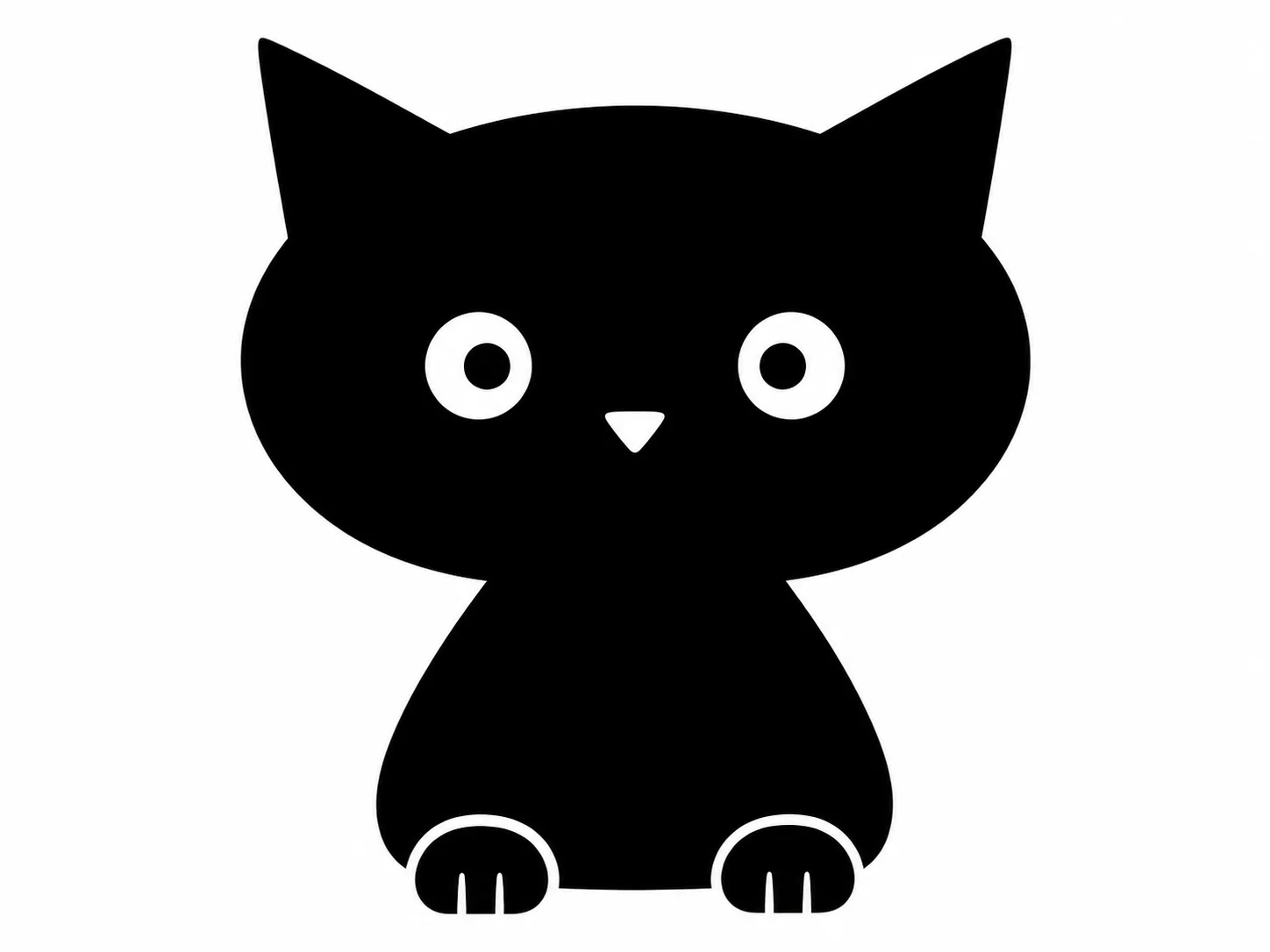
The front-facing cat is slightly more advanced than the previous five designs, but it remains achievable with basic shapes. Draw one large oval for the head, wider at the top for the ears and narrower toward the chin. Add two triangle ears at the top corners. Inside the oval, leave two small white or colored circles for eyes and a tiny triangle for the nose, filling in everything else solid black. Below the head, add a rounded triangle shape for the body, with two small paws peeking out from the bottom edge.
This pose is frequently used as a direct-eye-contact anchor point on a page, drawing the reader’s attention immediately. It pairs well with the sitting and stretching poses in monthly spread formats, where staring cats mark specific dates that need emphasis, such as deadlines or events, within a larger calendar grid.
Tools and Techniques for Drawing 6 Easy Black Cat Doodles to Adorn Your Journals and Notes
The right tools make a noticeable difference in how clean these designs look on the page, even though the shapes themselves stay simple. A common approach demonstrated in beginner cat doodle tutorials uses a 0.5mm mechanical pencil for the initial outline, followed by a fine-tip black pen to trace and fill in the final shape once the proportions look right.
Many bullet journal creators specifically recommend black Micron pens for outlining and filling black cat silhouettes, paired with Zebra Mildliners for adding subtle color accents like a moon, pumpkin, or star near the cat design. Paper choice matters too. Illustration paper around 90 lb weight is often suggested for practice sketches because it holds up well against repeated pen strokes without bleeding through, which is especially useful when filling in large solid-black shapes like the sitting or curled cat poses.
The table below summarizes the core tools used across most easy black cat doodle tutorials.
| Tool | Purpose | Best Used For |
|---|---|---|
| 0.5mm mechanical pencil | Sketching the initial outline | All six doodle poses before inking |
| Black Micron pen (fine tip) | Tracing and filling solid black shapes | Silhouette-heavy designs like the sitting and sleeping cat |
| Zebra Mildliner | Adding color accents near the cat | Halloween-themed backgrounds, moons, pumpkins |
| 90 lb illustration paper | Sturdy drawing surface | Practicing shapes before transferring to a journal |
| Eraser | Cleaning up pencil guidelines | Final cleanup before or after inking |
A simple three-step technique works across nearly all six designs. First, sketch light pencil guidelines for the basic shapes, oval body, circle head, triangle ears. Second, refine the outline until the proportions look balanced, adjusting the size of the ears or the curve of the tail as needed. Third, trace over the final outline with a black pen and fill in the solid areas, leaving only small details like eyes or a nose unfilled.
For anyone drawing digitally or preparing designs for printed journals, the same shape logic applies. Commercial products like hardback black cat doodle journals, which use fully printed front-and-back cover art on 90 gsm paper, are built from these same basic silhouette principles scaled up to cover-size artwork, showing that the technique holds up whether the final result is a quick margin doodle or a printed product design.
How to Incorporate Black Cat Doodles Into Your Journal Layouts
Once the six poses feel comfortable, the next step is deciding where they fit best within an actual journal layout. Placement matters as much as the drawing itself, since a well-placed doodle can organize a page while a poorly placed one competes with written content.
Several proven placement strategies have emerged from popular bullet journal formats:
- Date markers. Sitting, stretching, and staring cat poses can each represent a different type of day, such as a regular day, a busy day, or a deadline, within a monthly calendar grid.
- Section dividers. Cat heads and paw prints can separate daily sections within a weekly spread, replacing plain lines with a themed visual break.
- Page borders. A repeating pattern of the peeking paw cat or small paw prints along the edge of a page frames written notes without overwhelming them, a style seen in short-form content marketed for school notes and college journaling.
- Title page accents. The Halloween arched-back cat or the front-facing staring cat works well as a standalone illustration at the top of a themed monthly or seasonal spread.
- Empty space fillers. The curled sleeping cat is small enough to tuck into leftover space at the bottom of a to-do list or beside a short note without requiring layout changes.
Consistency across a spread matters more than complexity. Choosing two or three poses from the six described above and repeating them throughout a month’s worth of pages creates a cohesive theme, which is the same principle seen in fall bullet journal guides that list the black cat as one of a small set of core seasonal motifs meant to be reused rather than replaced with new designs each week.
Frequently Asked Questions
What supplies are needed to start drawing black cat doodles?
A pencil, an eraser, and a fine-tip black pen are enough to complete all six designs. A highlighter or colored pen is optional for adding Halloween-style background accents like a moon or pumpkin.
Are black cat doodles suitable for complete beginners?
Yes. Every design in this guide relies on basic shapes, ovals, circles, and triangles, that most people can draw without formal art training. Tutorials aimed at beginners consistently use these same shapes as the foundation for cat doodles.
Can these doodles be used outside of Halloween-themed pages?
Yes. While black cats are a recognized fall and Halloween motif, their high-contrast silhouette style also fits general bullet journal spreads, everyday note-taking, and minimalist monochrome doodle pages year-round.
How can black cat doodles help organize a journal instead of just decorating it?
Different poses can represent different types of days or sections. A sitting cat might mark a normal day, while a staring cat highlights a deadline, turning the doodle into a functional visual code across a monthly grid.
What pens work best for solid black cat silhouettes?
Fine-tip black Micron pens are widely recommended because they allow clean outlines and even fills without bleeding through standard journal paper.
Conclusion
Learning 6 Easy Black Cat Doodles to Adorn Your Journals and Notes does not require artistic talent, expensive supplies, or hours of practice. Each design, the sitting silhouette, the arched stretch, the curled sleeper, the Halloween arch-back, the peeking paw, and the front-facing stare, builds from the same small set of basic shapes that anyone can master in a single sitting.
The next step is simple. Pick one pose, practice it five or six times on scratch paper until the proportions feel natural, then transfer it into an actual journal page. Once that first design feels comfortable, add a second pose to create variety, and consider using different cats to mark different types of days across a monthly spread. Over time, these small, repeatable drawings can turn a plain notebook into a themed, organized, and genuinely enjoyable space to write in.