9 Lucky Cat Maneki Neko Figurines and Their Hidden Meanings
Over 30 million Maneki Neko figurines are sold globally every year — yet most buyers have no idea that the color of the cat they just placed on their desk could be doing the complete opposite of what they intended. 🐱
Disclosure: This post contains affiliate links. As an Amazon Associate, we earn from qualifying purchases, and at no extra cost to you.
That gap between decoration and intention is exactly what this guide closes. The 9 Lucky Cat Maneki Neko Figurines and Their Hidden Meanings are far more layered than a simple “good luck charm.” Each color, each raised paw, and even the oval coin the cat holds carries a specific message rooted in centuries of Japanese culture. Whether you are a collector, a business owner, or someone who just received one as a gift, understanding these meanings transforms a cute ornament into a purposeful symbol.
In this article, I’ll walk you through every major variation of the Maneki Neko, explain the symbolism behind each one, and help you choose the right figurine for your specific goal.
Key Takeaways
- 🐾 Left paw up attracts people and customers; right paw up invites wealth and money [2][3]
- 🎨 Each color carries a distinct meaning — from white for purity to black for spiritual protection [4]
- 💰 The koban coin most figurines hold represents material wealth and abundance [3]
- 🏛️ The Maneki Neko originated during Japan’s Edo period, with two competing origin stories tied to real locations [1][8]
- 🌈 The calico (tricolor) cat is the rarest and most powerful variation, combining multiple blessings [4][6]
The Origins of the Maneki Neko: A Symbol Born from Hardship
Before diving into the 9 Lucky Cat Maneki Neko Figurines and Their Hidden Meanings, it helps to understand where this icon came from — because the origin story shapes the symbolism.
The Maneki Neko (招き猫), which translates literally to “beckoning cat,” emerged during Japan’s Edo period (1603–1868) [1]. Two origin stories compete for authenticity, and both are worth knowing.
The Gotokuji Temple Legend
The most widely cited story connects the Maneki Neko to Gotokuji Temple in Setagaya Ward, Tokyo. According to the legend, a poor monk lived at the temple with a cat he cared for despite having very little food. One day, a feudal lord named Ii Naotaka was sheltering under a tree during a storm when he noticed the temple cat beckoning him inside. He followed the cat — and moments later, lightning struck the very tree he had been standing under. Grateful for his life, the lord became a patron of the temple, and the cat’s beckoning gesture became a symbol of good fortune [1].
The Imado Shrine Story
A competing origin comes from Imado Shrine in Asakusa, Tokyo. This story follows a poor elderly woman who could no longer afford to keep her beloved cat. After she let the cat go, it appeared to her in a dream and told her to make clay figurines in its likeness. She did — and sold them at the nearby shrine. The figurines became so popular that she escaped poverty entirely [8].
“Both stories share a core theme: a cat as a bridge between hardship and fortune.”
This dual origin is one reason the Maneki Neko holds such cultural weight. It is not just a lucky charm — it is a story about resilience, gratitude, and the unexpected sources of good fortune.
Understanding Paw Position and the Koban Coin
Before we explore each of the 9 Lucky Cat Maneki Neko Figurines and Their Hidden Meanings, let’s decode two universal symbols that apply to almost every variation.
Left Paw vs. Right Paw
| Paw Position | What It Attracts | Best Placement |
|---|---|---|
| Left paw raised | Customers, people, relationships | Shops, restaurants, social spaces |
| Right paw raised | Wealth, money, prosperity | Homes, offices, personal spaces |
| Both paws raised | Both people and money | Businesses (use with caution — see below) |
A left-paw-raised cat is the classic choice for businesses because it draws people in [2][3]. A right-paw cat focuses on financial gain, making it popular for home offices and personal altars [3]. When both paws are raised, the cat is said to attract both wealth and people — however, some Japanese traditions associate this pose with the word banzai, which in certain contexts can imply financial ruin. Use the double-paw version thoughtfully [7].
The Koban Coin 💰
Most Maneki Neko figurines hold an oval-shaped coin called a koban — a gold currency used during the Edo period. The coin typically bears the inscription “千万両” (sen man ryō), meaning “ten million gold pieces.” This coin directly represents money and material abundance [3]. In modern figurines, the coin is often exaggerated in size to amplify the wealth symbolism.
The 9 Lucky Cat Maneki Neko Figurines and Their Hidden Meanings
Now let’s get into the heart of this guide. Each of the nine figurines below carries a distinct purpose. Knowing which one to choose — or which one you already own — can completely change how you relate to it.
1. White Maneki Neko — Purity and New Beginnings ⚪
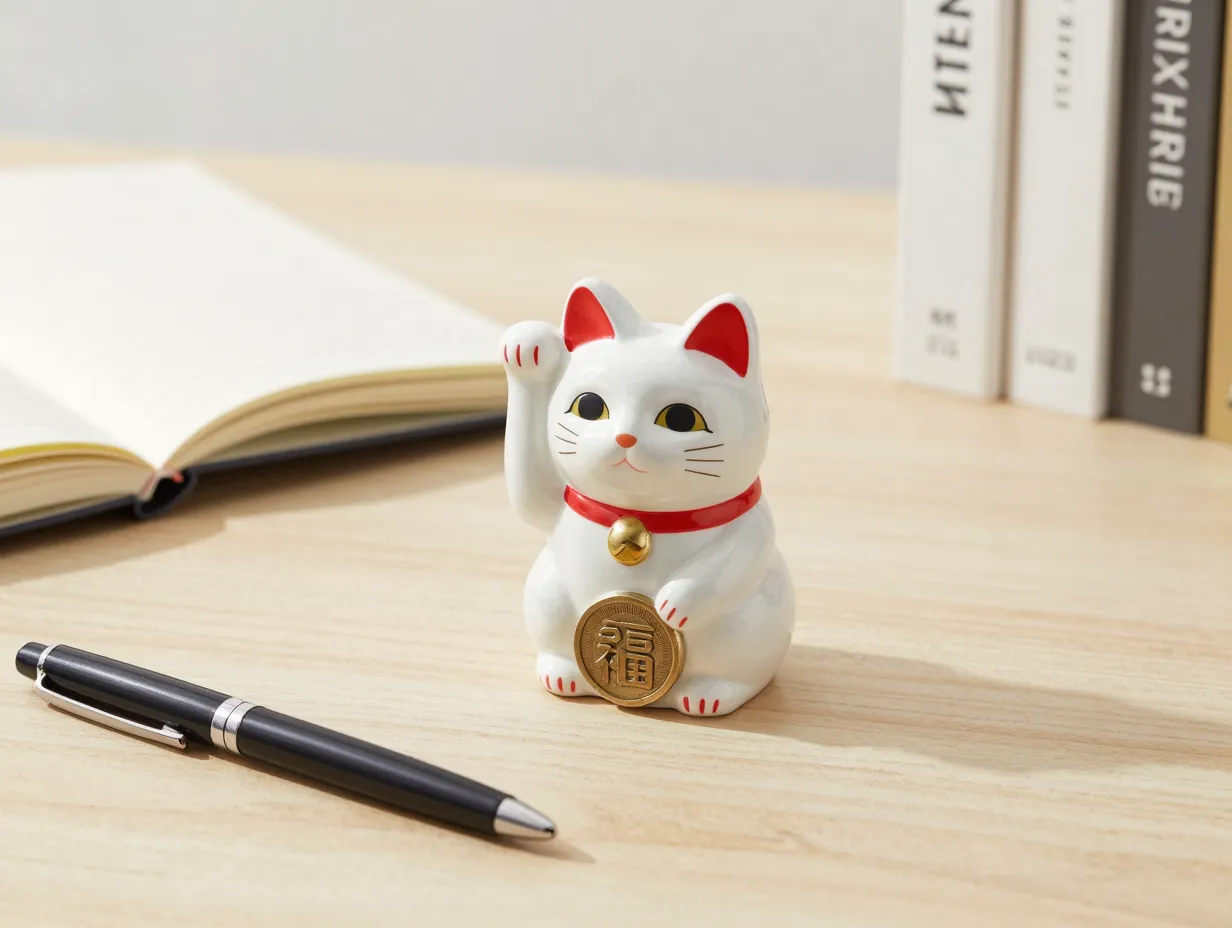
The white Maneki Neko is one of the most popular and widely recognized variations. White in Japanese culture symbolizes cleanliness, purity, and fresh starts. This cat is believed to invite positive energy, happiness, and peaceful relationships into a space [4].
If you are starting a new chapter in life — a new job, a new home, or a new relationship — the white cat is an ideal companion. It clears the energetic slate and welcomes good things in.
Best for: New homeowners, newlyweds, students starting school, anyone seeking emotional peace.
2. Gold Maneki Neko — Wealth and Financial Prosperity 🟡
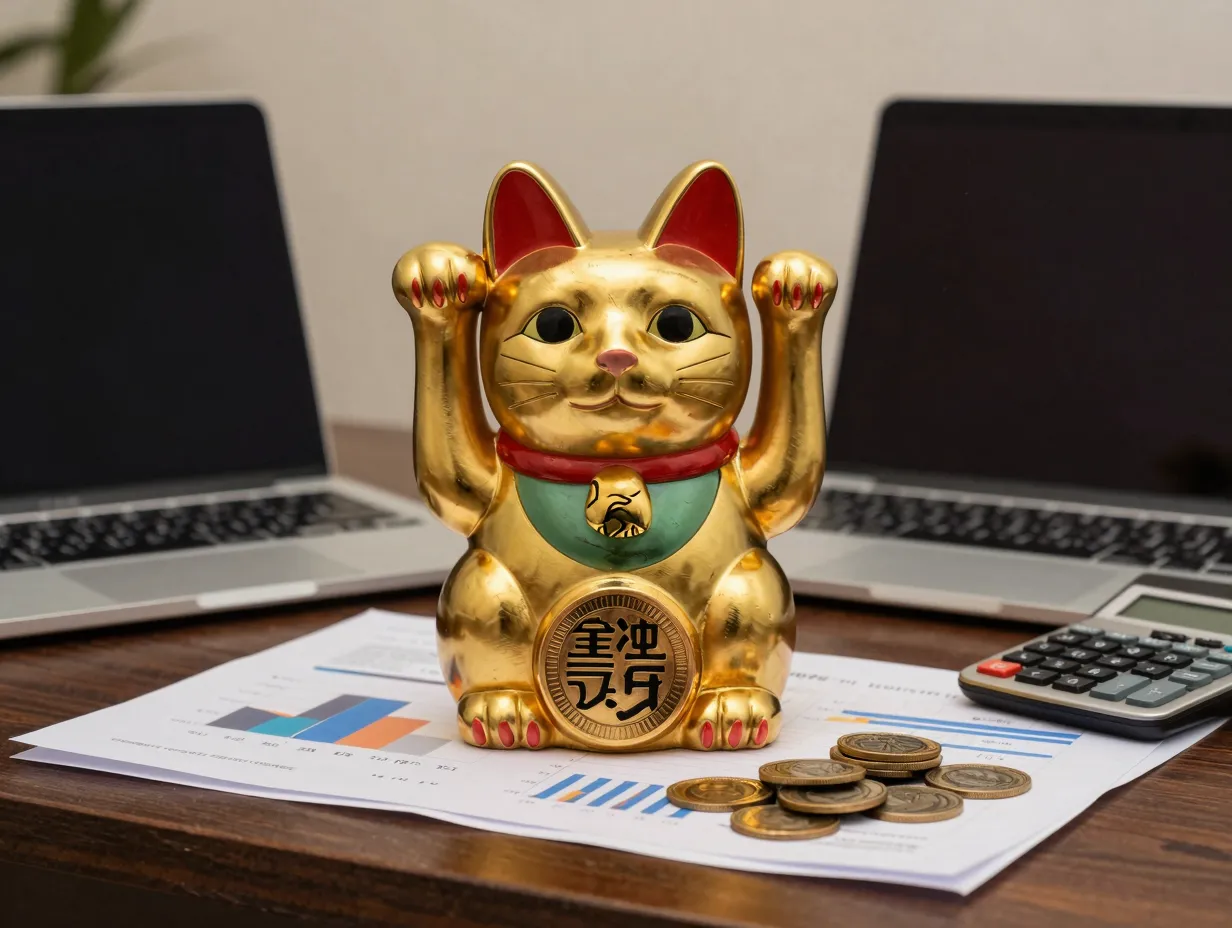
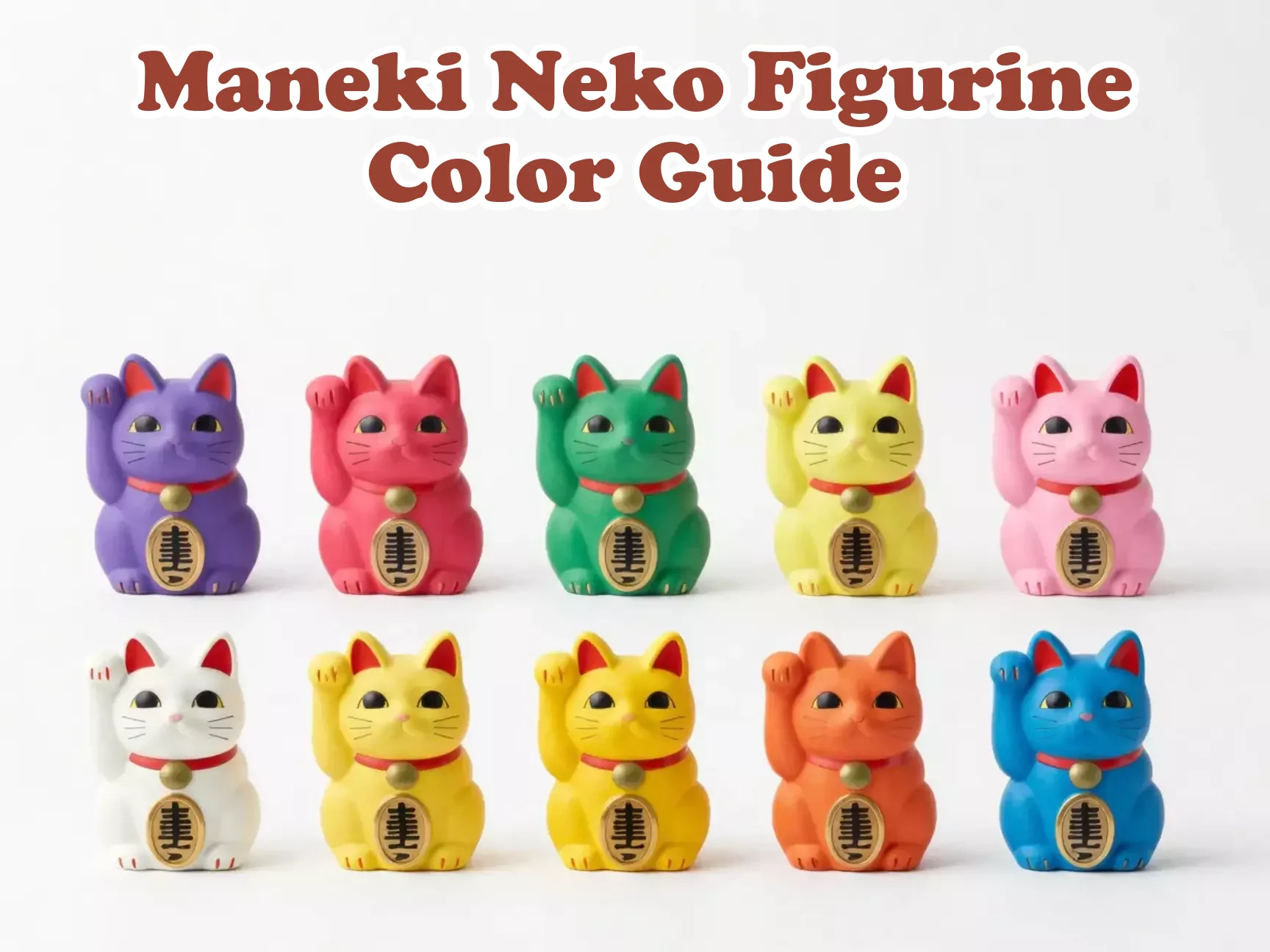
The gold (or yellow) Maneki Neko is arguably the most commercially popular variation worldwide. Gold has always been synonymous with wealth across cultures, and in the Maneki Neko tradition, this cat specifically represents financial success, material abundance, and business prosperity [3][4].
You will find gold cats prominently displayed in Japanese restaurants, retail shops, and casinos around the world. The gold color amplifies the message of the koban coin the cat already holds, doubling down on the wealth intention.
Best for: Business owners, entrepreneurs, investors, anyone with financial goals.
3. Black Maneki Neko — Protection from Evil 🖤
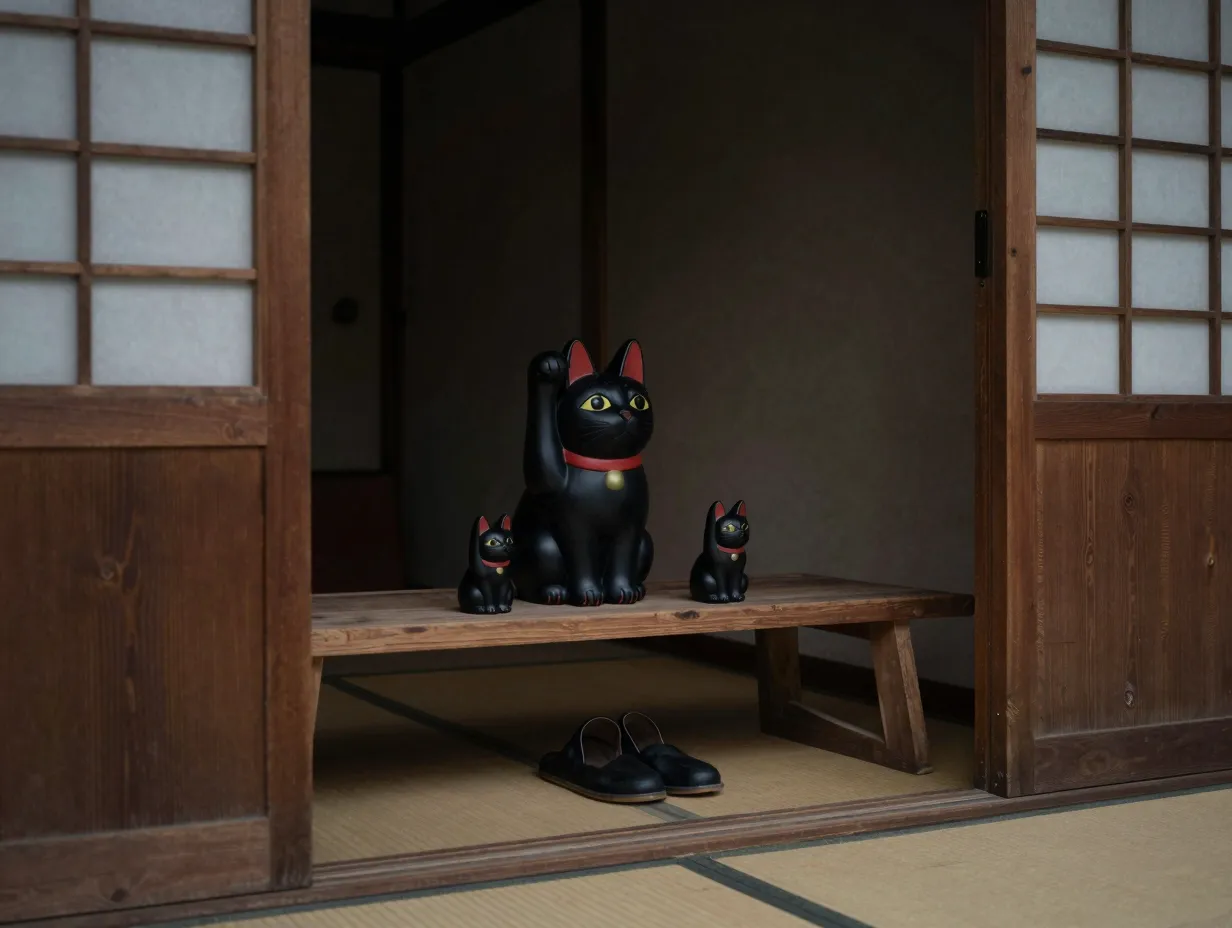
The black Maneki Neko is one of the most misunderstood figurines in Western markets. While black cats carry negative superstitions in many Western cultures, in the Maneki Neko tradition, the black cat is a powerful protector. It wards off evil spirits, negative energies, and bad luck [4][5].
Traditionally, black Maneki Neko figurines are placed at the entrance of a home to act as a spiritual guardian — a gatekeeper that filters out harmful influences before they enter your space [4].
Best for: Home entrances, anyone dealing with negative energy, those seeking spiritual protection.
“In Japan, the black Maneki Neko is not a bad omen — it is a guardian standing at your door.”
4. Pink Maneki Neko — Love and Romance 💗
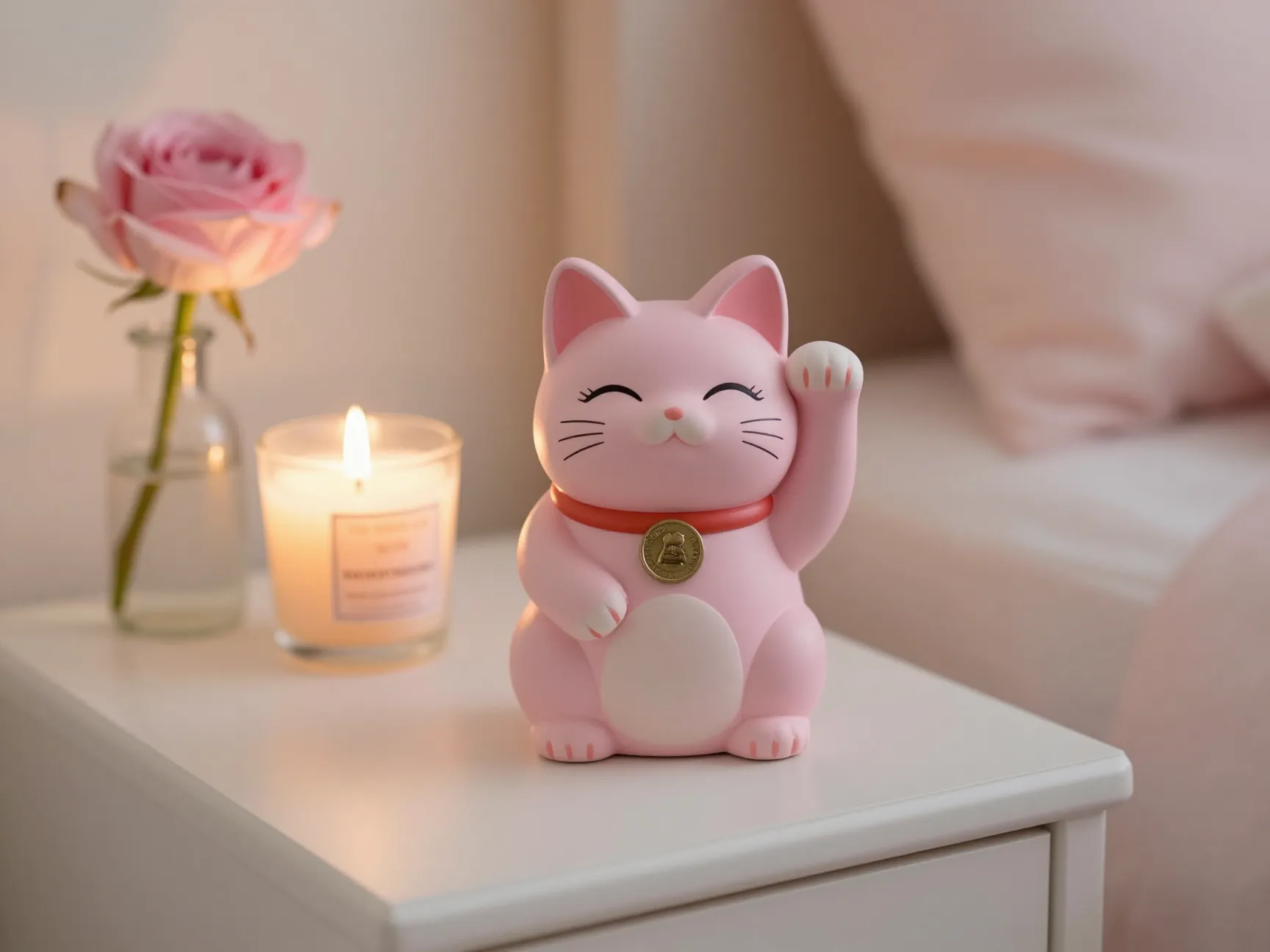
The pink Maneki Neko is the go-to figurine for matters of the heart. Pink is universally associated with love, warmth, and affection, and in the Maneki Neko system, this cat is believed to attract romantic fulfillment and loving relationships [3].
Interestingly, the pink cat is said to be most effective when paired with a raised left paw, since the left paw attracts people — in this case, a romantic partner [3]. If you are hoping to meet someone new or deepen an existing relationship, the pink cat with the left paw raised is your best bet.
Best for: Singles seeking romance, couples strengthening their bond, anyone focused on emotional connection.
5. Red Maneki Neko — Health and Protection from Illness ❤️
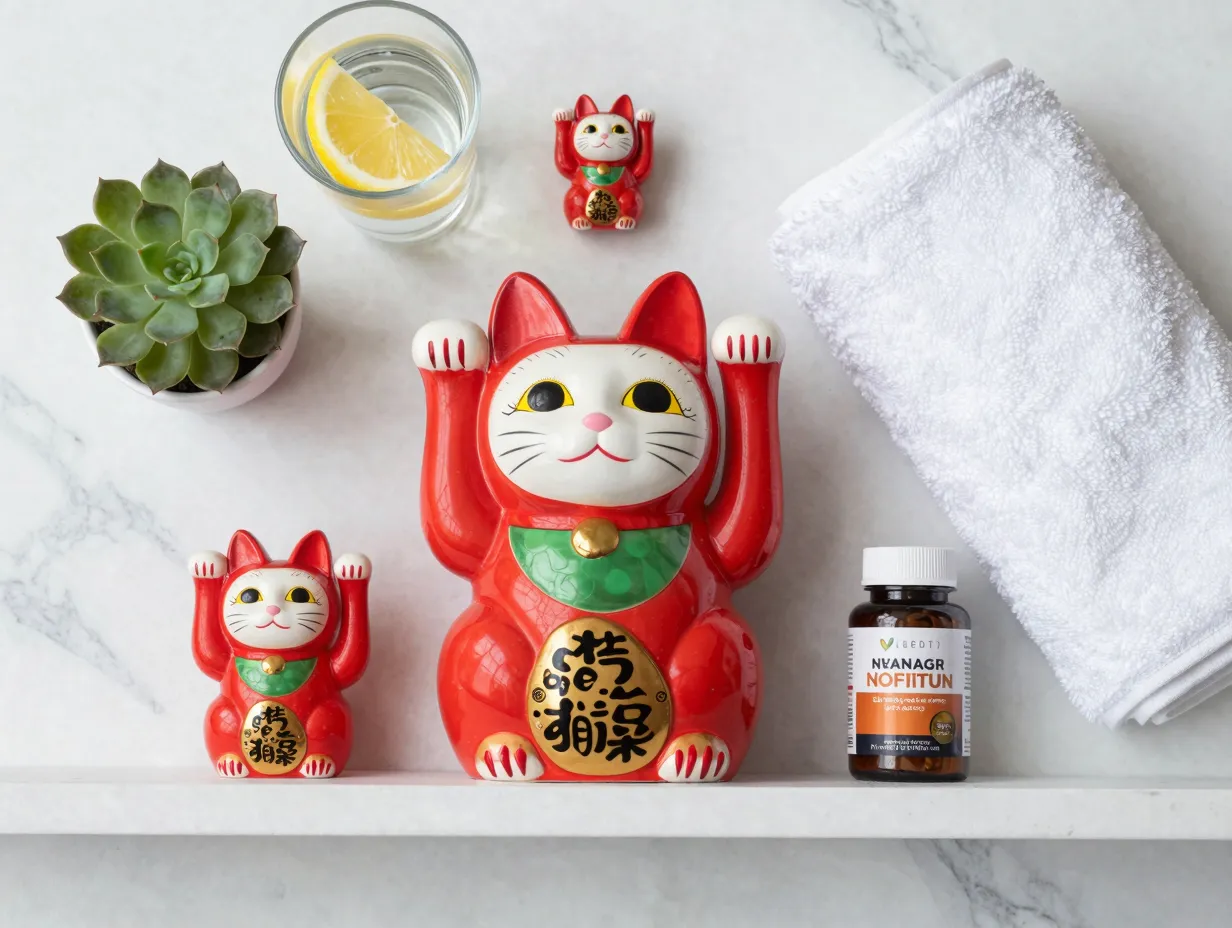
The red Maneki Neko carries a meaning that is especially relevant in 2026 as people continue to prioritize personal wellness. Red in Japanese culture is a color of vitality, energy, and protection — and the red lucky cat specifically represents good health and protection from sickness [6].
Red Maneki Neko figurines are often given as gifts to friends or family members recovering from illness, or placed in spaces where health is a priority, such as hospitals, clinics, and home wellness areas.
Best for: Anyone recovering from illness, health-conscious individuals, gifts for sick loved ones.
6. Calico (Tricolor) Maneki Neko — The Rarest and Most Powerful 🔶⚪🖤
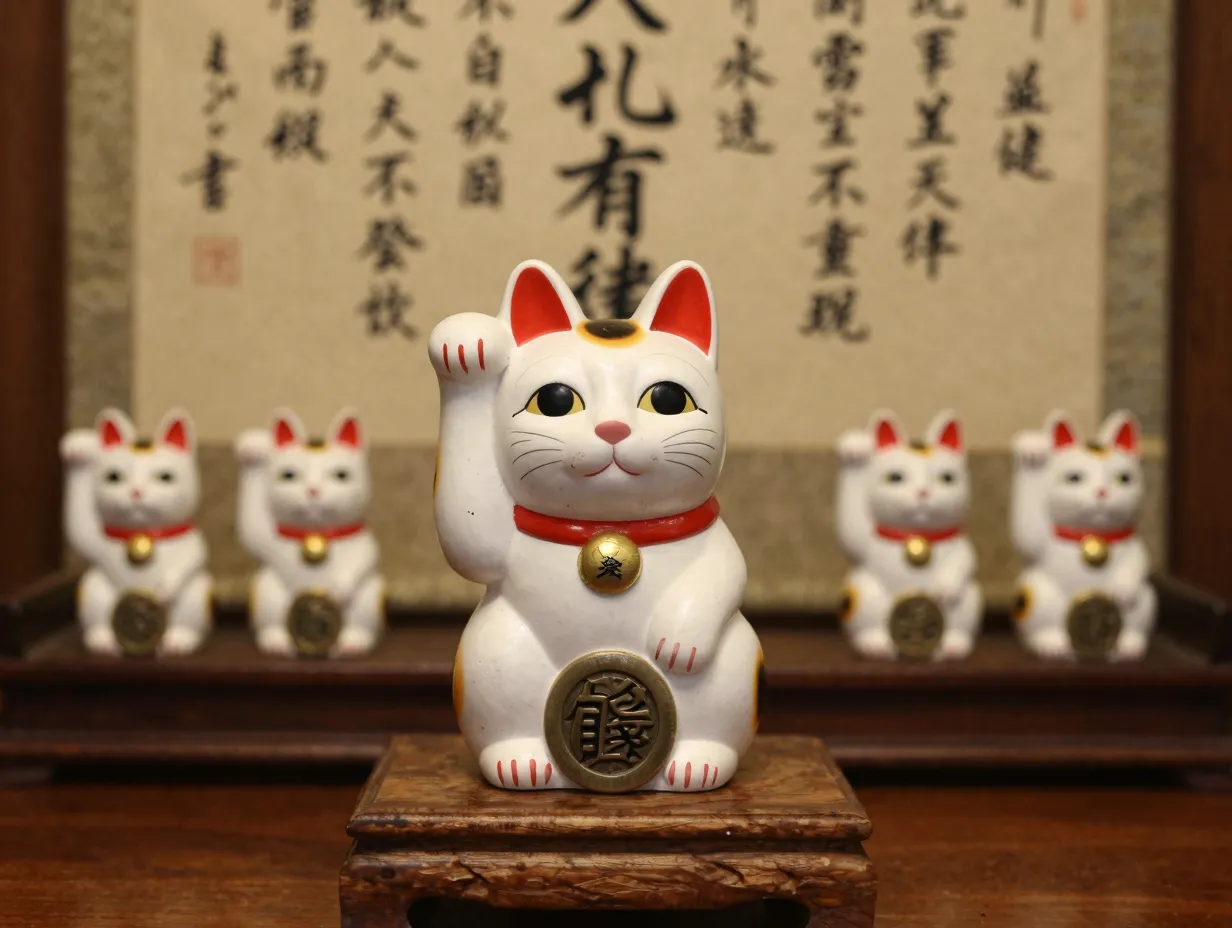
The calico Maneki Neko, also called the mi-ke (三毛, meaning “three fur”) cat, is the original and rarest variation of the lucky cat. Calico cats — white with patches of black and orange — are naturally rare, which is part of why this figurine holds such elevated status [4][6].
The calico cat is considered the most powerful Maneki Neko because it combines all blessings: fortune, love, health, and protection. It does not specialize in one area — it covers everything [4][6]. This is the figurine most closely tied to the original Edo-period design.
Best for: Anyone who wants comprehensive good luck, collectors seeking the most traditional version.
7. Green Maneki Neko — Education and Career Growth 💚
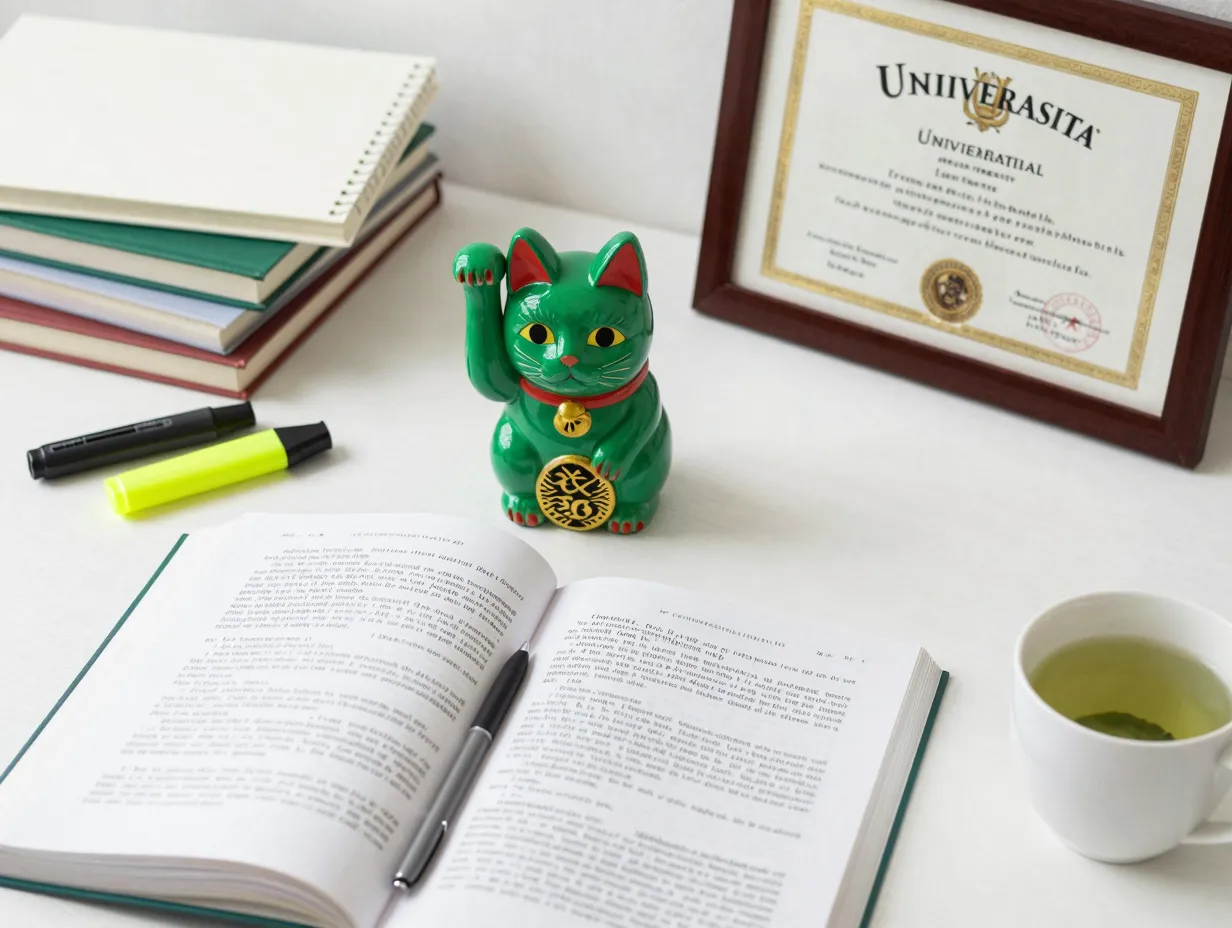
The green Maneki Neko is less commonly discussed but carries meaningful symbolism. Green is associated with growth, learning, and personal development in Japanese culture. This cat is believed to attract academic success, career advancement, and personal improvement.
Green cats are popular in study spaces, classrooms, and offices where professional development is a focus. If you are studying for an exam, pursuing a promotion, or learning a new skill, the green Maneki Neko is a fitting companion.
Best for: Students, professionals seeking career growth, lifelong learners.
8. Blue Maneki Neko — Wisdom and Safe Travel 💙
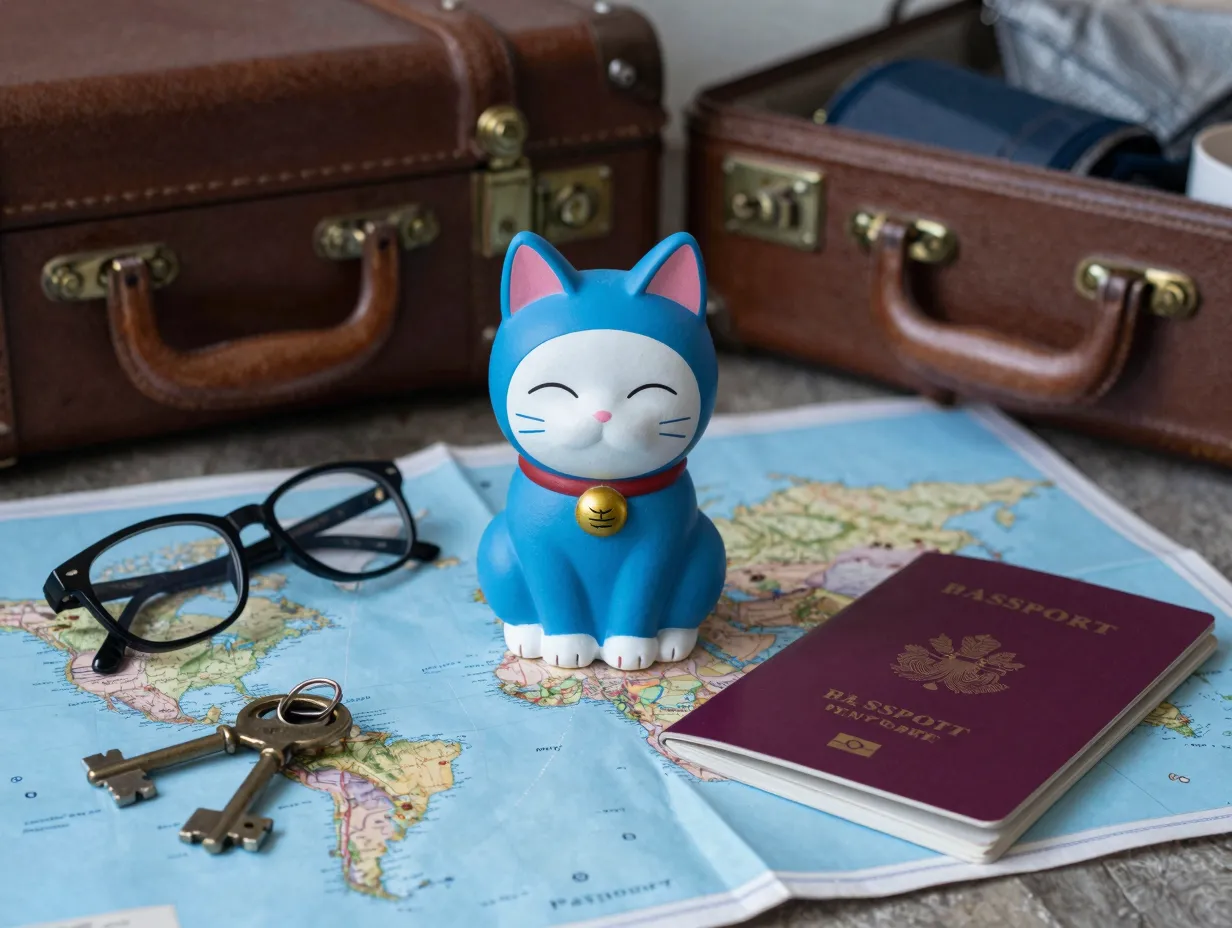
The blue Maneki Neko is associated with wisdom, intelligence, and safe travel. Blue is a calming, thoughtful color in Japanese symbolism, and this cat is often chosen by those who travel frequently or work in fields that require sharp thinking and clear communication.
Some traditions also associate the blue cat with success in studies and examinations, making it a close companion to the green cat — though blue leans more toward mental clarity and safe journeys than raw academic achievement.
Best for: Frequent travelers, professionals in communication or law, those seeking mental clarity.
9. Purple Maneki Neko — Spirituality and Ambition 💜
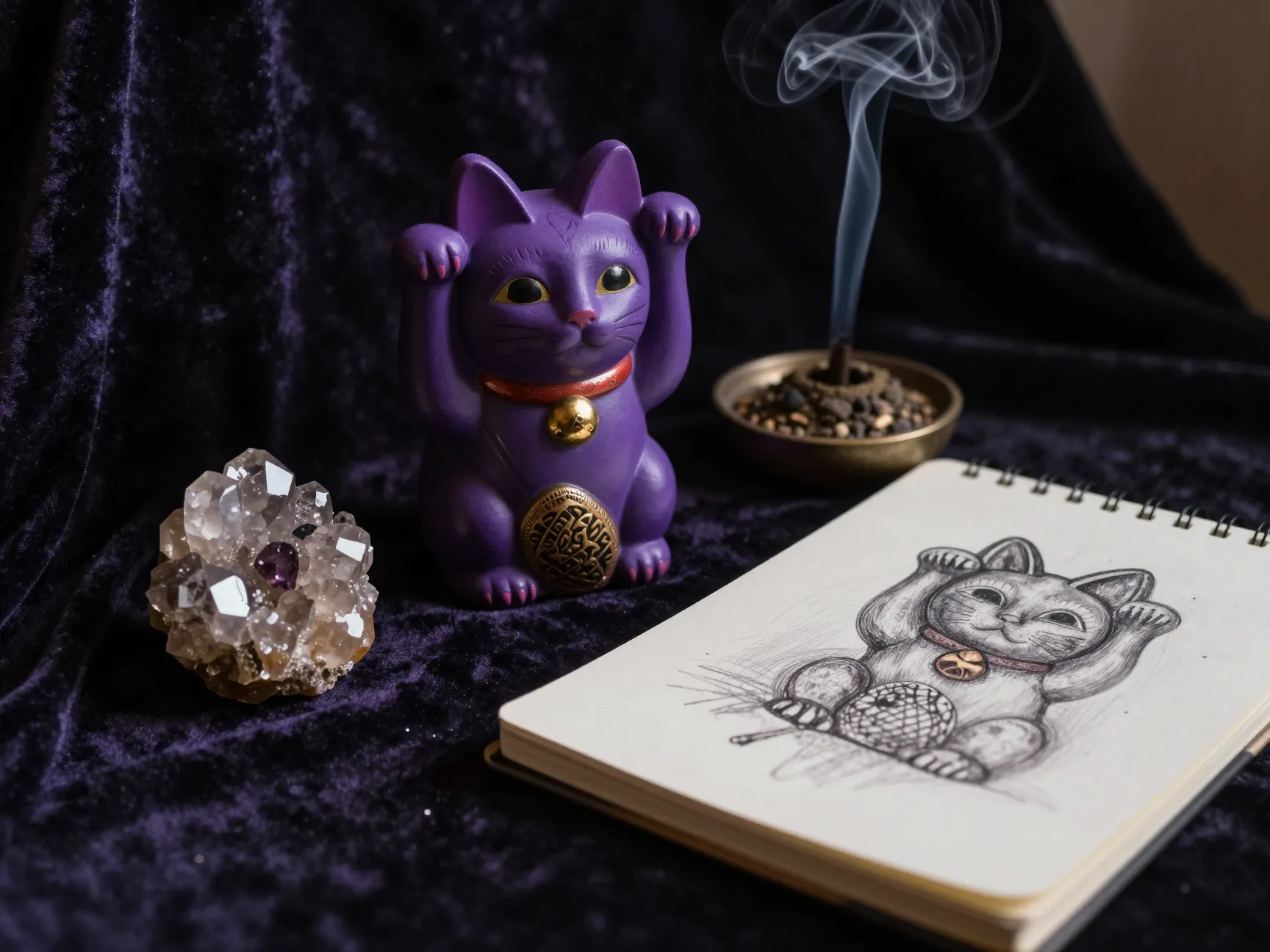
The purple Maneki Neko rounds out our list with a focus on spiritual growth, ambition, and higher purpose. Purple has long been associated with nobility, wisdom, and spiritual awareness across many cultures — and in the Maneki Neko tradition, this cat supports those who are pursuing something greater than material gain.
The purple cat is ideal for those on a spiritual path, artists, visionaries, or anyone who feels called to a higher purpose. It is one of the more modern color variations, reflecting how the Maneki Neko tradition continues to evolve.
Best for: Spiritual seekers, artists, visionaries, those pursuing meaningful life goals.
Quick Reference: All 9 Lucky Cat Colors at a Glance
| # | Color | Primary Meaning | Best For |
|---|---|---|---|
| 1 | ⚪ White | Purity, new beginnings | Fresh starts, peace |
| 2 | 🟡 Gold | Wealth, financial success | Business, investing |
| 3 | 🖤 Black | Protection from evil | Home entrances, spiritual defense |
| 4 | 💗 Pink | Love, romance | Relationships, emotional connection |
| 5 | ❤️ Red | Health, protection from illness | Wellness, recovery |
| 6 | 🔶 Calico | All blessings combined | Comprehensive good luck |
| 7 | 💚 Green | Education, career growth | Students, professionals |
| 8 | 💙 Blue | Wisdom, safe travel | Travelers, thinkers |
| 9 | 💜 Purple | Spirituality, ambition | Visionaries, spiritual seekers |
How to Choose the Right Maneki Neko for Your Needs
With so many options, choosing the right figurine can feel overwhelming. Here is a simple framework I recommend:
Step 1: Identify your primary intention. What do you most want to attract right now — money, love, health, protection, or growth?
Step 2: Choose your color based on the table above.
Step 3: Select the right paw. If your goal involves attracting people (customers, a partner, friends), choose the left paw. If your goal is financial or personal, choose the right paw [2][3].
Step 4: Consider placement. Black cats go near entrances. Gold cats work well in offices and cash registers. Pink cats belong in bedrooms or relationship spaces.
Step 5: Respect the tradition. The Maneki Neko is not just decor — it carries centuries of cultural meaning. Treat it with care, keep it clean, and place it at a respectful height (eye level or above is ideal).
Common Mistakes to Avoid
🚫 Placing a black cat in a business — Black cats are for home protection, not customer attraction. Use gold or white for businesses.
🚫 Choosing both paws raised without intention — The double-paw pose has mixed associations in Japanese culture [7]. Know what you are inviting in.
🚫 Ignoring paw direction — Many people buy a cat based on color alone and miss the paw meaning entirely. Both elements matter [2][3].
🚫 Treating it as pure decoration — The Maneki Neko is a cultural artifact with deep roots in Japanese history [1][8]. Engaging with its meaning makes it more meaningful for you and more respectful of its origins.
Conclusion: Choose Your Cat with Intention
The 9 Lucky Cat Maneki Neko Figurines and Their Hidden Meanings are not just a collector’s checklist — they are a practical system for setting intentions and inviting specific energies into your life and space. From the protective black cat standing guard at your front door to the rare calico cat combining every blessing, each figurine is a small but deliberate act of hope.
In 2026, as people increasingly look for meaningful ways to personalize their spaces and set intentions, the Maneki Neko offers something rare: a symbol that is both beautiful and purposeful.
Your Next Steps 🐾
- Identify your primary goal — wealth, love, health, protection, or growth
- Select the matching color from the guide above
- Choose the correct paw — left for people, right for prosperity
- Place it thoughtfully — entrance for protection, desk for wealth, bedroom for love
- Learn the origin story — share it with others to deepen the meaning
Whether you are buying your first Maneki Neko or expanding a collection, let intention guide your choice. The cat that is right for you is the one that speaks to what you genuinely need right now.
References
[1] Lucky Cat Day – https://gifcal.com/en/lucky-cat-day/
[2] The Curious Case Of The Japanese Lucky Cat Maneki Neko History Meaning And Why Cat Lovers Are Obsessed – https://platopettreats.com/blogs/blog/the-curious-case-of-the-japanese-lucky-cat-maneki-neko-history-meaning-and-why-cat-lovers-are-obsessed
[3] Lucky Cats Of Japan Decoding The Secrets Of Maneki Neko – https://bokksu.com/blogs/news/lucky-cats-of-japan-decoding-the-secrets-of-maneki-neko
[4] Maneki Neko Lucky Cat – https://japanwithlovestore.com/blogs/blogs/maneki-neko-lucky-cat
[5] Luckycat – https://www.japanlivingguide.com/expatinfo/japaneseculture/luckycat/
[6] The Meaning Of Maneki Neko Colors Raised Paws And How To Choose The Right One – https://manekineko-ai.com/blog/the-meaning-of-maneki-neko-colors-raised-paws-and-how-to-choose-the-right-one/
[7] Lucky Cats Beckoning Cats Of Japan Guide To Maneki Neko – https://omakase-forest.com/blogs/omakase-insights/lucky-cats-beckoning-cats-of-japan-guide-to-maneki-neko
[8] Guide To Maneki Neko Lucky Cats – https://musubikiln.com/blogs/journal/guide-to-maneki-neko-lucky-cats