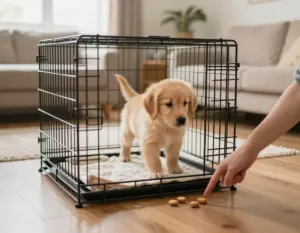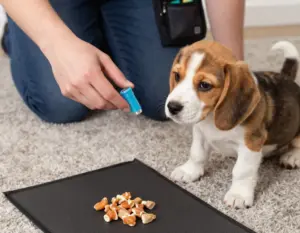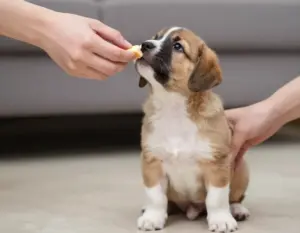
7 Kennel Training a Puppy Tips for a Happy, Secure Dog
Picture this: It’s 3 AM, and instead of being jolted awake by whimpering or the sound of tiny paws scratching at your bedroom door, you’re sleeping peacefully. Your new puppy is contentedly resting in their crate, viewing it not as a prison, but as their own personal sanctuary. This dream scenario isn’t just wishful thinking—it’s the reality that awaits when you master the 7 kennel training a puppy tips for a happy, secure dog. 🐕
Disclosure: This post contains affiliate links. As an Amazon Associate, we earn from qualifying purchases, and at no extra cost to you.
In 2026, more pet parents than ever are discovering that proper crate training isn’t about confining their furry friends—it’s about giving them a safe haven that reduces anxiety, accelerates house training, and creates a foundation for lifelong security. Whether you’re a first-time puppy parent or looking to refine your training approach, these proven strategies will transform your puppy’s relationship with their crate from reluctant tolerance to genuine comfort.
Key Takeaways
- Start early and go slow: Puppies can begin crate training at 8 weeks old, but gradual introduction is essential for long-term success
- Size matters: The crate should allow your puppy to stand, turn around, and lie down comfortably—but not be so large they can eliminate in one corner
- Positive associations are everything: Never use the crate for punishment; instead, build pleasant connections through treats, toys, and praise
- Consistency creates confidence: Use the same verbal cues, maintain regular schedules, and be patient as the process can take days or weeks
- Strategic placement helps: Position the crate near your bed initially to provide security and reduce nighttime anxiety
Understanding the Foundation of Successful Crate Training
Before diving into the specific techniques, it’s crucial to understand why crate training works so effectively. Puppies have a natural instinct to avoid soiling their sleeping space, which makes the crate an invaluable tool for house training [1][2]. When implemented correctly, crate training leverages this instinct while providing your puppy with a secure retreat they can call their own.
The key to success lies in patience and positive reinforcement. Every puppy is different—some may take to their crate within minutes, while others need several days to feel comfortable [2]. The timeline doesn’t matter as much as the consistency of your approach and your commitment to making the experience positive.
“A properly crate-trained puppy views their kennel as a safe refuge, not a punishment. This mindset shift is the foundation of all successful training.” – Professional Dog Training Expert
1. Start Early with the Right Timing and Mindset
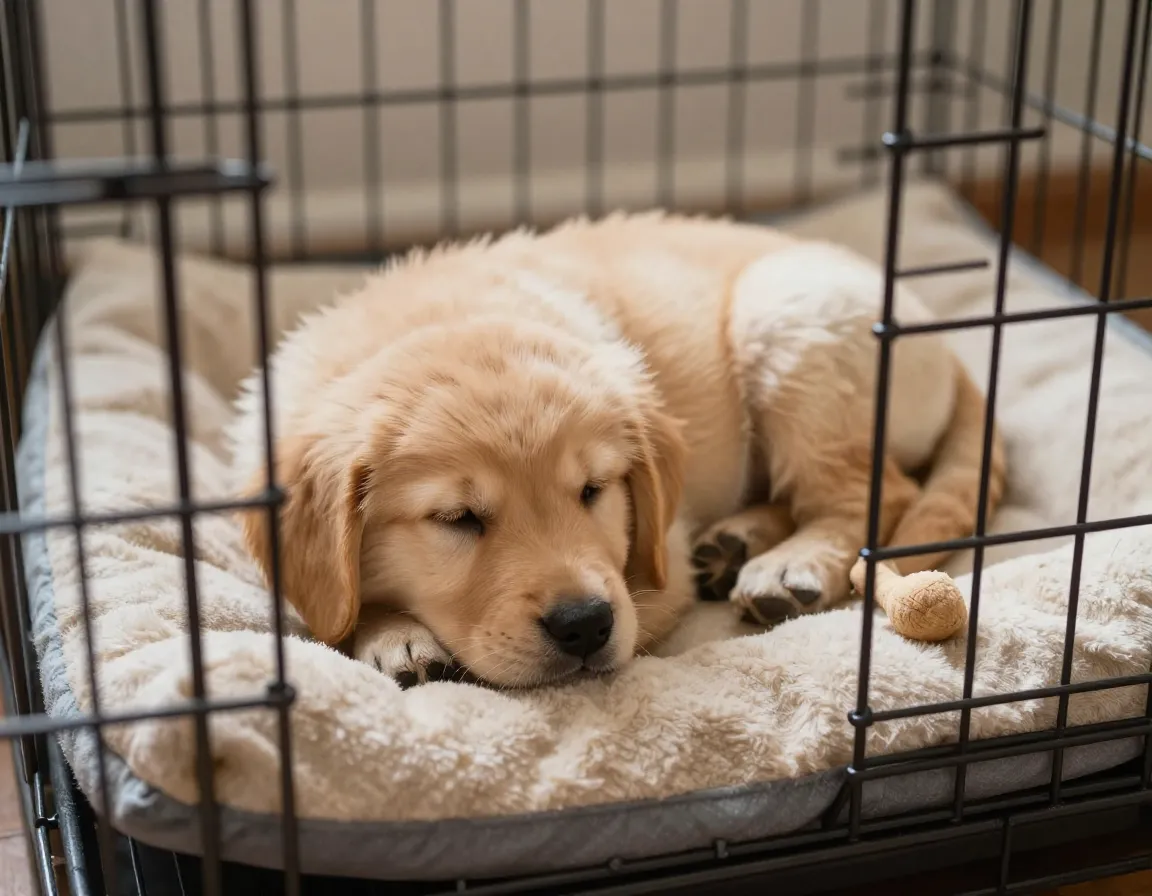
The first of our 7 kennel training a puppy tips for a happy, secure dog focuses on timing and your puppy’s emotional state. Puppies can begin crate training as early as 8 weeks old [7], but the key is introducing the crate when your puppy is calm rather than during active play time.
Why Timing Matters
When you introduce the crate during calm periods, your puppy naturally associates it with rest and relaxation [8]. This creates a positive foundation that makes all subsequent training easier. Avoid introducing the crate when your puppy is:
- Overly excited from play
- Hungry or thirsty
- Needing to eliminate
- Showing signs of stress or anxiety
The Optimal Introduction Window
The best times to introduce crate training include:
- After meals when your puppy is naturally becoming sleepy
- During quiet afternoon periods when energy levels are lower
- Before established nap times to align with natural sleep patterns
- After gentle play sessions when your puppy is pleasantly tired
Pro Tip: Start with very short periods—even 5-10 minutes of positive crate interaction can build the foundation for longer, more comfortable stays.
2. Perfect Your Crate Sizing for Maximum Comfort
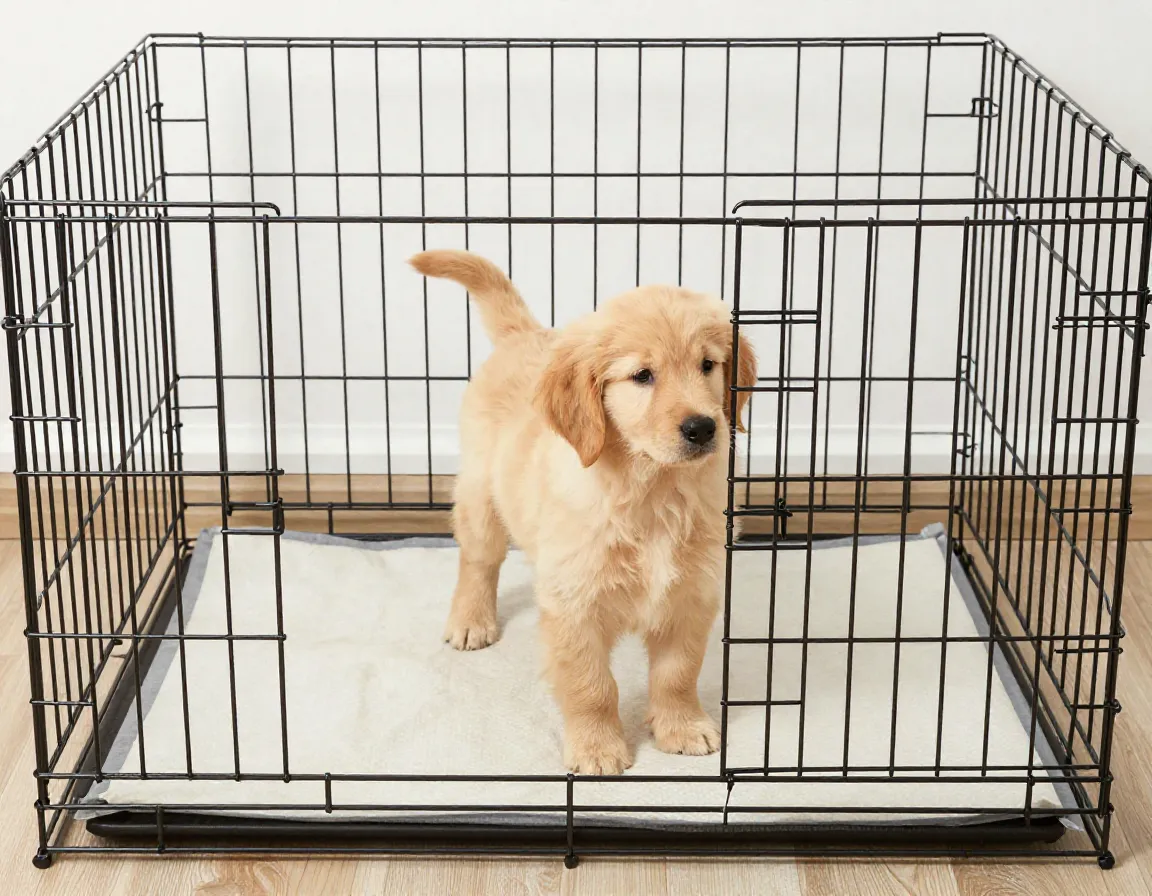
Proper crate sizing is absolutely foundational to successful training. The crate should allow your puppy to stand up, turn around, and lie down comfortably [4], but it shouldn’t be so large that they can eliminate in one corner and sleep in another.
The Goldilocks Principle of Crate Sizing
| Puppy Size | Crate Dimensions | Key Considerations |
|---|---|---|
| Small breeds (up to 25 lbs) | 24″ L x 18″ W x 19″ H | Consider adult size for growing puppies |
| Medium breeds (25-60 lbs) | 36″ L x 24″ W x 27″ H | May need divider panels for puppies |
| Large breeds (60-90 lbs) | 42″ L x 28″ W x 30″ H | Essential to use dividers during growth |
| Giant breeds (90+ lbs) | 48″ L x 30″ W x 33″ H | Plan for significant size changes |
Growing Puppy Solutions
For growing puppies, appropriately sized crates help them view the space as a safe refuge [1]. Consider these strategies:
- Adjustable divider panels allow you to expand space as your puppy grows
- Crate rental programs let you upgrade sizes without buying multiple crates
- Modular crate systems offer expandable configurations
Remember: A crate that’s too large defeats the house training benefits, while one that’s too small creates discomfort and negative associations.
Implementing the 7 Kennel Training a Puppy Tips for a Happy, Secure Dog
Now let’s dive into the core strategies that will transform your puppy’s relationship with their crate.
3. Build Irresistible Positive Associations
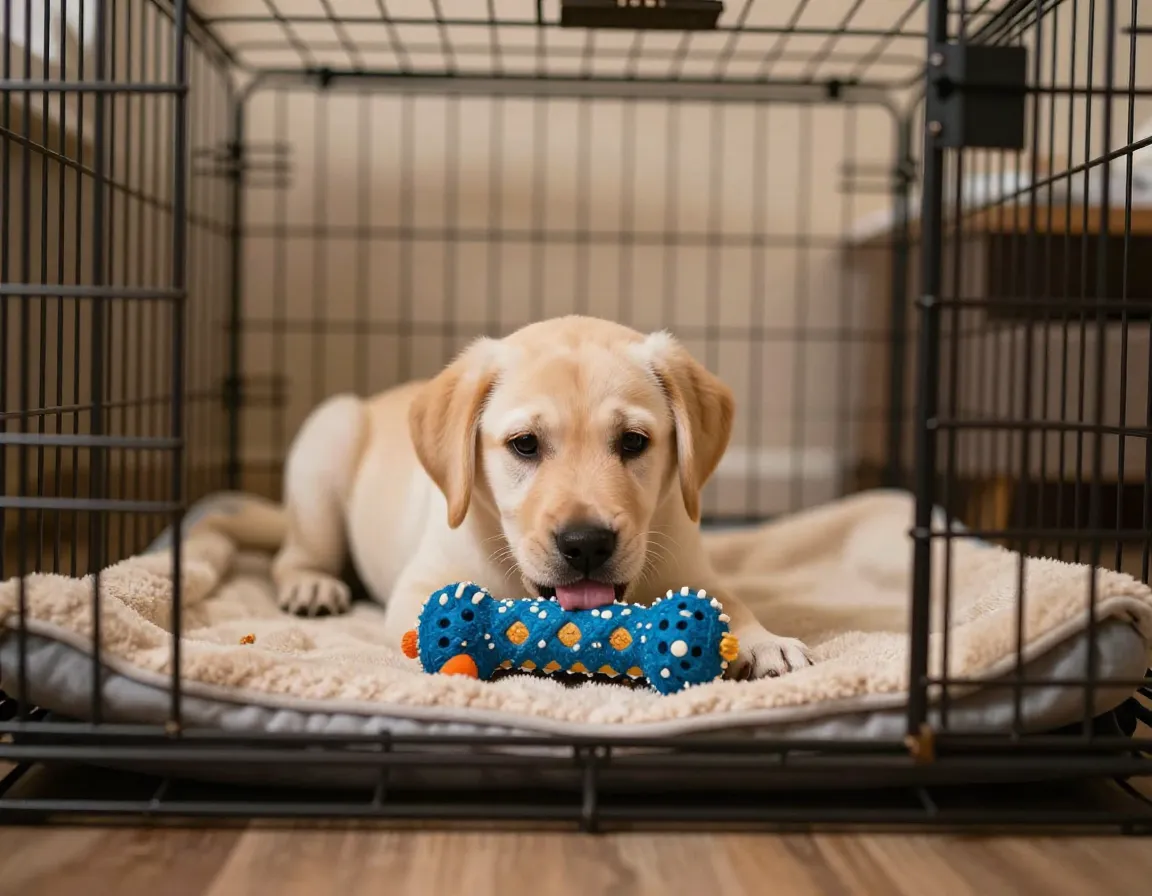
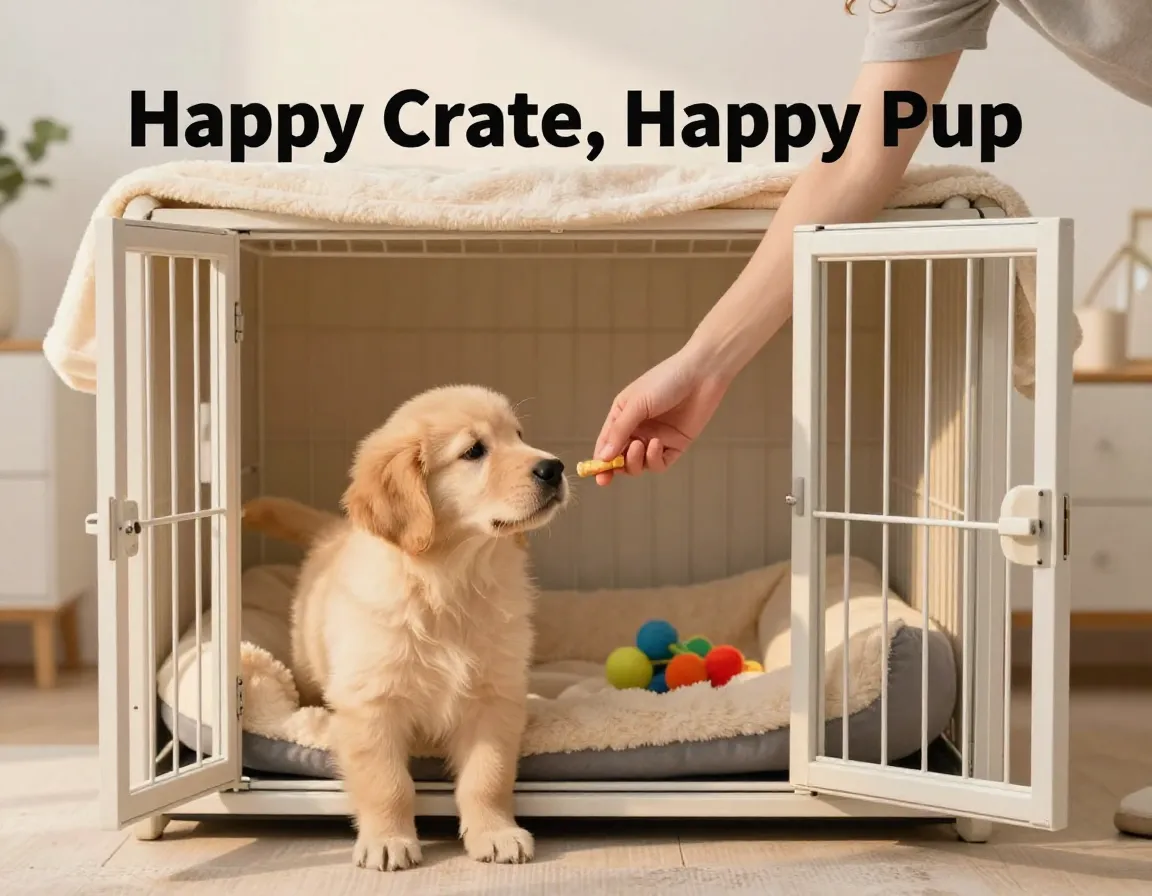
Building pleasant associations through treats, toys, and praise—rather than using the crate for punishment—is key to long-term success [1][2][4][6]. This principle cannot be overstated: your puppy’s first and ongoing experiences with the crate must be overwhelmingly positive.
Creating Positive Crate Experiences
Food-based associations are incredibly powerful:
- Feed meals inside the crate with the door open initially
- Place high-value treats randomly in the crate throughout the day
- Use puzzle toys or stuffed Kongs to create positive “crate time”
- Offer special treats that only appear during crate training
Comfort enhancements make the space inviting:
- Soft bedding and blankets provide physical comfort [4][7]
- Safe chew toys give puppies something enjoyable to do
- White noise machines can create a calming environment [4][7]
- Familiar scents like a piece of your clothing can provide security
What Never to Do
❌ Never use the crate for punishment or time-outs
❌ Never force your puppy into the crate aggressively
❌ Never leave your puppy crated for extended periods without breaks [1][4]
❌ Never include choking hazards or destructible toys [1][4]
4. Master the Gradual Door Closing Technique
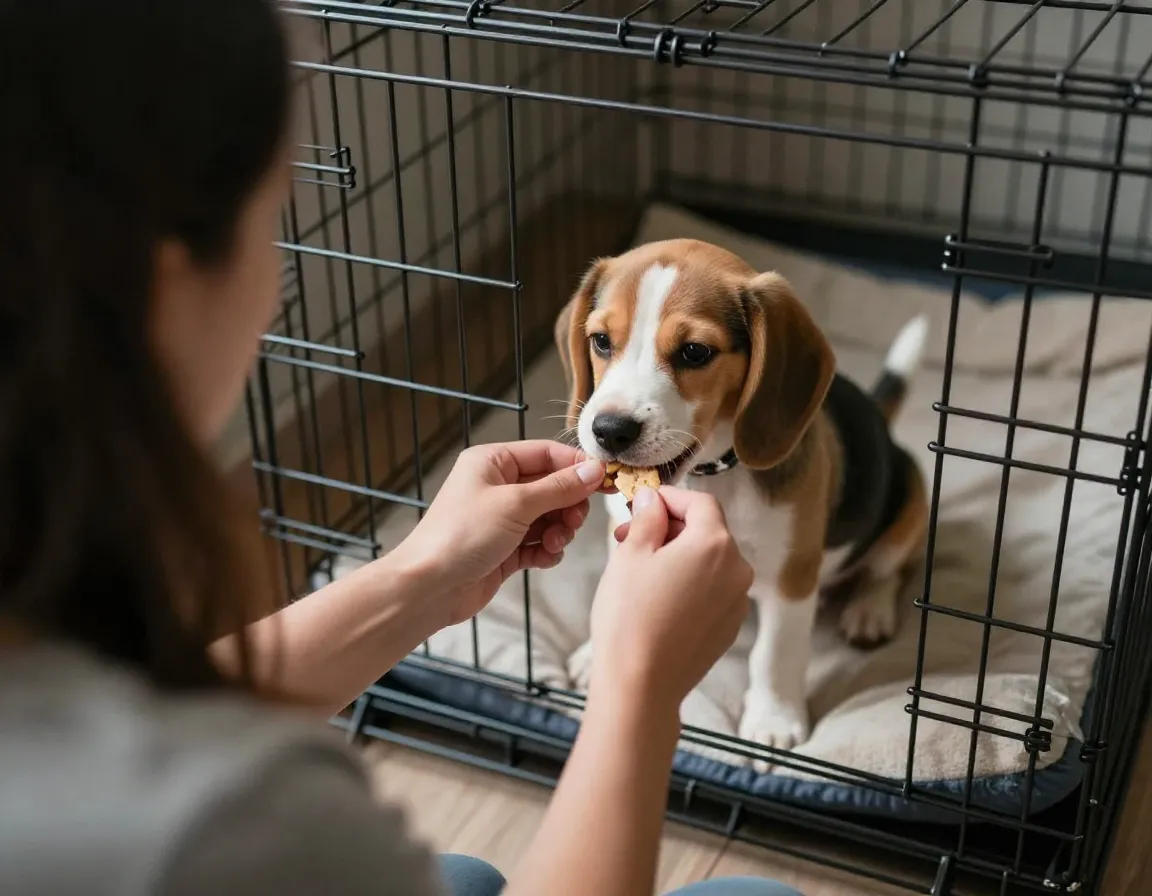
The gradual door closing technique is one of the most critical aspects of crate training. Start with the door open, then practice closing it while puppies enjoy treats or toys, gradually increasing time before returning and rewarding [1][3].
Step-by-Step Door Training Process
Week 1: Open Door Comfort
- Allow free access to explore the crate
- Feed meals with door completely open
- Place treats and toys inside regularly
- Never close the door during this phase
Week 2: Brief Door Closures
- Close door while puppy eats or plays with toys
- Start with 30-second intervals
- Open immediately when puppy finishes activity
- Gradually increase to 2-3 minutes
Week 3: Extended Periods
- Work up to 10-15 minute sessions
- Ensure puppy is calm before closing door
- Practice during natural rest periods
- Always end sessions before puppy becomes anxious
Week 4+: Full Integration
- Extend periods based on puppy’s comfort level
- Begin overnight training if appropriate
- Maintain positive associations throughout
Signs of Progress to Watch For
✅ Puppy enters crate voluntarily
✅ Relaxed body language when door closes
✅ Settles down quickly inside crate
✅ Shows excitement about crate-specific treats or toys
5. Establish Consistent Verbal Cues and Commands
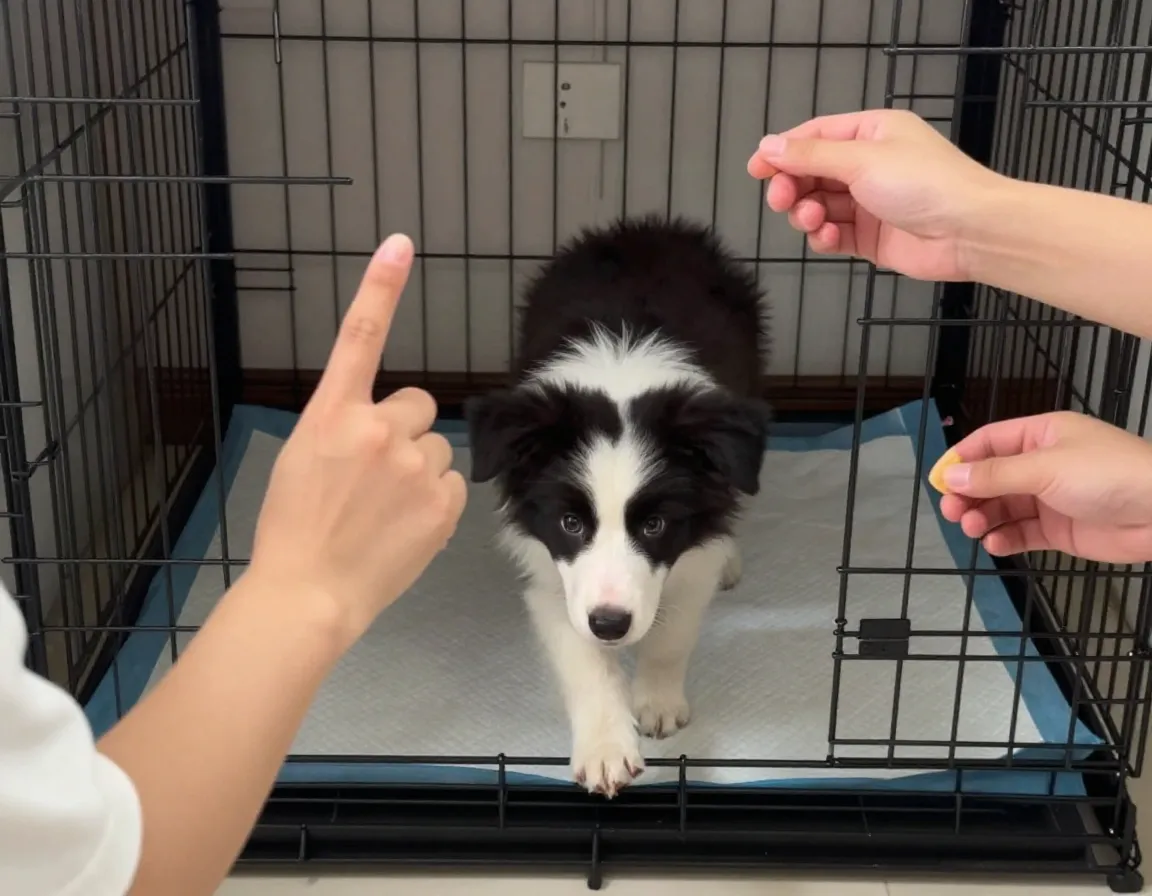
Using a consistent command like “kennel up” or “crate” combined with treats and praise establishes clear expectations [3][9]. Consistency in your verbal cues helps your puppy understand exactly what you want and when.
Choosing and Using Verbal Cues
Popular crate commands include:
- “Kennel up” 🏠
- “Crate time”
- “Go to bed”
- “Place”
- “House”
Training Your Verbal Cue
- Choose one command and stick with it consistently
- Use the command every time you want your puppy to enter the crate
- Pair with treats initially to create positive associations
- Practice during low-stress times when success is likely
- Gradually reduce treat frequency as the command becomes reliable
Pro Training Tip: Have all family members use the same command to avoid confusing your puppy. Consistency across all household members accelerates learning.
6. Strategic Nighttime Placement for Security and Success
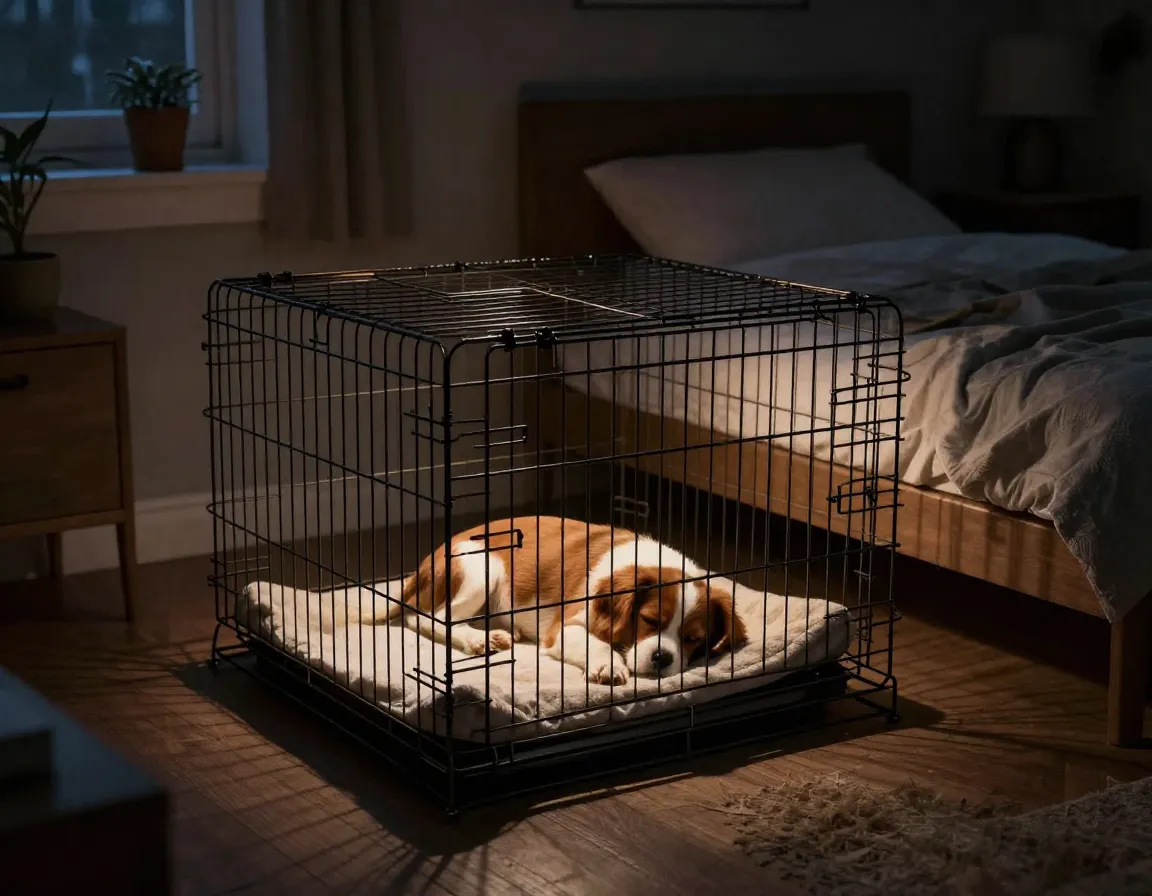
Positioning the crate near your bed initially provides security, reduces anxiety, and helps prevent accidents while building trust [5]. This strategic placement is particularly important during the first few weeks of training.
Benefits of Bedroom Placement
Security advantages:
- Reduces separation anxiety during vulnerable nighttime hours
- Allows you to hear if puppy needs a potty break
- Provides comfort through your nearby presence
- Builds trust and positive associations with crate time
Practical benefits:
- Easier to maintain consistent potty schedules
- Reduces nighttime whining and anxiety
- Helps establish healthy sleep routines
- Prevents accidents through better monitoring
Gradual Independence Training
As your puppy becomes more comfortable, you can gradually increase independence:
Week 1-2: Crate directly beside your bed
Week 3-4: Move crate a few feet away from bed
Week 5-6: Position crate across the room
Week 7+: Move to desired permanent location if different
Creating the Perfect Nighttime Environment
🌙 Optimal conditions include:
- Comfortable room temperature (65-70°F)
- Minimal lighting or blackout conditions
- Quiet environment or consistent white noise
- Easy access for middle-of-night potty breaks
7. Maintain Consistent Routines and Avoid Common Pitfalls
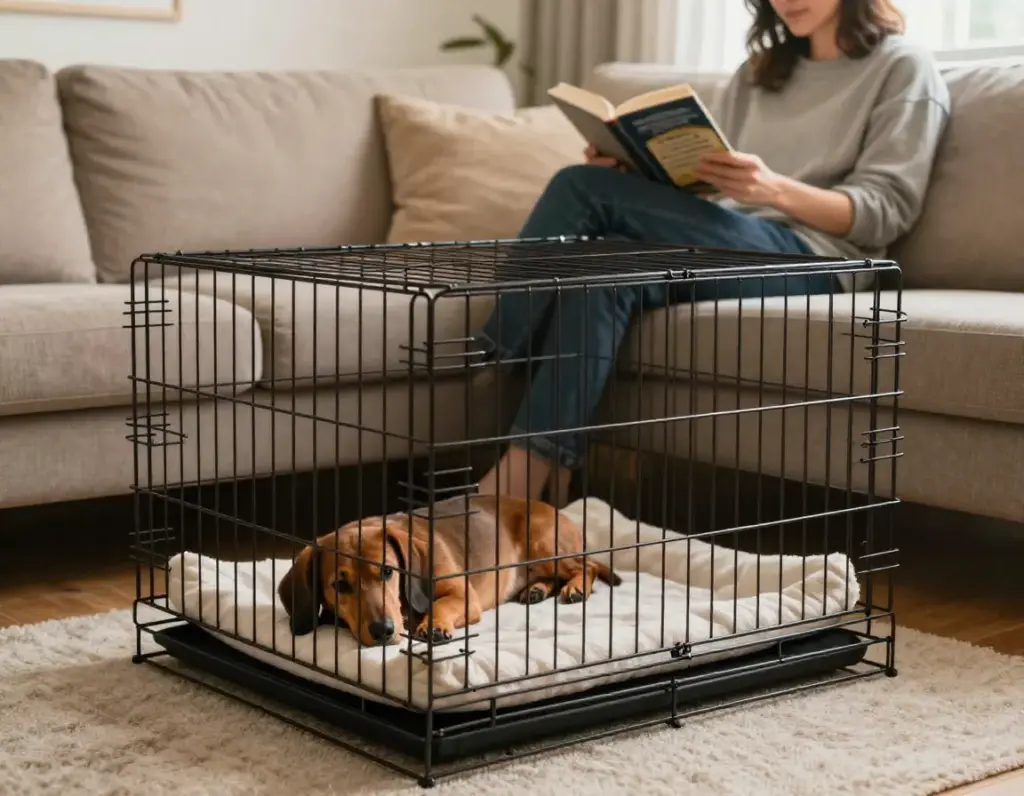
Maintaining consistent schedules for potty breaks, meals, and sleep—combined with ample play and physical activity—supports successful training [2][5]. The final tip in our 7 kennel training a puppy tips for a happy, secure dog focuses on the importance of routine and avoiding mistakes that can derail progress.
Essential Daily Routine Elements
Morning routine (6:00-8:00 AM):
- Immediate potty break upon waking
- Breakfast followed by brief crate rest
- Play and training session
- Another potty break before longer crate period
Midday routine (12:00-2:00 PM):
- Potty break and brief play
- Lunch if feeding multiple meals
- Quiet time or nap in crate
- Afternoon activity session
Evening routine (6:00-10:00 PM):
- Dinner and potty break
- Family interaction and training
- Final potty break before bed
- Settle into crate for overnight
Common Mistakes That Sabotage Success
Timing mistakes:
- Crating immediately after accidents (creates negative associations)
- Using crate when puppy clearly needs to eliminate
- Inconsistent schedule that confuses natural rhythms
Duration mistakes:
- Leaving young puppies crated too long (general rule: age in months + 1 = maximum hours)
- Not providing adequate exercise before crate time
- Expecting overnight success without gradual conditioning
Environmental mistakes:
- Placing crate in high-traffic, noisy areas initially
- Using crate that’s too large or too small
- Including inappropriate toys or bedding that could be dangerous
Age-Appropriate Crate Duration Guidelines
| Puppy Age | Maximum Crate Time | Overnight Capability |
|---|---|---|
| 8-10 weeks | 2-3 hours | 4-5 hours with breaks |
| 11-14 weeks | 3-4 hours | 5-6 hours |
| 15-16 weeks | 4-5 hours | 6-7 hours |
| 17+ weeks | 5-6 hours | 7-8 hours |
Troubleshooting Common Crate Training Challenges
Even with perfect implementation of these 7 kennel training a puppy tips for a happy, secure dog, you may encounter some challenges. Here’s how to address the most common issues:
Excessive Whining or Crying
Possible causes:
- Need to eliminate
- Separation anxiety
- Boredom or excess energy
- Negative associations with crate
Solutions:
- Ensure adequate potty breaks
- Increase exercise before crate time
- Provide engaging toys or puzzle feeders
- Review positive association training
Refusal to Enter Crate
Gradual re-introduction steps:
- Go back to basics with door open
- Feed all meals near or in crate
- Increase value of crate-specific treats
- Practice during calm, low-stress times
- Never force entry—patience is key
Accidents in Crate
Assessment questions:
- Is the crate appropriately sized?
- Are potty break intervals appropriate for puppy’s age?
- Could this be a medical issue requiring vet consultation?
- Are you recognizing early elimination signals?
The Long-Term Benefits of Proper Crate Training
Successfully implementing these 7 kennel training a puppy tips for a happy, secure dog creates benefits that extend far beyond the puppy months:
Lifelong security: A properly crate-trained dog has a reliable safe space during stressful situations like thunderstorms, fireworks, or household disruptions.
Travel convenience: Crate-trained dogs adapt more easily to travel, whether in cars, planes, or staying in pet-friendly accommodations.
Veterinary visits: Dogs comfortable with crates experience less stress during necessary veterinary stays or recovery periods.
House training success: The foundation of crate training creates dogs who naturally maintain clean living spaces and have reliable bathroom habits.
Independence and confidence: Dogs who view their crate positively develop healthy independence and confidence in various situations.
Conclusion
Mastering these 7 kennel training a puppy tips for a happy, secure dog requires patience, consistency, and a commitment to positive reinforcement, but the rewards are immeasurable. From peaceful nights to confident, well-adjusted adult dogs, proper crate training sets the foundation for a lifetime of happiness for both you and your furry companion.
Remember that every puppy progresses at their own pace. Some may embrace their crate within days, while others need weeks to feel completely comfortable. The key is maintaining consistency in your approach while celebrating small victories along the way.
Your Next Steps
- Assess your current setup: Ensure your crate is properly sized and positioned for success
- Start with positive associations: Begin feeding meals and offering special treats in the crate today
- Establish your routine: Create a consistent daily schedule that includes appropriate crate time
- Practice patience: Remember that lasting results come from gradual, positive experiences
- Monitor progress: Keep track of your puppy’s comfort level and adjust your approach as needed
The journey of crate training is an investment in your puppy’s future security and your peace of mind. By following these proven strategies and maintaining a positive, patient approach, you’re setting the stage for years of happiness with your well-adjusted, confident dog. 🐾
References
[1] How To Crate Train A Puppy A Step By Step Guide From An Expert – https://www.chewy.com/education/dog/new-dog/how-to-crate-train-a-puppy-a-step-by-step-guide-from-an-expert
[2] Mastering Crate Training A Dog Tips And Benefits – https://animalsmatter.com/blogs/news/mastering-crate-training-a-dog-tips-and-benefits
[3] Cratetraining – https://www.wihumane.org/behavior/dogs/cratetraining
[4] How To Crate Train A Puppy – https://www.sniffspot.com/blog/dog-training/how-to-crate-train-a-puppy
[5] Crate Training A Puppy At Night – https://www.bronteglen.co.uk/blog/crate-training-a-puppy-at-night/
[6] The First 30 Days Potty Training And Crate Training Your New Puppy – https://laschoolfordogs.com/12/the-first-30-days-potty-training-and-crate-training-your-new-puppy/
[7] Crate Training 101 – https://www.humaneworld.org/en/resources/crate-training-101
[8] How To Crate Train Your Dog In 9 Easy Steps – https://www.akc.org/expert-advice/training/how-to-crate-train-your-dog-in-9-easy-steps/
[9] How To Crate Train A Puppy – https://www.masterclass.com/articles/how-to-crate-train-a-puppy