8 Best Puppy Potty Training Tips to Speed Up Success
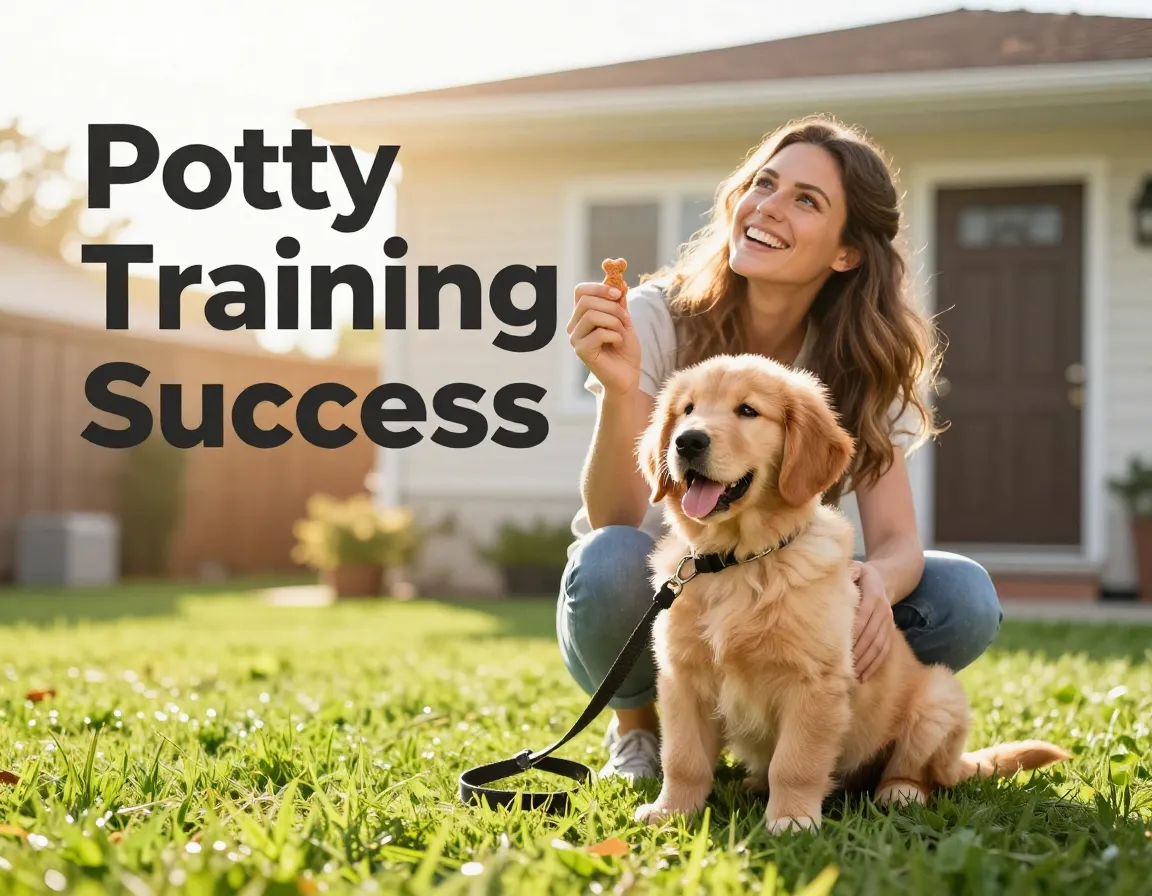
Picture this: you’ve just brought home your adorable new puppy, and within hours, you’re already discovering mysterious puddles and unwelcome surprises around your house. If you’re feeling overwhelmed by the prospect of house training your furry friend, you’re not alone. The good news? With the right approach and these 8 best puppy potty training tips to speed up success, you can transform this challenging phase into a manageable and even rewarding experience that strengthens the bond with your new companion.
Disclosure: This post contains affiliate links. As an Amazon Associate, we earn from qualifying purchases, and at no extra cost to you.
Key Takeaways
- Consistency is everything – Frequent potty breaks every 30 minutes and a strict schedule are the foundation of successful house training
- Immediate positive reinforcement – Praise and treats within seconds of successful elimination create lasting behavioral associations
- Crate training leverages natural instincts – Properly-sized crates teach bladder control by utilizing your puppy’s instinct to keep their sleeping area clean
- Prevention beats correction – Close supervision and recognizing early warning signs prevent accidents before they happen
- The right cleaning products matter – Enzymatic cleaners eliminate scent markers that encourage repeat accidents in the same spots
Potty training doesn’t have to be a months-long struggle filled with frustration and setbacks. In 2026, we have access to proven methods backed by canine behavioral science that can dramatically reduce the time it takes to house train your puppy. Let’s dive into these game-changing strategies that will have your puppy reliably doing their business outside.
Understanding the Foundation of Successful Potty Training
Before we explore the 8 best puppy potty training tips to speed up success, it’s crucial to understand that puppies aren’t being defiant when they have accidents. Young dogs simply haven’t developed the physical bladder control or mental associations needed for house training. Most puppies can’t reliably “hold it” until they’re 4-6 months old, which means patience and consistency are your best allies during this process.
The key to accelerating success lies in working with your puppy’s natural instincts and developmental timeline, rather than against them. Every successful potty training program combines three essential elements: timing, consistency, and positive reinforcement. When these elements work together, you create an environment where your puppy can learn quickly and confidently.
The 8 Best Puppy Potty Training Tips to Speed Up Success
1. Establish Frequent and Strategic Potty Breaks
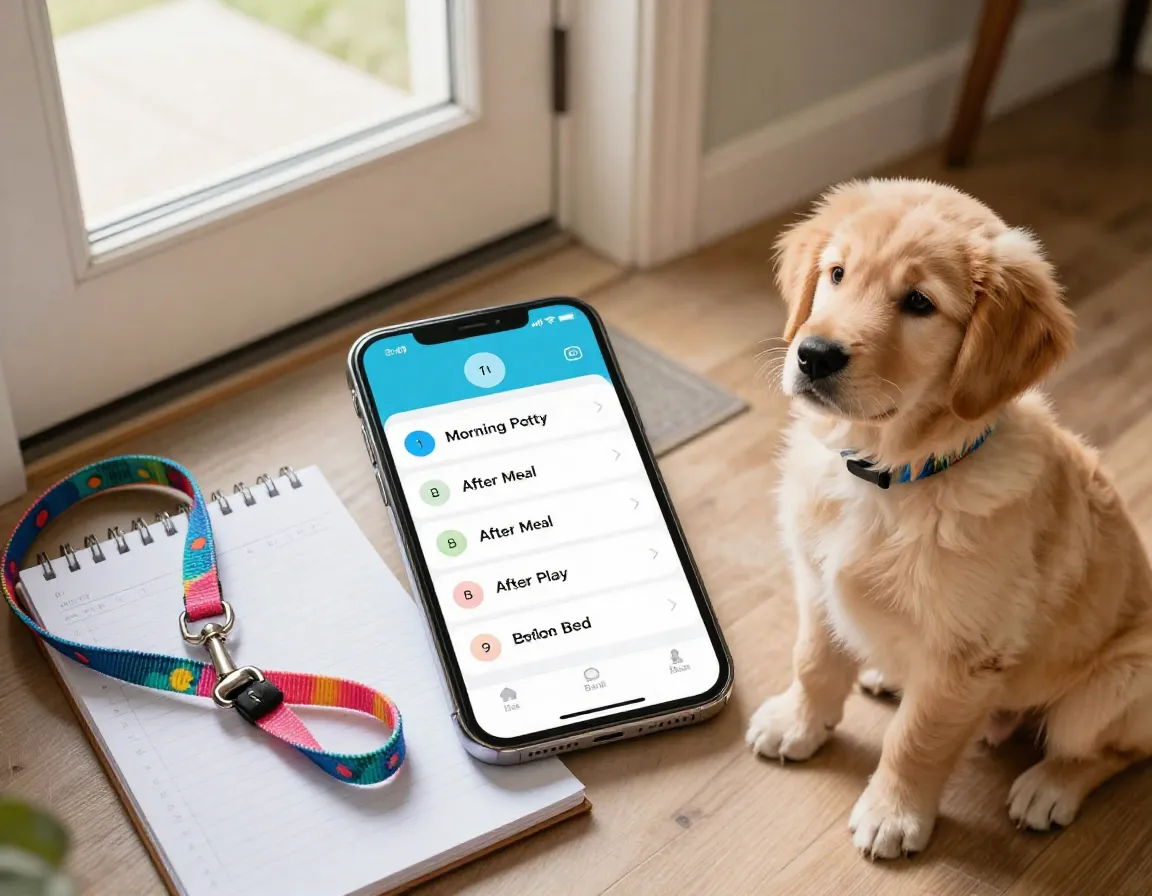
The most critical factor in rapid potty training success is providing your puppy with frequent opportunities to eliminate in the right place. Puppies need outdoor access at least every 30 minutes while awake, with younger puppies requiring breaks every 1-2 hours [1][3]. This might seem excessive, but it’s the foundation that prevents accidents and builds positive associations.
Strategic timing is everything. Take your puppy outside at these high-probability moments [2][3]:
- First thing in the morning (within 5 minutes of waking)
- 15-30 minutes after meals (digestion stimulates elimination)
- Immediately after naps (bladder pressure builds during sleep)
- After active play sessions (physical activity stimulates bowel movements)
- Right before bedtime (sets them up for overnight success)
“The more opportunities you give your puppy to succeed outside, the faster they’ll learn that outdoors is the appropriate place to go.”
I recommend setting phone alarms initially to maintain this schedule. Yes, it’s intensive for the first few weeks, but this front-loaded effort pays massive dividends in faster house training success.
2. Create a Designated Potty Spot and Routine
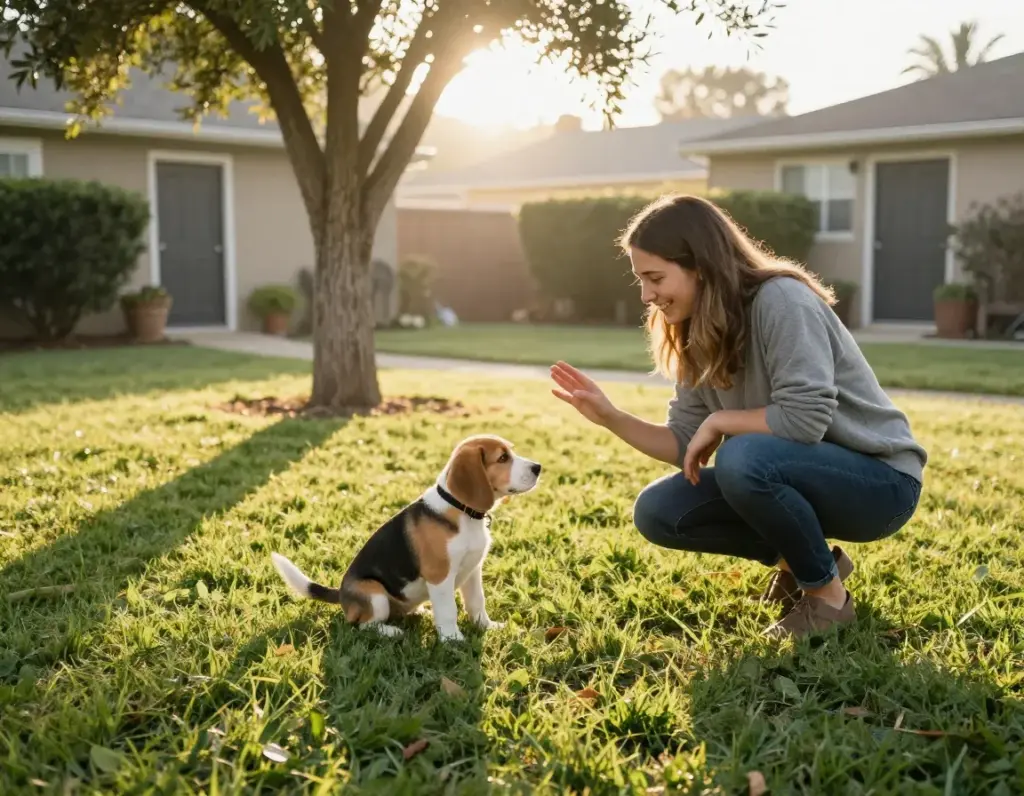
Consistency in location and routine dramatically accelerates the learning process. Use the same door, same yard location, and same verbal cue every time to help puppies make the connection faster [2]. This creates a predictable pattern that your puppy’s developing brain can easily recognize and remember.
Here’s how to establish your routine:
- Choose a specific outdoor area that will be your puppy’s permanent potty spot
- Always exit through the same door when heading to this area
- Use the same command phrase like “Go potty” or “Do your business”
- Stay in the designated area until your puppy eliminates
- Use the same walking path to and from the spot
The power of this approach lies in environmental cueing. When everything about the potty experience remains consistent, your puppy begins to anticipate what’s expected before you even reach the designated area. This mental preparation often triggers the physical response you’re looking for.
3. Master the Art of Immediate Positive Reinforcement
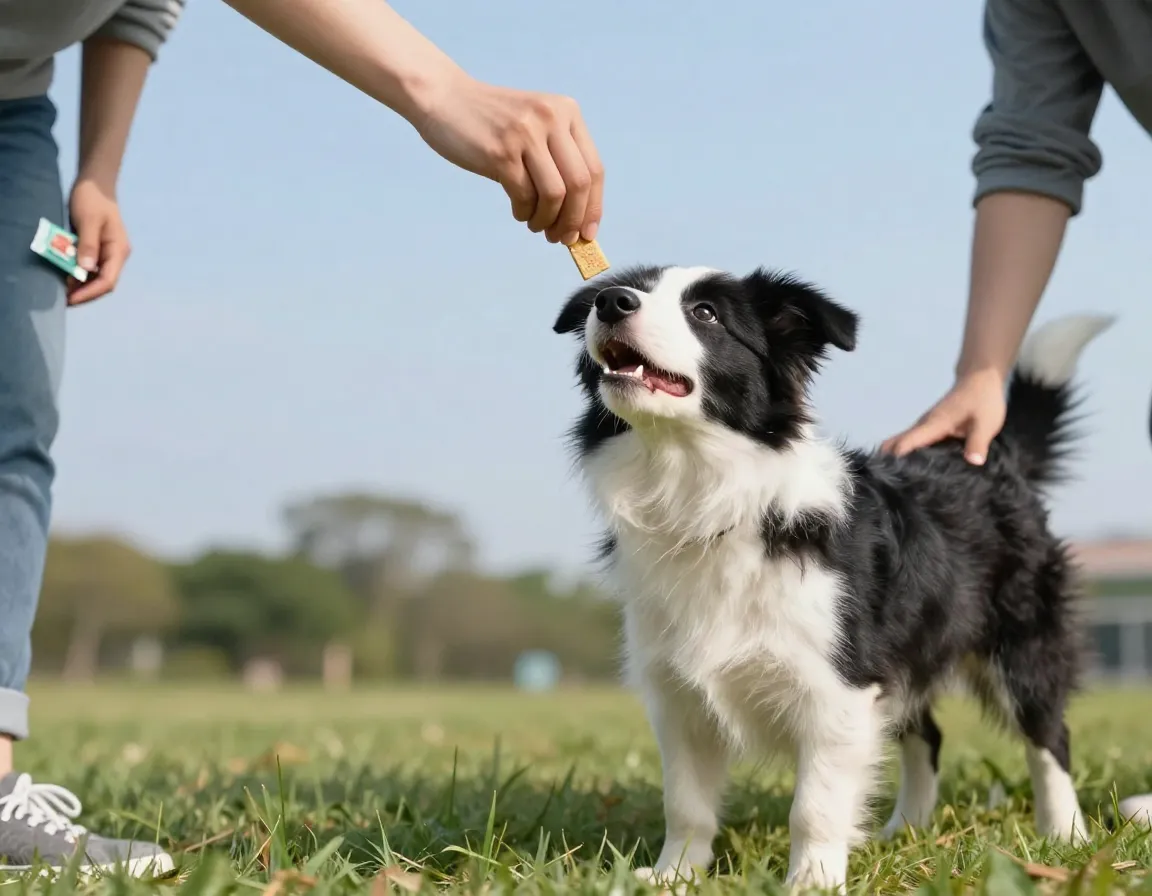
Timing is absolutely critical when it comes to rewards. Praise and treats must be given within seconds of successful elimination; delayed rewards fail to create the behavioral association [1][3]. Your puppy needs to understand exactly which behavior earned them the reward.
Effective reinforcement techniques:
- Keep high-value treats in your pocket during potty breaks
- Begin praising while your puppy is eliminating (use a calm, happy voice)
- Offer the treat immediately after they finish
- Use enthusiastic but calm praise to avoid overstimulation
- Consider using a specific “success phrase” like “Good potty!”
The science behind this approach is fascinating. Dogs form behavioral associations within a 3-5 second window. If you wait until you’re back inside to give praise or treats, your puppy may associate the reward with coming inside rather than eliminating outside.
4. Implement Strategic Crate Training
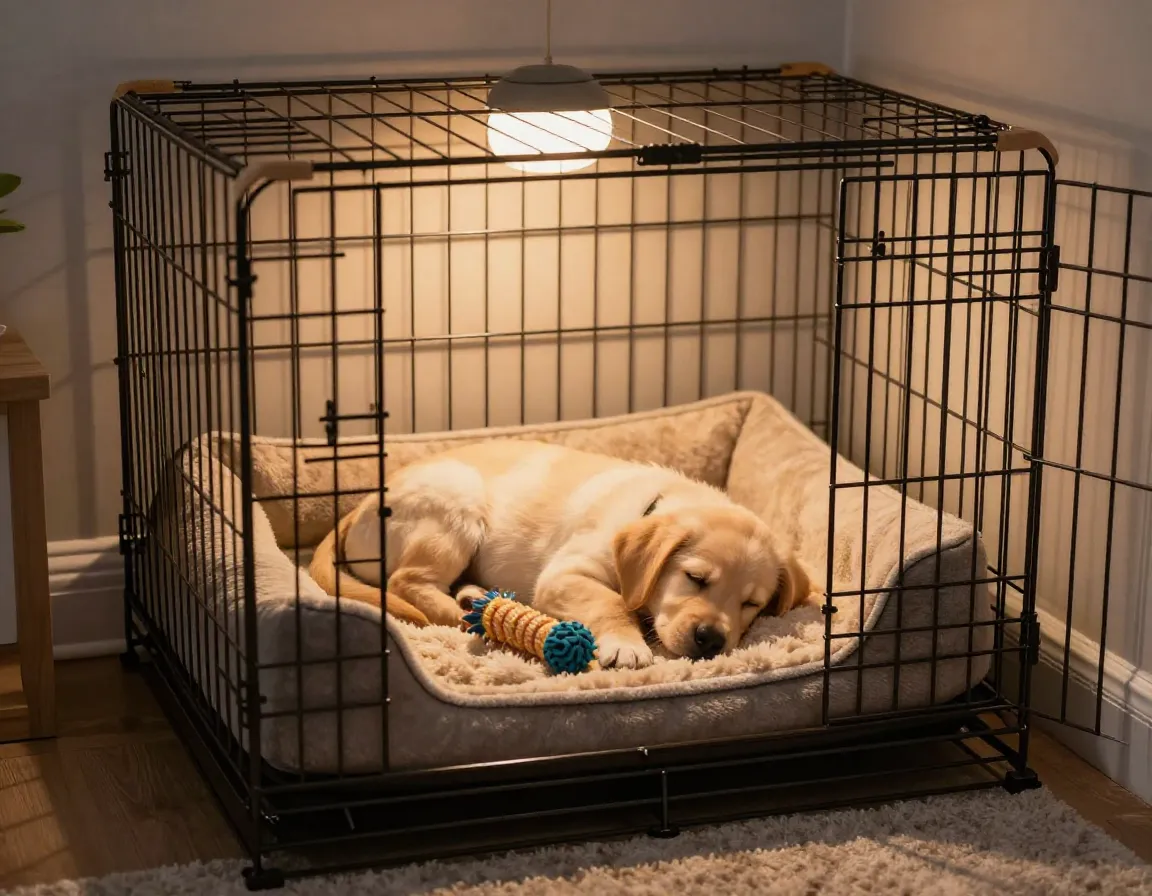
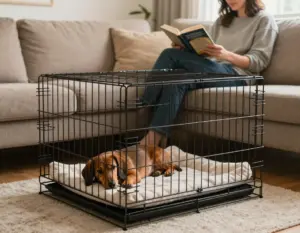
Crate training leverages your puppy’s natural instinct to avoid soiling where they sleep. Properly-sized crates (large enough to stand, turn, and lie down) teach bladder control by creating a clean, comfortable space that your puppy wants to keep pristine [1][2][3].
Crate training guidelines for potty success:
- Size matters: The crate should be just large enough for your puppy to stand, turn around, and lie down comfortably
- Gradual introduction: Start with short periods and gradually increase duration
- Never use as punishment: The crate should be a positive, safe space
- Immediate potty break: Always take your puppy directly outside after crate time
- Overnight success: Most puppies can hold it for 6-8 hours overnight by 12-16 weeks
Remember that crate training isn’t about confining your puppy—it’s about creating a den-like environment that satisfies their natural desire for a clean sleeping area while teaching valuable bladder control.
5. Maintain Constant Supervision and Learn Warning Signs
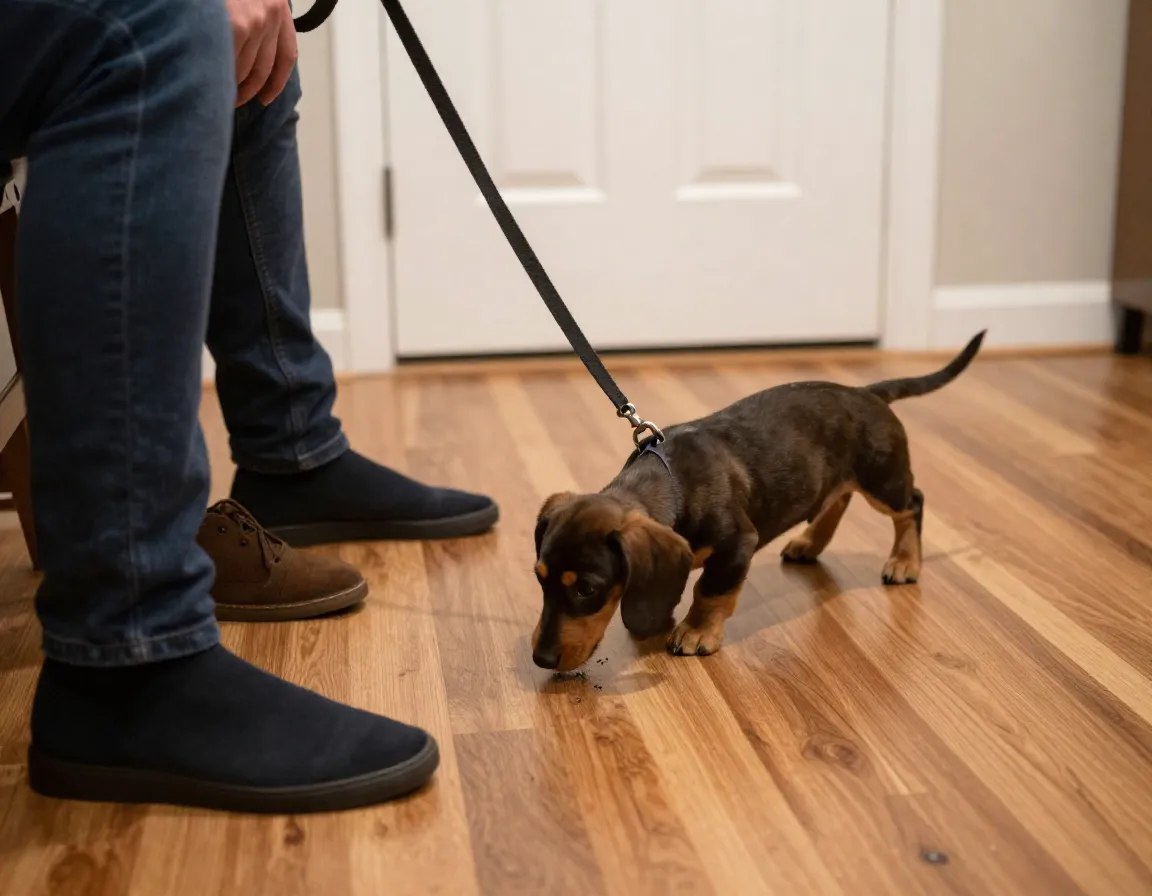
Close supervision allows you to catch cues like sniffing, circling, whining, and pacing—and reward success before accidents occur [1][2]. Think of yourself as a detective during the first few weeks, constantly watching for the subtle signs that indicate your puppy needs to eliminate.
Key warning signs to watch for:
- 🔍 Sniffing the ground intensely
- 🔄 Circling or spinning in place
- 😟 Whining or restless behavior
- 🚶 Pacing back and forth
- 🚪 Going to the door or looking toward the exit
- 😰 Sudden stop during play
When you notice any of these behaviors, immediately guide your puppy outside to their designated potty spot. Even if they don’t eliminate, you’re reinforcing the connection between these feelings and going outside.
6. Use Enzymatic Cleaners to Eliminate Scent Markers
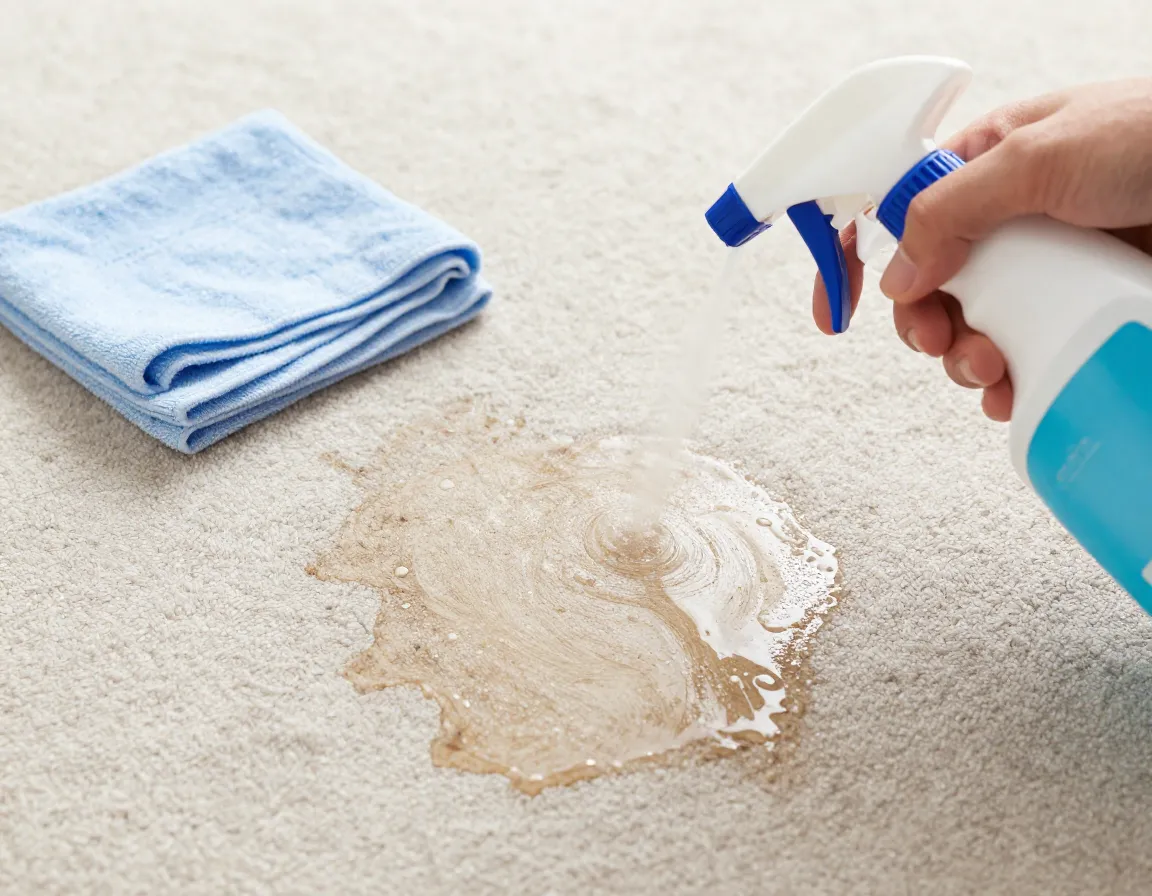
This tip is often overlooked but incredibly important. Ammonia and bleach can actually encourage re-soiling; enzymatic cleaners eliminate scent markers that signal appropriate potty zones [2]. Regular household cleaners may remove visible stains but leave behind scent molecules that are imperceptible to humans but obvious to your puppy’s sensitive nose.
Proper accident cleanup protocol:
- Clean immediately to prevent the scent from setting
- Use enzymatic cleaner specifically designed for pet accidents
- Saturate the area – don’t just surface clean
- Allow proper drying time as specified on the product label
- Block access to the area until completely dry and odor-free
Investing in a high-quality enzymatic cleaner is essential for long-term success. These products break down the organic compounds in urine and feces at a molecular level, completely eliminating the scent markers that might attract your puppy back to the same spot.
7. Control Feeding Schedules for Predictable Results
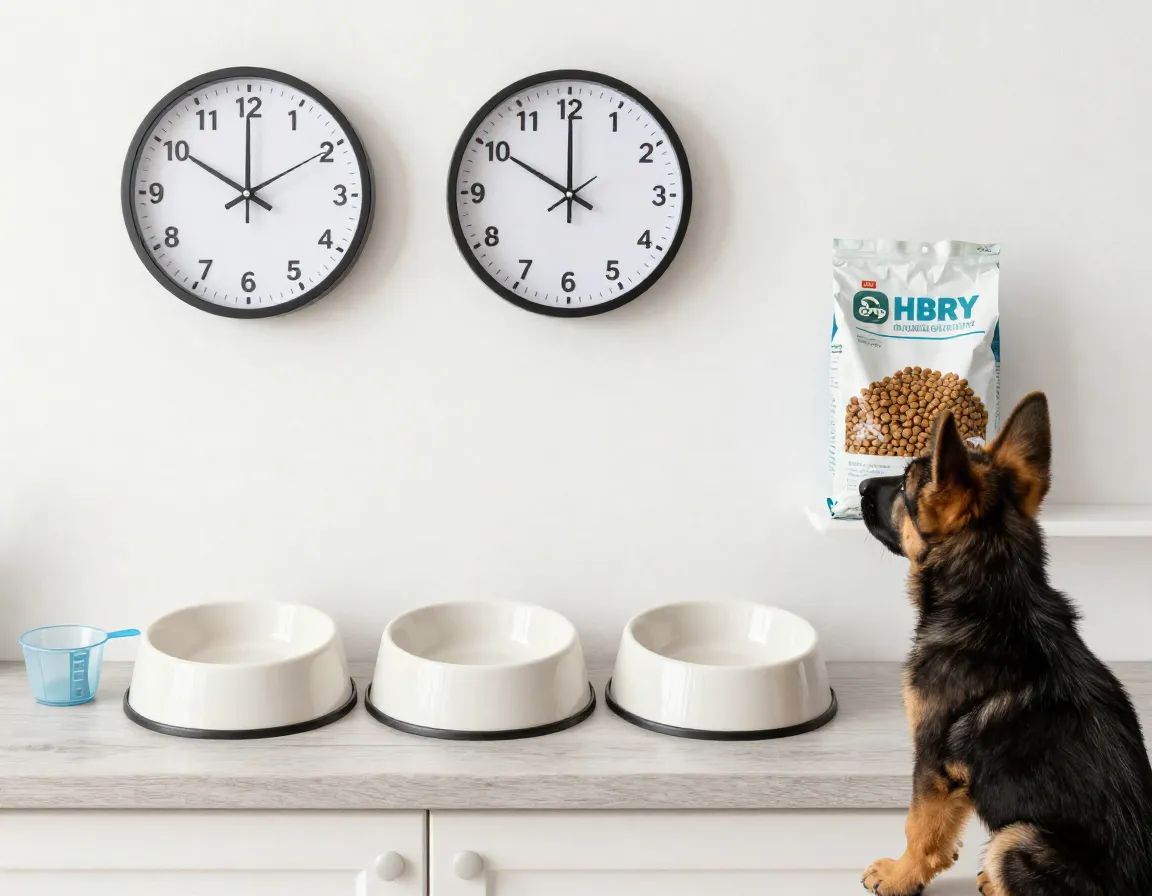
Consistent meal times at regular intervals make bowel movements more predictable and reduce accident frequency [1][2]. When you control the input, you can better predict and manage the output, making your potty training efforts far more effective.
Optimal feeding schedule structure:
- Puppies 8-12 weeks: 3-4 meals per day at consistent times
- Puppies 3-6 months: 3 meals per day, evenly spaced
- Remove food bowls between meals (water should always be available)
- Monitor eating habits to predict elimination timing
- Adjust schedule based on your puppy’s individual patterns
Most puppies need to eliminate within 15-30 minutes after eating. By feeding at the same times each day, you create a predictable schedule that allows you to anticipate when your puppy will need to go outside.
8. Maintain Patience and Consistency Throughout the Process
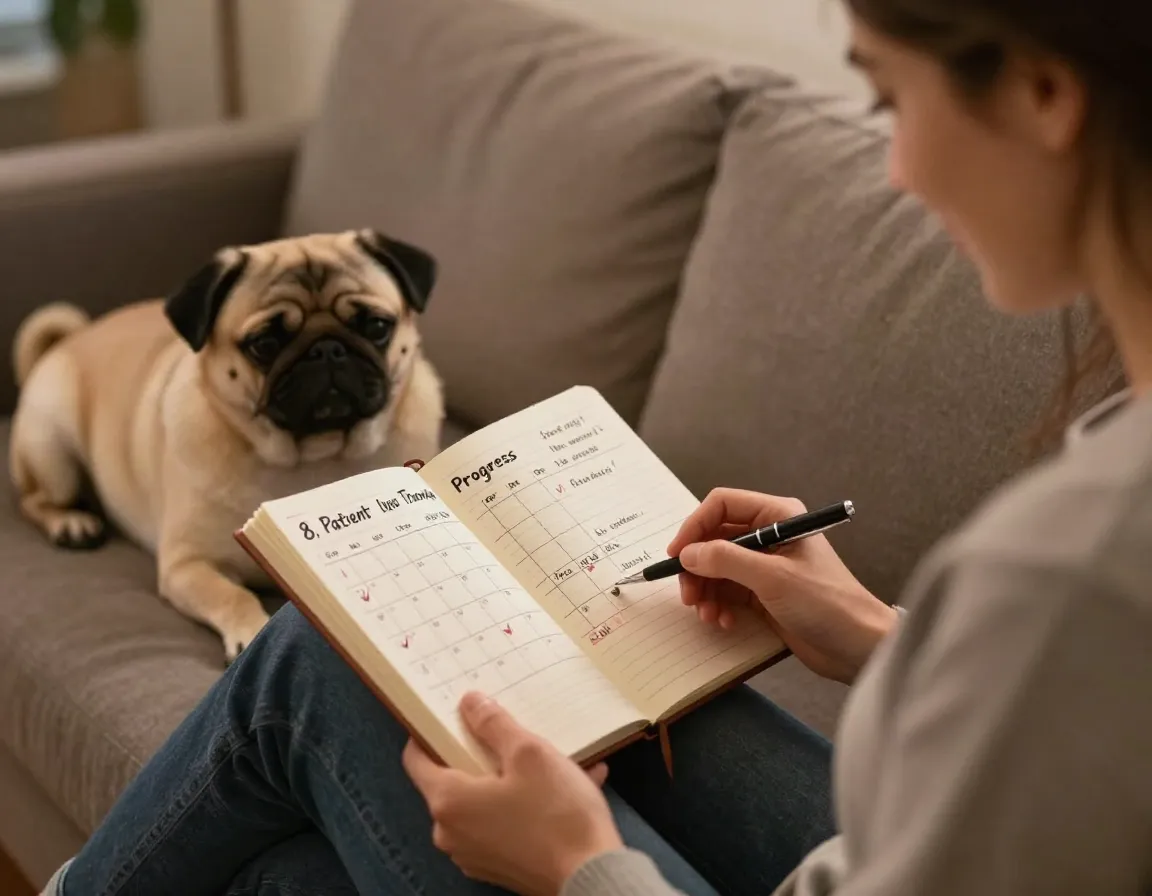
The final tip in our 8 best puppy potty training tips to speed up success is perhaps the most important: maintaining unwavering patience and consistency. House training is a process that requires time, and every puppy learns at their own pace. Frustration and inconsistency will only slow down progress and potentially create anxiety around elimination.
Keys to maintaining consistency:
- Never punish accidents – clean up and move on
- Stick to your schedule even when it’s inconvenient
- Celebrate small victories to stay motivated
- Track progress to see improvement over time
- Adjust expectations based on your puppy’s age and development
Remember that setbacks are normal and don’t indicate failure. Weather changes, schedule disruptions, or growth spurts can temporarily affect your puppy’s progress. The key is returning to your consistent routine as quickly as possible.
Common Mistakes That Slow Down Progress
Even with the best intentions, many puppy owners unknowingly sabotage their potty training efforts. Here are the most common mistakes to avoid:
❌ Inconsistent schedules – Skipping potty breaks or changing timing confuses your puppy
❌ Delayed reinforcement – Waiting too long to praise successful elimination
❌ Using punishment – Scolding accidents creates fear and anxiety
❌ Inadequate supervision – Missing warning signs leads to more accidents
❌ Wrong crate size – Too large allows soiling, too small causes distress
❌ Incomplete cleanup – Leftover scent markers encourage repeat accidents
Creating Your Personalized Potty Training Plan
Now that you understand the 8 best puppy potty training tips to speed up success, it’s time to create a customized plan for your specific situation. Consider your puppy’s age, breed, size, and your household schedule when developing your approach.
Week 1-2: Foundation Building
- Establish consistent potty break schedule
- Introduce crate training gradually
- Focus on supervision and accident prevention
- Begin positive reinforcement training
Week 3-4: Pattern Recognition
- Look for your puppy’s individual elimination patterns
- Refine timing based on observed behaviors
- Increase crate time gradually
- Celebrate successes enthusiastically
Week 5-8: Reliability Building
- Extend time between potty breaks slightly
- Test your puppy’s developing bladder control
- Address any remaining problem areas
- Prepare for increased independence
Troubleshooting Common Challenges
Even when following these proven tips, you may encounter specific challenges. Here’s how to address the most common issues:
🏠 Accidents in the same spot: Increase cleaning efforts with enzymatic cleaners and block access temporarily
🌙 Overnight accidents: Reduce evening water intake and ensure a final potty break before bed
🌧️ Weather resistance: Use covered areas or gradually acclimate your puppy to different weather conditions
⏰ Schedule conflicts: Arrange for dog walkers or adjust your routine to maintain consistency
The Science Behind Successful Potty Training
Understanding the developmental and psychological factors at play can help you maintain realistic expectations and stay motivated during challenging moments. Puppies’ brains are rapidly developing during their first six months, and the neural pathways associated with house training become stronger with each successful repetition.
Neurological development factors:
- Bladder control develops gradually over 4-6 months
- Routine recognition improves with consistent repetition
- Spatial awareness helps puppies understand indoor vs. outdoor spaces
- Social learning allows puppies to understand human expectations
Measuring Your Success
Track your progress to stay motivated and identify areas that need adjustment. Consider keeping a simple log that includes:
- Successful outdoor eliminations ✅
- Indoor accidents (location and time) ❌
- Warning signs observed 👀
- Schedule adherence ⏰
- Overall mood and energy 😊
Most puppies show significant improvement within 2-4 weeks of consistent training, with full reliability typically achieved by 4-6 months of age.
Conclusion
Successfully implementing these 8 best puppy potty training tips to speed up success requires commitment, patience, and consistency, but the results are absolutely worth the effort. By providing frequent potty breaks, establishing clear routines, using immediate positive reinforcement, implementing strategic crate training, maintaining constant supervision, using proper cleaning products, controlling feeding schedules, and staying patient throughout the process, you’re setting both yourself and your puppy up for long-term success.
Remember that every puppy is unique, and what works perfectly for one may need slight adjustments for another. The key is remaining flexible while maintaining the core principles outlined in these tips. Most importantly, celebrate the small victories along the way—each successful outdoor elimination is a step closer to a fully house-trained companion.
Your next steps:
- Choose your designated potty area and establish your routine today
- Set phone alarms for consistent potty break timing
- Purchase enzymatic cleaner and high-value training treats
- Create a simple tracking system to monitor progress
- Commit to consistency for the next 4-6 weeks
With dedication and the right approach, you’ll soon have a reliably house-trained puppy who understands exactly where and when to do their business. The investment you make in proper potty training now will pay dividends in the form of a well-behaved, confident dog who’s a joy to live with for years to come.
References
[1] How To Potty Train Your Dog In 7 Days – https://www.chewy.com/education/dog/new-dog/how-to-potty-train-your-dog-in-7-days
[2] Toilet Training Basics – https://www.barkbusters.com/news/toilet-training-basics
[3] Potty Training Tips How To Get Your Puppy On Track Fast – https://sitmeanssit.com/dog-training-mu/swlv-dog-training/potty-training-tips-how-to-get-your-puppy-on-track-fast/