9 Things to Look for in Miniature Australian Shepherd Puppies Red Merle
Only about 1 in 4 Miniature Australian Shepherd litters produces a red merle puppy — and finding a healthy, well-bred one is even rarer. The red merle coat pattern is one of the most visually stunning in the dog world, but its genetic complexity means buyers who don’t know what to look for can end up with a puppy carrying serious, preventable health issues. Whether you’re a first-time buyer or an experienced dog owner, knowing the 9 things to look for in Miniature Australian Shepherd puppies red merle can be the difference between a lifelong companion and a heartbreaking situation.
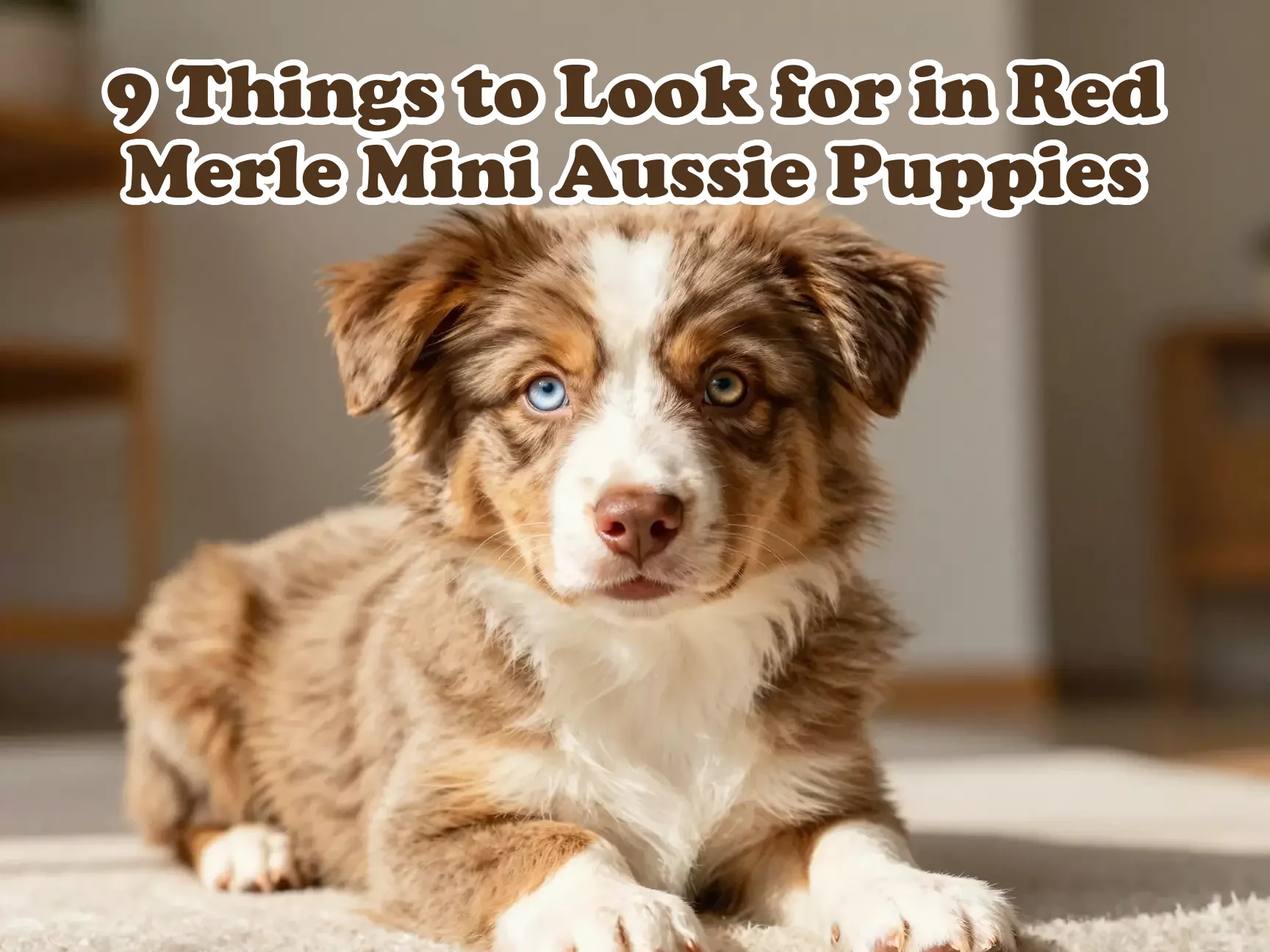
In this guide, I’ll walk you through every critical checkpoint — from coat genetics and eye color to breeder transparency and health testing — so you can make a confident, informed decision in 2026.
Key Takeaways
- 🐾 Red merle is a genetically recessive coat pattern, making truly healthy red merle Mini Aussies harder to find from quality breeders.
- 🧬 Double-merle genetics are a serious health hazard — always verify a puppy’s parentage and DNA test results before buying.
- 👁️ Eye color and nose pigmentation are key visual markers that help confirm authentic red merle genetics.
- 📋 Responsible breeders provide written health guarantees, vet records, and DNA screening for MDR1, PRA, and hip dysplasia.
- 🏡 Always visit the puppy in a home-like environment and meet at least one parent before committing.
Understanding the Red Merle Mini Aussie Before You Buy
Before diving into the 9 things to look for in Miniature Australian Shepherd puppies red merle, it helps to understand what makes this color pattern unique — and why it demands extra diligence from buyers.
The red merle pattern features a base of red (liver) and cream tones with mottled, marbled patches throughout the coat. Unlike the more common blue merle, red merle occurs less frequently because the red-colored gene is recessive in dogs. Both parents must carry the gene for a puppy to inherit it [2]. This rarity drives demand — and unfortunately, it also attracts irresponsible breeders who prioritize color over health.
“Rarity in coat color should never come at the cost of genetic health. The most beautiful puppy in the litter isn’t worth much if it’s carrying preventable conditions.”
Mini Aussies themselves are energetic, intelligent, and deeply loyal dogs that typically weigh between 20 and 40 pounds [1]. They thrive with active families and need consistent mental stimulation. The red merle variety shares all of these traits — the coat is simply a stunning bonus when everything else checks out.
The 9 Things to Look for in Miniature Australian Shepherd Puppies Red Merle
1. Authentic Red Merle Coat Pattern
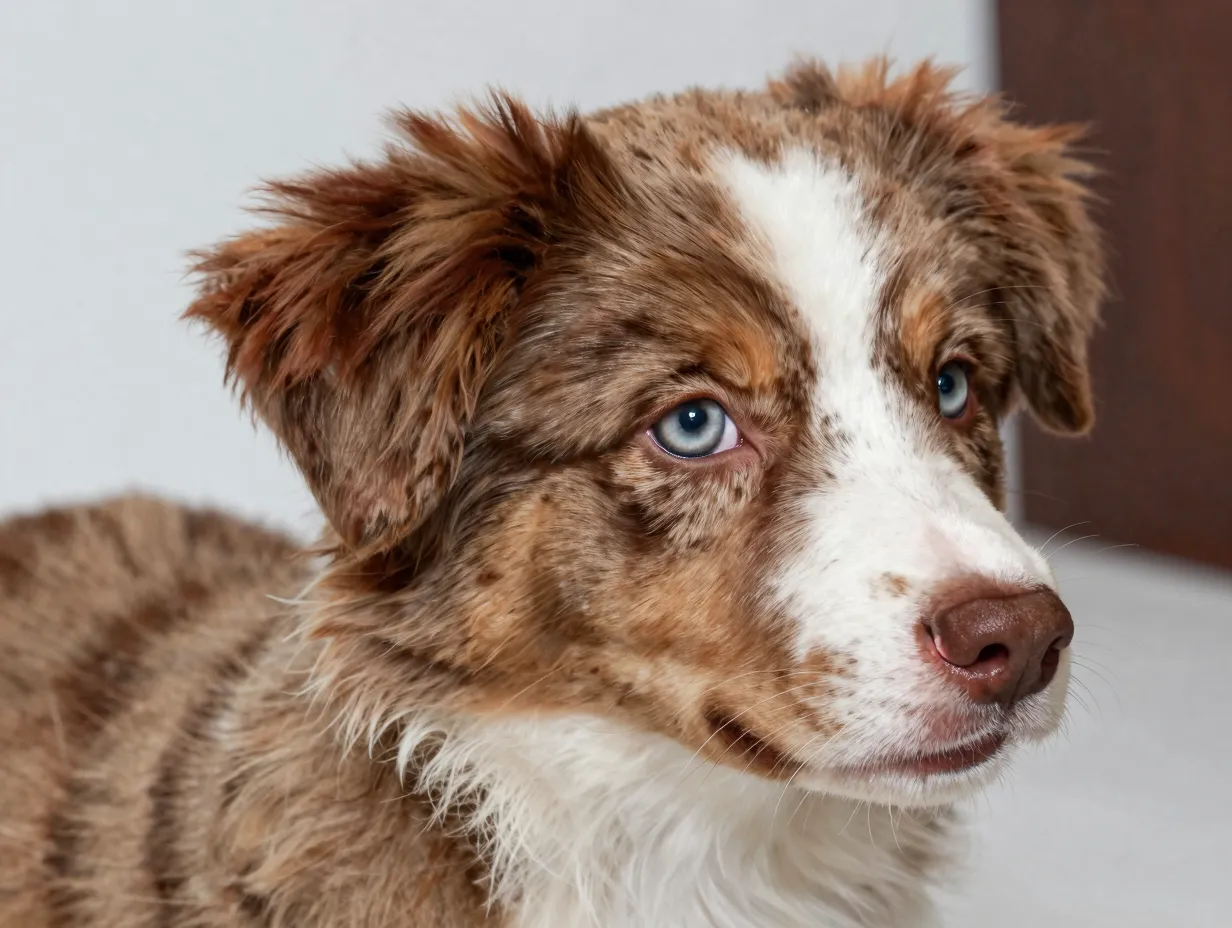
The first thing to evaluate is whether the puppy’s coat is a true red merle and not a misrepresented pattern. A genuine red merle Mini Aussie will display a marbled or mottled mix of red (liver/chocolate) and cream or buff tones, with irregular patches distributed across the body. The pattern should look organic and varied — not uniform or solid.
Be cautious of sellers who describe a dog as “red merle” when it may actually be a solid red or a sable. Ask for photos in natural lighting and, when possible, compare the puppy’s coat to verified red merle examples from reputable breed registries.
What to check:
- Mottled, marbled red and cream tones throughout the coat
- No two patches should look identical
- The pattern typically extends to the face, ears, and body
2. Eye Color That Matches Red Merle Genetics
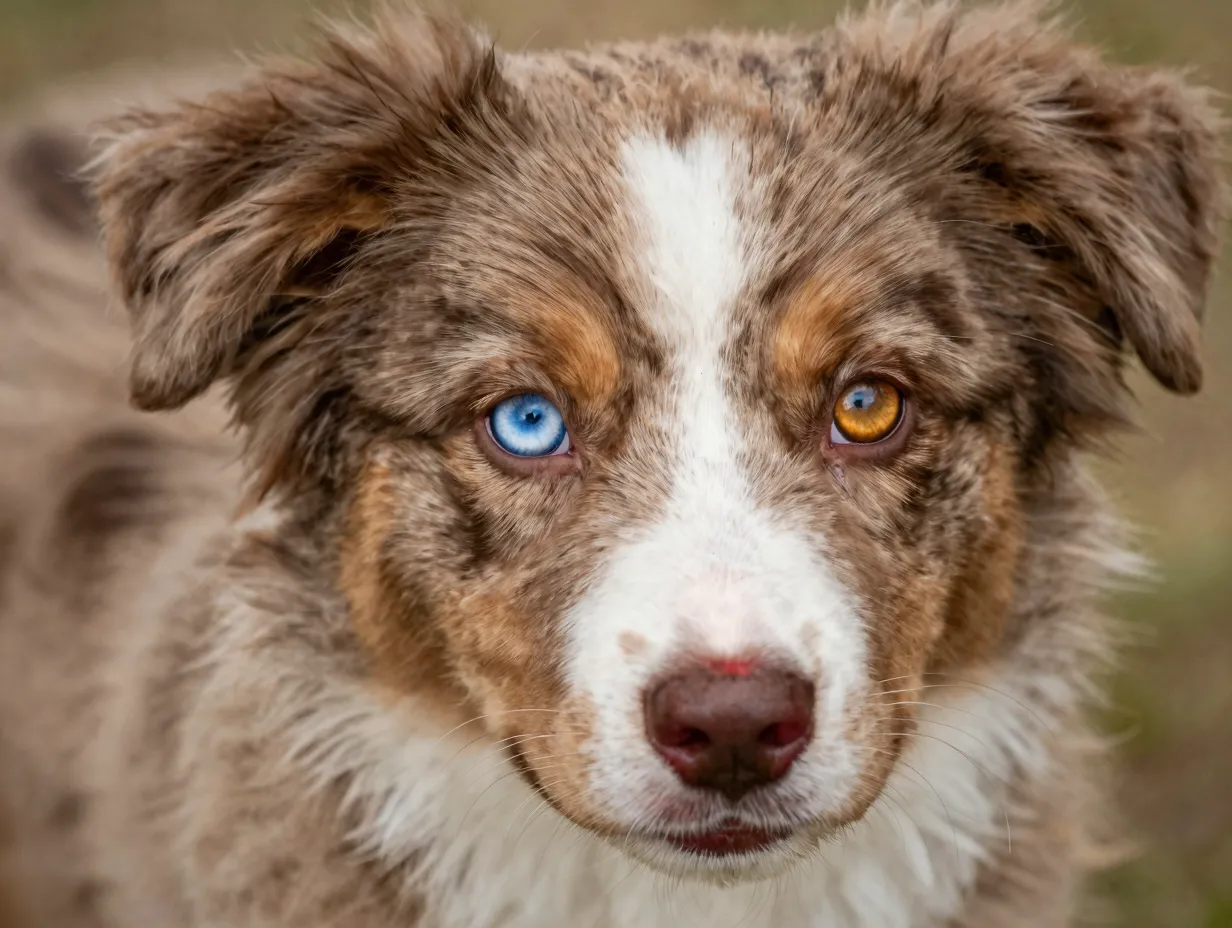
Eye color is one of the most reliable visual indicators of authentic red merle genetics [2]. Red merle Mini Aussies typically display one or more of the following:
| Eye Color Type | Description |
|---|---|
| Blue eyes | Solid blue, often striking and pale |
| Amber eyes | Warm golden-brown, common in red merles |
| Heterochromia | Two different-colored eyes (e.g., one blue, one amber) |
| Marbled/flecked eyes | A mix of colors within a single iris |
If a puppy presented as red merle has dark brown eyes with no variation, that’s worth questioning. While not impossible, it’s less typical and may indicate mixed or misidentified genetics. Heterochromia and blue eyes are especially common and celebrated in this color variety [2].
3. Red Nose and Red Paw Pads
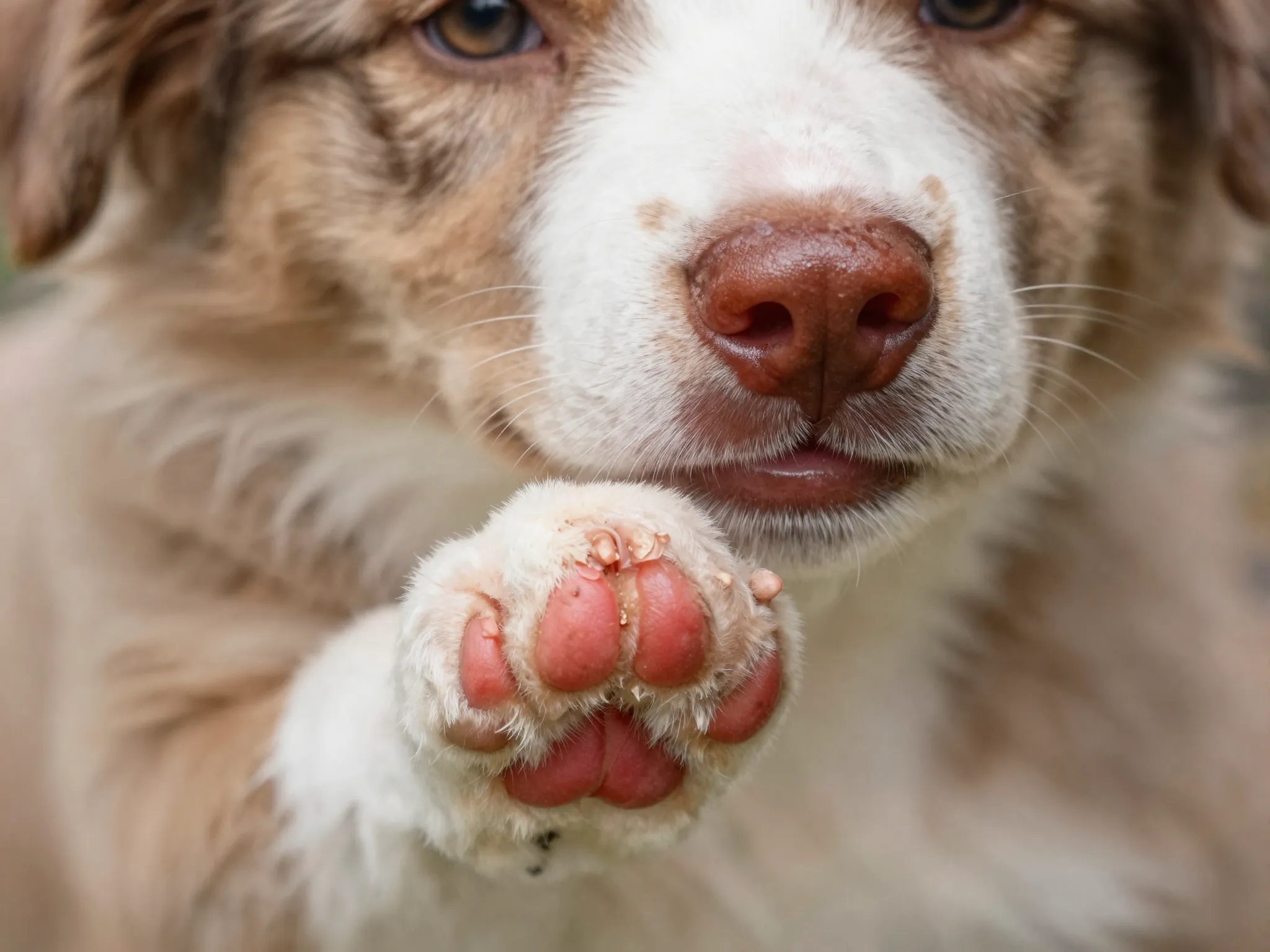
Beyond the coat and eyes, nose and paw pad pigmentation are key markers of true red merle genetics. Authentic red merle Mini Aussies have red (liver-colored) noses and red or pink-tinted paw pads — not black [2].
A black nose on a puppy being sold as red merle is a significant red flag. It may indicate the puppy is actually a blue merle, a mismarked dog, or the result of inaccurate record-keeping by the breeder.
🔍 Quick check: In good lighting, look at the puppy’s nose leather and the pads on the bottom of its feet. Both should show that warm liver-red tone consistent with the red merle gene expression.
4. No Double-Merle Genetics
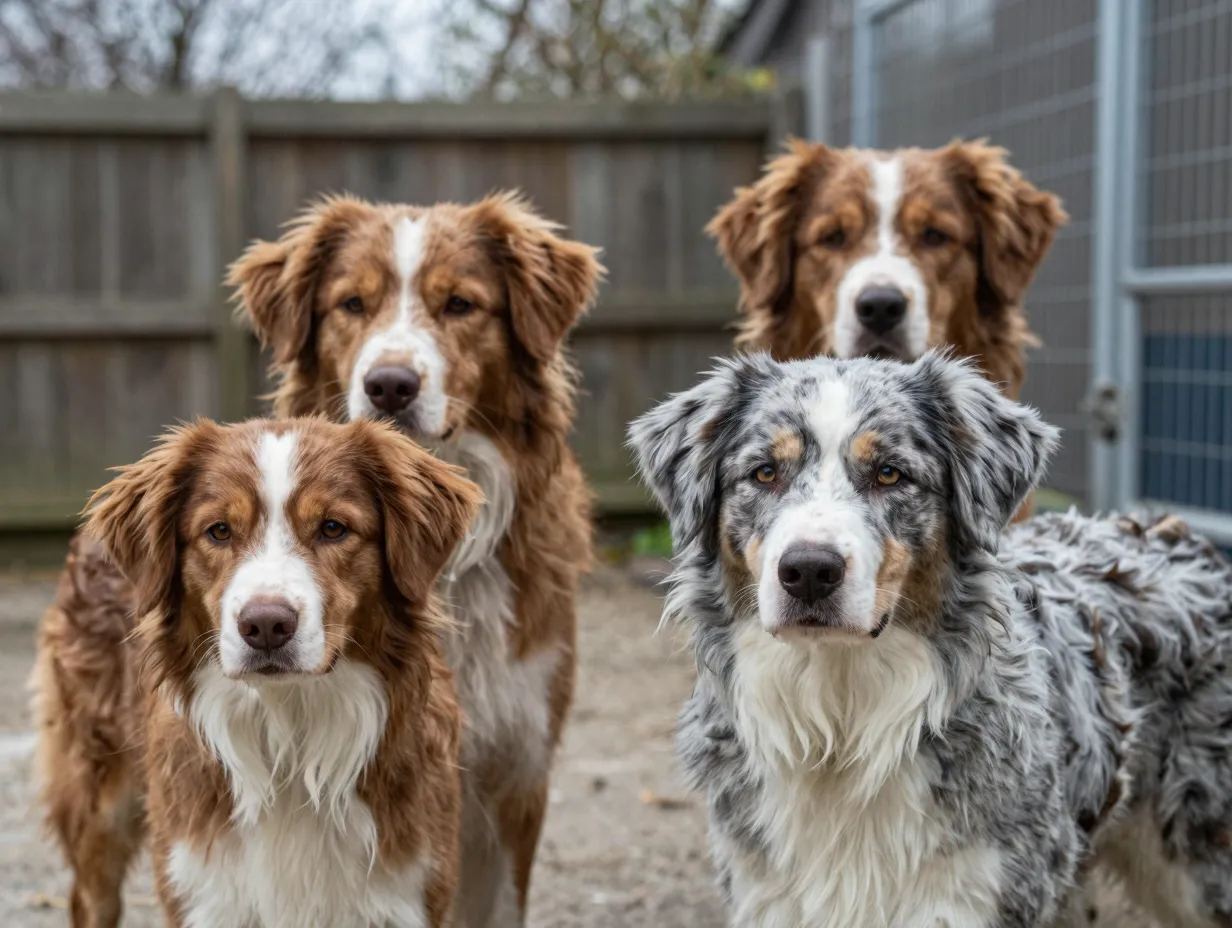
This is arguably the most critical health checkpoint when evaluating any merle-patterned puppy. Double-merle occurs when a puppy inherits the merle gene from both parents, resulting in a doubled merle pigment effect that causes serious health problems [2].
Health risks associated with double-merle genetics include:
- Severe vision impairment or blindness
- Hearing loss or complete deafness
- Increased sensitivity to light
- Skin abnormalities
Double-merle puppies are often predominantly white with very little patterning — sometimes called “lethal white” in casual breeding circles. A responsible breeder will never breed two merle dogs together, as this creates a 25% chance of double-merle offspring in the litter.
“A reputable breeder understands that merle-to-merle breeding is ethically off-limits. If a breeder can’t explain their pairing logic, walk away.”
Always ask the breeder to confirm that the puppy’s parents are not both merle-patterned dogs.
5. DNA Health Testing From the Breeder
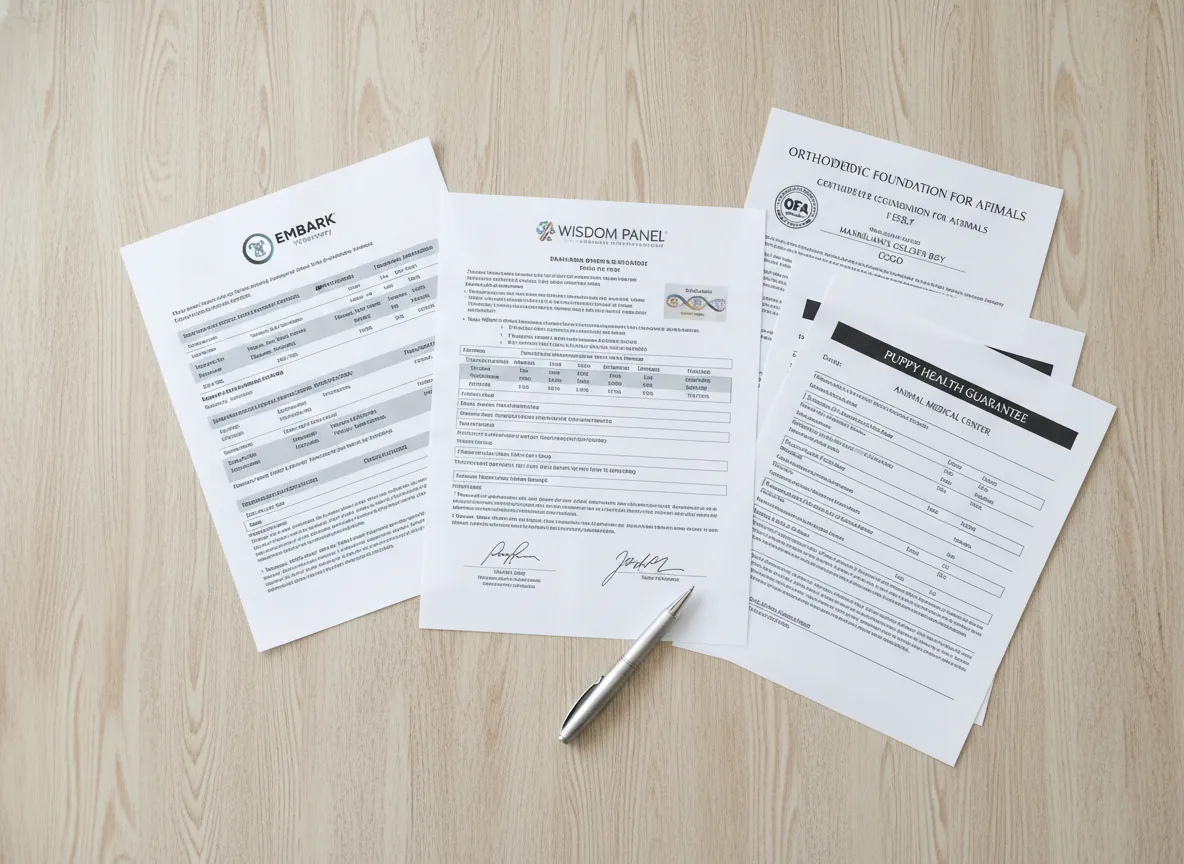
Responsible breeders of red merle Mini Aussie puppies should screen for genetic conditions that are common in shepherd breeds [3]. This isn’t optional — it’s a baseline standard of ethical breeding in 2026.
Key genetic tests to ask about:
- MDR1 (Multi-Drug Resistance Gene) — A mutation that makes dogs dangerously sensitive to certain common medications, including some antiparasitic drugs and anesthetics.
- PRA (Progressive Retinal Atrophy) — A degenerative eye condition that leads to blindness. Particularly relevant given the eye sensitivity already associated with merle genetics.
- Hip Dysplasia Screening — Structural hip evaluation (often via OFA or PennHIP) to screen for joint malformation that can cause lifelong pain and mobility issues [3].
Ask the breeder to provide actual documentation — not just verbal assurances. Legitimate test results come from certified labs such as Embark, Wisdom Panel, or the Orthopedic Foundation for Animals (OFA).
6. Breeder Transparency and Communication

The quality of a breeder’s communication tells you almost everything you need to know before you ever see a puppy. When researching the 9 things to look for in Miniature Australian Shepherd puppies red merle, breeder behavior is one of the most telling indicators of puppy quality [3].
Signs of a trustworthy breeder:
- ✅ Willingly answers detailed questions about genetics and health
- ✅ Shares both parents’ health histories and temperament profiles
- ✅ Provides references from previous puppy buyers
- ✅ Is registered with a recognized breed club or registry
- ✅ Does not have multiple litters available at all times
Red flags to watch for:
- ❌ Reluctant to share health documentation
- ❌ Pushes for fast decisions or deposits without letting you ask questions
- ❌ Cannot identify the sire (father) of the litter
- ❌ Offers to ship puppies without any in-person or video meeting
7. A Clean, Home-Like Puppy Environment
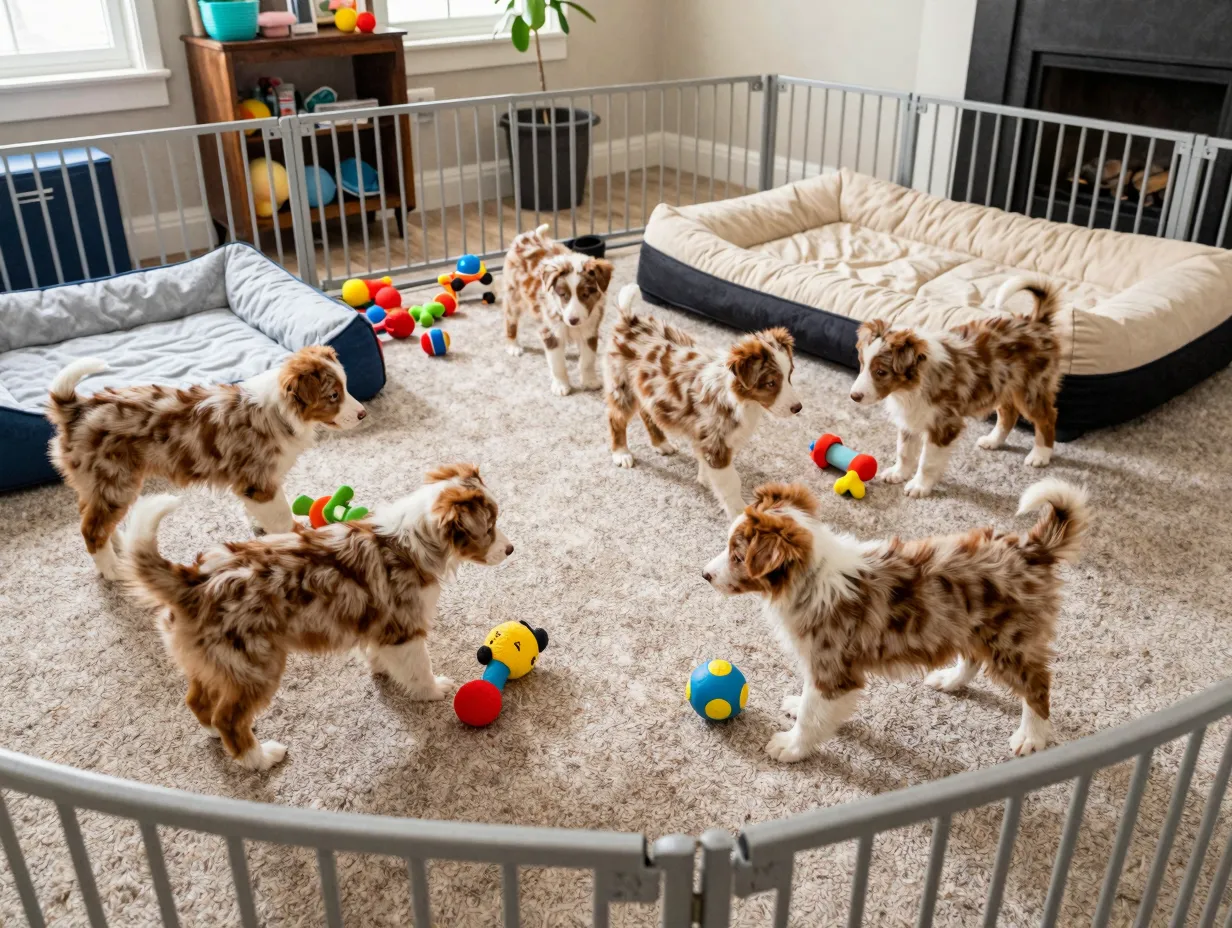
Where a puppy spends its first 8 weeks has a profound impact on its behavioral development, socialization, and long-term temperament. Always ask to visit the puppies in person or, at minimum, request a live video tour of the space [3].
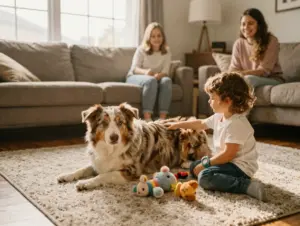
Red merle Mini Aussie puppies raised in home environments — rather than commercial kennels — tend to be better socialized, more comfortable around people, and less prone to anxiety-based behaviors. They should have exposure to:
- Household sounds (appliances, television, children)
- Different surfaces (carpet, tile, grass, gravel)
- Multiple people of different ages
- Basic handling of paws, ears, and mouth
A clean, stimulating environment with visible enrichment items (toys, tunnels, varied textures) is a strong indicator that the breeder takes early development seriously.
8. Healthy Physical Appearance and Energy Level
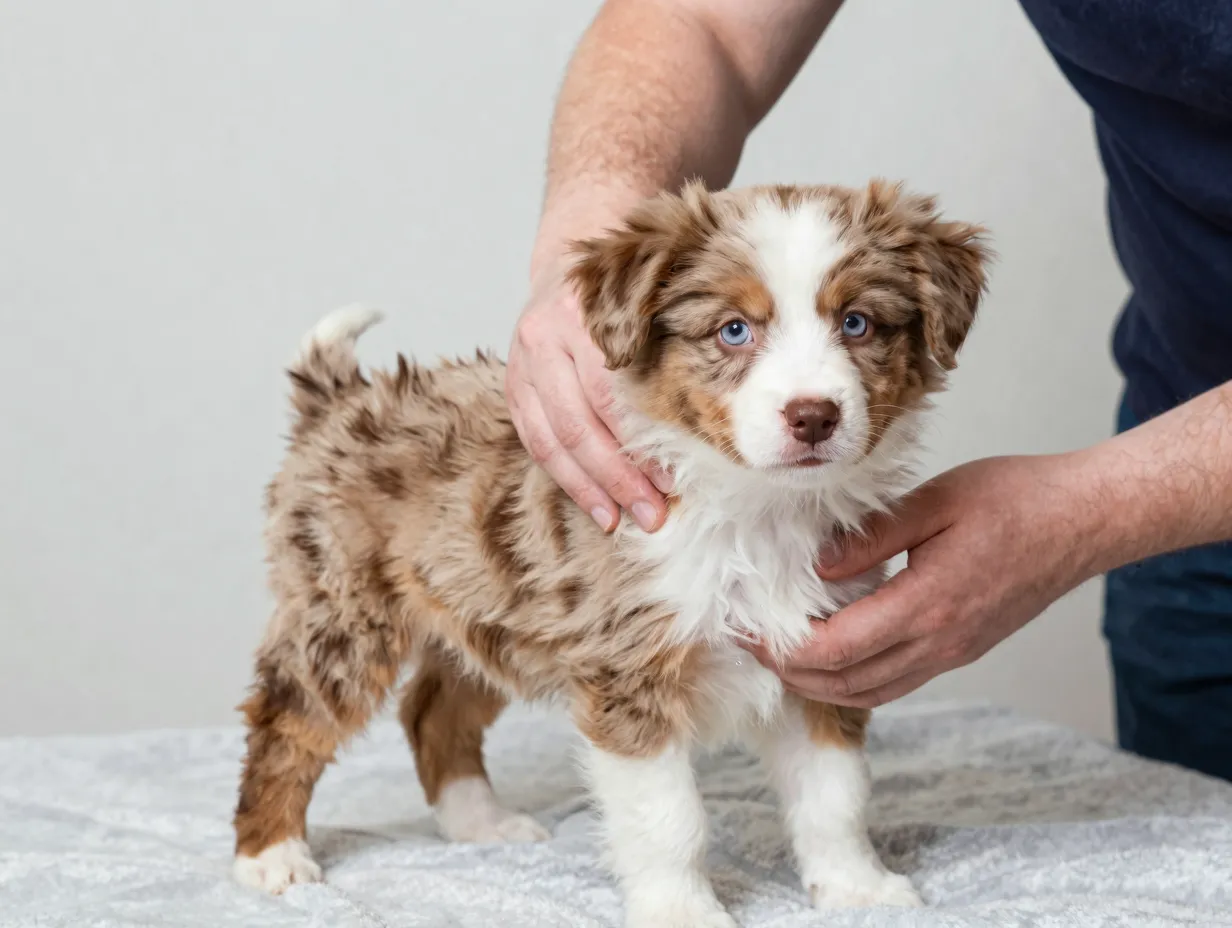
When you meet the puppy, conduct a basic visual and behavioral health assessment. A healthy red merle Mini Aussie puppy should be alert, curious, and engaged with its surroundings — not lethargic, fearful, or overly submissive.
Physical checklist:
| Feature | What to Look For |
|---|---|
| Eyes | Clear, bright, no discharge or cloudiness |
| Ears | Clean inside, no odor or dark debris |
| Coat | Soft, clean, no bald patches or excessive scratching |
| Belly | Slightly rounded after feeding, no bloating |
| Gait | Smooth movement, no limping or favoring of limbs |
| Weight | Proportional for age, ribs slightly palpable but not prominent |
A puppy that cowers in the corner, sneezes repeatedly, or has watery eyes may be sick or poorly socialized. Trust your instincts — if something feels off, it probably is.
9. Written Health Guarantee and Vet Records
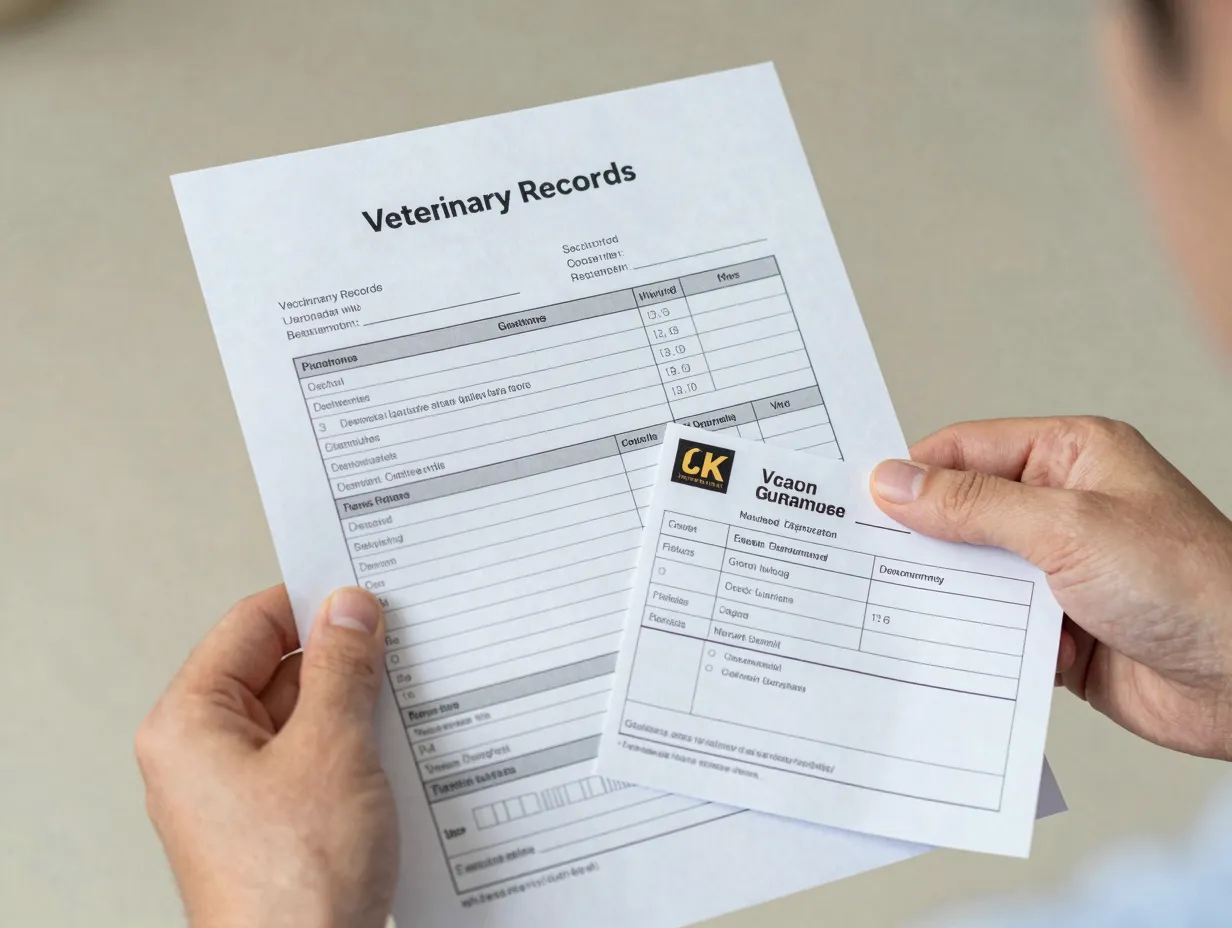
The final item on this checklist of 9 things to look for in Miniature Australian Shepherd puppies red merle is documentation. A reputable breeder will provide:
- A written health guarantee — typically covering genetic conditions for a minimum of 1–2 years
- Vet examination records — proof that the puppy has been examined by a licensed veterinarian before sale
- Vaccination records — documentation of which vaccines have been administered and which are due
- Deworming history — a schedule showing when and what deworming treatments were given
- Microchip information (if applicable) — registration details for the puppy’s microchip
This paperwork is not just bureaucratic formality — it’s your safety net. If a breeder refuses to provide written documentation, that’s a clear signal to look elsewhere.
“Paper trails protect puppies. A breeder who won’t put their health guarantee in writing doesn’t fully stand behind their dogs.”
Comparing Red Merle Mini Aussies to Other Color Varieties
To put things in perspective, here’s a quick comparison of the four standard Mini Aussie color varieties and how red merle stacks up:
| Color Variety | Rarity | Nose Color | Common Eye Colors | Special Considerations |
|---|---|---|---|---|
| Blue Merle | Common | Black | Blue, brown, heterochromia | Double-merle risk |
| Red Merle | Less common | Red/liver | Blue, amber, heterochromia | Double-merle risk; recessive gene |
| Black Tri | Common | Black | Brown | Straightforward genetics |
| Red Tri | Less common | Red/liver | Amber, brown | Recessive red gene |
Red merle sits in a unique position — it’s visually distinctive, genetically complex, and requires more careful vetting than solid-colored varieties [2]. That said, a well-bred red merle Mini Aussie is an extraordinary companion.
Questions to Ask Your Breeder Before Buying
Use this checklist during your breeder conversations:
- Are both parents DNA tested? Can I see the results?
- Is either parent a merle? If both are, why was this pairing made?
- Has the puppy been examined by a vet? Can I see the records?
- What genetic conditions have been screened in the breeding line?
- Do you offer a written health guarantee? What does it cover?
- Can I visit the puppies in your home before purchasing?
- What socialization experiences have the puppies had so far?
- Do you have references from previous buyers I can contact?
A breeder who answers these questions openly and confidently — without hesitation or deflection — is someone worth trusting.
What to Expect From a Red Merle Mini Aussie as a Pet
Once you’ve found a healthy, well-bred red merle Mini Aussie, you’re in for an incredible experience. These dogs are:
- 🧠 Highly intelligent — they pick up commands quickly and thrive with puzzle toys and agility training
- 💪 Energetic — they need at least 60–90 minutes of exercise daily [5]
- 🤝 Loyal and affectionate — they bond deeply with their families and can be reserved with strangers
- 🐑 Herding-instinct driven — they may try to “herd” children or other pets, which is manageable with training
Mini Aussies are smaller than their standard counterparts but carry the same working-dog drive [4]. They do best in homes with active owners who can provide consistent mental and physical stimulation.
Conclusion: Your Actionable Next Steps
Finding the right red merle Mini Aussie puppy takes time, research, and patience — but it’s absolutely worth it. Here’s what to do next:
- Start with reputable breed registries such as ASDR (Australian Shepherd Dog Registry) or NSDR to find breeders who follow ethical standards.
- Request DNA health test documentation before committing to any puppy or deposit.
- Verify that neither parent is a merle if the other parent is also merle — this eliminates double-merle risk.
- Schedule an in-person or live video visit to assess the puppy’s environment and temperament firsthand.
- Get everything in writing — health guarantees, vet records, and vaccination schedules before you bring your puppy home.
The 9 things to look for in Miniature Australian Shepherd puppies red merle outlined in this guide give you a complete framework for making a smart, ethical, and joyful purchase. A red merle Mini Aussie raised right will reward you with years of energy, loyalty, and that unforgettable marbled coat that turns heads everywhere you go. 🐾
References
[1] Dog Breed Guide Mini Australian Shepherd – https://www.petsbest.com/blog/dog-breed-guide-mini-australian-shepherd
[2] Mini Aussie Colors – https://spiritdogtraining.com/breeds/mini-aussie-colors/
[3] Mini Aussie Shepherd Everything You Need To Know – https://petpawz.com.au/blogs/blogs/mini-aussie-shepherd-everything-you-need-to-know
[4] Should I Get A Mini Australian Shepherd Or A Regular Standard Australian Shepherd What Are The Differences – https://karenshanley.com/should-i-get-a-mini-australian-shepherd-or-a-regular-standard-australian-shepherd-what-are-the-differences/
[5] Caring For Your Mini Australian Shepherd A Comprehensive Guide – https://marlowinaussies.com/f/caring-for-your-mini-australian-shepherd-a-comprehensive-guide