9 Early Training Tips for Your Belgian Shepherd Malinois Puppy
Belgian Malinois wash out of professional working dog programs at a rate of 50–70% — not because they lack intelligence, but because their early training was inconsistent or poorly timed. If you’ve just brought home a Malinois puppy, the decisions you make in the next 16 weeks will shape the dog you live with for the next decade. These 9 Early Training Tips for Your Belgian Shepherd Malinois Puppy are designed to give you a structured, evidence-based roadmap from day one.

This breed is not a golden retriever with a different coat. The Belgian Malinois is a high-drive, highly intelligent working dog that learns at a breathtaking pace — which means it picks up bad habits just as fast as good ones [2]. Getting ahead of that learning curve early is everything.
Key Takeaways 📌
- Start immediately — training begins the moment your puppy arrives home, not at 6 months old.
- Consistency beats intensity — short, frequent, positive sessions outperform long, exhausting ones.
- Mental stimulation is non-negotiable — a bored Malinois is a destructive Malinois.
- Socialization is a training skill — controlled, positive exposure builds a confident, stable adult dog.
- Your emotional state matters — this breed reads you; frustration in training sessions sets everyone back.
Why Early Training Is Non-Negotiable for This Breed
Before diving into the specific tips, it’s worth understanding why the Malinois demands early intervention more than most breeds. Originally bred for herding and later adopted by military and police forces worldwide, the Belgian Shepherd Malinois has an extraordinarily high work drive. Their brains are always “on.”
💡 Pull Quote: “A Belgian Malinois without structure isn’t just difficult — it’s a liability. Early training isn’t optional; it’s the foundation of everything.”
Without early guidance, that drive gets channeled into chasing cars, nipping at children, or dismantling your furniture. With it, you have one of the most loyal, capable, and rewarding companions in the dog world. The 9 Early Training Tips for Your Belgian Shepherd Malinois Puppy outlined below are sequenced intentionally — build them in order for the best results.
The 9 Early Training Tips for Your Belgian Shepherd Malinois Puppy
1. Start Training the Moment You Arrive Home
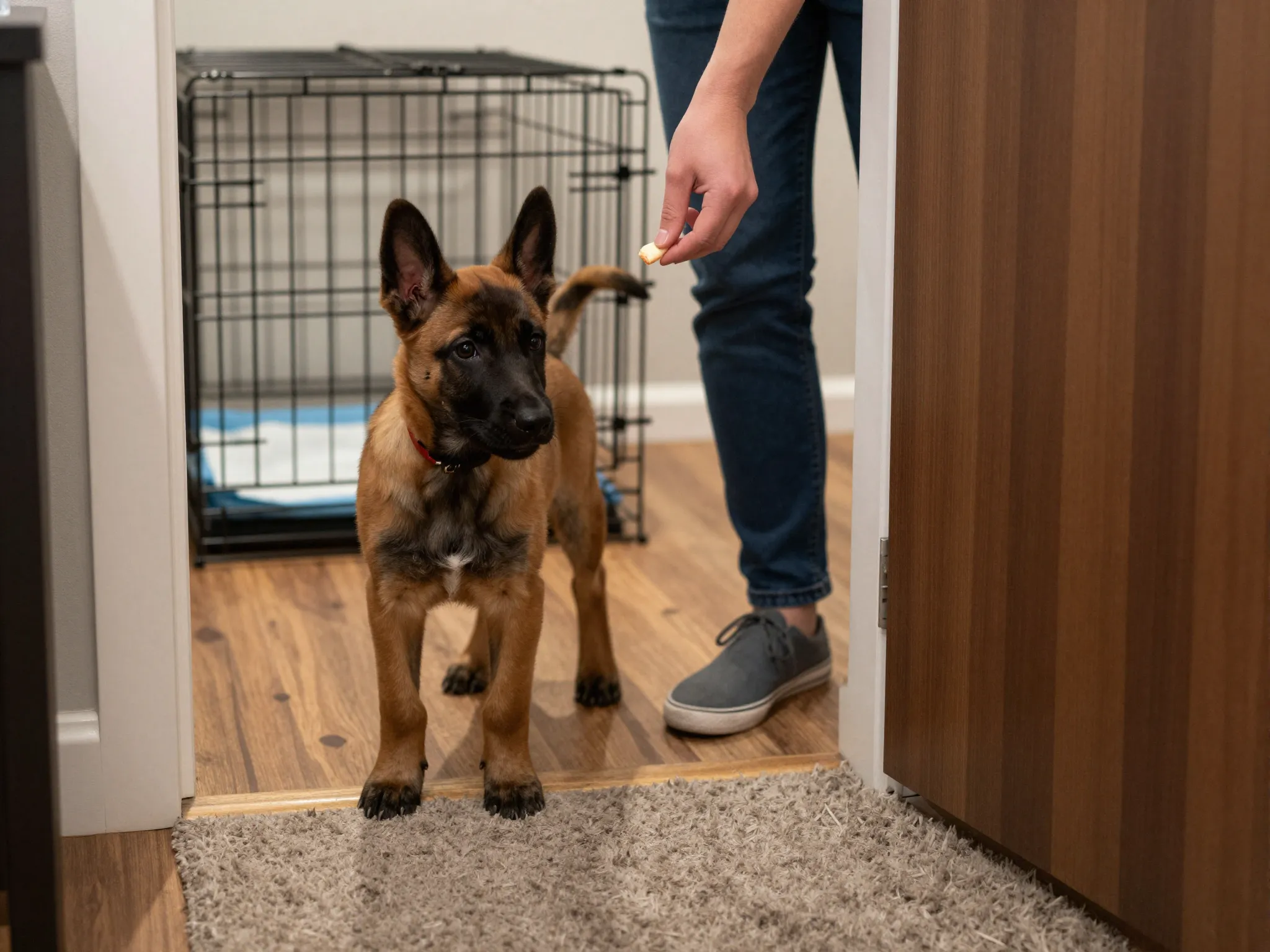
Most new owners make the mistake of giving their puppy a “settling-in grace period” before training begins. With a Malinois, this is a costly error. Training starts on day one — not in a harsh or overwhelming way, but through consistent expectations from the very first interaction [2].
From the moment your puppy walks through the door, you are teaching it something. The question is whether you’re teaching it intentionally or accidentally. Establish where it sleeps, where it eats, and what furniture it’s allowed on — and stick to those rules immediately.
Quick-start checklist for Day 1:
- Designate a crate or sleeping area before the puppy arrives
- Decide on house rules (furniture access, room access) and enforce them immediately
- Begin using the puppy’s name consistently and reward any eye contact
- Start crate introduction with positive associations (treats, calm praise)
The earlier structure is introduced, the more naturally the puppy accepts it as normal life [4].
2. Use Luring and Shaping Before Verbal Commands
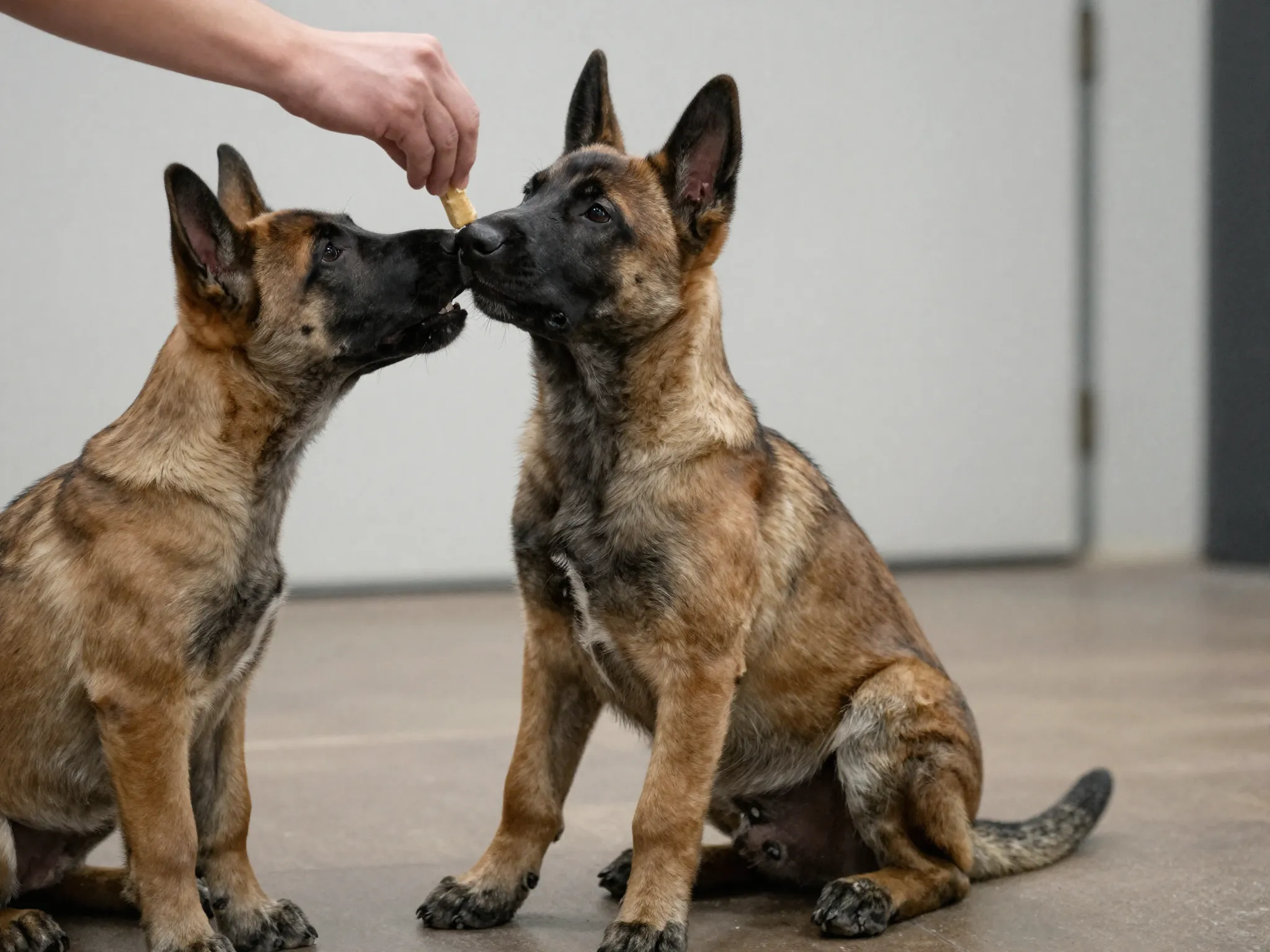
One of the most common beginner mistakes is jumping straight to verbal commands like “sit” or “stay” before the puppy understands what those words mean. Instead, use luring and shaping first [3].
Luring means using food or movement to guide the puppy into a desired position. Once the puppy is reliably offering the behavior on its own, then you attach a verbal cue. This sequence — behavior first, label second — creates a much stronger and more reliable response.
| Method | What It Looks Like | When to Use It |
|---|---|---|
| Luring | Hold treat at nose, guide into sit position | Early stages, new behaviors |
| Shaping | Reward small steps toward the final behavior | Building complex behaviors |
| Verbal Cue | Add word once behavior is 80%+ reliable | After behavior is established |
| Fading the Lure | Gradually remove food from hand | Once behavior is consistent |
This approach makes training feel like a game rather than a drill, which keeps a Malinois puppy engaged and motivated [3].
3. Keep Sessions Short, High-Energy, and Frequent 🔥
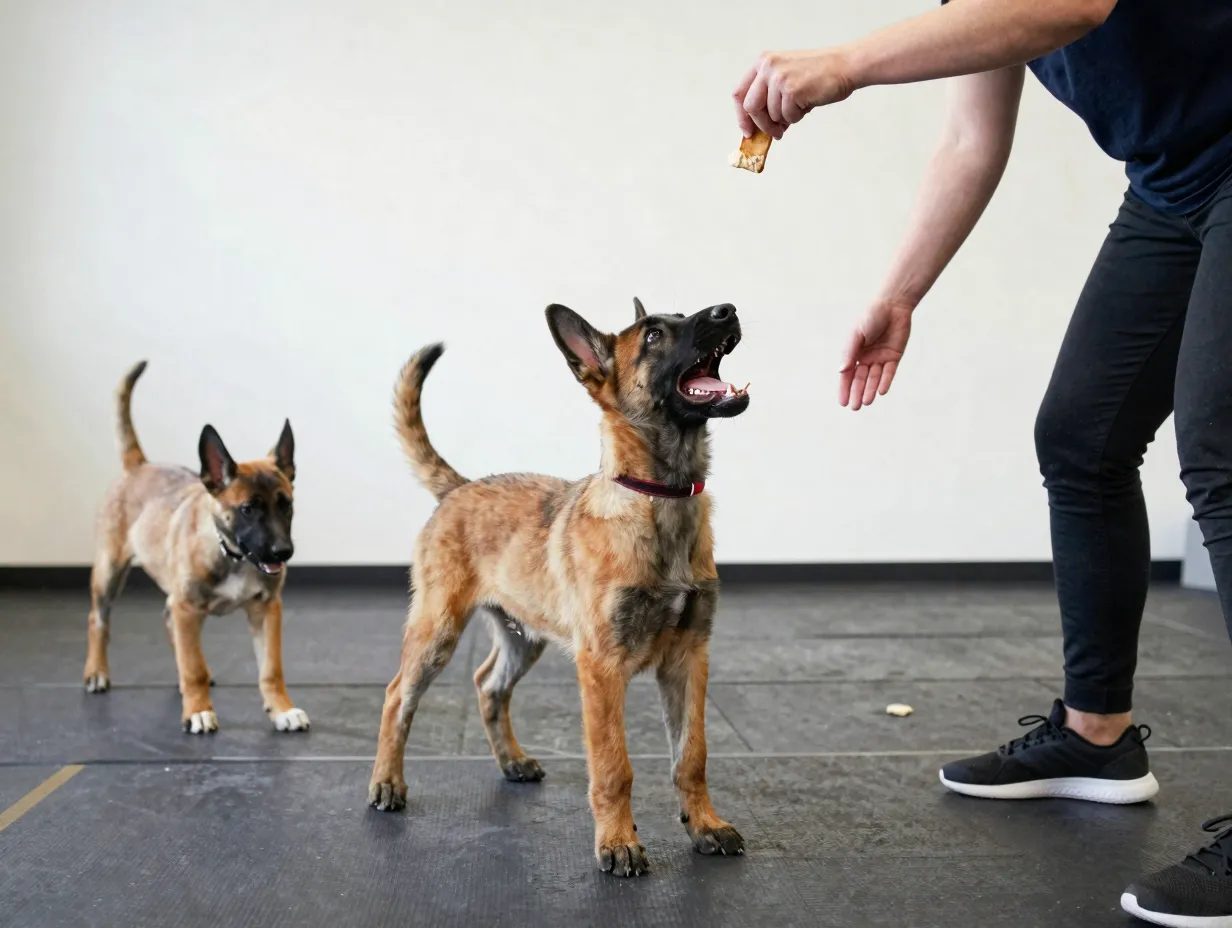
A 45-minute training marathon will exhaust and frustrate a young Malinois puppy. Their attention spans are short, but their enthusiasm is enormous. Capitalize on that enthusiasm with brief, punchy sessions [3].
Aim for:
- 3–5 minute sessions for puppies under 12 weeks
- 5–10 minute sessions for puppies 12–20 weeks
- Multiple sessions per day rather than one long session
End every session on a win. If your puppy is struggling with a new command, drop back to something it knows well, nail it, reward generously, and stop there. This leaves the puppy eager to train again rather than relieved it’s over.
💡 Pro Tip: Train before meals when possible. A slightly hungry puppy is a highly motivated puppy.
4. Build a Consistent Daily Routine
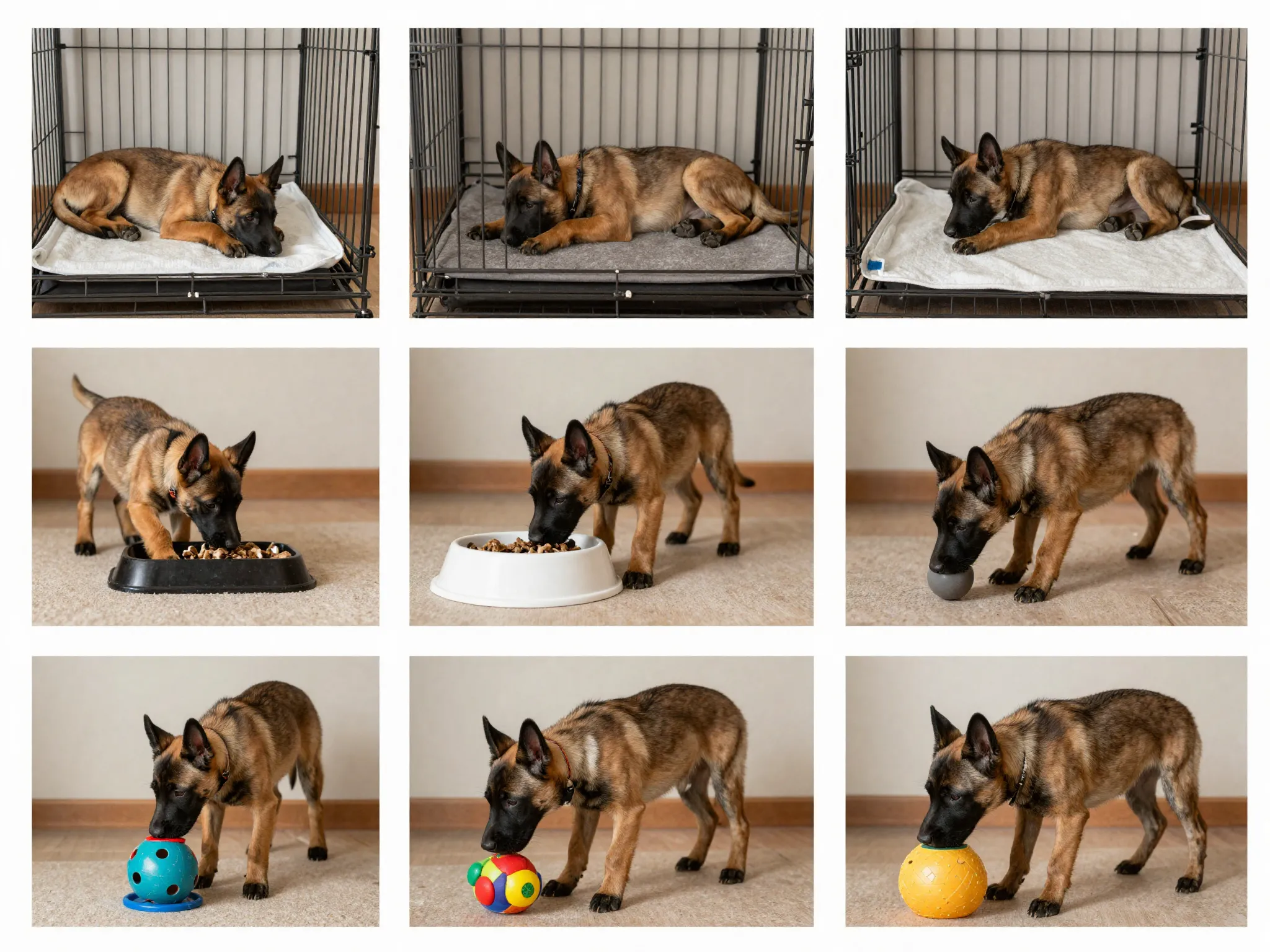
Belgian Malinois puppies thrive on predictability. A structured daily routine reduces anxiety, prevents boredom-based destruction, and makes training more effective because the puppy knows what to expect and when [2].
A sample daily routine for a Malinois puppy might look like this:
Sample Daily Schedule:
- 7:00 AM — Morning potty, feeding, 10-minute training session
- 8:00 AM — Supervised play or short walk
- 9:00 AM — Crate rest / nap
- 12:00 PM — Midday potty, feeding, 5-minute training session
- 1:00 PM — Mental enrichment activity (puzzle toy, sniff game)
- 2:00 PM — Crate rest / nap
- 5:00 PM — Evening exercise, training session
- 7:00 PM — Calm downtime, socialization practice
- 9:00 PM — Final potty, crate for the night
Consistency in this schedule — even on weekends — dramatically accelerates learning and reduces behavioral problems [4].
5. Prioritize Socialization as a Training Discipline
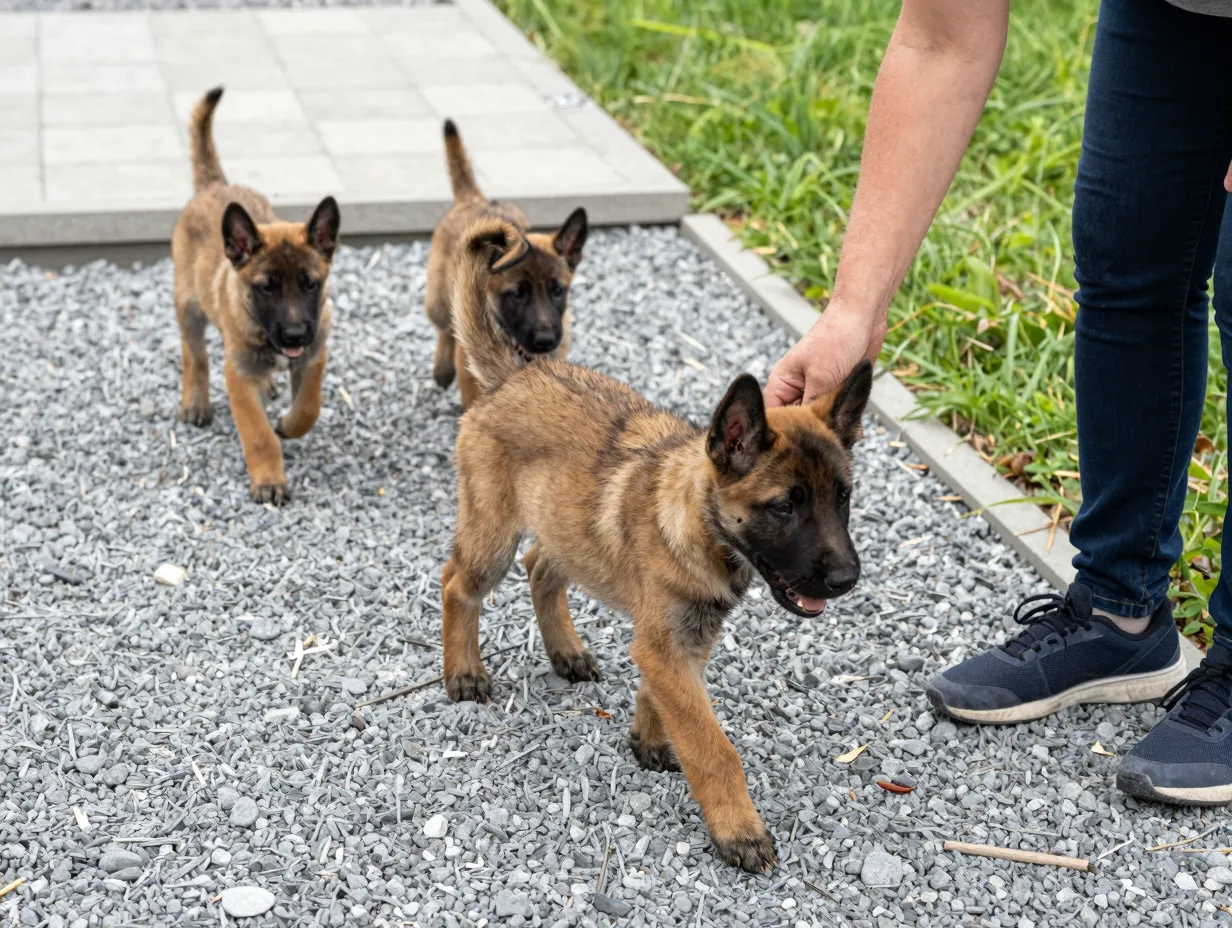
Socialization isn’t just “letting your puppy meet people.” For a Malinois, it’s a deliberate, managed training discipline that shapes how the dog responds to the world for the rest of its life [1].
Expose your puppy to:
- Different types of people (children, elderly, people in hats, uniforms, beards)
- Various surfaces (gravel, grass, tile, metal grating, sand)
- Urban sounds (traffic, sirens, construction, crowds)
- Other animals (in controlled, calm settings)
- Novel objects (bicycles, skateboards, umbrellas, shopping carts)
The critical socialization window for puppies is 3–16 weeks. After that window closes, new experiences become harder to process without fear or reactivity. Every positive exposure during this period is an investment in a stable adult dog [4].
⚠️ Important: Socialization should always be positive. If your puppy shows fear, don’t push through it — create distance, let the puppy observe, and reward calm behavior. Forcing fearful exposure creates lasting trauma.
6. Use Positive Reinforcement Consistently
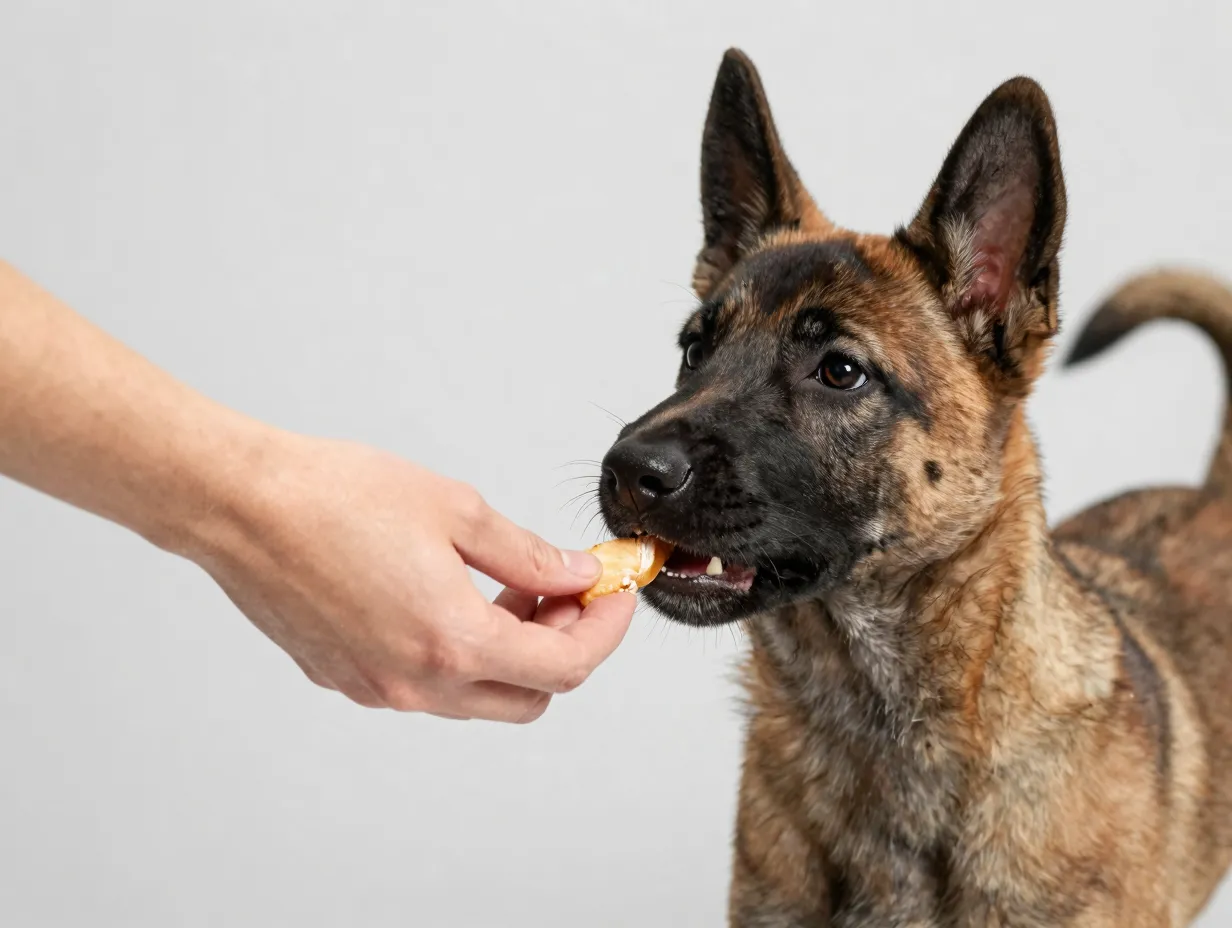
The science on this is settled: positive reinforcement is the most effective training method for building reliable, willing behavior in dogs — and it’s especially powerful with high-drive breeds like the Malinois [1].
Positive reinforcement means immediately rewarding the behavior you want to see more of. Rewards include:
- 🥩 High-value treats (small pieces of chicken, cheese, or commercial training treats)
- 🎾 Toy play (tug or fetch for ball-driven puppies)
- 🗣️ Verbal praise (“Yes!” or “Good boy/girl!” in an upbeat tone)
- 🤝 Physical affection (for puppies that enjoy it)
Timing is everything. The reward must come within 1–2 seconds of the desired behavior or the puppy won’t make the connection. A clicker can help bridge this gap by marking the exact moment of correct behavior.
💡 Pull Quote: “Positive reinforcement doesn’t mean permissive. It means you’re precise about what you’re rewarding — and that precision builds the dog you want.”
Avoid punishment-based methods with this breed. Harsh corrections can damage trust, create anxiety, and trigger defensive aggression in a dog that is already wired for intensity [2].
7. Work on Recall Early and Often 🐾
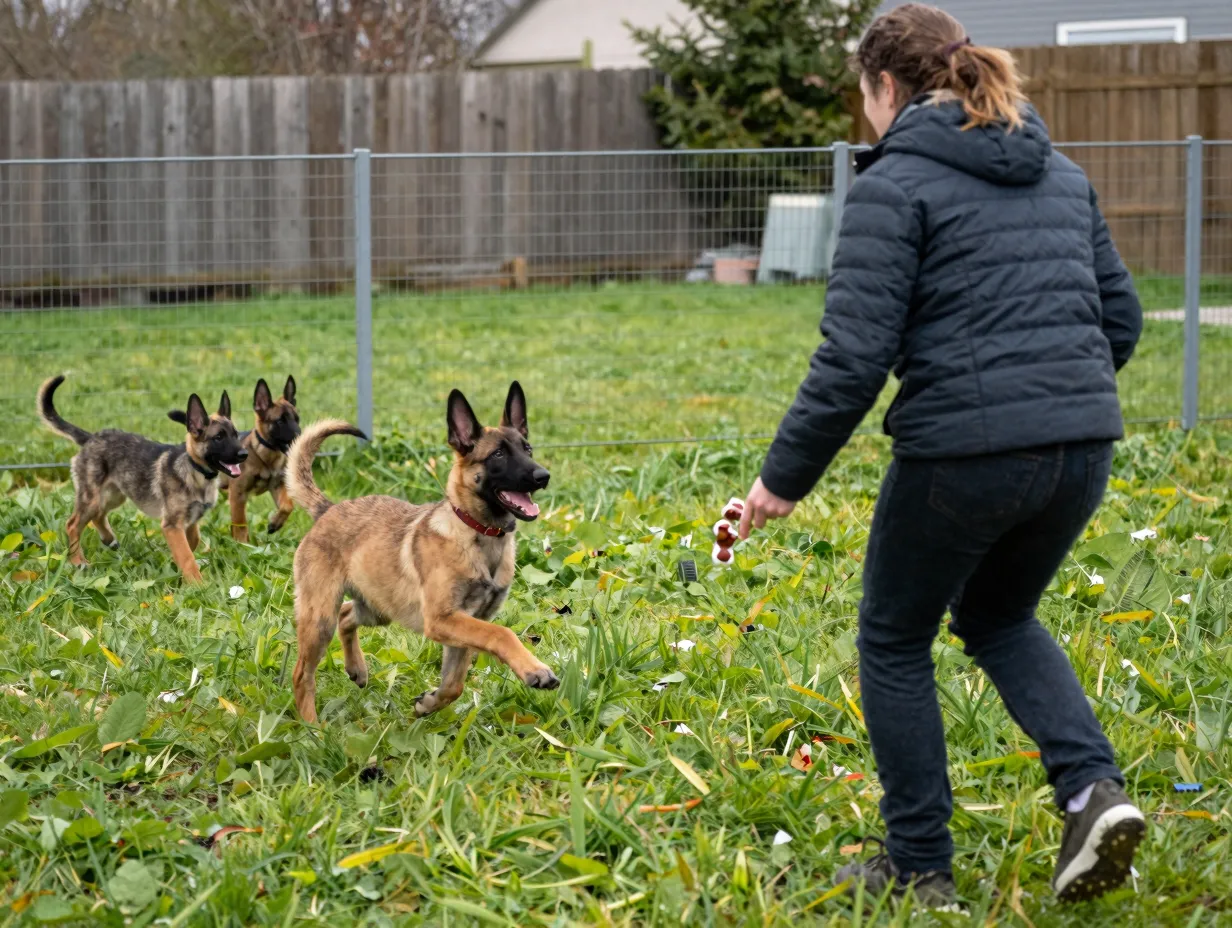
The Belgian Malinois has a strong prey drive. Moving objects — squirrels, cyclists, joggers, other dogs — can trigger a chase response that overrides everything else. A rock-solid recall command is not a nice-to-have; it’s a safety essential [2].
How to build a reliable recall:
- Start in a low-distraction environment (indoors or a fenced yard)
- Say your recall word (“Come!” or “Here!”) once in a happy, upbeat tone
- Back away from the puppy as you call — movement away triggers the chase instinct in your favor
- When the puppy reaches you, reward massively — this should be the best thing that ever happens to them
- Never call your puppy to you for something unpleasant (bath, nail trim, end of play) — go get them instead
- Gradually add distance and distraction as reliability improves
Practice recall every single day, even when you don’t “need” it. The more repetitions, the more automatic it becomes under pressure.
8. Provide Daily Mental Stimulation Beyond Physical Exercise
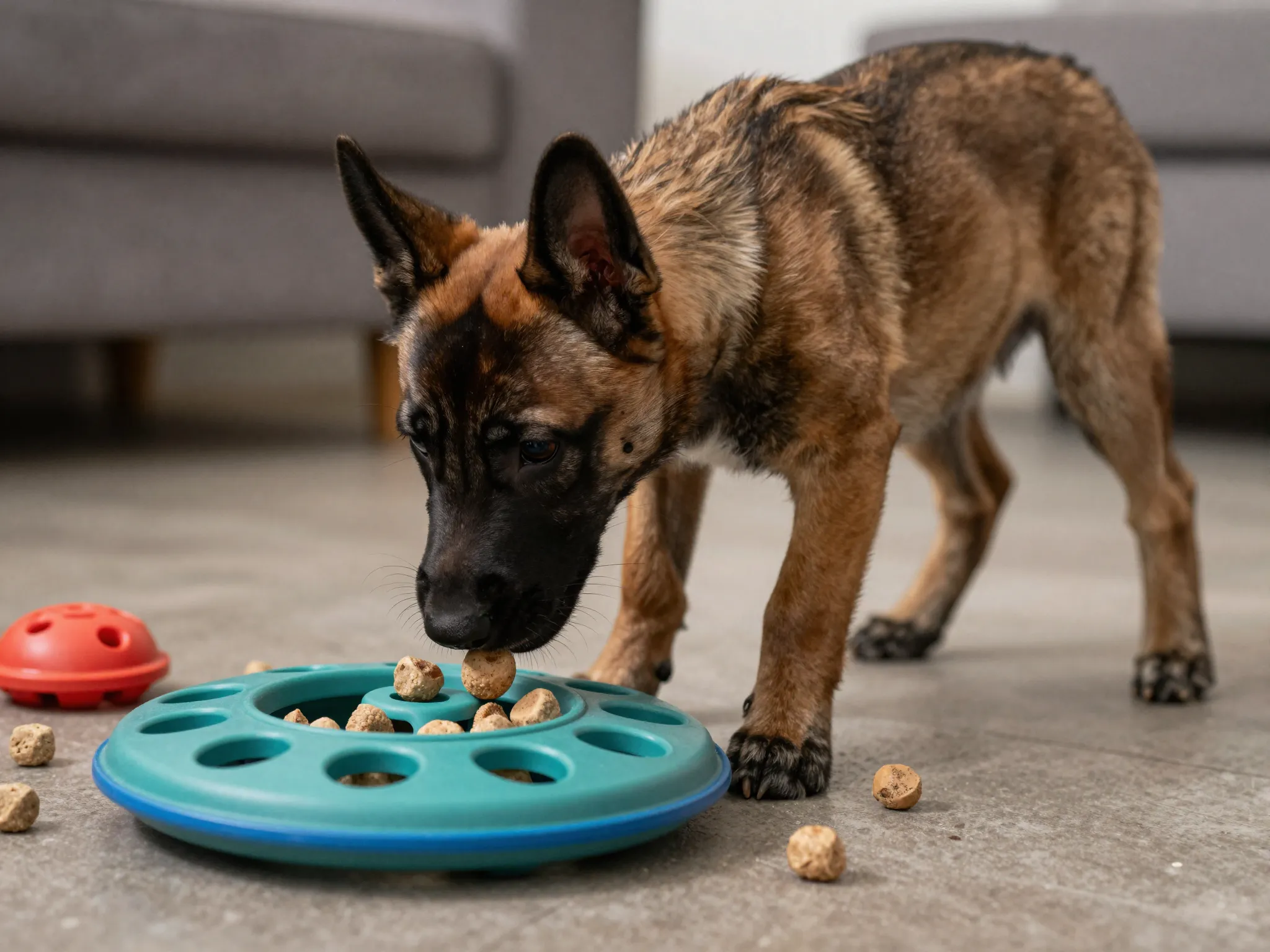
Many Malinois owners make the mistake of thinking a tired dog is a well-behaved dog. Physical exercise alone won’t satisfy this breed’s mental needs [2]. A Malinois that has run five miles can still destroy your kitchen if its brain isn’t engaged.
Mental enrichment activities to rotate through:
- 🧩 Puzzle feeders — make the puppy work for its meals
- 👃 Scent work — hide treats around the house and let the puppy “find” them
- 🎓 Trick training — teaching new behaviors keeps the brain active
- 📦 Novel object exploration — introduce new items to investigate
- 🌍 Sniff walks — slow walks where the puppy leads and sniffs freely
A good rule of thumb: 15 minutes of mental stimulation can equal 30–45 minutes of physical exercise in terms of tiredness. Use this to your advantage, especially on days when outdoor exercise is limited.
9. Train in a Calm, Positive Emotional State
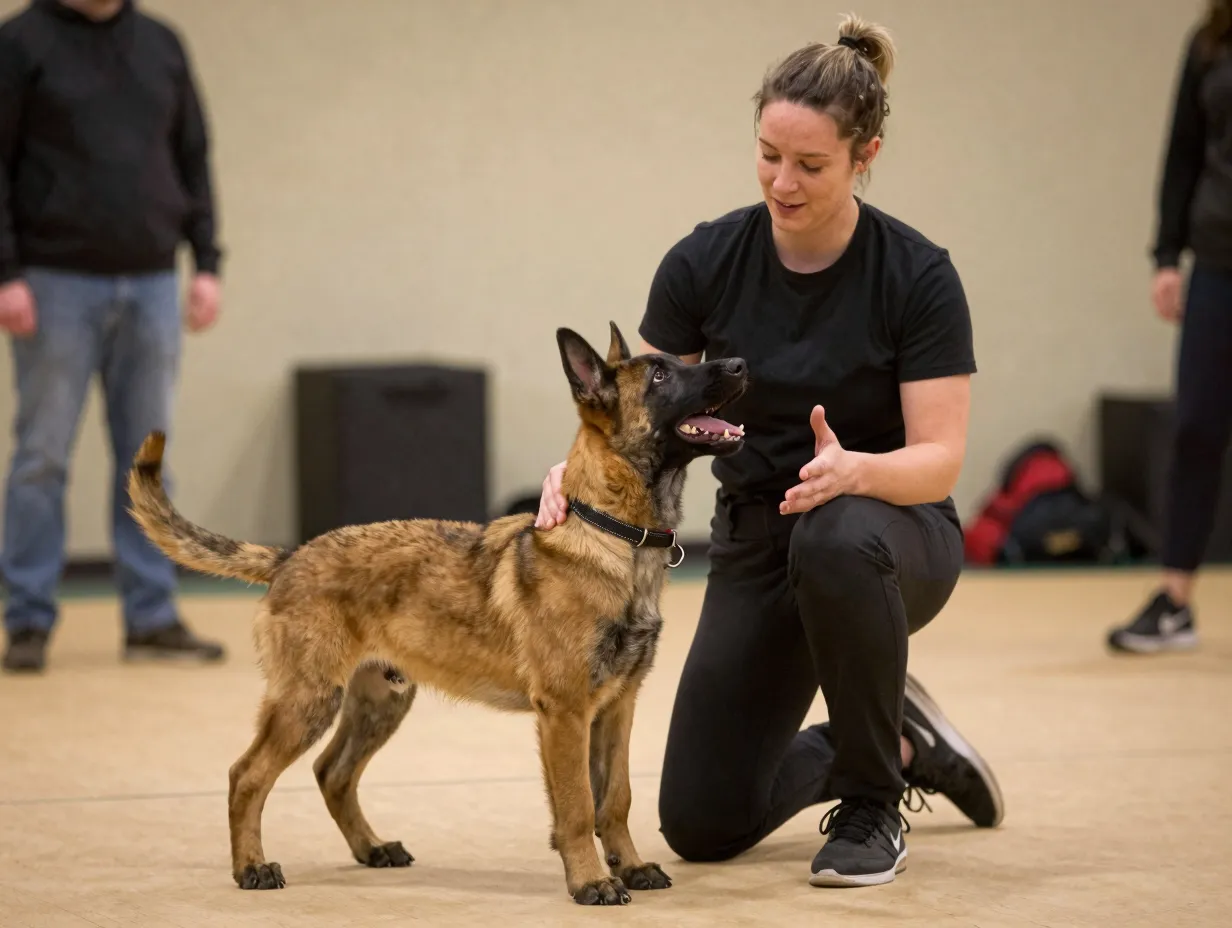
This tip is often overlooked, but it may be the most important of all the 9 Early Training Tips for Your Belgian Shepherd Malinois Puppy. The Belgian Malinois is extraordinarily sensitive to human emotion. They read body language, tone, and energy with remarkable accuracy [2].
If you sit down to train when you’re frustrated, rushed, or stressed, your puppy will pick up on that immediately. The session will be less productive, and repeated negative emotional associations with training can erode your puppy’s enthusiasm over time.
Practical guidelines:
- If you’re frustrated during a session, end it immediately — even if mid-exercise
- Take a 10-minute break, reset your mindset, and try again
- Keep your voice upbeat and your body language open
- Celebrate small wins genuinely — your enthusiasm is contagious
- If a behavior isn’t working, ask yourself: “Is my puppy confused, or am I being unclear?” — often it’s the latter
💡 Pull Quote: “Your puppy isn’t training in spite of your emotions — it’s training through them. Show up as the trainer you want your dog to respond to.”
Building a training relationship based on trust, clarity, and positive emotion creates a dog that wants to work with you — and with a Malinois, that willing partnership is the foundation of everything [2].
Common Mistakes to Avoid With a Malinois Puppy
Even well-intentioned owners fall into predictable traps with this breed. Here’s a quick reference table of what to watch for:
| Mistake | Why It’s Harmful | Better Approach |
|---|---|---|
| Waiting to train until 6 months | Bad habits are already ingrained | Start day one [2] |
| Long, exhausting sessions | Kills motivation and focus | 3–10 minutes, multiple times daily [3] |
| Skipping socialization | Creates fearful or reactive adult | Structured exposure during weeks 3–16 [1] |
| Using punishment-based methods | Damages trust, can trigger aggression | Positive reinforcement only [1] |
| Physical exercise only | Brain stays under-stimulated | Combine physical + mental enrichment [2] |
| Inconsistent rules | Confuses the puppy | Same rules, every person, every time [2] |
How These Tips Work Together
The 9 Early Training Tips for Your Belgian Shepherd Malinois Puppy aren’t isolated techniques — they’re an interconnected system. Starting early (Tip 1) gives you time to use luring properly (Tip 2). Short sessions (Tip 3) fit naturally into a daily routine (Tip 4). Socialization (Tip 5) is reinforced with positive rewards (Tip 6). Recall training (Tip 7) is practiced during enrichment activities (Tip 8). And all of it works better when you show up calm and consistent (Tip 9).
Think of these tips as gears in an engine — each one supports the others. Skipping one creates friction in the whole system.
Conclusion: Your Next Steps Starts Today
The window for shaping your Belgian Malinois puppy’s behavior is shorter than most people realize. By 16–20 weeks, foundational patterns are already being set. The good news is that with the right approach, this breed responds to training faster and more completely than almost any other dog.
Here’s what to do right now:
- Today: Set up your puppy’s crate, designate its space, and begin using its name with positive reinforcement.
- This week: Map out a daily routine and commit to it — including at least two short training sessions per day.
- This month: Prioritize socialization outings three to four times per week during the critical window.
- Ongoing: Rotate mental enrichment activities weekly to keep your puppy’s brain challenged.
- Always: Check your emotional state before every training session and end on a positive note.
A well-trained Belgian Malinois is one of the most extraordinary animals you’ll ever share your life with. The effort you put in now — in these early weeks and months — pays dividends for the next 12–14 years. Start today. Be consistent. Trust the process.
References
[1] Primal Kennel – https://www.lemon8-app.com/@primalkennel/7447250816916701742?region=us
[2] Watch – https://www.youtube.com/watch?v=Q14UYDBNct0
[3] Watch – https://www.youtube.com/watch?v=q8koo4-q8ZE
[4] 8 Tips For Raising A Happy Belgian Malinois Puppy – https://www.macesmalinois.com/8-tips-for-raising-a-happy-belgian-malinois-puppy/