8 Majestic King German Shepherd Dogs and What Makes Them Unique
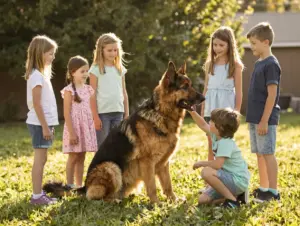
Only about 1 in 10 dog enthusiasts can correctly identify a King German Shepherd when they see one — and that is a shame, because this breed is one of the most impressive dogs ever developed. Larger, calmer, and often healthier than the standard German Shepherd, the King Shepherd is a deliberate masterpiece of selective breeding. In this guide to 8 Majestic King German Shepherd Dogs and What Makes Them Unique, I will walk you through eight remarkable examples of this breed, breaking down the specific traits, physical features, and personality qualities that set each one apart. Whether you are a seasoned dog owner or simply curious about these gentle giants, you are in for a fascinating look at what makes the King Shepherd so extraordinary.
Key Takeaways
- 🐾 King Shepherds are a hybrid breed developed from German Shepherds, Alaskan Malamutes, and Great Pyrenees — not simply oversized German Shepherds.
- 📏 Males can weigh 90–150 pounds and stand 29–32 inches tall, making them significantly larger than standard German Shepherds. [1]
- 🧠 They are highly intelligent and trainable, excelling in obedience, therapy, and service roles. [2]
- ❤️ Their temperament is calmer and more even-keeled than standard German Shepherds, making them excellent family dogs. [1]
- 🩺 Selective breeding has helped reduce common health issues like hip and elbow dysplasia seen in standard German Shepherds. [1]
What Is a King German Shepherd? A Quick Breed Overview
Before diving into our list of 8 Majestic King German Shepherd Dogs and What Makes Them Unique, it helps to understand what separates this breed from its more well-known cousin.
King Shepherds were developed through careful, intentional crossbreeding. Breeders combined the German Shepherd with the Alaskan Malamute and the Great Pyrenees to create a dog that blends size, intelligence, and a calm, stable temperament. [1] The goal was not simply to make a bigger German Shepherd. The goal was to engineer a dog that corrected some of the behavioral and physical drawbacks of the standard breed while amplifying its best qualities.
💬 “The King Shepherd was designed to be the best version of the working shepherd — bigger, gentler, and built to last.”
Here is a quick comparison between the two breeds:
| Feature | Standard German Shepherd | King German Shepherd |
|---|---|---|
| Height (Male) | Up to 26 inches | 29–32 inches |
| Weight (Male) | 50–90 pounds | 90–150 pounds |
| Temperament | Assertive, protective | Calm, even-tempered |
| Coat | Double coat (medium) | Dense double coat (thick) |
| Hip Dysplasia Risk | Higher | Lower (selective breeding) |
| Primary Lineage | German Shepherd | GSD + Malamute + Great Pyrenees |
Now, let us explore the eight most distinctive types and examples of King German Shepherds — and what makes each one truly special.
8 Majestic King German Shepherd Dogs and What Makes Them Unique: The Full Breakdown
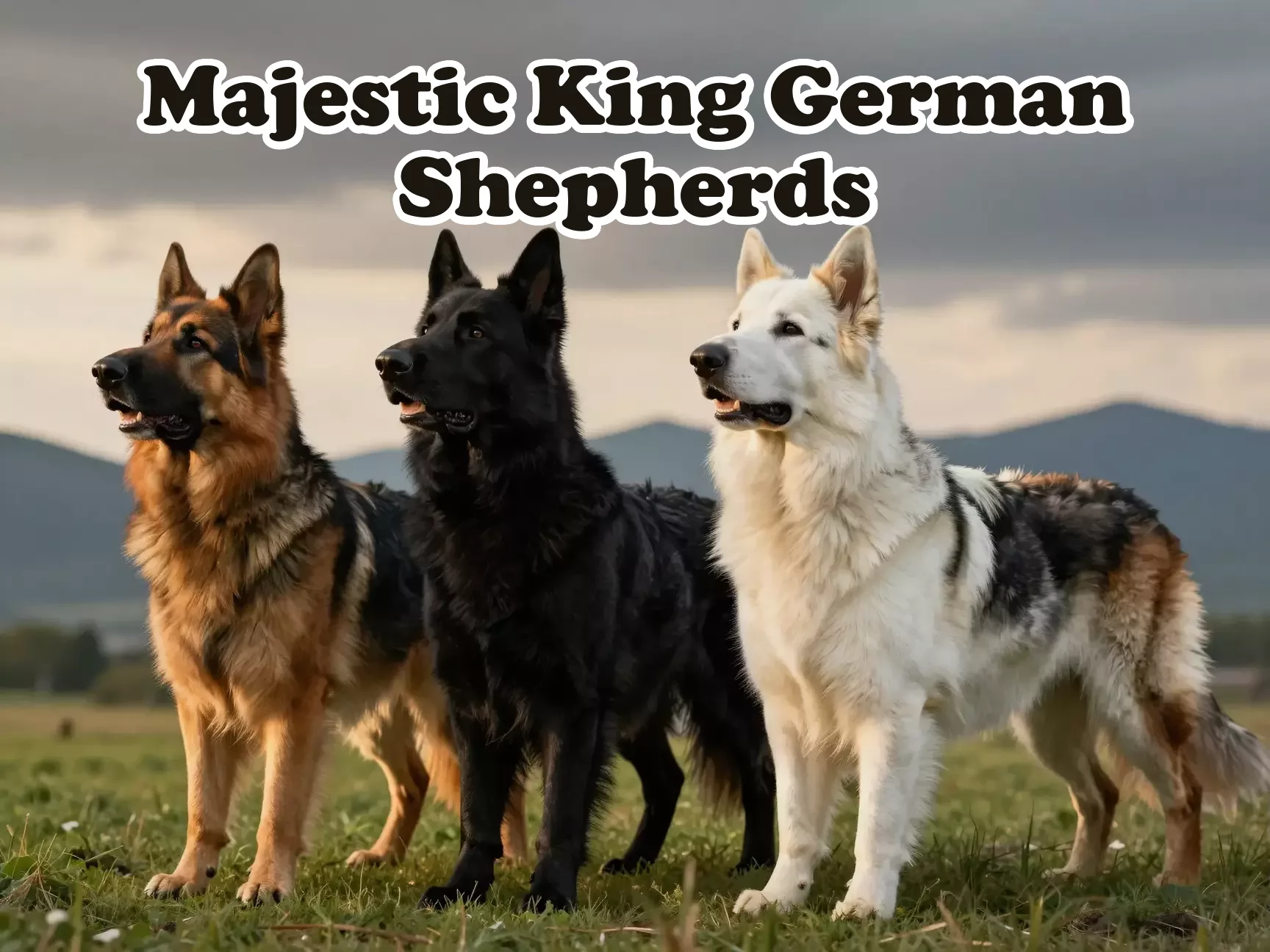
1. The Classic Sable King Shepherd
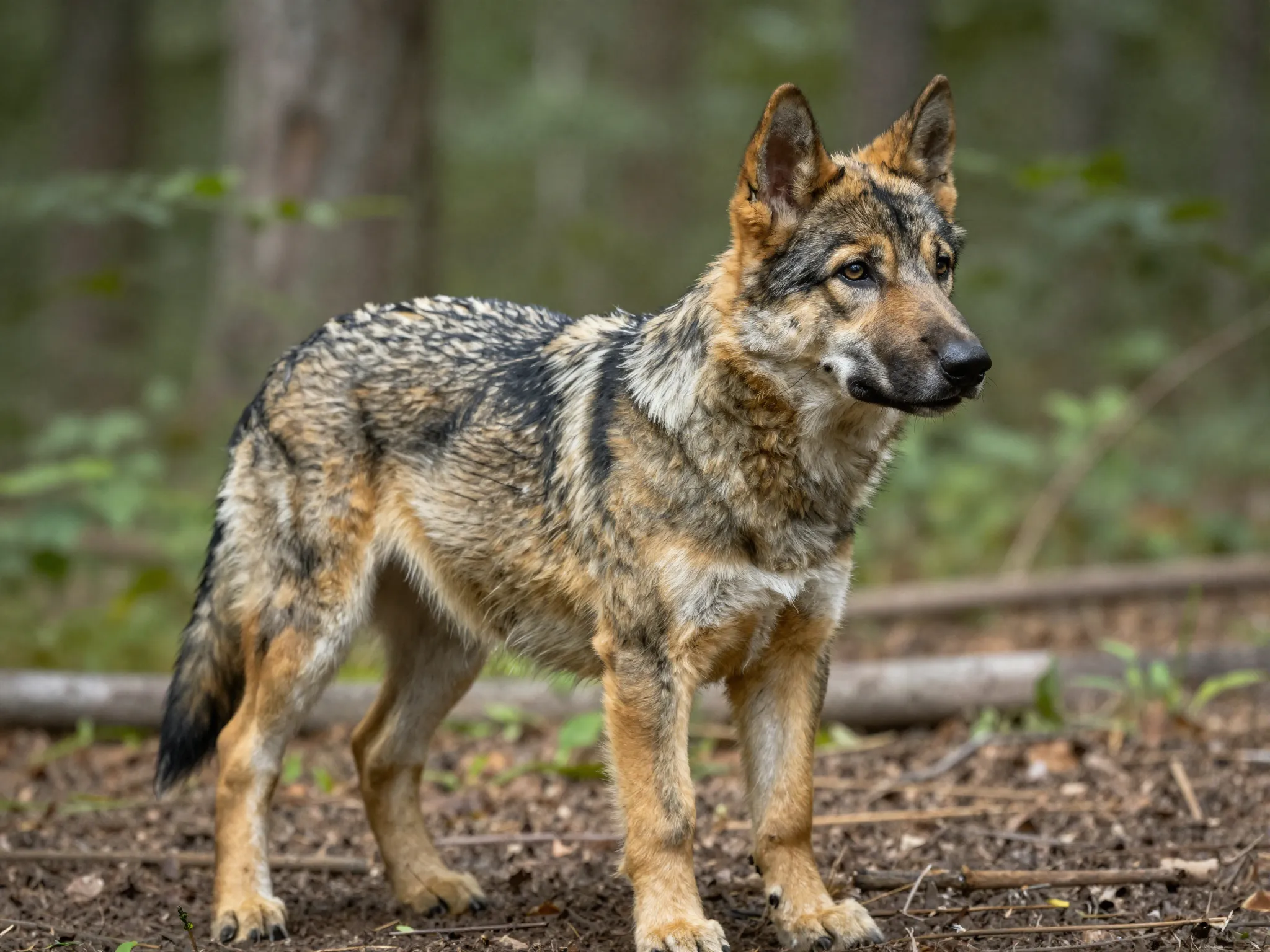
The sable King Shepherd is arguably the most recognizable and historically authentic-looking of the group. Sable coloring — a mix of black-tipped hairs over a base of gold, tan, or gray — gives these dogs a wild, wolf-like appearance that turns heads everywhere they go.
What makes this variation unique is the way the coat color shifts with age. Puppies often start with a much darker sable pattern, and the coloring can change multiple times before the dog reaches adulthood. [3] By the time a sable King Shepherd matures, the final coat is a rich, layered blend that looks almost painted on.
Key traits of the Sable King Shepherd:
- Wolf-like, multi-tonal coat
- Coat color evolves significantly from puppyhood to adulthood
- Tends to show the Malamute lineage most visually
- Highly photogenic and frequently used in breed promotion
This dog is a living example of how genetics from three powerful breeds can combine into something truly breathtaking.
2. The Black King Shepherd
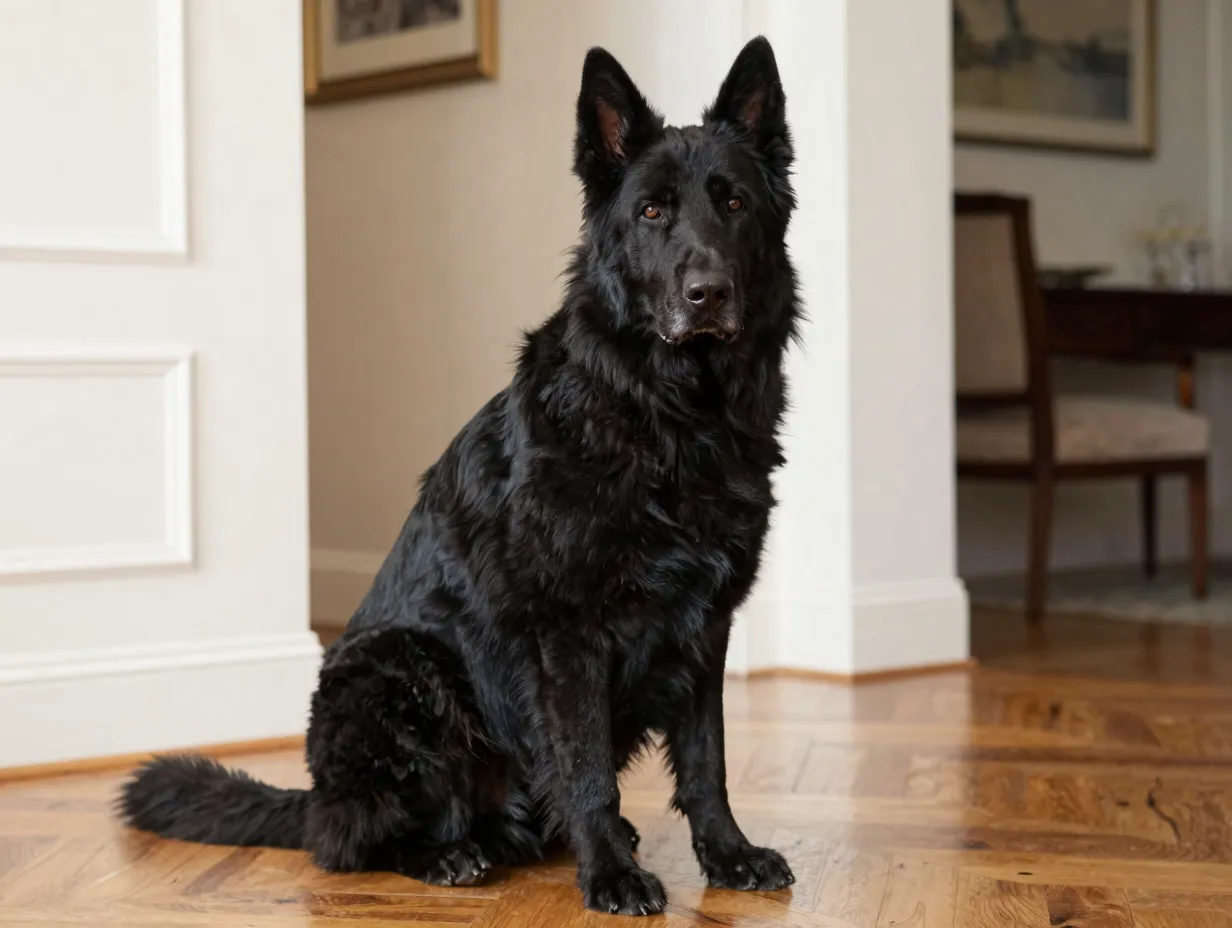
Solid black King Shepherds are rare and stunning. Unlike the sable variety, these dogs carry a recessive gene that produces an all-black coat from nose to tail. The result is a dog that looks powerful, sleek, and almost regal.
Black King Shepherds often face an unfair reputation for being more aggressive — a bias that is simply not supported by behavior research. In reality, their temperament aligns with the breed standard: calm, stable, and gentle. [1] Their imposing appearance may be intimidating, but their personality is anything but.
Why the Black King Shepherd stands out:
- Rare coat color due to recessive genetics
- Dense, all-black double coat provides excellent insulation [1]
- Often mistaken for other large black breeds
- Temperament is gentle despite the intimidating look
💬 “Never judge a King Shepherd by its coat color — the black variety is just as sweet-natured as any other.”
3. The White King Shepherd
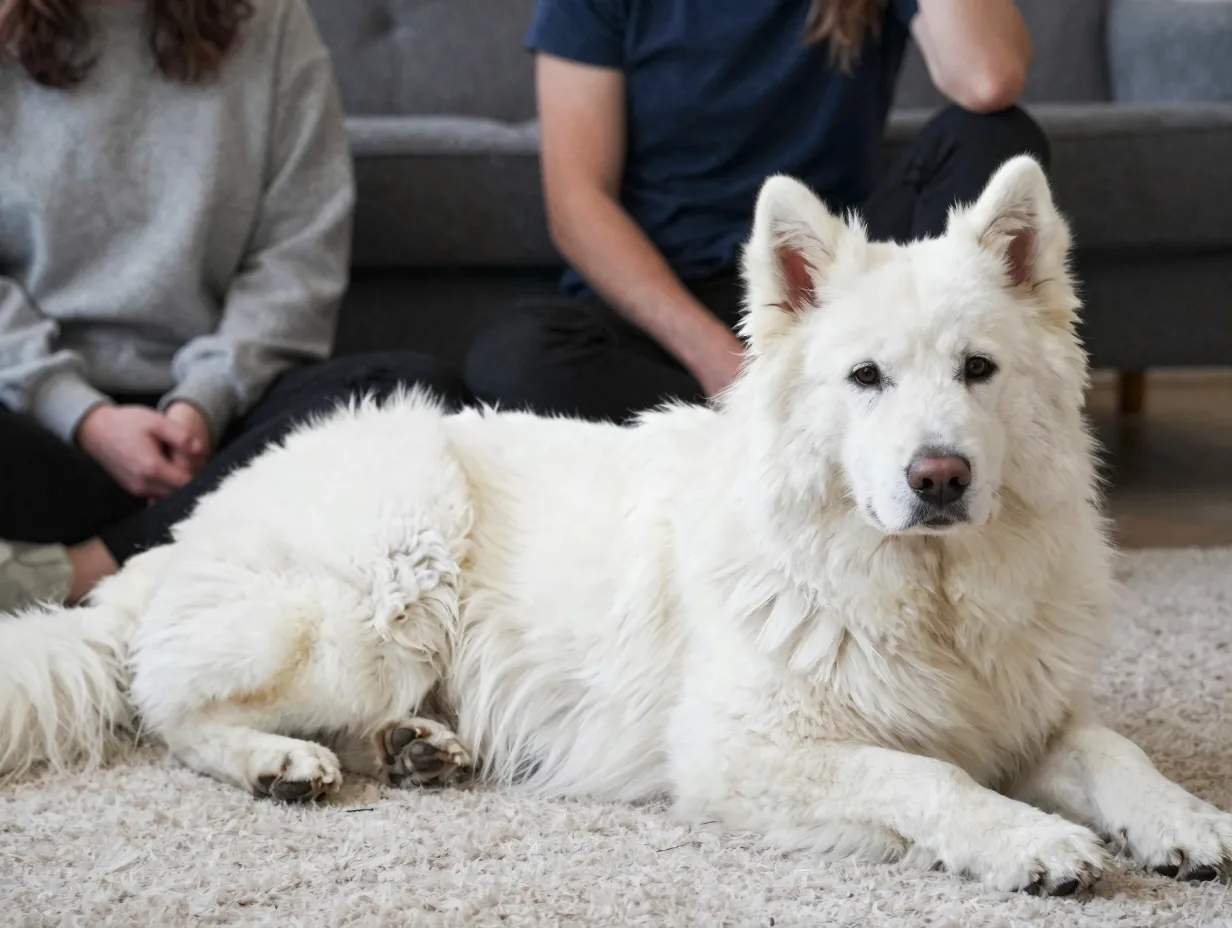
White King Shepherds are among the most visually striking dogs in the world. Their bright, cream-to-pure-white double coat — inherited largely from the Great Pyrenees lineage — gives them an almost ethereal appearance. [1]
These dogs are sometimes confused with Great Pyrenees or White Swiss Shepherds, but their size, structure, and behavioral profile are distinctly King Shepherd. They tend to be slightly more laid-back than the sable or black varieties, possibly reflecting a stronger Great Pyrenees influence in their temperament.
Standout features of the White King Shepherd:
- Brilliant white or cream double coat
- Strong Great Pyrenees genetic influence
- Slightly more relaxed disposition
- Exceptional for therapy and emotional support roles
- Coat requires regular grooming to maintain its clean appearance
White King Shepherds are increasingly popular with families who want a large, calm, and visually impressive dog.
4. The Tan and Black Saddle King Shepherd
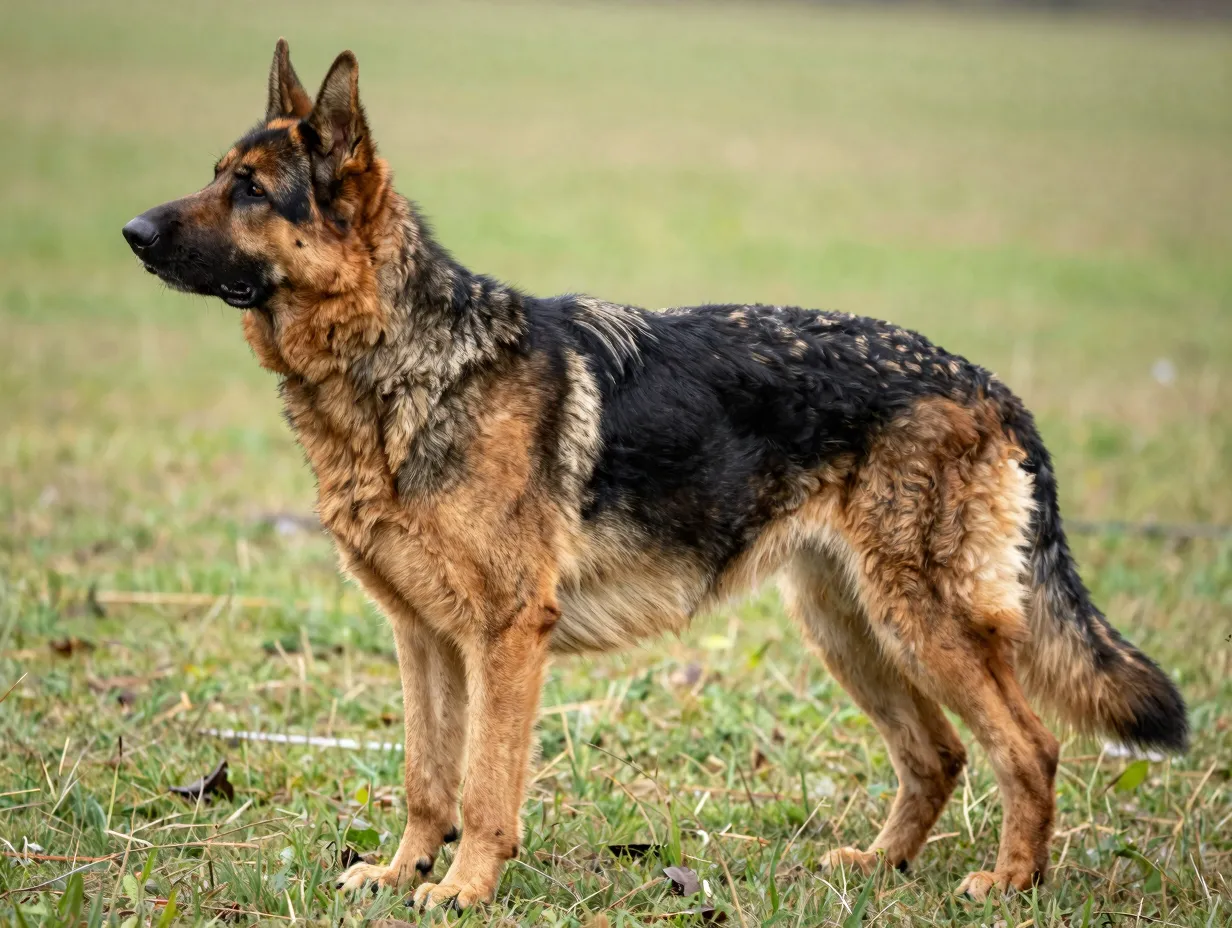
This is the variation most people associate with the traditional German Shepherd look — but scaled up dramatically. The tan and black saddle pattern features a rich tan body with a dark black “saddle” marking across the back and a black mask on the face.
What makes the saddle King Shepherd unique is how the pattern interacts with the breed’s larger frame. On a 130-pound dog, the saddle marking appears more dramatic and defined than on a standard German Shepherd. [1] The result is a dog that looks like the idealized version of the classic breed.
Characteristics of the Tan and Black Saddle King Shepherd:
- Classic GSD color pattern on a much larger body
- Black saddle marking appears more dramatic at King Shepherd size
- Strong visual connection to working dog heritage
- Highly popular with families who love the traditional GSD look
This is often the first King Shepherd variation that new enthusiasts encounter, and it rarely fails to impress.
5. The Silver King Shepherd
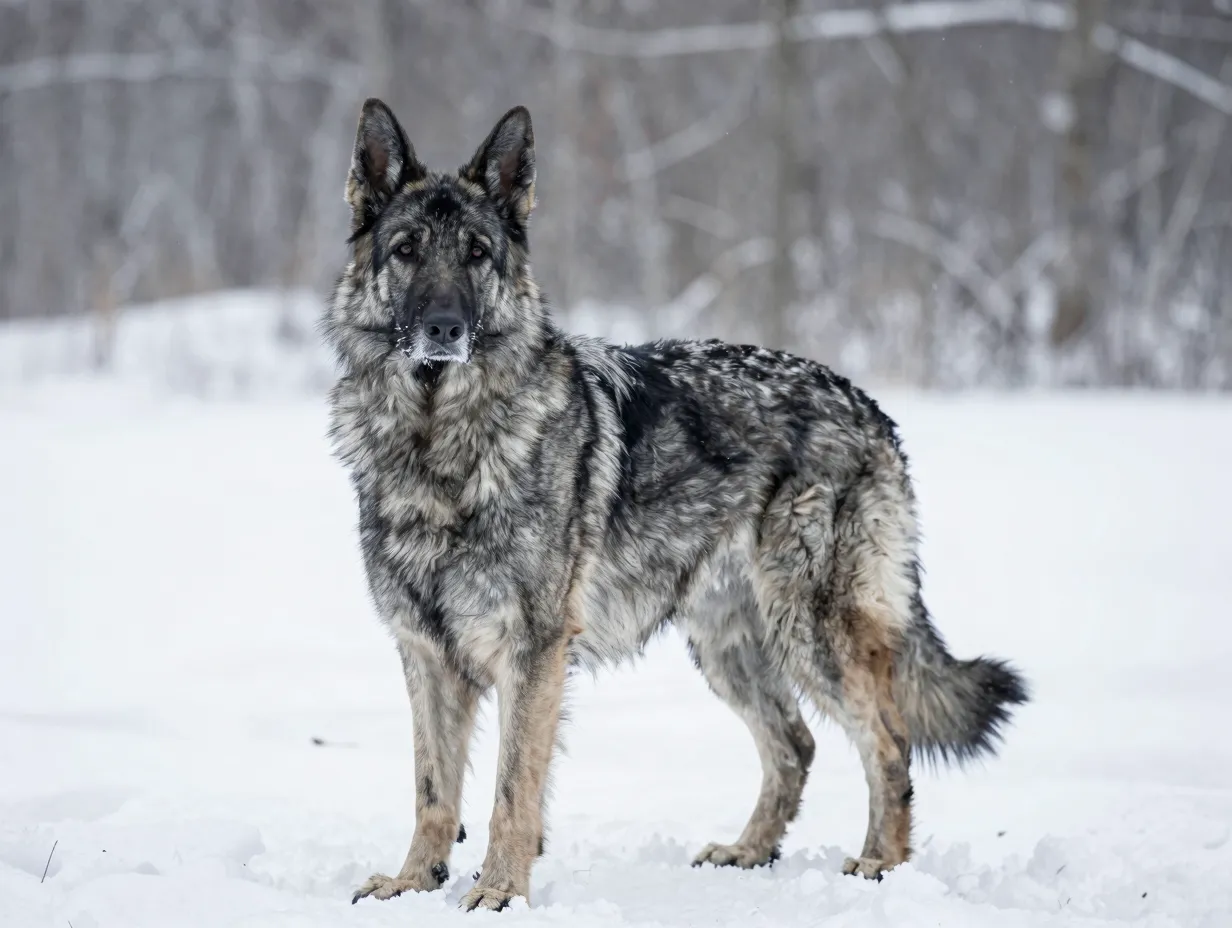
Silver King Shepherds are a rarer color variation that produces a cool, steel-gray coat with subtle lighter and darker tones throughout. [3] The silver coloring comes from specific dilution genes and creates a dog that looks almost metallic in certain lighting conditions.
These dogs are especially prized by breed enthusiasts who want something visually distinctive without straying too far from the classic shepherd aesthetic. The silver coat tends to be particularly dense, providing excellent protection in cold weather — a direct benefit of the Alaskan Malamute genetics in the breed’s background. [1]
What makes the Silver King Shepherd special:
- Rare steel-gray coat with subtle tonal variation
- Dense coat offers superior cold-weather insulation
- Malamute genetics are often visually evident
- Highly sought after by serious breed collectors and enthusiasts
💬 “A silver King Shepherd in full winter coat is one of the most visually spectacular dogs you will ever encounter.”
6. The Giant Working King Shepherd
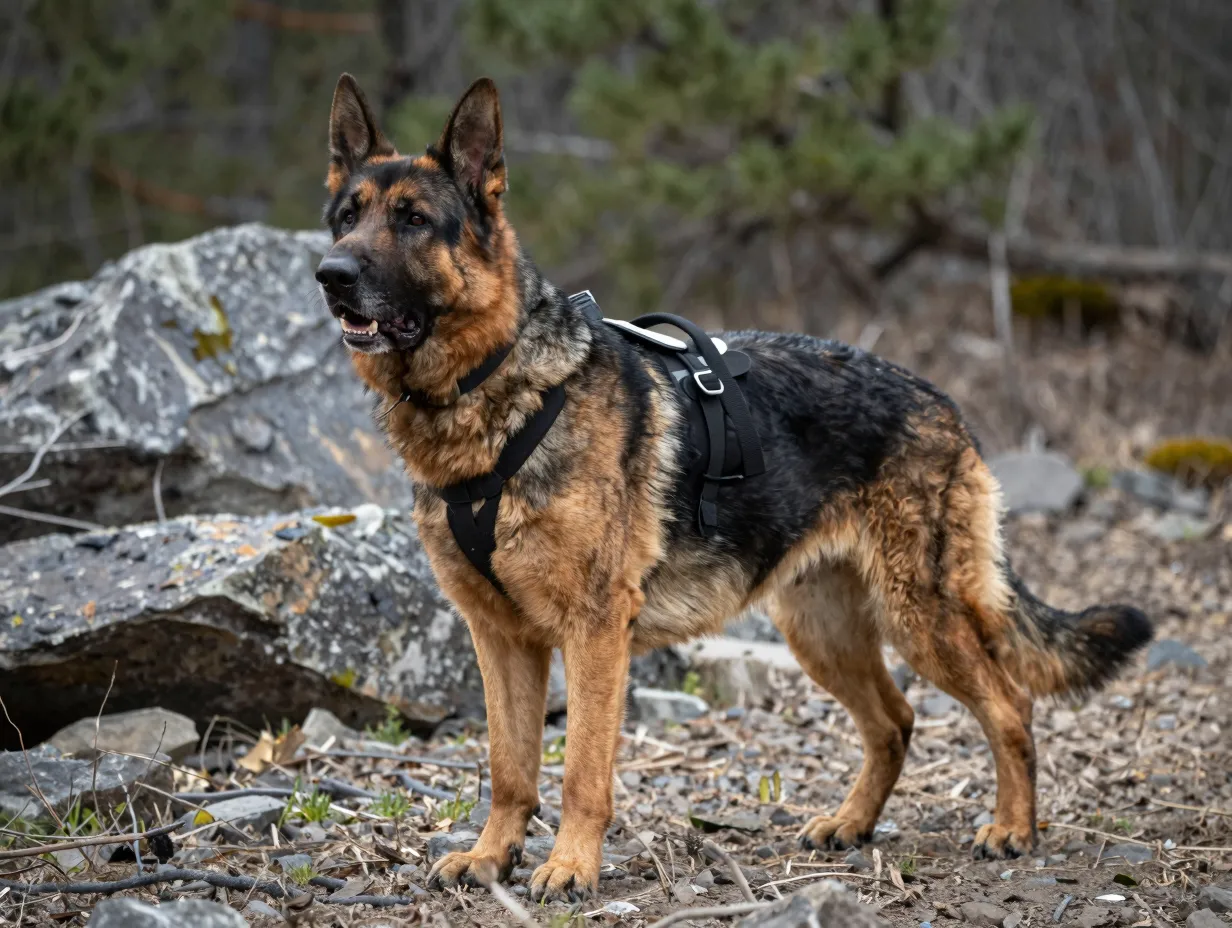
Not all King Shepherds are kept as family pets. Some are specifically bred and trained for working roles — search and rescue, personal protection, and even military support tasks. These dogs represent the upper end of the size spectrum, often weighing close to 150 pounds with a muscular, athletic build. [1]
Their intelligence makes them exceptional working dogs. King Shepherds are extremely quick learners and can master complex commands and specialized tasks with the right training. [2] They combine the German Shepherd’s work ethic with the physical endurance of the Malamute, making them capable of sustained effort in demanding conditions.
Working King Shepherd highlights:
- Can reach up to 150 pounds with a fully muscular build [1]
- Trained for search and rescue, protection, and service roles
- Exceptional problem-solving ability and task retention [2]
- Requires significant daily exercise and mental stimulation
- Bonds deeply with handlers and working partners
If you are looking for a dog that can genuinely work alongside you in demanding environments, the working King Shepherd is in a class of its own.
7. The Family-Bonded Therapy King Shepherd
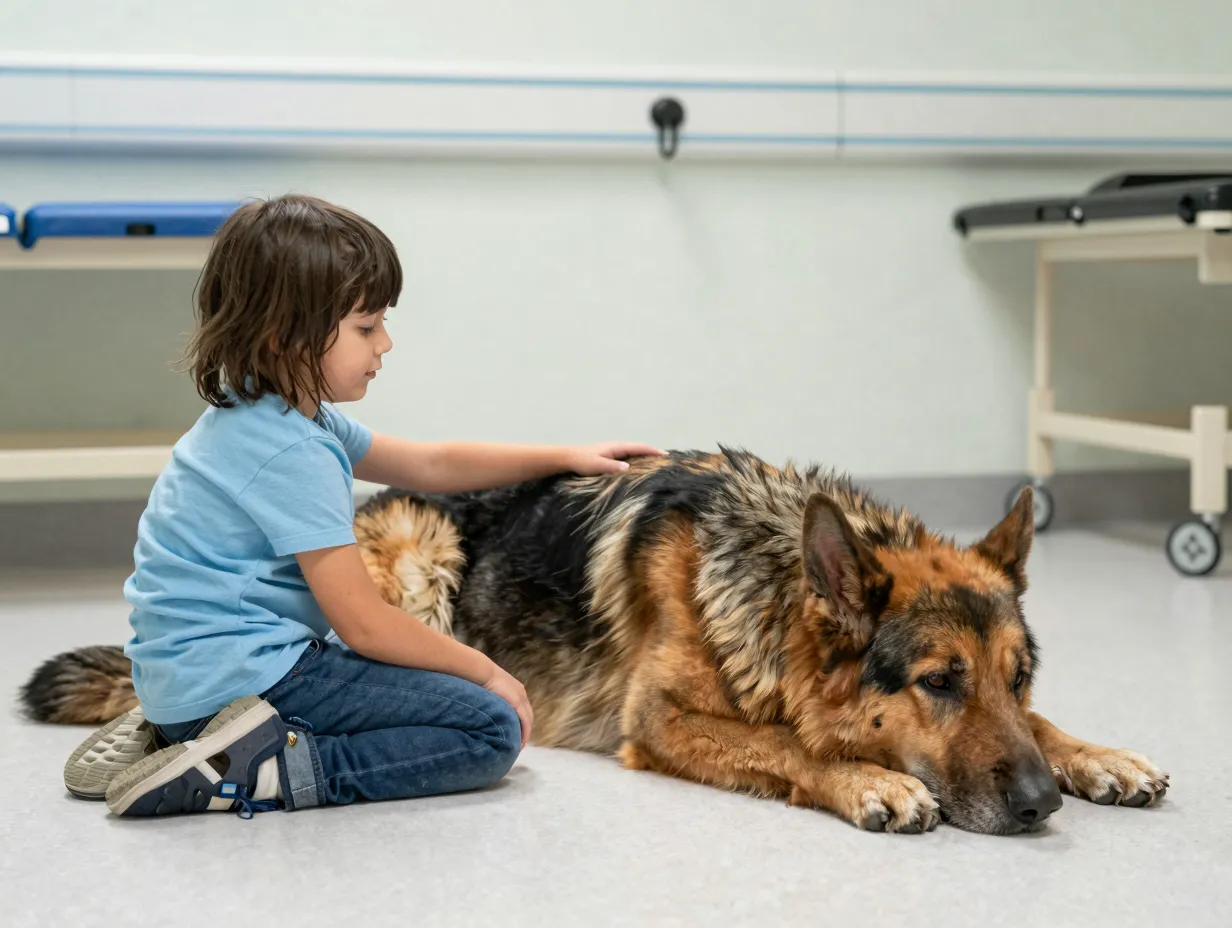
One of the most important and often overlooked roles for King Shepherds is as therapy and emotional support animals. Their naturally calm, even-tempered personality makes them ideal for working in hospitals, schools, and rehabilitation centers. [1]
Unlike standard German Shepherds, which can be more assertive and protective, King Shepherds were specifically bred to have a relaxed, gentle disposition. [1] This makes them less likely to become overstimulated in busy environments — a critical quality for therapy work.
Why King Shepherds excel in therapy roles:
- Calm, stable temperament is core to the breed standard [1]
- Large, comforting physical presence is reassuring to people in distress
- High intelligence allows them to read human emotional cues [2]
- Gentle with children, elderly individuals, and people with disabilities
- Even-keeled personality reduces unpredictable behavior in public settings
💬 “The King Shepherd’s calm confidence is not just a personality trait — it is a carefully engineered feature of the breed.”
8. The Health-Optimized King Shepherd
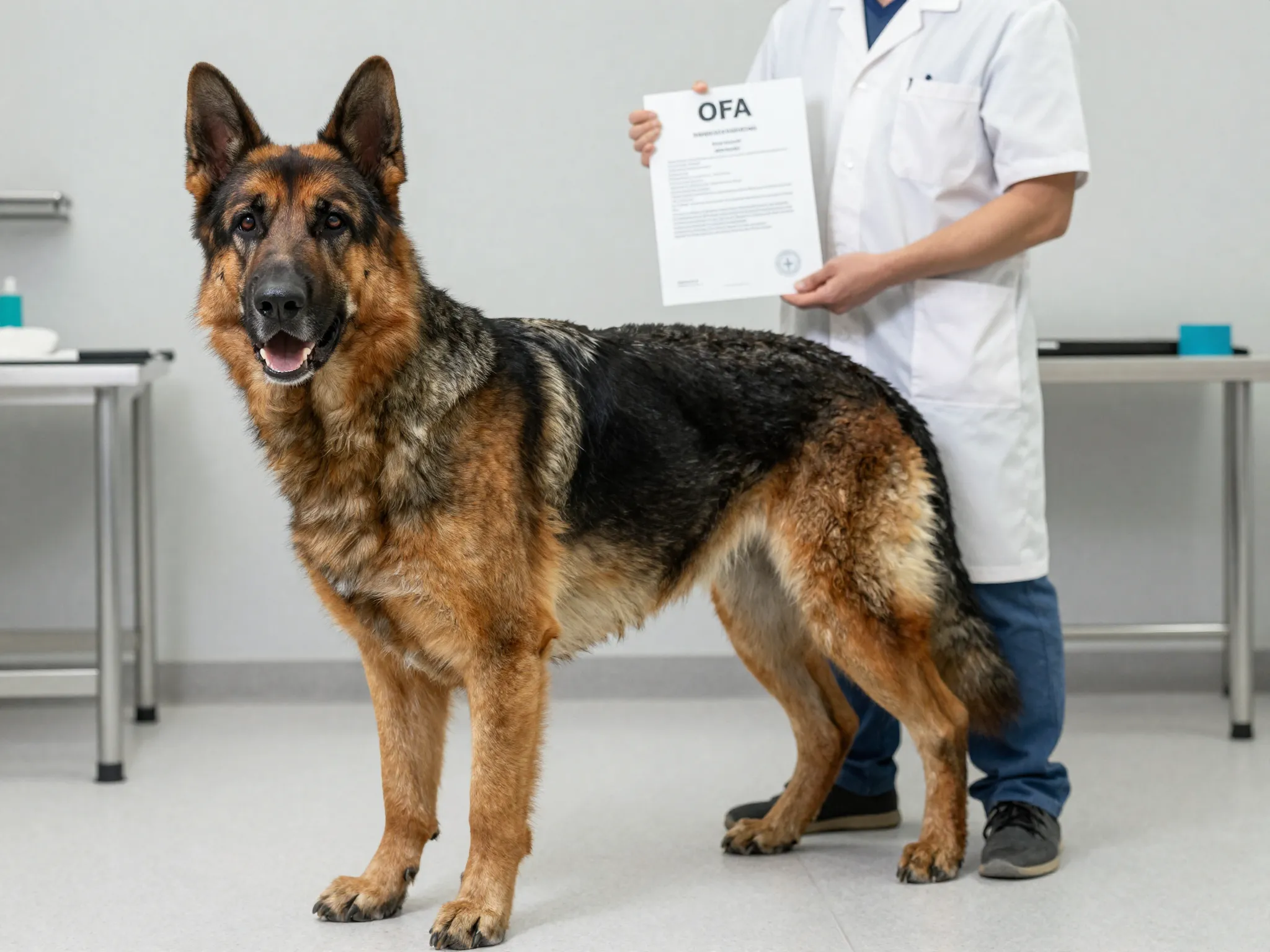
The eighth and perhaps most scientifically significant variation of the King Shepherd is not defined by coat color or size — it is defined by genetics and health optimization. Responsible breeders have worked hard to select for dogs that carry fewer of the hereditary health problems that plague standard German Shepherds.
Hip dysplasia and elbow dysplasia are two of the most common and debilitating conditions in standard German Shepherds. Through careful selective breeding, King Shepherd breeders have significantly reduced the prevalence of these conditions in well-bred lines. [1] The result is a dog that not only looks impressive but is also built to live a longer, healthier life.
Health advantages of the optimized King Shepherd:
- Reduced risk of hip and elbow dysplasia compared to standard GSDs [1]
- Larger gene pool from three breeds reduces inbreeding risks
- Longer average lifespan when sourced from reputable breeders
- Fewer structural issues despite larger body size
- Responsible breeders conduct OFA (Orthopedic Foundation for Animals) health testing
| Health Concern | Standard GSD Risk | King Shepherd Risk |
|---|---|---|
| Hip Dysplasia | High | Reduced (selective breeding) |
| Elbow Dysplasia | Moderate-High | Reduced |
| Bloat (GDV) | Moderate | Moderate (monitor diet) |
| Degenerative Myelopathy | Higher | Lower in well-bred lines |
This health-focused approach to breeding represents the future of responsible large-breed dog development.
What All 8 Majestic King German Shepherd Dogs and What Makes Them Unique Have in Common
Despite their differences in color, size, and role, all eight types of King Shepherds share a core set of qualities that define the breed. Understanding these shared traits helps you appreciate why this breed has earned such a devoted following.
Shared Breed Characteristics
🧬 Genetic Foundation
Every King Shepherd traces its lineage back to the same three breeds: German Shepherd, Alaskan Malamute, and Great Pyrenees. [1] This genetic combination is the foundation of everything that makes the breed special.
📏 Impressive Size
All King Shepherds are significantly larger than standard German Shepherds. Males consistently reach 29–32 inches in height and 90–150 pounds in weight. [1] This size is not accidental — it is a defining breed characteristic.
🧠 High Intelligence
Across all color variations and roles, King Shepherds are exceptionally smart. They learn quickly, retain commands well, and can be trained for complex specialized tasks. [2] This intelligence is one of the breed’s most valuable qualities.
🐕 Dense Double Coat
Every King Shepherd carries a thick double coat that is denser than a standard German Shepherd’s. [1] This coat provides superior insulation in cold weather and is a direct inheritance from the Malamute and Great Pyrenees genetics.
❤️ Calm Temperament
Perhaps the most important shared trait is temperament. King Shepherds were bred specifically to be calmer and more even-tempered than standard German Shepherds. [1] This makes them suitable for families, therapy work, and public settings where a more assertive dog might struggle.
Caring for a King German Shepherd: What You Need to Know
Owning a King Shepherd is a rewarding experience, but it comes with real responsibilities. Here are the most important care considerations:
Exercise Requirements
- Minimum 60–90 minutes of vigorous exercise per day
- Mental stimulation is just as important as physical activity
- Puzzle toys, training sessions, and scent work are excellent options
Grooming Needs
- The dense double coat requires brushing 3–4 times per week
- Shedding is heavy, especially during seasonal coat blows
- Professional grooming every 6–8 weeks is recommended
Nutrition
- Large-breed specific dog food formulas are essential
- Portion control is critical to prevent obesity, which stresses joints
- Avoid free-feeding — structured meal times are better
Training
- Start socialization and obedience training early (8–12 weeks)
- Positive reinforcement works best with this intelligent breed [2]
- Consistency and patience are key — these dogs respond to calm, confident leadership
Veterinary Care
- Regular OFA health screenings are important, especially for hips and elbows [1]
- Annual wellness exams and up-to-date vaccinations
- Monitor for bloat (GDV) — a risk in large, deep-chested breeds
Is a King German Shepherd Right for You?
King Shepherds are not the right dog for everyone. They need space, time, and an owner who is committed to their physical and mental well-being. But for the right family or individual, they are an extraordinary companion.
You might be a great King Shepherd owner if you:
- Have a large home with a yard or access to outdoor space
- Are active and enjoy daily outdoor exercise
- Want a calm, loyal, and highly trainable large dog
- Are prepared for significant grooming and feeding costs
- Have experience with large or working breeds
You might want to reconsider if you:
- Live in a small apartment with no outdoor access
- Travel frequently and cannot provide consistent care
- Are a first-time dog owner with no training experience
- Are not prepared for the financial commitment of a large breed
Conclusion: Your Next Steps With the King German Shepherd
The 8 Majestic King German Shepherd Dogs and What Makes Them Unique explored in this guide represent the full spectrum of what this incredible breed has to offer — from the wolf-like sable to the health-optimized working dog. Each variation brings something different to the table, but all of them share the core qualities that make the King Shepherd one of the most impressive dog breeds in the world today.
Here are your actionable next steps:
- Research reputable breeders who conduct OFA health testing and can provide documentation of lineage from all three founding breeds.
- Visit a King Shepherd in person before committing — their size and energy level need to be experienced firsthand.
- Connect with King Shepherd owner communities online to get real-world advice from experienced owners.
- Prepare your home and lifestyle for a large, active, intelligent dog before bringing one home.
- Consult a veterinarian who has experience with large breeds to set up a proper health and nutrition plan from day one.
The King Shepherd is not just a dog — it is a commitment to excellence in breeding, care, and companionship. If you are ready for that commitment, few breeds will reward you more generously. 🐾
References
[1] King Shepherd Breed – https://wopet.com/king-shepherd-breed/
[2] King Size German Shepherd Dogs What You Need To Know – https://www.mittelwest.com/blog/king-size-german-shepherd-dogs-what-you-need-to-know/
[3] Watch – https://www.youtube.com/watch?v=Kq6uR76oquE
[4] Watch – https://www.youtube.com/watch?v=RgVQWWjHWT0