8 Crucial Questions to Ask Before Buying Black Labrador Retriever Puppies for Sale
Imagine bringing home a black Labrador Retriever puppy, only to discover months later that it has a serious inherited hip condition — one that a simple health test could have flagged before you ever signed a contract. It happens more often than most people realize, and it’s almost always preventable. Knowing the 8 crucial questions to ask before buying black Labrador Retriever puppies for sale is the single most powerful tool you have as a buyer to protect your family, your wallet, and most importantly, your future dog. In this guide, I’ll walk you through every question you need to ask — and explain exactly why each one matters.
Key Takeaways 📋
- Health testing is non-negotiable. Responsible breeders certify the parents’ hips, elbows, eyes, and heart before breeding.
- Meeting the parents in person tells you more about temperament and living conditions than any website ever could.
- A written contract and health guarantee protect both you and the puppy — never skip this step.
- Early socialization shapes a puppy’s behavior for life; ask specifically what the breeder has done.
- A good breeder will interview you just as much as you interview them — this is a green flag, not a red one.
Why Asking the Right Questions Before Buying Black Labrador Retriever Puppies for Sale Matters
Black Labrador Retrievers are consistently one of the most popular dog breeds in the world. They’re loyal, energetic, and great with families. But their popularity also makes them a target for irresponsible breeding. Puppy mills and backyard breeders often advertise adorable black Lab puppies at low prices — without any of the health testing, socialization, or ethical standards that protect the breed.
“A puppy is a 10–15 year commitment. Spending 30 minutes asking the right questions upfront can save you years of heartbreak and thousands of dollars in vet bills.”
The questions below are designed to separate ethical, experienced breeders from those who are simply in it for profit. Use them every time you’re evaluating black Labrador Retriever puppies for sale.
The 8 Crucial Questions to Ask Before Buying Black Labrador Retriever Puppies for Sale
1. Have the Puppy’s Parents Been Health Tested and Certified by OFA?
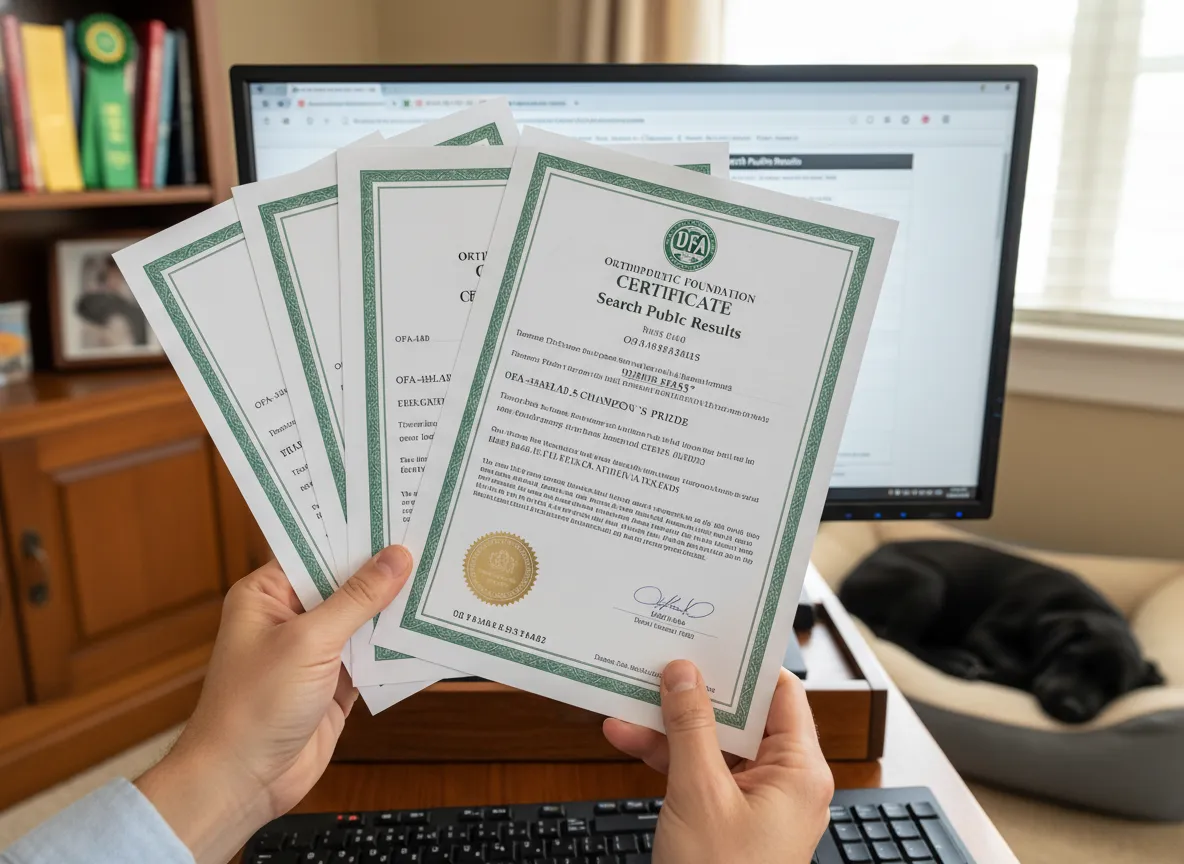
This is the most important question on the list. The Orthopedic Foundation for Animals (OFA) maintains a public database of health certifications for breeding dogs. For Labrador Retrievers, responsible breeders should have their dogs tested and cleared for:
| Health Test | What It Checks |
|---|---|
| Hip Evaluation | Hip dysplasia risk |
| Elbow Evaluation | Elbow dysplasia risk |
| Cardiac Exam | Inherited heart conditions |
| Eye Certification | Hereditary eye disease |
| prcd-PRA DNA Test | Progressive retinal atrophy |
Ask the breeder for the OFA registration numbers for both parents. You can verify these yourself at ofa.org. A breeder who hesitates or says “the parents are healthy” without documentation is a major red flag [1][4].
✅ Green flag: Breeder hands you printed OFA certificates and encourages you to verify them online.
🚩 Red flag: Breeder says health testing “isn’t necessary” or offers only a vet’s general wellness check.
2. What Specific Health Conditions Are the Parents Screened For?
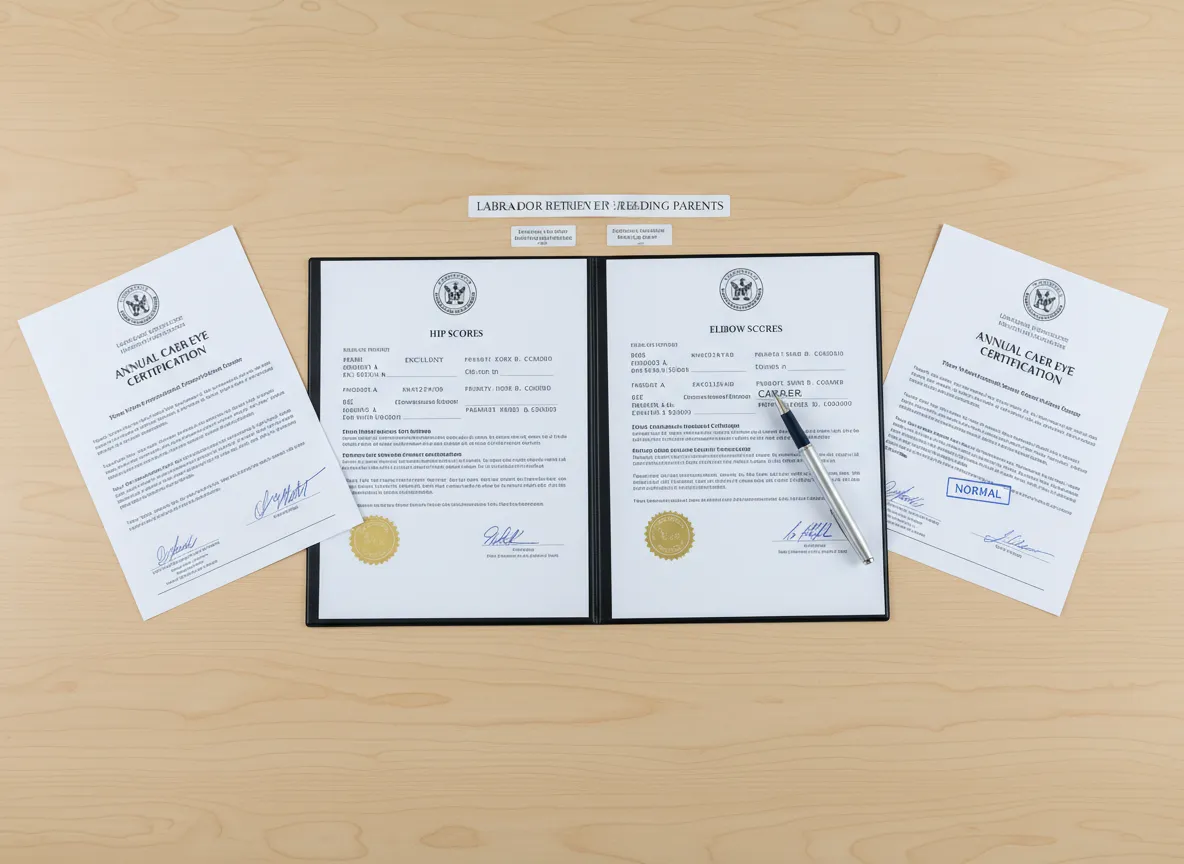
Beyond OFA certification, dig deeper. Labradors are genetically predisposed to several inherited conditions, and ethical breeders follow the recommendations of the Labrador Retriever Club and similar breed organizations [5][6].
Ask specifically about:
- Hip scores (both parents should have “Good” or “Excellent” ratings)
- Elbow scores (ideally Grade 0 on both sides)
- Eye certification (annual CAER exam is the gold standard)
- prcd-PRA status (DNA test; both parents should be “Clear” or one “Clear” and one “Carrier” — never two Carriers)
- Exercise-induced collapse (EIC) DNA testing
- Centronuclear myopathy (CNM) DNA testing
A breeder who tests for all of these is genuinely invested in the long-term health of the breed. This level of screening shows they understand that “health-tested parents produce healthier puppies” isn’t just a marketing slogan — it’s a scientific reality [4][6].
3. Can You Meet Both Parents in Person and See Where the Puppies Were Bred?

You should always be able to meet the mother (dam) in person. Seeing her temperament, body condition, and environment tells you a tremendous amount about what your puppy will be like. Meeting the father (sire) is ideal but not always possible since top-quality sires are sometimes used from other kennels [2].
What to look for when you visit:
- Is the mother calm, friendly, and well-socialized?
- Are the puppies kept in a clean, warm, stimulating environment?
- Do the puppies seem curious and confident — or fearful and withdrawn?
- Is there adequate space, bedding, and enrichment?
“If a breeder won’t let you visit in person, walk away. No legitimate breeder has anything to hide.”
A clean, well-managed breeding environment is a strong indicator of a responsible operation. Conversely, a breeder who only wants to meet you in a parking lot or won’t show you where the puppies live is a serious warning sign [2].
4. How Long Has the Breeder Been Breeding, and Can They Provide References?

Experience matters — but it’s not the only factor. A breeder who has been placing black Labrador Retriever puppies for sale for 10+ years and can provide verifiable references from previous buyers is far more trustworthy than a first-time breeder with no track record [5].
Questions to ask references:
- Was the puppy healthy when you brought it home?
- Did the breeder stay in touch after the sale?
- Were there any health issues, and how did the breeder respond?
- Would you buy from this breeder again?
📞 Pro tip: Don’t just read testimonials on the breeder’s website. Ask for direct contact information for two or three previous buyers and actually call or email them. Legitimate breeders will have no problem providing this.
Membership in breed clubs — such as the Labrador Retriever Club (LRC) or regional affiliates — is another positive indicator. These organizations often require members to follow a code of ethics [1][5].
5. Will There Be a Written Health Guarantee and Sales Contract?
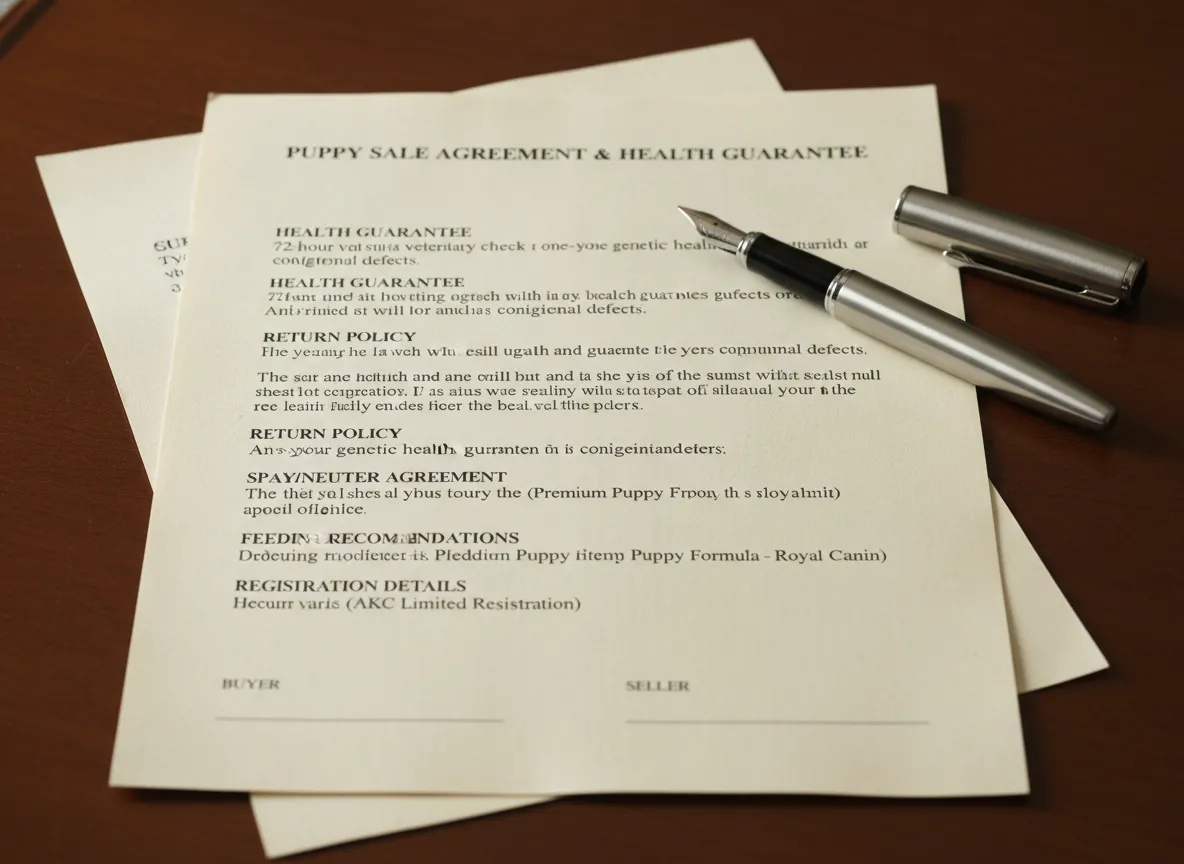
A written contract is not just a formality — it’s a critical protection for both you and the puppy. Responsible breeders provide contracts that clearly outline [1][2]:
What a good contract should include:
- Health guarantee period (typically 1–2 years for genetic conditions)
- What happens if the puppy develops a serious hereditary condition
- Spay/neuter requirements (if applicable)
- Return policy: The breeder should agree to take the puppy back at any point in its life if you can no longer care for it
- Feeding and care recommendations
- Registration paperwork details
“A breeder who offers a written health guarantee is putting their reputation on the line — and that’s exactly the kind of accountability you want.”
Be cautious of vague guarantees like “we’ll replace the puppy.” Reputable breeders typically offer a refund or contribution toward vet costs for serious genetic conditions — not just a replacement [1].
6. How Have the Puppies Been Socialized, and Have They Been Exposed to Children?

The window between 3 and 12 weeks of age is the most critical socialization period in a puppy’s life. What puppies experience during this time shapes their behavior and confidence for the rest of their lives [2].
Ask the breeder specifically:
- Have the puppies been handled daily from birth?
- Have they been exposed to different sounds (vacuum cleaners, traffic, music)?
- Have they met children, men, women, and people of different appearances?
- Have they been introduced to other animals?
- Have they experienced different surfaces (grass, tile, carpet, gravel)?
Socialization checklist to ask about:
✅ Daily human handling from week 1
✅ Exposure to household sounds and appliances
✅ Introduction to children and multiple adults
✅ Outdoor experiences (weather, terrain)
✅ Basic crate introduction
✅ Car rides
A breeder who has done this work is giving you a puppy with a head start on becoming a confident, well-adjusted adult dog [2]. A puppy that has spent its first 8 weeks in a kennel with minimal human contact will need significantly more work — and may develop fear-based behavioral issues.
7. Will the Puppies Be Vaccinated and Wormed Before Coming Home?
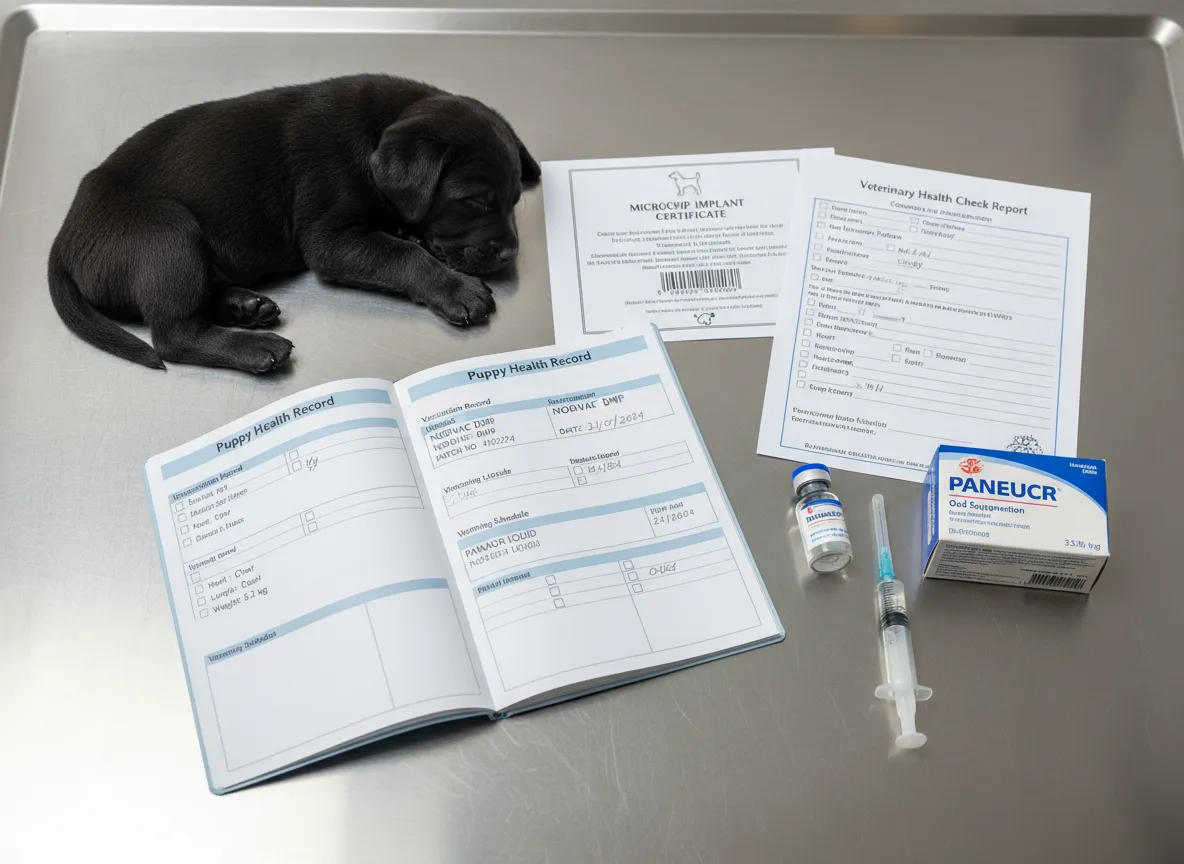
This is a practical but essential question. Before your black Lab puppy comes home, it should have received proper preventive medical care [2][3].
Standard medical care before 8 weeks:
| Treatment | Typical Schedule |
|---|---|
| Worming | At 2, 5, and 8 weeks of age |
| First vaccination | Around 6–8 weeks (varies by vet protocol) |
| Flea/parasite treatment | As recommended by vet |
| Microchipping | Often done before 8 weeks |
| Vet health check | Full exam before placement |
Ask for written documentation of all medical care received. This includes the brand and batch number of vaccines, the dates of worming treatments, and any vet records. This paperwork is essential for your own vet to continue the puppy’s care correctly [2][3].
🚩 Red flag: A breeder who says the puppies “don’t need” vaccines yet, or who can’t provide written medical records, is not operating to an acceptable standard.
Also ask: What food has the puppy been eating? Getting a week’s supply of the same food prevents digestive upset during the stressful transition to a new home.
8. What Questions Will the Breeder Ask You About Your Home and Lifestyle?

Here’s a question that many buyers don’t expect to be on this list — but it’s one of the most revealing. A responsible breeder will interview you. They will ask about your living situation, your experience with dogs, your work schedule, and your plans for training and exercise [1][4].
Expect a good breeder to ask you:
- Do you have a fenced yard?
- How many hours per day will the puppy be alone?
- Do you have children or other pets?
- Have you owned a Labrador or similar breed before?
- What is your plan for training and socialization?
- What will you do if you can no longer keep the dog?
“If a breeder is willing to sell you a puppy without asking a single question about your lifestyle, that tells you everything you need to know about how much they care about where their puppies end up.”
This screening process is a green flag, not an intrusion. It shows the breeder is genuinely invested in the puppy’s wellbeing beyond the sale. Labs are high-energy dogs that need significant exercise, mental stimulation, and companionship. A breeder who doesn’t care whether you can provide these things is not a breeder you want to buy from [1][4].
Quick Reference: Red Flags vs. Green Flags
| Situation | 🚩 Red Flag | ✅ Green Flag |
|---|---|---|
| Health testing | “The parents look healthy” | OFA certificates with verifiable numbers |
| Meeting parents | Refuses or makes excuses | Welcomes visit, mom is present |
| Contract | Verbal agreement only | Written contract with health guarantee |
| Socialization | Puppies kept in outdoor kennel | Daily handling, varied experiences documented |
| Medical records | None available | Full written records with vet details |
| Breeder questions | Asks nothing about your life | Thorough lifestyle screening |
| References | Website testimonials only | Direct contact with previous buyers |
| Puppy availability | Always has puppies available | Waitlist; limited litters per year |
How Much Should You Expect to Pay for a Health-Tested Black Lab Puppy in 2026?
Pricing for black Labrador Retriever puppies from reputable breeders in 2026 typically ranges from $1,200 to $3,000+ depending on the breeder’s location, the parents’ titles and health clearances, and demand. This may seem high compared to puppies advertised for $400–$600 online, but consider:
- Genetic health testing for both parents costs $500–$1,500
- Quality prenatal and postnatal care adds significant expense
- Proper socialization programs require time and resources
- Vet checks, vaccines, and worming for the entire litter add up quickly
A cheap puppy from an untested litter can easily cost $5,000–$15,000 or more in veterinary bills over its lifetime if it develops hip dysplasia, progressive retinal atrophy, or other preventable genetic conditions. The upfront investment in a health-tested puppy is almost always the more economical choice in the long run.
Conclusion: Your Action Plan for Finding the Right Black Lab Puppy 🐾
Knowing the 8 crucial questions to ask before buying black Labrador Retriever puppies for sale gives you a clear framework for evaluating any breeder you encounter. Let me summarize your action steps:
Before you contact a breeder:
- Research OFA health requirements for Labrador Retrievers at ofa.org
- Find breeders through the Labrador Retriever Club’s breeder referral list
- Prepare your list of questions in writing
During your breeder evaluation:
- Ask all 8 questions — and pay attention to how the breeder responds, not just what they say
- Request OFA numbers and verify them independently
- Schedule an in-person visit before committing
Before you sign anything:
- Read the contract carefully and ask about every clause
- Contact at least two references from previous buyers
- Have your own vet review the puppy’s medical records
After you bring your puppy home:
- Schedule a vet appointment within 48–72 hours of pickup
- Continue socialization and enroll in a puppy training class
The right black Labrador Retriever puppy is out there — and the right breeder is waiting to meet a buyer as committed as you are. Take your time, ask every question on this list, and don’t let excitement rush you into a decision you might regret. Your future dog is counting on you to get this right. 🐶
References
[1] Questions To Ask Your Potential Breeder – https://www.akc.org/expert-advice/puppy-information/questions-to-ask-your-potential-breeder/
[2] Questions For The Breeder – https://www.royalkennelclub.com/your-dog/getting-a-dog/buying-a-dog/questions-for-the-breeder/
[3] 23 Questions You Should Ask A Breeder – https://www.petplace.com/article/dogs/pet-care/23-questions-you-should-ask-a-breeder
[4] Questions To Ask Your Labrador Breeder – https://wearwagrepeat.com/questions-to-ask-your-labrador-breeder/
[5] Questions To Ask Before Buying A Puppy – https://www.gallivantlabradors.com/our-blog/questions-to-ask-before-buying-a-puppy
[6] Questions To Ask Breeder – https://thelabradorforum.com/threads/questions-to-ask-breeder.24069/